Japanese Scientist Invents Safe Edible Burger From Human Feces

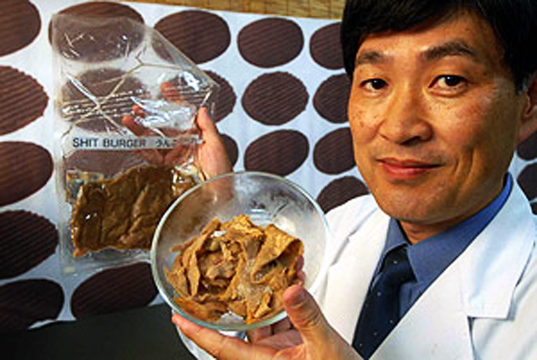
Mitsuyuki Ikeda, a researcher from the Environmental Assessment Center in Okayama has developed a new artificial meat burger made of human feces.

Ikeda has gathered sewage mud (which contains human feces) and has developed the artificial meat by adding fecal extracts, soy protein and steak sauce essence. Artificial food coloring to added to it to give it the same look as red meat. It is composed of 63 percent protein, 25 percent carbohydrates, 3 percent lipids and 9 percent minerals.

Protein is extracted from the sewage mud first. After the protein is extracted, “reaction enhancer” is added to it and it is then put in a machine called the “exploder” which produces the artificial meat. During the entire process, the bacteria in the sewage mud is rendered harmless as it is killed by heating.

The scientist is hoping that the new type of meat will one day replace real meat, which is more expensive to produce. He claims that the new feces burger is actually healthier than real meat (fecal meat has less fat and hence less calories) and is more environment-friendly (cows supposedly contribute around 18 percent of our greenhouse gas emissions).

Currently, fecal meat costs 10-20 times more than normal meat because of the cost of research, but ultimately Ikeda plans to bring the price down so that people can switch to feacl meat one day.

Ikeda did not say whether his “poop meat” is as tasty as real meat and he has acknowledged that few people would be keen to eat it.

http://www.ibtimes.com/articles/164958/20110617/japanese-scientist-makes-poop-burger-mitsuyuki-ikeda.htm


Speech-Jammer Gun Invented in Japan


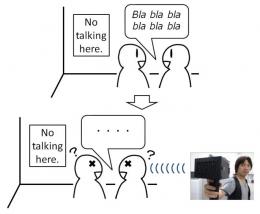
Imagine sitting around a conference table with several of your colleagues as you hold an important meeting. Now imagine your boss pulling out what looks like a radar gun for catching speeding motorists and aiming at any of you that speak to long, very nearly instantly causing whoever is speaking to start stuttering then mumbling and then to stop speaking at all. That’s the idea behind the SpeechJammer, a gun that can be fired at people to force them to stop speaking. It’s the brainchild of Koji Tsukada and Kazutaka Kurihara, science and technology researchers in Japan. They’ve published a paper describing how it works on the preprint server arXiv.

The idea is based on the fact that to speak properly, we humans need to hear what we’re saying so that we can constantly adjust how we go about it, scientists call it delayed auditory feedback. It’s partly why singers are able to sing better when they wear headphones that allow them to hear their own voice as they sing with music, or use feedback monitors when onstage. Trouble comes though when there is a slight delay between the time the words are spoken and the time they are heard. If that happens, people tend to get discombobulated and stop speaking, and that’s the whole idea behind the SpeechJammer. It’s basically just a gun that causes someone speaking to hear their own words delayed by 0.2 seconds.

To make that happen, the two attached a directional microphone and speaker to a box that also holds a laser pointer and distance sensor and of course a computer board to compute the delay time based on distance from the speaker. To make it work, the person using it points the gun at the person talking, using the laser pointer as a guide, then pulls the trigger. It works for distances up to a hundred feet.

The two say they have no plans to market the device, but because the technology is so simple, it’s doubtful they could patent it anyway.

http://www.physorg.com/news/2012-03-speechjammer-gun-quash-human-utterances.html

Chinese Toilets Recycled Into Desks for Kids

Scientists claim there is a fine margin between genius and madness and this is one invention which surely proves that theory.

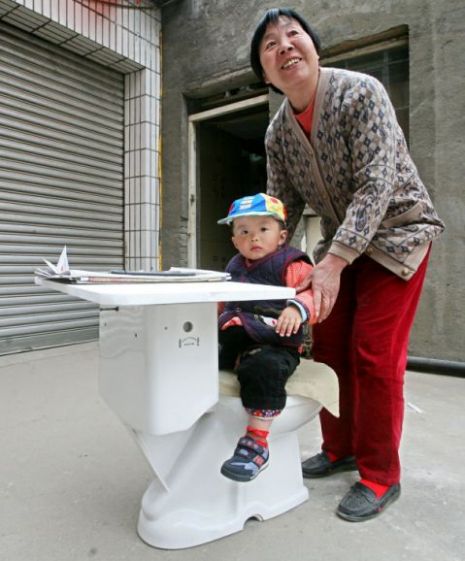
Loo manufacturer Gao Jianguo discovered a way to transform these bog standard unused toilets into fully functional desks by turning one lavatory’s cistern lid into portable lap desks.

Alternatively students can sit on top of the toilet seat backwards and work from a fixed position.

Gao, from Shijiazhuang, northern China, has now donated hundreds of the wacky toilet desks to local schools in the area.

While most critics believe his invention stinks, the inventor says his unique idea will stop hundreds of loos being thrown away every year.

‘We have lots of toilets that we would otherwise throw away,’ said Gau, responding to critics who have poo-poohed the idea.

‘It is wasteful and if we can find a use for them we should.

‘They are brand new and have never been used so there is no hygiene issue.’

Read more: http://www.metro.co.uk/weird/891058-recycled-toilets-made-into-school-desks-by-potty-chinese-inventor#ixzz1nttwW4MM

Genetically Engineered Stomach Microbe Converts Seaweed into Ethanol

Seaweed may well be an ideal plant to turn into biofuel. It grows in much of the two thirds of the planet that is underwater, so it wouldn’t crowd out food crops the way corn for ethanol does. Because it draws its own nutrients and water from the sea, it requires no fertilizer or irrigation. Most importantly for would-be biofuel-makers, it contains no lignin—a strong strand of complex sugars that stiffens plant stalks and poses a big obstacle to turning land-based plants such as switchgrass into biofuel.

Researchers at Bio Architecture Lab, Inc., (BAL) and the University of Washington in Seattle have now taken the first step to exploit the natural advantages of seaweed. They have built a microbe capable of digesting it and converting it into ethanol or other fuels or chemicals. Synthetic biologist Yasuo Yoshikuni, a co-founder of BAL, and his colleagues took Escherichia coli, a gut bacterium most famous as a food contaminant, and made some genetic modifications that give it the ability to turn the sugars in an edible kelp called kombu into fuel. They report their findings in the January 20 issue of the journal Science.

To get his E. coli to digest kombu, Yoshikuni turned to nature—specifically, he looked into the genetics of natural microbes that can break down alginate, the predominant sugar molecule in the brown seaweed. “The form of the sugar inside the seaweed is very exotic,” Yoshikuni told Scientific American. “There is no industrial microbe to break down alginate and convert it into fuels and chemical compounds.”

Once he and his colleagues had isolated the genes that would confer the required traits, they used a fosmid—a carrier for a small chunk of genetic code—to place the DNA into the E. coli cells, where it took its place in the microbe’s own genetic instruction set. To test the new genetically engineered bacterium, the researchers ground up some kombu, mixed it with water and added the altered E. coli. Before two days had gone by the solution contained about 5 percent ethanol and water. It also did this at (relatively) low temperatures between 25 and 30 degrees Celsius, both of which mean that the engineered microbe can turn seaweed to fuel without requiring the use of additional energy for the process.

An analysis from the Pacific Northwest National Laboratory (pdf) suggests that the U.S. could supply 1 percent of its annual gasoline needs by growing such seaweed for harvest in slightly less than 1 percent of the nation’s territorial waters. Humans already grow and harvest some 15 million metric tons of kombu and other seaweeds to eat. And there’s no reason to fear the newly engineered E. coli escaping into the wild and consuming the seaweed already out there, Yoshikuni argues. “E. coli loves the human gut, it doesn’t like the ocean environment,” he says. “I can hardly imagine it would do something. It would just be dead.”

The microbe could turn out to be useful for making molecules other than ethanol, such as isobutanol or even the precursors of plastics, Yoshikuni says. “Consider the microbe as the chassis with engineered functional modules,” or pathways to produce a specific molecule, Yoshikuni says. “If we integrate other pathways instead of the ethanol pathway, this microbe can be a platform for converting sugar into a variety of molecules.”

The fact that such a one-stop industrial microbe can turn seaweed into a variety of molecules has attracted the attention of outfits such as the U.S. Department of Energy’s Advanced Research Projects Agency–Energy, or ARPA–e, which has funded BAL work with DuPont to produce other molecules from such engineered microbes. “Because seaweed grows naturally in the ocean, it uses the two thirds of the planet that we don’t use for agriculture,” ARPA–e program director Jonathan Burbaum wrote in an e-mail. “ARPA–e is directing a small portion of the remaining funding toward an aquafarm experiment to measure area productivity and harvest efficiency.”
http://www.scientificamerican.com/article.cfm?id=genetically-engineered-stomach-microbe-turns-seaweed-into-ethanol&WT.mc_id=MND_20120216

Scientists Use Brain Waves to Detect What a Person Hears


The day we can scan a person’s brain and “hear” their inner dialogue just got closer. Scientists at the University of California, Berkeley recorded brain activity in patients while the patients listened to a series of words. They then used that brain activity to reconstruct the words with a computer. The research could one day be used to help people unable to speak due to brain damage.

The study was published recently in PLOS Biology.

Strokes or neurodegenerative diseases such as Lou Gehrig’s disease can leave people’s language centers damaged and impair their speech. A critical link between the current study and potentially helping these people is the idea that hearing words and thinking words activate similar brain processes. There is evidence to suggest that this is indeed the case, but more research is needed to work out exactly how perceived speech and inner speech are related. Even so, the current study lends hope to a potential treatment. “If you can understand the relationship well enough between the brain recordings and sound, you could either synthesize the actual sound a person is thinking, or just write out the worlds with a type of interface device,” Pasley told the Berkeley News Center.

http://singularityhub.com/2012/02/15/scientists-use-brain-waves-to-eavesdrop-on-what-we-hear/

Wiring the Brain to Treat Depression


The procedure starts with a surgeon drilling two holes in the patient’s skull. “Every bone and tooth in my head was rattling,” says Lisa Battiloro, who was awake, but not in pain, during the eight-hour operation.

Neurologists asked her questions and issued commands as they pinpointed the exact spot in her brain for electrical stimulation. At one point, “I suddenly felt hopeful and optimistic about the future,” recalls Ms. Battiloro, who had battled severe depression for more than a decade. That’s when the doctors knew they had found Brodmann 25, an area deep in the cerebral cortex associated with negative mood. They secured the electrodes in place, then sedated Ms. Battiloro while they ran an extension wire under the skin, down the side of her head and into her chest, where they implanted a battery pack to supply her brain with a mild electrical current.

Within two months, Ms. Battiloro says, her depression had lifted considerably. Now, nearly four years later, it hasn’t returned. “My friends and family are amazed,” say Ms. Battiloro, 41, of Boynton Beach, Fla. “I’m a new and improved Lisa.”

Deep brain stimulation, sometimes called a pacemaker for the brain, has helped halt tremors in more than 100,000 patients with Parkinson’s disease and other movement disorders since 1997. Now, researchers are reporting encouraging results using the procedure for psychiatric conditions as well. Ms. Battiloro was one of 17 patients in a study published this month in the Archives of General Psychiatry. After two years of DBS, 92% reported significant relief from their major depression or bipolar disorder and more than half were in remission, with no manic side effects.

“We are seeing dramatic effects in the small numbers of subjects, and they are not just getting well, they are getting well without side effects and without relapsing,” says neurologist Helen Mayberg, who led the study at Emory University in Atlanta.

read more here:  http://online.wsj.com/article/SB10001424052970204555904577164813955136748.html#articleTabs=article


The Glowing Puppy – What Every Kid Needs!


South Korean scientists have created a glowing dog using a cloning technique that could help find cures for human diseases such as Alzheimer’s and Parkinson’s disease.

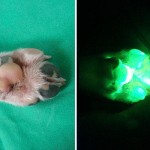
A research team from Seoul National University (SNU) said the genetically modified female beagle, named Tegon and born in 2009, glows fluorescent green under ultraviolet light if given a doxycycline antibiotic.  The ability to glow can be turned on or off by adding a drug to the dog’s food.

“The creation of Tegon opens new horizons since the gene injected to make the dog glow can be substituted with genes that trigger fatal human diseases,” the news agency quoted lead researcher Lee Byeong-chun as saying.

He said the dog was created using the somatic cell nuclear transfer technology that the university team used to make the world’s first cloned dog, Snuppy, in 2005.

The scientist said that because there are 268 illnesses that humans and dogs have in common, creating dogs that artificially show such symptoms could aid treatment methods for diseases that afflict humans.

Read about it here:  http://news.discovery.com/animals/beagle-dog-glows-green-110801.html


Chinese Cows Genetically Engineered to Produce Human Breast Milk


Professor Ning Li of China Agriculture University has successfully led a team that introduced the human gene for breast milk into cows.

Human genes were inserted in the DNA of Holstein dairy cows, and modified embryos were implanted into surrogate cows.

The offspring contained lysozyme, an anti-bacterial protein found in human breast milk that protects infants from infection during their first days of life.

They also created cattle containing lactoferrin, an immune system booster for babies that is found in human milk.

Fat content was raised by about 20% as well, and the level of milk solids was altered to make the final product as close to human milk as possible.

300 of these cattle have been produced.

Professor Li Ning, the director of the project, stated: “There are 1.5 billion people in the world who don’t get enough to eat.  It’s our duty to develop science and technology, not to hold it back. We need to feed people first, before we consider ideals and convictions.”

The ultimate goal is to sell the milk as an alternative to cow milk, which is less nutritious than human milk. The modified milk is currently undergoing safety tests, but those who have tasted the milk say it is stronger tasting and sweeter than cow’s milk.

This isn’t the first genetically engineered food China has created. Known for having a more liberal approach toward genetically modified food, China has already created modified fruits and vegetables such as papayas and tomatoes, as well as insect-resistant rice and corn.


Harry Wesley Coover Jr., Inventor of Super Glue, Dies at 94

The man who invented Super Glue died at the age of 94 on Saturday night from congestive heart failure at his home in Kingsport, Tenn.

Dr. Coover discovered super glue accidentally in 1951 when he was experimenting with acrylates for use in clear plastic gun-sights during World War II. He gave up because they stuck to everything they touched.  Later, after his team ruined expensive lab equipment with the substance, Dr. Coover saw an opportunity.  Seven years later, Eastman 910 (super glue) hit the market.

In 2010, Dr. Coover was awarded the National Medal of Technology and Innovation by Obama for his invention of “cyanoacrylates – novel adhesives known widely to consumers as ‘super glues’ – which today play significant roles in medicine and industry.

http://www.nytimes.com/2011/03/28/business/28coover.html?src=busln

http://www.supergluecorp.com/blog/2010/11/18/dr-harry-coover-inventor-of-super-glue-recognized-by-president-obama/

http://web.mit.edu/invent/iow/coover.html