Brazil aims to clone endangered animals


Conservationists in Brazil are poised to try cloning eight animals that are under pressure, including jaguars and maned wolves.

Other conservation groups have welcomed the plan, but say the priority should always be to preserve species in the wild by minimising hunting and maintaining habitats.

“While cloning is a tool of last resort, it may prove valuable for some species,” says Ian Harrison of the Biodiversity Assessment Unit at Conservation International in Arlington, Virginia. “Experimenting with it now, using species that are not at immediate risk of extinction, is important.”

None of the targeted animals are critically endangered, but Brazil’s agricultural research agency, Embrapa, wants a headstart. Working with the Brasilia Zoological Garden, it has collected around 420 tissue samples, mostly from carcasses.

The eight species live in the Cerrado, a tropical savannah. They will be cloned and kept in captivity as a reserve in case wild populations collapse.

Within a month, Embrapa hopes to begin cloning the maned wolf (Chrysocyon brachyurus), which is classed as “Near Threatened” on the IUCN Red List of endangered species. About 13,000 remain across South America.

As well as jaguars and maned wolves, the researchers hope to clone black lion tamarins (Leontopithecus chrysopygus), bush dogs (Speothos venaticus), coatis, collared anteaters (Tamandua tetradactyla), gray brocket deer (Mazama gouazoupira) and bison.

There are no plans to release cloned animals into the wild, says Embrapa’s Carlos Frederico Martins. Being clones, they would lack the genetic variability of wild populations.

Embrapa created Brazil’s first cloned animal in 2001, a cow called Vitória that died last year. It has since cloned over 100 animals, mainly cows and horses.

Rare animals have been cloned before, including the ox-like gaur, a wild sheep called a mouflon, a wild cow called the banteng, and even an extinct mountain goat – the Pyrenean ibex – that died at birth. Since then, more versatile cloning techniques have been developed, increasing the chances of success.

“The key is foresight, to just save a little piece of skin, blood or other living cells before the genes from these individuals are lost from the planet forever. A freezer the size of a standard refrigerator could store the genetics for all the pandas in China, or all the mountain gorillas in Africa,” says Robert Lanza of Advanced Cell Technology in Marlborough, Massachusetts, who headed the group that produced the gaur. “If you have the genetic material you can produce sperm, for instance, and reintroduce genetic diversity whenever you want.”

Rhiannon Lloyd of the University of Portsmouth, UK, runs a facility that stores DNA of threatened and extinct species. She backs Embrapa’s plan: “Collecting from dead specimens prevents the valuable information within their cells being lost forever.”

http://www.newscientist.com/article/dn22493-brazil-aims-to-clone-endangered-animals.html?cmpid=RSS|NSNS|2012-GLOBAL|online-news

Scientists discover gene that controls striping pattern on cats

Scientists say they’ve found the gene that sets the common tabby pattern – stripes or blotches.

It’s one of several genes that collaborate to create the distinctive design of a cat’s coat, and it’s the first of the pattern genes to be identified.

Cats with narrow stripes, the so-called “mackerel” pattern, have a working copy of the gene. But if a mutation turns the gene off, the cat ends up with the blotchy “classic” pattern, researchers reported online last week in the journal Science.

It’s called “classic” because “cat lovers really like the blotched pattern,” said one of the authors, Greg Barsh. He works at both Stanford University and the HudsonAlpha Institute of Biotechnology in Huntsville, Ala.

The research team, which included scientists from the National Cancer Institute, examined DNA from wild cats in California to identify the gene.

They also found that a mutation in the same gene produces the blotches and stripes of the rare “king” cheetah, rather than the spots most cheetahs have.

Leslie Lyons, a cat geneticist who studies coat color traits at the University of California, Davis, but didn’t participate in the new work, agreed that the research has identified the tabby’s stripes-versus-blotches gene. She noted that mysteries remain, such as just what genetic machinery gives a tabby spots.

The ENCODE project changes our understanding of how DNA works


When the human genome was sequenced a decade ago, scientists hailed the feat as a technical tour de force — but they also knew it was just a start. The “HHA000078” DNA blueprint was finally laid bare, but no one knew what it all meant.

Now an international team has taken the crucial next step by delivering the first in-depth report on what the endless loops and lengths of DNA inside our cells are up to.

The findings, detailed Wednesday in more than two dozen reports in the journals Nature and Science and other publications, do much more than provide a straightforward list of genes. By creating a complicated catalog of all the places along our DNA strands that are biochemically active, they offer new insight into how genes work and influence common diseases. They also upend the conventional wisdom that most of our DNA serves no useful purpose.

Defining this hive of activity is essential, scientists said, because it transforms our picture of the human blueprint from a static list of 3 billion DNA building blocks into the dynamic master-regulator that it is. The revelations will be key to understanding how genes are controlled so that they leap into action at precisely the right time and place in our bodies, allowing a whole human being to develop from a single fertilized egg. In addition, they will help explain how the carefully choreographed process can go awry, triggering birth defects, diseases and aging.

“The human genome was a bit like getting ‘War and Peace’ in Russian: It’s a great book containing all of human experience, but [if] I don’t know any Russian it’s very hard to read,” said Ewan Birney, a computational biologist at the European Bioinformatics Institute in England who coordinated the analysis for the project. Now scientists are on their way to having the translation, he said.

More than 400 scientists have conducted upward of 1,600 experiments over five years to produce the Encyclopedia of DNA Elements, which goes by the nickname ENCODE. If graphically presented, the data it has generated so far would cover a poster 30 kilometers long and 16 meters high, Birney estimated.

Already, it is revealing surprises.

The results overturn old ideas that the bulk of DNA in our cells is useless — albeit inoffensive — junk just carried along for the evolutionary ride. Back in 2003, when the human genome was finished, scientists estimated that less than 2% carries instructions for making proteins, which become physical structures in our bodies and do the myriad jobs inside cells. The conventional wisdom was that the rest of the genetic code didn’t do very much.

But the new analysis shows that more than 80% of the human genome is active in at least one biological process that the ENCODE team measured. Nearly all of it could turn out to be active when the data are more complete.

A huge chunk of that activity is wrapped up with gene regulation — dictating whether the instructions each gene carries for making a unique protein will be executed or not. Such regulation is key, because pretty much every cell in the human body carries the entire set of 21,000 protein-making genes. To adopt its unique identity, each cell — be it one in the pancreas that makes insulin or one in the skin making pigment or hair — must activate only a subset of them.

Using an array of laboratory methods and tissue from more than 150 types of human cells, the scientists found and mapped millions of DNA sites that act as “switches” — turning genes off or on in one cell or another, at various times and intensities. The switches flip when master-regulator proteins bind to them, or when chemical “tags” are attached to them by enzymes.

“There’s way more switches than we ever imagined,” Birney said.

Some of the switches are right where scientists would expect them to be: close to the genes they control. But some are extremely far away, the researchers found.

Though that was unexpected, it makes sense, said molecular geneticist Joseph Ecker of the Salk Institute for Biological Studies in La Jolla, who was not on the ENCODE team but wrote a commentary accompanying the main report in Nature.

“We draw DNA out as this long, linear thing where you can read from one end to the other, but the reality in the cell is that the molecule is folded tightly and compactly,” Ecker said. With the DNA scrunched up like a hairball, places far apart on a strand can end up close to each other in physical space.

The mass of data from the project is already proving a boon for scientists exploring the genetics of common disorders such as cancer and diabetes, which up till now has been a largely frustrating effort.

“Now that we have the switches, we can start to understand why a combination of DNA variants might increase the chances of a particular disease,” said ENCODE researcher Dr. Bradley Bernstein, a pathologist at Harvard Medical School in Boston and the Broad Institute in Cambridge, Mass.

Past efforts had focused on screening the genomes of people with various diseases to look for patterns of DNA differences, said Dr. John Stamatoyannopoulos, a genome scientist at the University of Washington in Seattle and member of the ENCODE team. Researchers found hundreds or thousands of variants associated with common diseases, but only about 5% of them were in genes, and it was unclear what all the other ones did.

Many of these variants, it now turns out, were located in places involved in regulating genes. For instance, the team discovered that one variant associated with platelet count was within a stretch of DNA that controls a gene involved in platelet production.

“It isn’t just noise,” Stamatoyannopoulos said of the baffling results from earlier studies.

http://www.latimes.com/news/science/la-sci-dna-encode-20120906,0,7798745.story

DNA is the future of data storage

A bioengineer and geneticist at Harvard’s Wyss Institute have successfully stored 5.5 petabits of data — around 700 terabytes — in a single gram of DNA, smashing the previous DNA data density record by a thousand times.

The work, carried out by George Church and Sri Kosuri, basically treats DNA as just another digital storage device. Instead of binary data being encoded as magnetic regions on a hard drive platter, strands of DNA that store 96 bits are synthesized, with each of the bases (TGAC) representing a binary value (T and G = 1, A and C = 0).

To read the data stored in DNA, you simply sequence it — just as if you were sequencing the human genome — and convert each of the TGAC bases back into binary. To aid with sequencing, each strand of DNA has a 19-bit address block at the start (the red bits in the image below) — so a whole vat of DNA can be sequenced out of order, and then sorted into usable data using the addresses.

Scientists have been eyeing up DNA as a potential storage medium for a long time, for three very good reasons: It’s incredibly dense (you can store one bit per base, and a base is only a few atoms large); it’s volumetric (beaker) rather than planar (hard disk); and it’s incredibly stable — where other bleeding-edge storage mediums need to be kept in sub-zero vacuums, DNA can survive for hundreds of thousands of years in a box in your garage.

It is only with recent advances in microfluidics and labs-on-a-chip that synthesizing and sequencing DNA has become an everyday task, though. While it took years for the original Human Genome Project to analyze a single human genome (some 3 billion DNA base pairs), modern lab equipment with microfluidic chips can do it in hours. Now this isn’t to say that Church and Kosuri’s DNA storage is fast — but it’s fast enough for very-long-term archival.

Just think about it for a moment: One gram of DNA can store 700 terabytes of data. That’s 14,000 50-gigabyte Blu-ray discs… in a droplet of DNA that would fit on the tip of your pinky. To store the same kind of data on hard drives — the densest storage medium in use today — you’d need 233 3TB drives, weighing a total of 151 kilos. In Church and Kosuri’s case, they have successfully stored around 700 kilobytes of data in DNA — Church’s latest book, in fact — and proceeded to make 70 billion copies (which they claim, jokingly, makes it the best-selling book of all time!) totaling 44 petabytes of data stored.

Looking forward, they foresee a world where biological storage would allow us to record anything and everything without reservation. Today, we wouldn’t dream of blanketing every square meter of Earth with cameras, and recording every moment for all eternity/human posterity — we simply don’t have the storage capacity. There is a reason that backed up data is usually only kept for a few weeks or months — it just isn’t feasible to have warehouses full of hard drives, which could fail at any time. If the entirety of human knowledge — every book, uttered word, and funny cat video — can be stored in a few hundred kilos of DNA, it might just be possible to record everything.

http://refreshingnews99.blogspot.in/2012/08/harvard-cracks-dna-storage-crams-700.html

Thanks to kebmodee for bringing this to the attention of the It’s Interesting community.

The Viking Missions May Have Discovered Life on Mars in 1976

Since the Viking Mars probes traveled to the red planet back in 1976, NASA has sent several more probes, landers, and rovers to the Martian surface to study the planet’s geology and search for signs of microbial life. But the evidence for life may have been hidden in Viking’s data all along. A new analysis of the data collected by probes Viking 1 and Viking 2 suggest the missions found evidence of microbial life more than three decades ago.

The new analysis centres on one of the three experiments carried by the probe: the Labeled Release (LR) experiment. This instrument searched for signs of life by mixing samples of Martian soil with droplets of water containing nutrients and radioactive carbon. If the soil contained microbes, the reasoning went, they would metabolise these carbon atoms and nutrients and release either methane gas or radioactive carbon dioxide, either of which would tip off the probes that life existed in the soil.

That’s exactly what happened. But other experiments aboard Viking didn’t back up the LR, and NASA scientists had to dismiss the LR’s findings as anomalous.

But now an analysis by a University of Southern California neurobiologist (and former NASA space shuttle project director) and a mathematician from Italy’s University of Siena could reverse that thinking. They used a technique called cluster analysis, which clusters together similar-looking data sets, to see what would happen. They found the analysis created two clusters: one for the two active experiments on Viking and the other for five control experiments.

Further, when they compared Viking’s data to confirmed biological sources on Earth, like temperature readings from a lab rat, the analysis correctly clustered the biological readings with the active Viking experiment data, separate from the non-biological data in the control experiments. All that essentially means that the cluster analysis, when fed a good deal of data from both biological and non-biological sources, correctly separates the two types of data. And when it does so, it lumps the Viking data into the “biological” category.

That’s not concrete evidence for microbial life on Mars. It’s merely concrete evidence that there is a stark difference between Viking’s LR experiment data and the control experiment data. And it’s evidence that the Viking data tracks with biological rather than non-biological data. More study is necessary (isn’t it always?), but if the cluster analysis is to be believed then our first shot at detecting microbial life in the soils of Mars may have hit pay dirt – and we didn’t even realise it.

[NatGeo]

http://www.popsci.com.au/technology/space/the-viking-mars-missions-may-have-discovered-life-in-1976

How Scientists Ressurected a 30,000 Year Old Flower


After successfully growing samples of an ancient flower, scientists dream of applying the same technique to the re-creation of a woolly mammoth.


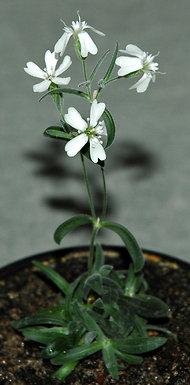
A few years ago in northeastern Siberia, Russian scientists uncovered a rare trove of immaculately frozen Arctic squirrel burrows dating back to the Ice Age. Inside they found buried seeds, including the fruit of a flower called the narrow-leafed campion. Now, after 30,000 years, they’ve brought the original flower back to life. Here’s what you should know:

Did they grow the flower from frozen seeds?
Not exactly. Efforts to resurrect ancient plants from seeds found “wonderfully preserved by the cold, dry environment” fell short, says Sharon Levy at Scientific American, including attempts to sprout sedge, alpine bearberry, and the narrow-leafed campion (known scientifically as Silene stenophylla). “Those seeds did begin to germinate, but then faltered and died back.” Instead, the scientists, led by David Gilichinsky of the Russian Academy of Sciences, looked to tissue samples from S. stenophylla fruit — specifically, they turned to the plant’s placenta (think of the white meat inside a bell pepper), which produces its seeds.

Then what did they do?
After thawing out the organic material, they placed cells taken from the placenta into petri dishes. Scientists were delighted when these specimens grew into “whole plants,” and were able to use those seeds to farm a second generation of flowers. The team was able to grow 36 narrow-leafed campion plants in all, and the specimens “appeared identical to the present day narrow-leafed campion until they flowered,” says Nicholas Wade at The New York Times, “when they produced narrower and more splayed-out petals.” 

How were the frozen seeds able to survive for so long?
Researchers think it may have something to do with the “special circumstances” of the campion’s deep freeze. Squirrels bury their finds next to icy permafrost “to keep seeds cool during the arctic summers,” meaning the fruit was frozen early on, notes Wade. Plus, the placentas contain “high levels of sucrose and phenols, which are good antifreeze agents.” 

Are these the oldest plants ever grown?
By far. The sediments surrounding the frozen seeds date back roughly 30,000 to 32,000 years. That “trounces the previous record held be a date palm from a 2,000-year-old seed recovered from Masada, Israel,” says Tristin Hopper at National Post

What’s next?
Scientists will use the techniques to produce more plants found in the Siberian burrows, but the same techniques could potentially be applied to woolly mammoths or saber tooth tigers. “We find partially preserved mammoth carcasses in the Siberian tundra that are 30,000 years old,” says paleontologist Grant Zazula. “This raises the potential that you could have viable sperm cells and eggs cells within some of these animals.”


Thanks to P.C. and Kebmodee for bringing this to the attention of the It’s Interesting community. 

http://kebmodee.blogspot.com/

http://theweek.com/article/index/224689/how-scientists-resurrected-a-30000-year-old-flower

http://www.nytimes.com/2012/02/21/science/new-life-from-an-arctic-flower-that-died-32000-years-ago.html?_r=1

Scientists Crack the Genetic Code of the 14th Century Bubonic Plague that Killed 50 Million Europeans

Scientists have mapped out the entire genetic map of the Black Death, a 14th century bubonic plague that killed 50 million Europeans in one of the most devastating epidemics in history.

The work, which involved extracting and purifying DNA from the remains of Black death victims buried in London’s “plague pits,” is the first time scientists have been able to draft a reconstructed genome of any ancient pathogen.

Their result — a full draft of the entire Black Death genome — should allow researchers to track changes in the disease’s evolution and virulence, and lead to better understanding of modern-day infectious diseases.

Building on previous research which showed that a specific variant of the Yersinia pestis (Y. pestis) bacterium was responsible for the plague that ravaged Europe between 1347 and 1351, a team of German, Canadian and American scientists went on to “capture” and sequence the entire genome of the disease.

“The genomic data show that this bacterial strain, or variant, is the ancestor of all modern plagues we have today worldwide. Every outbreak across the globe today stems from a descendant of the medieval plague,” said Hendrik Poinar, of Canada’s McMaster University, who worked with the team.

“Experts say the direct descendants of the same bubonic plague still exist today, killing around 2,000 people a year.

A virulent strain of E. coli bacteria which caused a deadly outbreak of infections in Germany and France earlier this year was also found to contain DNA sequences from plague bacteria.

For this study Poinar’s team analysed skeletal remains from Black Death victims buried in London’s East Smithfield “plague pits,” which are located under what is now the Royal Mint.

By focusing on promising specimens from the dental pulp of five bodies, which had already been pre-screened for the presence of Y. pestis, they were able to extract, purify and enrich the disease’s DNA and at the same time reduce the amount of background non-plague DNA which might interfere.

Linking the 1349 to 1350 dates of the skeletal remains to the genetic data allowed the researchers to calculate the age of the ancestor of Y. pestis that caused the mediaeval plague.

Poinar, whose work was published in the journal Nature, said the team found that in 660 years of evolution, the genetic map of the ancient organism had only barely changed. “The next step is to determine why this was so deadly,” he said.

Johannes Krause Of Germany’s University of Tubingen, who also worked on the study, said the same approach could now be used to study the genomes of all sorts of historic pathogens.

“This will provide us with direct insights into the evolution of human pathogens and historical pandemics,” he said in a statement.

http://www.reuters.com/article/2011/10/12/us-plague-genome-idUSTRE79B5D220111012?feedType=RSS

The Glowing Puppy – What Every Kid Needs!


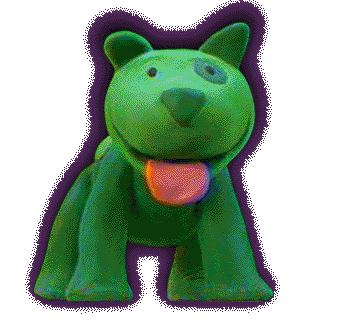
South Korean scientists have created a glowing dog using a cloning technique that could help find cures for human diseases such as Alzheimer’s and Parkinson’s disease.

A research team from Seoul National University (SNU) said the genetically modified female beagle, named Tegon and born in 2009, glows fluorescent green under ultraviolet light if given a doxycycline antibiotic.  The ability to glow can be turned on or off by adding a drug to the dog’s food.

“The creation of Tegon opens new horizons since the gene injected to make the dog glow can be substituted with genes that trigger fatal human diseases,” the news agency quoted lead researcher Lee Byeong-chun as saying.

He said the dog was created using the somatic cell nuclear transfer technology that the university team used to make the world’s first cloned dog, Snuppy, in 2005.

The scientist said that because there are 268 illnesses that humans and dogs have in common, creating dogs that artificially show such symptoms could aid treatment methods for diseases that afflict humans.

Read about it here:  http://news.discovery.com/animals/beagle-dog-glows-green-110801.html


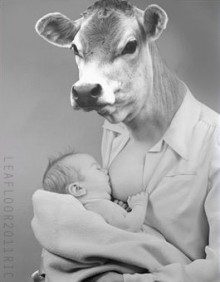
Chinese Cows Genetically Engineered to Produce Human Breast Milk


Professor Ning Li of China Agriculture University has successfully led a team that introduced the human gene for breast milk into cows.

Human genes were inserted in the DNA of Holstein dairy cows, and modified embryos were implanted into surrogate cows.

The offspring contained lysozyme, an anti-bacterial protein found in human breast milk that protects infants from infection during their first days of life.

They also created cattle containing lactoferrin, an immune system booster for babies that is found in human milk.

Fat content was raised by about 20% as well, and the level of milk solids was altered to make the final product as close to human milk as possible.

300 of these cattle have been produced.

Professor Li Ning, the director of the project, stated: “There are 1.5 billion people in the world who don’t get enough to eat.  It’s our duty to develop science and technology, not to hold it back. We need to feed people first, before we consider ideals and convictions.”

The ultimate goal is to sell the milk as an alternative to cow milk, which is less nutritious than human milk. The modified milk is currently undergoing safety tests, but those who have tasted the milk say it is stronger tasting and sweeter than cow’s milk.

This isn’t the first genetically engineered food China has created. Known for having a more liberal approach toward genetically modified food, China has already created modified fruits and vegetables such as papayas and tomatoes, as well as insect-resistant rice and corn.


Altered patterns of gene expression offer new clues in autism.

Dr. Dan Geschwind, director of the Center for Autism Research and Treatment at the University of California, Los Angeles (UCLA), and his team recently measured levels of gene expression — which determine the synthesis of various proteins, each with a specific task in the cell — in the brain tissue of 19 autistic people and 17 healthy ones.
 
They discovered certain patterns of expression common to the autistic brain. 
 
Autistic brains showed very little difference in gene expression between the frontal and temporal lobes, two regions responsible for language, decision-making and emotional responses.
 
Normally, marked differences in patterns of gene expression between these two areas begins in utero during fetal development.