Toothy prehistoric lizard named Obamadon after smiling president

tumblr_md3o18ovd91r1z6a3o1_400

Researchers have named a newly discovered, prehistoric lizard “Obamadon gracilis” in honor of the 44th president’s toothy grin.

The small, insect-eating lizard was first discovered in eastern Montana in 1974, but a recent re-examination showed the fossil had been wrongly classified as a Leptochamops denticulatus and was in fact a new species, researchers told Reuters on Tuesday.

Obamadon gracilis was one of nine newly discovered species reported on Monday in the Proceedings of the National Academy of Sciences.

In naming the new species, scientists from Yale and Harvard universities combined the Latin “Obamadon” for “Obama’s teeth” and “gracilis,” which means slender.

“The lizard has these very tall, straight teeth and Obama has these tall, straight incisors and a great smile,” said Nick Longrich, a paleontologist at the school in New Haven, Connecticut.

It was believed to have lived during the Cretaceous period, which began 145.5 million years ago. Along with many dinosaurs from that era, the lizard died out about 65 million years ago when a giant asteroid struck earth, scientists say.

Longrich said he waited until after the recent U.S. election to name the lizard.

“It would look like we were kicking him when he’s down if he lost and we named this extinct lizard after him,” he said in an interview.

“Romneydon” was never under consideration and “Clintondon” didn’t sound good, said Longrich, who supported Hillary Clinton’s failed run against Obama in the 2008 Democratic primary.

Obama is not the first politician whose name has been used to help classify organisms. Megalonyxx jeffersonii, an extinct species of plant-eating ground sloth, was named in honor of President Thomas Jefferson, an amateur paleontologist who studied the mammal.

Earlier this year, researchers announced they had named five newly identified species of freshwater perch after Obama, Bill Clinton, Al Gore, Jimmy Carter and Theodore Roosevelt.

In 2005, entomologists named three species of North American slime-mold beetles agathidium bushi, agathidium cheneyi and agathidium rumsfeldi in honor of George W. Bush, Dick Cheney, and Donald Rumsfeld – the U.S. president, vice president and secretary of defense at the time.

Other celebrity names also have been used to name new species. A small Caribbean crustacean has been named after reggae icon Bob Marley, an Australian horsefly has been named in honor of hip-hop star Beyonce, and an endangered species of marsh rabbit has been named after Playboy magazine founder Hugh Hefner.

http://news.yahoo.com/yale-names-toothy-dinosaur-obamadon-smiling-president-200415370.html

Hoarders horror: Woman has nearly 100 dead cats in refrigerator

imagesizer

After so many tragic tales of waste-filled homes, animal deaths and human suffering on A&E’s “Hoarders,” it’s hard to imagine finding anything on the show truly shocking anymore. Well, it was hard to imagine that before Monday night’s episode, which featured a woman whose cat obsession went beyond anything viewers of the docu-series had seen before.

As the episode opened, hoarder Terry explained what inspired her feline fascination.

“I really feel like the reason I collect cats is that I have this feeling in me that I’m helping save something,” she said.

A glance around her living space soon proved that Terry wasn’t saving cats or herself the way she was living. Floors and counters were covered in excrement and sick animals crawled over the scene.

“The complete number is probably about 50 cats,” she guessed.

But that low-estimate only included the living cats, and the dead ones outnumbered them by far.

“I probably have, in frozen and refrigerated cats, between 75 and 100 — if not more,” Terry said.

Terry had hoped to have them all cremated, but finances didn’t allow for that, so over time, she “saved” them all in the appliance, which wasn’t up to the task of preserving the cats. In fact, once the cleanup was underway, the “Hoarders” crew discovered that many of the cats had liquefied.

The removal process was difficult for Terry who broke down many times and finally seemed to see her hoarding problem as others viewed it.

“I can’t even say anymore that I love animals ’cause I treated them so horrible,” she said through tears.

By the end of the show, most of the mess and all of the cats were out of the home.

If you want to see the episode for yourself — and be forewarned, the feline footage gets far more graphic than the photos above — it’s available to view online at the A&E website.

http://theclicker.today.com/_news/2012/12/04/15676370-hoarders-horror-woman-has-nearly-100-dead-cats-in-refrigerator?lite

Stranded humpback whale on Dutch coast currently struggling to free itself

humpback


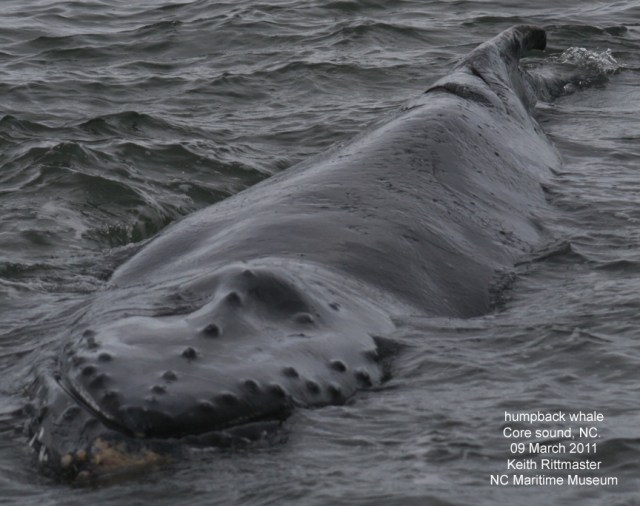
Rescuers say a humpback whale has stranded on a sandbank near the northern Dutch coast and is trying to free itself as the tide rises.

Henriette de Waal, a spokeswoman for the Ecomare wildlife and nature center, says the whale was spotted early Wednesday stuck in a gully on a sandbank off the coast of Den Helder, 90 kilometers (55 miles) north of Amsterdam.

She says boats from the Dutch coast guard and navy are at the scene but keeping their distance as the 12-meter (40-foot) animal, which is partially submerged, struggles to get into deeper water.

It is unusual for humpback whales to strand off the Dutch coast, though De Waal says an increasing number of the marine mammals have been spotted in the North Sea in recent years.

http://www.nbc12.com/story/20324655/stranded-humpback-whale-struggles-to-free-itself

Chinese scientists turn human urine into brain cells

NPGs_from_urine


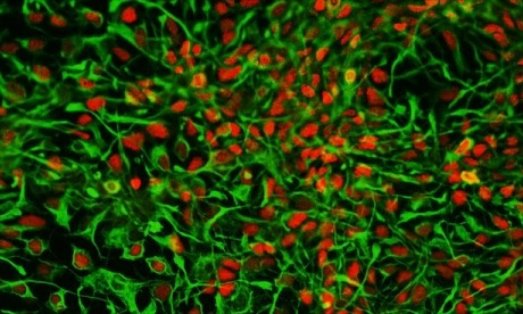
Chinese researchers have developed a new technique for isolating kidney cells from urine and turning them into neural progenitors — –immature brain cells that can develop into various types of glial cells and neurons. Reprogramming cells has been done before, of course, but not with cells gleaned from urine and not via a method this direct. The technique could prove extremely helpful to those pursuing treatments for neurodegenerative disorders like Parkinson’s and Alzheimer’s.

The innovation here is in the source and the method. We know that embryonic stem cells offer potential treatments for neurodegenerative disorders. And we know that we can turn adult human cells–that is, non-embryonic cells gathered from adult humans–into pluripotent cells (those that can become a different type of cell) by reprogramming them, usually with genetically engineered viruses that tamper with the cells’ genetic codes.

But embryonic stem cell treatments are fraught with ethical issues and non-embryonic methods are complicated–and complexity introduces a greater chance of something going wrong (in this case that means mutations and genetic defects). The new method, which taps skin-like cells from the linings of the kidney tubes that are present in urine, converts its source cells into neurons and glia cells via a more direct route, making the process more efficient while narrowing the margin of error.

In their study, the researchers harvested kidney cells from the urine samples of three human donors and converted the cells directly to neural progenitors. Rather than using a genetically engineered virus to reprogram the cells, they used a small piece of bacterial DNA that can replicate in the cellular cytoplasm, a technique that eliminates the need to tamper directly with the chromosome (in theory, at least, this should reduce mutations) while also speeding up the entire process. After growing their progenitors into mature neurons and glial cells, the researchers transplanted the progenitors into the brains of newborn rats. A month later, the cells were still alive in the rats’ brains, though it is not yet clear that they can survive for extended periods or mesh with the brain’s wiring to become functioning parts of the neural machine.

There’s still a lot of research to be done on this method of course, but the researchers think it may provide a way to take cells gathered non-invasively and quickly and efficiently convert them into neural cells while reducing the likelihood of genetic mutations.

http://www.guardian.co.uk/science/neurophilosophy/2012/dec/09/turning-urine-into-brain-cells


Researchers claim NIH grant process is ‘totally broken’

conform and be funded


John Ioannidis, a researcher at Stanford University has, along with graduate student Joshua Nicholson, published a commentary piece in the journal Nature, taking the National Institutes of Health (NIH) to task for maintaining a system that they say rewards conformity while ignoring innovation.

NIH is an agency within the US Department of Health and Human Services, and is the primary federal vehicle involved in offering money in the form of grants to researchers working to make in the biosciences. The agency reportedly has a budget of approximately $30 billion a year.

In their commentary piece, Ioannidis and Nicholson suggest that the process used by those in charge at NIH favors those who wish to work on incremental increases in current fields rather than rewarding those seeking funds for innovative, but more risky ventures. To back up their claims, they ran a search on research papers published in major journals over the past decade and found 700 papers that had been cited by authors in other papers at least 1,000 times. Of those papers, they say, just 40 percent of those listed as primary authors were working under an NIH grant.

To determine who to give grants to, NIH uses what are known as Study Sections. Their job is to read proposals sent to them by prospective researchers and then to decide whether to offer a grant to carry out the things discussed in the proposal. The Study Sections are in reality a group of people – a panel made up of scientists in the . And that’s part of a big problem at NIH, Ioannidis and Nicholson write, because people that serve on the panels tend to get more of the grant money. They note that just 0.8 percent of the 700 oft cited papers listed NIH panel members as a primary author. They contend that being highly cited is a credible measure of the degree of innovation of work.

The result the two say, is a system that systemically encourages incremental studies while discouraging those that are looking for big breakthroughs. And that they say, has led to both conformity and mediocrity. This they add goes against NIH’s mandate, which is to “fund the best science.” They recommend that NIH change its grant review process to encourage more innovation even if it means taking more risks.

More information: Research grants: Conform and be funded, Nature, 492, 34–36 (06 December 2012) doi:10.1038/492034a


Scientists create coconut-flavoured pineapple

pineapple_2418507b

Researchers in Australia have created a new “piña colada” pineapple that tastes like a coconut.

The scientists, from a government agency in Queensland, have spent ten years trying to develop a new variety of sweeter, juicier pineapple but did not actually intend to create the coconut flavour.

“It’s sweet, low acid, very juicy,” said Garth Sanewski, a senior horticulturalist at Queensland’s department of agriculture.

“It has this lovely coconut flavour, which you won’t find in any other pineapple in Australia.”

The new pineapple, called AusFestival, has been dubbed the “piña colada pineapple” and will potentially – as local media noted – preclude people from having to mix fruits in the famous cocktail. It is likely to be commercially available in two years.

“When we are doing the breeding, we are not actually looking for a coconut-flavoured pineapple or any other particular flavour,” Dr Sanewski told ABC.

“We are looking for a nice flavoured pineapple. We are looking for a variety that is sweet, low acid and aromatic.”

Two years ago, scientists in Queensland, which has a warm climate and produces various tropical fruits, developed Australia’s first home-grown pineapple, called the Australian Jubilee. Most Australian pineapples are Hawaiian-bred varieties.

Queensland produces more than 80,000 tons of pineapples a year but the government has been looking to create less costly and tastier varieties to compete with cheaper imports.

http://www.telegraph.co.uk/earth/agriculture/geneticmodification/9723258/Scientists-create-coconut-flavoured-pineapple.html

London bar raided after selling whale skin cocktail

101212-whale

Cops swooped on the Nightjar bar in Hoxton, East London, where barmen were  serving the Moby Dick drink.

It contained Laphroaig whisky, Drambuie, ale, bitters and a “whale skin  infusion”.

The raid last week comes amid a Europe-wide ban on whale meat and products,  except under strict restrictions in Greenland and Denmark.

The Metropolitan Police were tipped-off in October that the bar was serving  whale skin illegally. The Met’s Wildlife Crime Unit and a UK Border Force  officer raided the premises on December 3.

A police spokesman said: “One item from the premises was seized. This has  been  sent for analysis.”

No arrests have been made at the Nightjar, which describes itself on its  website as “a hidden slice of old-school glamour”. Its drinks range from £9  to £17 a glass.

Bar bosses said it had been unaware the drink contained an illegal ingredient  until the raid and has removed the drink from sale.

Nightjar director Edmund Weil said: “We did have a drink on this year’s menu  which included a small amount of scotch whisky infused with a single 2 x 5cm  strip of dried whale skin.

“The strip was purchased in a shop by an employee while on a trip to Japan in  autumn 2011.

“Until the police visit, neither ourselves nor our employees were aware of  the  legislation under which the bottle was seized.

“In hindsight we realise that regardless of the legal framework around such  products, it was an error of judgement on our part to include this on our  menu, and we would like to offer our apologies to anyone who may have been  offended by it.

“We have removed the drink entirely from our menu, which will be reprinted  before Monday to reflect this.”

Native Greenlanders who use whales as subsistence food are the only Europeans  allowed to kill or to eat them in strictly limited amounts.

Read more: http://www.thesun.co.uk/sol/homepage/news/4689220/Bar-raided-for-whale-meat-cocktail.html#ixzz2EhWDnief

South African whale driven through streets

beachedwhale1 beachedwhale2 beachedwhale3


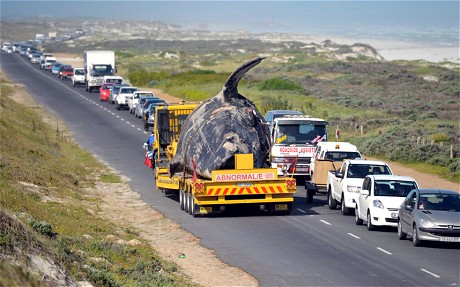
South African council cleaners have used a lorry to move a stranded whale from a beach near Cape Town.  Officials pulled the huge mammal through heavy traffic down a busy road along the city’s False Bay coastline.  Salvage staff needed an industrial digger to move the 30 metre southern Right Whale, which became stranded on Sunday at Cape Town’s Capricorn beach.

City emergency services spokesman Wilfred Solomons-Johannes confirmed the beach had been closed amid fears deadly Great White sharks had entered shallow waters to feed on the carcase.  He said: “The whale was spotted on the beach on Sunday afternoon. “It had become beached and was dead by the time officials could get to it.  The animal had several bits of flesh taken out of it, and it appears it had been bitten by sharks.”  He added: “We called in the city’s specialist marine rescue team, who used diggers and a lorry to remove the whale.

“It was heaved onto the back of a truck and taken to a landfill site for disposal.”

Mr Solomons-Johannes said experts would examine the dead animal to try to establish how it died.  He added: “Samples were taken from the whale and these will be analysed to try to work out what happened to it.  We hope to get the results within the next couple of days, which may help to explain why it died.”

City officials closed several beaches around Cape Town on Sunday after sharks were spotted in waters close to the beached whale.

Mr Solomons-Johannes on Tuesday confirmed some had reopened following the removal of the carcase but said Capricorn beach itself would remain closed until further notice.  He said: “Capricorn beach remains closed for the next few days until the whale blood and oil has dispersed sufficiently.

“The city is appealing to all water users to be vigilant at this time, obey the shark siren, and to take note of the Shark Spotters’ flags and signage for regular updates on shark sightings.  Beach users are advised that the general caution will remain in place until further notice.”

Specialist teams of Shark Spotters were working on several of Cape Town’s beaches to watch for any signs of the deadly animals.  The killer beasts are frequent visitors to the waters around the city and have been responsible for a string of attacks on humans.

British man Michael Cohen, 47, narrowly escaped with his life in September 2011 after he was bitten by a shark on a beach near Cape Town.  The keen swimmer lost his right leg and part of his left foot after being savaged in the False Bay water.

Zimbabwean tourist Lloyd Skinner was eaten alive by sharks in January 2010 as he swam near the town of Fish Hoek.  Shocked holiday-makers watched from the shore as he was pulled underwater, and rescuers later recovered only his goggles.

Southern Right whales are also regularly seen in the sea around Cape Town.

The massive mammals spend most of their time in the deep ocean but move towards the Cape peninsula during winter and spring to mate.

http://www.telegraph.co.uk/earth/wildlife/9596404/South-African-whale-driven-through-streets.html

Only 79 Pygmy Sloths Remain on Earth

pygmy-three-toed-sloth


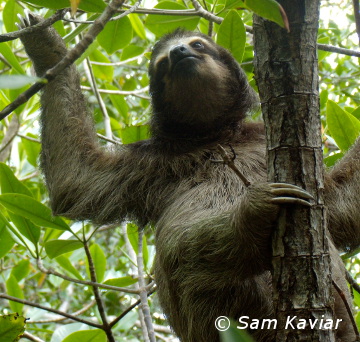
In May 2011, after months of preparation, Jakob Shockey and two fellow biology students from Evergreen State College in Washington State found themselves on a tiny Panamanian island staring at one of the rarest mammals in the world: the pygmy three-toed sloth (Bradypus pygmaeus). “I felt humbled to finally stand knee-deep in the mud of a mangrove thicket on Isla Escudo de Veraguas and watch this sloth move so comfortably through its world, entirely unconcerned by my presence or anticipation,” he says.

Shockey had originally planned to travel to Panama to study the local manatee population, but contacts with a local nongovernmental organization told him they were hearing reports of “imminent risk” to the pygmy sloths. “Little was known by the scientific community about the actual conditions on the island, and it was hard to separate fact and rumor, but the pygmy sloth seemed to be in trouble,” Shockey says. They decided to study the sloths instead.

Unfortunately the situation, as the students would soon learn, was much worse than anyone had feared.

A little-understood species
Isla Escudo de Veraguas sits in the Caribbean Sea seventeen kilometers off the coast of the Republic of Panama. The tiny island—less than five square kilometers—is home to the critically endangered solitary fruit-eating bat (Artibeus incomitatus), a few hundred fishermen and their families, dozens of coral species, and the rare pygmy sloths.

A typical case of island dwarfism, the pygmy sloths are about 40 percent smaller than brown-throated sloths (B. variegatus), which can be found across the water on the Panama Isthmus as well as throughout the southern half of Central America and the northern half of South America. Other than size, pygmy sloths look almost exactly like their mainland cousins—so much so, in fact, that the pygmies were only identified as a separate species in 2001. At that time scientists estimated the pygmy sloth population at about 300 to 500 animals, enough to consider them critically endangered, the only sloth species with that designation.

The ensuing decade has not been kind to the sloths. Families of indigenous fishermen from the Ngöbe–Buglé comarca (a semiautonomous region roughly equivalent to a Native American reservation) began moving to the island around 1995 and quickly started cutting down mangrove trees for firewood and lumber. Unfortunately, pygmy sloths depend on those mangroves for their food and habitat. As the trees disappeared, so did the sloths. Shockey and his fellow students spent three days counting the animals and found that just 79 remained. “We were all surprised to find such a low population,” he says. A paper detailing their census of the sloth population was published November 21 in PLoS One.

The young researchers also learned how little of the island constituted suitable habitat for the animals. “We had expected to find pygmy sloths using the interior forests of the Isla Escudo, but it seems they are completely reliant on mangroves for food and primary habitat,” Shockey says. “We found the intertidal mangrove thickets on only 0.024 percent of the already small island, and these were fragmented by upland forest and logging. This is a sobering reality for the pygmy sloth.”

pygmy sloth habitat
Known but unknown
The people living on the mainland and the island “were unaware that the sloths of Escudo were a unique species and endemic to Escudo or that they relied on the mangroves,” Shockey says.

In addition to their work counting the animals, the students also spent time communicating with locals about their rarity and importance. “We had many conversations with leaders in the mainland village of Kusapin, and we gave presentations in the local grade school,” Shockey says. “Our classmate, Miranda Ciotti, had illustrated coloring books of the endemic species on Escudo, and we gave these and crayons to the village children. All of this outreach was met with surprise and pride, and we began hearing the words ‘Kú dekú narobé’ around Kusapin, meaning ‘the sloths of Escudo are special’ in the local dialect. A local member of the indigenous congress pledged to put forward a bid for local protection of Escudo’s mangroves and the sloths, and we have shared a Spanish translation of our work and letter of recommendations for that effort.”

Shockey, who says he hopes to be a part of any future research to help protect the pygmy sloth, notes that the most important step to conserving the animals is preservation of their mangrove habitat. “Mangrove wood is favored for the cooking fires of a small transient fishing community on Escudo,” he says. “It is important that the Ngöbe act in protecting the mangroves from further cutting and that we do all we can to support that.” He suggests that economic incentives might help conservation efforts. “The Ngöbe community—especially those people who fish on Escudo—are relatively impoverished. But they are a proud people, and I believe they could be great allies in protecting the island if it was made economically viable.”

Shockey, who has now graduated, considers himself lucky to have seen and studied the rare pygmy three-toed sloths. “During my time on Escudo, I witnessed their daily routine of long afternoon naps, casual eating and climbing into the sunny branches to dry off after a downpour. Ultimately, I hope our work will help maintain that reality for the pygmy sloth.”

http://blogs.scientificamerican.com/extinction-countdown/2012/12/06/critically-endangered-pygmy-sloths-79-remain/

First Evidence of Fish Sensing Geomagnetic Fields from a Czech Christmas Market

121205200057


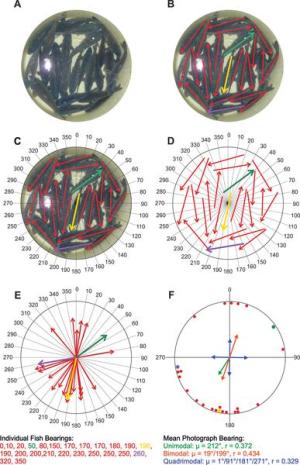
Carp stored in large tubs at Czech Christmas markets align themselves in the north-south direction, suggesting they possess a previously unknown capacity to perceive geomagnetic fields, according to a new study published December 5 in the open access journal PLOS ONE, led Hynek Burda from the University of Life Sciences (Prague), Czech Republic and colleagues from other institutions.

Their study included over 14,000 fish in 25 markets, and the majority of these fish were found to align themselves along the north-south axis. The fish were accustomed to human onlookers, and street lights and other potential disturbances seemed to have no effect on the orientation of the fish.

In the absence of other common stimuli for orientation like light, sound or the flow of water, the authors suggest that the fish most likely align themselves to geomagnetic cues.

http://www.sciencedaily.com/releases/2012/12/121205200057.htm