Ancient Lost Continent Discovered in Indian Ocean

new-micro-continent-found-near-mauritius_64654_600x450

Evidence of a drowned “microcontinent” has been found in sand grains from the beaches of a small Indian Ocean island, scientists say.

A well-known tourist destination, Mauritius (map) is located about 1,200 miles (2,000 kilometers) off the coast of Africa, east of Madagascar. Scientists think the tiny island formed some nine million years ago from cooling lava spewed by undersea volcanoes.

But recently, researchers have found sand grains on Mauritius that contain fragments of the mineral zircon that are far older than the island, between 660 million and about 2 billion years old.

In a new study, detailed in the current issue of the journal Nature Geoscience, scientists concluded that the older minerals once belonged to a now vanished landmass, tiny bits of which were dragged up to the surface during the formation of Mauritius.

“When lavas moved through continental material on the way towards the surface, they picked up a few rocks containing zircon,” study co-author Bjørn Jamtveit, a geologist at the University of Oslo in Norway, explained in an email.

Most of these rocks probably disintegrated and melted due to the high temperatures of the lavas, but some grains of zircons survived and were frozen into the lavas [during the eruption] and rolled down to form rocks on the Mauritian surface.”

Jamtveit and his colleagues estimate that the lost microcontinent, which they have dubbed Mauritia, was about a quarter of the size of Madagascar.

Furthermore, based on a recalculation of how the ancient continents drifted apart, the scientists concluded that Mauritia was once a tiny part of a much larger “supercontinent” that included India and Madagascar, called Rodinia.

The three landmasses “were tucked together in one big continent prior to the formation of the Indian Ocean,” Jamtveit said.

But like a prehistoric Atlantis, Mauritia was eventually drowned beneath the waves when India broke apart from Madagascar about 85 million years ago.

Scientists have long suspected that volcanic islands might contain evidence of lost continents, and Jamtveit and his team decided to test this hypothesis during a layover in Mauritius as part of a longer research trip in 1999.
The stop in tropical Mauritius “was a very tempting thing to do for a Norwegian in the cold month of January,” Jamtveit said.

Mauritius was a good test site because it was a relatively young island and, being formed from ocean lava, would not naturally contain zircon, a tough mineral that doesn’t weather easily.

If zircon older than nine million years was found on Mauritius, it would be good evidence of the presence of buried continental material, Jamtveit explained.

At first, the scientists crushed rocks from Mauritius to extract the zircon crystals, but this proved difficult because the crushing equipment contained zircon from other sites, raising the issue of contamination.

“That was a show stopper for a while,” Jamtveit said.

A few years later, however, some members of the team returned to Mauritius and this time brought back sand from two different beaches for sampling.

The scientists extracted 20 zircon samples and successfully dated 8 of them by calculating the rate that the elements uranium and thorium inside of the samples slowly break down into lead.

“They all provided much older ages than the age of the Mauritius lavas,” Jamtveit said. “In fact they gave ages consistent with the ages of known continental rocks in Madagascar, Seychelles, and India.”

Jérôme Dyment, a geologist at the Paris Institute of Earth Physics in France, said he’s unconvinced by the work because it’s possible that the ancient zircons found their way to the island by other means, for example as part of ship ballast or modern construction material.

“Extraordinary claims require extraordinary evidence, which are not given by the authors so far,” said Dyment, who did not participate in the research.

“Finding zircons in sand is one thing, finding them within a rock is another one … Finding the enclave of deep rocks that, according to the author’s inference, bring them to the surface during an eruption would be much more convincing evidence.”

Dyment added that if Mauritia was real, evidence for its existence should be found as part of a joint French and German experiment that installed deep-sea seismometers to investigate Earth’s mantle around Réunion Island, which is situated about 120 miles (200 kilometers) from Mauritius.

“If a microcontinent lies under Réunion, it should be depicted by this experiment,” said Dyment, who is part of the project, dubbed RHUM-RUM.

But Conall Mac Niocaill, a geologist at the University of Oxford in the U.K. who was also not involved in the study, said “the lines of evidence are, individually, only suggestive, but collectively they add up to a compelling story.”
The zircons “produce a range of ages, but all yield ages older than 660 million years, and one is almost 2 billion years old,” he added.

“There is no obvious source for them in Mauritius, and they are unlikely to have been blown in by the wind, or carried in by human activity, so the obvious conclusion is that the young volcanic lava sampled some older material on their way through the crust.”

Based on the new findings, Mac Niocaill and others think other vanished microcontinents could be lurking beneath the Indian Ocean.

In fact, analyses of Earth’s gravitational field have revealed other areas in the world’s oceans where the rock appears to be thicker than normal and could be a sign of continental crusts.

“We know more about the topography of Mars than we do about the [topography] of the world’s ocean floor, so there may well be other dismembered continents out there waiting to be discovered.”

http://news.nationalgeographic.com/news/2013/02/130225-microcontinent-earth-mauritius-geology-science/

Did Neanderthals go extinct because they couldn’t learn to catch rabbits?

snow-rabbitNeanderthals1

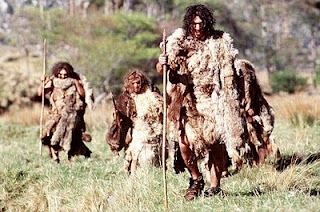
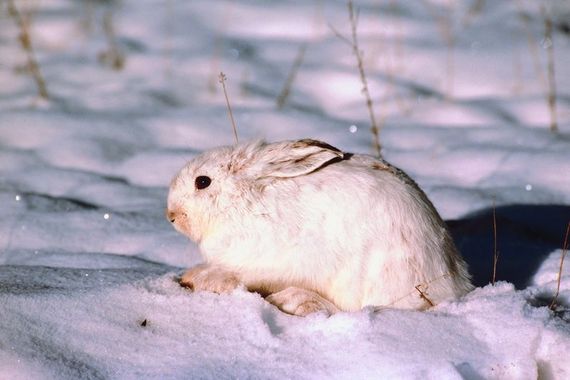
Neanderthals became extinct as they were unable to adapt their hunting skills to catch small animals like rabbits, a new study has claimed.

For the study, John Fa of Durrell Wildlife Conservation Trust in Trinity, Jersey, and his colleagues counted skeletons of animals that were found in three excavation sites in Spain and southern France.

The team found that up until 30,000 years ago, the skeletons of larger animals like deer were plentiful in caves.

But around the same time, coinciding with Neanderthals’ disappearance, rabbit skeletons became more abundant.

The team postulated that humans succeeded far more at switching to capturing and eating rabbits than Neanderthals, New Scientist reported.

Fa said that it is still not clear as to why Neanderthals had trouble changing their prey.

He said that maybe the Neanderthals may have been less able to cooperate and rather than using spears, early humans probably surrounded a warren and flushed out rabbits with fire, smoke or dogs.

http://www.phenomenica.com/2013/03/inability-to-catch-rabbits-may-have-led-to-demise-of-neanderthals.html

Communication of thoughts between rats on different continents, connected via brain-to-brain interface

The world’s first brain-to-brain connection has given rats the power to communicate by thought alone.

“Many people thought it could never happen,” says Miguel Nicolelis at Duke University in Durham, North Carolina. Although monkeys have been able to control robots with their mind using brain-to-machine interfaces, work by Nicolelis’s team has, for the first time, demonstrated a direct interface between two brains – with the rats able to share both motor and sensory information.

The feat was achieved by first training rats to press one of two levers when an LED above that lever was lit. A correct action opened a hatch containing a drink of water. The rats were then split into two groups, designated as “encoders” and “decoders”.

An array of microelectrodes – each about one-hundredth the width of a human hair – was then implanted in the encoder rats’ primary motor cortex, an area of the brain that processes movement. The team used the implant to record the neuronal activity that occurs just before the rat made a decision in the lever task. They found that pressing the left lever produced a different pattern of activity from pressing the right lever, regardless of which was the correct action.

Next, the team recreated these patterns in decoder rats, using an implant in the same brain area that stimulates neurons rather than recording from them. The decoders received a few training sessions to prime them to pick the correct lever in response to the different patterns of stimulation.

The researchers then wired up the implants of an encoder and a decoder rat. The pair were given the same lever-press task again, but this time only the encoder rats saw the LEDs come on. Brain signals from the encoder rat were recorded just before they pressed the lever and transmitted to the decoder rat. The team found that the decoders, despite having no visual cue, pressed the correct lever between 60 and 72 per cent of the time.

The rats’ ability to cooperate was reinforced by rewarding both rats if the communication resulted in a correct outcome. Such reinforcement led to the transmission of clearer signals, improving the rats’ success rate compared with cases where decoders were given a pre-recorded signal. This was a big surprise, says Nicolelis. “The encoder’s brain activity became more precise. This could have happened because the animal enhanced its attention during the performance of the next trial after a decoder error.”

If the decoders had not been primed to relate specific activity with the left or right lever prior to the being linked with an encoder, the only consequence would be that it would have taken a bit more time for them to learn the task while interacting with the encoder, says Nicolelis. “We simply primed the decoder so that it would get the gist of the task it had to perform.” In unpublished monkey experiments doing a similar task, the team did not need to prime the animals at all.

In a second experiment, rats were trained to explore a hole with their whiskers and indicate if it was narrow or wide by turning to the left or right. Pairs of rats were then connected as before, but this time the implants were placed in their primary somatosensory cortex, an area that processes touch. Decoder rats were able to indicate over 60 per cent of the time the width of a gap that only the encoder rats were exploring.

Finally, encoder rats were held still while their whiskers were stroked with metal bars. The researchers observed patterns of activity in the somatosensory cortex of the decoder rats that matched that of the encoder rats, even though the whiskers of the decoder rats had not been touched.

Pairs of rats were even able to cooperate across continents using cyberspace. Brain signals from an encoder rat at the Edmond and Lily Safra International Institute of Neuroscience of Natal in Brazil were sent to a decoder in Nicolelis’s lab in North Carolina via the internet. Though there was a slight transmission delay, the decoder rat still performed with an accuracy similar to those of rats in closer proximity with encoders.

Christopher James at the University of Warwick, UK, who works on brain-to-machine interfaces for prostheses, says the work is a “wake-up call” for people who haven’t caught up with recent advances in brain research.

We have the technology to create implants for long-term use, he says. What is missing, though, is a full understanding of the brain processes involved. In this case, Nicolelis’s team is “blasting a relatively large area of the brain with a signal they’re not sure is 100 per cent correct,” he says.

That’s because the exact information being communicated between the rats’ brains is not clear. The brain activity of the encoders cannot be transferred precisely to the decoders because that would require matching the patterns neuron for neuron, which is not currently possible. Instead, the two patterns are closely related in terms of their frequency and spatial representation.

“We are still using a sledgehammer to crack a walnut,” says James. “They’re not hearing the voice of God.” But the rats are certainly sending and receiving more than a binary signal that simply points to one or other lever, he says. “I think it will be possible one day to transfer an abstract thought.”

The decoders have to interpret relatively complex brain patterns, says Marshall Shuler at Johns Hopkins University in Baltimore, Maryland. The animals learn the relevance of these new patterns and their brains adapt to the signals. “But the decoders are probably not having the same quality of experience as the encoders,” he says.

Patrick Degenaar at Newcastle University in the UK says that the military might one day be able to deploy genetically modified insects or small mammals that are controlled by the brain signals of a remote human operator. These would be drones that could feed themselves, he says, and could be used for surveillance or even assassination missions. “You’d probably need a flying bug to get near the head [of someone to be targeted],” he says.

Nicolelis is most excited about the future of multiple networked brains. He is currently trialling the implants in monkeys, getting them to work together telepathically to complete a task. For example, each monkey might only have access to part of the information needed to make the right decision in a game. Several monkeys would then need to communicate with each other in order to successfully complete the task.

“In the distant future we may be able to communicate via a brain-net,” says Nicolelis. “I would be very glad if the brain-net my great grandchildren used was due to their great grandfather’s work.”

Journal reference: Nature Scientific Reports, DOI: 10.1038/srep01319

Fruit flies force their young to drink alcohol for protection

130222102958-large
The fruit fly study adds to the evidence “that using toxins in the environment to medicate offspring may be common across the animal kingdom,” says biologist Todd Schlenke.

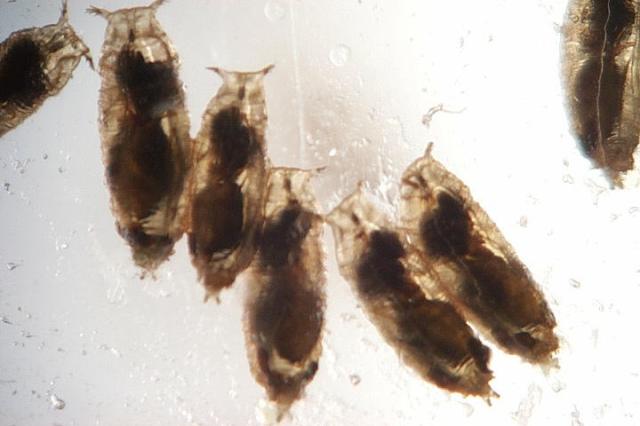
When fruit flies sense parasitic wasps in their environment, they lay their eggs in an alcohol-soaked environment, essentially forcing their larvae to consume booze as a drug to combat the deadly wasps.

The discovery by biologists at Emory University was published in the journal Science on February 22.

“The adult flies actually anticipate an infection risk to their children, and then they medicate them by depositing them in alcohol,” says Todd Schlenke, the evolutionary geneticist whose lab did the research. “We found that this medicating behavior was shared by diverse fly species, adding to the evidence that using toxins in the environment to medicate offspring may be common across the animal kingdom.”

Adult fruit flies detect the wasps by sight, and appear to have much better vision than previously realized, he adds. “Our data indicate that the flies can visually distinguish the relatively small morphological differences between male and female wasps, and between different species of wasps.”

The experiments were led by Balint Zacsoh, who recently graduated from Emory with a degree in biology and still works in the Schlenke lab. The team also included Emory graduate student Zachary Lynch and postdoc Nathan Mortimer.

The larvae of the common fruit fly, Drosophila melanogaster, eat the rot, or fungi and bacteria, that grows on overripe, fermenting fruit. They have evolved a certain amount of resistance to the toxic effects of the alcohol levels in their natural habitat, which can range up to 15 percent.

Tiny, endoparasitoid wasps are major killers of fruit flies. The wasps inject their eggs inside the fruit fly larvae, along with venom that aims to suppress their hosts’ cellular immune response. If the flies fail to kill the wasp egg, a wasp larva hatches inside the fruit fly larva and begins to eat its host from the inside out.

Last year, the Schlenke lab published a study showing how fruit fly larvae infected with wasps prefer to eat food high in alcohol. This behavior greatly improves the survival rate of the fruit flies because they have evolved high tolerance of the toxic effects of the alcohol, but the wasps have not.

“The fruit fly larvae raise their blood alcohol levels, so that the wasps living in their blood will suffer,” Schlenke says. “When you think of an immune system, you usually think of blood cells and immune proteins, but behavior can also be a big part of an organism’s immune defense.”

For the latest study, the researchers asked whether the fruit fly parents could sense when their children were at risk for infection, and whether they then sought out alcohol to prophylactically medicate them.

Adult female fruit flies were released in one mesh cage with parasitic wasps and another mesh cage with no wasps. Both cages had two petri dishes containing yeast, the nourishment for lab-raised fruit flies and their larvae. The yeast in one of the petri dishes was mixed with 6 percent alcohol, while the yeast in the other dish was alcohol free. After 24 hours, the petri dishes were removed and the researchers counted the eggs that the fruit flies had laid.

The results were dramatic. In the mesh cage with parasitic wasps, 90 percent of the eggs laid were in the dish containing alcohol. In the cage with no wasps, only 40 percent of the eggs were in the alcohol dish.

“The fruit flies clearly change their reproductive behavior when the wasps are present,” Schlenke says. “The alcohol is slightly toxic to the fruit flies as well, but the wasps are a bigger danger than the alcohol.”

The fly strains used in the experiments have been bred in the lab for decades. “The flies that we work with have not seen wasps in their lives before, and neither have their ancestors going back hundreds of generations,” Schlenke says. “And yet, the flies still recognize these wasps as a danger when they are put in a cage with them.”

Further experiments showed that the flies are extremely discerning about differences in the wasps. They preferred to lay their eggs in alcohol when female wasps were present, but not if only male wasps were in the cage.

Theorizing that the flies were reacting to pheromones, the researchers conducted experiments using two groups of mutated fruit flies. One group lacked the ability to smell, and another group lacked sight. The flies unable to smell, however, still preferred to lay their eggs in alcohol when female wasps were present. The blind flies did not make the distinction, choosing the non-alcohol food for their offspring, even in the presence of female wasps.

“This result was a surprise to me,” Schlenke says. “I thought the flies were probably using olfaction to sense the female wasps. The small, compound eyes of flies are believed to be more geared to detecting motion than high-resolution images.”

The only obvious visual differences between the female and male wasps, he adds, is that the males have longer antennae, slightly smaller bodies, and lack an ovipositor.

Further experimentation showed that the fruit flies can distinguish different species of wasps, and will only choose the alcohol food in response to wasp species that infect larvae, not fly pupae. “Fly larvae usually leave the food before they pupate,” Schlenke explains, “so there is likely little benefit to laying eggs at alcoholic sites when pupal parasites are present.”

The researchers also connected the exposure to female parasitic wasps to changes in a fruit fly neuropeptide.

Stress, and the resulting reduced level of neuropeptide F, or NPF, has previously been associated with alcohol-seeking behavior in fruit flies. Similarly, levels of a homologous neuropeptide in humans, NPY, is associated with alcoholism.

We found that when a fruit fly is exposed to female parasitic wasps, this exposure reduces the level of NPF in the fly brain, causing the fly to seek out alcoholic sites for oviposition,” Schlenke says. “Furthermore, the alcohol-seeking behavior appears to remain for the duration of the fly’s life, even when the parasitic wasps are no longer present, an example of long-term memory.”

Finally, Drosophila melanogaster is not unique in using this offspring medication behavior. “We tested a number of fly species,” Schlenke says, “and found that each fly species that uses rotting fruit for food mounts this immune behavior against parasitic wasps. Medication may be far more common in nature than we previously thought.”

http://www.sciencedaily.com/releases/2013/02/130222102958.htm

Giant bunny scares burglar from home

giant-rabbit
A petrified burglar fled a family home in the middle of the night – after coming face-to-face with their giant pet rabbit Toby.

Kimberley May, her fiance Martin, and their three-year-old daughter Olivia were all sound asleep when the thief broke into their house. But as the raider rifled through cupboards the noise woke up Toby the family’s British Giant bunny in his kitchen cage. The 4.5kg, two-feet long pet began stomping so loudly on the floor that the intruder was caught on the hop and left.

Kimberley said: “We went to bed on Wednesday at about 10pm. In the early hours of the morning Toby our rabbit did five loud thumps. “I sort of half woke up then realised he’d stopped and went back to sleep. When I went downstairs every single cupboard and drawer were open, there were bits out everywhere, then we started noticing things were missing and we phoned the police.”

Kimberley, a nurse, is convinced that two year-old Toby’s thumping scared the thief off from their house in Plymouth, Devon. She found a hoard of items left piled up on the sofa which she thinks the burglar was preparing to take but left behind.

She added: “Because of Christmas and my birthday just gone, I had loads of gift sets and perfumes that they’d laid out across the sofa. “We think that when the rabbit thumped it scared the burglar off and they left all the stuff they were going to take. He’s like a little dog, if you whistle him he comes. The rabbit was just traumatised in his cage, shaking. He’s usually really friendly but he tried to go for the policeman.”

The crook still managed to get away with other valuables including a treasured First World War medal that belonged to Kimberley’s great-grandad. Kimberley added: “They managed to take a laptop, an iPad and my handbag with my purse and everything in, but the worse thing was my great granddad’s medal. My gran actually died in 2007, she lived in a council house all her life, hardly had any possessions That was the one thing important thing she had. They also took a box which had all our wedding invitations and favours in it, as well as paperwork which I was due to give to the church and reception venue.”

Detective Constable Nick Bloom said: “We believe the family was burgled between 10.30pm on Wednesday February 6 and 7am on Thursday February 7. The police are asking for any witnesses or anyone with information to come forward.”

Toby still has some way to go before he is fully grown – British Giant rabbits can reach up to 5.9 kg.

Owner Kimberley, 30, said monster bunny Toby was so big he lives in a cage built for a Labrador. Kimberley and online salesman partner Martin, 33, got their prized pet from an animal adoption centre who took him in an unwanted pet.

She said: “He’s playful, really friendly, and he doesn’t mind my three-year-old crawling all over him. He’s like a small dog really. He has the run of the house and at night he goes in a dog’s crate. It’s a Labrador-sized cage. When he thumps on the floor its incredibly loud – you can hear it echoing around the house.”

On the night of the burglary Toby stomped his five-inch long feet so loudly on the plastic floor of his crate that he managed to wake Kimberley up.

She said: “The rabbit had obviously seen the burglar when he went into the kitchen. I heard him thump five times on the bottom of his cage and I woke up, sat up, then turned over and went back to sleep. As I’ve done that the bed springs have made a loud creaking sound, so the guy has probably heard movement and made a run for it.”

Although the thief managed to take some valuables Kimberley fears the break-in could have been even worse had it not been for Toby.

She added: “If he hadn’t been scared off he could have come upstairs looking for things. My daughter was asleep up there – it could have been really dangerous. Toby has done the job of a guard dog. We’re so proud of him we’ve rewarded him with a new tunnel to play with. It’s a cat’s tunnel obviously because he needs a big one.”

http://www.telegraph.co.uk/news/newstopics/howaboutthat/9873002/Giant-rabbit-scares-burglar-out-of-family-home.html

Bumblebees sense flowers’ electric fields

_65983396_bombus_terrestris_1

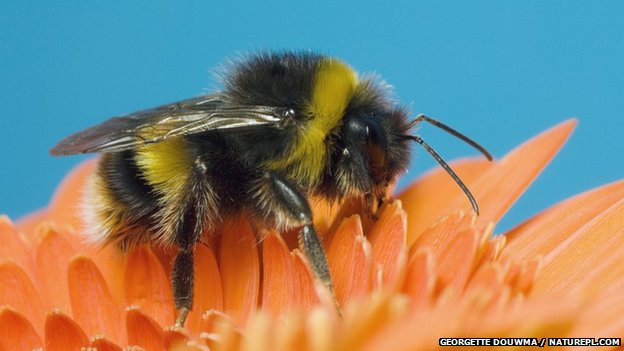
Bumblebees (Bombus terrestris) can detect flowers’ electric fields, scientists have discovered. Results indicate floral electric fields improve the bees’ ability to discriminate between different flowers. When used with visual signals, electrical cues can enhance the bee’s memory of floral rewards. Researchers suggest this method of signalling provides rapid and dynamic communication between plants and pollinators.

The findings are published in the online journal Science Express.

Flowering plants reward pollinators with nectar and pollen in return for their assistance in the flowers’ sexual reproduction. Flowers attract pollinators using cues such as bright colours, patterns and enticing fragrances but this study suggests the importance of electrostatic information as an additional cue for the first time.

“Of course it has existed for a long time but this is a new way we can look at the interactions between bees and flowers,” said Prof Daniel Robert of the University of Bristol. “This doesn’t throw away any of the previous work on cues that flowers are using, it adds another layer on top of that.” Prof Robert and his team were studying the mechanism of pollen transfer between flowers via an insect pollinator.

“What the pollen needs to ‘know’ is when to ‘jump’ onto the ‘vehicle’ – the bee – and when to get off it. So it’s a selective adhesion type of question,” Prof Robert told BBC Nature.

The team’s investigation highlighted the possible importance of electrostatic forces. “We looked at [existing] literature and realised that the bees were being positively charged when they fly around, and that flowers have a negative potential. “There’s always this electrical bias around. As a sensory biologist, suddenly I thought: can the bees sense that?” Prof Robert said.

Dominic Clarke, one of the lead authors, designed “fake” electric flowers in a laboratory “flying arena” to prove that electric fields are important floral cues. Electric flowers with a positive charge offered a sucrose reward while those without offered a bitter quinine solution. Bumblebees were allowed 50 visits in the flying arena and the last 10 visits showed the bees had learnt to tell the difference between the flowers.

When the electric field was turned off, “the bee goes back to selecting at random because it hasn’t got a way to tell the difference between them any more,” commented Mr Clarke. “That’s how we know it was the electric field that they were learning.”

“Animals are just constantly surprising us as to how good their senses are. More and more we’re starting to see that nature’s senses are almost as good as they could possibly be,” Mr Clarke told BBC Nature. Prof Robert summed up: “We know they can detect these electrostatic fields… this is the tip of the iceberg, there’s so much more that we haven’t seen yet.”

http://www.bbc.co.uk/nature/21508035

Thanks to Kebmodee for bringing this to the attention of the It’s Interesting community.

Demand for Gomutra Arka, cow urine extract, rising rapidly in India

cow

Demand for ‘Gomutra Arka’, a medicine distilled out of cow urine, is on the rise in Mangalore, India. An arka manufacturer on the outskirts of the city, who supplies around 10 litres a day, claims that even the educated are using the ayurvedic preparation regularly to prevent diseases.

Govanithashraya Trust manufactures gomutra arka at its goshala (cow shelter) in Beejaguri at Pajeer, 26 km from the city. Goshala in-charge Santhosh Kumar told TOI that they have plans to expand the manufacture unit as the demand for gomutra arka is increasing.

“We take care of more than 300 cows of various breeds. “Gomutra arka is effective in checking 109 types of diseases if consumed regularly as per the prescribed dosage. It increases resistance power, life span and purifies the blood, reduces cholesterol and checks obesity. It is also effective in skin diseases, acidity, kidney ailments and other diseases,” he claimed adding that even doctors use it routinely to prevent diseases.

Cow urine collected from local breeds like malenadu gidda, hallikaru and kankrej are used to make arka. “An average of 10 litres of arka is sold at our outlet in the city. There are other manufacturers, who also market arka in the city,” he added.

Santhosh underwent training in making organic products from panchagavyas (cow urine, cow dung, milk, ghee and curd) at a goshala in Devarapur in Nagpur. He makes medicines like gomootra arka, ghanvati, harde churna, kala taila, madhu meha churna, padasputana, goumaya taila, soundarya face pack, tooth powder, kapila bath soap and many other items using panchagavyas and medicinal herbs at the goshala. The products made at the goshala are sold through an outlet in the city.

http://articles.timesofindia.indiatimes.com/2013-02-15/mangalore/37118603_1_cow-urine-cow-dung-cow-shelter