Mysterious fever virus reported in Guinea

By Susanna Capelouto, CNN
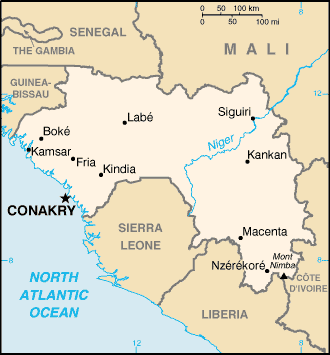
Since February 49 people have gotten sick and 29 have died from an unidentified illness characterized by fever, diarrhea and vomiting in Guinea, according to the West African nation’s minister of health, Remy Lamah.

Lamah said initial test results confirm the presence of a viral hemorrhagic fever, which according to the U.S. Centers for Disease Control and Prevention refers to a group of viruses that affect multiple organ systems in the body.

The Guinean health ministry warned in a statement that the disease is mainly spread from infected people, objects belonging to ill or dead people and by the consumption of meat from animals in the bush.

So far, most of the cases have been in the forest area of southern Guinea, and health officials say they are offering free treatment for all patients.

They’ve urged people to stay calm, wash their hands and report all cases to authorities.

http://www.cnn.com/2014/03/22/world/africa/fever-epidemic-guinea

Thanks to Da Brayn for bringing this to the attention of the It’s Interesting community.

More than 10 percent of emergency room visits involving energy drinks result in hospitalization

More than 10 percent of emergency room visits by people age 12 or older for problems involving energy drinks are serious enough to result in hospitalization, the federal government warned this week.

The Substance Abuse and Mental Health Services Administration said that 20,783 people visited emergency rooms in 2011 for difficulties involving the high-caffeine drinks, which are heavily marketed to youths and young adults. Eleven percent of them were hospitalized.

The data showed that 12 percent of people who had consumed only the energy drinks were hospitalized, while eight percent of those who had consumed an energy drink in combination with alcohol or drugs needed in-patient care. The total number of emergency room visits involving the beverages doubled between 2007 and 2011.

The flavored drinks — which include the brands Red Bull, Monster Energy and the smaller 5-Hour Energy shots — can contain as much as 500 milligrams of caffeine, which is five times as much as a typical cup of coffee and 10 times as much as a 12-ounce cola, according to SAMHSA. Ingesting that amount can cause health problems such as insomnia, racing heartbeat and increased blood pressure, the agency said in a bulletin issued March 13.

Even as their sales have soared, the drinks have been linked to “marijuana use, sexual risk taking, fighting, smoking, drinking and prescription drug misuse” among college students, the agency reported in 2013.

In 2012, the New York Times reported that the Food and Drug Administration had received 13 reports of deaths over the previous four years that cited the possible involvement of 5-Hour Energy and five fatalities that mentioned the possibility of Monster Energy being involved. A year ago, a group of physicians, researchers and public health experts urged the Food and Drug Administration to protect children and teens by restricting the amount of caffeine in energy drinks.

Energy drink companies have said that their products contain about the same amount of caffeine as strongly brewed coffee. Energy drinks and shots are usually sold as dietary supplements or food products, which don’t have caffeine limits. Other ingredients in energy drinks, such as taurine and ginseng, aren’t regulated by the FDA.

Studies have set different limits for the amount of caffeine an adult can safely consume, ranging from 2oo to 400 milligrams a day. More than 200 milligrams can be dangerous for children and adolescents, and the American Academy of Pediatrics advises against giving energy drinks to children.

http://www.washingtonpost.com/news/to-your-health/wp/2014/03/19/more-than-10-percent-of-emergency-room-visits-involving-energy-drinks-result-in-hospitalization/

Thanks to Pete Cuomo for bringing this to the attention of the It’s Interesting community.

New sweetener from the tequila plant may treat diabetes and weight loss

Could a new sugar substitute actually lower blood sugar and help you lose weight? That’s the tantalizing – but distant – promise of new research presented at the American Chemical Society (ACS) this week.

Agavins, derived from the agave plant that’s used to make tequila, were found in mouse studies to trigger insulin production and lower blood sugar, as well as help obese mice lose weight.

Unlike sucrose, glucose, and fructose, agavins aren’t absorbed by the body, so they can’t elevate blood glucose, according to research by Mercedes G. López, a researcher at the Centro de Investigación y de Estudios Avanzados, Biotechnology and Biochemistry Irapuato, in Guanajuato, Mexico.

And by boosting the level of a peptide called GLP-1 (short for glucagon-like peptide-1), which triggers the body’s production of insulin, agavins aid the body’s natural blood sugar control. Also, because agavins are type of fiber, they can make people feel fuller and reduce appetite, López’s research shows.

“We believe that agavins have a great potential as light sweeteners since they are sugars, highly soluble, have a low glycemic index, and a neutral taste, but most important, they are not metabolized by humans,” read the study abstract. “This puts agavins in a tremendous position for their consumption by obese and diabetic people.”

The caveat: The research was conducted in mice, and more study is necessary before we’ll know whether agavins are effective and safe in humans. In other words, we’re a long way from agavins appearing on grocery store shelves.

That said, with almost 26 millions of Americans living with diabetes and another 2 million diagnosed each year, a sweetener that lowered blood sugar levels rather than raised them would be quite a useful discovery. Not to mention the potential for a sugar substitute with the potential to help people lose weight.

In the study, titled “Agavins as Potential Novel Sweeteners for Obese and Diabetic People”, López added agavins to the water of mice who were fed a standard diet, weighing them and monitoring blood sugar levels every week. The majority of the mice given the agavin-supplemented water had lower blood glucose levels, ate less, and lost weight compared with other mice whose water was supplemented with glucose, sucrose, fructose, agave syrup, and aspartame.

Unlike other types of fructose, Agavins are fructans, which are long-chain fructoses that the body can’t use, so they are not absorbed into the bloodstream to raise blood sugar. And despite the similarity in the name, agavins are not to be confused with agave nectar or agave syrup, natural sweeteners that are increasingly popular sugar substitutes. In these products the fructans are broken down into fructose, which does raise blood sugar – and add calories.

López has been studying fructans for some time, and has published previous studies showing that they have protective prebiotic effects in the digestive tract and contribute to weight loss in obese mice.

A 2012 study by another team of researchers published in Plant Foods for Human Nutrition found that fructans boosted levels of the beneficial probiotics lactobacillus and bifidus. And like many types of fiber, agavins also lower levels of cholesterol and triglycerides in the blood.

But the news isn’t all good; a 2011 literature review of human studies of the relationship between fructans (not agavins specifically) and blood sugar found that of 13 randomized studies of fructans, only three documented positive results. It remains to be seen whether – as López argues – agavins are distinct from other fructans in their action.

The downside: Agavins are don’t taste as sweet as other forms of sugar such as sucrose, fructose and glucose. And not everyone can tolerate them; like other types of fiber they have the potential to cause digestive problems.

http://www.forbes.com/sites/melaniehaiken/2014/03/17/new-sweetener-from-the-tequila-plant-may-aid-diabetes-weight-loss/

Thanks to Dr. Rajadhyaksha for bringing this to the attention of the It’s Interesting community.

Wake Up And Smell The Caffeine. It’s A Powerful Drug

Many of us can barely make it through the morning without first downing a cup of hot coffee. It’s become such a big part of our daily rituals that few actually give much thought to what it is that we’re putting in our bodies.

To help us break down the little-known things about caffeine, NPR’s David Greene spoke with Murray Carpenter, author of Caffeinated: How Our Daily Habit Helps, Hurts and Hooks Us. These are the things you probably aren’t thinking about as you wait in line at your local coffee shop.

Caffeine is a drug. Treat it as such.

In its essential form, caffeine is a bitter white powder derived from a natural insecticide found in some plants. Over the years, it became acknowledged as a drug after people independently discovered its stimulating effect.

But, Carpenter says, people often underestimate just how powerful that drug is. “A tablespoon — about 10 grams — will kill you,” he says, recounting the unfortunate story of a college student who went into a seizure and died after chasing down spoonfuls of caffeine with an energy drink.

Most of the caffeine in soft drinks comes from factories in China.

Naturally extracted caffeine is burned out from heated-up coffee beans. But most of the caffeine used in soft drinks is actually synthetically produced in Chinese pharmaceutical plants. After visiting one of these plants — the world’s largest, in fact — Carpenter can only describe it as “sketchy.”

“It was not what I expected,” he says. “It was sort of a rundown industrial park.”

And our favorite caffeinated beverage? Not coffee, but soft drinks.

“Despite the Starbucks on every corner [and] this sort of conspicuous coffee culture that we have today, we’re not drinking as much coffee as our grandparents did,” Carpenter says.

As coffee consumption has declined, our love of soft drinks has taken over. Today, eight of the 10 top-selling soft drinks are caffeinated. “If you look at, say, Coke, Diet Coke, Pepsi, Mountain Dew, Dr. Pepper, the only common denominator, besides carbonated water, is caffeine,” he says.

Sometimes, he says, caffeine can lurk in unexpected places — like orange soda.

Which brings us to the case of the supercharged Sunkist soda.

In 2010, a batch of Sunkist orange soda was bottled with a botched caffeine content. “These were sodas that should’ve had 41 milligrams of caffeine per 12-ounce serving, but they were blended with six times the labeled amount of caffeine,” Carpenter says. “So [there were actually] 240 milligrams per bottle.” That’s as much as three Red Bulls or 16 ounces of strong coffee, Carpenter notes in the book.

After Sunkist started getting complaints from consumers, it finally agreed with the Food and Drug Administration to voluntarily recall the 40,000 cases of supercaffeinated orange soda it had sent out.

“But my impression is that a lot of the people who consumed this and had some funny experiences with caffeine probably didn’t know what was going on,” he adds.

So what’s the takeaway? Drink in moderation.

Carpenter says three to four cups of coffee a day isn’t dangerous over the long term. That’s in line with what we’ve previously reported. Of course, if you’re experiencing symptoms like jitters or sleeplessness related to too much caffeine, cut back.

“For people who are using caffeine moderately … it’s probably perfectly healthy,” he says. “And we know there are some indications that we may even get some benefit out of long-term caffeinated coffee drinking.”

http://www.npr.org/blogs/thesalt/2014/03/13/289750754/wake-up-and-smell-the-caffeine-its-a-powerful-drug

6 year old boy author raises $750K for sick friend

ABC_dylan_jonah_kab_140227_16x9_608

by Sydney Lupkin

Every morning at 3 a.m. Lora Pournazarian is awake to feed her 8-year-old son Jonah a mixture of corn starch and water through a tube in his stomach.

If she doesn’t, Jonah could die because he has a rare form of glycogen storage disease, a hereditary disorder that means his liver can store sugar but can’t release it, causing him to have dangerously low blood sugar levels that can result in seizures or even death.

“That’s huge anxiety every night,” his mother Lora Pournazarian told ABC News. “We go to sleep going, ‘We hope we don’t miss an alarm clock because he could die.’”

But Jonah’s parents aren’t the only ones looking out for him. His best friend from preschool, Dylan Siegel has his back, too.

Dr. David Weinstein, who studies and treats patients with glycogen storage disease at the University of Florida, was almost out of funding when he heard that Dylan wanted to help raise money to find a cure for the disease. Dylan was only 6 years old at the time, so Weinstein mostly just thought he was cute.

But Dylan had other plans. He wrote a book called “Chocolate Bar,” and explained to his parents “chocolate bar” means “awesome” to him. “Disneyland is so chocolate bar,” the book starts out. The last page says, “I like to help my friends. That is the biggest chocolate bar.”

Dylan’s project raised more than $750,000 in a little more than a year by selling the books for $20 each in all 50 states and 42 countries. Every cent goes to Weinstein’s lab.

“Boy, have I been shocked,” Weinstein told ABC News in September, when the book had crossed the $400,000 mark. “He’s raised more money for this disease than all the medical foundations and all the grants combined. Ever.”

When this story aired on ABC World News Wednesday night, “Chocolate Bar” had raised more than $500,000. Fewer than 24 hours later, it had raised an additional $250,000.

When asked where the two boys will be in 10 or 15 years, Dylan said, “High school, and probably his disease would be cured ’cause it’s not going to take like 15 years to be cured.”

That would be so chocolate bar.

http://abcnews.go.com/blogs/health/2014/02/27/boy-author-raises-750k-for-sick-friend/

50-Cent Origami Microscope Could Help Fight Malaria

When Manu Prakash, PhD, wants to impress lab visitors with the durability of his Origami-based paper microscope, he throws it off a three-story balcony, stomps on it with his foot and dunks it into a water-filled beaker. Miraculously, it still works.

Even more amazing is that this microscope — a bookmark-sized piece of layered cardstock with a micro-lens — only costs about 50 cents in materials to make.

Prakash’s dream is that this ultra-low-cost microscope will someday be distributed widely to detect dangerous blood-borne diseases like malaria, African sleeping sickness, schistosomiasis and Chagas.

“I wanted to make the best possible disease-detection instrument that we could almost distribute for free,” said Prakash. “What came out of this project is what we call use-and-throw microscopy.”

The Foldscope can be assembled in minutes, includes no mechanical moving parts, packs in a flat configuration, is extremely rugged and can be incinerated after use to safely dispose of infectious biological samples. With minor design modifications, it can be used for bright-field, multi-fluorescence or projection microscopy.

One of the unique design features of the microscope is the use of inexpensive spherical lenses rather than the precision-ground curved glass lenses used in traditional microscopes. These poppy-seed-sized lenses were originally mass produced in various sizes as an abrasive grit that was thrown into industrial tumblers to knock the rough edges off metal parts. In the simplest configuration of the Foldscope, one 17-cent lens is press-fit into a small hole in the center of the slide-mounting platform. Some of his more sophisticated versions use multiple lenses and filters.

To use a Foldscope, a sample is mounted on a microscope slide and wedged between the paper layers of the microscope. With a thumb and forefinger grasping each end of the layered paper strip, a user holds the micro-lens close enough to one eye that eyebrows touch the paper. Focusing and locating a target object are achieved by flexing and sliding the paper platform with the thumb and fingers.

Because of the unique optical physics of a spherical lens held close to the eye, samples can be magnified up to 2,000 times. (To the right are two disease-causing microbes, Giardia lamblia and Leishmania donovani, photographed through a Foldscope.)

The Foldscope can be customized for the detection of specific organisms by adding various combinations of colored LED lights powered by a watch battery, sample stains and fluorescent filters. It can also be configured to project images on the wall of a dark room.

In addition, Prakash is passionate about mass-producing the Foldscope for educational purposes, to inspire children — our future scientists — to explore and learn from the microscopic world.

In a recent Stanford bioengineering course, Prakash used the Foldscope to teach students about the physics of microscopy. He had the entire class build their own Foldscope. Then teams wrote reports on microscopic observations or designed Foldscope accessories, such a smartphone camera attachment.

http://scopeblog.stanford.edu/2014/03/10/stanford-bioengineer-develops-a-50-cent-paper-microscope/
Thanks to Kebmodee for bringing this to the attention of the It’s Interesting community.

New blood test to predict who will develop Alzheimer’s disease

Alzheimers_elderly_1665136c

In a first-of-its-kind study, researchers have developed a blood test for Alzheimer’s disease that predicts with astonishing accuracy whether a healthy person will develop the disease.

Though much work still needs to be done, it is hoped the test will someday be available in doctors’ offices, since the only methods for predicting Alzheimer’s right now, such as PET scans and spinal taps, are expensive, impractical, often unreliable and sometimes risky.

“This is a potential game-changer,” said Dr. Howard Federoff, senior author of the report and a neurologist at Georgetown University Medical Center. “My level of enthusiasm is very high.”

The study was published in Nature Medicine.

In the beginning, the researchers knew they wanted to find a blood test to detect Alzheimer’s but didn’t know what specifically to look for. Should they examine patients’ DNA? Their RNA? Or should they look for the byproducts of DNA and RNA, such as fats and proteins?

They decided to start with fats, since it was the easiest and least expensive. They drew blood from hundreds of healthy people over age 70 living near Rochester, New York, and Irvine, California. Five years later, 28 of the seniors had developed Alzheimer’s disease or the mild cognitive problems that usually precede it.

Scouring more than 100 fats, or lipids, for what might set this group apart, they found that these 28 seniors had low levels of 10 particular lipids, compared with healthy seniors.

To confirm their findings, the researchers then looked at the blood of 54 other patients who had Alzheimer’s or mild cognitive impairment. This group also had low levels of the lipids.

Overall, the blood test predicted who would get Alzheimer’s or mild cognitive impairment with over 90% accuracy.

“We were surprised,” said Mark Mapstone, a neuropsychologist at the University of Rochester Medical Center and lead author of the study. “But it turns out that it appears we were looking in the right place.”

The beauty of this test, Mapstone says, is that it caught Alzheimer’s before the patient even had symptoms, suggesting that the disease process begins long before people’s memories start failing. He says that perhaps the lipid levels started decreasing at the same time as brain cells started dying.

He and his team plan to try out this test in people in their 40s and 50s. If that works, he says, that would be the “holy grail,” because then researchers could try experimental drugs and treatments in a group that’s almost sure to get the disease. That would speed research along immensely.

Plus, people could get a heads up that they were probably destined to get Alzheimer’s. Although some people might not want to know that they’re destined for a horrible disease, others might be grateful for the warning.

Federoff said he would want to know whether he was on his way to getting the disease, even though there’s nothing he could do about it. He might want to take a family trip he’d been thinking about or might want to appoint a successor at work.

“I would make sure that things that are important to me get done,” he said.

But, Federoff added, others might not want to know they were about to get a devastating disease they were powerless to stop.

“I think it’s a very personal decision,” Federoff said. “It would have to be thought through on multiple dimensions. Patients and their families would have to be counseled.”

Other research teams are looking at other possible tests for Alzheimer’s. The need for a screening test of some kind for Alzheimer’s has never been greater: A report released last week says the disease claims the lives of perhaps a half a million Americans, making it nearly as deadly as heart disease and cancer.

If any of these tests work out — and that’s still an if — it would take years to make it to doctors’ offices, since the test would need to be validated by other labs and with larger groups of people. Thee test developed by the Georgetown and Rochester researchers, for example, was used mainly in white people, and it might not work as well with other groups.

Heather Snyder, a spokeswoman for the Alzheimer’s Association, said the study was well done but much work is still needed.

“It’s an interesting paper. It’s an intriguing study. But it is very preliminary,” she said.http://www.cnn.com/2014/03/09/health/alzheimers-blood-test/index.html?hpt=hp_t2

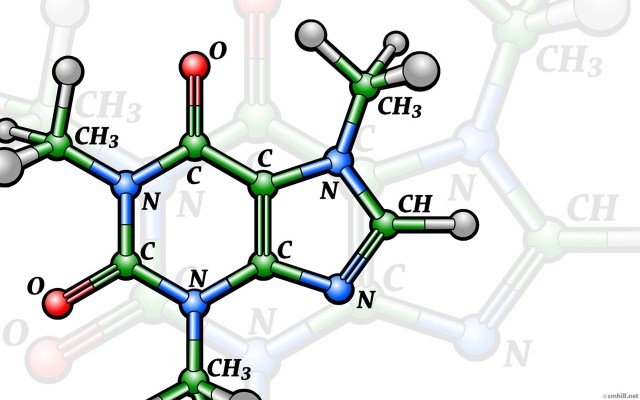
LSD used as drug therapy for the first time in 40 years

Swiss scientists broke a four-decade-long informal ban on LSD research yesterday when they announced the results of a study in which cancer patients received the drug to curb their anxiety about death.

The study, which was published in the Journal of Nervous and Mental Disease, looked at the safety and efficacy of LSD when used in combination with talk therapy. The researchers used the semisynthetic psychedelic drug to facilitate discussions about the cancer patients’ fears of dying. The patients who took LSD, most of whom were terminally ill, experienced 10-hour-long supervised “trips.” One patient described the trips to The New York Times as a “mystical experience,” where “the major part was pure distress at all the memories I had successfully forgotten for decades.”

These periods of distress are regarded as therapeutically valuable because they allow patients to address their memories and the emotions they evoke. The patients underwent 30 such trips over the course of two months.

A year after the sessions ceased, the patients who had received a full dose of LSD — 200 micrograms — experienced a 20 percent improvement in their anxiety levels. That was not the case for the group who received a lower dose, however, as their anxiety symptoms actually increased. They were later allowed to try the full dose after the trial had ended.

Because of the small number of study participants, the researchers are reluctant to make any conclusive statements about the LSD treatment’s effectiveness. Indeed, the results were not statistically significant. But the fact that the study took place at all bodes well for psychedelic drug research, as the drug caused no serious side effects. Rick Doblin, executive director of the Multidisciplinary Association for Psychedelic Studies, a foundation that has funded many of these studies, thinks that revisiting LSD-based treatments is worthwhile. “We want to break these substances out of the mold of the counterculture,” Doblin told The New York Times, “and bring them back to the lab as part of a psychedelic renaissance.”

http://www.theverge.com/2014/3/5/5473828/lsd-drug-therapy-first-time-in-40-years

Thanks to Jody Troupe for bringing this to the attention of the It’s Interesting community.

New study shows that anger outbursts acutely raise risk of heart attack and stroke

Getting really angry might be more dangerous than you think.

A new study found people who experienced severe anger outbursts were more at risk for cardiovascular events in the two hours following the outbursts compared to those who remained calm.

“The relative risk was similar for people who had known pre-existing heart disease and those who didn’t,” says Dr. Murray A. Mittleman, senior study author and an associate professor of medicine at Harvard Medical School.

The study was designed so that each patient was compared to his or her own baseline risk. “A person with pre-existing heart disease or cardiovascular disease, the absolute risk they are incurring is much greater than (that of) a person without cardiovascular disease or risk factors,” Mittleman says.
“If we look at somebody at higher risk for having cardiovascular events, and they get angry multiple times a day, this can lead to 650 extra heart attacks per year out of 10, 000 a year,” he says. “When we look at a person who is relatively low risk, but if they do have these episodes of anger fairly frequently, we estimate there would be about 150 extra heart attacks out of 10,000 a year.”

Smoking, high cholesterol, high blood pressure, being overweight and having diabetes are all risk factors for cardiovascular disease. An estimated 17 million people worldwide die of cardiovascular diseases, particularly heart attacks and strokes, each year, according to the Centers for Disease Control and Prevention.

The study published Monday in the European Heart Journal was a data analysis looking at nine studies where anger and cardiovascular events were self-reported over nearly two decades. The study found a 4.74 times higher risk of MI (myocardial infarction, or heart attack) or ACS (acute coronary syndrome, where the heart muscle doesn’t get enough oxygen-rich blood) following outbursts of anger.

“Anger causes our heart rate to increase through the sympathetic nervous system and causes our stress hormones to become elevated (the fight or flight mechanism),” says Dr. Mariell Jessup, president of the American Heart Association and medical director of the Penn Heart and Vascular Center at the University of Pennsylvania. “We breathe faster, all of which may trigger undesirable reactions in our blood pressure or in our arteries.”

This disruption may mean the heart or the brain doesn’t get the blood and oxygen they need resulting in a heart attack or a stroke, she says.

Researchers suggest more needs to be done to come up with effective interventions to prevent cardiovascular events triggered by anger outbursts. The American Heart Association suggests regular physical activity, finding a way to relax or talking with friends to help reduce stress and anger.

Mittleman suggests the best way to lower your risk for a heart attack or stroke during an angry outburst is to lower your overall baseline level of risk – exercise, eat healthy and don’t smoke – and then find ways to cope with stress and anger.

Angry outbursts may raise heart attack, stroke risk

Maryland police chief hoaxed on pot perils

50097724e81d3_image

By Fredrick Kunkle
The Washington Post

Annapolis Police Chief Michael A. Pristoop thought he came prepared when he testified before a Maryland state Senate panel on Tuesday about the perils of legalizing marijuana.

In researching his testimony against two bills before the Judicial Proceedings Committee, Pristoop said, he had found a news article to illustrate the risks of legalization: 37 people in Colorado, he said, had died of marijuana oversdoses on the very day that the state legalized pot.
“When he said it, everyone in the room dropped their laptops,” Sen. Jamie B. Raskin (D-Montgomery) said in an e-mail.

Trouble is, the facts were about as close to the truth as oregano is to pot. After a quick Google search on his laptop, Raskin — the sponsor of the legalization bill that was the subject of the Senate hearing — advised the chief that the Colorado overdose story, despite its deadpan delivery, had been made up for laughs by The Daily Currant, an online comedy magazine.

“I had not seen the spoof before, but it was self-evidently a parody,” Raskin said. “In the absence of real data, Internet hoaxes are becoming marijuana Prohibition’s last stand.”

Pristoop was among more than 100 people who testified at the hearing to give their views about legalizing or decriminalizing marijuana. Most witnesses said they were in favor of Raskin’s bill, which would legalize marijuana and tax and regulate its distribution and use. A separate bill, sponsored by Sens. Robert A. Zirkin (D-Baltimore County) and Allan H. Kittleman (R-Howard), would impose a civil fine of $100 for possession of small amounts of marijuana.
Late Tuesday, the chief apologized for the mistake, admitting in a news release that he had been duped.

“I apologize for the information I provided concerning the deaths. I believed the information I obtained was accurate, but I now know the story is nothing more than an urban legend,” Pristoop said. “This does not take away from the other facts presented in opposition to legalization or the good work of the Maryland Chiefs and Maryland Sheriffs Associations.”

Maj. Scott Baker said the chief and the department regretted the erroneous testimony but were also trying to take the mistake in stride, with a bit of humor.

“His numbers are up in smoke,” Baker acknowledged Wednesday — a sly tip of the hat to Cheech & Chong’s 1978 stoner movie.

Here’s an excerpt from the satirical — and totally fictional — Daily Currant article that duped Pristoop:

Colorado is reconsidering its decision to legalize recreational pot following the deaths of dozens due to marijuana overdoses.

According to a report in the Rocky Mountain News, 37 people were killed across the state on Jan. 1, the first day the drug became legal for all adults to purchase. Several more are clinging onto life in local emergency rooms and are not expected to survive.

“It’s complete chaos here,” says Dr. Jack Shepard, chief of surgery at St. Luke’s Medical Center in Denver. “I’ve put five college students in body bags since breakfast and more are arriving every minute.

“We are seeing cardiac arrests, hypospadias, acquired trimethylaminuria and multiple organ failures. By next week the death toll could go as high as 200, maybe 300. Someone needs to step in and stop this madness. My god, why did we legalize marijuana? What were we thinking?” http://www.washingtonpost.com/local/md-politics/like-wow-police-chief-is-hoaxed-on-pot-perils/2014/02/25/42bd0592-9e94-11e3-9ba6-800d1192d08b_story.html

Thanks to Da Brayn for bringing this to the attention of the It’s Interesting community.