7.5% of American schoolchildren take prescription psychiatric medications

The National Center for Health Statistics has found that 7.5 percent of American schoolchildren between the ages of six and 17 had been prescribed and taking pills for emotional or behavioral difficulties.

That is one in every 13 kids.

The study also found that more than half (55 percent) of the parents of the participants said that the medications helped their children “a lot,” while another 26 percent said it helped “some.”

The researchers were unable to identify the specific medications prescribed to the children, however they did make some discoveries regarding race and gender of the children on these medications.

Significantly more boys than girls were given medication; about 9.7 percent of boys compared with 5.2 percent of girls.

Older girls were more likely than younger females to be put on medication.

White children were the most likely to be on psychiatric medications (9.2 percent), followed by Black children (7.4 percent) and Hispanic children (4.5 percent).

Children on Medicaid or a Children’s Health Insurance Program (CHIP) were more likely on medication for emotional and behavioral problems (9.9 percent), versus 6.7 percent of kids with private insurance and only 2.7 percent of uninsured children.

Parents of younger children (between ages 6 and 11) were slightly more likely to feel the medications helped “a lot” compared to those of older children.

Parents of males were also more likely to feel the medications helped “a lot” — about 58 percent of parents of males reported that they helped “a lot” compared to 50 percent of the parents of females.

Parents with incomes less than 100 percent of the federal poverty level were the least likely to feel the medications helped “a lot”. Just 43 percent of these parents said the medications helped “a lot”, while about 31 percent said they helped “some”.

More families living below 100 percent of the federal poverty level had children taking medications for emotional and behavioral problems than those above the federal poverty level.

http://atlantablackstar.com/2014/04/25/1-13-schoolkids-takes-psych-meds/

Thanks to Da Brayn for bringing this to the attention of the It’s Interesting community.

Protecting new neurons reduces depression caused by stress, and may lead to a new class of molecules to treat depression.

Scientists probing the link between depression and a hormone that controls hunger have found that the hormone’s antidepressant activity is due to its ability to protect newborn neurons in a part of the brain that controls mood, memory, and complex eating behaviors. Moreover, the researchers also showed that a new class of neuroprotective molecules achieves the same effect by working in the same part of the brain, and may thus represent a powerful new approach for treating depression.

“Despite the availability of many antidepressant drugs and other therapeutic approaches, major depression remains very difficult to treat,” says Andrew Pieper, associate professor of psychiatry and neurology at the University of Iowa Carver College of Medicine and Department of Veterans Affairs, and co-senior author of the study.

In the new study, Pieper and colleagues from University of Texas Southwestern Medical Center led by Jeffrey Zigman, associate professor of internal medicine and psychiatry at UT Southwestern, focused on understanding the relationship between depression, the gut hormone ghrelin, and the survival of newborn neurons in the hippocampus, the brain region involved in mood, memory, and eating behaviors.

“Not only did we demonstrate that the P7C3 compounds were able to block the exaggerated stress-induced depression experienced by mice lacking ghrelin receptors, but we also showed that a more active P7C3 analog was able to complement the antidepressant effect of ghrelin in normal mice, increasing the protection against depression caused by chronic stress in these animals,” Zigman explains.

“The P7C3 compounds showed potent antidepressant activity that was based on their neurogenesis-promoting properties,” Pieper adds. “Another exciting finding was that our experiments showed that the highly active P7C3 analog acted more rapidly and was more effective [at enhancing neurogenesis] than a wide range of currently available antidepressant drugs.”

The findings suggest that P7C3-based compounds may represent a new approach for treating depression. Drugs based on P7C3 might be particularly helpful for treating depression associated with chronic stress and depression associated with a reduced response to ghrelin activity, which may occur in conditions such as obesity and anorexia nervosa.

Future studies, including clinical trials, will be needed to investigate whether the findings are applicable to other forms of depression, and determine whether the P7C3 class will have antidepressant effects in people with major depression.

The hippocampus is one of the few regions in the adult brain where new neurons are continually produced – a process known as neurogenesis. Certain neurological diseases, including depression, interfere with neurogenesis by causing death of these new neurons, leading to a net decrease in the number of new neurons produced in the hippocampus.

Ghrelin, which is produced mainly by the stomach and is best known for its ability to stimulate appetite, also acts as a natural antidepressant. During chronic stress, ghrelin levels rise and limit the severity of depression caused by long-term stress. When mice that are unable to respond to ghrelin experience chronic stress they have more severe depression than normal mice.

In the new study, Pieper and Zigman’s team showed that disrupted neurogenesis is a contributing cause of depression induced by chronic stress, and that ghrelin’s antidepressant effect works through the hormone’s ability to enhance neurogenesis in the hippocampus. Specifically, ghrelin helps block the death of these newborn neurons that otherwise occurs with depression-inducing stress. Importantly, the study also shows that the new “P7C3-class” of neuroprotective compounds, which bolster neurogenesis in the hippocampus, are powerful, fast-acting antidepressants in an animal model of stress-induced depression. The results were published online April 22 in the journal Molecular Psychiatry.

Potential for new antidepressant drugs

The neuroprotective compounds tested in the study were discovered about eight years ago by Pieper, then at UT Southwestern Medical Center, and colleagues there, including Steven McKnight and Joseph Ready. The root compound, known as P7C3, and its analogs protect newborn neurons from cell death, leading to an overall increase in neurogenesis. These compounds have already shown promising neuroprotective effects in models of neurodegenerative disease, including Parkinson’s disease, amyotrophic lateral sclerosis (ALS), and traumatic brain injury. In the new study, the team investigated whether the neuroprotective P7C3 compounds would reduce depression in mice exposed to chronic stress, by enhancing neurogenesis in the hippocampus.

http://now.uiowa.edu/2014/04/protecting-new-neurons-reduces-depression-caused-stress

Boosting Excess Neuron Activity Builds Resilience In Mice Vulnerable To Depression

A new study has found that activating natural resilience in the brain could reduce susceptibility for stress in mice, and potentially humans.

Depressive behaviors in mice are often linked to “out-of-balance” neuron activity in the brain’s reward circuit. Suppressing or stopping this hyperactive neuron activity was typically thought to treat this susceptibility to depression or anxiety — but the new study has found quite the opposite.

“To our surprise, neurons in this circuit harbor their own self-tuning, homeostatic mechanism of natural resilience,” Ming-Hu Han of the Icahn School of Medicine at Mount Sinai in New York City, explained in a press release. What this means is that instead of suppressing this excessive neuron activity, boosting it provided a self-stabilizing response, re-establishing balance and producing an antidepressant-like effect.

The mice that were once vulnerable to being anxious, listless, depressed or withdrawn after socially stressful experiences stopped exhibiting these behaviors after their neuron activity received a boost. “As we get to the bottom of a mystery that has perplexed the field for more than a decade, the story takes an unexpected twist that may hold clues to future antidepressants that would at through this counterintuitive resilience mechanism,” Dr. Thomas Insel, NIMH Director, said in the press release.

In susceptible mice, neurons that secrete dopamine — a feel-good hormone — from a reward circuit area called the ventral tegmental area (VTA) become unusually hyperactive. This hyperaction was much higher in mice that were resilient to stress, “even though they were spared the runaway dopamine activity and depression-related behaviors,” the press release reads. Using this logic, the susceptible mice just needed a boost in activation in these neurons to produce resilience.

What is interesting about this study is that it points to the power of the body and brain’s self-correcting prowess. “Homeostatic mechanisms finely regulate other critical components of physiology required for survival — blood glucose and oxygen, body temperature, blood pressure,” Lois Winsky, chief of the NIMH Molecular, Cellular, and Genomic Neuroscience Research Branch, said in the press release. “Similar mechanisms appear to also maintain excitatory balance in brain cells. This study shows how they may regulate circuits underlying behavior.”

http://www.medicaldaily.com/boosting-excess-neuron-activity-builds-resilience-mice-vulnerable-depression-277452

When doctors prescribe books to heal the mind

bibliotherapy_WEB

By Leah Price

More than 350 million people worldwide suffer from depression. Fewer than half receive any treatment; even fewer have access to psychotherapy. Around the turn of the millennium, antidepressants became the most prescribed kind of drug in the United States. In the United Kingdom, 1 in 6 adults has taken one.

But what if a scientist were to discover a treatment that required minimal time and training to administer, and didn’t have the side effects of drugs? In 2003, a psychiatrist in Wales became convinced that he had. Dr. Neil Frude noticed that some patients, frustrated by year-long waits for treatment, were reading up on depression in the meantime. And of the more than 100,000 self-help books in print, a handful often seemed to work.

This June, a program was launched that’s allowing National Health Service doctors across England to act upon Frude’s insight. The twist is that the books are not just being recommended, they’re being “prescribed.” If your primary care physician diagnoses you with “mild to moderate” depression, one of her options is now to scribble a title on a prescription pad. You take the torn-off sheet not to the pharmacy but to your local library, where it can be exchanged for a copy of “Overcoming Depression,” “Mind Over Mood,” or “The Feeling Good Handbook.” And depression is only one of over a dozen conditions treated. Other titles endorsed by the program include “Break Free from OCD,” “Feel the Fear and Do it Anyway,” “Getting Better Bit(e) by Bit(e),” and “How to Stop Worrying.”

The NHS’s Books on Prescription program is only the highest-profile example of a broader boom in “bibliotherapy.” The word is everywhere in Britain this year, although—or because—it means different things to different people. In London, a painter, a poet, and a former bookstore manager have teamed up to offer over-the-counter “bibliotherapy consultations”: after being quizzed about their literary tastes and personal problems, the worried well-heeled pay 80 pounds for a customized reading list. At the Reading Agency, a charity that developed and administers Books on Prescription, a second program called Mood-Boosting Books recommends fiction and poetry. The NHS’s public health and mental health budgets also fund nonprofits such as The Reader Organization, which gathers people who are unemployed, imprisoned, old, or just lonely to read poems and fiction aloud to one another.

At best, Books on Prescription looks like a win-win for both patients and book lovers. It boosts mental health while also bringing new library users in the door. Libraries loaned out NHS-approved self-help books 100,000 times in the first three months of the program; no doubt some of their borrowers must have picked up a novel or a memoir en route to the circulation desk. At worst, it’s hard to see what harm the program can do. Unlike drugs, books carry no risk of side effects like weight gain, dampened libido, or nausea (unless you read in the car).

For book lovers, an organization with as much clout as the NHS would seem to be a welcome ally. Yet its initiatives raise troubling questions about why exactly a society should value reading. What’s lost when a bookshelf is repurposed as a medicine cabinet—and when a therapist’s job gets outsourced to the page?

In 1916, the clergyman Samuel Crothers coined the term “bibliotherapy,” positing tongue-in-cheek that “a book may be a stimulant or a sedative or an irritant or a soporific.” In the intervening century, doctors, nurses, librarians, and social workers have more seriously championed “bibliopathy,” “bibliocounseling,” “biblioguidance,” and “literatherapy”—all variations on the notion that reading can heal.

Only recently, however, have the mental health effects of one genre—self-help books—been rigorously studied. As early as 1997, a randomized trial found bibliotherapy supervised by therapists no less effective in treating unipolar depression than individual or group therapy. More surprisingly, a 2007 literature review by the same researcher found that books treated anxiety just as effectively without a therapist’s guidance as with it. A 2004 meta-analysis comparing bibliotherapy for anxiety and depression to short-term talk therapy found books “as effective as professional treatment of relatively short duration.”

None of this means a book can outperform a therapist, even if it can underbid him. A 2012 meta-analysis of anxiety disorders concluding that “comparing self-help with waiting list gave a significant effect size of 0.84 in favour of self-help” nevertheless cautioned that “comparison of self-help with therapist-administered treatments revealed a significant difference in favour of the latter.” Translation: A book does worse than a therapist, but it’s better than nothing. And in the short term, at least, nothing is what many patients get.

Books on Prescription can be understood as an extension of larger changes in psychiatry over the past few decades. For most of the 20th century, psychodynamic therapy placed more emphasis on the therapist-patient relationship than on the content of the therapist’s words. More recently, insurers’ interest in cutting costs and researchers’ interest in protocols that can be measured and replicated have combined to nudge treatment toward short-term, standardized methods such as cognitive-behavioral therapy. Books take this trajectory to its logical conclusion. If your aim is less to help patients explore the underlying causes of their condition than to offer step-by-step instructions for managing it, then who cares whether the exercises emanate from a mouth, a manual, or even a smartphone app?

But even therapies like cognitive-behavioral therapy require the patient to feel recognized and understood by another human being. Asked how a printed page can mimic that face-to-face encounter, Frude comes up with an unexpected word: “magic.” The best books give the illusion of listening and caring, he explains, because authors who are also clinicians can draw on years of experience interacting with patients to leave each reader saying “that book was about me.” He does acknowledge that not every case fits books “off the peg” (or off the rack, as we say in the United States). But it’s a striking metaphor to choose—one that makes psychodynamic therapy sound like a luxury good as unattainable as Savile Row tailoring.

Where Frude sees magic, a cynic might smell pragmatism. Even short-term cognitive-behavioral therapy costs more than a $24.95 hardcover. But in any case, many patients read whether or not they have the NHS’s blessing. If recommended titles crowd out the misinformation that patients might otherwise stumble upon, whether in print or online, Books on Prescription will already have helped.

It’s hard not to notice that Books on Prescription was developed in the same years when American universities began to offer MOOCs, or massive open online courses. Even if an online course lacks the give-and-take of a seminar, it’s better than nothing. Like Books on Prescription, MOOCs scale up an activity whose face-to-face version was traditionally out of reach of the masses. Also like Books on Prescription, MOOCs create a cost-effective alternative that may eventually squeeze out personal contact even at the high end of the market.

That concern aside, it’s no surprise that self-help books can help the self. That literature might help, however, is a more controversial proposition. The other half of the Reading Agency’s two-pronged Reading Well initiative, Mood-Boosting Books, promotes fiction, poetry, and memoirs. Its annual list of “good reads for people who are anxious or depressed” mixes titles that represent characters experiencing anxiety or depression (Mark Haddon’s “A Spot of Bother”) with others calculated to combat those conditions. Some go for laughs (Sue Townsend’s “The Secret Diary of Adrian Mole Aged 13¾”); others, such as “A Street Cat Named Bob” and “The Bad Dog’s Diary,” read like printouts of PetTube.com. Others are darker and more demanding: Reading Well anointed Alice Munro’s short stories as a selection before the Nobel Prize Committee did.

The Reading Agency’s endorsement of imaginative reading stops short of recommending specific titles. Its website bristles with disclaimers that the works of literature are nominated by reading groups rather than tested by scientists. Yet the charity has given Mood-Boosting Books prestige—and the NHS has put hard cash behind them as well, providing some libraries with grants to purchase the recommended works of literature along with the “prescribed” self-help titles.

I ask Judith Shipman, who runs the Mood-Boosting Books program, whether recommending books “for people who are anxious or depressed” implies that poems or novels can treat those conditions. “I don’t think we could claim that they are therapy or a substitute for therapy,” she hazards after a long pause. “But for those who don’t quite need therapy, Mood-Boosting Books could be a nice little lift.”

Today it might seem commonplace to suggest that books are good for you. In the longer view, though, the hope that both literature and practical nonfiction can cure reverses an older belief by doctors that reading could cause physical and mental illness. In 1867, one expert cautioned that taking a book to bed could “injure your eyes, your brain, your nervous system.” Some social reformers proposed regulating books as if they were drugs. In 1883, the New York State Legislature debated whether to fine “any person who shall sell, loan, or give to any minor under sixteen years of age any dime novel or book of fiction, without first obtaining the written consent of the parent or guardian of such a minor.” As late as 1889, one politician called fiction “moral poison.”

As radio, TV, gaming, and eventually the Internet began to compete with books, though, fiction-reading came to look wholesome by comparison. Today, with only half of Americans reading any book for pleasure in a given year, reading is finding new champions from an unlikely quarter: science. This year, Science published a study concluding that reading about fictional characters increases empathy; in his 2011 book “The Better Angels of Our Nature,” the psychologist Steven Pinker correlated the rise of imaginative literature with a centuries-long decline in violence. And while correlation doesn’t imply causation, randomized trials have also attempted to link fiction-reading to physical health. In a 2008 study of 81 preteens, girls assigned fiction in which characters eat balanced breakfasts ended up with a lower body mass index than the control group. The Reading Well website itself cites a 2009 study that compared heart rates and muscle tension before and after various activities and found that reading is “68% better at reducing stress levels than listening to music; 100% more effective than drinking a cup of tea.” The numbers may be less telling than the fact that someone would think to compare books to tea in the first place.

It’s too early to predict the long-term effects of bibliotherapy programs. There’s little precedent for a government to make neuroscientists and psychiatrists the arbiters of what books should be read and why. And literary critics like me recoil from reducing the value of reading to a set of health metrics. But as library budgets shrink and any text longer than 140 characters gets crowded out by audio and video, white-coated experts may be the only ones prospective readers can hear. Racing to find out what happens next, seeing the world through a character’s eyes, wallowing in the play of language—all are becoming means to medical ends. Today, for an increasing number of people, the pleasures of reading require a doctor’s note.

http://www.bostonglobe.com/ideas/2013/12/22/when-doctors-prescribe-books-heal-mind/H2mbhLnTJ3Gy96BS8TUgiL/story.html

More evidence that mindfullness meditation can help with anxiety, depression and pain

mindfulness-meditation

By Andrew M. Seaman

Mindfulness meditation may be useful in battles against anxiety, depression and pain, according to a fresh look at past research.

Using data from 47 earlier studies, researchers found moderate evidence to support the use of mindfulness meditation to treat those conditions. Meditation didn’t seem to affect mood, sleep or substance use.

“Many people have the idea that meditation means just sitting quietly and doing nothing,” wrote Dr. Madhav Goyal in an email to Reuters Health. “That is not true. It is an active training of the mind to increase awareness, and different meditation programs approach this in different ways.”

Goyal led the study at The Johns Hopkins University in Baltimore.

He and his colleagues write in JAMA Internal Medicine that meditation techniques emphasize mindfulness and concentration.

So-called mindfulness meditation is aimed at allowing the mind to pay attention to whatever thoughts enter it, such as sounds in the environment, without becoming too focused. Mantra meditation, on the other hand, involves focusing concentration on a particular word or sound.

Approximately 9 percent of people in the U.S. reported meditating in 2007, according to the National Institutes of Health. About 1 percent said they use meditation as some sort of treatment or medicine.

For the new report, the researchers searched several electronic databases that catalog medical research for trials that randomly assigned people with a certain condition – such as anxiety, pain or depression – to do meditation or another activity. These randomized controlled trials are considered the gold standard of medical research.

The researchers found 47 studies with over 3,500 participants that met their criteria.

After combining the data, Goyal said his team found between a 5 and 10 percent improvement in anxiety symptoms among people who took part in mindfulness meditation, compared to those who did another activity.

There was also about a 10 to 20 percent improvement in symptoms of depression among those who practiced mindfulness meditation, compared to the other group.

“This is similar to the effects that other studies have found for the use of antidepressants in similar populations,” Goyal said.

Mindfulness meditation was also tied to reduced pain. But Goyal said it’s hard to know what kind of pain may be most affected by meditation.

The benefits of meditation didn’t surpass what is typically associated with other treatments, such as drugs and exercise, for those conditions.

“As with many therapies, we try to get a moderate level of confidence that the therapy works before we prescribe it,” Goyal said. “If we have a high level of confidence, it is much better.”

But he noted that the researchers didn’t find anything more than moderate evidence of benefit from meditation for anxiety, depression and pain.

There was some suggestion that meditation may help improve stress and overall mental health, but the evidence supporting those findings was of low quality.

There was no clear evidence that meditation could influence positive mood, attention, substance use, eating habits, sleep or weight.

“Clinicians should be prepared to talk with their patients about the role that meditation programs could have in addressing psychological stress, particularly when symptoms are mild,” Goyal said.

Dr. Allan Goroll, who wrote an editorial accompanying the new study, told Reuters Health the analysis is an example of an area of much-needed scientific study, because many people make treatment decisions based on beliefs – not data.

“That is particularly the case with alternative and complimentary approaches to treating medical problems,” he said. “It ranges from taking vitamins to undergoing particular procedures for which the scientific evidence is very slim but people’s beliefs are very great.”

Goroll is professor at Harvard Medical School and Massachusetts General Hospital in Boston.

Goyal said people should remember that meditation was not conceived to treat any particular health problem.

“Rather, it is a path we travel on to increase our awareness and gain insight into our lives,” he wrote. “The best reason to meditate is to gain this insight. Improvements in health conditions are really a side benefit, and it’s best to think of them that way.”

SOURCE: bit.ly/WiwDtv JAMA Internal Medicine, online January 6, 2014.

Sleep therapy becoming increasingly important in depression treatment

Insomnia-Electronic-Cigarettes

An insomnia therapy that scientists just reported could double the effectiveness of depression treatment is not widely available nor particularly well understood by psychiatrists or the public. The American Board of Sleep Medicine has certified just 400 practitioners in the United States to administer it, and they are sparse, even in big cities.

That may change soon, however. Four rigorous studies of the treatment are nearing completion and due to be reported in coming months. In the past year, the American Psychological Association recognized sleep psychology as a specialty, and the Department of Veterans Affairs began a program to train about 600 sleep specialists. So-called insomnia disorder is defined as at least three months of poor sleep that causes problems at work, at home or in relationships.

The need is great: Depression is the most common mood disorder, affecting some 18 million Americans in any given year, and most have insomnia.

“I think it’s increasingly likely that this kind of sleep therapy will be used as a possible complement to standard care,” said Dr. John M. Oldham, chief of staff at the Menninger Clinic in Houston. “We are the court of last resort for the most difficult-to-treat patients, and I think sleep problems have been extremely underrecognized as a critical factor.”

The treatment, known as cognitive behavioral therapy for insomnia, or CBT-I, is not widely available. Most insurers cover it, and the rates for private practitioners are roughly the same as for any psychotherapy, ranging from $100 to $250 an hour, depending on the therapist.

“There aren’t many of us doing this therapy,” said Shelby Harris, the director of the behavioral sleep medicine program at Montefiore Medical Center in the Bronx, who also has a private practice in Tarrytown, N.Y. “I feel like we all know each other.”

According to preliminary results, one of the four studies has found that when CBT-I cures insomnia — it does so 40 percent to 50 percent of the time, previous work suggests — it powerfully complements the effect of antidepressant drugs.

“There’s been a huge recognition that insomnia cuts across a wide variety of medical disorders, and there’s a need to address it,” said Michael T. Smith, a professor at the Johns Hopkins School of Medicine and president of the Society of Behavioral Sleep Medicine.

The therapy is easy to teach, said Colleen Carney, director of the sleep and depression lab at Ryerson University in Toronto, whose presentation at a conference of the Association for Behavioral and Cognitive Therapies in Nashville on Saturday raised hopes for depression treatment. “In the study we did, I trained students to administer the therapy,” she said in an interview, “and the patients in the study got just four sessions.”

CBT-I is not a single technique but a collection of complementary ideas. Some date to the 1970s, others are more recent. One is called stimulus control, which involves breaking the association between being in bed and activities like watching television or eating. Another is sleep restriction: setting a regular “sleep window” and working to stick to it. The therapist typically has patients track their efforts on a standardized form called a sleep diary. Patients record bedtimes and when they wake up each day, as well as their perceptions about quality of sleep and number of awakenings. To this the therapist might add common-sense advice like reducing caffeine and alcohol intake, and making sure the bedroom is dark and quiet.

Those three elements — stimulus control, restriction and common sense — can do the trick for many patients. For those who need more, the therapist applies cognitive therapy — a means of challenging self-defeating assumptions. Patients fill out a standard questionnaire that asks how strongly they agree with statements like: “Without an adequate night’s sleep, I can hardly function the next day”; “I believe insomnia is the result of a chemical imbalance”; and “Medication is probably the only solution to sleeplessness.” In sessions, people learn to challenge those beliefs, using evidence from their own experiences.

“If someone has the belief that if they don’t sleep, they’ll somehow fail the next day, I’ll ask, ‘What does failure mean? You’ll be slower at work, not get everything done, not make dinner?’ ” Dr. Harris said. “Then we’ll look at the 300 nights they didn’t sleep well over the past few years and find out they managed; it might not have been as pleasant as they liked, but they did not fail. That’s how we challenge those kinds of thoughts.”

Dr. Aaron T. Beck, an emeritus professor of psychiatry at the University of Pennsylvania who is recognized as the father of cognitive therapy for mental disorders, said the techniques were just as applicable to sleep problems. “In fact, I have used it myself when I occasionally have insomnia,” he said by email.

In short-term studies of a month or two, CBT-I has been about as effective as prescription sleeping pills. But it appears to have more staying power. “There’s no data to show that if you take a sleeping pill — and then stop taking it — that you’ll still be good six months later,” said Jack Edinger, a professor at National Jewish Health in Denver and an author, with Dr. Carney, of “Overcoming Insomnia: A Cognitive-Behavioral Therapy Approach.”

“It might happen, but those certainly aren’t the people who come through my door,” he said.

Dr. Edinger and others say that those who respond well to CBT-I usually do so quickly — in an average of four sessions, and rarely more than eight. “You’re not going to break the bank doing this stuff; it’s not a marriage,” he said. “You do it for a fixed amount of time, and then you’re done. Once you’ve got the skills, they don’t go away.”

Diamond Light Source particle accelerator enables discovery of CRF1 receptor structure that may help design new drugs for anxiety and depression

crf

Scientists have used one of the world’s most powerful X-ray machines to identify the molecule responsible for feelings of stress, anxiety and even depression.

The pituitary gland is known to the medical world as a key player in stress and anxiety, as it releases stress chemicals in the blood.

However, scientists have now discovered that the protein receptor CRF1 is responsible for releasing hormones which can cause anxiety and depression over extended periods of time. The protein receptor is found in the brain and controls our response to stress. When it detects stress molecules released by the hypothalamus, it releases these hormones.

The study, conducted by drug company Heptares Therapeutics, was published in the Nature journal on 17 July.

Researchers used a particle accelerator called the Diamond Light Source to understand the structure of CRF1. The X-ray machine’s powerful beams illuminated the protein’s structure, according to the Sunday Times, including a crevice that could become a new target for drug therapy.

The information gained from this study will be used to design small molecule drugs that fit into this new pocket to treat depression.

Speaking to the Sunday Times, Dr Fiona Marshall, Chief Scientific Officer at Heptares Therapeutics, said: “Now we know its shape, we can design a molecule that will lock into this crevice and block it so that CRF1 becomes inactive — ending the biochemical cascade that ends in stress.”

Writing on Diamond’s website, Dr. Andrew Dore, a senior scientist with Heptares added that the structure of the protein receptor “can be used as a template to solve closely related receptors that open up the potential for new drugs to treat a number of major diseases including Type 2 diabetes and osteoporosis”.

Thanks to Tracy Lindley for bringing this to the attention of the It’s Interesting community.

http://www.independent.co.uk/news/science/scientists-discover-the-molecule-responsible-for-causing-feelings-of-depression-8724471.html

Largest psychiatric genetic study in history shows a common genetic basis that underlies 5 types of mental disorders

Protein_CACNA1C_PDB_2be6
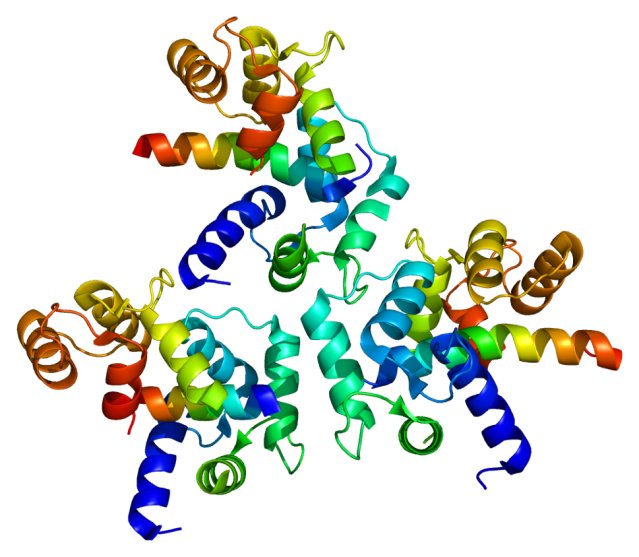
Structure of the CACNA1C gene product, a calcium channel named Cav1.2, which is one of 4 genes that has now been found to be genetically held in common amongst schizophrenia, bipolar disorder, autism, major depression and attention deficit hyperactivity disoder. Groundbreaking work on the role of this protein on anxiety and other forms of behavior related to mental illness has previously been established in the Rajadhyaksha laboratory at Weill Cornell Medical Center.
http://weill.cornell.edu/research/arajadhyaksha/

http://www.ncbi.nlm.nih.gov/pmc/articles/PMC3481072/
http://www.ncbi.nlm.nih.gov/pmc/articles/PMC3192195/
http://www.ncbi.nlm.nih.gov/pmc/articles/PMC3077109/

From the New York Times:
The psychiatric illnesses seem very different — schizophrenia, bipolar disorder, autism, major depression and attention deficit hyperactivity disorder. Yet they share several genetic glitches that can nudge the brain along a path to mental illness, researchers report. Which disease, if any, develops is thought to depend on other genetic or environmental factors.

Their study, published online Wednesday in the Lancet, was based on an examination of genetic data from more than 60,000 people worldwide. Its authors say it is the largest genetic study yet of psychiatric disorders. The findings strengthen an emerging view of mental illness that aims to make diagnoses based on the genetic aberrations underlying diseases instead of on the disease symptoms.

Two of the aberrations discovered in the new study were in genes used in a major signaling system in the brain, giving clues to processes that might go awry and suggestions of how to treat the diseases.

“What we identified here is probably just the tip of an iceberg,” said Dr. Jordan Smoller, lead author of the paper and a professor of psychiatry at Harvard Medical School and Massachusetts General Hospital. “As these studies grow we expect to find additional genes that might overlap.”

The new study does not mean that the genetics of psychiatric disorders are simple. Researchers say there seem to be hundreds of genes involved and the gene variations discovered in the new study confer only a small risk of psychiatric disease.

Steven McCarroll, director of genetics for the Stanley Center for Psychiatric Research at the Broad Institute of Harvard and M.I.T., said it was significant that the researchers had found common genetic factors that pointed to a specific signaling system.

“It is very important that these were not just random hits on the dartboard of the genome,” said Dr. McCarroll, who was not involved in the new study.

The work began in 2007 when a large group of researchers began investigating genetic data generated by studies in 19 countries and including 33,332 people with psychiatric illnesses and 27,888 people free of the illnesses for comparison. The researchers studied scans of people’s DNA, looking for variations in any of several million places along the long stretch of genetic material containing three billion DNA letters. The question: Did people with psychiatric illnesses tend to have a distinctive DNA pattern in any of those locations?

Researchers had already seen some clues of overlapping genetic effects in identical twins. One twin might have schizophrenia while the other had bipolar disorder. About six years ago, around the time the new study began, researchers had examined the genes of a few rare families in which psychiatric disorders seemed especially prevalent. They found a few unusual disruptions of chromosomes that were linked to psychiatric illnesses. But what surprised them was that while one person with the aberration might get one disorder, a relative with the same mutation got a different one.

Jonathan Sebat, chief of the Beyster Center for Molecular Genomics of Neuropsychiatric Diseases at the University of California, San Diego, and one of the discoverers of this effect, said that work on these rare genetic aberrations had opened his eyes. “Two different diagnoses can have the same genetic risk factor,” he said.

In fact, the new paper reports, distinguishing psychiatric diseases by their symptoms has long been difficult. Autism, for example, was once called childhood schizophrenia. It was not until the 1970s that autism was distinguished as a separate disorder.

But Dr. Sebat, who did not work on the new study, said that until now it was not clear whether the rare families he and others had studied were an exception or whether they were pointing to a rule about multiple disorders arising from a single genetic glitch.

“No one had systematically looked at the common variations,” in DNA, he said. “We didn’t know if this was particularly true for rare mutations or if it would be true for all genetic risk.” The new study, he said, “shows all genetic risk is of this nature.”

The new study found four DNA regions that conferred a small risk of psychiatric disorders. For two of them, it is not clear what genes are involved or what they do, Dr. Smoller said. The other two, though, involve genes that are part of calcium channels, which are used when neurons send signals in the brain.

“The calcium channel findings suggest that perhaps — and this is a big if — treatments to affect calcium channel functioning might have effects across a range of disorders,” Dr. Smoller said.

There are drugs on the market that block calcium channels — they are used to treat high blood pressure — and researchers had already postulated that they might be useful for bipolar disorder even before the current findings.

One investigator, Dr. Roy Perlis of Massachusetts General Hospital, just completed a small study of a calcium channel blocker in 10 people with bipolar disorder and is about to expand it to a large randomized clinical trial. He also wants to study the drug in people with schizophrenia, in light of the new findings. He cautions, though, that people should not rush out to take a calcium channel blocker on their own.

“We need to be sure it is safe and we need to be sure it works,” Dr. Perlis said.

Scientists Debunk the IQ Myth: Notion of Measuring One’s Intelligence Quotient by Singular, Standardized Test Is Highly Misleading

iq

After conducting the largest online intelligence study on record, a Western University-led research team has concluded that the notion of measuring one’s intelligence quotient or IQ by a singular, standardized test is highly misleading.

The findings from the landmark study, which included more than 100,000 participants, were published Dec. 19 in the journal Neuron. The article, “Fractionating human intelligence,” was written by Adrian M. Owen and Adam Hampshire from Western’s Brain and Mind Institute (London, Canada) and Roger Highfield, Director of External Affairs, Science Museum Group (London, U.K).

Utilizing an online study open to anyone, anywhere in the world, the researchers asked respondents to complete 12 cognitive tests tapping memory, reasoning, attention and planning abilities, as well as a survey about their background and lifestyle habits.

“The uptake was astonishing,” says Owen, the Canada Excellence Research Chair in Cognitive Neuroscience and Imaging and senior investigator on the project. “We expected a few hundred responses, but thousands and thousands of people took part, including people of all ages, cultures and creeds from every corner of the world.”

The results showed that when a wide range of cognitive abilities are explored, the observed variations in performance can only be explained with at least three distinct components: short-term memory, reasoning and a verbal component.

No one component, or IQ, explained everything. Furthermore, the scientists used a brain scanning technique known as functional magnetic resonance imaging (fMRI), to show that these differences in cognitive ability map onto distinct circuits in the brain.

With so many respondents, the results also provided a wealth of new information about how factors such as age, gender and the tendency to play computer games influence our brain function.

“Regular brain training didn’t help people’s cognitive performance at all yet aging had a profound negative effect on both memory and reasoning abilities,” says Owen.

Hampshire adds, “Intriguingly, people who regularly played computer games did perform significantly better in terms of both reasoning and short-term memory. And smokers performed poorly on the short-term memory and the verbal factors, while people who frequently suffer from anxiety performed badly on the short-term memory factor in particular.”

1.Adam Hampshire, Roger R. Highfield, Beth L. Parkin, Adrian M. Owen. Fractionating Human Intelligence. Neuron, 2012; 76 (6): 1225 DOI: 10.1016/j.neuron.2012.06.022

http://www.sciencedaily.com/releases/2012/12/121219133334.htm

Are Bacteria Making You Hungry?

hunry

Over the last half decade, it has become increasingly clear that the normal gastrointestinal (GI) bacteria play a variety of very important roles in the biology of human and animals. Now Vic Norris of the University of Rouen, France, and coauthors propose yet another role for GI bacteria: that they exert some control over their hosts’ appetites. Their review was published online ahead of print in the Journal of Bacteriology.

This hypothesis is based in large part on observations of the number of roles bacteria are already known to play in host biology, as well as their relationship to the host system. “Bacteria both recognize and synthesize neuroendocrine hormones,” Norris et al. write. “This has led to the hypothesis that microbes within the gut comprise a community that forms a microbial organ interfacing with the mammalian nervous system that innervates the gastrointestinal tract.” (That nervous system innervating the GI tract is called the “enteric nervous system.” It contains roughly half a billion neurons, compared with 85 billion neurons in the central nervous system.)

“The gut microbiota respond both to both the nutrients consumed by their hosts and to the state of their hosts as signaled by various hormones,” write Norris et al. That communication presumably goes both ways: they also generate compounds that are used for signaling within the human system, “including neurotransmitters such as GABA, amino acids such as tyrosine and tryptophan — which can be converted into the mood-determining molecules, dopamine and serotonin” — and much else, says Norris.

Furthermore, it is becoming increasingly clear that gut bacteria may play a role in diseases such as cancer, metabolic syndrome, and thyroid disease, through their influence on host signaling pathways. They may even influence mood disorders, according to recent, pioneering studies, via actions on dopamine and peptides involved in appetite. The gut bacterium, Campilobacter jejuni, has been implicated in the induction of anxiety in mice, says Norris.

But do the gut flora in fact use their abilities to influence choice of food? The investigators propose a variety of experiments that could help answer this question, including epidemiological studies, and “experiments correlating the presence of particular bacterial metabolites with images of the activity of regions of the brain associated with appetite and pleasure.”

1.V. Norris, F. Molina, A. T. Gewirtz. Hypothesis: bacteria control host appetites. Journal of Bacteriology, 2012; DOI: 10.1128/JB.01384-12

http://www.sciencedaily.com/releases/2012/12/121219142301.htm