New research shows that moderate alcohol consumption boosts the immune system

Artisanal Beer Brewers Find Growing Niche In Berlin

According to a new study, alcohol can boost your immune system. Researchers vaccinated animals and then gave them access to alcohol. Researchers found that the animals that had consumed alcohol also had faster responses to the vaccines. The researchers hope this study leads to a better understanding of how the immune system works, and how to improve its ability to respond to vaccines and infections. Moderate alcohol consumption has long been associated with a lower mortality rate.

Moderate alcohol consumption boosts your immune system while chronic alcohol consumption leads to a suppressed vaccine response. The difference between moderate and chronic is defined by the National Institute on Alcohol Abuse and Alcoholism. They define moderate as no more than four drinks on a single day and no more than 14 in a week for men. For women, it is defined as no more than three drinks on a single day and no more than seven in a week.

The study was published in the journal Vaccine.

http://www.sciencedirect.com/science/article/pii/S0264410X13014734

Could Pot Help Veterans With PTSD? Brain Scientists Say Maybe

pot

by Jon Hamilton

Veterans who smoke marijuana to cope with post-traumatic stress disorder may be onto something. There’s growing evidence that pot can affect brain circuits involved in PTSD.

Experiments in animals show that tetrahydrocannabinol, the chemical that gives marijuana its feel-good qualities, acts on a system in the brain that is “critical for fear and anxiety modulation,” says Andrew Holmes, a researcher at the National Institute on Alcohol Abuse and Alcoholism. But he and other brain scientists caution that marijuana has serious drawbacks as a potential treatment for PTSD.

The use of marijuana for PTSD has gained national attention in the past few years as thousands of traumatized veterans who fought in Iraq and Afghanistan have asked the federal government to give them access to the drug. Also, Maine and a handful of other states have passed laws giving people with PTSD access to medical marijuana.

But there’s never been a rigorous scientific study to find out whether marijuana actually helps people with PTSD. So lawmakers and veterans groups have relied on anecdotes from people with the disorder and new research on how both pot and PTSD works in the brain.

An Overactive Fear System

When a typical person encounters something scary, the brain’s fear system goes into overdrive, says Dr. Kerry Ressler of Emory University. The heart pounds, muscles tighten. Then, once the danger is past, everything goes back to normal, he says.

But Ressler says that’s not what happens in the brain of someone with PTSD. “One way of thinking about PTSD is an overactivation of the fear system that can’t be inhibited, can’t be normally modulated,” he says.

For decades, researchers have suspected that marijuana might help people with PTSD by quieting an overactive fear system. But they didn’t understand how this might work until 2002, when scientists in Germany published a mouse study showing that the brain uses chemicals called cannabinoids to modulate the fear system, Ressler says.

There are two common sources of cannabinoids. One is the brain itself, which uses the chemicals to regulate a variety of brain cells. The other common source is Cannabis sativa, the marijuana plant.

So in recent years, researchers have done lots of experiments that involved treating traumatized mice with the active ingredient in pot, tetrahydrocannabinol (THC), Ressler says. And in general, he says, the mice who get THC look “less anxious, more calm, you know, many of the things that you might imagine.”

Problems with Pot

Unfortunately, THC’s effect on fear doesn’t seem to last, Ressler says, because prolonged exposure seems to make brain cells less sensitive to the chemical.

Another downside to using marijuana for PTSD is side effects, says Andrew Holmes at the National Institute on Alcohol Abuse and Alcoholism. “You may indeed get a reduction in anxiety,” Holmes says. “But you’re also going to get all of these unwanted effects,” including short-term memory loss, increased appetite and impaired motor skills.

So for several years now, Holmes and other scientists have been testing drugs that appear to work like marijuana, but with fewer drawbacks. Some of the most promising drugs amplify the effect of the brain’s own cannabinoids, which are called endocannabinoids, he says. “What’s encouraging about the effects of these endocannabinoid-acting drugs is that they may allow for long-term reductions in anxiety, in other words weeks if not months.”

The drugs work well in mice, Holmes says. But tests in people are just beginning and will take years to complete. In the meantime, researchers are learning more about how marijuana and THC affect the fear system in people.

At least one team has had success giving a single dose of THC to people during something called extinction therapy. The therapy is designed to teach the brain to stop reacting to something that previously triggered a fearful response.

The team’s study found that people who got THC during the therapy had “long-lasting reductions in anxiety, very similar to what we were seeing in our animal models,” Holmes says. So THC may be most useful when used for a short time in combination with other therapy, he says.

As studies continue to suggest that marijuana can help people with PTSD, it may be unrealistic to expect people with the disorder to wait for something better than marijuana and THC, Ressler says. “I’m a pragmatist,” he says. “I think if there are medications including drugs like marijuana that can be used in the right way, there’s an opportunity there, potentially.”

http://www.npr.org/blogs/health/2013/12/23/256610483/could-pot-help-veterans-with-ptsd-brain-scientists-say-maybe

Uruguay becomes first nation to legalize of all aspects of marijuana trade

pot

Uruguay’s Senate, on Tuesday, approved the legalization of marijuana in the country—including the growing, sale and smoking—making it the first nation to sanction all aspects of the pot industry. Previously, the use of marijuana was legal in the South American country, but cultivation and sale of the drug were not.

The newly passed, government-backed bill will now provide for government regulation of all aspects of the marijuana trade with an eye on “wresting the business from criminals,” according to Reuters. “The bill gives authorities 120 days to set up a drug control board that will regulate cultivation standards, fix the price and monitor consumption.” Uruguayan president Jose Mujica is a supporter of a legal national market for marijuana, but the measure has yet to win over a majority of the 3-plus million people in the country. A recent poll, Reuters reports, found that 58 percent of Uruguayans are opposed to legalization.

Here’s more from Reuters on what the law will look like on the ground once it goes into effect:

Cannabis consumers will be able to buy a maximum of 40 grams (1.4 ounces) each month from licensed pharmacies as long as they are Uruguayan residents over the age of 18 and registered on a government database that will monitor their monthly purchases. When the law is implemented in 120 days, Uruguayans will be able to grow six marijuana plants in their homes a year, or as much as 480 grams (about 17 ounces), and form smoking clubs of 15 to 45 members that can grow up to 99 plants per year. Registered drug users should be able to start buying marijuana over the counter from licensed pharmacies in April.

http://www.slate.com/blogs/the_slatest/2013/12/10/uruguay_sets_up_a_national_marketplace_for_marijuana_the_world_s_first.html

Thanks to Kebmodee for bringing this to the attention of the It’s Interesting community.

Sprite Shortens Duration Of Alcohol’s Damaging Metabolic Process

sprite_620x350

Chinese researchers have found that Sprite may actually be one of the best options for getting over a hangover.

Rather than focusing on a cure, researchers at Sun Yat-Sen University in Guangzhou looked at how a hangover could be prevented before it even started. To do this, they looked at the metabolic processes that the body goes through when drinking alcohol. First, the ethanol in alcoholic drinks gets metabolized by an enzyme known as alcohol dehydrogenase (ADH) into acetaldehyde. Acetaldehyde is believed to be the real cause of alcohol-related effects, including hangovers. It’s then metabolized into acetate by the enzyme aldehyde dehydrogenase (ALDH). Contrary to acetaldehyde’s effects, acetate could be responsible for some of alcohol’s health benefits, the researchers said.

Knowing these processes, the researchers tested 57 different drinks, including herbal infusions, teas, and carbonated beverages, and gauged their effects on ADH and ALDH. They found that every drink had a different effect. For example, an herbal infusion with huo ma ren seeds, also known as hemp seeds, increased the ADH process and inhibited the ALDH process, meaning that the adverse effects of drinking would linger for a longer time. Conversely, Sprite, known as Xue bi, was among the drinks that increased the ALDH process, causing acetaldehyde to break down at a faster pace, and reducing the duration of alcohol-related effects on the body.

“These results are a reminder that herbal and other supplements can have pharmacological activities that both harm and benefit our health,” Edzard Ernst, an expert in medicinal science at the University of Exeter in the U.K., told Chemistry World about the study. But he also noted that the tests should be done over, in living organisms, before the tests are regarded as conclusive. The researchers plan to do this next.

Sprite is also a more reasonable “cure” for the hangover. One recent fad had people drinking Pedialyte, the baby formula, in hopes of replacing lost vitamins and minerals from drinking. Still, going even further, some Vietnamese millionaires felt that the keratin in rhinoceros horns, which costs as much as gold per ounce, was the answer to their morning-after woes.

Source: Li S, Gan L, Li S, et al. Effects of Herbal Infusion, Tea and Carbonated Beverage on Alcohol Dehydrogenase and Aldehyde Dehydrogenase Activities. Food & Function. 2013.

http://www.medicaldaily.com/sprite-could-cure-your-hangover-beverage-shortens-duration-alcohols-damaging-metabolic-process

FBI Captures Alleged Silk Road Boss Using His Own Methods

silk road

From an Internet café in San Francisco, a 29-year-old free-market evangelist who called himself “Dread Pirate Roberts” used untraceable web services, an international network of servers and anonymous digital currency to run a global online exchange of cocaine and heroin beyond the reach of the law.

For two years, cybercrime experts from the FBI pored over the secretive online drug bazaar known as Silk Road — an underground operation that had become, by the time the FBI shut it down this week, the venue for $1 billion worth of illegal transactions, according to prosecutors. Seeking the mastermind behind it, investigators began picking up clues: an anonymous posting to a website devoted to hallucinogenic mushrooms, recurring references to an Austrian school of economics, and early clues left on public sites including Google and LinkedIn.

A big break came in July, when a routine inspection of inbound mail from Canada turned up a parcel containing nine counterfeit IDs — each with a different name, but all featuring the photograph of the same man.

According to a 33-page criminal complaint unsealed yesterday in Manhattan federal court, the man in the ID photos was Ross Ulbricht, Silk Road’s alleged overseer. FBI agents arrested Ulbricht in San Francisco the same day at the Glen Park library in San Francisco, where he had gone to log onto a computer, according to a person briefed on the matter.

The criminal complaint against Ulbricht depicts the dark side of Internet commerce. In it, special agent Christopher Tarbell of the FBI’s New York office described Silk Road as “the most sophisticated and extensive criminal marketplace on the Internet today” — a virtual bazaar where buyers could find everything from heroin and hacking software to contact information for hit men in more than 10 different countries.

Meanwhile, on July 10 of this year, customs officials intercepted the package from Canada as part of what the complaint characterized as a routine inspection. The package, addressed to an apartment on 15th Street in San Francisco, contained nine counterfeit IDs, each in a different name, but all featuring a photo of the same person.

Agents from Homeland Security Investigations arrived on July 26 at the 15th Street address. There, according to the complaint, they encountered Ross Ulbricht, whose photo matched those on all nine fake IDs.

Confronted with a fake California driver’s license bearing his photo and birthdate but a different name, Ulbricht avoided answering questions about the purchase of false IDs, according to the complaint. Instead, he volunteered that “hypothetically” anyone could go onto a website named Silk Road and purchase any drugs or counterfeit IDs they wanted. Ulbricht then produced his real ID, a Texas driver’s license, according to the complaint, and explained that he was subletting a room in the apartment for $1,000 a month. According to the complaint, he also said the roommates knew him as “Josh.”

Ulbricht stands accused of narcotics trafficking, money laundering, computer-hacking conspiracy and, in an indictment unsealed yesterday in Maryland, of attempted murder.

Bitcoin Bets Feed Twitter Dreams as Regulators CircleCyber Drug Bazaar’s Alleged Boss Paired EBay Style, Crime
The genius of Silk Road’s design and the reason it eluded the FBI’s grasp for so long, according to the complaint, was its impenetrability. The site was accessible only on a so-called tor network, which is designed to conceal the true Internet addresses of computers using it. Its exclusive reliance on Bitcoin, an anonymous digital currency, added another layer of protection for its buyers and sellers.

Since November 2011, Tarbell’s team made more than 100 purchases of drugs from Silk Road vendors, accepting shipments of ecstasy, cocaine, heroin, LSD and other drugs posted from 10 different countries, including the U.S., according to the complaint.

In the FBI’s bid to identify the individual behind Silk Road, an agent on Tarbell’s team combed through Internet postings and discovered the earliest mention of the site on shroomery.org, an informational website for consumers of “magic mushrooms,” in January 2011.

The posting, from someone with the username altoid, alerted the site’s visitors to Silk Road and asked if anyone had tried it. Two days later, someone using the same username posted a similar message on “bitcointalk.org,” a discussion forum for the virtual currency.

“The two postings created by ’altoid’ on Shroomery and Bitcoin Talk appear to be attempts to generate interest in the site,” Tarbell wrote. “The fact that ’altoid’ posted similar messages about the site on two very different discussion forums, two days apart, indicates that ’altoid’ was visiting various discussion forums…and seeking to publicize the site among the forum users — which, based on my training and experience, is a common online marketing tactic for new websites.”

In October 2011, altoid surfaced again on the Bitcoin forum, seeking an “IT pro” to help build a Bitcoin startup company and directing potential job candidates to the Gmail account of someone named Ross Ulbricht. From a Google profile associated with the account, the FBI learned that Ulbricht had an interest in the Austrian school of economics and the Auburn, Alabama-based Ludwig von Mises Institute. According to the group’s website, it functions as a center of Libertarian political and social theory.

Similar sentiments are voiced on a page of professional networking site LinkedIn that is also attributed to Ulbricht, according to the complaint. In a LinkedIn profile accessed yesterday, a user identified as Ross Ulbricht describes himself as an “investment adviser and entrepreneur” and lists his interests as “trading, economics, physics, virtual worlds, liberty.”

Agents made a connection between Ulbricht and Silk Road: The site’s webmaster, who identified himself as Dread Pirate Roberts, made regular references to Austrian economic theory and the teachings of Mises to justify Silk Road’s existence.

The New York FBI agents weren’t the only lawmen gunning for Silk Road. In April 2012, a federal agent in Maryland began communicating with Dread Pirate Roberts in an undercover capacity, posing as a drug dealer.

In January, the undercover agent completed the sale of a small quantity of cocaine to a Silk Road employee and was paid the equivalent of $27,000 in Bitcoin currency. According to the Maryland indictment, Dread Pirate Roberts subsequently asked the undercover agent to murder an employee the site overseer believed to have stolen money from Silk Road.

During this time, Tarbell’s team in New York tracked the Silk Road webmaster’s online logins to an Internet café on Laguna Street in San Francisco, near an apartment where Ulbricht had moved.

Following the confrontation, Tarbell and his team learned that in the weeks leading up to the discovery of the counterfeit identity papers, Dread Pirate Roberts had sent a series of private e-mails suggesting that he “needed a fake ID,” according to the complaint.

All the while, word of Silk Road and its bazaar of illicit goods and services spread around the Internet. In August, Forbes.com posted an interview with Dread Pirate Roberts that it said was conducted via messages sent through the site. “The highest levels of government are hunting me,” the cyber entrepreneur said, adding: “I can’t take any chances.”

Yesterday afternoon, Ulbricht surfaced at San Francisco’s Glen Park library, a small branch facility where public computers are located in front of the check-out desk. There, according to the person familiar with the matter, he was arrested by the FBI.

The criminal case is U.S. v. Ulbricht, 13-mg-023287; the civil forfeiture case is U.S. v. Ulbricht, 13-cv-06919, U.S. District Court, Southern District of New York (Manhattan).

To contact the reporters on this story: Greg Farrell in New York at gregfarrell@bloomberg.net

To contact the editor responsible for this story: Michael Hytha at mhytha@bloomberg.net

http://www.businessweek.com/news/2013-10-03/fbi-captures-alleged-silk-road-pirate-boss-using-his-own-methods#p2

Thanks to Kebmodee for bringing this to the attention of the It’s Interesting community.

First cases of flesh-eating drug Krokodil surface in US

krokodil640

A man prepares heroin in Zhukovsky, Russia, near Moscow. To produce krokodil, which has a comparable effect to heroin but is much cheaper to make, users mix codeine with gasoline, paint thinner, iodine, hydrochloric acid and red phosphorous.

Krokodil, a flesh-eating drug which first surfaced in Russia more than a decade ago, has reportedly been found in the United States.

Similar to morphine or heroin, krokodil is made by mixing codeine with substances like gasoline, paint thinner, oil or alcohol. That mixture is then injected into a vein, potentially causing an addict’s skin to turn greenish, scaly and eventually rot away.

Dr. Frank LoVecchio, co-medical director at Banner Good Samaritan Poison and Drug Information Center in Arizona, told CBS5 that the first two cases of people using the drug have been reported in the state. He declined to comment on the patients’ conditions.

“As far as I know, these are the first cases in the United States that are reported,” LoVecchio said, adding that the cases are believed to be linked. “So we’re extremely frightened.”

Users of krokodil — or desomorphine — had previously only been found in large numbers in Russia, where 65 million doses of the opiate were seized during the first three months of 2011, Russia’s Federal Drug Control Service told Time.

“This is really frightening,” Dr. Aaron Skolnik, a toxicologist at Banner Good Samaritan Poison and Drug Information Center told MyFoxPhoenix.com. “This is something we hoped would never make it to the U.S. because it’s so detrimental to the people who use it.”

To produce the potentially deadly drug, which has a comparable effect to heroin but is much cheaper to make, users mix codeine with gasoline, paint thinner, iodine, hydrochloric acid and red phosphorous. Codeine, a controlled substance in the United States used to treat mild to moderate pain, is widely available over the counter in Russia.

In 2010, up to a million people, according to various estimates, were injecting the resulting substance into their veins in Russia, thus far the only country worldwide to see it grow into an epidemic, Time reports.

The drug’s sinister moniker — also known as crocodile — refers to the greenish and scaly appearance of a user’s skin at the site of injection as blood vessels rupture and cause surrounding tissues to die. According to reports, the drug first appeared in Siberia and parts of Russia around 2002, but has spread throughout the country in recent years.

Officials at the Washington-based National Institute on Drug Abuse told FoxNews.com in 2011 that they had not heard of the drug prior to an inquiry by FoxNews.com.

Dr. Ellen Marmur, chief of dermatological and cosmetic surgery at the Mount Sinai Medical Center in New York City, told FoxNews.com in 2011 she had never seen any cases involving krokodil, but said it reminded her of “skin popping,” or when intravenous drug users inject a substance directly into their skin due to damaged veins.

“This looks to me a lot like skin popping, what drug users used to do back in the day with heroin and other drugs,” Marmur said. “It just kills the skin, that’s what you’re seeing, big dead pieces of skin.”

Those large pieces of dead skin are referred to as eschars, Marmur said, leaving the user prone to infection, amputation and other complications.

Marmur said at the time that she was concerned the drug could eventually make its way into the United States.

“It’s horrible,” she continued. “These people are the ultimate in self-destructive drug addiction. Once you’re an addict at this level, any rational thinking doesn’t apply.”

Dr. Lewis Nelson, a medical toxicologist at Bellevue Hospital Center in New York, also said in 2011 that he doubted krokodil would reach the United States due to the availability of other cheap, powerful drugs such as black tar heroin and Oxycontin.

“It’s not going to become a club drug, I can guarantee you that,” he said.

http://www.foxnews.com/health/2013/09/26/first-cases-flesh-eating-drug-krokodil-surface-in-us/

Man becomes drunk when stomach turns into brewery

beer_1016300_fullwidth_620x350

When a 61-year-old Texas man came into an emergency room claiming he was dizzy and was found to have a blood alcohol concentration of 0.37 percent, doctors assumed he was drunk. Despite the fact the man claimed he hadn’t consumed alcohol that day, most doctors still thought he was a “closet drinker,” NPR reported.

It turned out that those medical professionals were wrong: the man had “auto-brewery syndrome.” His stomach contained so much yeast that he was making his own in-house brew, literally. Before he was diagnosed with the syndrome, the patient’s wife — who was a nurse — was so concerned with her husband’s constantly drunk condition that she had him regularly tested with a Breathalyzer. He would record numbers as high as 0.33 to 0.4 percent, considerably higher than the U.S. legal driving limit of 0.08 percent.

Barbara Cordell, the dean of nursing at Panola College in Carthage, Texas, and Dr. Justin McCarthy, a gastroenterologist in Lubbock, Texas, decided to figure out what was really going on.

“He would get drunk out of the blue — on a Sunday morning after being at church, or really, just anytime,” Cordell told NPR.

After isolating the patient for 24 hours and making sure there was no alcohol or sugar available, the team continued to check his blood alcohol level. The levels were as high as 0.12 percent without any alcohol consumption. The doctors then realized that he must have been infected with high levels Saccharomyces cerevisiae, a kind of yeast that is used in alcohol fermentation and baking. They suspected that because the patient had been put on antibiotics following surgery for a broken foot in 2004, the medications might have killed all his gut bacteria. This allowed the yeast to thrive in his body.

The Environmental Protection Agency said the organism is not considered to be a pathogen, and some people take large quantities of the yeast daily as part of a “health food” diet.”No one takes potential danger from Saccharomyces cerevesiae seriously,” Dr. Michael D. Gershon, a professor in the department of pathology and cell biology at Columbia University in New York, told CBSNews.com.

Gershon added that the yeast is so non-threatening that it is often used by researchers in studies without any additional precautions.

Interviews revealed the man ate a lot of carbohydrates. That meant each time the patient ate something with starch, the high amounts of yeast in his body turned the sugars into ethanol or ethyl alcohol, which made him drunk from the inside. To cure his illness, the patient was placed on a low-carbohydrate diet and prescribed antifungal medication to get rid of the excess yeast.

His case study was published in the International Journal of Clinical Medicine earlier this summer.

The researchers acknowledge that this condition is extremely rare. Only a handful of cases have been reported in the last three decades, including a 13-year-old girl with short gut syndrome who would get drunk if she ate carbohydrates. Another 3-year-old with the same condition became drunk when she had a fruit drink high in carbohydrates.

“This is a rare syndrome but should be recognized because of the social implications such as loss of job, relationship difficulties, stigma, and even possible arrest and incarceration,” the authors noted. “It would behoove health care providers to listen more carefully to the intoxicated patient who denies ingesting alcohol.”

Thanks to Mike Moore for bringing this to the attention of the It’s Interesting community.

Ohio man orders gun safe on Internet and discovers almost 300 pounds of marijuana inside

HT_pot_in_gun_safe_ml_130816_16x9_608

Authorities in Ohio say a man who ordered a gun safe online opened it up only to discover 280 pounds of marijuana inside.

Shelby County Sheriff John Lenhart in western Ohio says the safe was made in Nogales, Mexico and that it was sent by truck to Ohio.

He says the marijuana has a street value of $420,000.

Federal authorities who are investigating say the truck driver who brought the shipment into the United States is now missing.

The Ohio sheriff says that truck was carrying a full shipment of safes, but none of the others contained any drugs.

He says the safe with the marijuana was delivered to Ohio in June, but authorities have kept quiet about it while they looked into how the safe got into the U.S.

http://abcnews.go.com/US/wireStory/gun-safe-ohio-man-filled-marijuana-19995543

Cocaine Vaccine Passes Key Testing Hurdle of Preventing Drug from Reaching the Brain – Human Clinical Trials soon

cocaine

Researchers at Weill Cornell Medical College have successfully tested their novel anti-cocaine vaccine in primates, bringing them closer to launching human clinical trials. Their study, published online by the journal Neuropsychopharmacology, used a radiological technique to demonstrate that the anti-cocaine vaccine prevented the drug from reaching the brain and producing a dopamine-induced high.

“The vaccine eats up the cocaine in the blood like a little Pac-man before it can reach the brain,” says the study’s lead investigator, Dr. Ronald G. Crystal, chairman of the Department of Genetic Medicine at Weill Cornell Medical College. “We believe this strategy is a win-win for those individuals, among the estimated 1.4 million cocaine users in the United States, who are committed to breaking their addiction to the drug,” he says. “Even if a person who receives the anti-cocaine vaccine falls off the wagon, cocaine will have no effect.”

Dr. Crystal says he expects to begin human testing of the anti-cocaine vaccine within a year.

Cocaine, a tiny molecule drug, works to produce feelings of pleasure because it blocks the recycling of dopamine — the so-called “pleasure” neurotransmitter — in two areas of the brain, the putamen in the forebrain and the caudate nucleus in the brain’s center. When dopamine accumulates at the nerve endings, “you get this massive flooding of dopamine and that is the feel good part of the cocaine high,” says Dr. Crystal.

The novel vaccine Dr. Crystal and his colleagues developed combines bits of the common cold virus with a particle that mimics the structure of cocaine. When the vaccine is injected into an animal, its body “sees” the cold virus and mounts an immune response against both the virus and the cocaine impersonator that is hooked to it. “The immune system learns to see cocaine as an intruder,” says Dr. Crystal. “Once immune cells are educated to regard cocaine as the enemy, it produces antibodies, from that moment on, against cocaine the moment the drug enters the body.”

In their first study in animals, the researchers injected billions of their viral concoction into laboratory mice, and found a strong immune response was generated against the vaccine. Also, when the scientists extracted the antibodies produced by the mice and put them in test tubes, it gobbled up cocaine. They also saw that mice that received both the vaccine and cocaine were much less hyperactive than untreated mice given cocaine.

In this study, the researchers sought to precisely define how effective the anti-cocaine vaccine is in non-human primates, who are closer in biology to humans than mice. They developed a tool to measure how much cocaine attached to the dopamine transporter, which picks up dopamine in the synapse between neurons and brings it out to be recycled. If cocaine is in the brain, it binds on to the transporter, effectively blocking the transporter from ferrying dopamine out of the synapse, keeping the neurotransmitter active to produce a drug high.

In the study, the researchers attached a short-lived isotope tracer to the dopamine transporter. The activity of the tracer could be seen using positron emission tomography (PET). The tool measured how much of the tracer attached to the dopamine receptor in the presence or absence of cocaine.

The PET studies showed no difference in the binding of the tracer to the dopamine transporter in vaccinated compared to unvaccinated animals if these two groups were not given cocaine. But when cocaine was given to the primates, there was a significant drop in activity of the tracer in non-vaccinated animals. That meant that without the vaccine, cocaine displaced the tracer in binding to the dopamine receptor.

Previous research had shown in humans that at least 47 percent of the dopamine transporter had to be occupied by cocaine in order to produce a drug high. The researchers found, in vaccinated primates, that cocaine occupancy of the dopamine receptor was reduced to levels of less than 20 percent.

“This is a direct demonstration in a large animal, using nuclear medicine technology, that we can reduce the amount of cocaine that reaches the brain sufficiently so that it is below the threshold by which you get the high,” says Dr. Crystal.

When the vaccine is studied in humans, the non-toxic dopamine transporter tracer can be used to help study its effectiveness as well, he adds.

The researchers do not know how often the vaccine needs to be administered in humans to maintain its anti-cocaine effect. One vaccine lasted 13 weeks in mice and seven weeks in non-human primates.

“An anti-cocaine vaccination will require booster shots in humans, but we don’t know yet how often these booster shots will be needed,” says Dr. Crystal. “I believe that for those people who desperately want to break their addiction, a series of vaccinations will help.”

Co-authors of the study include Dr. Anat Maoz, Dr. Martin J. Hicks, Dr. Shankar Vallabhajosula, Michael Synan, Dr. Paresh J. Kothari, Dr. Jonathan P. Dyke, Dr. Douglas J. Ballon, Dr. Stephen M. Kaminsky, Dr. Bishnu P. De and Dr. Jonathan B. Rosenberg from Weill Cornell Medical College; Dr. Diana Martinez from Columbia University; and Dr. George F. Koob and Dr. Kim D. Janda from The Scripps Research Institute.

The study was funded by grants from the National Institute on Drug Abuse (NIDA).

Thanks to Kebmodee and Dr. Rajadhyaksha for bringing this to the attention of the It’s Interesting community.
Fruit flies force their young to drink alcohol for protection

130222102958-large
The fruit fly study adds to the evidence “that using toxins in the environment to medicate offspring may be common across the animal kingdom,” says biologist Todd Schlenke.

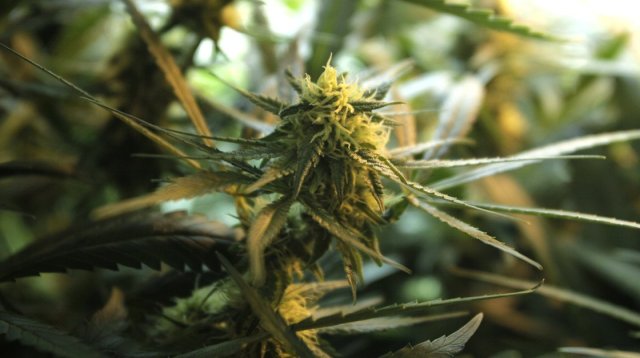
When fruit flies sense parasitic wasps in their environment, they lay their eggs in an alcohol-soaked environment, essentially forcing their larvae to consume booze as a drug to combat the deadly wasps.

The discovery by biologists at Emory University was published in the journal Science on February 22.

“The adult flies actually anticipate an infection risk to their children, and then they medicate them by depositing them in alcohol,” says Todd Schlenke, the evolutionary geneticist whose lab did the research. “We found that this medicating behavior was shared by diverse fly species, adding to the evidence that using toxins in the environment to medicate offspring may be common across the animal kingdom.”

Adult fruit flies detect the wasps by sight, and appear to have much better vision than previously realized, he adds. “Our data indicate that the flies can visually distinguish the relatively small morphological differences between male and female wasps, and between different species of wasps.”

The experiments were led by Balint Zacsoh, who recently graduated from Emory with a degree in biology and still works in the Schlenke lab. The team also included Emory graduate student Zachary Lynch and postdoc Nathan Mortimer.

The larvae of the common fruit fly, Drosophila melanogaster, eat the rot, or fungi and bacteria, that grows on overripe, fermenting fruit. They have evolved a certain amount of resistance to the toxic effects of the alcohol levels in their natural habitat, which can range up to 15 percent.

Tiny, endoparasitoid wasps are major killers of fruit flies. The wasps inject their eggs inside the fruit fly larvae, along with venom that aims to suppress their hosts’ cellular immune response. If the flies fail to kill the wasp egg, a wasp larva hatches inside the fruit fly larva and begins to eat its host from the inside out.

Last year, the Schlenke lab published a study showing how fruit fly larvae infected with wasps prefer to eat food high in alcohol. This behavior greatly improves the survival rate of the fruit flies because they have evolved high tolerance of the toxic effects of the alcohol, but the wasps have not.

“The fruit fly larvae raise their blood alcohol levels, so that the wasps living in their blood will suffer,” Schlenke says. “When you think of an immune system, you usually think of blood cells and immune proteins, but behavior can also be a big part of an organism’s immune defense.”

For the latest study, the researchers asked whether the fruit fly parents could sense when their children were at risk for infection, and whether they then sought out alcohol to prophylactically medicate them.

Adult female fruit flies were released in one mesh cage with parasitic wasps and another mesh cage with no wasps. Both cages had two petri dishes containing yeast, the nourishment for lab-raised fruit flies and their larvae. The yeast in one of the petri dishes was mixed with 6 percent alcohol, while the yeast in the other dish was alcohol free. After 24 hours, the petri dishes were removed and the researchers counted the eggs that the fruit flies had laid.

The results were dramatic. In the mesh cage with parasitic wasps, 90 percent of the eggs laid were in the dish containing alcohol. In the cage with no wasps, only 40 percent of the eggs were in the alcohol dish.

“The fruit flies clearly change their reproductive behavior when the wasps are present,” Schlenke says. “The alcohol is slightly toxic to the fruit flies as well, but the wasps are a bigger danger than the alcohol.”

The fly strains used in the experiments have been bred in the lab for decades. “The flies that we work with have not seen wasps in their lives before, and neither have their ancestors going back hundreds of generations,” Schlenke says. “And yet, the flies still recognize these wasps as a danger when they are put in a cage with them.”

Further experiments showed that the flies are extremely discerning about differences in the wasps. They preferred to lay their eggs in alcohol when female wasps were present, but not if only male wasps were in the cage.

Theorizing that the flies were reacting to pheromones, the researchers conducted experiments using two groups of mutated fruit flies. One group lacked the ability to smell, and another group lacked sight. The flies unable to smell, however, still preferred to lay their eggs in alcohol when female wasps were present. The blind flies did not make the distinction, choosing the non-alcohol food for their offspring, even in the presence of female wasps.

“This result was a surprise to me,” Schlenke says. “I thought the flies were probably using olfaction to sense the female wasps. The small, compound eyes of flies are believed to be more geared to detecting motion than high-resolution images.”

The only obvious visual differences between the female and male wasps, he adds, is that the males have longer antennae, slightly smaller bodies, and lack an ovipositor.

Further experimentation showed that the fruit flies can distinguish different species of wasps, and will only choose the alcohol food in response to wasp species that infect larvae, not fly pupae. “Fly larvae usually leave the food before they pupate,” Schlenke explains, “so there is likely little benefit to laying eggs at alcoholic sites when pupal parasites are present.”

The researchers also connected the exposure to female parasitic wasps to changes in a fruit fly neuropeptide.

Stress, and the resulting reduced level of neuropeptide F, or NPF, has previously been associated with alcohol-seeking behavior in fruit flies. Similarly, levels of a homologous neuropeptide in humans, NPY, is associated with alcoholism.

We found that when a fruit fly is exposed to female parasitic wasps, this exposure reduces the level of NPF in the fly brain, causing the fly to seek out alcoholic sites for oviposition,” Schlenke says. “Furthermore, the alcohol-seeking behavior appears to remain for the duration of the fly’s life, even when the parasitic wasps are no longer present, an example of long-term memory.”

Finally, Drosophila melanogaster is not unique in using this offspring medication behavior. “We tested a number of fly species,” Schlenke says, “and found that each fly species that uses rotting fruit for food mounts this immune behavior against parasitic wasps. Medication may be far more common in nature than we previously thought.”

http://www.sciencedaily.com/releases/2013/02/130222102958.htm