$5 Insanity’: 5 Crazy Facts About Flakka

A new drug that gives people superhuman strength, but leads to violent delusions, is gaining attention.

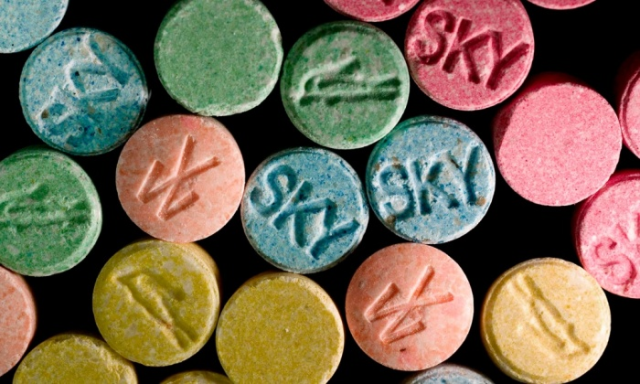
The drug, which has the street name of Flakka, is a synthetic stimulant that is chemically similar to bath salts. Flakka is fast developing a reputation for what seem to be its nasty side effects, including a tendency to give people enormous rage and strength, along with intense hallucinations.”

Even though addicted, users tell us they are literally afraid of this drug,” said James Hall, an epidemiologist at the Center for Applied Research on Substance Use and Health Disparities at Nova Southeastern University in Florida. “As one user recently reported, it’s $5 insanity.”

From what it is to how it may work, here are five facts about Flakka.

1. What is it?

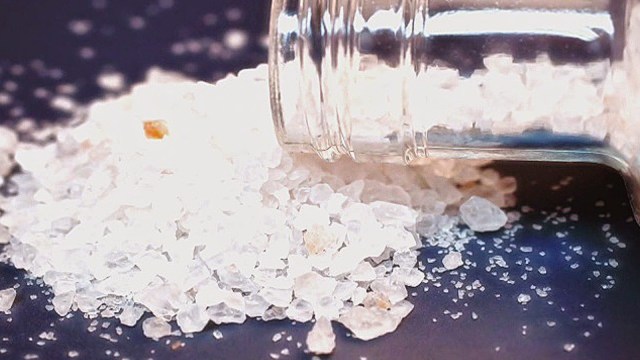
Flakka, which is also called gravel in some parts of the country, is the street name for a chemical called alpha-PVP, or alpha-pyrrolidinovalerophenone. The chemical is a synthetic cathinone, a category that includes the mild natural stimulant khat, which people in Somalia and the Middle East have chewed for centuries. Chemically, Flakka is a next-generation, more powerful version of bath salts. Flakka was banned by the Drug Enforcement Administration in early 2014.

2. What are its effects?

At low doses, Flakka is a stimulant with mild hallucinatory effects.

Like cocaine and methamphetamine, Flakka stimulates the release of feel-good brain chemicals such as dopamine and norepinephrine, Hall said. The drug also prevents neurons, or brain cells, from reabsorbing these brain chemicals, meaning the effects of the drug may linger in the system longer than people anticipate.

3. What are the dangers?

The danger comes from the drug’s incredible potency. A typical dose is just 0.003 ounces (0.1 grams), but “just a little bit more will trigger very severe adverse effects,” Hall told Live Science. “Even a mild overdose can cause heart-related problems, or agitation, or severe aggression and psychosis.”

Because of the drug’s addictive properties, users may take the drug again shortly after taking their first dose, but that can lead to an overdose, Hall said. Then, users report, “they can’t think,” and will experience what’s known as the excited delirium syndrome: Their bodies overheat, often reaching 105 degrees Fahrenheit, they will strip off their clothes and become violent and delusional, he said. The drug also triggers the adrenaline-fueled fight-or-flight response, leading to the extreme strength described in news reports.

“Police are generally called, but it might take four or five or six officers to restrain the individual,” Hall said.

At that point, emergency responders will try to counteract the effects of the drug in the person’s system by injecting a sedative such as the benzodiazepine Ativan, and if they can’t, the person can die, Hall said.

In the last several months, 10 people have died from Flakka overdoses, he said. (Users of PCP, Ecstasy, cocaine and methamphetamine can also experience the excited delirium syndrome.)

4. How is it sold?

According to Hall’s research, alpha-PVP is often purchased online in bulk from locations such as China, typically at $1,500 per kilogram. Doses typically sell on the street for $4 or $5, and because each dose is so tiny, that means dealers can net about $50,000 from their initial investment, as long as they have the networks to distribute the drug.

5. Why are we only hearing about it now?

Evidence suggests the illegal drug has only recently come on the scene. Crime lab reports from seized drugs reveal that seizures of alpha-PVP have soared, from 699 samples testing positive for the drug in 2010, to 16,500 in 2013, according to the Drug Enforcement Administration’s National Forensic Laboratory Information System.

About 22 percent of the drug seizures that tested positive for alpha-PVP came from South Florida, according to the data.
http://www.livescience.com/50502-what-is-flakka.html

New study shows that use of psychedelic drugs does not increase risk of mental illness

An analysis of data provided by 135,000 randomly selected participants – including 19,000 people who had used drugs such as LSD and magic mushrooms – finds that use of psychedelics does not increase risk of developing mental health problems. The results are published in the Journal of Psychopharmacology.

Previously, the researchers behind the study – from the Norwegian University of Science and Technology in Trondheim – had conducted a population study investigating associations between mental health and psychedelic use. However, that study, which looked at data from 2001-04, was unable to find a link between use of these drugs and mental health problems.

“Over 30 million US adults have tried psychedelics and there just is not much evidence of health problems,” says author and clinical psychologist Pål-Ørjan Johansen.

“Drug experts consistently rank LSD and psilocybin mushrooms as much less harmful to the individual user and to society compared to alcohol and other controlled substances,” concurs co-author and neuroscientist Teri Krebs.

For their study, they analyzed a data set from the US National Health Survey (2008-2011) consisting of 135,095 randomly selected adults from the US, including 19,299 users of psychedelic drugs.

Krebs and Johansen report that they found no evidence for a link between use of psychedelic drugs and psychological distress, depression, anxiety or suicidal thoughts, plans and attempts.

In fact, on a number of factors, the study found a correlation between use of psychedelic drugs and decreased risk for mental health problems.

“Many people report deeply meaningful experiences and lasting beneficial effects from using psychedelics,” says Krebs.

However, Johansen acknowledges that – given the design of the study – the researchers cannot “exclude the possibility that use of psychedelics might have a negative effect on mental health for some individuals or groups, perhaps counterbalanced at a population level by a positive effect on mental health in others.”

Despite this, Johansen believes that the findings of the study are robust enough to draw the conclusion that prohibition of psychedelic drugs cannot be justified as a public health measure.

Krebs says:

“Concerns have been raised that the ban on use of psychedelics is a violation of the human rights to belief and spiritual practice, full development of the personality, and free-time and play.”

Commenting on the research in a piece for the journal Nature, Charles Grob, a paediatric psychiatrist at the University of California-Los Angeles, says the study “assures us that there were not widespread ‘acid casualties’ in the 1960s.” However, he urges caution when interpreting the results, as individual cases of adverse effects can and do occur as a consequence of psychedelic use.

For instance, Grob describes hallucinogen persisting perception disorder, sometimes referred to as “a never-ending trip.” Patients with this disorder experience “incessant distortions” in their vision, such as shimmering lights and colored dots. “I’ve seen a number of people with these symptoms following a psychedelic experience, and it can be a very serious condition,” says Grob.

http://www.medicalnewstoday.com/articles/290461.php

Ecstasy and other drugs temporarily legal in Ireland

Possession of ecstasy and other drugs is currently legal in Ireland, but only for a day, after a court ruling on Tuesday morning.

A written judgment released by the Republic’s court of appeal said part of the Misuse of Drugs Act 1977, which allows certain substances to be controlled, is unconstitutional, meaning all government orders banning substances such as ecstasy and magic mushrooms are void – and it is not an offence to possess them.

Specifically, the court found that the act was being added to via ministerial order and without consulting the Oireachtas (both houses of the Irish parliament) and deemed this unconstitutional.

The appeal court’s ruling came in favor of a man who was prosecuted for possession of methylethcathinone, which was among a number of substances put on the controlled drugs list in 2010.

Stanislav Bederev denied the charge of having the substance for supply in 2012, and then brought a high court challenge in Dublin seeking to stop his trial, claiming that additions to the 1977 act were unconstitutional.

Bederev’s legal team argued it was not lawful to put the substance on the controlled drug list because there are no principles and policies guiding the introduction of such rules – and specifically no consultation with the Irish parliament.

The Irish government now has to force through emergency legislation in its parliament on Tuesday evening in response to the ruling.

The emergency law won’t come into place until the Republic’s second chamber, the Seanad, endorses the legislation. Following that the country’s president, Michael D Higgins, will have to gave his approval.

http://www.theguardian.com/world/2015/mar/10/irish-es-are-smiling-ecstasy-drugs-temporarily-legal-in-ireland

American Military Intelligence reveals that Adolf Hitler regularly used crystal methamphetamines

Last year, newly published letters written by Nobel prize winner Heinrich Böll appeared to confirm that Nazi troops took crystal methamphetamines in order to stay awake and motivated, despite the desperate conditions they faced on the front line.

Now, new research has revealed that Adolf Hitler was himself a regular user of the drug, now a Class A, prized among addicts for its feeling of euphoria but feared for its mental destructiveness.

According to a 47-page wartime dossier compiled by American Military Intelligence, the Fuhrer was a famous hypochondriac and took over 74 different medications, including methamphetamines.

It claims that Hitler took the drug before his final meeting with Italian fascist leader Mussolini in July of 1943, during which he apparently ranted non-stop for two hours.

Hitler eased the pain of his final days in his bunker with nine injections of a drug called Vitamultin, too, which contained among its ingredients meth-amphetamine.

The dossier – which is the subject of a new documentary Hitler’s Hidden Drug Habit – goes on to claim that the Fuhrer became addicted to drugs after seeking the medical advice of Berlin-based Dr Morell in 1936.

He was initially prescribed a drug called Mutaflor in order to relieve the pain of his stomach cramps.

He was then prescribed Brom-Nervacit, a barbiturate, Eukodal, a morphine-based sedative, bulls’ semen to boost his testosterone, stimulants Coramine and Cardiazol, and Pervitin, an ‘alertness pill’ made with crystal meth-amphetamine.

His reliance on medication became costly, and by the end of 1943, Hitler was dependant on a mentally debilitating cocktail of uppers and downers.

“Morell was a quack and a fraud and a snake oil salesman,” Bill Panagopoulos, an American collector who discovered the dossier, said.

“He should not have been practising medicine anywhere outside a veterinary clinic.”

“Some [of the drugs] were innocuous, some not so innocuous, some poisonous. Did he develop a dependence on any of these drugs? Which of these drugs, if any, were addictive? And did he become addicted to them? I’d be interested to know what the combination of these medications would do to someone who’s otherwise in good health.”

http://www.independent.co.uk/news/people/hitler-was-a-regular-user-of-crystal-meth-american-military-intelligence-dossier-reveals-9789711.html

Ayahuasca – possible new aid to psychotherapy?

Imagine discovering a plant that has the potential to help alleviate post-traumatic stress disorder, suicidal thoughts and paralyzing anxiety. That’s what some believe ayahuasca can do, and this psychedelic drink is attracting more and more tourists to the Amazon.

If you Google “ayahuasca,” you’ll find a litany of stories about Hollywood celebrities espousing its benefits, as well as the dangers of this relatively unstudied substance that triggers hallucinations.

On this Sunday’s episode of “This Is Life,” Lisa Ling goes inside an ayahuasca ceremony in Peru and talks to the men and women who are drinking this potent brew in hopes that it will alleviate their mental and emotional traumas.

Here are six things to know about ayahuasca, which some call a drug and others call a medicine:

War vets are seeking it for PTSD

Former Marine Lance Cpl. Ryan LeCompte organizes trips to Peru for war veterans, like himself, who are seeking ayahuasca as a possible treatment for PTSD and other emotional and mental trauma suffered after multiple combat deployments.

He says he’s aware of the risks, as there’s very little known about ayahuasca’s effect on the body, but he says “it’s a calculated risk.”

“Ayahuasca is a way to give relief to those who are suffering,” says LeCompte, who says many veterans are not satisfied with the PTSD treatment they receive when they return from combat.

“It’s just, ‘Here’s a pill, here’s a Band-Aid.’ The ayahuasca medicine is a way to, instead of sweeping your dirt under the rug, you know, these medicines force you to take the rug outside and beat it with a stick until it’s clean,” LeCompte explains. “And that’s how I prefer to clean my house.”

Libby, an airman 1st class, is one of the veterans who accompanied LeCompte to Peru to try ayahuasca for her PTSD diagnosis, which includes sexual trauma while on active duty. She says antidepressants made her more suicidal.

“I would like to wish not to die all the time,” she said, when asked why she was seeking ayahuasca. “I want that to go away”

It’s endorsed by some Hollywood celebrities

As more ayahuasca centers pop up in the United States, not surprisingly, celebrities including Sting and Lindsay Lohan have spoken publicly about their experiences with the substance — albeit illegal outside of religious purposes in the United States.

Lohan, who has struggled with addiction, called her ayahuasca experience “eye-opening” and “intense.” “I saw my whole life in front of me, and I had to let go of past things that I was trying to hold on to that were dark in my life,” she said on her OWN reality series “Linsday.”

Sting said he and his wife, Trudie Styler, traveled to a church in the Amazon where they tried ayahuasca, which the British singer said made him feel like he was “wired to the entire cosmos.”

It’s not a cure
Those of have tried ayahuasca say that any benefits — like with other drugs or medicine — must be combined with therapy.

“If you think you’re just going to take ‘joy juice’ … you’re nuts,” explained author and ayahuasca expert Peter Gorman, who settled in Iquitos, Peru, during the first wave of ayahuasca tourism in the 1990s.

“The five years of work to get rid of [mental trauma] is still gonna be on you.”

Gorman, author of “Ayahuasca in My Blood,” explains that ayahuasca can help “dislodge that negative energy” and show people what their life could be like without the negativity.

“[Then] you can go back home and work on getting rid of it.”

And it used to be taken by only the shaman

Gorman says ayahuasca traditions in the Amazon have changed since Western tourists began seeking its benefits.

“Traditionally, the shaman drinks [ayahuasca], he accesses other realms of reality to find out where the dissonance is, that if the shaman corrects, will eliminate the [symptoms] — could be physical, could be emotional, could be bad luck,” Gorman explains. “[Then] we Americans come, and we said we insist on drinking the damn stuff — we want our lives changed and we want that experience, so that certainly set things right on its head.”

You can even buy ayahuasca powders and extracts online and in the local markets in the Peruvian Amazon, but Gorman warns “you don’t know what it would be.”

As more and more Western tourists consume ayahuasca, Gorman says it has him worried. “I’ve had this feeling in my bones for five or six years that something could go slightly wrong here that could sour a lot of stuff.”

Some ayahuasca tourists have died

In April, 19-year-old Briton Henry Miller died after taking part in an ayahuasca ceremony in Colombia, according to various media reports. And Kyle Nolan, an 18-year-old from northern California, died under similar circumstances in August 2012 in Peru.

The shaman who provided Nolan with the ayahuasca and who initially lied about his death was sentenced to three years in prison, his mother, Ingeborg Oswald, told CNN.

There have been other reported deaths, as well as reports of physical and sexual assaults. Writer Lily Kay Ross says she survived sexual abuse by an ayahuasca shaman.

“We have to take seriously the potential for harm alongside the huge potential for benefit,” Ross says on a video on a fundraising website for the Ethnobotanical Stewardship Council. “Standards of safety and ethics would go a long way in making sure that this kind of abuse isn’t experienced by anyone else.”

Ron Wheelock, an American shaman who leads an ayahuasca healing center in the Peruvian Amazon, says he fears there may be more deaths.

“I hate to say it, yes there probably will be,” he told Lisa Ling. “It’s in the cards”

There’s a movement to create safe ayahuasca

Through IndieGogo.com, the Ethnobotanical Stewardship Council is raising money to create a health guide for ayahuasca centers in the Amazon, so tourists know which centers are safe and harvesting the plants in a sustainable manner that supports the local communities.

The idea would be to put the ESC’s logo outside ayahuasca ceremony sites to signify those centers that meet the council’s criteria for safety and sustainability.

In addition, there are efforts to study the medicinal benefits of ayahuasca so that it can be regulated and legalized in the United States, explains Rick Doblin, executive director of the Multidisciplinary Association of Psychedelic Studies.

“At a time when drug policy is being reevaluated, when marijuana looks like it’s on the road toward legalization, when psychedelic medicine is moving forward through the FDA and we can envision a time when psychedelics are available as prescription medicines, how ayahuasca should be handled in a regulatory context is really up in the air,” Doblin said.

http://www.cnn.com/2014/10/22/health/ayahuasca-medicine-six-things/index.html?hpt=hp_t2

LSD’s ability to make minds malleable revisited

Could taking LSD help people make peace with their neuroses?

Psychiatrists in the 1960s certainly thought so. They carried out many studies looking at the effect of LSD and other psychedelics on people undergoing psychotherapy for schizophrenia, OCD and alcoholism.

The idea was that the drug would mimic the effect of hypnotherapy, making people more suggestible and open to changing their thought patterns. The results were reportedly positive, but the experiments rarely included control groups and so don’t stand up to modern scrutiny.

The work ground to a halt when recreational use of LSD was banned in 1971 – even though using LSD for research purposes was exempt.

Several decades on and LSD research is less of a contentious issue. This has allowed a team of researchers to revisit LSD’s suggestive powers with more care.

A team at Imperial College London gave 10 healthy volunteers two injections a week apart, either a moderate dose of LSD or a placebo. The subjects acted as their own controls, and didn’t know which dose was which. Two hours after the injection, the volunteers lay down and listened to the researchers describe various scenarios often used in hypnotherapy. They were asked to “think along” with each one. These scenarios included tasting a delicious orange, re-experiencing a childhood memory, or relaxing on the shore of a lake.

“Sometimes the suggestions had a kind of irresistible quality” says team member Robin Carhart-Harris. “In a suggestion which describes heavy dictionaries in the palm of your hand, one of the volunteers said that even though they knew that I was offering a suggestion and it wasn’t real, their arm really ached, and only by letting their arm drop a little bit did the ache go away.”

Once all the scenarios had been read out, the participants had to rate the vividness of the mental experiences they triggered on a standard scale.

The volunteers rated their experiences after taking LSD as 20 per cent more vivid than when they had been injected with the placebo.

Treating neuroses with psychotherapy requires the therapist to be able to influence the patient’s way of viewing themselves and their obsession. Co-author David Nutt, also at Imperial College, says the work suggests that psychedelic-assisted psychotherapy may provide a unique opportunity for the brain to enter the plastic, or malleable, state required for this to happen.

Peter Gasser, a psychiatrist working in Solothurn, Switzerland, who recently conducted the first clinical trial using LSD in over 40 years, commended the study and emphasized the importance of suggestibility for therapy. “The mind on LSD is easily able to make connections between ideas and thoughts,” he says.

Now that the team has verified the historical findings, the path is laid for them to explore the mechanisms underpinning LSD’s effect on consciousness, and the legitimacy of its use in psychotherapy.

Journal reference: Psychopharmacology, DOI: 10.1007/s00213-014-3714-z

http://www.newscientist.com/article/dn26351-lsds-ability-to-make-minds-malleable-revisited.html

7 Very Bizarre (and Very Rare) Psychotic Hallucinations

brain

The many documented cases of strange delusions and neurological syndromes can offer a window into how bizarre the brain can be.

It may seem that hallucinations are random images that appear to some individuals, or that delusions are thoughts that arise without purpose. However, in some cases, a specific brain pathway may create a particular image or delusion, and different people may experience the same hallucination.

In recent decades, with advances in brain science, researchers have started to unravel the causes of some of these conditions, while others have remained a mystery.

Here is a look at seven odd hallucinations, which show that anything is possible when the brain takes a break from reality.

1. Alice-in-Wonderland syndrome
This neurological syndrome is characterized by bizarre, distorted perceptions of time and space, similar to what Alice experienced in Lewis Carroll’s “Alice’s Adventures in Wonderland.”

Patients with Alice-in-Wonderland syndrome describe seeing objects or parts of their bodies as smaller or bigger than their actual sizes, or in an altered shape. These individuals may also perceive time differently.

The rare syndrome seems to be caused by some viral infections, epilepsy, migraine headaches and brain tumors. Studies have also suggested that abnormal activity in parts of the visual cortex that handle information about the shape and size of objects might cause the hallucinations.

It’s also been suggested that Carroll himself experienced the condition during migraine headaches and used them as inspiration for writing the tale of Alice’s strange dream.

English psychiatrist John Todd first described the condition in an article published in the Canadian Medical Association Journal in 1955, and that’s why the condition is also called Todd’s syndrome. However, an earlier reference to the condition appears in a 1952 article by American neurologist Caro Lippman. The doctor describes a patient who reported feeling short and wide as she walked, and referenced “Alice’s Adventures in Wonderland” to explain her body image illusions.

2. Walking Corpse Syndrome
This delusion, also called Cotard’s Syndrome, is a rare mental illness in which patients believe they are dead, are dying or have lost their internal organs.

French neurologist Jules Cotard first described the condition in 1880, finding it in a woman who had depression and also symptoms of psychosis. The patient believed she didn’t have a brain or intestines, and didn’t need to eat. She died of starvation.

Other cases of Cotard’s syndrome have been reported in people with a range of psychiatric and neurological problems, including schizophrenia, traumatic brain injury and multiple sclerosis.

In a recent case report of Cotard’s syndrome, researchers described a previously healthy 73-year-old woman who went to the emergency room insisting that she was “going to die and going to hell.” Eventually, doctors found the patient had bleeding in her brain due to a stroke. After she received treatment in the hospital, her delusion resolved within a week, according to the report published in January 2014 in the journal of Neuropsychiatry.

3. Charles Bonnet syndrome
People who have lost their sight may develop Charles Bonnet syndrome, which involves having vivid, complex visual hallucinations of things that aren’t really there.

People with this syndrome usually hallucinate people’s faces, cartoons, colored patterns and objects. It is thought the condition occurs because the brain’s visual system is no longer receiving visual information from the eye or part of the retina, and begins making up its own images.

Charles Bonnet syndrome occurs in between 10 and 40% of older adults who have significant vision loss, according to studies.

4. Clinical lycanthropy
In this extremely rare psychiatric condition, patients believe they are turning into wolves or other animals. They may perceive their own bodies differently, and insist they are growing the fur, sharp teeth and claws of a wolf.

Cases have also been reported of people with delusional beliefs about turning into dogs, pigs, frogs and snakes.

The condition usually occurs in combination with another disorder, such as schizophrenia, bipolar disorder or severe depression, according to a review study published in the March issue of the journal History of Psychiatry in 2014.

5. Capgras delusion
Patients with Capgras delusion believe that an imposter has replaced a person they feel close to, such as a friend or spouse. The delusion has been reported in patients with schizophrenia, Alzheimer’s disease, advanced Parkinson’s disease, dementia and brain lesions.

One brain imaging study suggested the condition may involve reduced neural activity in the brain system that processes information about faces and emotional responses.

6. Othello syndrome
Named after Shakespeare’s character, Othello syndrome involves a paranoid belief that the sufferer’s partner is cheating. People with this condition experience strong obsessive thoughts and may show aggression and violence.

In one recent case report, doctors described a 46-year-old married man in the African country Burkina Faso who had a stroke, which left him unable to communicate and paralyzed in half of his body. The patient gradually recovered from his paralysis and speaking problems, but developed a persistent delusional jealousy and aggression toward his wife, accusing her of cheating with an unidentified man.

7. Ekbom’s syndrome
Patients with Ekbom’s syndrome, also known as delusional parasitosis or delusional infestations, strongly believe they are infested with parasites that are crawling under their skin. Patients report sensations of itching and being bitten, and sometimes, in an effort to get rid of the pathogens, they may hurt themselves, which can result in wounds and actual infections.

It’s unknown what causes these delusions, but studies have linked the condition with structural changes in the brain, and some patients have improved when treated with antipsychotic medications.

http://www.livescience.com/46477-oddest-hallucinations.html

New Report Blasts DEA For Spending 4 Decades Obstructing Marijuana Science

by Matt Ferner

The Drug Enforcement Administration has been impeding and ignoring the science on marijuana and other drugs for more than four decades, according to a report released this week by the Drug Policy Alliance, a drug policy reform group, and the Multidisciplinary Association for Psychedelic Studies, a marijuana research organization.

“The DEA is a police and propaganda agency,” Ethan Nadelmann, executive director of the Drug Policy Alliance, said Wednesday. “It makes no sense for it to be in charge of federal decisions involving scientific research and medical practice.”

The report alleges that the DEA has repeatedly failed to act in a timely fashion when faced with petitions to reschedule marijuana. The drug is currently classified as Schedule I, which the DEA reserves for the “most dangerous” drugs with “no currently accepted medical use.” Schedule I drugs, which include substances like heroin and LSD, cannot receive federal funding for research. On three separate occasions — in 1973, 1995 and again in 2002 — the DEA took years to make a final decision about a rescheduling petition, and in two of the cases the DEA was sued multiple times to force a decision.

The report criticizes the DEA for overruling its own officials charged with determining how illicit substances should be scheduled. It also criticizes the agency for creating a “regulatory Catch-22” by arguing there is not enough scientific evidence to support rescheduling marijuana while simultaneously impeding the research that would produce such evidence.

A spokesperson at the DEA declined to comment on the report.

The feds have long been accused of only funding marijuana research that focuses on the potential negative effects of the substance, but that trend appears to be changing.

According to The Hill, the National Institute on Drug Abuse has conducted about 30 studies to date on the potential benefits of marijuana. NIDA oversees the cultivation, production and distribution of marijuana grown for research purposes at the University of Mississippi in the only federally legal marijuana garden in the U.S.– a process through which the only federally sanctioned marijuana studies are approved.

The joint report comes less than two weeks after the House approved three amendments taking aim at the DEA and its ability to enforce federal marijuana and hemp laws in states which have legal marijuana operations and industrial hemp programs. The medical marijuana amendment was sponsored by Rep. Dana Rohrabacher (R-Calif.).

“Nobody should be afraid of the truth,” Rohrabacher said Wednesday. “There’s a lot of other drugs that have harmful side effects. Is the downside of marijuana a harmful side effect? Or is there a positive side that actually does help? That needs to be proven.”

The federal government’s interest in marijuana certainly appears to be growing. Since 2003, it has approved more than 500 grants for marijuana-related studies, with a marked upswing in recent years, according to McClatchy. In 2003, 22 grants totaling $6 million were approved for cannabis research. In 2012, that number had risen to 69 approved grants totaling more than $30 million.

“The DEA has obstructed research into the medical use of marijuana for over 40 years and in the process has caused immeasurably suffering that would otherwise have been treated by low-cost, low-risk generic marijuana,” Rick Doblin, executive director of the Multidisciplinary Association for Psychedelic Studies, said in a statement. “The DEA’s obstruction of the FDA approval process for marijuana has — to the DEA’s dismay — unintentionally catalyzed state-level medical marijuana reforms.”

Currently, 22 states and the District of Columbia have legalized marijuana for medical use. Eight other states — Alabama, Iowa, Kentucky, Mississippi, South Carolina, Tennessee, Utah and Wisconsin — have legalized CBD oils, made from a non-psychoactive ingredient in marijuana frequently used to treat epilepsy, for limited medical use or for research purposes.

A number of recent studies have shown the medical potential of cannabis. Purified forms may attack some forms of aggressive cancer. Marijuana use also has been tied to better blood sugar control and may help slow the spread of HIV. One study found that legalization of the plant for medical purposes may even lead to lower suicide rates.

Nadelmann said the DEA has “demonstrated a regular pattern of abusing its discretionary powers.”

“We believe this authority would be better handled by another government agency in the health realm, or even better still, by an organization that is truly independent, perhaps something that involves the National Academy of Sciences,” he said. “We will be working to encourage greater congressional oversight and also to call for reforms of federal law.”

Thanks to Dr. Lutter for bringing this to the attention of the It’s Interesting community.

http://www.huffingtonpost.com/2014/06/11/dea-blocks-marijuana-science_n_5482367.html

Brief History of 8 Hallucinogens

Humans have been ingesting mind-altering substances for a very long time. Hallucinogen-huffing bowls 2,500 years old (http://www.livescience.com/5240-ancient-family-heirlooms-snort-hallucinogens.html) have been found on islands in the Lesser Antilles, and traditional cultures from the Americas to Africa use hallucinogenic substances for spiritual purposes. Here are some notable substances that send the mind tripping.

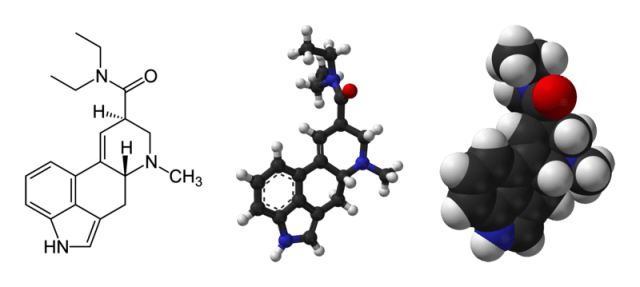
LSD is commonly known as “acid,” but its scientific name is a mouthful: lysergic acid diethylamaide. The drug was first synthesized in 1938 from a chemical called ergotamine. Ergotamine, in turn, is produced by a grain fungus that grow on rye.

LSD was originally produced by a pharmaceutical company under the name Delysid, but it got a bad reputation in the 1950s when the CIA decided to research its effects on mind control. The test subjects of the CIA project MKULTRA proved very difficult to control indeed, and many, like counter-culture writer Ken Kesey, started taking the drug for fun (and for their own form of 1960s enlightenment).

ayahuasca-vine-110929

Ayahuasca is a hallucinatory mixture of Amazonian infusions centered around the Banisteriopsis caapi vine. The brew has long been used by native South American tribes for spiritual rituals and healing, and like other hallucinogens, ayahuasca often triggers very intense emotional experiences (vomiting is also common). In 2006, National Geographic writer Kira Salak described her experience with ayahuasca in Peru for the magazine.

” I will never forget what it was like. The overwhelming misery. The certainty of never-ending suffering. No one to help you, no way to escape. Everywhere I looked: darkness so thick that the idea of light seemed inconceivable,” Salak wrote. “Suddenly, I swirled down a tunnel of fire, wailing figures calling out to me in agony, begging me to save them. Others tried to terrorize me. ‘You will never leave here,’ they said. ‘Never. Never.'”

Nonetheless, Salak wrote, when she broke free of her hallucinations, her crippling depression was alleviated. It’s anecdotal experiences like this that have led researchers to investigate the uses of hallucinogens as therapy for mental disorders such as anxiety, depression and post-traumatic stress disorder.

Peyote is a cactus that gets its hallucinatory power from mescaline. Like most hallucinogens, mescaline binds to serotonin receptors in the brain, producing heightened sensations and kaleidoscopic visions.

Native groups in Mexico have used peyote in ceremonies for thousands of years, and other mescaline-producing cacti have long been used by South American tribes for their rituals. Peyote has been the subject of many a court battle because of its role in religious practice; currently, Arizona, Colorado, New Mexico, Nevada and Oregon allow some peyote possession, but only if linked to religious ceremonies, according to Arizona’s Peyote Way Church of God.

The “magic” ingredient in hallucinogenic mushrooms is psilocybin, a compound that breaks down into psilocin in the body. Psilocin bonds to serotonin receptors all over the brain, and can cause hallucinations as well as synesthesia, or the mixture of two senses. Under the influence, for example, a person might feel that they can smell colors.

In keeping with the human tradition of eating anything that might alter your mind, people have been ingesting psilocybin-continuing mushrooms for thousands of years. Synthetic psilocybin is now under study as a potential treatment for anxiety, depression and addiction.

Best known by its street name, “angel dust,” PCP stands for phencyclidine. The drug blocks receptors in the brain for the neurotransmitter glutamate. It’s more dangerous than other hallucinogens, with schizophrenia-like symptoms and nasty side effects.

Those side effects are why PCP has no medical uses. The drug was tested as an anesthetic in the 1950s and used briefly to knock out animals during veterinary surgeries. But by the 1960s, PCP had hit the streets and was being used as a recreation drug, famous for the feelings of euphoria and invincibility it bestowed on the user. Unfortunately, a side effect of all that euphoria is sometimes truly destructive behavior, including users trying to jump out of windows or otherwise self-mutilating. Not to mention that high enough doses can cause convulsions.

Derived from the African iboga plant, ibogaine is another hallucinogen with a long history of tribal use. More recently, the drug has shown promise in treating addiction, although mostly in Mexico and Europe where ibogaine treatment is not prohibited as it is in the U.S.

Using ibogaine as therapy is tricky, however. The drug can cause heart rhythm problems, and vomiting is a common side effect. The Massachusetts-based Multidisciplinary Association for Psychedelic Research (MAPS) reports that an estimated 1 in 300 ibogaine users die due to the drug. The group is studying the long-term effects of ibogaine on patients in drug treatment programs in New Zealand and Mexico.

Salvia divinorum, also known as seer’s or diviner’s sage, grows in the cloud forest of Oaxaca, Mexico. The native Mazatec people have long used tea made out of the leaves in spiritual ceremonies, but the plant can also be smoked or chewed for its hallucinogenic effects.

Salvia is not currently a controlled substance, according to the National Institute on Drug Abuse, but it is under consideration to be made illegal and placed in the same drug class as marijuana.

Ecstasy, “E” or “X” are the street names for MDMA, or (get ready for a long one) 3,4-methylenedioxymethamphetamine. The drug acts on serotonin in the brain, causing feelings of euphoria, energy and distortions of perception. It can also nudge body temperatures up, raising the risk of heat stroke. Animal studies suggest that MDMA causes long-term and potentially dangerous changes in the brain, according to the National Institute on Drug Abuse.

MDMA was first synthesized by a chemist looking for substances to stop bleeding in 1912. No one paid the compound much mind for the next half-decade, but by the 1970s, MDMA had hit the streets. It was popular at raves and nightclubs and among those who liked their music psychedelic. Today, ecstasy is still a common street drug, but researchers are investigating whether MDMA could be used to treat post-traumatic stress disorder and cancer-related anxiety.

http://www.livescience.com/16286-hallucinogens-lsd-mushrooms-ecstasy-history.html

End The War On Drugs, Say Nobel Prize-Winning Economists

war_on_drugs_thumb

The decades-long global war on drugs has failed and it’s time to shift the focus from mass incarceration to public health and human rights, according to a new report endorsed by five Nobel Prize-winning economists.

The report, titled “Ending the Drug Wars” and put together by the London School of Economics’ IDEAS center, looks at the high costs and unintended consequences of drug prohibitions on public health and safety, national security and law enforcement.

“The pursuit of a militarized and enforcement-led global ‘war on drugs’ strategy has produced enormous negative outcomes and collateral damage,” says the 82-page report. “These include mass incarceration in the US, highly repressive policies in Asia, vast corruption and political destabilization in Afghanistan and West Africa, immense violence in Latin America, an HIV epidemic in Russia, an acute global shortage of pain medication and the propagation of systematic human rights abuses around the world.”

The report urges the world’s governments to reframe their drug policies around treatment and harm reduction rather than prosecution and prison.

It is also aimed at the United Nations General Assembly, which is preparing to convene a special session on drug policy in 2016. The hope is to push the U.N. to encourage countries to develop their own policies, because the report declares the current one-size-fits-all approach has not proved to be effective.

“The UN must recognize its role is to assist states as they pursue best-practice policies based on scientific evidence, not undermine or counteract them,” said Danny Quah, a professor of economics at LSE and a contributor to the report. “If this alignment occurs, a new and effective international regime can emerge that effectively tackles the global drug problem.”

In addition to contributions from Quah and a dozen other foreign and drug policy experts, the report has been endorsed by five past winners of the Nobel Prize in Economics: Kenneth Arrow (1972), Sir Christopher Pissarides (2010), Thomas Schelling (2005), Vernon Smith (2002) and Oliver Williamson (2009). Also signing on to the report’s foreword are a number of current and former international leaders, including George Shultz, secretary of state under President Ronald Reagan; Nick Clegg, British deputy prime minister; and Javier Solana, the former EU high representative for common foreign and security policy.

Guatemalan President Otto Perez Molina, who has announced that his government may present a plan to legalize production of marijuana and opium poppies by the end of 2014, has also publicly backed the report. Molina plans to discuss the report at the U.N.

A recent Pew survey suggests that Americans may be ready to refocus the U.S. end of the drug war, with 67 percent favoring policies that would provide drug treatment.

“The drug war’s failure has been recognized by public health professionals, security experts, human rights authorities and now some of the world’s most respected economists,” said John Collins, the International Drug Policy Project coordinator at LSE IDEAS. “Leaders need to recognize that toeing the line on current drug control strategies comes with extraordinary human and financial costs to their citizens and economies.”

http://www.huffingtonpost.com/2014/05/06/end-drug-war_n_5275078.html?utm_hp_ref=politics

Thanks to Dr. Lutter for bringing this to the attention of the It’s Interesting community.