Wake Up And Smell The Caffeine. It’s A Powerful Drug

Many of us can barely make it through the morning without first downing a cup of hot coffee. It’s become such a big part of our daily rituals that few actually give much thought to what it is that we’re putting in our bodies.

To help us break down the little-known things about caffeine, NPR’s David Greene spoke with Murray Carpenter, author of Caffeinated: How Our Daily Habit Helps, Hurts and Hooks Us. These are the things you probably aren’t thinking about as you wait in line at your local coffee shop.

Caffeine is a drug. Treat it as such.

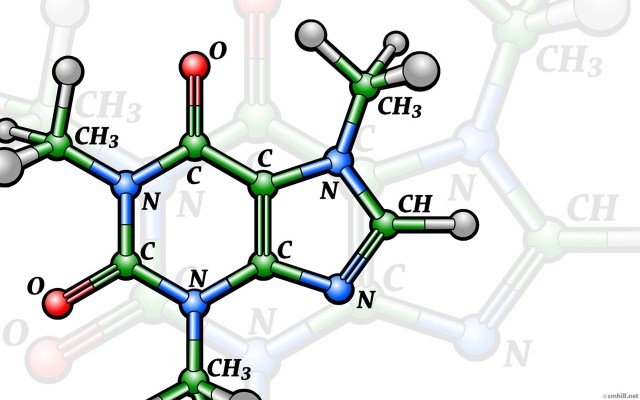
In its essential form, caffeine is a bitter white powder derived from a natural insecticide found in some plants. Over the years, it became acknowledged as a drug after people independently discovered its stimulating effect.

But, Carpenter says, people often underestimate just how powerful that drug is. “A tablespoon — about 10 grams — will kill you,” he says, recounting the unfortunate story of a college student who went into a seizure and died after chasing down spoonfuls of caffeine with an energy drink.

Most of the caffeine in soft drinks comes from factories in China.

Naturally extracted caffeine is burned out from heated-up coffee beans. But most of the caffeine used in soft drinks is actually synthetically produced in Chinese pharmaceutical plants. After visiting one of these plants — the world’s largest, in fact — Carpenter can only describe it as “sketchy.”

“It was not what I expected,” he says. “It was sort of a rundown industrial park.”

And our favorite caffeinated beverage? Not coffee, but soft drinks.

“Despite the Starbucks on every corner [and] this sort of conspicuous coffee culture that we have today, we’re not drinking as much coffee as our grandparents did,” Carpenter says.

As coffee consumption has declined, our love of soft drinks has taken over. Today, eight of the 10 top-selling soft drinks are caffeinated. “If you look at, say, Coke, Diet Coke, Pepsi, Mountain Dew, Dr. Pepper, the only common denominator, besides carbonated water, is caffeine,” he says.

Sometimes, he says, caffeine can lurk in unexpected places — like orange soda.

Which brings us to the case of the supercharged Sunkist soda.

In 2010, a batch of Sunkist orange soda was bottled with a botched caffeine content. “These were sodas that should’ve had 41 milligrams of caffeine per 12-ounce serving, but they were blended with six times the labeled amount of caffeine,” Carpenter says. “So [there were actually] 240 milligrams per bottle.” That’s as much as three Red Bulls or 16 ounces of strong coffee, Carpenter notes in the book.

After Sunkist started getting complaints from consumers, it finally agreed with the Food and Drug Administration to voluntarily recall the 40,000 cases of supercaffeinated orange soda it had sent out.

“But my impression is that a lot of the people who consumed this and had some funny experiences with caffeine probably didn’t know what was going on,” he adds.

So what’s the takeaway? Drink in moderation.

Carpenter says three to four cups of coffee a day isn’t dangerous over the long term. That’s in line with what we’ve previously reported. Of course, if you’re experiencing symptoms like jitters or sleeplessness related to too much caffeine, cut back.

“For people who are using caffeine moderately … it’s probably perfectly healthy,” he says. “And we know there are some indications that we may even get some benefit out of long-term caffeinated coffee drinking.”

http://www.npr.org/blogs/thesalt/2014/03/13/289750754/wake-up-and-smell-the-caffeine-its-a-powerful-drug

18 Things Highly Creative People Do Differently

Creativity works in mysterious and often paradoxical ways. Creative thinking is a stable, defining characteristic in some personalities, but it may also change based on situation and context. Inspiration and ideas often arise seemingly out of nowhere and then fail to show up when we most need them, and creative thinking requires complex cognition yet is completely distinct from the thinking process.

Neuroscience paints a complicated picture of creativity. As scientists now understand it, creativity is far more complex than the right-left brain distinction would have us think (the theory being that left brain = rational and analytical, right brain = creative and emotional). In fact, creativity is thought to involve a number of cognitive processes, neural pathways and emotions, and we still don’t have the full picture of how the imaginative mind works.

And psychologically speaking, creative personality types are difficult to pin down, largely because they’re complex, paradoxical and tend to avoid habit or routine. And it’s not just a stereotype of the “tortured artist” — artists really may be more complicated people. Research has suggested that creativity involves the coming together of a multitude of traits, behaviors and social influences in a single person.

“It’s actually hard for creative people to know themselves because the creative self is more complex than the non-creative self,” Scott Barry Kaufman, a psychologist at New York University who has spent years researching creativity, told The Huffington Post. “The things that stand out the most are the paradoxes of the creative self … Imaginative people have messier minds.”

While there’s no “typical” creative type, there are some tell-tale characteristics and behaviors of highly creative people. Here are 18 things they do differently.

They daydream.

Creative types know, despite what their third-grade teachers may have said, that daydreaming is anything but a waste of time.

According to Kaufman and psychologist Rebecca L. McMillan, who co-authored a paper titled “Ode To Positive Constructive Daydreaming,” mind-wandering can aid in the process of “creative incubation.” And of course, many of us know from experience that our best ideas come seemingly out of the blue when our minds are elsewhere.

Although daydreaming may seem mindless, a 2012 study suggested it could actually involve a highly engaged brain state — daydreaming can lead to sudden connections and insights because it’s related to our ability to recall information in the face of distractions. Neuroscientists have also found that daydreaming involves the same brain processes associated with imagination and creativity.

They observe everything.

The world is a creative person’s oyster — they see possibilities everywhere and are constantly taking in information that becomes fodder for creative expression. As Henry James is widely quoted, a writer is someone on whom “nothing is lost.”

The writer Joan Didion kept a notebook with her at all times, and said that she wrote down observations about people and events as, ultimately, a way to better understand the complexities and contradictions of her own mind:

“However dutifully we record what we see around us, the common denominator of all we see is always, transparently, shamelessly, the implacable ‘I,'” Didion wrote in her essay On Keeping A Notebook. “We are talking about something private, about bits of the mind’s string too short to use, an indiscriminate and erratic assemblage with meaning only for its marker.”

They work the hours that work for them.

Many great artists have said that they do their best work either very early in the morning or late at night. Vladimir Nabokov started writing immediately after he woke up at 6 or 7 a.m., and Frank Lloyd Wright made a practice of waking up at 3 or 4 a.m. and working for several hours before heading back to bed. No matter when it is, individuals with high creative output will often figure out what time it is that their minds start firing up, and structure their days accordingly.

They take time for solitude.

In order to be open to creativity, one must have the capacity for constructive use of solitude. One must overcome the fear of being alone,” wrote the American existential psychologist Rollo May.

Artists and creatives are often stereotyped as being loners, and while this may not actually be the case, solitude can be the key to producing their best work. For Kaufman, this links back to daydreaming — we need to give ourselves the time alone to simply allow our minds to wander.

“You need to get in touch with that inner monologue to be able to express it,” he says. “It’s hard to find that inner creative voice if you’re … not getting in touch with yourself and reflecting on yourself.”

They turn life’s obstacles around.

Many of the most iconic stories and songs of all time have been inspired by gut-wrenching pain and heartbreak — and the silver lining of these challenges is that they may have been the catalyst to create great art. An emerging field of psychology called post-traumatic growth is suggesting that many people are able to use their hardships and early-life trauma for substantial creative growth. Specifically, researchers have found that trauma can help people to grow in the areas of interpersonal relationships, spirituality, appreciation of life, personal strength, and — most importantly for creativity — seeing new possibilities in life.

“A lot of people are able to use that as the fuel they need to come up with a different perspective on reality,” says Kaufman. “What’s happened is that their view of the world as a safe place, or as a certain type of place, has been shattered at some point in their life, causing them to go on the periphery and see things in a new, fresh light, and that’s very conducive to creativity.”

They seek out new experiences.

Creative people love to expose themselves to new experiences, sensations and states of mind — and this openness is a significant predictor of creative output.

“Openness to experience is consistently the strongest predictor of creative achievement,” says Kaufman. “This consists of lots of different facets, but they’re all related to each other: Intellectual curiosity, thrill seeking, openness to your emotions, openness to fantasy. The thing that brings them all together is a drive for cognitive and behavioral exploration of the world, your inner world and your outer world.”

They “fail up.”

Resilience is practically a prerequisite for creative success, says Kaufman. Doing creative work is often described as a process of failing repeatedly until you find something that sticks, and creatives — at least the successful ones — learn not to take failure so personally.

“Creatives fail and the really good ones fail often,” Forbes contributor Steven Kotler wrote in a piece on Einstein’s creative genius.

They ask the big questions.
Creative people are insatiably curious — they generally opt to live the examined life, and even as they get older, maintain a sense of curiosity about life. Whether through intense conversation or solitary mind-wandering, creatives look at the world around them and want to know why, and how, it is the way it is.

They people-watch.

Observant by nature and curious about the lives of others, creative types often love to people-watch — and they may generate some of their best ideas from it.

“[Marcel] Proust spent almost his whole life people-watching, and he wrote down his observations, and it eventually came out in his books,” says Kaufman. “For a lot of writers, people-watching is very important … They’re keen observers of human nature.”

They take risks.

Part of doing creative work is taking risks, and many creative types thrive off of taking risks in various aspects of their lives.

“There is a deep and meaningful connection between risk taking and creativity and it’s one that’s often overlooked,” contributor Steven Kotler wrote in Forbes. “Creativity is the act of making something from nothing. It requires making public those bets first placed by imagination. This is not a job for the timid. Time wasted, reputation tarnished, money not well spent — these are all by-products of creativity gone awry.”

They view all of life as an opportunity for self-expression.

Nietzsche believed that one’s life and the world should be viewed as a work of art. Creative types may be more likely to see the world this way, and to constantly seek opportunities for self-expression in everyday life.

“Creative expression is self-expression,” says Kaufman. “Creativity is nothing more than an individual expression of your needs, desires and uniqueness.”

They follow their true passions.

Creative people tend to be intrinsically motivated — meaning that they’re motivated to act from some internal desire, rather than a desire for external reward or recognition. Psychologists have shown that creative people are energized by challenging activities, a sign of intrinsic motivation, and the research suggests that simply thinking of intrinsic reasons to perform an activity may be enough to boost creativity.

“Eminent creators choose and become passionately involved in challenging, risky problems that provide a powerful sense of power from the ability to use their talents,” write M.A. Collins and T.M. Amabile in The Handbook of Creativity.

They get out of their own heads.

Kaufman argues that another purpose of daydreaming is to help us to get out of our own limited perspective and explore other ways of thinking, which can be an important asset to creative work.

“Daydreaming has evolved to allow us to let go of the present,” says Kaufman. “The same brain network associated with daydreaming is the brain network associated with theory of mind — I like calling it the ‘imagination brain network’ — it allows you to imagine your future self, but it also allows you to imagine what someone else is thinking.”

Research has also suggested that inducing “psychological distance” — that is, taking another person’s perspective or thinking about a question as if it was unreal or unfamiliar — can boost creative thinking.

They lose track of the time.
Creative types may find that when they’re writing, dancing, painting or expressing themselves in another way, they get “in the zone,” or what’s known as a flow state, which can help them to create at their highest level. Flow is a mental state when an individual transcends conscious thought to reach a heightened state of effortless concentration and calmness. When someone is in this state, they’re practically immune to any internal or external pressures and distractions that could hinder their performance.

You get into the flow state when you’re performing an activity you enjoy that you’re good at, but that also challenges you — as any good creative project does.

“[Creative people] have found the thing they love, but they’ve also built up the skill in it to be able to get into the flow state,” says Kaufman. “The flow state requires a match between your skill set and the task or activity you’re engaging in.”

They surround themselves with beauty.

Creatives tend to have excellent taste, and as a result, they enjoy being surrounded by beauty.

A study recently published in the journal Psychology of Aesthetics, Creativity, and the Arts showed that musicians — including orchestra musicians, music teachers, and soloists — exhibit a high sensitivity and responsiveness to artistic beauty.

They connect the dots.
If there’s one thing that distinguishes highly creative people from others, it’s the ability to see possibilities where other don’t — or, in other words, vision. Many great artists and writers have said that creativity is simply the ability to connect the dots that others might never think to connect.

In the words of Steve Jobs:

“Creativity is just connecting things. When you ask creative people how they did something, they feel a little guilty because they didn’t really do it, they just saw something. It seemed obvious to them after a while. That’s because they were able to connect experiences they’ve had and synthesize new things.”

They constantly shake things up.

Diversity of experience, more than anything else, is critical to creativity, says Kaufman. Creatives like to shake things up, experience new things, and avoid anything that makes life more monotonous or mundane.

“Creative people have more diversity of experiences, and habit is the killer of diversity of experience,” says Kaufman.

They make time for mindfulness.

Creative types understand the value of a clear and focused mind — because their work depends on it. Many artists, entrepreneurs, writers and other creative workers, such as David Lynch, have turned to meditation as a tool for tapping into their most creative state of mind.

And science backs up the idea that mindfulness really can boost your brain power in a number of ways. A 2012 Dutch study suggested that certain meditation techniques can promote creative thinking. And mindfulness practices have been linked with improved memory and focus, better emotional well-being, reduced stress and anxiety, and improved mental clarity — all of which can lead to better creative thought.

http://www.huffingtonpost.com/2014/03/04/creativity-habits_n_4859769.html

New study shows that anger outbursts acutely raise risk of heart attack and stroke

Getting really angry might be more dangerous than you think.

A new study found people who experienced severe anger outbursts were more at risk for cardiovascular events in the two hours following the outbursts compared to those who remained calm.

“The relative risk was similar for people who had known pre-existing heart disease and those who didn’t,” says Dr. Murray A. Mittleman, senior study author and an associate professor of medicine at Harvard Medical School.

The study was designed so that each patient was compared to his or her own baseline risk. “A person with pre-existing heart disease or cardiovascular disease, the absolute risk they are incurring is much greater than (that of) a person without cardiovascular disease or risk factors,” Mittleman says.
“If we look at somebody at higher risk for having cardiovascular events, and they get angry multiple times a day, this can lead to 650 extra heart attacks per year out of 10, 000 a year,” he says. “When we look at a person who is relatively low risk, but if they do have these episodes of anger fairly frequently, we estimate there would be about 150 extra heart attacks out of 10,000 a year.”

Smoking, high cholesterol, high blood pressure, being overweight and having diabetes are all risk factors for cardiovascular disease. An estimated 17 million people worldwide die of cardiovascular diseases, particularly heart attacks and strokes, each year, according to the Centers for Disease Control and Prevention.

The study published Monday in the European Heart Journal was a data analysis looking at nine studies where anger and cardiovascular events were self-reported over nearly two decades. The study found a 4.74 times higher risk of MI (myocardial infarction, or heart attack) or ACS (acute coronary syndrome, where the heart muscle doesn’t get enough oxygen-rich blood) following outbursts of anger.

“Anger causes our heart rate to increase through the sympathetic nervous system and causes our stress hormones to become elevated (the fight or flight mechanism),” says Dr. Mariell Jessup, president of the American Heart Association and medical director of the Penn Heart and Vascular Center at the University of Pennsylvania. “We breathe faster, all of which may trigger undesirable reactions in our blood pressure or in our arteries.”

This disruption may mean the heart or the brain doesn’t get the blood and oxygen they need resulting in a heart attack or a stroke, she says.

Researchers suggest more needs to be done to come up with effective interventions to prevent cardiovascular events triggered by anger outbursts. The American Heart Association suggests regular physical activity, finding a way to relax or talking with friends to help reduce stress and anger.

Mittleman suggests the best way to lower your risk for a heart attack or stroke during an angry outburst is to lower your overall baseline level of risk – exercise, eat healthy and don’t smoke – and then find ways to cope with stress and anger.

Angry outbursts may raise heart attack, stroke risk

Maryland police chief hoaxed on pot perils

50097724e81d3_image

By Fredrick Kunkle
The Washington Post

Annapolis Police Chief Michael A. Pristoop thought he came prepared when he testified before a Maryland state Senate panel on Tuesday about the perils of legalizing marijuana.

In researching his testimony against two bills before the Judicial Proceedings Committee, Pristoop said, he had found a news article to illustrate the risks of legalization: 37 people in Colorado, he said, had died of marijuana oversdoses on the very day that the state legalized pot.
“When he said it, everyone in the room dropped their laptops,” Sen. Jamie B. Raskin (D-Montgomery) said in an e-mail.

Trouble is, the facts were about as close to the truth as oregano is to pot. After a quick Google search on his laptop, Raskin — the sponsor of the legalization bill that was the subject of the Senate hearing — advised the chief that the Colorado overdose story, despite its deadpan delivery, had been made up for laughs by The Daily Currant, an online comedy magazine.

“I had not seen the spoof before, but it was self-evidently a parody,” Raskin said. “In the absence of real data, Internet hoaxes are becoming marijuana Prohibition’s last stand.”

Pristoop was among more than 100 people who testified at the hearing to give their views about legalizing or decriminalizing marijuana. Most witnesses said they were in favor of Raskin’s bill, which would legalize marijuana and tax and regulate its distribution and use. A separate bill, sponsored by Sens. Robert A. Zirkin (D-Baltimore County) and Allan H. Kittleman (R-Howard), would impose a civil fine of $100 for possession of small amounts of marijuana.
Late Tuesday, the chief apologized for the mistake, admitting in a news release that he had been duped.

“I apologize for the information I provided concerning the deaths. I believed the information I obtained was accurate, but I now know the story is nothing more than an urban legend,” Pristoop said. “This does not take away from the other facts presented in opposition to legalization or the good work of the Maryland Chiefs and Maryland Sheriffs Associations.”

Maj. Scott Baker said the chief and the department regretted the erroneous testimony but were also trying to take the mistake in stride, with a bit of humor.

“His numbers are up in smoke,” Baker acknowledged Wednesday — a sly tip of the hat to Cheech & Chong’s 1978 stoner movie.

Here’s an excerpt from the satirical — and totally fictional — Daily Currant article that duped Pristoop:

Colorado is reconsidering its decision to legalize recreational pot following the deaths of dozens due to marijuana overdoses.

According to a report in the Rocky Mountain News, 37 people were killed across the state on Jan. 1, the first day the drug became legal for all adults to purchase. Several more are clinging onto life in local emergency rooms and are not expected to survive.

“It’s complete chaos here,” says Dr. Jack Shepard, chief of surgery at St. Luke’s Medical Center in Denver. “I’ve put five college students in body bags since breakfast and more are arriving every minute.

“We are seeing cardiac arrests, hypospadias, acquired trimethylaminuria and multiple organ failures. By next week the death toll could go as high as 200, maybe 300. Someone needs to step in and stop this madness. My god, why did we legalize marijuana? What were we thinking?” http://www.washingtonpost.com/local/md-politics/like-wow-police-chief-is-hoaxed-on-pot-perils/2014/02/25/42bd0592-9e94-11e3-9ba6-800d1192d08b_story.html

Thanks to Da Brayn for bringing this to the attention of the It’s Interesting community.

New evidence of lifelong effects of childhood bullying

By Andrew M. Seaman

The negative physical and mental effects tied to bullying among children and teens may accumulate throughout the years, according to a new study.

Researchers found that teens who had been bullied in the past and those currently being bullied tended to have a lower quality of life, compared to those who were bullied less or not at all.

This finding and previous research on the effects of bullying suggest more rigorous work should be done on finding ways to intervene and stop bullying, said the study’s lead author.

“I think this is overwhelming support for early interventions and immediate interventions and really advancing the science about interventions,” Laura Bogart, from Boston Children’s Hospital, told Reuters Health.

In the past, when researchers have surveyed students at one point in time, children and teens who were being bullied tended to score lower on measures of physical and mental health.

But few studies have examined whether the possible effects of bullying accumulate over the years, the researchers write in the journal Pediatrics.

They analyzed data from the Healthy Passages study, which surveyed students in Alabama, California and Texas about how much bullying they experienced and evaluated their physical and mental health.

Overall, 4,297 students completed the surveys in fifth, seventh and 10th grades.

The researchers found that about a third of the students had been regularly bullied at some point during the course of the study.

Generally, those who had been bullied in the past scored better on measures of physical and mental health, compared to those who were currently being bullied. Teens who were bullied throughout their school career scored the worst.

For example, about seven percent of 10th grade students who had never been bullied scored low on mental health measures. That compared to 12 percent who had been bullied in the past, 31 percent who were currently being bullied and almost 45 percent of those who underwent persistent bullying.

About eight percent of 10th grade students who were never bullied had poor physical health, compared to 12 percent of those who were bullied in the past, 26 percent who were currently being bullied and 22 percent who were continuously bullied.

Poor mental health included traits such as being sad, afraid and angry, according to Bogart. Poor physical health included limitations like not being able to walk far and not being able to pick up heavy objects.

“I think one key thing to take from this is that any adult that has any contact with children . . . (should) know what the signs of bullying might be,” Bogart said. “This study tells us some of them, but not all of them.”

“There are physical signs, but they’re not always physical,” she said.

For example, one non-physical sign that a young person is being bullied is that the child doesn’t want to go to school.

Bogart also said it’s important for parents to know if their child falls into one of the groups at high risk for bullying. Those groups include children with physical disabilities, those who are overweight and obese and those who are lesbian, gay, bisexual or questioning.

“I think this says – especially for parents – to be really attuned to what’s going on in their kids’ lives by paying attention, knowing what’s going on during the school day and being aware so they’ll notice changes like these,” she said.

SOURCE: bit.ly/uFc4g2 Pediatrics, online February 17, 2014.

http://www.reuters.com/article/2014/02/17/us-effects-bullying-kids-idUSBREA1G0PU20140217

Nigerian restaurant closed down for cannibal cuisine

A tip-off led police to the macabre discovery in Anambra, Nigeria, with 11 people being arrested and AK-47 guns and other weapons being seized.

Human flesh was apparently being sold as an expensive treat at the restaurant, with authorities saying that roasted human head was even on the menu.

“I went to the hotel early this year, after eating, I was told that a lump of meat was being sold at N700, I was surprised,” a pastor who had visited the eatery said.

“So I did not know it was human meat that I ate at such expensive price.

“What is this country turning into? Can you imagine people selling human flesh as meat,” he added. “Seriously I’m beginning to fear people in this part of the world. ”

Another local added to the Osun Defender newspaper: “I always noticed funny movements in and out of the hotel; dirty people with dirty characters always come into the hotel.

“So, I was not surprised when the police made this discovery in the early hours of yesterday.”

The tabloid reported that two army caps, 40 rounds of live ammunition and ‘so many cell phones’ were also discovered by authorities.

http://www.independent.ie/world-news/africa/roasted-head-anyone-cannibal-restaurant-shut-down-by-police-30006469.html

Mexican Vigilantes Battling A Drug Cartel For Control Of A City

MexDrug1

by Harrison Jacobs

Mexico has long suffered blistering violence and crime at the hands of its homegrown drug cartels.

Though the Mexican government has waged war on the cartels, the effort has struggled to go anywhere. More than 90,000 people have died in the ongoing conflict.

Fed up with a corrupt police force that is often in bed with the cartels and a military that has to this point been ineffective, some Mexicans have taken it upon themselves to fight the cartels and protect their families — with an incredible conflict happening this week in the city of Paracuaro.

Over the last year, vigilante groups, known as fuerzas autodefensas have sprung up all over Mexico, particularly in the southwestern state of Michoacan, an area plagued by the Knights Templar cartel.

MexDrug2

In neighbouring Guerrero, members of the Public Safety System (the name of the vigilante group) marched to commemorate the first anniversary of their founding.

MexDrug3

On Monday, hundreds of vigilantes stormed Paracuaro, Michoacan, where the Knights Templar had set up their headquarters, in order to seize the town back from the cartel. Below is the entrance, where vigilantes erected a checkpoint.

MexDrug4

The gunmen, “community police” from a number of nearby towns, rode in a convoy of pickup trucks and SUVs, before engaging in a gunfight with the Knights Templar.

MexDrug5

The battle was bloody. One vigilante, two members of the Knights Templar, and two federal police were reportedly killed in the shootout.

MexDrug6

Once they had taken control of the town, the vigilantes began disarming municipal police, whom they accuse of being corrupt and in league with the cartel.

MexDrug7

The vigilantes set up patrols and checkpoints on any highways going into and out of Paracuaro.

MexDrug8

Anybody suspected of being associated with the Knights Templar was detained. Currently, 11 police officers are being held on suspicion of colluding with the cartel.

MexDrug9

What happened in Paracuaro is becoming more common. Several months ago, another group in Guerrero detained more than 50 people for over six weeks for alleged crimes.

MexDrug10

While the vigilantes in Paracuaro went after the drug cartel, most other vigilante groups in Mexico are more concerned with punishing criminals who commit robberies, rape, and murder, than stopping the actual drug trade.

MexDrug11

In response to the vigilantes’ takeover of Paracauro, the Michaocan governor told press that the police will begin attempting to “eradicate” the vigilante groups.

MexDrug12

For a government and police force already overwhelmed by the drug cartels, trying to eliminate the vigilante groups likely won’t be easy.

MexDrug13

http://www.businessinsider.com.au/mexican-vigilantes-battle-drug-cartel-photos-2014-1

Thanks to Kebmodee for bringing this to the attention of the It’s Interesting community.

New research shows that psychedelic drugs may help decrease crime

lsd

Psychedelic drugs could help to keep ex-offenders out of prison, new research suggests.

U.S. scientists have found that drugs such as LSD and magic mushrooms could be used to help reform criminals under community correction supervision.

It has previously been thought that LSD could be used to treat alcohol addiction, but the new research is the first in 40 years to suggest it could be used to stop criminals from re-offending.

Researchers from the University of Alabama at Birmingham and Johns Hopkins University School of Medicine, Baltimore, collected data about 25,622 people under community supervision between 2002 and 2007.

All study participants were in the Treatment Accountability for Safer Communities (TASC) program, for people with a history of drug abuse, including alcohol addiction.

The researchers found that criminals diagnosed with a hallucinogen use disorder were less likely to fail the TASC programme, appear in court and be arrested and imprisoned, compared to those who did not have a history of taking the drugs.

Just one per cent of people on the programme were diagnosed with a hallucinogen disorder, while heavy users of cocaine, cannabis and alcohol were the most common.

‘Our results provide a notable exception to the robust positive link between substance use and criminal behaviour,’ the researchers wrote in their study, which was published in the Journal of Psychopharmacology.

‘They add to both the older and emerging body of data indicating beneficial effects of hallucinogen interventions and run counter to the legal classification as well as popular perception of hallucinogens as categorically harmful substances with no therapeutic potential,’ they added.

The scientists believe that offenders may be especially likely to benefit from LSD treatment as many people become criminals as a result of drug-seeking behaviour and impulsive conduct, often caused by compulsive drug use.

The study took factors such as race, employment, age, history of drug abuse and crimes, as well as gender and education into account.

However, the researchers warned that the findings of the study should not be seen to advocate recreational use of psychedelic drugs.

‘Nevertheless, they demonstrate that, in a real-world, substance-related intervention setting, hallucinogen use is associated with a lower probability of poor outcome,’ they wrote.

They believe the research should be the start of a continued investigation into the use of psychedelic drugs to treat criminals.

Read more: http://www.dailymail.co.uk/sciencetech/article-2537137/Could-LSD-cut-crime-Psychedelic-drug-help-prevent-criminals-offending.html#ixzz2qK1CX9Vz
Follow us: @MailOnline on Twitter | DailyMail on Facebook

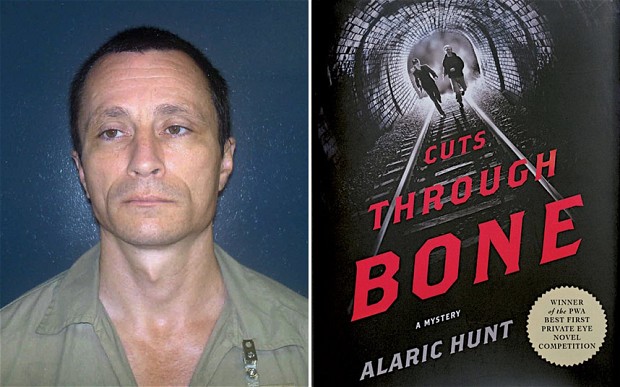
Writer behind prize-winning private detective novel serving life sentence for 1988 killing of graduate student

Alaric-Hunt_2787491b

When the judges of a contest for first-time crime novelists awarded their prize to Cuts Through Bone, they hailed the book for its authenticity.

No one from the Private Eye Writers of America panel, however, deduced that there might be a good reason for its author’s believable voice —he was himself a convicted killer serving a sentence for murder.

“He’s not available. He’s in an institution,” Jade Reed, his cousin, told an interested publisher that called to follow up on his win.

“Will he be out soon?” came the reply. After a pause, Ms Reed said: “Well, he’s there indefinitely.” Alaric Hunt, 44, has lived more than half his life in prison after being convicted of killing Joyce Austin, a 23-year-old graduate student, in Clemson, South Carolina, 1988. He is now in a maximum-security facility 180 miles from the crime scene in Bishopville.

Ms Austin died of smoke inhalation from a fire started by Hunt’s brother, Jason, with a can of petrol and a match to distract emergency services while the two of them robbed a nearby jewellery shop.

The brothers were arrested six weeks later.

They were sentenced to life with no parole for at least 30 years.

Hunt, who works in the prison library, discovered authors such as Ernest Hemingway while locked up. He came upon the idea of writing his own novel after seeing an advertisement for the prize three years ago.

He wrote Cuts Through Bone in nine months in sessions between his prison duties. The story centres on the murder of a woman whose boyfriend, a military veteran, is wrongfully accused of the crime.

Clayton Guthrie, a middle-aged detective, teams up with Rachel Vasquez, the inquisitive teenage daughter of Puerto Rican immigrants, to get to the bottom of the case.

The book is set in New York, where Hunt has never been. He said he had pieced together knowledge of the city from watching episodes of Law and Order, a popular American detective drama series set there.

Unlike some other American states, South Carolina has no law barring prisoners to profit from such work. Still, Hunt’s publishers, Minotaur, are keen to stress that his book is not based on his own offence. “He’s not writing a memoir of the crimes and trying to make money off that,” a spokesman told the newspaper.

However, Frances Austin, the mother of the Hunt brothers’ victim, told the New York Times that she was astonished to learn he had written the book. “He caused my daughter’s death, and now he’s writing a book about it,” she said. “I can’t believe this.” The booked received mixed reviews. “Sometimes, a crime novel grabs you on the first page with its plot. Sometimes, it’s the writing. Rarely is it the author’s background. But Alaric Hunt hits the trifecta in his debut,” wrote the critic for the Richmond Times-Dispatch in Virginia.

However, Publishers Weekly said: “Overblown prose (’dawn broke, like an egg yolk bleeding yellow into a dark pan’) doesn’t help an unremarkable plot.” Hunt told The New York Times:“What haunts me is not seeing beyond what I wanted and casually risking others,” Hunt told the newspaper. “That’s the act that defines me — something I didn’t do, but failed to do: consider. I killed Joyce Austin, and I killed my brother and myself. There’s a hole there that can’t ever fill up.”

He hopes to earn parole when he is eligible, in five years. “I’m afraid to choke on wistfulness,” he said. “That has been the fate of many a prisoner. I pass them each day, still shuffling and muttering with their hands full of hope.”

http://www.telegraph.co.uk/news/worldnews/northamerica/usa/10564467/Winner-of-crime-novel-prize-turns-out-to-be-killer.html

When doctors prescribe books to heal the mind

bibliotherapy_WEB

By Leah Price

More than 350 million people worldwide suffer from depression. Fewer than half receive any treatment; even fewer have access to psychotherapy. Around the turn of the millennium, antidepressants became the most prescribed kind of drug in the United States. In the United Kingdom, 1 in 6 adults has taken one.

But what if a scientist were to discover a treatment that required minimal time and training to administer, and didn’t have the side effects of drugs? In 2003, a psychiatrist in Wales became convinced that he had. Dr. Neil Frude noticed that some patients, frustrated by year-long waits for treatment, were reading up on depression in the meantime. And of the more than 100,000 self-help books in print, a handful often seemed to work.

This June, a program was launched that’s allowing National Health Service doctors across England to act upon Frude’s insight. The twist is that the books are not just being recommended, they’re being “prescribed.” If your primary care physician diagnoses you with “mild to moderate” depression, one of her options is now to scribble a title on a prescription pad. You take the torn-off sheet not to the pharmacy but to your local library, where it can be exchanged for a copy of “Overcoming Depression,” “Mind Over Mood,” or “The Feeling Good Handbook.” And depression is only one of over a dozen conditions treated. Other titles endorsed by the program include “Break Free from OCD,” “Feel the Fear and Do it Anyway,” “Getting Better Bit(e) by Bit(e),” and “How to Stop Worrying.”

The NHS’s Books on Prescription program is only the highest-profile example of a broader boom in “bibliotherapy.” The word is everywhere in Britain this year, although—or because—it means different things to different people. In London, a painter, a poet, and a former bookstore manager have teamed up to offer over-the-counter “bibliotherapy consultations”: after being quizzed about their literary tastes and personal problems, the worried well-heeled pay 80 pounds for a customized reading list. At the Reading Agency, a charity that developed and administers Books on Prescription, a second program called Mood-Boosting Books recommends fiction and poetry. The NHS’s public health and mental health budgets also fund nonprofits such as The Reader Organization, which gathers people who are unemployed, imprisoned, old, or just lonely to read poems and fiction aloud to one another.

At best, Books on Prescription looks like a win-win for both patients and book lovers. It boosts mental health while also bringing new library users in the door. Libraries loaned out NHS-approved self-help books 100,000 times in the first three months of the program; no doubt some of their borrowers must have picked up a novel or a memoir en route to the circulation desk. At worst, it’s hard to see what harm the program can do. Unlike drugs, books carry no risk of side effects like weight gain, dampened libido, or nausea (unless you read in the car).

For book lovers, an organization with as much clout as the NHS would seem to be a welcome ally. Yet its initiatives raise troubling questions about why exactly a society should value reading. What’s lost when a bookshelf is repurposed as a medicine cabinet—and when a therapist’s job gets outsourced to the page?

In 1916, the clergyman Samuel Crothers coined the term “bibliotherapy,” positing tongue-in-cheek that “a book may be a stimulant or a sedative or an irritant or a soporific.” In the intervening century, doctors, nurses, librarians, and social workers have more seriously championed “bibliopathy,” “bibliocounseling,” “biblioguidance,” and “literatherapy”—all variations on the notion that reading can heal.

Only recently, however, have the mental health effects of one genre—self-help books—been rigorously studied. As early as 1997, a randomized trial found bibliotherapy supervised by therapists no less effective in treating unipolar depression than individual or group therapy. More surprisingly, a 2007 literature review by the same researcher found that books treated anxiety just as effectively without a therapist’s guidance as with it. A 2004 meta-analysis comparing bibliotherapy for anxiety and depression to short-term talk therapy found books “as effective as professional treatment of relatively short duration.”

None of this means a book can outperform a therapist, even if it can underbid him. A 2012 meta-analysis of anxiety disorders concluding that “comparing self-help with waiting list gave a significant effect size of 0.84 in favour of self-help” nevertheless cautioned that “comparison of self-help with therapist-administered treatments revealed a significant difference in favour of the latter.” Translation: A book does worse than a therapist, but it’s better than nothing. And in the short term, at least, nothing is what many patients get.

Books on Prescription can be understood as an extension of larger changes in psychiatry over the past few decades. For most of the 20th century, psychodynamic therapy placed more emphasis on the therapist-patient relationship than on the content of the therapist’s words. More recently, insurers’ interest in cutting costs and researchers’ interest in protocols that can be measured and replicated have combined to nudge treatment toward short-term, standardized methods such as cognitive-behavioral therapy. Books take this trajectory to its logical conclusion. If your aim is less to help patients explore the underlying causes of their condition than to offer step-by-step instructions for managing it, then who cares whether the exercises emanate from a mouth, a manual, or even a smartphone app?

But even therapies like cognitive-behavioral therapy require the patient to feel recognized and understood by another human being. Asked how a printed page can mimic that face-to-face encounter, Frude comes up with an unexpected word: “magic.” The best books give the illusion of listening and caring, he explains, because authors who are also clinicians can draw on years of experience interacting with patients to leave each reader saying “that book was about me.” He does acknowledge that not every case fits books “off the peg” (or off the rack, as we say in the United States). But it’s a striking metaphor to choose—one that makes psychodynamic therapy sound like a luxury good as unattainable as Savile Row tailoring.

Where Frude sees magic, a cynic might smell pragmatism. Even short-term cognitive-behavioral therapy costs more than a $24.95 hardcover. But in any case, many patients read whether or not they have the NHS’s blessing. If recommended titles crowd out the misinformation that patients might otherwise stumble upon, whether in print or online, Books on Prescription will already have helped.

It’s hard not to notice that Books on Prescription was developed in the same years when American universities began to offer MOOCs, or massive open online courses. Even if an online course lacks the give-and-take of a seminar, it’s better than nothing. Like Books on Prescription, MOOCs scale up an activity whose face-to-face version was traditionally out of reach of the masses. Also like Books on Prescription, MOOCs create a cost-effective alternative that may eventually squeeze out personal contact even at the high end of the market.

That concern aside, it’s no surprise that self-help books can help the self. That literature might help, however, is a more controversial proposition. The other half of the Reading Agency’s two-pronged Reading Well initiative, Mood-Boosting Books, promotes fiction, poetry, and memoirs. Its annual list of “good reads for people who are anxious or depressed” mixes titles that represent characters experiencing anxiety or depression (Mark Haddon’s “A Spot of Bother”) with others calculated to combat those conditions. Some go for laughs (Sue Townsend’s “The Secret Diary of Adrian Mole Aged 13¾”); others, such as “A Street Cat Named Bob” and “The Bad Dog’s Diary,” read like printouts of PetTube.com. Others are darker and more demanding: Reading Well anointed Alice Munro’s short stories as a selection before the Nobel Prize Committee did.

The Reading Agency’s endorsement of imaginative reading stops short of recommending specific titles. Its website bristles with disclaimers that the works of literature are nominated by reading groups rather than tested by scientists. Yet the charity has given Mood-Boosting Books prestige—and the NHS has put hard cash behind them as well, providing some libraries with grants to purchase the recommended works of literature along with the “prescribed” self-help titles.

I ask Judith Shipman, who runs the Mood-Boosting Books program, whether recommending books “for people who are anxious or depressed” implies that poems or novels can treat those conditions. “I don’t think we could claim that they are therapy or a substitute for therapy,” she hazards after a long pause. “But for those who don’t quite need therapy, Mood-Boosting Books could be a nice little lift.”

Today it might seem commonplace to suggest that books are good for you. In the longer view, though, the hope that both literature and practical nonfiction can cure reverses an older belief by doctors that reading could cause physical and mental illness. In 1867, one expert cautioned that taking a book to bed could “injure your eyes, your brain, your nervous system.” Some social reformers proposed regulating books as if they were drugs. In 1883, the New York State Legislature debated whether to fine “any person who shall sell, loan, or give to any minor under sixteen years of age any dime novel or book of fiction, without first obtaining the written consent of the parent or guardian of such a minor.” As late as 1889, one politician called fiction “moral poison.”

As radio, TV, gaming, and eventually the Internet began to compete with books, though, fiction-reading came to look wholesome by comparison. Today, with only half of Americans reading any book for pleasure in a given year, reading is finding new champions from an unlikely quarter: science. This year, Science published a study concluding that reading about fictional characters increases empathy; in his 2011 book “The Better Angels of Our Nature,” the psychologist Steven Pinker correlated the rise of imaginative literature with a centuries-long decline in violence. And while correlation doesn’t imply causation, randomized trials have also attempted to link fiction-reading to physical health. In a 2008 study of 81 preteens, girls assigned fiction in which characters eat balanced breakfasts ended up with a lower body mass index than the control group. The Reading Well website itself cites a 2009 study that compared heart rates and muscle tension before and after various activities and found that reading is “68% better at reducing stress levels than listening to music; 100% more effective than drinking a cup of tea.” The numbers may be less telling than the fact that someone would think to compare books to tea in the first place.

It’s too early to predict the long-term effects of bibliotherapy programs. There’s little precedent for a government to make neuroscientists and psychiatrists the arbiters of what books should be read and why. And literary critics like me recoil from reducing the value of reading to a set of health metrics. But as library budgets shrink and any text longer than 140 characters gets crowded out by audio and video, white-coated experts may be the only ones prospective readers can hear. Racing to find out what happens next, seeing the world through a character’s eyes, wallowing in the play of language—all are becoming means to medical ends. Today, for an increasing number of people, the pleasures of reading require a doctor’s note.

http://www.bostonglobe.com/ideas/2013/12/22/when-doctors-prescribe-books-heal-mind/H2mbhLnTJ3Gy96BS8TUgiL/story.html