Food’s Biggest Scam: The Great Kobe Beef Lie

You cannot buy Japanese Kobe beef in this country. Not in stores, not by mail, and certainly not in restaurants. No matter how much you have spent, how fancy a steakhouse you went to, or which of the many celebrity chefs who regularly feature “Kobe beef” on their menus you believed, you were duped. If it wasn’t in Asia you almost certainly have never had Japan’s famous Kobe beef.

You may have had an imitation from the Midwest, Great Plains, South America or Australia, where they produce a lot of “Faux-be” beef. You may have even had a Kobe imposter from Japan before 2010. It is now illegal to import (or even hand carry for personal consumption) any Japanese beef. Before 2010 you could import only boneless fresh Japanese beef, but none was real Kobe. Under Japanese law, Kobe beef can only came from Hyogo prefecture (of which Kobe is the capital city), where no slaughterhouses were approved for export by the USDA. According to its own trade group, the Kobe Beef Marketing & Distribution Promotion Association in Japan, where Kobe Beef is a registered trademark, Macao is the only place it is exported to – and only since last year. If you had real Kobe beef in this country in recent years, someone probably smuggled it in their luggage.

“How is this possible?” you ask, when you see the virtues of Kobe being touted on television food shows, by famous chefs, and on menus all over the country? A dozen burger joints in Las Vegas alone offer Kobe burgers. Google it and you will find dozens of online vendors happy to take your money and ship you very pricey steaks. Restaurant reviews in the New York Times have repeatedly praised the “Kobe beef” served at high-end Manhattan restaurants. Not an issue of any major food magazine goes by without reinforcing the great fat Kobe beef lie.

Despite the fact that Kobe Beef, as well as Kobe Meat and Kobe Cattle, are patented terms and/or trademarks in Japan, these are neither recognized nor protected by U.S. law. As far as regulators here are concerned, Kobe beef, unlike say Florida Orange Juice, means almost nothing (the “beef” part should still come from cows). Like the recent surge in the use of the unregulated label term “natural,” it is an adjective used mainly to confuse consumers and profit from that confusion.

This matters because the reason food lovers and expense account diners want Kobe beef, and are willing to pay a huge premium for it, is because of the real Kobe’s longstanding reputation for excellence. The con the US food industry is running is leading you to believe that what you are paying huge dollars for – like the $40 NYC “Kobe” burger – is somehow linked to this heritage of excellence. It’s not.

Real Kobe beef is produced under some of the world’s strictest legal food standards, whereas “domestic Kobe” beef production, along with that in Australia and South America, is as regulated as the Wild West. In Japan, to be Kobe requires a pure lineage of Tajima-gyu breed cattle (not any old Japanese breed crossbred with American cattle as is the norm here). The animal must also have been born in Hyogo prefecture and thus raised on the local grasses and water and terroir its entire life. It must be a bull or virgin cow, and it takes considerably longer to raise a Tajima-gyu for consumption than most other breeds, adding to the cost. It must be processed in a Hyogo slaughterhouse – none of which export to the US – and then pass a strict government grading exam. There are only 3000 head of certified Kobe Beef cattle in the world, and none are outside Japan. The process is so strict that when the beef is sold, either in stores or restaurants, it must carry the 10-digit identification number so customers know what particular Tajima-gyu cow it came from.

In contrast, when you order “Kobe beef” here, you usually can’t even tell what kind of cow it came from – or where. Or what makes it “Kobe.”

The bottom line is that the only reason there is beef called Kobe beef sold in this country is because our government lets vendors call a lot of things Kobe beef. But the reason consumers buy it is because the cattle industry in Kobe spent lifetimes building a reputation for excellence, a reputation that has essentially been stolen.

There are two different parts to the broad misuse of the Kobe name. Historically in the US, restaurants and distributors have generically termed virtually any beef from anywhere in Japan Kobe, and many high-end restaurants did once get beef from Japan, and put it on the menus as Kobe, though it was not true Kobe beef. But in the past two years there has been no Japanese beef here. So the term Kobe today has even less meaning, and the meat can come from many different countries and have nothing in common with actual Kobe beef except that it comes from cows.  The argument often broached by the food industry that this non-Japanese Kobe is some sort of recreation of the real thing from the same breed of cows is also largely a myth.

Read about it in the USDA’s own words, about how as of early 2010 all beef from Japan including that “normally referred to as Kobe beef,” will “be refused entry,” “including in passenger luggage.” This is still the case, as you can see in the most recent Animal Product Manual, produced by the USDA’s Animal and Plant Health Inspection Service (APHIS), dated March 1, 2012 which specifically states that beef from Japan, fresh or frozen, whole or cut, bone-in or boneless, will be “Refused Entry.”

It is impossible to say exactly what you are getting in your Faux-be slider, or $100 Faux-be strip, but one thing is certain – it is not Japanese Kobe beef.  For the past two years, it has not been any kind of Japanese beef at all.

http://www.forbes.com/sites/larryolmsted/2012/04/12/foods-biggest-scam-the-great-kobe-beef-lie/

Philippe Croizon – limbless man plans to swim around the world


Limbless French endurance athlete Philippe Croizon said Tuesday he wants to connect the world by swimming between five continents.

Croizon, who has previously crossed the English Channel, will spend the northern hemisphere summer swimming between the continents with his friend Arnaud Chassery — starting with a swim between Indonesia (Asia) and Papua New Guinea (Oceania) in May.

The pair will follow up by crossing the Red Sea between Jordan (Asia) and Egypt (Africa) and the Strait of Gibraltar between Africa and Europe, before finishing by crossing the Bering Strait between America and Asia in August.

“We are going to symbolically link the five continents, two little people like us, two little men, we’re going to be able to build a bridge between the continents,” Croizon said, according to the International Business Times.

“That means that we’re going to bring them together. Which means no one is very far from each other. So even if we have different political opinions, or skin colors, or even with our disabilities, we all live on the same planet. And that’s the clear message we want to send.”

On his website, Croizon — who lost his limbs after he was electrocuted while changing a TV antenna on his roof in 1994 — says the total distance covered by the swims will be roughly 53 miles and that the pair expect to be in the water for about 45 hours.

The 44-year-old swims using prosthetic limbs and fins attached to the stumps of his legs.

http://msn.foxsports.com/other/story/limbless-man-wants-to-swim-around-world-042412

101 year old marathon runner

A 101-year-old runner has told the BBC Asian Network that this Sunday’s London Marathon will be his last long distance race.

Fauja Singh, who was born in India but moved to Britain in the 1960s, has completed eight marathons since taking up the sport at the age of 89.

Recently he completed the Toronto marathon in a time of eight hours, 25 minutes and 16 seconds and his coach Harmandar Singh thinks he can go faster in the London race.

http://www.bbc.co.uk/news/uk-17765170

Bacteria isolated for millions of years in Lechuguilla Cave are resistant to modern antibiotics

The caverns of Lechuguilla Cave are some of the strangest on the planet. Its acid-carved passages extend for over 120 miles. Parts of Lechuguilla have been cut off from the surface for four to seven million years, and the life-forms there – mainly bacteria and other microbes – have charted their own evolutionary courses. But Gerry Wright from McMaster University in Canada has found that many of these cave bacteria can resist our antibiotics. They have been living underground for as long as modern humans have existed, but they can fend off our most potent weapons.

read more here:  http://blogs.discovermagazine.com/notrocketscience/2012/04/13/isolated-for-millions-of-years-cave-bacteria-resist-modern-antibiotics/

Premature Baby in Argentina Found Alive in Morgue Refrigerator 10 Hours After Being Pronounced Dead


One-week-old Luz Milagros Veron is Argentina’s miracle baby. Pronounced dead after her premature birth, the baby withstood more than 10 hours in a morgue refrigerator before being found alive.

“Today is the eighth day of my daughter’s resurrection,” the girl’s father, Fabian Veron, told CNN Wednesday.

Doctors at the Perrando Hospital in northeast Argentina can’t explain it, and every, doctor, nurse and morgue worker who dealt with the baby has been suspended as an investigation gets underway, officials said.

Luz Milagros remains in stable condition but she’s in intensive care, a health official said.

Analia Boutet, the baby’s mother, had given birth four times previously, and had recently suffered a miscarriage. This baby was born on April 3, three months early, and had no vital signs, hospital director Dr. Jose Luis Meirino told CNN.

The gynecologist on hand didn’t find any signs of life, so he passed the baby to a neonatal doctor who also didn’t find vital signs, Meirino said.

The doctors observed the baby for a while, and only then, pronounced her dead.

The hospital followed protocol, Meirino said.

Two morgue workers then put her body inside a little wooden coffin and placed it in the freezer.

“Up to that point, there were still no vital signs,” the hospital director said.

That night, Boutet began insisting on seeing her dead daughter’s body, Veron said.

She wanted to take a picture with her cell phone of the baby just as she lay, as a memory, the husband said.

It took some cajoling, but finally, hospital officials allowed the couple to visit the baby in the hospital morgue around 10 p.m., Veron said. As many as 12 hours had passed since the baby had been declared dead.

“They put the coffin on top of a stretcher and we looked for a little crowbar to open it because it was nailed shut,” Veron told a local television station. “It was nailed shut. I put the crowbar in there and started prying. I took a breath and took the lid off.”

Boutet approached the baby’s body, touched her hand, and heard a cry, Veron told CNN.

She jumped back. “It’s my imagination, it’s my imagination,” she repeated.

But the baby was alive, and crying.

Veron’s brother-in-law rushed the baby back to the neonatal ward. He clutched her close to his chest for warmth. She felt like an ice-cold bottle against his body, the relative told Veron.

“I can’t explain what happened. Only that God has performed a miracle,” Veron said.

His daughter was given a fresh, if precarious chance, and along with it, a new name.

She was going to be named Lucia, but after finding her alive, her parents said she would be Luz Milagros — the Spanish words for light and miracles.

In the meantime, an investigation has been launched at the hospital.

“I don’t have an explanation for what happened, but if there is culpability we’ll see what we’ll do,” Rafael Sabatinelli, deputy secretary of health in the Chaco region, told CNN.

“The personnel who were involved have responsibilities, and therefore, will have to be held accountable for their actions,” he said in a statement.

Both Sabatinelli and Meirino said it was the first time they had witnessed an incident like this, but that a nearly identical thing happened in Israel in 2008.

In that case, a baby was found alive in a morgue refrigerator after having been declared dead.

Some doctors at the time said that it was possible that the low temperatures inside the refrigerator had slowed down the baby’s metabolism and helped her survive. However, that baby later died.

http://www.cnn.com/2012/04/11/world/americas/argentina-baby-survivor/index.html?hpt=hp_c2


New Zealand Hokitika Wildfoods Festival

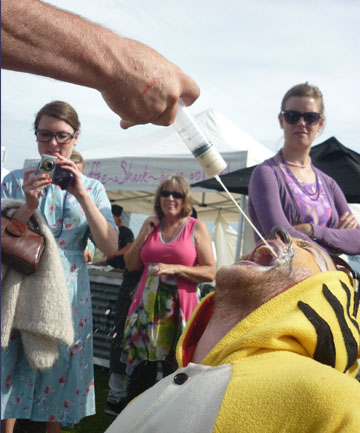
The main attraction at the Hokitika Wildfoods Festival this Saturday was horse semen.

The event has gained notoriety over the last two years after it started offering shots of horse semen to festival-goers and surprisingly the stall has become one of the most popular.

Even the mayor of Hokitika, Maureen Pugh, didn’t shy away from the stallion juice.

Mr Walsh, a vineyard worker in Blenheim, was attending his third Hokitika Wildfoods Festival on Saturday.

The protein shot was definitely the craziest thing yet, the 24-year-old said.

“I don’t like calling it horse semen. I just call it milkshake because that’s what it tastes like.”

Mr Walsh, originally from Palmerston North, hadn’t planned on trying the equestrian smoothie, he said.

“It was a blend of people urging me to do it and the girls I was with paying for it. Then the guy [stall holder] said `take a knee’ so I did.”

The taste wasn’t that bad, he said. “I thought it would be creamy and curdled. The grossest part was it hitting me in the face.”

The stall had a microscope so punters could see the live semen, he said.

“I didn’t look in,” he said. “That would have freaked me out.”

The 23rd Wildfoods Festival had other delicacies on offer, including mountain oysters (sheep’s testicles), live huhu grubs and grasshoppers.

http://www.stuff.co.nz/marlborough-express/news/6564102/Don-t-ask-what-hes-drinking

http://www.wildfoods.co.nz/index.cfm/1,51,0,0,html

Autism may be linked to obesity during pregnancy


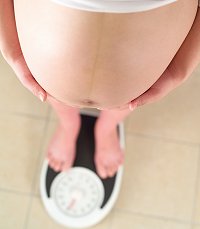
Obesity during pregnancy may increase chances for having a child with autism, provocative new research suggests.

It’s among the first studies linking the two, and though it doesn’t prove obesity causes autism, the authors say their results raise public health concerns because of the high level of obesity in this country.

Study women who were obese during pregnancy were about 67 percent more likely than normal-weight women to have autistic children. They also faced double the risk of having children with other developmental delays.

On average, women face a 1 in 88 chance of having a child with autism; the results suggest that obesity during pregnancy would increase that to a 1 in 53 chance, the authors said.

The study was released online Monday in Pediatrics.

Since more than one-third of U.S. women of child-bearing age are obese, the results are potentially worrisome and add yet another incentive for maintaining a normal weight, said researcher Paula Krakowiak, a study co-author and scientist at the University of California, Davis.

Previous research has linked obesity during pregnancy with stillbirths, preterm births and some birth defects.

Dr. Daniel Coury, chief of developmental and behavioral pediatrics at Nationwide Children’s Hospital in Columbus, Ohio, said the results “raise quite a concern.”

He noted that U.S. autism rates have increased along with obesity rates and said the research suggests that may be more than a coincidence.

More research is needed to confirm the results. But if mothers’ obesity is truly related to autism, it would be only one of many contributing factors, said Coury, who was not involved in the study.

Genetics has been linked to autism, and scientists are examining whether mothers’ illnesses and use of certain medicines during pregnancy might also play a role.

The study involved about 1,000 California children, ages 2 to 5. Nearly 700 had autism or other developmental delays, and 315 did not have those problems.

Mothers were asked about their health. Medical records were available for more than half the women and confirmed their conditions. It’s not clear how mothers’ obesity might affect fetal development, but the authors offer some theories.

Obesity, generally about 35 pounds overweight, is linked with inflammation and sometimes elevated levels of blood sugar. Excess blood sugar and inflammation-related substances in a mother’s blood may reach the fetus and damage the developing brain, Krakowiak said.

The study lacks information on blood tests during pregnancy. There’s also no information on women’s diets and other habits during pregnancy that might have influenced fetal development.

There were no racial, ethnic, education or health insurance differences among mothers of autistic kids and those with unaffected children that might have influenced the results, the researchers said.

http://www.usatoday.com/news/health/story/2012-04-09/Autism-obesity-pregnancy/54126558/1

Tom Winter: The Nebraska Skateboarding Professor

Tom Winter finished a lecture on passive and past-tense Latin verbs, pulled his skateboard from the desk and rolled into a cool spring afternoon.

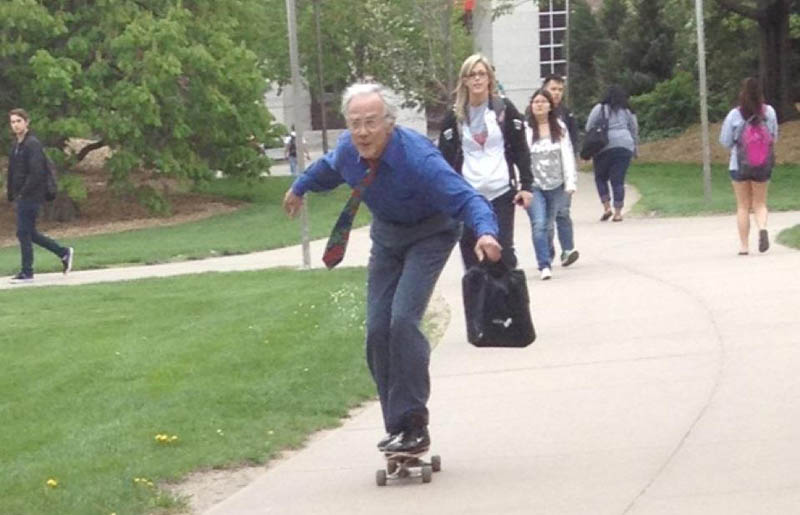
The University of Nebraska-Lincoln classics and religious studies professor became an Internet sensation last week when a photo of him skateboarding across campus became the top item on the social news website Reddit.com. The photo inspired dozens of memes, which are photos with humorous text superimposed.

“Nine pages of memes and a site I never knew about before yesterday,” Winter told the Lincoln Journal Star on Thursday. “It’s a pretty good photo.”

By Thursday afternoon, the photo had gotten more than 756,000 views on Imgur.com, the Internet image hosting site on which it originally appeared, and 1,300 comments on Reddit.com. Users of Imgur.com wrote mock captions for the image, which features a skateboarding Winter, arms out and holding a briefcase.

The top-rated caption: “They see me rollin,’ I’m gradin.'” On Reddit.com, users created memes using the photo of Winter with captions such as, “Write a two-page paper on shredding the gnar,” and, “Has a PhD in righteousness.”

Winter said he heard about the photo from students Thursday and thinks he knows who took it.

“Nine pages of memes and a site I never knew about before yesterday,” Winter told the  Lincoln  Journal Star on Thursday. “It’s a pretty good photo.”

He teaches Latin, Greek and English classes, including Classical Mythology, Ancient Warfare and the Ancient Novel. His favorite course is Science and Technology in Antiquity.

He’s been teaching since 1970 and rides his bike 4.5 miles to work each morning. To get around campus easier, he uses his Arbor Pocket Rocket skateboard, which is just short enough to fit in his desk. He said he built the first recumbent bicycle to appear in Lincoln back in 1975.

A champion roller skater, Winter said he began skateboarding 15 years ago because it’s faster, and it’s easier on his body.

“I’m 19, but my joints are all of 68 years old,” he said. “Sometimes, walking is simply unpleasant.”

After watching Winter take off on his skateboard Thursday, UNL English professor Joe Goecke said it’s wonderful to see his colleague roll across campus.

“We used to smoke together, but we don’t anymore,” Goecke said. “He quit.”

http://www.therepublic.com/view/story/ba599649782e434ba81b40ccb079525f/NE–Exchange-Skateboarding-Professor/

Unicorn Cookbook Found at British Library


A long-lost medieval cookbook, containing recipes for hedgehogs, blackbirds and even unicorns, has been discovered at the British Library. Professor Brian Trump of the British Medieval Cookbook Project described the find as near-miraculous. “We’ve been hunting for this book for years. The moment I first set my eyes on it was spine-tingling.”

Experts believe that the cookbook was compiled by Geoffrey Fule, who worked in the kitchens of Philippa of Hainault, Queen of England (1328-1369). Geoffrey had a reputation for blending unusual flavours – one scholar has called him “the Heston Blumenthal of his day” – and everything points to his hand being behind the compilation.

After recipes for herring, tripe and codswallop (fish stew, a popular dish in the Middle Ages) comes that beginning “Taketh one unicorne”. The recipe calls for the beast to be marinaded in cloves and garlic, and then roasted on a griddle. The cookbook’s compiler, doubtless Geoffrey Fule himself, added pictures in its margins, depicting the unicorn being prepared and then served. Sarah J Biggs, a British Library expert on medieval decoration, commented that “the images are extraordinary, almost exactly as we’d expect them to be, if not better”.

The recipe for cooking blackbirds is believed to be the origin of the traditional English nursery rhyme “Sing a song of sixpence / A pocket full of rye / Four-and-twenty blackbirds / Baked in a pie.” Professor Trump added that he was tempted to try some of the recipes, but suspected that sourcing ingredients would be challenging. “Unfortunately, they don’t stock unicorn in my local branch of Tesco.”

http://britishlibrary.typepad.co.uk/digitisedmanuscripts/2012/04/unicorn-cookbook-found-at-the-british-library.html

Pope Receives Gigantic Chocolate Easter Egg

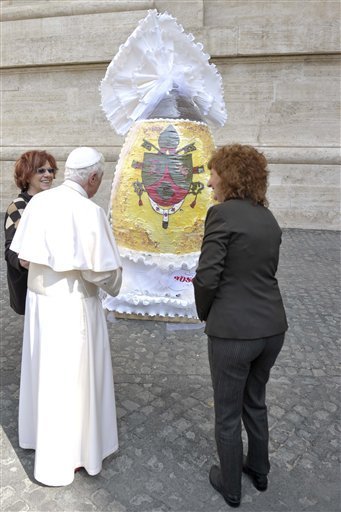
A pleased-looking Pope Benedict XVI has been presented with a colourful, two-metre high Easter egg weighing 250 kilograms as Catholics and other Christians prepare to celebrate Easter.

The egg, made by Italian chocolate maker Tosca, was unveiled in a Vatican courtyard. The brilliant yellow and blue wrapper was decorated with the Pope’s coat of arms, wreathes of flowers and doves – the symbol of peace.

The head of the Roman Catholic Church, who will be 85 later this month, will not be cracking open the egg himself, but will give it to young offenders in Rome’s Casal del Marmo institute, which he visited in 2007, according to the Vatican’s official newspaper, L’Osservatore Romano.

Tosca, based in the northern town of Cremona, is known for its oversized delicacies.

http://bigpondnews.com/articles/OddSpot/2012/04/05/Pope_given_whopper_Easter_egg_736440.html