Scientists create 3D computer model of the human tongue to understand its unique muscular organization

sn-tongue

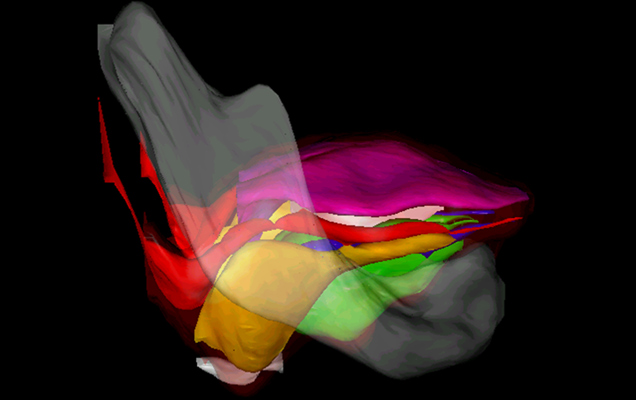
We use our tongues whenever we speak or swallow, but much about how they work remains a mystery. Now, researchers have constructed a 3D computer model of the human tongue that could help reveal its secrets. The model is based on data from the Visible Human Project, which froze a dead man and woman in blocks of gelatin in the 1990s and cut them into many thin slices to scan them. The scientists improved their model by analyzing slices of three additional human tongues, whose translucency helped reveal the complex interweaving of muscles throughout the organ. Unlike arms and legs that rely on bones to behave in a familiar way, like classical levers, tongues operate bonelessly like the tentacles of an octopus, with the motion of any lone muscle depending on the activity of surrounding muscles in a complex manner that researchers do not yet fully grasp. The new model, reported online this week in The Anatomical Record, now shows where each muscle (various colors in picture above) is positioned in relation to each other and the jaw (gray), and it could yield insights on how they work together. A number of tongue muscles overlap so extensively, for example, that they might best be treated as a single entity.

Thanks to Dr. Rajadhyaksha for bringing this to the attention of the It’s Interesting community.

http://news.sciencemag.org/sciencenow/2013/05/scienceshot-your-tongue-inside-o.html

New Study Ties Autism Risk to Creases in Placenta

placenta

After most pregnancies, the placenta is thrown out, having done its job of nourishing and supporting the developing baby.

But a new study raises the possibility that analyzing the placenta after birth may provide clues to a child’s risk for developing autism. The study, which analyzed placentas from 217 births, found that in families at high genetic risk for having an autistic child, placentas were significantly more likely to have abnormal folds and creases.

“It’s quite stark,” said Dr. Cheryl K. Walker, an obstetrician-gynecologist at the Mind Institute at the University of California, Davis, and a co-author of the study, published in the journal Biological Psychiatry. “Placentas from babies at risk for autism, clearly there’s something quite different about them.”

Researchers will not know until at least next year how many of the children, who are between 2 and 5, whose placentas were studied will be found to have autism. Experts said, however, that if researchers find that children with autism had more placental folds, called trophoblast inclusions, visible after birth, the condition could become an early indicator or biomarker for babies at high risk for the disorder.

“It would be really exciting to have a real biomarker and especially one that you can get at birth,” said Dr. Tara Wenger, a researcher at the Center for Autism Research at Children’s Hospital of Philadelphia, who was not involved in the study.

The research potentially marks a new frontier, not only for autism, but also for the significance of the placenta, long considered an after-birth afterthought. Now, only 10 percent to 15 percent of placentas are analyzed, usually after pregnancy complications or a newborn’s death.

Dr. Harvey J. Kliman, a research scientist at the Yale School of Medicine and lead author of the study, said the placenta had typically been given such little respect in the medical community that wanting to study it was considered equivalent to someone in the Navy wanting to scrub ships’ toilets with a toothbrush. But he became fascinated with placentas and noticed that inclusions often occurred with births involving problematic outcomes, usually genetic disorders.

He also noticed that “the more trophoblast inclusions you have, the more severe the abnormality.” In 2006, Dr. Kliman and colleagues published research involving 13 children with autism, finding that their placentas were three times as likely to have inclusions. The new study began when Dr. Kliman, looking for more placentas, contacted the Mind Institute, which is conducting an extensive study, called Marbles, examining potential causes of autism.

“This person came out of the woodwork and said, ‘I want to study trophoblastic inclusions,’ ” Dr. Walker recalled. “Now I’m fairly intelligent and have been an obstetrician for years and I had never heard of them.”

Dr. Walker said she concluded that while “this sounds like a very smart person with a very intriguing hypothesis, I don’t know him and I don’t know how much I trust him.” So she sent him Milky Way bar-size sections of 217 placentas and let him think they all came from babies considered at high risk for autism because an older sibling had the disorder. Only after Dr. Kliman had counted each placenta’s inclusions did she tell him that only 117 placentas came from at-risk babies; the other 100 came from babies with low autism risk.

She reasoned that if Dr. Kliman found that “they all show a lot of inclusions, then maybe he’s a bit overzealous” in trying to link inclusions to autism. But the results, she said, were “astonishing.” More than two-thirds of the low-risk placentas had no inclusions, and none had more than two. But 77 high-risk placentas had inclusions, 48 of them had two or more, including 16 with between 5 and 15 inclusions.

Dr. Walker said that typically between 2 percent and 7 percent of at-risk babies develop autism, and 20 percent to 25 percent have either autism or another developmental delay. She said she is seeing some autism and non-autism diagnoses among the 117 at-risk children in the study, but does not yet know how those cases match with placental inclusions.

Dr. Jonathan L. Hecht, associate professor of pathology at Harvard Medical School, said the study was intriguing and “probably true if it finds an association between these trophoblast inclusions and autism.” But he said that inclusions were the placenta’s way of responding to many kinds of stress, so they might turn out not to be specific enough to predict autism.

Dr. Kliman calls inclusions a “check-engine light, a marker of: something’s wrong, but I don’t know what it is.”

That’s how Chris Mann Sullivan sees it, too. Dr. Sullivan, a behavioral analyst in Morrisville, N.C., was not in the study, but sent her placenta to Dr. Kliman after her daughter Dania, now 3, was born. He found five inclusions. Dr. Sullivan began intensive one-on-one therapy with Dania, who has not been given a diagnosis of autism, but has some relatively mild difficulties.

“What would have happened if I did absolutely nothing, I’m not sure,” Dr. Sullivan said. “I think it’s a great way for parents to say, ‘O.K., we have some risk factors; we’re not going to ignore it.’ ”

Thanks to Dr. Rajadhyaksha for bringing this to the attention of the It’s Interesting community.

Have scientists rendered the final word on penis size?

sn-penis

No man is an island, and it turns out neither is his penis. New research suggests that size does matter (sorry, guys), but the penis is only one (sometimes) small contributor to manly allure. A man’s overall attractiveness to a woman, researchers have found, depends in part on the trio of height, body shape, and penis size.

Although the assault of penis pill spam in your inbox might make you think that “bigger is better,” scientific research has returned mixed results. Some findings say that women prefer longer penises, others say they like wider ones, and still others report that size doesn’t matter at all.

Most of these studies had either asked women directly about their preferences or had them rate the attractiveness of different male figures that varied only in penis length. The penis doesn’t exist in a vacuum, though, and biologists led by Brian Mautz, who was then at the Australian National University in Acton, wondered how penis size interacts with other body traits that are usually considered attractive or manly.

Using data from a large study of Italian men, the researchers created 343 computer-generated male figures that varied in penis size, as well as in height and shoulder-to-hip ratio—traits that other research has linked to attractiveness and reproductive success. Mautz and colleagues turned the figures into short video clips and projected them, life-sized, onto a wall for viewing by 105 women. Each woman watched a random set of 53 figures and rated their attractiveness as potential sexual partners on a scale of 1 to 7.

“The first thing we found was that penis size influences male attractiveness,” Mautz says. “There’s a couple of caveats to that, and the first is that the relationship isn’t a straight line.” Rather than the attractiveness rating consistently improving with each jump in penis size, the team found what Mautz calls “an odd kink in the middle.” Attractiveness increased quickly until flaccid penis length reached 7.6 centimeters (about 3 inches) and then began to slow down, the team reports online today in the Proceedings of the National Academy of Sciences.

The reason, Mautz says, is that penis size isn’t the only thing that matters. It interacts with other traits, and its effect depends on whether those other traits are already attractive to begin with. If one of the model men was tall and had a masculine, V-shaped torso with broad shoulders and narrower hips, for example, he was considered more attractive than his shorter, stockier counterparts, regardless of penis size.

An increase in penis size was also a bigger benefit to attractiveness, and a smaller penis was less of a detriment, to the taller, fitter figures than it was to shorter or potato-shaped ones. For example, a model that was 185 cm tall (about 6 ft) with a 7-cm-long (about 3-in-long) penis got an average score for attractiveness. To get that same score, a model that was 170 cm (about 5’6″) needed a penis of about 11 cm (about 4.5 in) in length. Boost the taller guy’s penis by just about centimeter, and the shorter guy needs double that to keep up and get the same attractiveness score. After that, the shorter male pretty much can’t continue to compete. To really reap the benefits of a big penis, a guy needs to be attractive in the first place, Mautz says. If he isn’t, even the biggest penis in the world won’t do him that much good.

So have women been responsible for the male penis getting larger—at least over the course of evolution? That’s a distinct possibility, the researchers say. Women may have selected for larger penises because they’re linked to higher rates of female orgasm and sexual satisfaction, which may explain why the human penis is proportionally larger than those of our evolutionary cousins.

That size matters, and that it matters in the context of other traits, makes sense, because proportionate features are attractive, says Adam Jones, a biologist who studies sexual selection and mate choice at Texas A&M University in College Station and who was not involved in the work. But he cautions that projections on a wall are no substitute for real life. Just because a woman prefers a man with a large penis doesn’t mean that she’s going to find one. Outside the lab, there’s greater variation and more traits to consider, so penis size might not be as important. That’s good, Jones says, because hurdles like competition with other women and her own perceived attractiveness could place her with a man who comes up a little short.

http://news.sciencemag.org/sciencenow/2013/04/the-final-word-on-penis-size.html?ref=em

Thanks to Dr. Rajadhyaksha for bringing this to the attention of the It’s Interesting community.
Ancient urine provides clues to Africa’s past

sn-hyrax

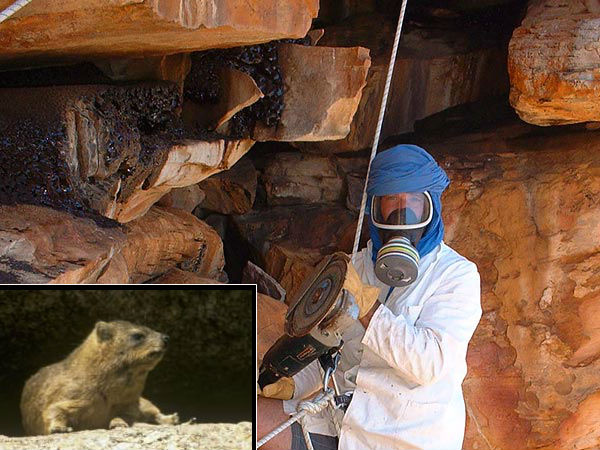
When it comes to peering into Africa’s climate past, the ancient homes of hyraxes are number one. Paleoclimatologists typically dig up muddy core samples and analyze their pollen content for clues to long-ago weather, but parts of southern and central Africa are too dry to preserve such evidence. Enter the rock hyrax (Procavia capensis) (inset), a furry mammal that looks like a large groundhog but is actually a distant cousin of the elephant. Brian Chase, a geographical scientist at the University of Montpellier in France, turned to urine accretions left by the animals thousands of years ago; hyrax colonies use the same rock shelters for generation after generation, depositing pollen, calcium remnants, charcoal particles, stable isotopes, and other detritus in their urine (black splotches on rock in main image). Most climate models predict arid conditions in southern Africa 12,000 years ago, but the pollen content of hyrax urine from that period indicates that they ate grasses, which flourish in wetter conditions Chase, who reported his findings here today at the annual meeting of the American Association for the Advancement of Science (which publishes ScienceNOW), believes his method can be used to give researchers a wealth of data to improve their models of Africa’s paleohistory. “You can turn a 2-meter pile of pee into a very nice section which you can bring back to the lab,” he told the audience. “These are very high-resolution records.”

http://news.sciencemag.org/sciencenow/2013/02/scienceshot-ancient-pee-provides.html?ref=hp

Thanks to Dr. Rajadhyaksha for bringing this to the attention of the It’s Intereting community.

Ancient fish had circular-saw jaw

sn-heliocoprion

An ancient fish that sported a saw blade-like whorl of serrated teeth—and was long presumed to be a member of the shark family—actually belonged to a different but closely related group, a new study suggests. Members of the genus Helicoprion were first described in 1899, but fossils have been notoriously incomplete, with most including only spiral groupings of teeth. Although some fossils have also preserved hints of cartilaginous tissue, none have included the braincase or postcranial parts of these fish. Accordingly, scientists never came up with a convincing idea of what these creatures looked like, with some teams suggesting the whorls sprouted from the nose like an elephant’s trunk, and others placing toothy appendages on the creature’s tail, dorsal fins, or drooping from the lower jaw. Now, an x-ray CT scan of a particularly well-preserved fossil unearthed in Idaho in 1950—one that includes 117 teeth, the cartilage on which they were attached, and part of the upper jaw—reveals that the whorl resided within the animal’s lower jaw (artist’s concept above), researchers reported in Biology Letters. The size and shape of the upper jaw fragment suggests that the creature was about 4 meters long, with some other species in the Helicoprion genus measuring almost twice that length. The arrangement of tissues in the animal’s lower jaw, including those previously hidden by the rock that entombs them, definitively shows that Helicoprion is not a shark, the researchers say. Instead, the genus is nestled firmly within a group of cartilaginous fish known as chimaera, a lineage that includes species commonly known as ghost sharks and ratfish.

http://news.sciencemag.org/sciencenow/2013/02/scienceshot-ancient-fish-sported.html?ref=em

Thanks to Dr. Rajadhyaksha for bringing this to the attention of the It’s Interesting community.

Largest psychiatric genetic study in history shows a common genetic basis that underlies 5 types of mental disorders

Protein_CACNA1C_PDB_2be6
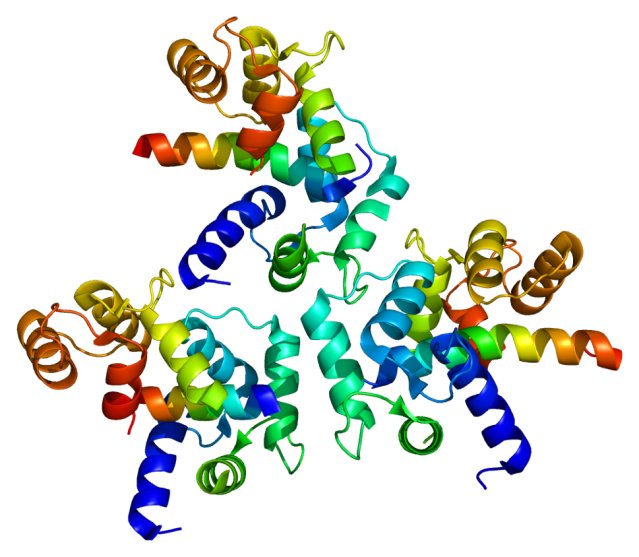
Structure of the CACNA1C gene product, a calcium channel named Cav1.2, which is one of 4 genes that has now been found to be genetically held in common amongst schizophrenia, bipolar disorder, autism, major depression and attention deficit hyperactivity disoder. Groundbreaking work on the role of this protein on anxiety and other forms of behavior related to mental illness has previously been established in the Rajadhyaksha laboratory at Weill Cornell Medical Center.
http://weill.cornell.edu/research/arajadhyaksha/

http://www.ncbi.nlm.nih.gov/pmc/articles/PMC3481072/
http://www.ncbi.nlm.nih.gov/pmc/articles/PMC3192195/
http://www.ncbi.nlm.nih.gov/pmc/articles/PMC3077109/

From the New York Times:
The psychiatric illnesses seem very different — schizophrenia, bipolar disorder, autism, major depression and attention deficit hyperactivity disorder. Yet they share several genetic glitches that can nudge the brain along a path to mental illness, researchers report. Which disease, if any, develops is thought to depend on other genetic or environmental factors.

Their study, published online Wednesday in the Lancet, was based on an examination of genetic data from more than 60,000 people worldwide. Its authors say it is the largest genetic study yet of psychiatric disorders. The findings strengthen an emerging view of mental illness that aims to make diagnoses based on the genetic aberrations underlying diseases instead of on the disease symptoms.

Two of the aberrations discovered in the new study were in genes used in a major signaling system in the brain, giving clues to processes that might go awry and suggestions of how to treat the diseases.

“What we identified here is probably just the tip of an iceberg,” said Dr. Jordan Smoller, lead author of the paper and a professor of psychiatry at Harvard Medical School and Massachusetts General Hospital. “As these studies grow we expect to find additional genes that might overlap.”

The new study does not mean that the genetics of psychiatric disorders are simple. Researchers say there seem to be hundreds of genes involved and the gene variations discovered in the new study confer only a small risk of psychiatric disease.

Steven McCarroll, director of genetics for the Stanley Center for Psychiatric Research at the Broad Institute of Harvard and M.I.T., said it was significant that the researchers had found common genetic factors that pointed to a specific signaling system.

“It is very important that these were not just random hits on the dartboard of the genome,” said Dr. McCarroll, who was not involved in the new study.

The work began in 2007 when a large group of researchers began investigating genetic data generated by studies in 19 countries and including 33,332 people with psychiatric illnesses and 27,888 people free of the illnesses for comparison. The researchers studied scans of people’s DNA, looking for variations in any of several million places along the long stretch of genetic material containing three billion DNA letters. The question: Did people with psychiatric illnesses tend to have a distinctive DNA pattern in any of those locations?

Researchers had already seen some clues of overlapping genetic effects in identical twins. One twin might have schizophrenia while the other had bipolar disorder. About six years ago, around the time the new study began, researchers had examined the genes of a few rare families in which psychiatric disorders seemed especially prevalent. They found a few unusual disruptions of chromosomes that were linked to psychiatric illnesses. But what surprised them was that while one person with the aberration might get one disorder, a relative with the same mutation got a different one.

Jonathan Sebat, chief of the Beyster Center for Molecular Genomics of Neuropsychiatric Diseases at the University of California, San Diego, and one of the discoverers of this effect, said that work on these rare genetic aberrations had opened his eyes. “Two different diagnoses can have the same genetic risk factor,” he said.

In fact, the new paper reports, distinguishing psychiatric diseases by their symptoms has long been difficult. Autism, for example, was once called childhood schizophrenia. It was not until the 1970s that autism was distinguished as a separate disorder.

But Dr. Sebat, who did not work on the new study, said that until now it was not clear whether the rare families he and others had studied were an exception or whether they were pointing to a rule about multiple disorders arising from a single genetic glitch.

“No one had systematically looked at the common variations,” in DNA, he said. “We didn’t know if this was particularly true for rare mutations or if it would be true for all genetic risk.” The new study, he said, “shows all genetic risk is of this nature.”

The new study found four DNA regions that conferred a small risk of psychiatric disorders. For two of them, it is not clear what genes are involved or what they do, Dr. Smoller said. The other two, though, involve genes that are part of calcium channels, which are used when neurons send signals in the brain.

“The calcium channel findings suggest that perhaps — and this is a big if — treatments to affect calcium channel functioning might have effects across a range of disorders,” Dr. Smoller said.

There are drugs on the market that block calcium channels — they are used to treat high blood pressure — and researchers had already postulated that they might be useful for bipolar disorder even before the current findings.

One investigator, Dr. Roy Perlis of Massachusetts General Hospital, just completed a small study of a calcium channel blocker in 10 people with bipolar disorder and is about to expand it to a large randomized clinical trial. He also wants to study the drug in people with schizophrenia, in light of the new findings. He cautions, though, that people should not rush out to take a calcium channel blocker on their own.

“We need to be sure it is safe and we need to be sure it works,” Dr. Perlis said.

10 Million-Year Hard Disk

sn-radwaste

It seems these days that no data storage medium lasts long before becoming obsolete—does anyone remember Sony’s Memory Stick? So have pity for the builders of nuclear waste repositories, who are trying to preserve records of what they’ve buried and where, not for a few years but for tens of thousands of years.

Today, Patrick Charton of the French nuclear waste management agency ANDRA presented one possible solution to the problem: a sapphire disk inside which information is engraved using platinum. The prototype shown costs €25,000 to make, but Charton says it will survive for a million years. The aim, Charton told the Euroscience Open Forum here, is to provide “information for future archaeologists.” But, he concedes: “We have no idea what language to write it in.”

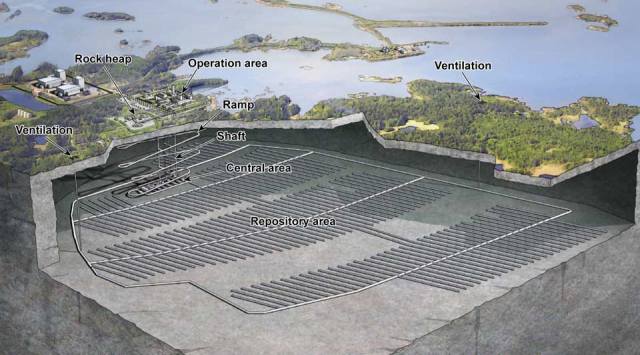
Most countries with nuclear power stations agree that the solution for dealing with long-lived nuclear waste is to store it deep inside the earth, about 500 meters below the surface. Finland, France, and Sweden are the furthest advanced in the complicated process of finding a geologically suitable site, persuading local communities to accept it, and getting regulatory approval. Sweden’s waste management company, SKB, for example, spent 30 years finding the right site and is now waiting for the government’s green light to begin excavation. It plans to start loading in waste a decade from now, and will be filling its underground pits for up to 50 years.

While the designers of such repositories say they are confident that the waste will be safely incarcerated, the most uncontrollable factor is future archaeologists or others with a penchant for digging. Archaeologist Cornelius Holtorf of Linnaeus University in Sweden showed meeting participants an early attempt at warning future generations: a roughly 1-meter-wide stone block with the words “Caution – Do Not Dig” written in English with some smaller text explaining that there is nuclear waste below. But who knows what language its discoverers will understand in thousands or hundreds of thousands of years—or even if they will be human beings? Holtorf points out that a much earlier attempt to warn off future excavations, the Egyptian pyramids, were looted within a generation. “The future will be radically different from today,” says archaeologist Anders Högberg, who is also from Linnaeus University. “We have no idea how humans will think.”

In 2010, ANDRA began a project to address these issues, says Charton. It brings together specialists from as wide a selection of fields as possible, including materials scientists, archivists, archaeologists, anthropologists, linguists, and even artists—”to see if they have some answers to our questions.” The initial goal is to identify all the approaches possible; in 2014 or 2015, the group hopes to narrow down the possibilities.

The sapphire disk is one product of that effort. It’s made from two thin disks, about 20 centimeters across, of industrial sapphire. On one side, text or images are etched in platinum—Charton says a single disk can store 40,000 miniaturized pages—and then the two disks are molecularly fused together. All a future archaeologist would need to read them is a microscope. The disks have been immersed in acid to test their durability and to simulate ageing. Charton says they hope to demonstrate a lifetime of 10 million years.

Researchers have some time to work on the problem because the repositories will probably not be filled and sealed up until the end of this century. “Each country has its own ideas, but we need to get a common approach,” says SKB’s Erik Setzman. “We technical people can’t solve this problem ourselves. We need help from other parts of society.”

http://news.sciencemag.org/sciencenow/2012/07/a-million-year-hard-disk.html

Thanks to Dr. Rajadhyaksha for bringing this to the attention of the It’s Interesting community.
Landscape of Dead Bodies May Have Inspired First Mummies

sn-mimmification

Trekking through Chile’s Atacama Desert 7000 years ago, hunter-gatherers known as the Chinchorro walked in the land of the dead. Thousands of shallowly buried human bodies littered the earth, their leathery corpses pockmarking the desolate surroundings. According to new research, the scene inspired the Chinchorro to begin mummifying their dead, a practice they adopted roughly 3000 years before the Egyptians embraced it.

Archaeologists have long studied how the Chinchorro made their mummies, the first in history, says ecologist Pablo Marquet of the Pontifical Catholic University of Chile in Santiago. After removing the skin to be dried, the hunter-gatherers scooped out the organs and stuffed the body with clay, dried plants, and sticks. Once they reattached the skin, embalmers painted the mummy shiny black or red and put a black wig on its head. Covering the corpses’ faces were clay masks, some molded into an open-mouthed expression that later inspired Edvard Munch’s famous painting The Scream.

Few scientists have tackled the mystery of why the Chinchorro started to mummify their dead in the first place. Complicated cultural practices such as mummification, Marquet says, tend to arise only in large, sedentary populations. The more people you have in one place, the more opportunity for innovation, development, and the spread of new ideas. The Chinchorro don’t fit that mold. As nomadic hunter-gatherers, they formed groups of about only 100 people.

To solve the mystery, Marquet and his colleagues needed to go back in time. Using data from ice cores in the Andes, the researchers reconstructed the climate of the region where the Chinchorro lived: the northern coast of Chile and the southern coast of Peru, along the western edge of the Atacama Desert. Before 7000 years ago, the area was extremely arid, the team found, but then it went through a wetter period that lasted until about 4000 years ago. Analyses of carbon-dated Chinchorro artifacts, such as shell piles (known as middens) and mummies, suggest that the rainier conditions supported a larger population, peaking about 6000 years ago.

The team calculated, based on the demographics of hunter-gatherers, that a single Chinchorro group of roughly 100 people would produce about 400 corpses every century. These corpses, shallowly buried and exposed to the arid Atacama climate, would not have decomposed, but lingered. Given that the Chinchorro settled the Atacama coast roughly 10,000 years ago, the researchers argue that by the time the practice of mummification started about 7000 years ago, a staggering number of bodies would have piled up. A single person was likely to see several thousand naturally mummified bodies during his or her lifetime, the team reports online today in the Proceedings of the National Academy of Sciences. The number increased over the years, until mummies “became part of the landscape,” Marquet says.

This constant exposure to natural mummies may have led to a cult of the dead involving artificial mummification. “The dead have a huge impact on the living,” Marquet says, citing work by psychologists and sociologists that shows that exposure to dead bodies produces tangible psychological and social effects, often leading to religious practices. “There’s a conflict between how you think of someone alive and dead,” he says. Religious practices and ideas—such as funerals, wakes, and the belief in ghosts—help resolve that conflict. “Imagine living in the barren desert with barely anything, just sand and stone,” he says. Barely anything, that is, except for hundreds, if not thousands, of dead bodies that never decay. One would feel “compelled somehow to relate” to the corpses, he says, speculating that the Chinchorro made mummies in order to come to terms with the continued presence of their dead. When the climate turned dry again and food supplies dwindled, Marquet says, the population dropped. The complex Chinchorro embalming practices also petered out around that time.

http://news.sciencemag.org/sciencenow/2012/08/landscape-of-dead-bodies-may-hav.html

Thanks to Dr. Rajadhyaksha for bringing this to the attention of the It’s Interesting community.

Amasia: the Next Supercontinent

sn-amasia

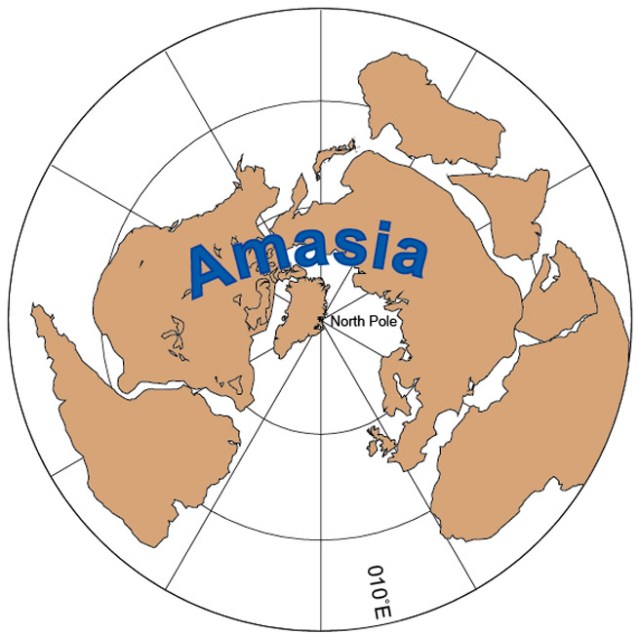
Over the next few hundred million years, the Arctic Ocean and the Caribbean Sea will disappear, and Asia will crash into the Americas forming a supercontinent that will stretch across much of the Northern Hemisphere. That’s the conclusion of a new analysis of the movements of these giant landmasses.

Unlike in today’s world, where a variety of tectonic plates move across Earth’s surface carrying the bits of crust that we recognize as continents, ancient Earth was home to supercontinents, which combined most if not all major landmasses into one. Previous studies suggest that supercontinents last about 100 million years or so before they break apart, setting the pieces adrift to start another cycle.

The geological record reveals that in the past 2 billion years or so, there have been three supercontinents, says Ross Mitchell, a geophysicist at Yale University. The oldest known supercontinent, Nuna, came together about 1.8 billion years ago. The next, Rodinia, existed about 1 billion years ago, and the most recent, Pangaea, came together about 300 million years ago. In the lengthy intervals between supercontinents, continent-sized-and-smaller landmasses drifted individually via plate tectonics, as they do today.

Scientists can track the comings and goings of those landmasses by analyzing the iron-bearing magnetic minerals in various types of rock deposits. That’s because the iron atoms, and sometimes even tiny magnetized bits of iron-bearing rock, line up with Earth’s magnetic field when they’re free to rotate, as they are when the material that contains them is molten. Once the rocks have solidified—and if they aren’t heated above the temperature at which their magnetic information is wiped clean—careful analyses can reveal where on Earth those rocks were when they first cooled, even if the rocks are hundreds of millions of years old. In particular, the rocks retain a record of their paleolatitude, or how far they were from Earth’s magnetic pole.

Although supercontinents before Nuna may have existed, rocks more than 2 billion years old that still preserve evidence of ancient magnetic fields are scarce, Mitchell says. And although scientists have generally agreed that Nuna, Rodinia, and Pangaea existed, exactly where on Earth each came together has been a matter of strong debate. Some geophysical models have suggested that drifting landmasses have come together in the same spot on Earth’s surface each cycle. Other teams have proposed that the wandering pieces reassembled on the opposite side of the planet, 180° away from where the previous supercontinent broke apart.

Now, Mitchell and his colleagues suggest an intermediate answer—that each supercontinent has come together about 90° away from its predecessor. The team’s analyses, reported online today in Nature, use techniques that determine the paleolatitude of ancient landmasses but also, for the first time, estimate their paleolongitude by taking into account how the locations of Earth’s magnetic poles changed through time. Together, these data suggest that the geographic center of Rodinia was located about 88° away from the center of Nuna, and the center of Pangaea—which was located near present-day Africa—sat about 87° from Rodinia’s center.

These angles are no accident, the researchers suggest: The drifting pieces of crust eventually come together along the former edge of the fractured supercontinent—an area approximately 90° away from the former supercontinent’s center. That’s where relatively dense ocean crust was being shoved beneath the lighter continental crust, causing a downward flow in the underlying mantle that in turn attracted the drifting bits like water running down a drain.

According to this model, the next supercontinent—a sprawling landmass dubbed Amasia, which in its earliest stages will merge Asia with the Americas—will stretch across much of the Northern Hemisphere, the researchers suggest. Over the next few hundred million years, Mitchell says, the motions of tectonic plates will cause the Arctic Ocean and the Caribbean Sea to disappear, the western edge of South America to crowd up against the eastern seaboard, and Australia to slam into southeastern Asia. It’s unclear whether Antarctica will join the party or be stranded at the South Pole.

“This is a beautiful piece of work,” says Joseph Kirschvink, a geophysicist at California Institute of Technology in Pasadena. Most of the high-quality paleomagnetic data available today has been collected in the past 20 years or so, he notes. “And the more data we have, the more we can recognize the patterns of where chunks of Earth’s crust must have been.”

The team’s ideas about how and where supercontinents form are “reasonable but far from proven,” says Bernhard Steinberger, a geodynamicist at the German Research Centre for Geosciences in Potsdam. Although Mitchell and his colleagues have identified statistical trends in their paleomagnetic analyses, he notes, “the data still just look like clouds of points to me.”

The team’s results “are very impressive,” says Brendan Murphy, a geologist at St. Francis Xavier University in Antigonish, Canada. Because the breakup and assembly of supercontinents is arguably one of the most important cycles in Earth’s biological and geological evolution, the findings will undoubtedly stimulate further research and analyses, he notes. “And even if the new model is wrong,” he adds, “we’ll learn a lot by testing it.”

http://news.sciencemag.org/sciencenow/2012/02/meet-amasia-the-next-supercontin.html

Thanks to Dr. Rajadhyaksha for bringing this to the attention of the It’s Interesting community.
Old termites blow themselves up to save the nest

sn-termites

When trekking through a forest in French Guiana to study termites, a group of biologists noticed unique spots of blue on the backs of the insects in one nest. Curious, one scientist reached down to pick up one of these termites with a pair of forceps. It exploded. The blue spots, the team discovered, contain explosive crystals, and they’re found only on the backs of the oldest termites in the colony. The aged termites carry out suicide missions on behalf of their nest mates.

After their initial observation, the team carried out field studies of Neocapritermes taracua termites and discovered that those with the blue spots also exploded during encounters with other species of termites or larger predators. The researchers report online today in Science that the secretions released during the explosion killed or paralyzed opponents from a competing termite species. However, if the scientists removed the blue crystal from the termites, their secretions were no longer toxic.

Back in their labs, scientists led by biochemist Robert Hanus of the Academy of Sciences of the Czech Republic in Prague went on to show that the blue termites always had shorter, worn-down mandibles than others from the same species, indicating that they were older. Then, the researchers removed the contents of the blue pouches and analyzed them. They contained a novel protein that is unusually rich with copper, suggesting that it’s an oxygen binding-protein. Rather than being toxic itself, it likely is an enzyme that converts a nontoxic protein into something toxic.

“What happens is when the termites explode, the contents of the back pouch actually interact with secretions from the salivary gland and the mixture is what is toxic,” explains Hanus. It’s the first time two interacting chemicals have been shown responsible for a defense mechanism in termites, he says.

Researchers already knew that many social insects change roles in their colony as they age. Moreover, it’s well known that a number of species of termites explode, often oozing sticky or smelly fluid onto their opponent. But in previously observed cases, the explosive or noxious material is found in the termites’ heads, and the suicide missions are the responsibility of a distinct caste of soldier termites, not aging workers. Since N. taracua have soldiers, it’s especially surprising to see workers exploding, says Hanus.

“This is a quirky, funny natural history,” says behavioral ecologist Rebeca Rosengaus of Northeastern University in Boston, who was not involved in the study. “What’s new and interesting here is that this is found to be an aspect of colony-related age organization,” says biologist James Traniello of Boston University. And the placement and chemistry of the blue crystals is unique, he says. The findings illustrate the vast diversity of social structures and defense mechanisms that the more than 3000 species of termites have evolved over time, Traniello says.

One question that remains is exactly how aging triggers the accumulation of the blue crystals. “We’re still not 100% sure what the role of the blue protein is,” says Hanus. “That’s definitely something which we want to perform further research on.”

http://news.sciencemag.org/sciencenow/2012/07/old-termites-blow-themselves-up-.html

Thanks to Dr. Rajadhyaksha for bringing this to the attention of the It’s Interesting community.