Dried Meat ‘Resurrects’ Lost Species of Beaked Whale

sn-whales

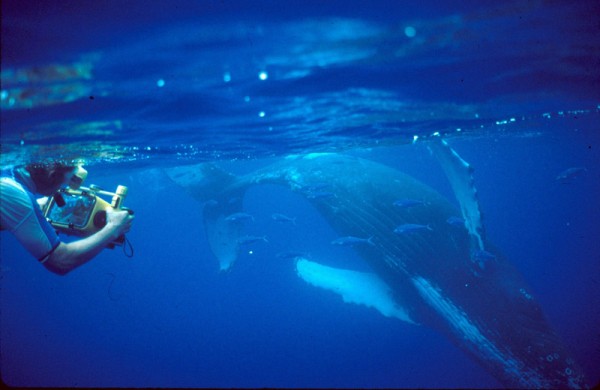
A gift of dried whale meat—and some clever genetic sleuthing across almost 16,000 kilometers of equatorial waters—has helped scientists identify a long-forgotten animal as a new species of beaked whale. The “resurrection” raises new questions about beaked whales, the most elusive and mysterious of cetaceans.

“Literally nothing is known about most species of beaked whales; they are probably the least known family of large mammals,” says Robin Baird, a cetacean biologist at Cascadia Research Collective in Olympia. “So it’s exciting to have this study.”

The species, Mesoplodon hotaula, is a dark blue, Volkswagen-van-sized cetacean with the prominent snout that gives beaked whales their common name. It first came to scientists’ attention in 1963 when a single adult female stranded on the coast of Sri Lanka in the Indian Ocean. The director of the National Museums of Ceylon, P. E. P. Deraniyagala, decided that it was different from the other Mesoplodon species known at that time, and assigned it the name hotaula, meaning “pointed beak” in the local Sinhala language. But only 2 years later, M. hotaula was eliminated as a species when other researchers decided that it was identical to M. ginkgodens (another beaked whale which scientists know only from stranded carcasses and have never seen alive in the sea).

Forty years later, locals on an atoll in the Gilbert Islands, part of the Republic of Kiribati in the west Pacific, gave a visiting marine biologist dried strips of whale meat left over from a recent festival. The sample was turned over to cetacean geneticists at the University of Auckland in New Zealand who had assembled a database of the DNA of all known beaked whales. “It was a surprise, because the genetic sequences from the meat didn’t match any of the known species,” says Scott Baker, a cetacean geneticist now at Oregon State University’s Marine Mammal Institute in Newport, and one of the authors of the study. “We thought we had a new species.”

Then, in 2005, other co-authors collected some whale bone and teeth on Palmyra Atoll, which lies southeast of the Hawaiian Islands and 2600 kilometers northeast of the Gilbert Islands. The genetic sequences extracted from these specimens matched those of the dried meat. “We knew then we were on to something,” Baker says. Finally, in 2009, the body of a beaked whale was found in the Seychelles, in the western part of the Indian Ocean; its DNA also matched that of the dried meat sample, even though this whale lived tens of thousands of kilometers away from the Gilbert Islands.

That was the clue the researchers needed. “We immediately wondered, ‘Could it be Deraniyagala’s beaked whale?’ ” Baker says. It was. The team recently reported its resurrection of the forgotten M. hotaula in Marine Mammal Science. Counting M. hotaula, there are now 15 known species in this genus, making it by far the most species-rich genus of cetaceans.

Overall, the saga of M. hotaula shows “that there are probably even more species of beaked whales that we don’t know about,” says Phil Clapham, a marine mammalogist at the National Marine Mammal Laboratory in Seattle, Washington. “We don’t see them because they’re very deep-diving and live far from land.” They also live in a poorly surveyed part of the ocean, Baker says, where very few people dwell on remote atolls.

Intriguingly, it is the islanders who seem to know the most about M. hotaula and some other beaked whales. The Gilbert Islands residents who provided the original gift of dried meat reported that it came from one of seven whales they had driven onto the beach and killed. “That was something we didn’t know: that these beaked whales live in groups,” Baker says. “We thought they were solitary” because of the single, stranded individuals that are occasionally found. The scientists also believe that males of M. hotaula fight each other, because this behavior is known in other species of beaked whales, and because the teeth of two adult male specimens were broken. “Other than that, and knowing that Deraniyagala was right, M. hotaula is still pretty mysterious,” says Baker, who hopes to launch an expedition to learn more about them.

http://news.sciencemag.org/biology/2014/02/dried-meat-resurrects-lost-species-whale

Thanks to Dr. Rajadhyaksha for bringing this to the attention of the It’s Interesting community.

Online Video Game Plugs Players Into Real Biochemistry Lab

sn-crowdsourcing

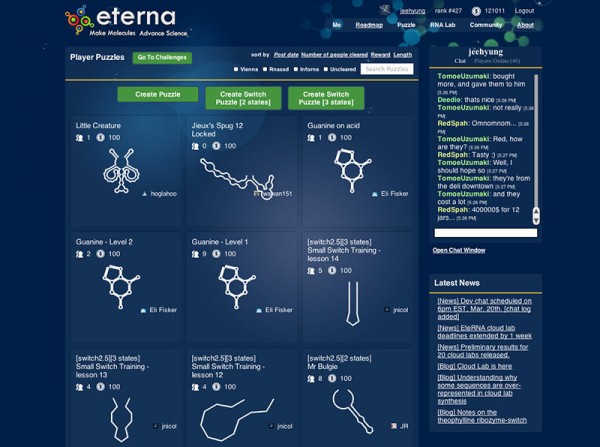
Crowdsourcing is the latest research rage—Kickstarter to raise funding, screen savers that number-crunch, and games to find patterns in data—but most efforts have been confined to the virtual lab of the Internet. In a new twist, researchers have now crowdsourced their experiments by connecting players of a video game to an actual biochemistry lab. The game, called EteRNA, allows players to remotely carry out real experiments to verify their predictions of how RNA molecules fold. The first big result: a study published this week in the Proceedings of the National Academy of Sciences, bearing the names of more than 37,000 authors—only 10 of them professional scientists. “It’s pretty amazing stuff,” says Erik Winfree, a biophysicist at the California Institute of Technology in Pasadena.

Some see EteRNA as a sign of the future for science, not only for crowdsourcing citizen scientists but also for giving them remote access to a real lab. “Cloud biochemistry,” as some call it, isn’t just inevitable, Winfree says: It’s already here. DNA sequencing, gene expression testing, and many biochemical assays are already outsourced to remote companies, and any “wet lab” experiment that can be automated will be automated, he says. “Then the scientists can focus on the non-boring part of their work.”

EteRNA grew out of an online video game called Foldit. Created in 2008 by a team led by David Baker and Zoran Popović, a molecular biologist and computer scientist, respectively, at the University of Washington, Seattle, Foldit focuses on predicting the shape into which a string of amino acids will fold. By tweaking virtual strings, Foldit players can surpass the accuracy of the fastest computers in the world at predicting the structure of certain proteins. Two members of the Foldit team, Adrien Treuille and Rhiju Das, conceived of EteRNA back in 2009. “The idea was to make a version of Foldit for RNA,” says Treuille, who is now based at Carnegie Mellon University in Pittsburgh, Pennsylvania. Treuille’s doctoral student Jeehyung Lee developed the needed software, but then Das persuaded them to take it a giant step further: hooking players up directly to a real-world, robot-controlled biochemistry lab. After all, RNA can be synthesized and its folded-up structure determined far more cheaply and rapidly than protein can.

Lee went back to the drawing board, redesigning the game so that it had not only a molecular design interface like Foldit, but also a laboratory interface for designing RNA sequences for synthesis, keeping track of hypotheses for RNA folding rules, and analyzing data to revise those hypotheses. By 2010, Lee had a prototype game ready for testing. Das had the RNA wet lab ready to go at Stanford University in Palo Alto, California, where he is now a professor. All they lacked were players.

A message to the Foldit community attracted a few hundred players. Then in early 2011, The New York Times wrote about EteRNA and tens of thousands of players flooded in.

The game comes with a detailed tutorial and a series of puzzles involving known RNA structures. Only after winning 10,000 points do you unlock the ability to join EteRNA’s research team. There the goal is to design RNA sequences that will fold into a target structure. Each week, eight sequences are chosen by vote and sent to Stanford for synthesis and structure determination. The data that come back reveal how well the sequences’ true structures matched their targets. That way, Treuille says, “reality keeps score.” The players use that feedback to tweak a set of hypotheses: design rules for determining how an RNA sequence will fold.

Two years and hundreds of RNA structures later, the players of EteRNA have proven themselves to be a potent research team. Of the 37,000 who played, about 1000 graduated to participating in the lab for the study published today. (EteRNA now has 133,000 players, 4000 of them doing research.) They generated 40 new rules for RNA folding. For example, at the junctions between different parts of the RNA structure—such as between a loop and an arm—the players discovered that it is far more stable if enriched with guanines and cytosines, the strongest bonding of the RNA base pairs. To see how well those rules describe reality, the humans then competed toe to toe against computers in a new series of RNA structure challenges. The researchers distilled the humans’ 40 rules into an algorithm called EteRNA Bot.

The human players still came out on top, solving structures more accurately than the standard software 99% of the time. The algorithmic version of their rules also outperformed the standard software, but only 95% of the time, showing that the crowdsourced human RNA-folding know-how has not been completely captured yet. The next step, Lee says, is to make the wet lab completely robotic. It still requires humans to operate some of the steps between the input of player RNA sequences and the data output.

EteRNA won’t work for every kind of science, says Shawn Douglas, a biomolecular engineer at the University of California, San Francisco, because a problem has to be “amenable to game-ification.” But he’s optimistic that there will be many more to come. “Many areas of biological research have reached a level of complexity that the mental bandwidth of the individual researcher has become a bottleneck,” Douglas says. EteRNA proves that “there are tens of thousands of people around the world with surplus mental bandwidth and the desire to participate in scientific problem solving.” The trick is to design a good game.

http://news.sciencemag.org/biology/2014/01/online-video-game-plugs-players-real-biochemistry-lab

Thanks to Dr. Rajadhyaksha for bringing this to the It’s Interesting community.

‘Jumping Genes’ Linked to Schizophrenia

sn-schizophrenia

Roaming bits of DNA that can relocate and proliferate throughout the genome, called “jumping genes,” may contribute to schizophrenia, a new study suggests. These rogue genetic elements pepper the brain tissue of deceased people with the disorder and multiply in response to stressful events, such as infection during pregnancy, which increase the risk of the disease. The study could help explain how genes and environment work together to produce the complex disorder and may even point to ways of lowering the risk of the disease, researchers say.

Schizophrenia causes hallucinations, delusions, and a host of other cognitive problems, and afflicts roughly 1% of all people. It runs in families—a person whose twin sibling has the disorder, for example, has a roughly 50-50 chance of developing it. Scientists have struggled to define which genes are most important to developing the disease, however; each individual gene associated with the disorder confers only modest risk. Environmental factors such as viral infections before birth have also been shown to increase risk of developing schizophrenia, but how and whether these exposures work together with genes to skew brain development and produce the disease is still unclear, says Tadafumi Kato, a neuroscientist at the RIKEN Brain Science Institute in Wako City, Japan and co-author of the new study.

Over the past several years, a new mechanism for genetic mutation has attracted considerable interest from researchers studying neurological disorders, Kato says. Informally called jumping genes, these bits of DNA can replicate and insert themselves into other regions of the genome, where they either lie silent, doing nothing; start churning out their own genetic products; or alter the activity of their neighboring genes. If that sounds potentially dangerous, it is: Such genes are often the culprits behind tumor-causing mutations and have been implicated in several neurological diseases. However, jumping genes also make up nearly half the current human genome, suggesting that humans owe much of our identity to their audacious leaps.

Recent research by neuroscientist Fred Gage and colleagues at the University of California (UC), San Diego, has shown that one of the most common types of jumping gene in people, called L1, is particularly abundant in human stem cells in the brain that ultimately differentiate into neurons and plays an important role in regulating neuronal development and proliferation. Although Gage and colleagues have found that increased L1 is associated with mental disorders such as Rett syndrome, a form of autism, and a neurological motor disease called Louis-Bar syndrome, “no one had looked very carefully” to see if the gene might also contribute to schizophrenia, he says.

To investigate that question, principal investigator Kazuya Iwamoto, a neuroscientist; Kato; and their team at RIKEN extracted brain tissue of deceased people who had been diagnosed with schizophrenia as well as several other mental disorders, extracted DNA from their neurons, and compared it with that of healthy people. Compared with controls, there was a 1.1-fold increase in L1 in the tissue of people with schizophrenia, as well as slightly less elevated levels in people with other mental disorders such as major depression, the team reports today in Neuron.

Next, the scientists tested whether environmental factors associated with schizophrenia could trigger a comparable increase in L1. They injected pregnant mice with a chemical that simulates viral infection and found that their offspring did, indeed, show higher levels of the gene in their brain tissue. An additional study in infant macaques, which mimicked exposure to a hormone also associated with increased schizophrenia risk, produced similar results. Finally, the group examined human neural stem cells extracted from people with schizophrenia and found that these, too, showed higher levels of L1.

The fact that it is possible to increase the number of copies of L1 in the mouse and macaque brains using established environmental triggers for schizophrenia shows that such genetic mutations in the brain may be preventable if such exposures can be avoided, Kato says. He says he hopes that the “new view” that environmental factors can trigger or deter genetic changes involved in the disease will help remove some of the disorder’s stigma.

Combined with previous studies on other disorders, the new study suggests that L1 genes are indeed more active in the brain of patients with neuropsychiatric diseases, Gage says. He cautions, however, that no one yet knows whether they are actually causing the disease. “Now that we have multiple confirmations of this occurring in humans with different diseases, the next step is to determine if possible what role, if any, they play.”

One tantalizing possibility is that as these restless bits of DNA drift throughout the genomes of human brain cells, they help create the vibrant cognitive diversity that helps humans as a species respond to changing environmental conditions, and produces extraordinary “outliers,” including innovators and geniuses such as Picasso, says UC San Diego neuroscientist Alysson Muotri. The price of such rich diversity may be that mutations contributing to mental disorders such as schizophrenia sometimes emerge. Figuring out what these jumping genes truly do in the human brain is the “next frontier” for understanding complex mental disorders, he says. “This is only the tip of the iceberg.”

Thanks to Dr. Rajadhyaksha for bringing this to the attention of the It’s Interesting community.

http://news.sciencemag.org/biology/2014/01/jumping-genes-linked-schizophrenia

John McKetta, Jr.: A Journey To Greatness Started In A Coal Mine

John-McKetta-in-1931

Dean-McKettas-portrait-1984

More-about-McKetta-1

More-about-McKetta-2

By Forrest Preece
West Austin News

Part 1

In 1903, a 14-year-old Ukrainian boy named John McKetta packed a suitcase and headed for Pennsylvania for $25, ($15 of which he gave to his father), a job in the coal mines, and a place to live.

That youngster had a lot on his mind – mainly how to survive in a new country and how to adjust to working deep underground for long hours. It’s doubtful he would have imagined his namesake son would become the world’s most prominent chemical engineer; receive the “International Chemical Engineering Award” in Venice, Italy; be one of the most revered professors ever to teach at The University of Texas, with a large academic department named after him; and serve as an energy adviser to five United States presidents. All of that would take a while.

When John, Jr., the subject of this column, was born in 1915, he faced the bleak prospect of finishing public school and then a lifetime of backbreaking work in the coal mines. That was the only career option – six days a week in the mines – the same as his father and uncle and the other men in Wyano, Pa., population 200. But before John could start the first grade, he and the other kids his age had to learn English. So they began a month early, were given primers, and they could all speak English when it was time for school to start. (“It can be done — that’s why I don’t like the idea of having double-language schools,” he says.)

For three years after he finished high school, John, Jr. went 475 feet underground into a seven-foot coal vein, six days a week.
”At least we could stand up! The men in Kentucky were in four-foot veins and had to stoop and crawl around all day,” he says.

During those three years, the most he ever made in a week was $3, based on 25 cents per ton of coal he brought out of the ground. In that era, the workers had no electric equipment to use. It was strictly pick-and-shovel manual labor.

“I hated every minute of it,” John says.

Then one day, he saw a book that changed his life. It was by a man named Porter about the process of carbonization that extracted energy from coal.

“There were people called chemical engineers who made this happen,” John says. “I wanted to be one of them.”

So he obtained a list of colleges in the country that had chemical engineering programs and determined to keep writing to them until one would accept him. With no typewriter or even a pen to use, he kept grinding out pencil-written letters.

”About the best I could do was three or four letters a night.”

Of the first 54 colleges he applied to, none even gave him the courtesy of a rejection letter. Finally, President Burton Handy of Tri-State University in Angola, Indiana wrote him back. His letter said, “If we admit you, we will provide you with a job that will help you pay for your tuition and your lodging. Please come talk to us.”

That was on a Friday. The next day, he put $10.20 in his pocket and hitchhiked across Ohio to Indiana.

“In those days, people would pick up a kid with a suitcase.”

When he arrived on Monday, he made a beeline for the registrar’s office. When he got there, he gave the receptionist his name. She flipped through her files, looked startled and said, “Oh yes, Mr. McKetta, President Handy wants to see you.”

John says that the president leaped out of his chair, came over and gave him a slap on the back. “He admired me for being willing to apply.”

The upshot of the conversation they then had was that John would have a job making twenty cents an hour, twenty hours a week. Of that $4.00 total weekly salary, he’d pay $2.00 for tuition and $2.00 for a room at a house off campus run by a lady named Mrs. Nichols.

After meeting Mrs. Nichols, and seeing his room that he’d be sharing, he decided to get a cup of coffee at a local diner. As it happened, the owner of the diner was just preparing a “Dishwasher Wanted” sign to put in his window. John asked about it and found out that it paid no money, but for every hour worked, it meant a free meal. He took the job and was just beaming over all his good fortune.

Then things got even better. He ran into a local bandleader named Ray Bodie who needed a second trumpet and John had played that instrument in the Wyano Volunteer Fire Department Band.

He told Bodie that he could sit in on Wednesday and Saturday nights, if he could find a trumpet to use. That was even more income. A year later, he started his own 12-piece band called JJKK – “Johnny Jay and the Kampus Kollegians” an, started playing gigs all over the thriving 3,000-person metropolis of Angola.

He paid himself $1.01 (sometimes $1.50) and hi musicians got 75 cents for their performances. All the while, he was diligently studying every night and he kept a coal miner’s cap on his desk for a very good reason.

“When some of the guy would ask me to go shoot pool, I’d just look at that cap and remember being in the mine and say ‘No, I have to study.”

Part 2
What can you say about a 98-year-old college professor who still goes to his office at The University of Texas at Austin three days a week, around 6 a.m. and stays for several hours to visit with researchers? Who still calls eight to ten of his former students a day -and laments how fast they are dying? And who still operates at a level of energy and good-hearted enthusiasm that would shame most 40- year-olds?

John McKetta, Jr. does all of that and more. In a recent interview with him at his apartment at Westninster Manor, where he has resided for eight years, John told me about his life. It has been quite a journey: from his post-high school years laboring in the coal mines of rural Pennsylvania to his career in chemical engineering, where he gained worldwide recognition for his teaching, research, publications and administrative ability.

He also told me about his family: his beloved wife Helen “Pinky” McKetta, who he married in 1943 and who passed away in 2011; his sons Charles, Mike and Randy and his daughter Mary Anne.

If you read part one of my column about him last week, you know that through dogged perseverance, he was accepted as a student at Tri-State University in Angola, Indiana, where he excelled in the chemical engineering program.

“The faculty members were so wonderful to me! And when I graduated, they got me job at the Michigan Alkali, CO. in Wyandotte, Michigan, near Detroit.”

His work there was exciting, but he started hearing about this company called Dow that was doing amazing things in the realm of producing chemicals from gas and oil.

Dr. George Granger Brown (or as he was jokingly called, “Great God” Brown), was a chief consultant to Dow and the chairman of the chemical engineering department at the University of Michigan. One day John drove his 1928 Ford up to meet this notable man. Soon he was a student again, working toward his Ph.D.

One night in an off-campus coffee shop, he met Pinky Smith, the love of his life. Who married him a few months later. Her name still crawls across his home office’s computer screen.

While he was at Michigan doing his Ph.D. research, John and one of his professors, Dr. Donald Katz, developed a set of tables relating to underground temperature and pressure in gas and oil wells that reveal the composition of the surrounding terrain. These McKetta and Katz tables are still in widespread use.

Partially thanks to his desire to be “where the oil and gas was underground,” he came to Texas. Besides that, Dow Chemical in Freeport was doing amazing things.

“God was with me when I decided to come to Texas and I got hired at the University in 1946.”

John would progress up the ladder at UT from assistant professor to professor, to chairman of the Department of Chemical Engineering to dean of the College of Engineering.

For a while, he was executive vice-chancellor for the UT system under Chancellor Harry Ransom. That was during the period when they were establishing UT Permian Basin, UT Dallas, UT El Paso and UT San Antonio and John was the key executive in that effort.

One conversation John recalls from his early days on the faculty is when, in 1948, he was having lunch with his colleagues in the College of Engineering and Professor Bill Cunningham (not the man who would later be president of UT) brought in a list of the top 50 engineering schools. UT wasn’t on it; Rice was number 26.

He laughs and says, “As of last year, we were number four on a similar list. For 40 years, he was on the payroll and taught at UT for another 20 years, he donated his time to teaching courses.

Also, with the $6,900,000 in the McKetta Fund which he established with a $964,000 personal gift, many outstanding students have scholarships so they concentrate on their studies. “It’s just wonderful for these students to have this financial support,” he says.

What changes has he seen in his field? He warms to the subject of bioengineering which is a topic that only recently has come to the fore.

“Forrest, when I wave my hand at you like this, there are something like 80,000 cells in my body involved. Your whole body is a chemical plant.”

Long story short, there are researchers at UT Austin who are zeroing in on being able to provide pinpointed medication to the parts of the body that cure certain diseases. John says that years ago, he went to the chairman of the board of directors of St. David’s Hospital and asked him to bring some of his MDs over to talk to the engineering faculty on a regular, voluntary basis about bioengineering.

Something like 80 percent of his engineering faculty members showed up for the talks, because they were all interested in this new field of research.

As a result, now there is a new $60,000,000 Bioengineering Building on the UT Austin campus. So what advice would he give to a student starting in engineering? First, they have to be interested in the field. And he says that there are two traits he looks for: curiosity and “judicious discontent.”

“I like kids who ask ‘why’ and ‘what can I do about it?’”

One last note – for many years, Dr. McKetta kept a miner’s cap on his UT office desk, as a reminder of how much better it is to be a professor than working in the mines. Oh – and being a Longhorn football fan to the max, he says that Mack Brown is going to have a terrific season this year.

http://www.che.utexas.edu/2013/09/06/a-journey-to-greatness-started-in-a-coal-mine/

Thanks to Dr. Rajadhyaksha for bringing this to the attention of the It’s Interesting community.

How the Whale Became the Whale

whale

About 54 million years ago, a semiaquatic deerlike creature headed into the water for good, giving rise to whales and their relatives. The newly sequenced genome of the minke whale, a baleen whale found worldwide, tells the story of how stressful this move to live underwater was. An international team has decoded the genomes of four minke whales, a fin whale, a bottlenose dolphin, and a finless porpoise, comparing these cetaceans’ genes to the equivalent genes in other mammals. It found whale-specific mutations in genes important for the regulation of salt and of blood pressure and for antioxidants that get rid of charged oxygen molecules that can harm cells. These molecules increase in number as the whale uses up its oxygen supply during dives. Whales also had larger numbers of related genes, called gene families, for dealing with sustained dives, the team reports online today in Nature Genetics. Overall, 1156 gene families had expanded, and several increased the number of enzymes that help the whale cope with low-to-no oxygen conditions. A few of those expanded families are also expanded in naked mole rats, which live underground where oxygen is scarce. But the numbers of genes for body hair and for taste and smell had decreased. And of course, there were genes and gene families that help explain why whales look the way they do.

http://news.sciencemag.org/biology/2013/11/scienceshot-how-whale-became-whale

Thanks to Dr. Rajadhyaksha for bringing this to the attention of the It’s Interesting community.

How Exercise Beefs Up the Brain

exercise

New research explains how abstract benefits of exercise—from reversing depression to fighting cognitive decline—might arise from a group of key molecules.

While our muscles pump iron, our cells pump out something else: molecules that help maintain a healthy brain. But scientists have struggled to account for the well-known mental benefits of exercise, from counteracting depression and aging to fighting Alzheimer’s and Parkinson’s disease. Now, a research team may have finally found a molecular link between a workout and a healthy brain.

Much exercise research focuses on the parts of our body that do the heavy lifting. Muscle cells ramp up production of a protein called FNDC5 during a workout. A fragment of this protein, known as irisin, gets lopped off and released into the bloodstream, where it drives the formation of brown fat cells, thought to protect against diseases such as diabetes and obesity. (White fat cells are traditionally the villains.)

While studying the effects of FNDC5 in muscles, cellular biologist Bruce Spiegelman of Harvard Medical School in Boston happened upon some startling results: Mice that did not produce a so-called co-activator of FNDC5 production, known as PGC-1α, were hyperactive and had tiny holes in certain parts of their brains. Other studies showed that FNDC5 and PGC-1α are present in the brain, not just the muscles, and that both might play a role in the development of neurons.

Spiegelman and his colleagues suspected that FNDC5 (and the irisin created from it) was responsible for exercise-induced benefits to the brain—in particular, increased levels of a crucial protein called brain-derived neurotrophic factor (BDNF), which is essential for maintaining healthy neurons and creating new ones. These functions are crucial to staving off neurological diseases, including Alzheimer’s and Parkinson’s. And the link between exercise and BDNF is widely accepted. “The phenomenon has been established over the course of, easily, the last decade,” says neuroscientist Barbara Hempstead of Weill Cornell Medical College in New York City, who was not involved in the new work. “It’s just, we didn’t understand the mechanism.”

To sort out that mechanism, Spiegelman and his colleagues performed a series of experiments in living mice and cultured mouse brain cells. First, they put mice on a 30-day endurance training regimen. They didn’t have to coerce their subjects, because running is part of a mouse’s natural foraging behavior. “It’s harder to get them to lift weights,” Spiegelman notes. The mice with access to a running wheel ran the equivalent of a 5K every night.

Aside from physical differences between wheel-trained mice and sedentary ones—“they just look a little bit more like a couch potato,” says co-author Christiane Wrann, also of Harvard Medical School, of the latter’s plumper figures—the groups also showed neurological differences. The runners had more FNDC5 in their hippocampus, an area of the brain responsible for learning and memory.

Using mouse brain cells developing in a dish, the group next showed that increasing the levels of the co-activator PGC-1α boosts FNDC5 production, which in turn drives BDNF genes to produce more of the vital neuron-forming BDNF protein. They report these results online today in Cell Metabolism. Spiegelman says it was surprising to find that the molecular process in neurons mirrors what happens in muscles as we exercise. “What was weird is the same pathway is induced in the brain,” he says, “and as you know, with exercise, the brain does not move.”

So how is the brain getting the signal to make BDNF? Some have theorized that neural activity during exercise (as we coordinate our body movements, for example) accounts for changes in the brain. But it’s also possible that factors outside the brain, like those proteins secreted from muscle cells, are the driving force. To test whether irisin created elsewhere in the body can still drive BDNF production in the brain, the group injected a virus into the mouse’s bloodstream that causes the liver to produce and secrete elevated levels of irisin. They saw the same effect as in exercise: increased BDNF levels in the hippocampus. This suggests that irisin could be capable of passing the blood-brain barrier, or that it regulates some other (unknown) molecule that crosses into the brain, Spiegelman says.

Hempstead calls the findings “very exciting,” and believes this research finally begins to explain how exercise relates to BDNF and other so-called neurotrophins that keep the brain healthy. “I think it answers the question that most of us have posed in our own heads for many years.”

The effect of liver-produced irisin on the brain is a “pretty cool and somewhat surprising finding,” says Pontus Boström, a diabetes researcher at the Karolinska Institute in Sweden. But Boström, who was among the first scientists to identify irisin in muscle tissue, says the work doesn’t answer a fundamental question: How much of exercise’s BDNF-promoting effects come from irisin reaching the brain from muscle cells via the bloodstream, and how much are from irisin created in the brain?

Though the authors point out that other important regulator proteins likely play a role in driving BDNF and other brain-nourishing factors, they are focusing on the benefits of irisin and hope to develop an injectable form of FNDC5 as a potential treatment for neurological diseases and to improve brain health with aging.

http://news.sciencemag.org/biology/2013/10/how-exercise-beefs-brain

Thanks to Dr. Rajadhyaksha for bringing this to the attention of the It’s Interesting community.
Graduate student frozen out of research in Antarctica because of U.S. government shutdown

antarctica

Time on his hands. Sebastian Vivancos (inset) is part of the newly arrived team whose planned research activities at the U.S. Palmer Station in Antarctica are being thwarted by the government shutdown.

After 5 years as a lieutenant in the U.S. Coast Guard, Jamie Collins knows what it’s like to be at sea. But nothing in his military service prepared him for his current 30,000-km scientific round trip to nowhere, courtesy of the failure of the U.S. Congress to approve a budget. His predicament is one of the stranger—and sadder—tales of how the government-wide shutdown is affecting researchers.

Collins, a third-year graduate student in chemical oceanography, arrived Wednesday at the National Science Foundation’s (NSF’s) Palmer Station in Antarctica. He was eager to begin working on a long-running ecological research project funded by NSF and to start collecting data for his dissertation in a graduate program run jointly by the Massachusetts Institute of Technology and the Woods Hole Oceanographic Institution. But the rough seas he encountered during his 4-day crossing of the notorious Drake Passage in the south Atlantic—the final leg of a journey that began in Boston—paled in comparison to the storm he encountered once he stepped off the Laurence M. Gould, a U.S. icebreaking research vessel that ferries scientists and supplies between Puenta Arenas, Chile, and the west Antarctic Peninsula.

On Tuesday, NSF had announced that its contractor for Antarctic logistical support, Lockheed Martin, would begin putting the three U.S. stations on “caretaker” status unless Congress passed an appropriations bill to continue funding the government by 14 October. Although legislators will eventually adopt such a bill, nobody expects them to act in the next few days. Without an appropriation, NSF has no money to operate the stations.

For Collins, that announcement meant his plans for an intensive 5-month research regime had suddenly melted away. “The station manager told us not to unpack our stuff and to stay on the ship,” he says in a phone call to ScienceInsider from the ship. “She said we were to wait here for a week while they prepare to shut down the station. Then we’d sail back to Chile, and go home.”

Collins was stunned. “I had spent all summer preparing for this trip,” he says. He had filled three pallets with supplies for his experiments on how algae in the region detect and react to the presence of ultraviolet radiation, part of a larger effort to understand the role that bacteria play in sequestering carbon in the Southern Ocean. “Without the data from those experiments, I may have to reevaluate what to do for my Ph.D.,” he adds.

Collins was also part of the first wave of students arriving at Palmer this season to work on a research project, begun in 1990, that explores how the extent of annual sea ice affects the polar biota. The project is one of 26 so-called LTER (Long Term Ecological Research) sites around the world that NSF supports. He was scheduled to divide his time at Palmer between his own research and monitoring penguin colonies on several offshore islands as part of the LTER project. And he had signed up for a 6-week research cruise aboard the Gould that supplements the land-based LTER observations with oceanographic data collected up and down the peninsula.

Despite the jarring news, the 31-year-old Collins says that he is more worried about what it may mean to some of his younger colleagues with less worldly experience. “I spent 5 years in the military and I’m used to dealing with bureaucracy,” he explains. “And nothing that happens here is going to deter me from pursuing my goal of a career in science. But for some of the undergraduates on the trip, this is their first taste of what Congress thinks about the value of scientific research. And it’s sending them a pretty horrific message.”

http://news.sciencemag.org/people-events/2013/10/tales-shutdown-grad-student-frozen-out-research-antarctica

Thanks to Dr. Rajadhyaksha for bringing this to the attention of the It’s Interesting community.

New research shows that male humpback whales sing in unison to attract females

sn-whalesong_0

The mournful, curiously repetitious yet ever-changing songs of male humpback whales have long puzzled scientists. The tunes are part of the males’ mating displays, but researchers don’t know their exact function, or which males in a population are doing the singing. Now, scientists who’ve been studying the giant marine mammals in Hawaii for almost 40 years report that even sexually immature males join older males in singing, apparently as a way to learn the music and to amplify the song. The beefed-up, all-male choruses may attract more females to the areas where the songsters hang out.

Scientists generally thought that only adult male humpbacks (Megaptera novaeangliae) sing, says Louis Herman, a marine mammal biologist emeritus at the University of Hawaii, Manoa, and the lead author of the new study. “But that’s just because you can’t easily tell which ones are mature and which ones are immature,” he says. “We know that mature males are larger than immature ones, so we had to figure out an unobtrusive way to measure them in the open ocean.”

Herman and his team hit on a technique by looking at 20th century whaling records. Biologists with whaling operations in the Southern Ocean had the opportunity to measure many humpbacks killed during the commercial hunts. They determined, based on the weight of males’ testes, that the whales reached sexual maturity at a body length of 11.2 meters. Working independently, whaling biologists in Japan, who also measured killed whales, reached a similar conclusion; they described 11.3 meters as the break point between adolescents and adults.

To determine the lengths of living male humpbacks, Herman’s group analyzed digital videos that they made between 1998 and 2008 of 87 of the whale singers. The males were recorded as they sang in the waters off the Hawaiian islands of Maui, Lanai, Molokai, and Kahoolawe during their winter mating season. A swimmer carried the camera in one hand and in the other hand carried a sonar device, which measured the distance from the camera to the whale. The swimmer began filming when the whale assumed a horizontal position (singing whales are typically canted with their heads downward), so that he or she could capture the full body length of the whale while keeping the camera’s axis perpendicular to the whale and close to its midline. The researchers calculated the whales’ body lengths from these images and the distance measurements.

The scientists found that the whales varied in length from 10.7 meters to 13.6 meters. Using 11.3 meters as the boundary for sexually mature adults, the researchers counted 74 humpback singers as mature and 13 as immature. The team has been following individual humpbacks (which are identified by the unique markings on their tail flukes) for decades, and its analysis also showed that some individual males have been singing for 17 to 20 years. “It is a lifelong occupation for them,” says Herman, who notes that male calves and probably 1-year-old males don’t join in.

During the winter months in Hawaii, the male humpbacks assemble in areas that the researchers call arenas, where the males sing and compete for females. Typically, the singers are widely dispersed around their arenas, which may help amp up the reach of the chorus. Males also sing in other social situations, such as while escorting a female humpback and her calf.

When chorusing at the arenas, immature and mature whales are engaged in an unintentional mutual benefits game, Herman and his colleagues argue. By singing with the big boys, the youngsters indirectly learn the songs and the social rules of the mating grounds. The older males, in turn, gain an extra voice in their asynchronous chorus, his team reports in an upcoming issue of Behavioral Ecology and Sociobiology. “We know that the females don’t respond to an individual male’s song,” Herman says. “It’s not like a songbird’s song, designed to attract a female and repel other males. The humpbacks’ songs are meant to attract females to the arena.” That is, they tell the gals where the boys are. And another voice, even one of a young, inexperienced male, may help carry the message, he says.

The findings strengthen the still controversial idea that gatherings of male humpback whales may be similar to some birds’ lek mating systems, such as those of the sage grouse, which also feature male assemblages. If proved, humpbacks would be the first whale known to have this type of system.

“This is great stuff,” says Phillip Clapham, a cetacean biologist at the National Marine Mammal Laboratory in Seattle, Washington. He applauds the idea of the males’ chorus serving to “collectively ‘call in’ the females.” He adds that “we’ve known for many years that only male humpbacks sing, but no one had ever managed to figure out a way to determine the maturational class of the singers, so this is a significant advance.”

Now all Herman and his team have to do is determine which of the male singers in the chorus a female actually mates with—an event the researchers have yet to see.

http://news.sciencemag.org/plants-animals/2013/08/mens-chorus%E2%80%94-whales

Thanks to Dr. Rajadhyaksha for bringing this to the attention of the It’s Interesting community.

Dolomedes tenebrosus spider dies from sex

sn-spiders

For the male dark fishing spider, the price of love is death. New research shows that the male Dolomedes tenebrosus (right) expires just after the height of passion, despite no visible assault by his partner. Scientists collected the common U.S. arachnids (see image) in Nebraska parks and did a little matchmaking. In 25 observed matings, after the male stuffed his sperm into the female’s body using his antennalike pedipalp, he immediately went limp and his legs curled underneath him, researchers report online today in Biology Letters. By counting the pulse rate in the spiders’ abdomens, researchers measured the heartbeat of motionless males and confirmed that they do indeed die. As if death weren’t sacrifice enough, the scientists found that lovemaking also disfigures the male. In most spiders, part of the male’s pedipalp swells to deliver sperm before shrinking to normal size. In D. tenebrosus, the pedipalp remains enormously enlarged and presumably useless even after the deed is done. Evolutionary theory predicts male monogamy—such as that shown by the dark fishing spider—when females are larger than males. Smaller animals are more likely to survive to mating age than big ones, the thinking goes, making larger females scarcer than smaller males. And that means males must settle for just one inamorata. True to theory, the female dark fishing spider, whose outstretched legs span a human’s palm, outweighs her man 14-to-1.

http://news.sciencemag.org/sciencenow/2013/06/scienceshot-spider-dies-from-sex.html?ref=em

Thanks to Dr. Rajadhyaksha for bringing this to the attention of the It’s Interesting community.

Cocaine Vaccine Passes Key Testing Hurdle of Preventing Drug from Reaching the Brain – Human Clinical Trials soon

cocaine

Researchers at Weill Cornell Medical College have successfully tested their novel anti-cocaine vaccine in primates, bringing them closer to launching human clinical trials. Their study, published online by the journal Neuropsychopharmacology, used a radiological technique to demonstrate that the anti-cocaine vaccine prevented the drug from reaching the brain and producing a dopamine-induced high.

“The vaccine eats up the cocaine in the blood like a little Pac-man before it can reach the brain,” says the study’s lead investigator, Dr. Ronald G. Crystal, chairman of the Department of Genetic Medicine at Weill Cornell Medical College. “We believe this strategy is a win-win for those individuals, among the estimated 1.4 million cocaine users in the United States, who are committed to breaking their addiction to the drug,” he says. “Even if a person who receives the anti-cocaine vaccine falls off the wagon, cocaine will have no effect.”

Dr. Crystal says he expects to begin human testing of the anti-cocaine vaccine within a year.

Cocaine, a tiny molecule drug, works to produce feelings of pleasure because it blocks the recycling of dopamine — the so-called “pleasure” neurotransmitter — in two areas of the brain, the putamen in the forebrain and the caudate nucleus in the brain’s center. When dopamine accumulates at the nerve endings, “you get this massive flooding of dopamine and that is the feel good part of the cocaine high,” says Dr. Crystal.

The novel vaccine Dr. Crystal and his colleagues developed combines bits of the common cold virus with a particle that mimics the structure of cocaine. When the vaccine is injected into an animal, its body “sees” the cold virus and mounts an immune response against both the virus and the cocaine impersonator that is hooked to it. “The immune system learns to see cocaine as an intruder,” says Dr. Crystal. “Once immune cells are educated to regard cocaine as the enemy, it produces antibodies, from that moment on, against cocaine the moment the drug enters the body.”

In their first study in animals, the researchers injected billions of their viral concoction into laboratory mice, and found a strong immune response was generated against the vaccine. Also, when the scientists extracted the antibodies produced by the mice and put them in test tubes, it gobbled up cocaine. They also saw that mice that received both the vaccine and cocaine were much less hyperactive than untreated mice given cocaine.

In this study, the researchers sought to precisely define how effective the anti-cocaine vaccine is in non-human primates, who are closer in biology to humans than mice. They developed a tool to measure how much cocaine attached to the dopamine transporter, which picks up dopamine in the synapse between neurons and brings it out to be recycled. If cocaine is in the brain, it binds on to the transporter, effectively blocking the transporter from ferrying dopamine out of the synapse, keeping the neurotransmitter active to produce a drug high.

In the study, the researchers attached a short-lived isotope tracer to the dopamine transporter. The activity of the tracer could be seen using positron emission tomography (PET). The tool measured how much of the tracer attached to the dopamine receptor in the presence or absence of cocaine.

The PET studies showed no difference in the binding of the tracer to the dopamine transporter in vaccinated compared to unvaccinated animals if these two groups were not given cocaine. But when cocaine was given to the primates, there was a significant drop in activity of the tracer in non-vaccinated animals. That meant that without the vaccine, cocaine displaced the tracer in binding to the dopamine receptor.

Previous research had shown in humans that at least 47 percent of the dopamine transporter had to be occupied by cocaine in order to produce a drug high. The researchers found, in vaccinated primates, that cocaine occupancy of the dopamine receptor was reduced to levels of less than 20 percent.

“This is a direct demonstration in a large animal, using nuclear medicine technology, that we can reduce the amount of cocaine that reaches the brain sufficiently so that it is below the threshold by which you get the high,” says Dr. Crystal.

When the vaccine is studied in humans, the non-toxic dopamine transporter tracer can be used to help study its effectiveness as well, he adds.

The researchers do not know how often the vaccine needs to be administered in humans to maintain its anti-cocaine effect. One vaccine lasted 13 weeks in mice and seven weeks in non-human primates.

“An anti-cocaine vaccination will require booster shots in humans, but we don’t know yet how often these booster shots will be needed,” says Dr. Crystal. “I believe that for those people who desperately want to break their addiction, a series of vaccinations will help.”

Co-authors of the study include Dr. Anat Maoz, Dr. Martin J. Hicks, Dr. Shankar Vallabhajosula, Michael Synan, Dr. Paresh J. Kothari, Dr. Jonathan P. Dyke, Dr. Douglas J. Ballon, Dr. Stephen M. Kaminsky, Dr. Bishnu P. De and Dr. Jonathan B. Rosenberg from Weill Cornell Medical College; Dr. Diana Martinez from Columbia University; and Dr. George F. Koob and Dr. Kim D. Janda from The Scripps Research Institute.

The study was funded by grants from the National Institute on Drug Abuse (NIDA).

Thanks to Kebmodee and Dr. Rajadhyaksha for bringing this to the attention of the It’s Interesting community.