Marijuana And Cancer: Scientists Find that a Non-Psychoactive Cannabis Compound Stops Metastasis In Aggressive Cancers

pile-of-weed3

A pair of scientists at California Pacific Medical Center in San Francisco has found that a compound derived from marijuana could stop metastasis in many kinds of aggressive cancer, potentially altering the fatality of the disease forever.

“It took us about 20 years of research to figure this out, but we are very excited,” said Pierre Desprez, one of the scientists behind the discovery, to The Huffington Post. “We want to get started with trials as soon as possible.”

The Daily Beast first reported on the finding, which has already undergone both laboratory and animal testing, and is awaiting permission for clinical trials in humans.

Desprez, a molecular biologist, spent decades studying ID-1, the gene that causes cancer to spread. Meanwhile, fellow researcher Sean McAllister was studying the effects of Cannabidiol, or CBD, a non-toxic, non-psychoactive chemical compound found in the cannabis plant. Finally, the pair collaborated, combining CBD and cells containing high levels of ID-1 in a petri dish.

“What we found was that his Cannabidiol could essentially ‘turn off’ the ID-1,” Desprez told HuffPost. The cells stopped spreading and returned to normal.

“We likely would not have found this on our own,” he added. “That’s why collaboration is so essential to scientific discovery.”

Desprez and McAllister first published a paper about the finding in 2007. Since then, their team has found that CBD works both in the lab and in animals. And now, they’ve found even more good news.

“We started by researching breast cancer,” said Desprez. “But now we’ve found that Cannabidiol works with many kinds of aggressive cancers–brain, prostate–any kind in which these high levels of ID-1 are present.”

Desprez hopes that clinical trials will begin immediately.

“We’ve found no toxicity in the animals we’ve tested, and Cannabidiol is already used in humans for a variety of other ailments,” he said. Indeed, the compound is used to relieve anxiety and nausea, and, since it is non-psychoactive, does not cause the “high” associated with THC.

While marijuana advocates will surely praise the discovery, Desprez explained that it’s not so easy as just lighting up.

“We used injections in the animal testing and are also testing pills,” he said. “But you could never get enough Cannabidiol for it to be effective just from smoking.”

Furthermore, the team has started synthesizing the compound in the lab instead of using the plant in an effort to make it more potent.

“It’s a common practice,” explained Desprez. “But hopefully it will also keep us clear of any obstacles while seeking approval.”

http://www.huffingtonpost.com/2012/09/19/marijuana-and-cancer_n_1898208.html?ncid=edlinkusaolp00000003&ir=Weird%20News

Daily aspirin may increase risk for age-related blindness

ctm_0321_ASPIRIN_620x350

Many people take aspirin to prevent heart attacks, but new research suggests the added benefits may be coming at the expense of pill-takers’ eyesight.

A 15-year-study published Jan. 22 in JAMA Internal Medicine showed that people taking regular aspirin faced a higher risk for age-related macular degeneration (AMD), one of the leading causes of blindness in older adults. The research also suggests the risk may worsen over time.

AMD commonly affects adults 50 and older, gradually destroying their “macula,” which is a part of the eye that provides sharp, central vision that’s required to see objects clearly. There are two types of the disease: “Dry” AMD is most common and occurs when the light-sensitive cells in the macula slowly break down, gradually blurring central vision while “wet” or neovascular AMD occurs when blood vessels under the macula leak blood and fluid, causing damage. Wet AMD is often more severe but also more rare, affecting about 10 percent of patients with AMD.

People at a high risk for having a heart attack — such as those who have heart disease — are encouraged by the American Heart Association and other medical groups to take a daily low-dose of aspirin.

For the study, Australian researchers tracked nearly 2,400 adults who were given four exams during the 15 year study. More than 250 of these individuals took aspirin regularly because aspirin is thought to prevent clots from forming by “thinning” the blood.

The researchers found an increased risk for wet AMD among aspirin takers, with 1.9 percent of patients having the condition at five years, 7 percent at 10 years and 9.3 percent at 15 years. That compares with 0.8 percent of non-aspirin takers at five years, 1.6 percent at 10 years and 3.7 percent at 15 years.

“Regular aspirin use was significantly associated with an increased incidence of neovascular AMD,” concluded the authors, led by Dr. Gerald Liew of the University of Sydney in Australia.

In December, a study published in JAMA also found that people who used aspirin regularly for 10 years were more likely to have wet AMD, but the overall reported risk was still low.

Liew wrote that the decision to stop taking aspirin is a “complex” one and should be decided on an individual basis. For example, those at a higher risk for AMD such as people with a family history or smokers — who are two times more likely to develop AMD than non-smokers — may want to consider changing their aspirin regimen.

In an accompanying editorial published in the same issue, Dr. Sanjay Kaul and Dr. George A. Diamond, cardiologists at Cedars-Sinai Medical Center, Los Angeles, wrote that the study was observational, and could not prove cause and effect. Therefore, it may be too soon to recommend people curb their aspirin intake.

“In the absence of definitive evidence regarding whether limiting aspirin exposure mitigates AMD risk, one obvious course of action is to maintain the status quo,” they wrote.

Dr. Gregg Fonarow, a spokesman for the American Heart Association and professor of cardiology at the University of California, Los Angeles, added to HealthDay that more rigorous randomized controlled trials have yet to demonstrate any increased risk of blindness from people taking aspirin.

“Individuals prescribed aspirin for high-risk primary prevention or secondary cardiovascular prevention should not be concerned or discontinue this beneficial therapy,” he said.

To reduce your risk for AMD, the National Eye Institute recommends exercising, eating a healthy diet rich in leafy greens and fish, maintaining normal blood pressure and cholesterol, and avoiding smoking.

http://www.cbsnews.com/8301-204_162-57565181/daily-aspirin-may-increase-risk-for-age-related-blindness/

Samurai Isao Machii slices speeding pellet (200 mph) in half

samurai1

This truly needs to seen to be believed: A man who calls himself a modern-day samurai warrior has been videotaped slicing a speeding pellet in half with a sword.

Isao Machii accomplished the seemingly superhuman feat in a video filmed at a firing range outside Los Angeles last year. The clip was recently recirculated by Oddity Central. The filmmakers used a special camera to slow down the film by 250 times. Viewers can see Machii’s blade slicing into the pellet, which was moving at 200 mph.

Witness Dr. Ramani Durvasula, an associate Professor of Psychology from California State University, said she heard the blade connect with the bullet, but could not see it.

“This is about processing it at an entirely different sensory level because he is not visually processing it,” Durvasula says in the video. “This is a different level of anticipatory processing. Something so procedural, something so fluid for him.”

Machii’s skills with a blade are well-documented.

The Daily Mail notes that the swordsman began studying the ancient art at age 5 and is now the leader of his own samurai school.

Machii also holds multiple Guinness World Records, including one for most sword cuts to straw mats in three minutes. Machii’s record of 252 cuts was achieved on the set of Lo Show Dei Record, in Milan, Italy, in April 2011.

Perhaps unsurprisingly, YouTube is filled with videos of the talented samurai’s various feats. Machii has been filmed cutting an egg in half, slicing the delicate top of a mushroom and cutting clean through an iron pipe.

http://www.huffingtonpost.com/2012/12/28/isao-machii-modern-day-samurai-cuts-pellet-half_n_2377386.html

In the Flesh: The Embedded Dangers of Untested Stem Cell Cosmetics

original

When cosmetic surgeon Allan Wu first heard the woman’s complaint, he wondered if she was imagining things or making it up. A resident of Los Angeles in her late sixties, she explained that she could not open her right eye without considerable pain and that every time she forced it open, she heard a strange click—a sharp sound, like a tiny castanet snapping shut. After examining her in person at The Morrow Institute in Rancho Mirage, Calif., Wu could see that something was wrong: Her eyelid drooped stubbornly, and the area around her eye was somewhat swollen. Six and a half hours of surgery later, he and his colleagues had dug out small chunks of bone from the woman’s eyelid and tissue surrounding her eye, which was scratched but largely intact. The clicks she heard were the bone fragments grinding against one another.

About three months earlier the woman had opted for a relatively new kind of cosmetic procedure at a different clinic in Beverly Hills—a face-lift that made use of her own adult stem cells. First, cosmetic surgeons had removed some the woman’s abdominal fat with liposuction and isolated the adult stem cells within—a family of cells that can make many copies of themselves in an immature state and can develop into several different kinds of mature tissue. In this case the doctors extracted mesenchymal stem cells—which can turn into bone, cartilage or fat, among other tissues—and injected those cells back into her face, especially around her eyes. The procedure cost her more than $20,000, Wu recollects. Such face-lifts supposedly rejuvenate the skin because stem cells turn into brand-new tissue and release chemicals that help heal aging cells and stimulate nearby cells to proliferate.

During the face-lift her clinicians had also injected some dermal filler, which plastic surgeons have safely used for more than 20 years to reduce the appearance of wrinkles. The principal component of such fillers is calcium hydroxylapatite, a mineral with which cell biologists encourage mesenchymal stem cells to turn into bone—a fact that escaped the woman’s clinicians. Wu thinks this unanticipated interaction explains her predicament. He successfully removed the pieces of bone from her eyelid in 2009 and says she is doing well today, but some living stem cells may linger in her face. These cells could turn into bone or other out-of-place tissues once again.

Dozens, perhaps hundreds, of clinics across the country offer a variety of similar, untested stem cell treatments for both cosmetic and medical purposes. Costing between $3,000 and $30,000, the treatments promise to alleviate everything from wrinkles to joint pain to autism. The U.S. Food and Drug Administration (FDA) has not approved any of these treatments and, with a limited budget, is struggling to keep track of all the unapproved therapies on the market. At the same time, pills, oils, creams and moisturizers that allegedly contain the right combination of ingredients to mobilize the body’s resident stem cells, or contain chemicals extracted from the stem cells in plants and animals, are popping up in pharmacies and online. There’s Stem Cell 100, for example, MEGA STEM and Apple Stem Cell Cloud Cream. Few of these cosmetics have been properly tested in published experiments, yet the companies that manufacture them say they may heal damaged organs, slow or reverse natural aging, restore youthful energy and revitalize the skin. Whether such cosmetics may also produce unintended and potentially harmful effects remains largely unexamined. The increasing number of untested and unauthorized stem cell treatments threaten both people who buy them and researchers hoping to conduct clinical trials for promising stem cell medicine.

So far, the FDA has only approved one stem cell treatment: a transplant of bone marrow stem cells for people with the blood cancer leukemia. Among the increasing number of unapproved stem cell treatments, some clearly violate the FDA’s regulations whereas others may technically be legal without its approval. In July 2012, for example, the U.S. District Court upheld an injunction brought by the FDA against Colorado-based Regenerative Sciences to regulate just one of the company’s several stem cell treatments for various joint injuries as an “unapproved biological drug product.” The decision hinged on what constitutes “minimal manipulation” of cells in the lab before they are injected into patients. In the treatment that the FDA won the right to regulate, stem cells are grown and modified in the lab for several weeks before they are returned to patients; in Regenerative Sciences’s other treatments, patients’ stem cells are extracted and injected within a day or two. Regenerative Sciences now offers the legally problematic treatment at a Cayman Island facility.

Many stem cell cosmetics reside in a legal gray area. Unlike drugs and “biologics” made from living cells and tissues, cosmetics do not require premarket approval from the FDA. But stem cell cosmetics often satisfy the FDA’s definitions for both cosmetics and drugs. In September 2012 the FDA posted a letter on its Web site warning Lancôme, a division of L’Oréal, that the way it describes its Genifique skin care products qualify the creams and serums as unapproved drugs: they are supposed to “boost the activity of genes,” for example, and “improve the condition of stem cells.” Other times the difference between needing or not needing FDA approval comes down to linguistic nuance—the difference between claiming that a product does something or appears to do something.

Personal Cell Sciences, in Eatontown, N.J., sells some of the more sophisticated stem cell–based cosmetics: an eye cream, moisturizer and serum infused with chemicals derived from a consumer’s own stem cells. According to its website and marketing materials, these products help “make skin more supple and radiant,” “reduce the appearance of fine lines and wrinkles around the eyes and lips,” “improve cellular renewal” and “stimulate cell turnover for renewed texture and tone.” In exchange for $3,000, Personal Cell Sciences will arrange for a participating physician to vacuum about 60 cubic centimeters (one quarter cup) of a customer’s fat from beneath his or her skin and ship it on ice to American CryoStem Corp. in Red Bank, N.J., where laboratory technicians isolate and grow the customer’s mesenchymal stem cells to around 30 million strong. Half these cells are frozen for storage; from the other half, technicians harvest hundreds of different kinds of exuded growth factors and cytokines—molecules that help heal damaged cells and encourage cells to divide, among other functions. These molecules are mixed with many other ingredients—including green tea extract, caffeine and vitamins—to create the company’s various “U Autologous” skin care products, which are then sold back to the consumer for between $400 and $800. When the customer wants a refill, technicians thaw some of the frozen cells, collect more cytokines and produce new bottles of cream.

In an unpublished safety trial sponsored by Personal Cell Sciences, Frederic Stern of the Stern Center for Aesthetic Surgery in Bellevue, Wash., and his colleagues monitored 19 patients for eight weeks as they used the U Autologous products on the left sides of their faces. A computer program meant to objectively analyze photos of the volunteers’ faces measured an average of 25.6 percent reduction in the volume of wrinkles on the treated side of the face. Analysis of tissue biopsies revealed increased levels of the protein elastin, which helps keep skin taut, and no signs of unusual or cancerous cell growth.

Supposedly, the primary active ingredients in the U Autologous skin care products are the hundreds of different kinds of cytokines they contain. Cytokines are a large and diverse family of proteins that cells release to communicate with and influence one another. Cytokines can stimulate cell division or halt it; they can suppress the immune system or provoke it; they can also change a cell’s shape, modulate its metabolism and force it to migrate from one location to another like a cowboy corralling cattle. Researchers have only named and characterized some of the many cytokines that stem cells secrete. Some of these molecules certainly help repair damaged cells and promote cell survival. Others seem to be involved in the development of tumors. In fact, some recent evidence suggests that the cytokines released by mesenchymal stem cells can trigger tumors by accelerating the growth of dormant cancer cells. Personal Cell Sciences does not pick and choose among the cytokines exuded by its customers’ stem cells—instead, it dumps them all into its skin care products.

Based on the available evidence so far, topical creams containing cytokines from stem cells pose far less risk of cancer than living stem cells injected beneath the skin. But scientists do not yet know enough about stem cell cytokines to reliably predict everything they will do when rubbed into the skin; they could interact with healthy skin cells in a completely unexpected way, just as the unintended interplay between calcium hydroxylapatite and stem cells produced bones in the Los Angeles woman’s eye. Stern acknowledges that unusual tissue growth is a concern for any treatment based on stem cells and the chemicals they release. “Down the line, we want to continue watching that,” he says. Unlike many other clinics, he and his colleagues have been keeping tabs on their patients through regular follow-ups. John Arnone, CEO of American CryoStem and founder of Personal Cell Sciences, says the fact that U Autologous skin care products contain such a diversity of cytokines does not bother him: “I’ve seen worse things out there. I’ve been putting this formulation for almost a year on myself prior to the study. I’m the best guinea pig here.”

Beyond the considerable risks to consumers, unapproved stem cell treatments also threaten the progress of basic research and clinical trials needed to establish safe stem cell therapies for serious illnesses. By harvesting stem cells, subsequently nourishing them in the lab and transplanting them back inside the human body, scientists hope to improve treatment for a variety of medical conditions, including heart failure, neurodegenerative disorders like Parkinson’s, and spinal cord injuries—essentially any condition in which the body needs new cells and tissues. Researchers are investigating many stem cell therapies in ongoing, carefully controlled clinical trials. Some of the principal questions entail which of the many kinds of stem cells to use; how to safely deliver stem cells to patients without stimulating tumors or the growth of unwanted tissues; and how to prevent the immune system from attacking stem cells provided by a donor. Securing funding for such research becomes all the more difficult if shortcuts taken by private clinics and cosmetic manufacturers—and the subsequent botched procedures and unanticipated consequences—imprint a stigma on stem cells.

“Many of us are super excited about stem cells, but at same time we have to be really careful,” says Paul Knoepfler, a cell biologist at the University of California, Davis, who regularly blogs about the regulation of stem cell treatments. “These aren’t your typical drugs. You can stop taking a pill and the chemicals go away. But if you get stem cells, most likely you will have some of those cells or their effects for the rest of your life. And we simply don’t know everything they are going to do.”

.
https://www.scientificamerican.com/article.cfm?id=stem-cell-cosmetics&WT.mc_id=SA_emailfriend

Thanks to Dr. Nakamura for bringing this to the attention of the It’s Interesting community.

Closest Single Star Like Our Sun May Have Habitable Planet

sun

An international team of astronomers led by the University of Hertfordshire has discovered that Tau Ceti, one of the closest and most Sun-like stars, may host five planets — with one in the star’s habitable zone.

At a distance of twelve light years and visible with the naked eye in the evening sky, Tau Ceti is the closest single star that has the same spectral classification as our Sun. Its five planets are estimated to have masses between two and six times the mass of Earth — making it the lowest-mass planetary system yet detected. One of the planets lies in the habitable zone of the star and has a mass around five times that of Earth, making it the smallest planet found to be orbiting in the habitable zone of any Sun-like star.

The international team of astronomers, from the UK, Chile, the USA, and Australia, combined more than six-thousand observations from three different instruments and intensively modelled the data. Using new techniques, the team has found a method to detect signals half the size previously thought possible. This greatly improves the sensitivity of searches for small planets and suggests that Tau Ceti is not a lone star but has a planetary system.

Mikko Tuomi, from the University of Hertfordshire and the first author of the paper, said: “We pioneered new data modelling techniques by adding artificial signals to the data and testing our recovery of the signals with a variety of different approaches. This significantly improved our noise modelling techniques and increased our ability to find low mass planets.”

“We chose Tau Ceti for this noise modelling study because we had thought it contained no signals. And as it is so bright and similar to our Sun it is an ideal benchmark system to test out our methods for the detection of small planets,” commented Hugh Jones from the University of Hertfordshire.

James Jenkins, Universidad de Chile and Visiting Fellow at the University of Hertfordshire, explained: “Tau Ceti is one of our nearest cosmic neighbours and so bright that we may be able to study the atmospheres of these planets in the not too distant future. Planetary systems found around nearby stars close to our Sun indicate that these systems are common in our Milky Way galaxy.”

Over 800 planets have been discovered orbiting other worlds, but planets in orbit around the nearest Sun-like stars are particularly valuable. Steve Vogt from University of California Santa Cruz said: “This discovery is in keeping with our emerging view that virtually every star has planets, and that the galaxy must have many such potentially habitable Earth-sized planets. They are everywhere, even right next door! We are now beginning to understand that Nature seems to overwhelmingly prefer systems that have a multiple planets with orbits of less than one hundred days. This is quite unlike our own solar system where there is nothing with an orbit inside that of Mercury. So our solar system is, in some sense, a bit of a freak and not the most typical kind of system that Nature cooks up.”

“As we stare the night sky, it is worth contemplating that there may well be more planets out there than there are stars … some fraction of which may well be habitable,” remarked Chris Tinney from the University of New South Wales.

Journal Reference:

1.M. Tuomi, H. R. A. Jones, J. S. Jenkins, C. G. Tinney, R. P. Butler, S. S. Vogt, J. R. Barnes, R. A. Wittenmyer, S. O’Toole, J. Horner, J. Bailey, B. D. Carter, D. J. Wright, G. S. Salter, D. Pinfield. Signals embedded in the radial velocity noise. Periodic variations in the tau Ceti velocities. Astronomy & Astrophysics, 2012; DOI: 10.1051/0004-6361/201220509

http://www.sciencedaily.com/releases/2012/12/121219084102.htm

Mass squid suicides in California

shutterstock_45976420

Thousands of jumbo squid have recently beached themselves on central California shores, committing mass “suicide.” But despite decades of study into the phenomenon in which the squid essentially fling themselves onto shore, the cause of these mass beachings have been a mystery.

But a few intriguing clues suggest poisonous algae that form so-called red tides may be intoxicating the Humboldt squid and causing the disoriented animals to swim ashore in Monterey Bay, said William Gilly, a marine biologist at Stanford University’s Hopkins Marine Station in Pacific Grove, Calif.

Each of the strandings has corresponded to a red tide, in which algae bloom and release an extremely potent brain toxin, Gilly said. This fall, the red tides have occurred every three weeks, around the same time as the squid beachings, he said. (The squid have been stranding in large numbers for years, with no known cause.)

For decades, beach lovers have reported bizarre mass strandings where throngs of Humboldt squid (Dosidicus gigas), also called jumbo squid, fling themselves ashore, said Hannah Rosen, a marine biology doctoral candidate at the Hopkins Marine Station.

“For some reason they just start swimming for the beach,” Rosen told LiveScience. “They’ll asphyxiate because they’re out of the water too long. People have tried to throw them back in the water, and a lot of times the squid will just head right back for the beach.”

Before this, scientists in 2002 and 2006 noticed mass squid strandings from the Gulf of Mexico all the way to Alaska, Gilly said.

But the cause of the mass squid deaths was an enigma. The strandings seem to happen whenever schools of squid invade new territory, leading some to suggest the creatures simply get lost and don’t realize they are out of the water until it is too late. The squid washing ashore are juvenile size, about 1 foot (0.3 meters) long, and hadn’t been traveled to Monterey Bay before this fall. This season’s stranding, which started Oct. 9, happened around the time Humboldt squid entered the bay.

Other scientists have proposed that red tides that release a lethal toxin called domoic acid may be intoxicating the squid and disorienting them. But when researchers tested the stranded squid for domoic acid, they found only trace amounts of the chemical, Gilly said.

The poisonous chemical mimics a brain chemical called glutamate in mammals, though domoic acid is 10,000 times more potent than glutamate. The similar structure means domoic acid can bind to glutamate receptors on neurons. In turn, the receptor opens channels that let calcium into the cell. At high levels the poison causes brain cells to go haywire and fire like crazy, so much that they fill up with calcium, burst and die, Gilly said. [10 Weird Facts About the Brain]

Humans who eat shellfish contaminated with this red-tide toxin get amnesic shellfish poisoning, because the toxin destroys their brain’s memory center called the hippocampus. Sea lions that eat similarly poisoned anchovies or krill go into seizures or become disoriented and behave bizarrely.

However, no one has tested the effects of lower levels of the chemical on squid.

Potential cause?

But new evidence points to the red tide as at least one cause of the mass strandings. While most sea life follows daily tidal or lunar cycles, the mass deaths seem to be happening every three weeks. That led one of Gilly’s graduate students, R. Russell Williams, to see if something in the environment was leading them astray.

“He was fixated in finding some kind of environmental signal,” Gilly said.

Russell found that red tides occurred every three weeks, around the same time as the squid strandings, suggesting a link, Gilly said.

While past researchers have only found trace levels of the toxic red-tide chemical in stranded squid, low doses of domoic could essentially be making the squid drunk. Combined with navigating unfamiliar waters, that could cause the mass die-offs.

“They could be tipped over the edge by something like domoic acid that might cloud their judgment,” Gilly said.

This isn’t the first time Gilly and his colleagues have been led on a CSI-like hunt for Humboldt squid. In 2011, they figured out why the elusive jumbo squid left their usual feeding grounds off the Baja California coast in the winter of 2009 to 2010. Apparently, the squid had moved north, following their prey, small, bioluminescent fish called lantern fish, which had also moved north due to El Niño weather patterns.

http://www.livescience.com/25550-mass-squid-suicide.html

Multi-Tasking Humpback Whales Sing While Feeding, Not Just Breeding

whale

Humpback whales are famed for their songs, most often heard in breeding season when males are competing to mate with females. In recent years, however, reports of whale songs occurring outside traditional breeding grounds have become more common. A new study may help explain why.

Humpbacks sing for their supper — or at least, they sing while they hunt for it.

The research, published December 19 in PLoS ONE, uncovers the whales’ little-understood acoustic behavior while foraging.

It also reveals a previously unknown behavioral flexibility on their part that allows the endangered marine mammals to balance their need to feed continuously with the competing need to exhibit mating behaviors such as song displays.

“They need to feed. They need to breed. So essentially, they multi-task,” said study co-author Ari S. Friedlaender, research scientist at Duke University’s Nicholas School of the Environment. “This suggests the widely held behavioral dichotomy of breeding-versus-feeding for this species is too simplistic.”

Researchers from the U.S. Naval Postgraduate School, the University of California-Santa Barbara and Duke tracked 10 humpback whales in coastal waters along the Western Antarctic Peninsula in May and June 2010. The peninsula’s bays and fjords are important late-season feeding grounds where humpbacks feast on krill each austral autumn before migrating to warm-water calving grounds thousands of miles away.

Using non-invasive multi-sensor tags that attach to the whales with suction cups, the researchers recorded the whales’ underwater movements and vocalizations as they foraged.

All 10 of the tags picked up the sounds of background songs, and in two cases, they recorded intense and continuous whale singing with a level of organization and structure approaching that of a typical breeding-ground mating display. The song bouts sometimes lasted close to an hour and in one case occurred even while sensors indicated the whale, or a close companion, was diving and lunging for food.

Humpbacks sing most frequently during breeding season, but are known to sing on other occasions too, such as while escorting mother-calf pairs along migratory routes. Though the reasons they sing are still not thoroughly understood, one distinction is clear: Songs sung in breeding grounds are quite different in duration, phrase type and theme structure from those heard at other locations and times.

“The fact that we heard mating displays being sung in late-season foraging grounds off the coast of Antarctica suggests humpback whale behavior may be more closely tied to the time of year than to physical locations. This may signify an ability to engage in breeding activities outside their traditional warm-water breeding grounds,” said Douglas P. Nowacek, Repass-Rogers University Associate Professor of Conservation Technology at Duke’s Nicholas School.

As the region’s climate warms, sea ice cover around the Western Antarctic Peninsula has thinned in recent years and the water stays open later in the foraging season, he explained. Whales are remaining there longer into austral autumn to feast on krill instead of heading off to warm-water breeding grounds, as many scientists previously believed.

“Mating may now be taking place at higher latitudes,” Nowacek said. “This merits further study.”

Alison K. Stimpert, research associate in oceanography at the Naval Postgraduate School, was lead author of the new study. Lindsey E. Peavey, a PhD Student at the University of California at Santa Barbara’s Bren School of Environmental Science and Management, co-authored it with Stimpert, Friedlaender and Nowacek.

Journal Reference:

1.Stimpert AK, Peavey LE, Friedlaender AS, Nowacek DP. Humpback Whale Song and Foraging Behavior on an Antarctic Feeding Ground. PLoS One, 2012 DOI: 10.1371/journal.pone.0051214

http://www.sciencedaily.com/releases/2012/12/121219174156.htm

Scientists Construct First Detailed Map of How the Brain Organizes Everything We See

121219142257-large

Our eyes may be our window to the world, but how do we make sense of the thousands of images that flood our retinas each day? Scientists at the University of California, Berkeley, have found that the brain is wired to put in order all the categories of objects and actions that we see. They have created the first interactive map of how the brain organizes these groupings.

The result — achieved through computational models of brain imaging data collected while the subjects watched hours of movie clips — is what researchers call “a continuous semantic space.”

“Our methods open a door that will quickly lead to a more complete and detailed understanding of how the brain is organized. Already, our online brain viewer appears to provide the most detailed look ever at the visual function and organization of a single human brain,” said Alexander Huth, a doctoral student in neuroscience at UC Berkeley and lead author of the study published Dec. 19 in the journal Neuron.

A clearer understanding of how the brain organizes visual input can help with the medical diagnosis and treatment of brain disorders. These findings may also be used to create brain-machine interfaces, particularly for facial and other image recognition systems. Among other things, they could improve a grocery store self-checkout system’s ability to recognize different kinds of merchandise.

“Our discovery suggests that brain scans could soon be used to label an image that someone is seeing, and may also help teach computers how to better recognize images,” said Huth.

It has long been thought that each category of object or action humans see — people, animals, vehicles, household appliances and movements — is represented in a separate region of the visual cortex. In this latest study, UC Berkeley researchers found that these categories are actually represented in highly organized, overlapping maps that cover as much as 20 percent of the brain, including the somatosensory and frontal cortices.

To conduct the experiment, the brain activity of five researchers was recorded via functional Magnetic Resonance Imaging (fMRI) as they each watched two hours of movie clips. The brain scans simultaneously measured blood flow in thousands of locations across the brain.

Researchers then used regularized linear regression analysis, which finds correlations in data, to build a model showing how each of the roughly 30,000 locations in the cortex responded to each of the 1,700 categories of objects and actions seen in the movie clips. Next, they used principal components analysis, a statistical method that can summarize large data sets, to find the “semantic space” that was common to all the study subjects.

The results are presented in multicolored, multidimensional maps showing the more than 1,700 visual categories and their relationships to one another. Categories that activate the same brain areas have similar colors. For example, humans are green, animals are yellow, vehicles are pink and violet and buildings are blue.

“Using the semantic space as a visualization tool, we immediately saw that categories are represented in these incredibly intricate maps that cover much more of the brain than we expected,” Huth said.

Other co-authors of the study are UC Berkeley neuroscientists Shinji Nishimoto, An T. Vu and Jack Gallant.

Journal Reference:

1.Alexander G. Huth, Shinji Nishimoto, An T. Vu, Jack L. Gallant. A Continuous Semantic Space Describes the Representation of Thousands of Object and Action Categories across the Human Brain. Neuron, 2012; 76 (6): 1210 DOI: 10.1016/j.neuron.2012.10.014

http://www.sciencedaily.com/releases/2012/12/121219142257.htm

Shot Away from Its Companion, Giant Star Makes Waves: Spitzer Captures Infrared Portrait

121218153330-large

Like a ship plowing through still waters, the giant star Zeta Ophiuchi is speeding through space, making waves in the dust ahead. NASA’s Spitzer Space Telescope has captured a dramatic, infrared portrait of these glowing waves, also known as a bow shock.

Astronomers theorize that this star was once sitting pretty next to a companion star even heftier than itself. But when that star died in a fiery explosion, Zeta Ophiuchi was kicked away and sent flying. Zeta Ophiuchi, which is 20 times more massive and 80,000 times brighter than our sun, is racing along at about 54,000 mph (24 kilometers per second).

In this view, infrared light that we can’t see with our eyes has been assigned visible colors. Zeta Ophiuchi appears as the bright blue star at center. As it charges through the dust, which appears green, fierce stellar winds push the material into waves. Where the waves are the most compressed, and the warmest, they appear red. This bow shock is analogous to the ripples that precede the bow of a ship as it moves through the water, or the pileup of air ahead of a supersonic airplane that results in a sonic boom.

NASA’s Wide-field Infrared Survey Explorer, or WISE, released a similar picture of the same object in 2011. WISE sees infrared light as does Spitzer, but WISE was an all-sky survey designed to take snapshots of the entire sky. Spitzer, by contrast, observes less of the sky, but in more detail. The WISE image can be seen at: http://www.jpl.nasa.gov/news/news.php?release=2011-026 .

NASA’s Jet Propulsion Laboratory, Pasadena, Calif., manages the Spitzer Space Telescope mission for NASA’s Science Mission Directorate, Washington. Science operations are conducted at the Spitzer Science Center at the California Institute of Technology in Pasadena. Data are archived at the Infrared Science Archive housed at the Infrared Processing and Analysis Center at Caltech. Caltech manages JPL for NASA. For more information about Spitzer, visit: http://spitzer.caltech.edu and http://www.nasa.gov/spitzer .

http://www.sciencedaily.com/releases/2012/12/121218153330.htm

Changes in the anterior insula of hte brain may make us more trusting as we age

sn-trustworthiness

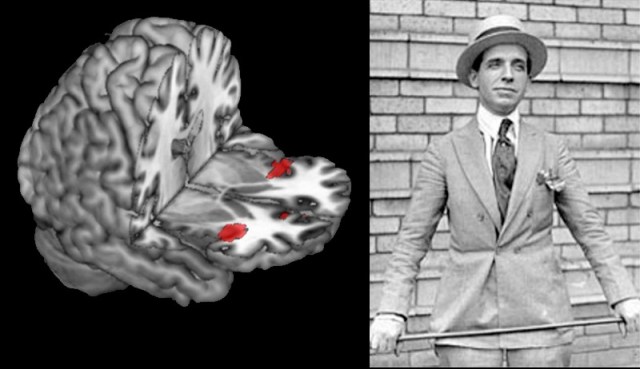
Despite long experience with the ways of the world, older people are especially vulnerable to fraud. According to the Federal Trade Commission (FTC), up to 80% of scam victims are over 65. One explanation may lie in a brain region that serves as a built-in crook detector. Called the anterior insula, this structure—which fires up in response to the face of an unsavory character—is less active in older people, possibly making them less cagey than younger folks, a new study finds.

Both FTC and the Federal Bureau of Investigation have found that older people are easy marks due in part to their tendency to accentuate the positive. According to social neuroscientist Shelley Taylor of the University of California, Los Angeles, research backs up the idea that older people can put a positive spin on things—emotionally charged pictures, for example, and playing virtual games in which they risk the loss of money. “Older people are good at regulating their emotions, seeing things in a positive light, and not overreacting to everyday problems,” she says. But this trait may make them less wary.

To see if older people really are less able to spot a shyster, Taylor and colleagues showed photos of faces considered trustworthy, neutral, or untrustworthy to a group of 119 older adults (ages 55 to 84) and 24 younger adults (ages 20 to 42). Signs of untrustworthiness include averted eyes; an insincere smile that doesn’t reach the eyes; a smug, smirky mouth; and a backward tilt to the head. The participants were asked to rate each face on a scale from -3 (very untrustworthy) to 3 (very trustworthy).

In the study, appearing in the Proceedings of the National Academy of Sciences, the “untrustworthy” faces were perceived as significantly more trustworthy by the older subjects than by the younger ones. The researchers then performed the same test on a different set of volunteers, this time imaging their brains during the process, to look for differences in brain activity between the age groups. In the younger subjects, when asked to judge whether the faces were trustworthy, the anterior insula became active; the activity increased at the sight of an untrustworthy face. The older people, however, showed little or no activation.

Taylor explains that the insula’s job is to collect information not about others but about one’s own body—sensing feelings, including “gut instincts”—and present that information to the rest of the brain. “It’s a warning bell that doesn’t seem to work as well in older people.” By habitually seeing the world in a positive light, older people may be overriding this warning signal, she says. “It looks like the brain is conspiring with what older people do naturally.”

Whether the insula activates in response to non-facial cues, such as telephone scams (a particular problem for older people), remains unclear, says Taylor, since the study was limited to faces.

The new study is the first to show a characteristic pattern of brain activation in a “social” situation involving the assessment of another person’s trustworthiness, says psychologist Lisbeth Nielsen of the National Institute on Aging (NIA) in Bethesda, Maryland. (Though NIA funded the project, Nielsen was not involved in the study.)

A question to be addressed in future research, she says, is whether decreased activity in the insula is the cause or the effect of older peoples’ more positive outlook. “It may be that older people engage with the world in a certain way and this is reflected in the brain activity.”

If so, she adds, older people could work on becoming more cautious. For example, they could be taught to look out for the facial signs of untrustworthiness. “Just because the insula isn’t being activated doesn’t mean it can’t be.”

http://news.sciencemag.org/sciencenow/2012/12/why-old-people-get-scammed.html?ref=hp