Acceptance and Commitment Therapy (ACT) shows that self-compassion may be more important than self-esteem

Few concepts in popular psychology have gotten more attention over the last few decades than self-esteem and its importance in life success and long-term mental health. Of course, much of this discussion has focused on young people, and how families, parents, teachers, coaches, and mentors can provide the proper psychological environment to help them grow into functional, mature, mentally stable adults.

Research shows that low self-esteem correlates with poorer mental health outcomes across the board, increased likelihood of suicide attempts, and difficulty developing supportive social relationships. Research also shows that trying to raise low self-esteem artificially comes with its own set of problems, including tendencies toward narcissism, antisocial behavior, and avoiding challenging activities that may threaten one’s self-concept.

This division in the research has led to a division amongst psychologists about how important self-esteem is, whether or not it’s useful to help people improve their self-esteem, and what the best practices are for accomplishing that.

In one camp, you have people who believe improving self-esteem is of paramount importance. On the other side of the fence are those who feel the whole concept of self-esteem is overrated and that it’s more critical to develop realistic perceptions about oneself.

But what if we’ve been asking the wrong questions all along? What if the self-esteem discussion is like the proverbial finger pointing at the moon?

New research is suggesting this may indeed be the case, and that a new concept — self-compassion — could be vastly more important than self-esteem when it comes to long-term mental health and success.

Why the Self-Esteem Model Is Flawed

The root problem with the self-esteem model comes down to some fundamental realities about language and cognition that Acceptance and Commitment Therapy (ACT, pronounced all as one word) was designed to address.

The way psychologists classically treat issues with self-esteem is by having clients track their internal dialog — especially their negative self talk — and then employ a number of tactics to counter those negative statements with more positive (or at least more realistic) ones. Others attempt to stop the thoughts, distract themselves from them, or to self sooth.

Put bluntly, these techniques don’t work very well. The ACT research community has shown this over and over again. There are many reasons that techniques like distraction and thought stopping tend not to work — too many to go into all of them here. For a full discussion, see the books Acceptance and Commitment Therapy or Get Out of Your Mind and Into Your Life. For the purposes of our discussion here, we will look at one aspect of this: How fighting a thought increases its believability.

Imagine a young person has the thought, “There is something wrong with me.” The classic rhetoric of self-esteem forces this person to take the thought seriously. After all he or she has likely been taught that having good self-esteem is important and essential for success in life. If they fight against the thought by countering it, however, that means the thought is confirmed. The thought is itself something that is wrong with the individual and has to change. Every time they struggle against it, the noose just gets tighter as the thought is reconfirmed. The more they fight the thought, the more power they give it.

This is a classic example of why in ACT we say, “If you are not willing to have it, you do.”

The simple fact is, we can’t always prevent young people from experiencing insecurity and low self-esteem. Heck, we can’t eliminate those feelings in ourselves. All people feel inadequate or imperfect at times. And in an ever-evolving, ever-more complex world, there is simply no way we can protect our young people from events that threaten their self-esteem — events like social rejection, family problems, personal failures, and others.

What we can do is help young people to respond to those difficult situations and to self-doubt with self-compassion. And a couple of interesting studies that were recently published show that this may indeed offer a more useful way forward not only for young people, but for all of us.

What Is Self-Compassion?

Before we look at the studies, let’s take a moment to define self-compassion.

Dr. Kirstin Neff, one of the premier researchers in this area, defines self-compassion as consisting of three key components during times of personal suffering and failure:
1. Treating oneself kindly.
2. Recognizing one’s struggles as part of the shared human experience.
3. Holding one’s painful thoughts and feelings in mindful awareness.

Given this context, the negativity or positivity of your thoughts isn’t what’s important. It’s how you respond to those thoughts that matters. Going back to the example above — “There is something wrong with me” — instead of fighting against that thought or trying to distract yourself from it, you could notice this thought without getting attached to it (become mindful), understand that it is common to all humans and part of our shared experience as people, and then treat yourself kindly instead of beating yourself up.

Does this approach really work better than simply improving self-esteem?

It seems it does.

A just-published longitudinal study that followed 2,448 ninth graders for a year found that low self-esteem had little effect on mental health in those who had the highest levels of self-compassion. That means that even if they had negative thoughts, those thoughts had minimal impact on their sense of well-being over time as compared to peers who didn’t have self-compassion skills.6

This suggests that teaching kids who suffer from self-esteem issues to be more self-compassionate may have more benefit than simply trying to improve their self-esteem.

The question is: How do we do that?

As it turns out, this is exactly where ACT excels.

Using ACT to Enhance Self-Compassion

Knowing that enhancing self-compassion has been shown not only to mitigate problems with self-esteem, but also impacts other conditions including traumatic stress. Jamie Yadavaia decided to see in his doctoral project if we could enhance self-compassion using ACT.

The results were promising.

A group of 78 students 18 years or older was randomized into one of two groups. The first group was put in a “waitlist condition” which basically means they received no treatment. The other group was provided with six hours of ACT training.

As anticipated, ACT intervention led to substantial increases in self-compassion over the waitlist control post-treatment and two months after the intervention. In this group self-compassion increased 106 percent — an effect size comparable to far longer treatments previously published. Not only that, but the ACT treatment reduced general psychological distress, depression, anxiety, and stress.

At the heart of all these changes was psychological flexibility, this skill seemed to be the key mediating factor across the board, which makes sense. After all, learning how to become less attached to your thoughts, hold them in mindful awareness, and respond to them with a broader repertoire of skills — like self-kindness, for example — has not only been posited in the self-compassion literature as a core feature of mental health but proven time and again in the ACT research as essential for it.

Taken together these studies have an important lesson to teach all of us.

It’s time for us to put down the idea that we have to think well of ourselves at all times to be mature, successful, functional, mentally healthy individuals. Indeed, this toxic idea can foster a kind of narcissistic ego-based self-story that is bound to blow up on us. Instead of increasing self-esteem content what we need to do is increase self-compassion as the context of all we do. That deflates ego-based self-stories, as we humbly accept our place as one amongst our fellow human beings, mindfully acknowledging that we all have self-doubt, we all suffer, we all fail from time to time, but none of that means we can’t live a life of meaning, purpose, and compassion for ourselves and others.

http://www.huffingtonpost.com/steven-c-hayes-phd/is-selfcompassion-more-im_b_6316320.html

American Military Intelligence reveals that Adolf Hitler regularly used crystal methamphetamines

Last year, newly published letters written by Nobel prize winner Heinrich Böll appeared to confirm that Nazi troops took crystal methamphetamines in order to stay awake and motivated, despite the desperate conditions they faced on the front line.

Now, new research has revealed that Adolf Hitler was himself a regular user of the drug, now a Class A, prized among addicts for its feeling of euphoria but feared for its mental destructiveness.

According to a 47-page wartime dossier compiled by American Military Intelligence, the Fuhrer was a famous hypochondriac and took over 74 different medications, including methamphetamines.

It claims that Hitler took the drug before his final meeting with Italian fascist leader Mussolini in July of 1943, during which he apparently ranted non-stop for two hours.

Hitler eased the pain of his final days in his bunker with nine injections of a drug called Vitamultin, too, which contained among its ingredients meth-amphetamine.

The dossier – which is the subject of a new documentary Hitler’s Hidden Drug Habit – goes on to claim that the Fuhrer became addicted to drugs after seeking the medical advice of Berlin-based Dr Morell in 1936.

He was initially prescribed a drug called Mutaflor in order to relieve the pain of his stomach cramps.

He was then prescribed Brom-Nervacit, a barbiturate, Eukodal, a morphine-based sedative, bulls’ semen to boost his testosterone, stimulants Coramine and Cardiazol, and Pervitin, an ‘alertness pill’ made with crystal meth-amphetamine.

His reliance on medication became costly, and by the end of 1943, Hitler was dependant on a mentally debilitating cocktail of uppers and downers.

“Morell was a quack and a fraud and a snake oil salesman,” Bill Panagopoulos, an American collector who discovered the dossier, said.

“He should not have been practising medicine anywhere outside a veterinary clinic.”

“Some [of the drugs] were innocuous, some not so innocuous, some poisonous. Did he develop a dependence on any of these drugs? Which of these drugs, if any, were addictive? And did he become addicted to them? I’d be interested to know what the combination of these medications would do to someone who’s otherwise in good health.”

http://www.independent.co.uk/news/people/hitler-was-a-regular-user-of-crystal-meth-american-military-intelligence-dossier-reveals-9789711.html

Ayahuasca – possible new aid to psychotherapy?

Imagine discovering a plant that has the potential to help alleviate post-traumatic stress disorder, suicidal thoughts and paralyzing anxiety. That’s what some believe ayahuasca can do, and this psychedelic drink is attracting more and more tourists to the Amazon.

If you Google “ayahuasca,” you’ll find a litany of stories about Hollywood celebrities espousing its benefits, as well as the dangers of this relatively unstudied substance that triggers hallucinations.

On this Sunday’s episode of “This Is Life,” Lisa Ling goes inside an ayahuasca ceremony in Peru and talks to the men and women who are drinking this potent brew in hopes that it will alleviate their mental and emotional traumas.

Here are six things to know about ayahuasca, which some call a drug and others call a medicine:

War vets are seeking it for PTSD

Former Marine Lance Cpl. Ryan LeCompte organizes trips to Peru for war veterans, like himself, who are seeking ayahuasca as a possible treatment for PTSD and other emotional and mental trauma suffered after multiple combat deployments.

He says he’s aware of the risks, as there’s very little known about ayahuasca’s effect on the body, but he says “it’s a calculated risk.”

“Ayahuasca is a way to give relief to those who are suffering,” says LeCompte, who says many veterans are not satisfied with the PTSD treatment they receive when they return from combat.

“It’s just, ‘Here’s a pill, here’s a Band-Aid.’ The ayahuasca medicine is a way to, instead of sweeping your dirt under the rug, you know, these medicines force you to take the rug outside and beat it with a stick until it’s clean,” LeCompte explains. “And that’s how I prefer to clean my house.”

Libby, an airman 1st class, is one of the veterans who accompanied LeCompte to Peru to try ayahuasca for her PTSD diagnosis, which includes sexual trauma while on active duty. She says antidepressants made her more suicidal.

“I would like to wish not to die all the time,” she said, when asked why she was seeking ayahuasca. “I want that to go away”

It’s endorsed by some Hollywood celebrities

As more ayahuasca centers pop up in the United States, not surprisingly, celebrities including Sting and Lindsay Lohan have spoken publicly about their experiences with the substance — albeit illegal outside of religious purposes in the United States.

Lohan, who has struggled with addiction, called her ayahuasca experience “eye-opening” and “intense.” “I saw my whole life in front of me, and I had to let go of past things that I was trying to hold on to that were dark in my life,” she said on her OWN reality series “Linsday.”

Sting said he and his wife, Trudie Styler, traveled to a church in the Amazon where they tried ayahuasca, which the British singer said made him feel like he was “wired to the entire cosmos.”

It’s not a cure
Those of have tried ayahuasca say that any benefits — like with other drugs or medicine — must be combined with therapy.

“If you think you’re just going to take ‘joy juice’ … you’re nuts,” explained author and ayahuasca expert Peter Gorman, who settled in Iquitos, Peru, during the first wave of ayahuasca tourism in the 1990s.

“The five years of work to get rid of [mental trauma] is still gonna be on you.”

Gorman, author of “Ayahuasca in My Blood,” explains that ayahuasca can help “dislodge that negative energy” and show people what their life could be like without the negativity.

“[Then] you can go back home and work on getting rid of it.”

And it used to be taken by only the shaman

Gorman says ayahuasca traditions in the Amazon have changed since Western tourists began seeking its benefits.

“Traditionally, the shaman drinks [ayahuasca], he accesses other realms of reality to find out where the dissonance is, that if the shaman corrects, will eliminate the [symptoms] — could be physical, could be emotional, could be bad luck,” Gorman explains. “[Then] we Americans come, and we said we insist on drinking the damn stuff — we want our lives changed and we want that experience, so that certainly set things right on its head.”

You can even buy ayahuasca powders and extracts online and in the local markets in the Peruvian Amazon, but Gorman warns “you don’t know what it would be.”

As more and more Western tourists consume ayahuasca, Gorman says it has him worried. “I’ve had this feeling in my bones for five or six years that something could go slightly wrong here that could sour a lot of stuff.”

Some ayahuasca tourists have died

In April, 19-year-old Briton Henry Miller died after taking part in an ayahuasca ceremony in Colombia, according to various media reports. And Kyle Nolan, an 18-year-old from northern California, died under similar circumstances in August 2012 in Peru.

The shaman who provided Nolan with the ayahuasca and who initially lied about his death was sentenced to three years in prison, his mother, Ingeborg Oswald, told CNN.

There have been other reported deaths, as well as reports of physical and sexual assaults. Writer Lily Kay Ross says she survived sexual abuse by an ayahuasca shaman.

“We have to take seriously the potential for harm alongside the huge potential for benefit,” Ross says on a video on a fundraising website for the Ethnobotanical Stewardship Council. “Standards of safety and ethics would go a long way in making sure that this kind of abuse isn’t experienced by anyone else.”

Ron Wheelock, an American shaman who leads an ayahuasca healing center in the Peruvian Amazon, says he fears there may be more deaths.

“I hate to say it, yes there probably will be,” he told Lisa Ling. “It’s in the cards”

There’s a movement to create safe ayahuasca

Through IndieGogo.com, the Ethnobotanical Stewardship Council is raising money to create a health guide for ayahuasca centers in the Amazon, so tourists know which centers are safe and harvesting the plants in a sustainable manner that supports the local communities.

The idea would be to put the ESC’s logo outside ayahuasca ceremony sites to signify those centers that meet the council’s criteria for safety and sustainability.

In addition, there are efforts to study the medicinal benefits of ayahuasca so that it can be regulated and legalized in the United States, explains Rick Doblin, executive director of the Multidisciplinary Association of Psychedelic Studies.

“At a time when drug policy is being reevaluated, when marijuana looks like it’s on the road toward legalization, when psychedelic medicine is moving forward through the FDA and we can envision a time when psychedelics are available as prescription medicines, how ayahuasca should be handled in a regulatory context is really up in the air,” Doblin said.

http://www.cnn.com/2014/10/22/health/ayahuasca-medicine-six-things/index.html?hpt=hp_t2

7 Very Bizarre (and Very Rare) Psychotic Hallucinations

brain

The many documented cases of strange delusions and neurological syndromes can offer a window into how bizarre the brain can be.

It may seem that hallucinations are random images that appear to some individuals, or that delusions are thoughts that arise without purpose. However, in some cases, a specific brain pathway may create a particular image or delusion, and different people may experience the same hallucination.

In recent decades, with advances in brain science, researchers have started to unravel the causes of some of these conditions, while others have remained a mystery.

Here is a look at seven odd hallucinations, which show that anything is possible when the brain takes a break from reality.

1. Alice-in-Wonderland syndrome
This neurological syndrome is characterized by bizarre, distorted perceptions of time and space, similar to what Alice experienced in Lewis Carroll’s “Alice’s Adventures in Wonderland.”

Patients with Alice-in-Wonderland syndrome describe seeing objects or parts of their bodies as smaller or bigger than their actual sizes, or in an altered shape. These individuals may also perceive time differently.

The rare syndrome seems to be caused by some viral infections, epilepsy, migraine headaches and brain tumors. Studies have also suggested that abnormal activity in parts of the visual cortex that handle information about the shape and size of objects might cause the hallucinations.

It’s also been suggested that Carroll himself experienced the condition during migraine headaches and used them as inspiration for writing the tale of Alice’s strange dream.

English psychiatrist John Todd first described the condition in an article published in the Canadian Medical Association Journal in 1955, and that’s why the condition is also called Todd’s syndrome. However, an earlier reference to the condition appears in a 1952 article by American neurologist Caro Lippman. The doctor describes a patient who reported feeling short and wide as she walked, and referenced “Alice’s Adventures in Wonderland” to explain her body image illusions.

2. Walking Corpse Syndrome
This delusion, also called Cotard’s Syndrome, is a rare mental illness in which patients believe they are dead, are dying or have lost their internal organs.

French neurologist Jules Cotard first described the condition in 1880, finding it in a woman who had depression and also symptoms of psychosis. The patient believed she didn’t have a brain or intestines, and didn’t need to eat. She died of starvation.

Other cases of Cotard’s syndrome have been reported in people with a range of psychiatric and neurological problems, including schizophrenia, traumatic brain injury and multiple sclerosis.

In a recent case report of Cotard’s syndrome, researchers described a previously healthy 73-year-old woman who went to the emergency room insisting that she was “going to die and going to hell.” Eventually, doctors found the patient had bleeding in her brain due to a stroke. After she received treatment in the hospital, her delusion resolved within a week, according to the report published in January 2014 in the journal of Neuropsychiatry.

3. Charles Bonnet syndrome
People who have lost their sight may develop Charles Bonnet syndrome, which involves having vivid, complex visual hallucinations of things that aren’t really there.

People with this syndrome usually hallucinate people’s faces, cartoons, colored patterns and objects. It is thought the condition occurs because the brain’s visual system is no longer receiving visual information from the eye or part of the retina, and begins making up its own images.

Charles Bonnet syndrome occurs in between 10 and 40% of older adults who have significant vision loss, according to studies.

4. Clinical lycanthropy
In this extremely rare psychiatric condition, patients believe they are turning into wolves or other animals. They may perceive their own bodies differently, and insist they are growing the fur, sharp teeth and claws of a wolf.

Cases have also been reported of people with delusional beliefs about turning into dogs, pigs, frogs and snakes.

The condition usually occurs in combination with another disorder, such as schizophrenia, bipolar disorder or severe depression, according to a review study published in the March issue of the journal History of Psychiatry in 2014.

5. Capgras delusion
Patients with Capgras delusion believe that an imposter has replaced a person they feel close to, such as a friend or spouse. The delusion has been reported in patients with schizophrenia, Alzheimer’s disease, advanced Parkinson’s disease, dementia and brain lesions.

One brain imaging study suggested the condition may involve reduced neural activity in the brain system that processes information about faces and emotional responses.

6. Othello syndrome
Named after Shakespeare’s character, Othello syndrome involves a paranoid belief that the sufferer’s partner is cheating. People with this condition experience strong obsessive thoughts and may show aggression and violence.

In one recent case report, doctors described a 46-year-old married man in the African country Burkina Faso who had a stroke, which left him unable to communicate and paralyzed in half of his body. The patient gradually recovered from his paralysis and speaking problems, but developed a persistent delusional jealousy and aggression toward his wife, accusing her of cheating with an unidentified man.

7. Ekbom’s syndrome
Patients with Ekbom’s syndrome, also known as delusional parasitosis or delusional infestations, strongly believe they are infested with parasites that are crawling under their skin. Patients report sensations of itching and being bitten, and sometimes, in an effort to get rid of the pathogens, they may hurt themselves, which can result in wounds and actual infections.

It’s unknown what causes these delusions, but studies have linked the condition with structural changes in the brain, and some patients have improved when treated with antipsychotic medications.

http://www.livescience.com/46477-oddest-hallucinations.html

Psychedelic mushrooms put your brain in a “waking dream,” study finds

imrs

Psychedelic mushrooms can do more than make you see the world in kaleidoscope. Research suggests they may have permanent, positive effects on the human brain.

In fact, a mind-altering compound found in some 200 species of mushroom is already being explored as a potential treatment for depression and anxiety. People who consume these mushrooms, after “trips” that can be a bit scary and unpleasant, report feeling more optimistic, less self-centered, and even happier for months after the fact.

But why do these trips change the way people see the world? According to a study published today in Human Brain Mapping, the mushroom compounds could be unlocking brain states usually only experienced when we dream, changes in activity that could help unlock permanent shifts in perspective.

The study examined brain activity in those who’d received injections of psilocybin, which gives “shrooms” their psychedelic punch. Despite a long history of mushroom use in spiritual practice, scientists have only recently begun to examine the brain activity of those using the compound, and this is the first study to attempt to relate the behavioral effects to biological changes.

After injections, the 15 participants were found to have increased brain function in areas associated with emotion and memory. The effect was strikingly similar to a brain in dream sleep, according to Dr. Robin Carhart-Harris, a post-doctoral researcher in neuropsychopharmacology at Imperial College London and co-author of the study.

“You’re seeing these areas getting louder, and more active,” he said. “It’s like someone’s turned up the volume there, in these regions that are considered part of an emotional system in the brain. When you look at a brain during dream sleep, you see the same hyperactive emotion centers.”

In fact, administration of the drug just before or during sleep seemed to promote higher activity levels during Rapid Eye Movement sleep, when dreams occur. An intriguing finding, Carhart-Harris says, given that people tend to describe their experience on psychedelic drugs as being like “a waking dream.” It seems that the brain may literally be slipping into unconscious patterns while the user is awake.

Conversely, the subjects of the study had decreased activity in other parts of the brain—areas associated with high level cognition. “These are the most recent parts of our brain, in an evolutionary sense,” Carhart-Harris said. “And we see them getting quieter and less organized.”

This dampening of one area and amplification of another could explain the “mind-broadening” sensation of psychedelic drugs, he said. Unlike most recreational drugs, psychotropic mushrooms and LSD don’t provide a pleasant, hedonistic reward when they’re consumed. Instead, users take them very occasionally, chasing the strange neurological effects instead of any sort of high.

“Except for some naïve users who go looking for a good time…which, by the way, is not how it plays out,” Carhart-Harris said, “you see people taking them to experience some kind of mental exploration, and to try to understand themselves.”

Our firm sense of self—the habits and experiences that we find integral to our personality—is quieted by these trips. Carhart-Harris believes that the drugs may unlock emotion while “basically killing the ego,” allowing users to be less narrow-minded and let go of negative outlooks.

It’s still not clear why such effects can have more profound long-term effects on the brain than our nightly dreams. But Carhart-Harris hopes to see more of these compounds in modern medicine. “The way we treat psychological illnesses now is to dampen things,” he said. “We dampen anxiety, dampen ones emotional range in the hope of curing depression, taking the sting out of what one feels.”

But some patients seem to benefit from having their emotions “unlocked” instead. “It would really suit the style of psychotherapy where we engage in a patient’s history and hang-ups,” Carhart-Harris said. “Instead of putting a bandage over the exposed wound, we’d be essentially loosening their minds—promoting a permanent change in outlook.”

Thanks to Steven Weihing for bringing this to the attention of the It’s Interesting community.

http://www.washingtonpost.com/news/to-your-health/wp/2014/07/03/psychedelic-drugs-put-your-brain-in-a-waking-dream-study-finds/

Deep brain stimulation treatment for patients with obsessive-compulsive disorder (OCD)

It seems simple: Walk to the refrigerator and grab a drink.

But Brett Larsen, 37, opens the door gingerly — peeks in — closes it, opens it, closes it and opens it again. This goes on for several minutes.

When he finally gets out a bottle of soda, he places his thumb and index finger on the cap, just so. Twists it open. Twists it closed. Twists it open.

“Just think about any movement that you have during the course of a day — closing a door or flushing the toilet — over and over and over,” said Michele Larsen, Brett’s mother.

“I cannot tell you the number of things we’ve had to replace for being broken because they’ve been used so many times.”

At 12, Larsen was diagnosed with obsessive-compulsive disorder, or OCD. It causes anxiety, which grips him so tightly that his only relief is repetition. It manifests in the smallest of tasks: taking a shower, putting on his shoes, walking through a doorway.

There are days when Larsen cannot leave the house.

“I can only imagine how difficult that is to live with that every single living waking moment of your life,” said Dr. Gerald Maguire, Larsen’s psychiatrist.

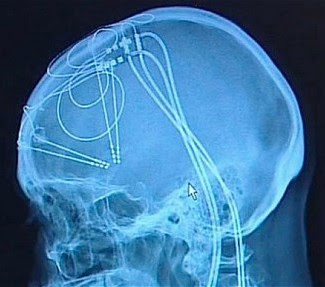
In a last-ditch effort to relieve his symptoms, Larsen decided to undergo deep brain stimulation. Electrodes were implanted in his brain, nestled near the striatum, an area thought to be responsible for deep, primitive emotions such as anxiety and fear.

Brett’s OCD trigger

Brett says his obsessions and compulsions began when he was 10, after his father died.

“I started worrying a lot about my family and loved ones dying or something bad happening to them,” he said. “I just got the thought in my head that if I switch the light off a certain amount of times, maybe I could control it somehow.

“Then I just kept doing it, and it got worse and worse.”

“Being OCD” has become a cultural catchphrase, but for people with the actual disorder, life can feel like a broken record. With OCD, the normal impulse to go back and check if you turned off the stove, or whether you left the lights on, becomes part of a crippling ritual.

The disease hijacked Larsen’s life (he cannot hold down a job and rarely sees friends); his personality (he can be stone-faced, with only glimpses of a slight smile); and his speech (a stuttering-like condition causes his speaking to be halting and labored.)

He spent the past two decades trying everything: multiple medication combinations, cognitive behavioral therapy, cross-country visits to specialists, even hospitalization.

Nothing could quell the anxiety churning inside him.

“This is not something that you consider first line for patients because this is invasive,” said Maguire, chair of psychiatry and neuroscience at the University of California Riverside medical school, and part of the team evaluating whether Larsen was a good candidate for deep brain stimulation. “It’s reserved for those patients when the standard therapies, the talk therapies, the medication therapies have failed.”

Deep brain stimulation is an experimental intervention, most commonly used among patients with nervous system disorders such as essential tremor, dystonia or Parkinson’s disease. In rare cases, it has been used for patients with intractable depression and OCD.

The electrodes alter the electrical field around regions of the brain thought to influence disease — in some cases amplifying it, in others dampening it — in hopes of relieving symptoms, said Dr. Frank Hsu, professor and chair of the department of neurosurgery at University of California, Irvine.

Hsu says stimulating the brain has worked with several OCD patients, but that the precise mechanism is not well understood.

The procedure is not innocuous: It involves a small risk of bleeding in the brain, stroke and infection. A battery pack embedded under the skin keeps the electrical current coursing to the brain, but each time the batteries run out, another surgical procedure is required.

‘I feel like laughing’

As doctors navigated Larsen’s brain tissue in the operating room — stimulating different areas to determine where to focus the electrical current — Larsen began to feel his fear fade.

At one point he began beaming, then giggling. It was an uncharacteristic light moment for someone usually gripped by anxiety.

In response to Larsen’s laughter, a staff member in the operating room asked him what he was feeling. Larsen said, “I don’t know why, but I feel happy. I feel like laughing.”

Doctors continued probing his brain for hours, figuring out what areas — and what level of stimulation — might work weeks later, when Larsen would have his device turned on for good.

In the weeks after surgery, the residual swelling in his brain kept those good feelings going. For the first time in years, Larsen and his mother had hope for normalcy.

“I know that Brett has a lot of normal in him, even though this disease eats him up at times,” said Michele Larsen. “There are moments when he’s free enough of anxiety that he can express that. But it’s only moments. It’s not days. It’s not hours. It’s not enough.”

Turning it on

In January, Larsen had his device activated. Almost immediately, he felt a swell of happiness reminiscent of what he had felt in the OR weeks earlier.

But that feeling would be fleeting — the process for getting him to an optimal level would take months. Every few weeks doctors increased the electrical current.

“Each time I go back it feels better,” Larsen said. “I’m more calm every time they turn it up.”

With time, some of his compulsive behaviors became less pronounced. In May, several weeks after his device was activated, he could put on his shoes with ease. He no longer spun them around in an incessant circle to allay his anxiety.

But other behaviors — such as turning on and shutting off the faucet — continued. Today, things are better, but not completely normal.

Normal, by society’s definition, is not the outcome Larsen should expect, experts say. Patients with an intractable disease who undergo deep brain stimulation should expect to have manageable OCD.

Lately, Larsen feels less trapped by his mind. He is able to make the once interminable trek outside his home within minutes, not hours. He has been to Disneyland with friends twice. He takes long rides along the beach to relax.

In his mind, the future looks bright.

“I feel like I’m getting better every day,” said Larsen, adding that things like going back to school or working now feel within his grasp. “I feel like I’m more able to achieve the things I want to do since I had the surgery.”

Thanks to Da Brayn for bringing this to the attention of the It’s Interesting community.

http://www.cnn.com/2014/06/24/health/brain-stimulation-ocd/?c=&page=0

Century-old drug reverses signs of autism in mice

By Elizabeth Norton

A single dose of a century-old drug has eliminated autism symptoms in adult mice with an experimental form of the disorder. Originally developed to treat African sleeping sickness, the compound, called suramin, quells a heightened stress response in neurons that researchers believe may underlie some traits of autism. The finding raises the hope that some hallmarks of the disorder may not be permanent, but could be correctable even in adulthood.

That hope is bolstered by reports from parents who describe their autistic children as being caught behind a veil. “Sometimes the veil parts, and the children are able to speak and play more normally and use words that didn’t seem to be there before, if only for a short time during a fever or other stress” says Robert Naviaux, a geneticist at the University of California, San Diego, who specializes in metabolic disorders.

Research also shows that the veil can be parted. In 2007, scientists found that 83% of children with autism disorders showed temporary improvement during a high fever. The timing of a fever is crucial, however: A fever in the mother can confer a higher risk for the disorder in the unborn child.

As a specialist in the cell’s life-sustaining metabolic processes, Naviaux was intrigued. Autism is generally thought to result from scrambled signals at synapses, the points of contact between nerve cells. But given the specific effects of something as general as a fever, Naviaux wondered if the problem lay “higher up” in the cell’s metabolism.

To test the idea, he and colleagues focused on a process called the cell danger response, by which the cell protects itself from threats like infection, temperature changes, and toxins. As part of this strategy, Naviaux explains, “the cells behave like countries at war. They harden their borders. They don’t trust their neighbors.” If the cells in question are neurons, he says, disrupted communication could result—perhaps underlying the social difficulties; heightened sensitivity to sights, sounds, and sensations; and intolerance for anything new that often afflict patients with autism.

The key player may be ATP, the chief carrier of energy within a cell, which can also relay messages to other nearby cells. When too much ATP is released for too long, it can induce a hair-trigger cell danger response in neighboring neurons. In 2013, Naviaux spelled out his hypothesis that autism involves a prolonged, heightened cell danger response, disrupting pathways within and between neurons and contributing to the symptoms of the disorder.

The same year, he and his colleagues homed in on the drug suramin as a way to call off the response. The medication has been in use since the early 20th century to kill the organisms that cause African sleeping sickness. In 1988, it was found to block the so-called purinergic receptors, which bind to compounds called purines and pyrimidines—including ATP. These receptors are found on every cell in the body; on neurons, they help orchestrate many of the processes impaired in autism—such as brain development, the production of new synapses, inflammation, and motor coordination.

To determine if suramin could protect these receptors from overstimulation by ATP, Naviaux’s team worked with mice that developed an autism-like disorder after their mothers had been exposed to a simulated viral infection (and heightened cell danger responses) during pregnancy. Like children with autism, the mice born after these pregnancies were less social and did not seek novelty; they avoided unfamiliar mice and passed up the chance to explore new runs of a maze. In the 2013 paper, the researchers reported that these traits vanished after weekly injections of suramin begun when the mice were 6 weeks old (equivalent to 15-year-old humans). Many consequences of altered metabolism—including the structure of synapses, body temperature, the production of key receptors, and energy transport within neurons—were either corrected or improved.

In the new study, published online today in Translational Psychiatry, the researchers found equally compelling results after a single injection of suramin given to 6-month-old mice (equivalent to 30-year-old humans) with the same autism-like condition. Once again, previously reclusive animals approached unknown mice and investigated unfamiliar parts of a maze, suggesting that the animals had overcome the aversion to novelty that’s a hallmark of autism in children. After the single injection, the team lowered the levels of suramin by half each week. Within 5 weeks most, but not all, of the benefits of treatment had been lost. The drug also corrected 17 of 18 metabolic pathways that are disrupted in mice with autism-like symptoms.

Naviaux cautions that mice aren’t people, and therapies that are promising in rodents have a track record of not panning out in humans. He also says that prolonged treatment with suramin is not an option for children, because it can have side effects such as anemia with long-term use. He notes that there are 19 different kinds of purinergic receptors; if suramin does prove to be helpful in humans, newer drugs could be developed that would target only one or a few key receptors. The researchers are beginning a small clinical trial in humans of a single dose of suramin that they hope will be completed by the end of the year.

The study is exciting, says Bruce Cohen, a pediatric neurologist at Akron Children’s Hospital in Ohio. “The authors have come up with a novel idea, tested it thoroughly, and got a very positive response after one dose.” He notes, however, that the mice with a few characteristics of autism don’t necessarily reflect the entire condition in humans. “Autism isn’t a disease. It’s a set of behaviors contributing to hundreds of conditions and resulting from multiple genes and environmental effects. Great work starts with a single study like this one, but there’s more work to be done.”

http://news.sciencemag.org/biology/2014/06/century-old-drug-reverses-signs-autism-mice

Thousands of Toddlers Are Inapprorpiately Medicated for A.D.H.D., Report Finds, Raising Worries

By ALAN SCHWARZ

More than 10,000 American toddlers 2 or 3 years old are being medicated for attention deficit hyperactivity disorder outside established pediatric guidelines, according to data presented on Friday by an official at the Center.

The report, which found that toddlers covered by Medicaid are particularly prone to be put on medication such as Ritalin and Adderall, is among the first efforts to gauge the diagnosis of A.D.H.D. in children below age 4. Doctors at the Georgia Mental Health Forum at the Carter Center in Atlanta, where the data was presented, as well as several outside experts strongly criticized the use of medication in so many children that young.

The American Academy of Pediatrics standard practice guidelines for A.D.H.D. do not even address the diagnosis in children 3 and younger — let alone the use of such stimulant medications, because their safety and effectiveness have barely been explored in that age group. “It’s absolutely shocking, and it shouldn’t be happening,” said Anita Zervigon-Hakes, a children’s mental health consultant to the Carter Center. “People are just feeling around in the dark. We obviously don’t have our act together for little children.”

Dr. Lawrence H. Diller, a behavioral pediatrician in Walnut Creek, Calif., said in a telephone interview: “People prescribing to 2-year-olds are just winging it. It is outside the standard of care, and they should be subject to malpractice if something goes wrong with a kid.”

Friday’s report was the latest to raise concerns about A.D.H.D. diagnoses and medications for American children beyond what many experts consider medically justified. Last year, a nationwide C.D.C. survey found that 11 percent of children ages 4 to 17 have received a diagnosis of the disorder, and that about one in five boys will get one during childhood.

A vast majority are put on medications such as methylphenidate (commonly known as Ritalin) or amphetamines like Adderall, which often calm a child’s hyperactivity and impulsivity but also carry risks for growth suppression, insomnia and hallucinations.

Only Adderall is approved by the Food and Drug Administration for children below age 6. However, because off-label use of methylphenidate in preschool children had produced some encouraging results, the most recent American Academy of Pediatrics guidelines authorized it in 4- and 5-year-olds — but only after formal training for parents and teachers to improve the child’s environment were unsuccessful.

Children below age 4 are not covered in those guidelines because hyperactivity and impulsivity are developmentally appropriate for toddlers, several experts said, and more time is needed to see if a disorder is truly present.

Susanna N. Visser, who oversees the C.D.C.’s research on the disorder, compiled Friday’s report through two sources: Medicaid claims in Georgia and claims by privately insured families nationwide kept by MarketScan, a research firm. Her report did not directly present a total number of toddlers 2 and 3 years old nationwide being medicated for the disorder, however her data suggested a number of at least 10,000 and perhaps many more.

Dr. Visser’s analysis of Georgia Medicaid claims found about one in 225 toddlers being medicated for A.D.H.D., or 760 cases in that state alone. Dr. Visser said that nationwide Medicaid data were not yet available, but Georgia’s rates of the disorder are very typical of the United States as a whole.

“If we applied Georgia’s rate to the number of toddlers on Medicaid nationwide, we would expect at least 10,000 of those to be on A.D.H.D. medication,” Dr. Visser said in an interview. She added that MarketScan data suggested that an additional 4,000 toddlers covered by private insurance were being medicated for the disorder.

Dr. Visser said that effective nonpharmacological treatments, such as teaching parents and day care workers to provide more structured environments for such children, were often ignored. “Families of toddlers with behavioral problems are coming to the doctor’s office for help, and the help they’re getting too often is a prescription for a Class II controlled substance, which has not been established as safe for that young of a child,” Dr. Visser said. “It puts these children and their developing minds at risk, and their health is at risk.”

Very few scientific studies have examined the use of stimulant medications in young children. A prominent 2006 study found that methylphenidate could mollify A.D.H.D.-like symptoms in preschoolers, but only about a dozen 3-year-olds were included in the study, and no 2-year-olds. Most researchers on that study, sponsored by the National Institute of Mental Health, had significant financial ties to pharmaceutical companies that made A.D.H.D. medications.

Some doctors said in interviews on Friday that they understood the use of stimulant medication in 2- and 3-year-olds under rare circumstances.

Keith Conners, a psychologist and professor emeritus at Duke University who since the 1960s has been one of A.D.H.D.’s most prominent figures, said that he had occasionally recommended it when nothing else would calm a toddler who was a harm to himself or others.

Dr. Doris Greenberg, a behavioral pediatrician in Savannah, Ga., who attended Dr. Visser’s presentation, said that methylphenidate can be a last resort for situations that have become so stressful that the family could be destroyed. She cautioned, however, that there should not be 10,000 such cases in the United States a year.

“Some of these kids are having really legitimate problems,” Dr. Greenberg said. “But you also have overwhelmed parents who can’t cope and the doctor prescribes as a knee-jerk reaction. You have children with depression or anxiety who can present the same way, and these medications can just make those problems worse.”

Dr. Visser said she could offer no firm explanation for why she found toddlers covered by Medicaid to be medicated for the disorder far more often than those covered by private insurance.

Dr. Nancy Rappaport, a child psychiatrist and director of school-based programs at Cambridge Health Alliance outside Boston who specializes in underprivileged youth, said that some home environments can lead to behavior often mistaken for A.D.H.D., particularly in the youngest children.

“In acting out and being hard to control, they’re signaling the chaos in their environment,” Dr. Rappaport said. “Of course only some homes are like this — but if you have a family with domestic violence, drug or alcohol abuse, or a parent neglecting a 2-year-old, the kid might look impulsive or aggressive. And the parent might just want a quick fix, and the easiest thing to do is medicate. It’s a travesty.”

Brain Injury Turns Man Into Math Genius

In 2002, two men savagely attacked Jason Padgett outside a karaoke bar, leaving him with a severe concussion and post-traumatic stress disorder. But the incident also turned Padgett into a mathematical genius who sees the world through the lens of geometry.

Padgett, a furniture salesman from Tacoma, Wash., who had very little interest in academics, developed the ability to visualize complex mathematical objects and physics concepts intuitively. The injury, while devastating, seems to have unlocked part of his brain that makes everything in his world appear to have a mathematical structure.

“I see shapes and angles everywhere in real life” — from the geometry of a rainbow, to the fractals in water spiraling down a drain, Padgett told Live Science. “It’s just really beautiful.”

Padgett, who just published a memoir with Maureen Seaberg called “Struck by Genius” (Houghton Mifflin Harcourt, 2014), is one of a rare set of individuals with acquired savant syndrome, in which a normal person develops prodigious abilities after a severe injury or disease. Other people have developed remarkable musical or artistic abilities, but few people have acquired mathematical faculties like Padgett’s.

Now, researchers have figured out which parts of the man’s brain were rejiggered to allow for such savant skills, and the findings suggest such skills may lie dormant in all human brains.

Before the injury, Padgett was a self-described jock and partyer. He hadn’t progressed beyond than pre-algebra in his math studies. “I cheated on everything, and I never cracked a book,” he said.

But all that would change the night of his attack. Padgett recalls being knocked out for a split second and seeing a bright flash of light. Two guys started beating him, kicking him in the head as he tried to fight back. Later that night, doctors diagnosed Padgett with a severe concussion and a bleeding kidney, and sent him home with pain medications, he said.

Soon after the attack, Padgett suffered from PTSD and debilitating social anxiety. But at the same time, he noticed that everything looked different. He describes his vision as “discrete picture frames with a line connecting them, but still at real speed.” If you think of vision as the brain taking pictures all the time and smoothing them into a video, it’s as though Padgett sees the frames without the smoothing. In addition, “everything has a pixilated look,” he said.

With Padgett’s new vision came an astounding mathematical drawing ability. He started sketching circles made of overlapping triangles, which helped him understand the concept of pi, the ratio of a circle’s circumference to its diameter. There’s no such thing as a perfect circle, he said, which he knows because he can always see the edges of a polygon that approximates the circle.

Padgett dislikes the concept of infinity, because he sees every shape as a finite construction of smaller and smaller units that approach what physicists refer to as the Planck length, thought to be the shortest measurable length.

After his injury, Padgett was drawing complex geometric shapes, but he didn’t have the formal training to understand the equations they represented. One day, a physicist spotted him making these drawings in a mall, and urged him to pursue mathematical training. Now Padgett is a sophomore in college and an aspiring number theorist.

Padgett’s remarkable abilities garnered the interest of neuroscientists who wanted to understand how he developed them.

Berit Brogaard, a philosophy professor now at the University of Miami, in Coral Gables, Fla., and her colleagues scanned Padgett’s brain with functional magnetic resonance imaging (fMRI) to understand how he acquired his savant skills and the synesthesia that allows him to perceive mathematical formulas as geometric figures. (Synesthesia is a phenomenon in which one sense bleeds into another.)

“Acquired savant syndrome is very rare,” Brogaard said, adding that only 15 to 25 cases have ever been described in medical studies.

Functional magnetic resonance imaging measures changes in blood flow and oxygen use throughout the brain. During scans of Padgett, the researchers showed the man real and nonsense mathematical formulas meant to conjure images in his mind.

The resulting scans showed significant activity in the left hemisphere of Padgett’s brain, where mathematical skills have been shown to reside. His brain lit up most strongly in the left parietal cortex, an area behind the crown of the head that is known to integrate information from different senses. There was also some activation in parts of his temporal lobe (involved in visual memory, sensory processing and emotion) and frontal lobe (involved in executive function, planning and attention).

But the fMRI only showed what areas were active in Padgett’s brain. In order to show these particular areas were causing the man’s synesthesia, Brogaard’s team used transcranial magnetic stimulation (TMS), which involves zapping the brain with a magnetic pulse that activates or inhibits a specific region. When they zapped the parts of Padgett’s parietal cortex that had shown the greatest activity in the fMRI scans, it made his synesthesia fade or disappear, according to a study published in August 2013 in the journal Neurocase.

Brogaard showed, in another study, that when neurons die, they release brain-signaling chemicals that can increase brain activity in surrounding areas. The increased activity usually fades over time, but sometimes it results in structural changes that can cause brain-activity modifications to persist, Brogaard told Live Science.

Scientists don’t know whether the changes in Padgett’s brain are permanent, but if he had structural changes, it’s more likely his abilities are here to stay, Brogaard said.

So do abilities like Padgett’s lie dormant in everyone, waiting to be uncovered? Or was there something unique about Padgett’s brain to begin with?

Most likely, there is something dormant in everyone that Padgett tapped into, Brogaard said. “It would be quite a coincidence if he were to have that particular special brain and then have an injury,” she said. “And he’s not the only [acquired savant].”

In addition to head injuries, mental disease has also been known to reveal latent abilities. And Brogaard and others have done studies that suggest zapping the brains of normal people using TMS can temporarily bring out unusual mathematical and artistic skills.

Yet Padgett wouldn’t change his new abilities if he could. “It’s so good, I can’t even describe it,” he said.

It’s always possible that having savant skills may come with trade-offs. In Padgett’s case, he developed fairly severe post-traumatic stress disorder and obsessive-compulsive disorder, and he still finds it difficult to appear in public.

http://news.discovery.com/human/life/brain-injury-turns-man-into-math-genius-1405061.htm

End The War On Drugs, Say Nobel Prize-Winning Economists

war_on_drugs_thumb

The decades-long global war on drugs has failed and it’s time to shift the focus from mass incarceration to public health and human rights, according to a new report endorsed by five Nobel Prize-winning economists.

The report, titled “Ending the Drug Wars” and put together by the London School of Economics’ IDEAS center, looks at the high costs and unintended consequences of drug prohibitions on public health and safety, national security and law enforcement.

“The pursuit of a militarized and enforcement-led global ‘war on drugs’ strategy has produced enormous negative outcomes and collateral damage,” says the 82-page report. “These include mass incarceration in the US, highly repressive policies in Asia, vast corruption and political destabilization in Afghanistan and West Africa, immense violence in Latin America, an HIV epidemic in Russia, an acute global shortage of pain medication and the propagation of systematic human rights abuses around the world.”

The report urges the world’s governments to reframe their drug policies around treatment and harm reduction rather than prosecution and prison.

It is also aimed at the United Nations General Assembly, which is preparing to convene a special session on drug policy in 2016. The hope is to push the U.N. to encourage countries to develop their own policies, because the report declares the current one-size-fits-all approach has not proved to be effective.

“The UN must recognize its role is to assist states as they pursue best-practice policies based on scientific evidence, not undermine or counteract them,” said Danny Quah, a professor of economics at LSE and a contributor to the report. “If this alignment occurs, a new and effective international regime can emerge that effectively tackles the global drug problem.”

In addition to contributions from Quah and a dozen other foreign and drug policy experts, the report has been endorsed by five past winners of the Nobel Prize in Economics: Kenneth Arrow (1972), Sir Christopher Pissarides (2010), Thomas Schelling (2005), Vernon Smith (2002) and Oliver Williamson (2009). Also signing on to the report’s foreword are a number of current and former international leaders, including George Shultz, secretary of state under President Ronald Reagan; Nick Clegg, British deputy prime minister; and Javier Solana, the former EU high representative for common foreign and security policy.

Guatemalan President Otto Perez Molina, who has announced that his government may present a plan to legalize production of marijuana and opium poppies by the end of 2014, has also publicly backed the report. Molina plans to discuss the report at the U.N.

A recent Pew survey suggests that Americans may be ready to refocus the U.S. end of the drug war, with 67 percent favoring policies that would provide drug treatment.

“The drug war’s failure has been recognized by public health professionals, security experts, human rights authorities and now some of the world’s most respected economists,” said John Collins, the International Drug Policy Project coordinator at LSE IDEAS. “Leaders need to recognize that toeing the line on current drug control strategies comes with extraordinary human and financial costs to their citizens and economies.”

http://www.huffingtonpost.com/2014/05/06/end-drug-war_n_5275078.html?utm_hp_ref=politics

Thanks to Dr. Lutter for bringing this to the attention of the It’s Interesting community.