Man Withdraws Mouse From ATM in Sweden


A man in northern Sweden got quite a run for his money Tuesday when an ATM machine dispensed a mouse along with his 700 Swedish Kroner ($104), The Local reported.

Gholam Hafezi grabbed what appeared to be a string hanging from the machine, but suddenly discovered it was a mouse, reports Vasterbotten Folkblad, a Swedish local newspaper.

“I pulled once more and then his tail came off,” said Hafezi, who then rushed to a nearby grocery store for help.

Though the grocery store first ignored his request for help, eventually they managed to help remove the entire rodent from the ATM dispenser.

“One of them pulled out the mouse, and its head was left intact, although it was a little bloody. Then I got out my receipt,” Hafezi told the paper.

Halfezi isn’t sure if the mouse survived the ordeal.

This isn’t the first reported incident of a mouse-dispensing ATM machine. Earlier this month, a man in Saudi Arabia also received a rodent with his cash, notes Emirates247.com.

And just last November, a Spaniard was issued a live snake alongside his cash, according to the Daily Mail.

http://www.huffingtonpost.com/2012/01/27/man-withdraws-mouse-from-atm_n_1236823.html

Forget Global Warming? New Data That the Rising Trend in Global Temperatures Ended in 1997


The supposed ‘consensus’ on man-made global warming is facing an inconvenient challenge after the release of new temperature data showing the planet has not warmed for the past 15 years.

The figures suggest that we could even be heading for a mini ice age to rival the 70-year temperature drop that saw frost fairs held on the Thames in the 17th Century.

Based on readings from more than 30,000 measuring stations, the data was issued last week without fanfare by the Met Office and the University of East Anglia Climatic Research Unit. It confirms that the rising trend in world temperatures ended in 1997.

Meanwhile, leading climate scientists yesterday told The Mail on Sunday that, after emitting unusually high levels of energy throughout the 20th Century, the sun is now heading towards a ‘grand minimum’ in its output, threatening cold summers, bitter winters and a shortening of the season available for growing food.

Solar output goes through 11-year cycles, with high numbers of sunspots seen at their peak.

We are now at what should be the peak of what scientists call ‘Cycle 24’ – which is why last week’s solar storm resulted in sightings of the aurora borealis further south than usual. But sunspot numbers are running at less than half those seen during cycle peaks in the 20th Century.

Analysis by experts at NASA and the University of Arizona – derived from magnetic-field measurements 120,000 miles beneath the sun’s surface – suggest that Cycle 25, whose peak is due in 2022, will be a great deal weaker still.
According to a paper issued last week by the Met Office, there is a  92 per cent chance that both Cycle 25 and those taking place in the following decades will be as weak as, or weaker than, the ‘Dalton minimum’ of 1790 to 1830. In this period, named after the meteorologist John Dalton, average temperatures in parts of Europe fell by 2C.

However, it is also possible that the new solar energy slump could be as deep as the ‘Maunder minimum’ (after astronomer Edward Maunder), between 1645 and 1715 in the coldest part of the ‘Little Ice Age’ when, as well as the Thames frost fairs, the canals of Holland froze solid.

Yet, in its paper, the Met Office claimed that the consequences now would be negligible – because the impact of the sun on climate is far less than man-made carbon dioxide. Although the sun’s output is likely to decrease until 2100, ‘This would only cause a reduction in global temperatures of 0.08C.’ Peter Stott, one of the authors, said: ‘Our findings suggest  a reduction of solar activity to levels not seen in hundreds of years would be insufficient to offset the dominant influence of greenhouse gases.’

These findings are fiercely disputed by other solar experts.

‘World temperatures may end up a lot cooler than now for 50 years or more,’ said Henrik Svensmark, director of the Center for Sun-Climate Research at Denmark’s National Space Institute. ‘It will take a long battle to convince some climate scientists that the sun is important. It may well be that the sun is going to demonstrate this on its own, without the need for their help.’

He pointed out that, in claiming the effect of the solar minimum would be small, the Met Office was relying on the same computer models that are being undermined by the current pause in global-warming.

CO2 levels have continued to rise without interruption and, in 2007, the Met Office claimed that global warming was about to ‘come roaring back’. It said that between 2004 and 2014 there would be an overall increase of 0.3C. In 2009, it predicted that at least three of the years 2009 to 2014 would break the previous temperature record set in 1998.

So far there is no sign of any of this happening. But yesterday a Met Office spokesman insisted its models were still valid.

‘The ten-year projection remains groundbreaking science. The period for the original projection is not over yet,’ he said.

Dr Nicola Scafetta, of Duke University in North Carolina, is the author of several papers that argue the Met Office climate models show there should have been ‘steady warming from 2000 until now’.

‘If temperatures continue to stay flat or start to cool again, the divergence between the models and recorded data will eventually become so great that the whole scientific community will question the current theories,’ he said.

He believes that as the Met Office model attaches much greater significance to CO2 than to the sun, it was bound to conclude that there would not be cooling. ‘The real issue is whether the model itself is accurate,’ Dr Scafetta said. Meanwhile, one of America’s most eminent climate experts, Professor Judith Curry of the  Georgia Institute of Technology, said she found the Met Office’s confident prediction of a ‘negligible’ impact difficult to understand.

‘The responsible thing to do would be to accept the fact that the models may have severe shortcomings when it comes to the influence of the sun,’ said Professor Curry. As for the warming pause, she said that many scientists ‘are not surprised’.

She argued it is becoming evident that factors other than CO2 play an important role in rising or falling warmth, such as the 60-year water temperature cycles in the Pacific and Atlantic oceans.

‘They have insufficiently been appreciated in terms of global climate,’ said Prof Curry. When both oceans were cold in the past, such as from 1940 to 1970, the climate cooled. The Pacific cycle ‘flipped’ back from warm to cold mode in 2008 and the Atlantic is also thought likely to flip in the next few years .

Pal Brekke, senior adviser at the Norwegian Space Centre, said some scientists found the importance of water cycles difficult to accept, because doing so means admitting that the oceans – not CO2 – caused much of the global warming between 1970 and 1997.

The same goes for the impact of the sun – which was highly active for much of the 20th Century.

‘Nature is about to carry out a very interesting experiment,’ he said. ‘Ten or 15 years from now, we will be able to determine much better whether the warming of the late 20th Century really was caused by man-made CO2, or by natural variability.’

Meanwhile, since the end of last year, world temperatures have fallen by more than half a degree, as the cold ‘La Nina’ effect has re-emerged in the South Pacific.

‘We’re now well into the second decade of the pause,’ said Benny Peiser, director of the Global Warming Policy Foundation. ‘If we don’t see convincing evidence of global warming by 2015, it will start to become clear whether the models are bunk. And, if they are, the implications for some scientists could be very serious.’

Read more: http://www.dailymail.co.uk/sciencetech/article-2093264/Forget-global-warming–Cycle-25-need-worry-NASA-scientists-right-Thames-freezing-again.html#ixzz1ks03puRd


‘Magic Mushrooms’ May Treat Depression


Rave-goers and visitors to Amsterdam before December 2008 may be intimately familiar with magic mushrooms, but there’s little scientific knowledge on what happens to the brain while tripping.

Now it appears that more research is warranted. A growing number of studies suggested that perhaps the mushrooms’ key ingredient could work magic for certain mental disorders.

New research in Proceedings of the National Academy of Sciences sheds light on why one of the mushrooms’ hallucinogenic chemical compounds, psilocybin, may hold promise for the treatment of depression. Scientists explored the effect of psilocybin on the brain, documenting the neural basis behind the altered state of consciousness that people have reported after using magic mushrooms.

“We have found that these drugs turn off the parts of the brain that integrate sensations – seeing, hearing, feeling – with thinking,” said David Nutt, co-author of the study and researcher at Imperial College London in the United Kingdom.

Nutt is also Britain’s former chief drug adviser, who has published controversial papers about the relative harms of various drugs. He was asked to leave his government position in 2009 because “he cannot be both a government adviser and a campaigner against government policy,” according to a letter in the Guardian from a member of the British Parliament.

Psilocybin is illegal in the United States and considered a Schedule 1 drug, along with heroin and LSD. Schedule 1 drugs “have a high potential for abuse and serve no legitimate medical purpose in the United States,” according to the Department of Justice.

But in the early stages of research on psilocybin, there’s been a bunch of good news for its medicinal potential: psilocybin has shown to be helpful for terminally ill cancer patients dealing with anxiety, and preliminary studies on depression are also promising.

Nutt’s study is also preliminary and small, with only 30 participants. His group used magnetic resonance imaging (MRI) to look at how the brain responds to psilocybin, from normal waking consciousness to a psychedelic state.

The study found that the more psilocybin shuts off the brain, the greater the feeling of being in an altered state of consciousness, he said. It’s not the same as dreaming, because you’re fully conscious and aware, he said.

The medial prefrontal cortex, the front part of the brain in the middle, appears to be crucial – it determines how you think, feel and behave. Damage to it produces profound changes in personality, and so if you switch it off, your sense of self becomes fragmented, Nutt said. That’s what happens when psilocybin decreases activity in it.

“Some people say they become one with the universe,” he said. “It’s that sort of transcendental experience.”

Another brain region that psilocybin affects is the anterior cingulate cortex, which is over-active in depression, Nutt said. Some patients with severe depression that cannot be treated with pharmaceuticals receive deep brain stimulation, a technique of surgically implanting a device that delivers electrical impulses directed at decreasing activity in that brain region. Psilocybin could be a cheaper option, Nutt said.

It’s counterintuitive that a hallucinogenic drug would de-activate rather than stimulate key brain regions, although other studies have shown a mix of results regarding psilocybin turning brain areas on and off, said Roland Griffiths, a professor of psychiatry and neuroscience at the Johns Hopkins University School of Medicine. Griffiths was not involved in Nutt’s study, but has also researched the effects of psilocybin.

Even if this drug gets approved some day, don’t expect to be able to pick up a prescription for psilocybin at your local pharmacy, Griffiths cautioned. There’s too much potential for abuse, he said.

Although scientists have found many positive effects of psilocybin in experimental trials, there are of course potential dangers. Some people have frightening experiences while on psilocybin. The fear and anxiety responses of magic mushrooms can be so great that, when taken casually in a non-medical setting, people can cause harm to themselves or others. They may jump out a window or run into traffic because of a panic reaction.

The drug would have to be administered in a controlled setting in a hospital, if found in further research to be an effective and safe therapy for certain mental illnesses, Griffiths said. It would not be appropriate for people who already have psychotic disorders such as schizophrenia, since psilocybin can exacerbate those symptoms.

But among healthy volunteers, Griffiths and others have found that people may have long-lasting positive effects from the vivid memories of being on psilocybin (in a controlled, experimental setting). People report mystical experiences of feeling the “interconnectedness of all things,” which can be life-changing.

“People claim to have an enhanced sense of self, more emotional balance, they’re more compassionate, they’re more sensitive to the needs of others,” he said. “They have more well-being and less depression, but they’re not ‘high’ in any conventional sense. They feel like their perceptual set has shifted.”

The memories of the psilocybin experience, and positive outcomes that users attribute toward them, can last as much as 25 years, research has shown.

Still, there’s just not enough known yet about the long-term safety of psilocybin to say whether it could also do damage to the brain, Griffiths said.

“There’d have to be changes in the brain for these long-lasting memories and attributions to occur,” Griffiths said. “We don’t know how those changes occur, and why.”


Wiring the Brain to Treat Depression


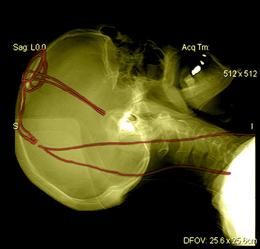
The procedure starts with a surgeon drilling two holes in the patient’s skull. “Every bone and tooth in my head was rattling,” says Lisa Battiloro, who was awake, but not in pain, during the eight-hour operation.

Neurologists asked her questions and issued commands as they pinpointed the exact spot in her brain for electrical stimulation. At one point, “I suddenly felt hopeful and optimistic about the future,” recalls Ms. Battiloro, who had battled severe depression for more than a decade. That’s when the doctors knew they had found Brodmann 25, an area deep in the cerebral cortex associated with negative mood. They secured the electrodes in place, then sedated Ms. Battiloro while they ran an extension wire under the skin, down the side of her head and into her chest, where they implanted a battery pack to supply her brain with a mild electrical current.

Within two months, Ms. Battiloro says, her depression had lifted considerably. Now, nearly four years later, it hasn’t returned. “My friends and family are amazed,” say Ms. Battiloro, 41, of Boynton Beach, Fla. “I’m a new and improved Lisa.”

Deep brain stimulation, sometimes called a pacemaker for the brain, has helped halt tremors in more than 100,000 patients with Parkinson’s disease and other movement disorders since 1997. Now, researchers are reporting encouraging results using the procedure for psychiatric conditions as well. Ms. Battiloro was one of 17 patients in a study published this month in the Archives of General Psychiatry. After two years of DBS, 92% reported significant relief from their major depression or bipolar disorder and more than half were in remission, with no manic side effects.

“We are seeing dramatic effects in the small numbers of subjects, and they are not just getting well, they are getting well without side effects and without relapsing,” says neurologist Helen Mayberg, who led the study at Emory University in Atlanta.

read more here:  http://online.wsj.com/article/SB10001424052970204555904577164813955136748.html#articleTabs=article


Firefighters Cut Through Wall To Rescue Hoarder

Firefighters had to cut through an exterior wall to rescue a man who became stuck in the bathroom of his cluttered, second-story apartment on Long Island, NY, officials told local media.

The man was very “overweight,” officials told MYFOXNY.com.

According to authorities quoted by Newsday, a rescue team used a series of ladders and a rope system Thursday to lower the man, identified as a 55-year-old former postal worker, to safety on a stretcher around 12:30 p.m. — about three hours after someone called 911. His weight is unknown.

The man, who was not identified by police or firefighters, was taken to a local hospital for treatment, the paper said. Officials said the man fell in his bathroom and could not get back on his feet. He was listed in stable condition.

Stacks of boxes blocked firefighters from bringing rescue equipment up to the man’s apartment, prompting them to cut a way out through the wall, Brookhaven Town spokesman Jack Krieger said in an email to Newsday. The narrowness of the space in some places added to their difficulty, authorities said.

“From what I’m told stuff was stacked to the ceiling in most of the rooms” on the second floor, Krieger told the paper.

The second floor of the wood-frame home was condemned by the town after the rescue, Krieger said. Officials deemed it unfit for human occupancy because of what he called hoarding. The home’s owner declined to comment.

After the rescue, a massive pile of junk and collectibles — including stacks of newspapers and figurines of dragons and “Star Wars” characters — lay in the yard, Newsday said.

Pulitzer-winner’s 96-second NDAA cartoon


2010 Pulitzer-winner Mark Fiore‘s 96-second animated cartoon shows the removal of Constitutional Civil Rights. When “rights” are no longer absolute, they are no longer rights. This changes the definition of the US from defending unalienable rights and limited government under a constitution, to having control over what liberties people receive and unlimited government and no restraining law, at least in these areas of the Bill of Rights.

Here’s how this has progressed since 2006:

The background of NDAA extends into the Military Commissions Act of 2006 (MCA), which “legalized” Executive Branch declaration of again, “any person” of being in a legal category without Constitutional or Geneva Convention Rights: unlawful enemy combatant. The Bush Administration applied this to American citizens and the Obama Administration extends power to assassinate American citizens upon Executive Branch dictate of “unlawful enemy.”

Mark’s cartoon also addresses torture. The US is bound by Constitutional Law, Federal Law, and four treaties to never torture.  Mr. Bush and Mr. Cheney publicly admit to authorizing waterboarding/controlled drowning. All US case law found this practice as torture; in fact, the US executed Japanese officials for authorizing its use upon US WW2 military.

Thanks to Kebmodee for bringing this to the attention of the It’s Interesting community.

Read more here:  http://kebmodee.blogspot.com/2012/01/pulitzer-winners-96-second-ndaa-cartoon.html?utm_source=feedburner&utm_medium=email&utm_campaign=Feed%3A+Kebmodee+%28kebmodee%29

Sex Safe for Heart Patients Not Having an Extramarital Affair


Most people being treated for heart disease can safely have sex, according to research that also suggests the risk of sudden cardiac death may rise for men when the amorous activity occurs during an extramarital affair.

Having sex is linked with less than 1 percent of all heart attacks and less than 5 percent of incidences of chest pain, the American Heart Association reported today. More than 27 million Americans have heart disease and it is the leading cause of death in the U.S., according to the Centers for Disease Control and Prevention.

The act of intercourse is generally comparable to climbing two flights of stairs, said Glenn Levine, a professor of medicine at Baylor College of Medicine in Houston and the paper’s lead author. The scientific statement, published in the Dallas-based heart organization’s journal, Circulation, may provide a road map for doctors to counsel patients, Levine said.

Levine’s research group reviewed more than 100 studies to determine the risks. In autopsy reports of 5,559 cases of sudden death, 0.6 percent occurred during sexual intercourse, they found. Of those who died, 82 percent to 93 percent were men and 75 percent were having extramarital sex, in most cases with a younger partner and after excessive food and alcohol consumption, the report said.

read more:  http://www.businessweek.com/news/2012-01-20/sex-safe-for-heart-patients-not-having-an-extramarital-affair.html

Thanks to Dr. N for bringing this to the attention of the It’s Interesting community.

New Definition of Autism Will Exclude Many

 
By BENEDICT CAREY
Proposed changes in the definition of autism would sharply reduce the skyrocketing rate at which the disorder is diagnosed and might make it harder for many people who would no longer meet the criteria to get health, educational and social services, a new analysis suggests.
The definition is now being reassessed by an expert panel appointed by the American Psychiatric Association, which is completing work on the fifth edition of its Diagnostic and Statistical Manual of Mental Disorders, the first major revision in 17 years. The D.S.M., as the manual is known, is the standard reference for mental disorders, driving research, treatment and insurance decisions. Most experts expect that the new manual will narrow the criteria for autism; the question is how sharply.
The results of the new analysis are preliminary, but they offer the most drastic estimate of how tightening the criteria for autism could affect the rate of diagnosis. For years, many experts have privately contended that the vagueness of the current criteria for autism and related disorders like Asperger syndrome was contributing to the increase in the rate of diagnoses — which has ballooned to one child in 100, according to some estimates.
The psychiatrists’ association is wrestling with one of the most agonizing questions in mental health — where to draw the line between unusual and abnormal — and its decisions are sure to be wrenching for some families. At a time when school budgets for special education are stretched, the new diagnosis could herald more pitched battles. Tens of thousands of people receive state-backed services to help offset the disorders’ disabling effects, which include sometimes severe learning and social problems, and the diagnosis is in many ways central to their lives. Close networks of parents have bonded over common experiences with children; and the children, too, may grow to find a sense of their own identity in their struggle with the disorder.
The proposed changes would probably exclude people with a diagnosis who were higher functioning. “I’m very concerned about the change in diagnosis, because I wonder if my daughter would even qualify,” said Mary Meyer of Ramsey, N.J. A diagnosis of Asperger syndrome was crucial to helping her daughter, who is 37, gain access to services that have helped tremendously. “She’s on disability, which is partly based on the Asperger’s; and I’m hoping to get her into supportive housing, which also depends on her diagnosis.”
The new analysis, presented Thursday at a meeting of the Icelandic Medical Association, opens a debate about just how many people the proposed diagnosis would affect.
The changes would narrow the diagnosis so much that it could effectively end the autism surge, said Dr. Fred R. Volkmar, director of the Child Study Center at the Yale School of Medicine and an author of the new analysis of the proposal. “We would nip it in the bud.”
Experts working for the Psychiatric Association on the manual’s new definition — a group from which Dr. Volkmar resigned early on — strongly disagree about the proposed changes’ impact. “I don’t know how they’re getting those numbers,” Catherine Lord, a member of the task force working on the diagnosis, said about Dr. Volkmar’s report.
Previous projections have concluded that far fewer people would be excluded under the change, said Dr. Lord, director of the Institute for Brain Development, a joint project of NewYork-Presbyterian Hospital, Weill Medical College of Cornell University, Columbia University Medical Center and the New York Center for Autism.
Disagreement about the effect of the new definition will almost certainly increase scrutiny of the finer points of the psychiatric association’s changes to the manual. The revisions are about 90 percent complete and will be final by December, according to Dr. David J. Kupfer, a professor of psychiatry at the University of Pittsburgh and chairman of the task force making the revisions.
At least a million children and adults have a diagnosis of autism or a related disorder, like Asperger syndrome or “pervasive developmental disorder, not otherwise specified,” also known as P.D.D.-N.O.S. People with Asperger’s or P.D.D.-N.O.S. endure some of the same social struggles as those with autism but do not meet the definition for the full-blown version. The proposed change would consolidate all three diagnoses under one category, autism spectrum disorder, eliminating Asperger syndrome and P.D.D.-N.O.S. from the manual. Under the current criteria, a person can qualify for the diagnosis by exhibiting 6 or more of 12 behaviors; under the proposed definition, the person would have to exhibit 3 deficits in social interaction and communication and at least 2 repetitive behaviors, a much narrower menu.
Dr. Kupfer said the changes were an attempt to clarify these variations and put them under one name. Some advocates have been concerned about the proposed changes.
“Our fear is that we are going to take a big step backward,” said Lori Shery, president of the Asperger Syndrome Education Network. “If clinicians say, ‘These kids don’t fit the criteria for an autism spectrum diagnosis,’ they are not going to get the supports and services they need, and they’re going to experience failure.”
Mark Roithmayr, president of the advocacy organization Autism Speaks, said that the proposed diagnosis should bring needed clarity but that the effect it would have on services was not yet clear. “We need to carefully monitor the impact of these diagnostic changes on access to services and ensure that no one is being denied the services they need,” Mr. Roithmayr said by e-mail. “Some treatments and services are driven solely by a person’s diagnosis, while other services may depend on other criteria such as age, I.Q. level or medical history.”
In the new analysis, Dr. Volkmar, along with Brian Reichow and James McPartland, both at Yale, used data from a large 1993 study that served as the basis for the current criteria. They focused on 372 children and adults who were among the highest functioning and found that overall, only 45 percent of them would qualify for the proposed autism spectrum diagnosis now under review.
The focus on a high-functioning group may have slightly exaggerated that percentage, the authors acknowledge. The likelihood of being left out under the new definition depended on the original diagnosis: about a quarter of those identified with classic autism in 1993 would not be so identified under the proposed criteria; about three-quarters of those with Asperger syndrome would not qualify; and 85 percent of those with P.D.D.-N.O.S. would not.
Dr. Volkmar presented the preliminary findings on Thursday. The researchers will publish a broader analysis, based on a larger and more representative sample of 1,000 cases, later this year. Dr. Volkmar said that although the proposed diagnosis would be for disorders on a spectrum and implies a broader net, it focuses tightly on “classically autistic” children on the more severe end of the scale. “The major impact here is on the more cognitively able,” he said.
Dr. Lord said that the study numbers are probably exaggerated because the research team relied on old data, collected by doctors who were not aware of what kinds of behaviors the proposed definition requires. “It’s not that the behaviors didn’t exist, but that they weren’t even asking about them — they wouldn’t show up at all in the data,” Dr. Lord said.
Dr. Volkmar acknowledged as much but said that problems transferring the data could not account for the large differences in rates.

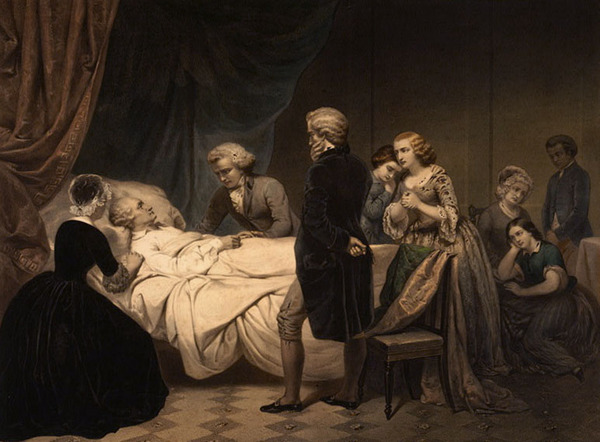
Nurse Reveals Top 5 Regrets of the Dying

“For many years I worked in palliative care. My patients were those who had gone home to die. Some incredibly special times were shared. I was with them for the last three to twelve weeks of their lives

People grow a lot when they are faced with their own mortality. I learnt never to underestimate someone’s capacity for growth. Some changes were phenomenal. Each experienced a variety of emotions, as expected, denial, fear, anger, remorse, more denial and eventually acceptance. Every single patient found their peace before they departed though, every one of them.

When questioned about any regrets they had or anything they would do differently, common themes surfaced again and again. Here are the most common five:

1. I wish I’d had the courage to live a life true to myself, not the life others expected of me.

This was the most common regret of all. When people realise that their life is almost over and look back clearly on it, it is easy to see how many dreams have gone unfulfilled. Most people had not honoured even a half of their dreams and had to die knowing that it was due to choices they had made, or not made.

It is very important to try and honour at least some of your dreams along the way. From the moment that you lose your health, it is too late. Health brings a freedom very few realise, until they no longer have it.

2. I wish I didn’t work so hard.

This came from every male patient that I nursed. They missed their children’s youth and their partner’s companionship. Women also spoke of this regret. But as most were from an older generation, many of the female patients had not been breadwinners. All of the men I nursed deeply regretted spending so much of their lives on the treadmill of a work existence.

By simplifying your lifestyle and making conscious choices along the way, it is possible to not need the income that you think you do. And by creating more space in your life, you become happier and more open to new opportunities, ones more suited to your new lifestyle.

3. I wish I’d had the courage to express my feelings.

Many people suppressed their feelings in order to keep peace with others. As a result, they settled for a mediocre existence and never became who they were truly capable of becoming. Many developed illnesses relating to the bitterness and resentment they carried as a result.

We cannot control the reactions of others. However, although people may initially react when you change the way you are by speaking honestly, in the end it raises the relationship to a whole new and healthier level. Either that or it releases the unhealthy relationship from your life. Either way, you win.

4. I wish I had stayed in touch with my friends.

Often they would not truly realise the full benefits of old friends until their dying weeks and it was not always possible to track them down. Many had become so caught up in their own lives that they had let golden friendships slip by over the years. There were many deep regrets about not giving friendships the time and effort that they deserved. Everyone misses their friends when they are dying.

It is common for anyone in a busy lifestyle to let friendships slip. But when you are faced with your approaching death, the physical details of life fall away. People do want to get their financial affairs in order if possible. But it is not money or status that holds the true importance for them. They want to get things in order more for the benefit of those they love. Usually though, they are too ill and weary to ever manage this task. It is all comes down to love and relationships in the end. That is all that remains in the final weeks, love and relationships.

5. I wish that I had let myself be happier.

This is a surprisingly common one. Many did not realise until the end that happiness is a choice. They had stayed stuck in old patterns and habits. The so-called ‘comfort’ of familiarity overflowed into their emotions, as well as their physical lives. Fear of change had them pretending to others, and to their selves, that they were content. When deep within, they longed to laugh properly and have silliness in their life again.

When you are on your deathbed, what others think of you is a long way from your mind. How wonderful to be able to let go and smile again, long before you are dying.

Thanks to SRW for bringing this to the attention of the It’s Interesting community.

http://kellyoxford.tumblr.com/post/14958669440/nurse-reveals-top-5-regrets-of-the-dying