Marlinda Wilson Claims Her Winning Mega-Millions Lottery Ticket is Hidden Inside McDonald’s

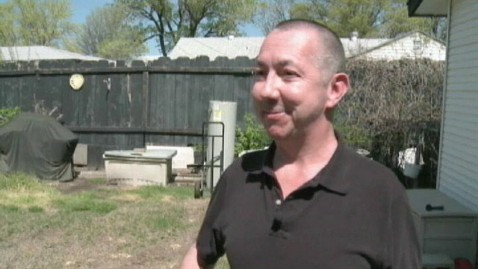
One of the three Mega Millions jackpot winners says her winning ticket remains stashed away inside the Baltimore McDonald’s where she works. But some of Marlinde Wilson’s co-workers think she is telling a Big Lie.

“I left my ticket there, and it’s somewhere safe that only I know about,” Wilson told the New York Post. “I’m waiting for things to calm down so I can go back to McDonald’s and get it. The people [at McDonald’s] are too excited. I want their heads to cool down before I go back.”

Wilson claims to have purchased one of the three winning Mega Millions lottery tickets. The three winners will each receive a share of the record-breaking $640 million jackpot. If Wilson’s story is true, that would mean a $105 million ticket (after taxes) is stashed away somewhere inside the fast food restaurant.

Wilson’s co-workers appear to be split in their opinion of her but all who have spoken to the media seem to share some animosity toward the Haiti native. Some of Wilson’s colleagues say she is attempting to cheat them out of what should be shared winnings from a pool of lotto tickets 14 of the McDonald’s employees purchased together.

And Wilson’s manager, identified only as “Layla” by the Post, says she thinks Wilson isn’t telling the truth about hiding the ticket inside the McDonald’s. “That’s impossible. She didn’t come back here” after she purchased the ticket, Layla said.


CBS News has also raised questions about whether or not Wilson actually purchased one of the three winning tickets. Mega Millions officials say they do not know who actually purchased the ticket. They have only been able to confirm that the winning ticket was in fact purchased at a Baltimore 7-Eleven just four hours before the winning numbers were announced.

The Post also raises some question’s about Wilson’s character, noting she has a Facebook page under the alias Sheila Paraison, on which she says she will donate her winnings to relief efforts in Haiti.


http://news.yahoo.com/blogs/sideshow/mega-millions-winners-says-ticket-still-hidden-inside-160453864.html;_ylt=Av0bxgEA2k7kk7bfHcbI8_ASH9EA;_ylu=X3oDMTFobWc1czNjBG1pdANCbG9nIEJvZHkEcG9zAzcEc2VjA01lZGlhQmxvZ0JvZHlUZW1wQXNzZW1ibHk-;_ylg=X3oDMTNlbzM5NnQwBGludGwDdXMEbGFuZwNlbi11cwRwc3RhaWQDMTBjYTU3ZDktZmU0OS0zZDNiLTlkNTctMjI2ZTU5YTNkNTc2BHBzdGNhdANvcmlnaW5hbHN8dGhlc2lkZXNob3cEcHQDc3RvcnlwYWdlBHRlc3QD;_ylv=3


Colonoscopy Reveals Living Cockroach in Patient’s Colon

“A 52-year-old woman with a history of depression was referred by her  primary physician for colorectal cancer screening. She had no family  history of colorectal cancer and a review of systems was positive for  abdominal bloating. Bowel preparation was done using 4 L of polyethylene  glycol the evening prior to screening colonoscopy. The procedure was  uncomplicated with no gross mucosal pathology, however, an insect was  found in the transverse colon (Fig. 1, to the left), was found in the transverse colon on a routine screening colonoscopy.). The insect was aspirated and sent to the lab for further identification. The insect had three body segments (head, thorax, and abdomen) with ventrodorsal flattening of the body and a segmented abdomen, three pairs of legs extending from the thorax (with spikes and claw-like terminal appendages), elongated hind legs, and a pair of elongated antennae extending from the head to beyond the hind legs.These morphologic findings were most consistent with the nymph form of Blattella germanica (German cockroach) of the Blattellidae family, a common household pest. The patient had a cockroach infestation at home and hence it was hypothesized that she may have inadvertently ingested a cockroach with food.”

http://blogs.discovermagazine.com/discoblog/2011/01/03/ncbi-rofl-an-unusual-finding-during-screening-colonoscopy-a-cockroach/

Parents in shock as priest displays gay porn images

A PRIEST has denied knowing how gay porn images appeared on a screen during a presentation he was giving to parents of children preparing for First Communion.

Fr Martin McVeigh was setting up the PowerPoint display when the explicit sex scenes flashed up on the screen.

He was about to give a talk to the parents of First Communicants but abandoned the presentation after the pornographic images appeared.

One of those present said the pictures appeared on the screen after the priest put a USB memory stick into the computer at St Mary’s School in Pomeroy, Co Tyrone.

“There were plenty of shocked faces. There’s a lot of parents very angry about it.”

School principal Sean Devlin is understood to have contacted the Armagh diocese about the incident, which is being investigated by the diocese child protection office.

The Church authorities also went to the police, who said no crime had been committed.

The Archdiocese of Armagh has refused to say whether Fr McVeigh has been suspended from duties or had restrictions imposed on his position while the investigation is under way.

The priest himself insists the pornographic images can be “legitimately explained”.

He told the Ulster Herald newspaper he had no knowledge of how the images appeared on the computer.

A statement from Cardinal Sean Brady said: “The archdiocese immediately sought the advice of the PSNI who indicated that on the basis of the evidence available no crime had been committed.”

A spokeswoman for the Council of Catholic Maintained Schools said they were aware that the principal of the school “immediately referred this matter to the diocesan authorities in accordance with the diocesan safeguarding procedures”.

An emergency meeting was held in the parish last night.

http://www.herald.ie/news/parents-in-shock-as-priest-displays-gay-porn-images-3066704.html

Thanks to Kedmobee for bringing this to the attention of the It’s Interesting community.

Kansas Man Struck By Lightning Hours After Buying Lottery Tickets

A Kansas man was struck by lightning hours after buying three Mega Millions lottery tickets, proving in real life the old saying that a gambler is more likely to be struck down from the sky than win the jackpot.

Bill Isles, 48, bought three tickets in the record $656 million lottery Thursday at a Wichita, Kan., grocery store.

On the way to his car, Isles said he commented to a friend: “I’ve got a better chance of getting struck by lightning” than winning the lottery.

Later at about 9:30 p.m., Isles was standing in the back yard of his Wichita duplex, when he saw a flash and heard a boom — lightning.

“It threw me to the ground quivering,” Isles said in a telephone interview on Saturday. “It kind of scrambled my brain and gave me an irregular heartbeat.”

Isles, a volunteer weather spotter for the National Weather Service, had his portable ham radio with him because he was checking the skies for storm activity. He crawled on the ground to get the radio, which had been thrown from his hand.

Isles had been talking to other spotters on the radio and called in about the lightning strike. One of the spotters, a local television station intern, called 911. Isles was taken by ambulance to a hospital and kept overnight for observation.

Isles said doctors wanted to make sure his heartbeat was back to normal. He suffered no burns or other physical effects from the strike, which he said could have been worse because his yard has a power line pole and wires overhead.

“But for the grace of God, I would have been dead,” Isles said. “It was not a direct strike.”

Isles said he had someone buy him 10 more tickets to the Mega Millions lottery on Friday night. While one of the three winning tickets was sold in Kansas, Isles was not a winner.

Officials of the Mega Millions lottery, which had the largest prize in U.S. history, said that the odds of winning lottery were about 176 million to one. Americans have a much higher chance of being struck by lightning, at 775,000 to one over the course of a year, depending on the part of the country and the season, according to the National Weather Service.

Isles, who is out of work after being laid off last June by a furniture store, said he did once win $2,000 in the lottery and will keep playing.

“The next time I will use the radio while sitting in the car,” he said.

http://www.msnbc.msn.com/id/46915119/ns/us_news-weird_news/

Human Sacrifice to Santa Muerte In Sonora, Mexico

Authorities in the northern Mexican state of Sonora have arrested eight people accused of killing two boys and one woman as human sacrifices for Santa Muerte — the saint of death — officials said Friday.

The victims, two of whom were age 10, were killed and their blood was offered at an altar to the saint, according to Jose Larrinaga, spokesman for state prosecutors. The accused were asking the saint, who is generally portrayed as a skeleton dressed in a long robe and carrying a scythe, for protection, he said.

Santa Muerte is a favorite among criminals and the country’s drug traffickers. The saint, though not recognized by the Catholic Church, has taken off in popularity in recent years.

Details of the case were laid out in a statement from the Sonora State Investigative Police (PEI), which described the cult as a “Satanic sect.”

The first of the three victims was allegedly killed in 2009; the last this month. Their bodies were found in the small mining community of Nacozari de Garcia, some 155 miles (250 kilometers) north of Hermosillo, the state capital.

Many of the accused belong to the same family and one is just 15 years old, the PEI said. Authorities said they began looking into the case when one of the victim’s families reported him missing.

“Nothing like this has ever happened before in the state of Sonora. And it’s not something we’re going to allow,” said Guillermo Padres Elias, state governor.

http://www.cnn.com/2012/03/30/world/americas/mexico-human-sacrifice/index.html?hpt=hp_t3

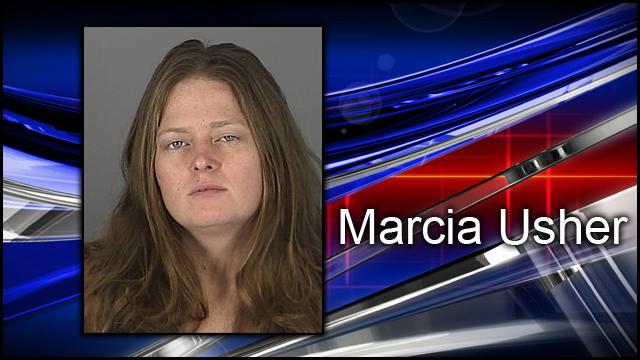
Marcia Usher: Drunk Florida Woman Facing Multiple Charges After She Called 911 for Help Finding a Place to Urinate

A woman needing help finding the bathroom is now facing numerous charges.

Her first mistake: calling 911 for her restroom emergency.

The Pasco Sheriff’s Office says 32-year-old Marcia Usher placed the 911 call Wednesday night, saying she was lost in the woods and didn’t know where she should urinate.

Responding deputies found Usher not in the woods, but instead in front of her home, reportedly intoxicated and drinking a beer.

A deputy noticed a nearby open beer cooler and asked Usher if he could check inside for any weapons or drugs. According to the arrest report, Usher complied and told the deputy there was beer and a knife inside.

Instead of a knife, the deputy immediately saw a loaded handgun on top of the beer.

The deputy tried putting Usher in handcuffs, and a brief struggle ensued.  She was reportedly tackled to the ground and taken into custody without further incident.

At the jail, a vial of meth residue was allegedly discovered on Usher during a strip search.

She now faces charges of carrying a concealed weapon without a permit, possession of methamphetamine, introduction/possession of contraband in a detention facility, and resisting arrest without violence.

http://www.wtsp.com/news/article/243316/8/Deputies-Drunk-woman-calls-911-to-say-she-was-lost-in-woods-did-not-know-where-to-urinate


Ulcers from H. Pylori Increase the Risk of Diabetes


The same bacterium responsible for most stomach ulcers may play a role in the development of Type 2 diabetes among overweight and obese adults, New York University researchers recently reported.

And in the same way that antibiotics eradicate the bacterium and heal ulcers, antibiotics might eventually prove useful in diabetes prevention, they suggest in an article appearing in the Journal of Infectious Diseases.

Non-diabetic adults infected with Helicobacter pylori (whether or not they had ulcer symptoms), tended to have higher blood sugar than adults without H. pylori, according to the study co-authored by Yu Chen, an associate professor of environmental medicine at NYU, and Dr. Martin J. Blaser, chairman of NYU’s department of medicine.

Chen and Blaser assessed blood sugar levels using measurements of glycosylated hemoglobin (HbA1c or A1c), a marker of excess glucose in the bloodstream that in recent years has become a key tool for diagnosing and monitoring diabetes.

Helicobacteri pylori is a complicated bacterium. Persistent H. pylori infections beginning in childhood have been linked decades later to ulcers of the stomach and small intestine, and a heightened risk of stomach cancer. Although H. pylori can inflame the stomach, many infected people have no symptoms.

Blaser called H. pylori a complicated and interesting organism that affects children and adults in entirely different ways. In previous work he and Chen found that H. pylori protects children against asthma and allergy.

“This study provides further evidence of late-in-life cost to having H. pylori,” Blaser said in an interview. The findings also give new support to “the concept of eradicating H. pylori in older people.”

Theoretically, antibiotics that wipe out H. pylori might protect older, overweight men and women from developing diabetes, Blaser and Chen said. However, scientists still need to determine how eliminating H. pylori might affect Type 2 diabetes, and how H. pylori affects sugar breakdown among people of different weights.

Chen and Blaser proposed a mechanism for how H. pylori might set the stage for diabetes. They said the bacterium might alter levels of two important digestive hormones, ghrelin and leptin. Ghrelin, sometimes called the hunger hormone, decreases calorie-burning and promotes weight gain. Leptin reduces appetite and boosts calorie-burning. Previous research has linked H. pylori with decreased ghrelin and increased leptin.

In the past, scientists working with small samples came up with conflicting findings about an association between H. pylori and Type 2 diabetes, a chronic disease strongly associated with excess body weight, as well as heredity. Formerly called adult onset or late onset diabetes, Type 2 diabetes has become epidemic among overweight and obese youngsters. It kills an estimated 3.8 million adults worldwide each year.

One of the strengths of the NYU study is that Blaser and Chen worked with a bigger study population, analyzing data from 7,417 adults in the National Health and Nutrition Examination Survey (NHANES) III and 6,072 adults and children 3 and older in NHANES 1999-2000.

“H. pylori was consistently positively related to HbA1c level in adults, a valid and reliable biomarker for long-term blood glucose levels,” they wrote.

In an editorial appearing in the same issue of the journal, lead author Dani Cohen, an epidemiologist at Tel Aviv University in Israel, suggested that the new findings could have important implications for diabetes prevention and control.

Cohen, a specialist in H. pylori’s health effects, said the next step should be conducting rigorous studies to examine the impact of H. pylori treatment on A1c levels and on the development of diabetes among older adults carrying excess pounds.

http://www.12newsnow.com/story/17156233/diabetes-linked-to-ulcer-causing-bacteria