A 330 square foot apartment transforms into 24 different rooms.

A 330 square foot apartment transforms into 24 different rooms.

Tony Pietrantonio was unfortunate enough to be on the receiving end of a knockout punch from Lavarn Harvell during their light heavyweight boxing match in Atlantic City, New Jersey
Pietrantonio, 34, came crashing down on to the canvas in the third round after receiving the blow, which a well-timed photo captured perfectly, conveying the sheer impact of the punch.
The punch was so hard that Pietrantonio’s face became heavily distorted and his mouth looked like it was about to twist off his face. Even his flapping ears appeared to absorb the full force of the blow.
Harvell, 23, said after the fight: “I felt that punch all the way up my shoulder and back, so I knew he wasn’t getting up.”
He was completely right. The devastating blow, delivered after 31 seconds in the third round, gave him the fight. It was his second straight knockout in four weeks.
Pietrantonio, who only agreed to fight three days beforehand, had previously won six of the 17 bouts in his boxing career, but did not stand a chance after the dramatic jab from Harvell.
He was unconscious as he hit the ground, prompting referee David Fields to immediately stop the fight and call for medical assistance.
After a few minutes, Pietrantonio was then able to climb on to the stool in his corner and eventually shook off the injury to leave the ring under his own power.
Thanks to Dr. Mark for bringing this to the It’s Interesting community.

Swiss newspaper Tages-Anzeiger reports that a woman starved to death after embarking on a spiritual diet that required her to stop eating or drinking and live off sunlight alone.
The Zurich newspaper reported Wednesday that the unnamed Swiss woman in her fifties decided to follow the radical fast in 2010 after viewing an Austrian documentary about an Indian guru who claims to have lived this way for 70 years.
Tages-Anzeiger says there have been similar cases of self-starvation in Germany, Britain and Australia.
The prosecutors’ office in the Swiss canton (state) of Aargau confirmed Wednesday that the woman died in January 2011 in the town of Wolfhalden in eastern Switzerland.
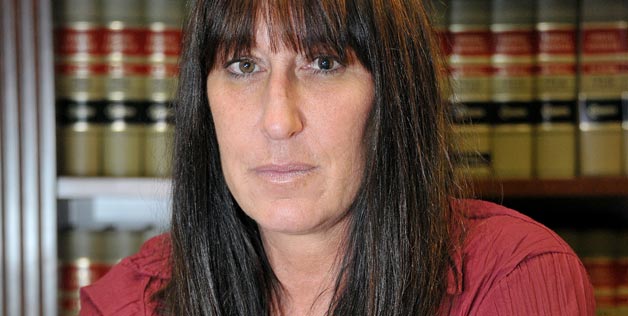
Forty-Seven year old Deborah Stevens is a sweet mother of two who thought she was doing something humane and simply out of the kindness of her heart which, in turn, seemed to backfire, big time.
Stevens was an employee at the Atlantic Automotive Group from over a year before she decided to move to Florida. She left on good terms and during a trip back to NY, she visited her former employer to say hello.
While she was there, her boss, Jacqueline Brucia explained how she was having health problems and needed a new kidney. Debbie told Brucia if she ever needed a kidney, she would be willing to donate.
After deciding to move back to New York, Debbie asked for her old job back. Brucia immediately hired her back, and then reminded her that she offered a kidney at one time.
“My boss needed a kidney,” said Stevens.
Stevens went under the knife in August of 2011 to have her left kidney removed. The recovery was nothing like she expected and she went through a painful recovery.
On September 6th, Stevens went back to work, even though she was still in pain. That is when she realized what really went down.
“It appeared I was used. She used her power and she manipulated me,” said Stevens.
The boss who once asked for the gift of life — turned into an ungrateful monster, finding fault in everything Stevens did.
“She accused me of not doing my job, she’d yell at me every day. She made me feel guilty about the pain I was in.”
Stevens couldn’t take it anymore and went to human resources. They informed her they had heard from other employees that Brucia was harassing Stevens. They in turn moved Stevens to another dealership fifty miles away, and then abruptly fired her.
” I felt like my heart was ripped out,” said Stevens.
Stevens is now filing a complaint and lawsuit to the Division of Human Rights against Atlantic Automotive and Brucia.
Stevens says if she had to do it all over again, she would not.
http://www.wpix.com/news/wpix-woman-fired-after-donating-kidney,0,164903.story

Aquamation “uses water instead of fire to return the body to nature”.
Your body gets put in a stainless steel tank, which is filled with a special liquid that speeds up the decomposition process.
The resulting liquid can then be used as fertiliser, or released into the ocean.
It is being marketed as a “natural” and eco-friendly alternative.
It’s just the usual process sped-up, with none of the toxins that a rotting body can produce or the pollution from a cremation.
Left over bones are then pulverised and given to the family.
It costs around $1000.
http://www.news.com.au/national/bodies-in-barrels-to-be-rolled-out/story-e6frfkvr-1226338112173

You cannot buy Japanese Kobe beef in this country. Not in stores, not by mail, and certainly not in restaurants. No matter how much you have spent, how fancy a steakhouse you went to, or which of the many celebrity chefs who regularly feature “Kobe beef” on their menus you believed, you were duped. If it wasn’t in Asia you almost certainly have never had Japan’s famous Kobe beef.
You may have had an imitation from the Midwest, Great Plains, South America or Australia, where they produce a lot of “Faux-be” beef. You may have even had a Kobe imposter from Japan before 2010. It is now illegal to import (or even hand carry for personal consumption) any Japanese beef. Before 2010 you could import only boneless fresh Japanese beef, but none was real Kobe. Under Japanese law, Kobe beef can only came from Hyogo prefecture (of which Kobe is the capital city), where no slaughterhouses were approved for export by the USDA. According to its own trade group, the Kobe Beef Marketing & Distribution Promotion Association in Japan, where Kobe Beef is a registered trademark, Macao is the only place it is exported to – and only since last year. If you had real Kobe beef in this country in recent years, someone probably smuggled it in their luggage.
“How is this possible?” you ask, when you see the virtues of Kobe being touted on television food shows, by famous chefs, and on menus all over the country? A dozen burger joints in Las Vegas alone offer Kobe burgers. Google it and you will find dozens of online vendors happy to take your money and ship you very pricey steaks. Restaurant reviews in the New York Times have repeatedly praised the “Kobe beef” served at high-end Manhattan restaurants. Not an issue of any major food magazine goes by without reinforcing the great fat Kobe beef lie.
Despite the fact that Kobe Beef, as well as Kobe Meat and Kobe Cattle, are patented terms and/or trademarks in Japan, these are neither recognized nor protected by U.S. law. As far as regulators here are concerned, Kobe beef, unlike say Florida Orange Juice, means almost nothing (the “beef” part should still come from cows). Like the recent surge in the use of the unregulated label term “natural,” it is an adjective used mainly to confuse consumers and profit from that confusion.
This matters because the reason food lovers and expense account diners want Kobe beef, and are willing to pay a huge premium for it, is because of the real Kobe’s longstanding reputation for excellence. The con the US food industry is running is leading you to believe that what you are paying huge dollars for – like the $40 NYC “Kobe” burger – is somehow linked to this heritage of excellence. It’s not.
Real Kobe beef is produced under some of the world’s strictest legal food standards, whereas “domestic Kobe” beef production, along with that in Australia and South America, is as regulated as the Wild West. In Japan, to be Kobe requires a pure lineage of Tajima-gyu breed cattle (not any old Japanese breed crossbred with American cattle as is the norm here). The animal must also have been born in Hyogo prefecture and thus raised on the local grasses and water and terroir its entire life. It must be a bull or virgin cow, and it takes considerably longer to raise a Tajima-gyu for consumption than most other breeds, adding to the cost. It must be processed in a Hyogo slaughterhouse – none of which export to the US – and then pass a strict government grading exam. There are only 3000 head of certified Kobe Beef cattle in the world, and none are outside Japan. The process is so strict that when the beef is sold, either in stores or restaurants, it must carry the 10-digit identification number so customers know what particular Tajima-gyu cow it came from.
In contrast, when you order “Kobe beef” here, you usually can’t even tell what kind of cow it came from – or where. Or what makes it “Kobe.”
The bottom line is that the only reason there is beef called Kobe beef sold in this country is because our government lets vendors call a lot of things Kobe beef. But the reason consumers buy it is because the cattle industry in Kobe spent lifetimes building a reputation for excellence, a reputation that has essentially been stolen.
There are two different parts to the broad misuse of the Kobe name. Historically in the US, restaurants and distributors have generically termed virtually any beef from anywhere in Japan Kobe, and many high-end restaurants did once get beef from Japan, and put it on the menus as Kobe, though it was not true Kobe beef. But in the past two years there has been no Japanese beef here. So the term Kobe today has even less meaning, and the meat can come from many different countries and have nothing in common with actual Kobe beef except that it comes from cows. The argument often broached by the food industry that this non-Japanese Kobe is some sort of recreation of the real thing from the same breed of cows is also largely a myth.
Read about it in the USDA’s own words, about how as of early 2010 all beef from Japan including that “normally referred to as Kobe beef,” will “be refused entry,” “including in passenger luggage.” This is still the case, as you can see in the most recent Animal Product Manual, produced by the USDA’s Animal and Plant Health Inspection Service (APHIS), dated March 1, 2012 which specifically states that beef from Japan, fresh or frozen, whole or cut, bone-in or boneless, will be “Refused Entry.”
It is impossible to say exactly what you are getting in your Faux-be slider, or $100 Faux-be strip, but one thing is certain – it is not Japanese Kobe beef. For the past two years, it has not been any kind of Japanese beef at all.
http://www.forbes.com/sites/larryolmsted/2012/04/12/foods-biggest-scam-the-great-kobe-beef-lie/

Since the Viking Mars probes traveled to the red planet back in 1976, NASA has sent several more probes, landers, and rovers to the Martian surface to study the planet’s geology and search for signs of microbial life. But the evidence for life may have been hidden in Viking’s data all along. A new analysis of the data collected by probes Viking 1 and Viking 2 suggest the missions found evidence of microbial life more than three decades ago.
The new analysis centres on one of the three experiments carried by the probe: the Labeled Release (LR) experiment. This instrument searched for signs of life by mixing samples of Martian soil with droplets of water containing nutrients and radioactive carbon. If the soil contained microbes, the reasoning went, they would metabolise these carbon atoms and nutrients and release either methane gas or radioactive carbon dioxide, either of which would tip off the probes that life existed in the soil.
That’s exactly what happened. But other experiments aboard Viking didn’t back up the LR, and NASA scientists had to dismiss the LR’s findings as anomalous.
But now an analysis by a University of Southern California neurobiologist (and former NASA space shuttle project director) and a mathematician from Italy’s University of Siena could reverse that thinking. They used a technique called cluster analysis, which clusters together similar-looking data sets, to see what would happen. They found the analysis created two clusters: one for the two active experiments on Viking and the other for five control experiments.
Further, when they compared Viking’s data to confirmed biological sources on Earth, like temperature readings from a lab rat, the analysis correctly clustered the biological readings with the active Viking experiment data, separate from the non-biological data in the control experiments. All that essentially means that the cluster analysis, when fed a good deal of data from both biological and non-biological sources, correctly separates the two types of data. And when it does so, it lumps the Viking data into the “biological” category.
That’s not concrete evidence for microbial life on Mars. It’s merely concrete evidence that there is a stark difference between Viking’s LR experiment data and the control experiment data. And it’s evidence that the Viking data tracks with biological rather than non-biological data. More study is necessary (isn’t it always?), but if the cluster analysis is to be believed then our first shot at detecting microbial life in the soils of Mars may have hit pay dirt – and we didn’t even realise it.
[NatGeo]
http://www.popsci.com.au/technology/space/the-viking-mars-missions-may-have-discovered-life-in-1976

Limbless French endurance athlete Philippe Croizon said Tuesday he wants to connect the world by swimming between five continents.
Croizon, who has previously crossed the English Channel, will spend the northern hemisphere summer swimming between the continents with his friend Arnaud Chassery — starting with a swim between Indonesia (Asia) and Papua New Guinea (Oceania) in May.
The pair will follow up by crossing the Red Sea between Jordan (Asia) and Egypt (Africa) and the Strait of Gibraltar between Africa and Europe, before finishing by crossing the Bering Strait between America and Asia in August.
“We are going to symbolically link the five continents, two little people like us, two little men, we’re going to be able to build a bridge between the continents,” Croizon said, according to the International Business Times.
“That means that we’re going to bring them together. Which means no one is very far from each other. So even if we have different political opinions, or skin colors, or even with our disabilities, we all live on the same planet. And that’s the clear message we want to send.”
On his website, Croizon — who lost his limbs after he was electrocuted while changing a TV antenna on his roof in 1994 — says the total distance covered by the swims will be roughly 53 miles and that the pair expect to be in the water for about 45 hours.
The 44-year-old swims using prosthetic limbs and fins attached to the stumps of his legs.
http://msn.foxsports.com/other/story/limbless-man-wants-to-swim-around-world-042412
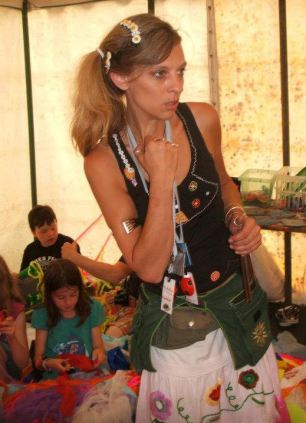


A 40-year-old British woman blames a ‘toxic’ bracelet she bought on eBay for ruining her life.
During a two year period, Jo Wollacott, from Bridport, Dorset, suffered abscesses, hives and hallucinations; she lost her boyfriend, her job and her home and was even sectioned under the mental health act.
Miss Wollacott thought her terrible time was the result of back luck, until she discovered a bracelet she’d been wearing contained a dangerous toxin.
The mother-of-two is actually lucky to be alive. The bracelet contained a banned substance called abrin, which is prohibited under the Terrorism Act because just three micrograms of the drug could kill if swallowed.
Incredibly, it’s 75 times more deadly than ricin poison.
Miss Wollacott bought a batch of the deadly red-and-black ‘love’ bracelets for just £1 each from internet auction site eBay in April 2010.
She put one around her wrist, kept another and sold the rest.
The mosaic maker, who was living with her partner and children, Shirelle, aged 22, and Dagan, seven, started noticing problems as soon as they arrived.
She said: ‘A few weeks later I had a really big abscess in my mouth. Then about one month after that I got hives all over my body.
‘I was being physically sick throughout the summer – suffering diarrhoea and vomiting – but I just put it down to having a bad bug.
‘Then my life started to spiral out of control.’
She split up with her boyfriend in July 2010 and claimed the bracelet had started to put her in an hallucinogenic-like state.
A few months later she ended up quitting her mosaic design business after missing so many days through illness.
Miss Wollacott then got into debt and was forced to sell her family home in Lyme Regis, eventually moving to a smaller home in nearby Bridport.
She also had to sell her Ford Fiesta.
Her mental health deteriorated and things came to a head in December 2010 when she was sectioned in the Forston Clinic in Dorchester.
She said: ‘I was in hospital for a few days with hallucinations – I did not know what was going on.
‘Doctors could not work out what was wrong with me – they did not know what medication to put me on. They thought I had been on drugs, but all my tests were negative.
‘Thinking about it now, the effect of the beans on the bracelet probably would have been the same as being on drugs.’
Miss Wollacott was released from the clinic after nine days but continued to suffer problems throughout most of 2011 and was briefly sectioned again in October.
At that point the mum had lost 22 beads off the bracelet and had attached it onto her house keys.
By November last year she finally decided to put the beaded item away in a bedside jewellery box – sparking a transformation in her life.
Since then her mental health has improved, she has stopped feeling sick, bought a new car and has now begun a new career as a toymaker.
But Miss Wollacott did not discover her woes were down to the bracelet – until son Dagan bought a letter home from school in December warning of the dangers.
She said: ‘The letter had a picture of my bracelet on. When I got the warning letter I came home and got the bracelet and realised how long I’d been wearing it for.
‘I couldn’t believe it. When I found out hallucinations were part of the side affects of the bead poisoning I started to piece things together.
‘My life is a lot better now and I am 99 per cent certain it is down to me not wearing the bracelet.’
I feel like I have lot two years of my life to this bracelet.
‘It has been a nightmare. Everybody around me thought my life was just spiralling out of control because I was going through a stressful time.
‘But now I realise that my problems started when I bought this bracelet. I am now finally trying to get my life back together.’
She now keeps the bracelets in a sealed box in her home and is warning others about the dangers.
The Jequirity bean, also known as the abrus precatorius, originates from Peru and can cause serious sickness or even death.
In December last year the Eden Project, in Cornwall, had to recall all of its bracelets – after selling them in its gift shop for a year.
A spokesman from the Health Protection Agency said: ‘Seeds from abrus precatorius contain the poison abrin which is very toxic.
‘Ingestion of any quantity of chewed, crushed or drilled seeds should be regarded seriously because, if fully absorbed, even small amounts of abrin can be fatal.
‘Anyone who is suspected of ingesting seeds from this plant should seek medical advice immediately.’
 It's Interesting