New study shows that getting less than 6 hours of sleep a night significantly increases risk of stroke

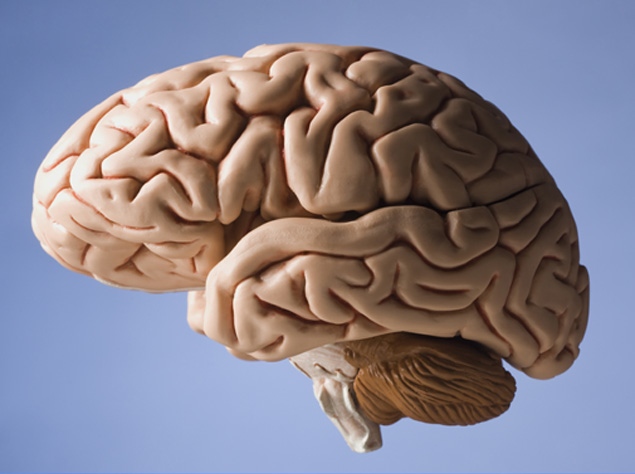
Getting a good night’s rest continues to be of utmost importance to your health. New data from researchers at the University of Alabama at Birmingham shows too little sleep can increase the risk for stroke symptoms in people with a healthy body-mass index who are at low risk for obstructive sleep apnea and have no history of stroke.

The study, being presented June 11, 2012, at the SLEEP 2012conference in Boston, looked at self-reported sleep data from 5,666 people ages 45 and older who were followed up to a three-year period. In people with a low risk for obstructive sleep apnea and a BMI of 18.5 to 24.99, which is considered optimal, there was a four-time greater risk of stroke symptoms in participants who had fewer than six hours of sleep per night, compared to participants in the same BMI range who got seven to eight hours of sleep per night. The study found no association between short sleep periods and stroke symptoms among overweight and obese participants.

“We adjusted for many possible factors that could explain this increase, including hypertension, high cholesterol, sleep disordered breathing and being overweight or obese,” explains Megan Ruiter, Ph.D., the study’s lead author and a UAB post-doctoral fellow in the Division of Preventive Medicine in the School of Medicine.

“Despite controlling for other known stroke risk factors, we still found the association between sleeping less than six hours and reporting stroke symptoms, like sudden body weakness or numbness or deficits in vision,” says Ruiter. “These participants may be late in the development of a stroke. It is possible they may have had a stroke but it was not verified with a physician.”

Sleep specialist Susan Harding, M.D., who was not involved with this study, says these findings do not surprise her.

“Short sleep duration is already associated with cardiovascular death and other cardiovascular related events,” says Harding, director of UAB’s Sleep/Wake Disorders Center. “What is different with this study is that it specifically looked at people who are at a normal weight, which means they are less likely to have diabetes — which is a stroke risk factor — and found they are still at increased risk of stroke symptoms.”

The study also found a differential risk according to racial group.

“We find that sleep duration might partially explain the relationship between ethnic differences in stroke symptoms,” Ruiter adds. “African-Americans had a greater prevalence of short sleep, and they were more likely to have stroke symptoms.”

Ruiter notes that sleep duration was self-reported by participants, making it a limitation of the study, as recall accuracy can vary.

“We need to see if sleep duration is related to actual stroke events. It would be great to learn more about what it is about sleep duration. Is it actually sleep fragmentation, or perhaps the perception of your sleep and the factors that contribute to its quality rather than sleep duration itself? These are all really important factors that are modifiable through behavioral treatment,” says Ruiter.

Data used for this study comes from the Reasons for Geographic and Racial Differences in Stroke study, led by George Howard, DrPH, of the UAB School of Public Health. REGARDS enrolled 30,239 people ages 45 and older between January 2003 and October 2007, and it continues to follow them for health changes. The study is funded by the National Institute of Neurological Disorders and Stroke.

http://www.uab.edu/news/latest/item/2483-sleep-debt-hikes-risk-of-stroke-symptoms-despite-healthy-bmi

New Bacon Sundae at Burger King

Just when we thought fast food news could not get any more exciting, Burger King announced that it will be offering a bacon sundae throughout the U.S. this summer.

The dessert — a 510 calorie monstrosity featuring both a whole strip of bacon and bacon crumbles atop a fudge and caramel sundae — was released in April in Nashville to reasonable fanfare, but will now receive a wide release as part of Burger King’s expanded summer menu. This move coincides with the world’s second largest hamburger chain’s new strategy to rebrand itself, changing its tagline from “Have It Your Way” to “Taste Is King.” It’s already made several changes to its menu this year, adding new snack wraps and salads and adjusting its recipes for staples like French fries and the Whopper.

(LIST: Top 10 Worst Fast-Food Meals)

Burger King first saw success for its bacon sundae earlier this year when it “took Nashville, TN by storm,” according to a company press release. The cold treat — which boasts 8 grams of fat and 61 grams of sugar — is described in the release as a “sweet and savory dessert [featuring] rich and creamy vanilla soft serve, drizzled with chocolate fudge, caramel and topped with bacon crumbles, complete with a thick-cut, hardwood smoked bacon garnish.”

Bacon garnishes are not the only new development on the BK menu: summer additions also include the Memphis Pulled Pork BBQ sandwich, Carolina and Texas BBQ sandwiches, frozen lemonade and sweet potato fries. These items will be available throughout the summer, or while supplies last.

Read more: http://newsfeed.time.com/2012/06/13/the-bacon-sundae-is-coming/?iid=nf-article-mostpop1#ixzz1xr1krrOL

Freezer malfunction at Harvard destroys crucial supply of brains being used to study autism

A freezer malfunctioned at a Harvard-affiliated hospital that oversees the world’s largest collection of autistic brain samples, damaging a third of the scientifically precious specimens and casting doubt on whether they can be used in research.

The director of the Harvard Brain Tissue Resource Center said the loss was “devastating,” particularly in light of the increasing demand for brain samples among scientists searching for the cause of autism and potential treatments.

“Over the last 10 years, the autism tissue program has been working very hard to get the autism community to understand the importance of brain donation,” Dr. Francine Benes said. Now many of those samples have been compromised.

The freezer failed sometime late last month at the center, which is housed at McLean Hospital in the Boston suburb of Belmont. At least 54 samples earmarked for autism research were harmed. Many of them turned dark with decay.

However, an initial review indicates that the DNA in the samples is intact and can still be used for genetic research. It’s unclear, however, whether the samples could be used for the full range of neuroscience needs.

Thirty-two of the brains had been cut in half, with one side placed in a formaldehyde solution and the other placed in the freezer. The samples in the solution remain available for all research projects, the hospital said.

The frozen tissue samples are normally maintained at about minus 80 degrees Celsius, but the temperature had reached about 7 degrees — the temperature of a common refrigerator — when the failure was discovered, Benes said.

That means an important chemical cousin of DNA called RNA was destroyed, she said.

Center officials say they’ve already completed an inspection of the equipment to ensure the safety of the collection.

Dr. Fred Volkmar, an autism researcher and director of the Child Study Center at Yale University, said the damage is even more disheartening given recent advances in autism research.

Some of that research, including autism studies involving stem cells, wasn’t even possible at the time when some of the brains were donated.

“We can’t always know where the science is going to take us,” Volkmar said. “In that respect, it’s a horrible loss. The hope is that at least it’s not a total disaster.”

The hospital launched an investigation to determine why the freezer malfunctioned and why two alarm systems failed to go off as the temperature rose.

Benes said her biggest fear is that the loss of samples could make it harder in the future to encourage brain donation from autistic children and young adults.

“There has been a lot of resistance of brain donations for religious and cultural reasons,” she said.

The collection is owned by the advocacy and research organization Autism Speaks.

The Harvard Brain Tissue Resource Center is the largest and oldest federally funded “brain bank” in the United States. It provides thousands of postmortem brain tissue samples annually to researchers across the nation.

Read more: http://www.nydailynews.com/life-style/health/freezer-malfunction-thaws-brains-harvard-research-hospital-article-1.1094094#ixzz1xnz81QSj

James Carville on what if the rich had lost 40% of their wealth, instead of the middle class….

Let’s imagine that yesterday there was a front page story in The New York Times that read the following:

“The recent economic crisis left the top 1% of Americans in 2010 with no more wealth than in the early 1990s, erasing almost two decades of accumulated prosperity, the Federal Reserve Monday.

“A hypothetical family richer than the median net worth of the top 1% of the nation’s families had a net worth of $77.3 million in 2010, compared with $126.4 million in 2007, the Fed said. The crash of the stock market, in addition to the collapse of housing prices in Greenwich, Connecticut, the Upper East Side of New York City, Beverly Hills, Highland Park in Dallas and the North Shore of Chicago, directly accounted for three-quarters of the loss.”

What do you think the reaction would be to that?

The elite would call for the suspension of habeas corpus, the government would call out the National Guard, invade Honduras and the Supreme Court would announce that it is in session 24/7 to take any action deemed necessary to help their friends.

The Wall Street Journal would have a black border on the newspaper. The Financial Times would go from pink to gray. CNBC would play funeral music for nine months. Steve Schwarzman would compare it to the H-word. Cable networks would roadblock all coverage.

Minimum wage laws would be suspended, the 40-hour work week would be thrown out, perhaps they would even do away with child labor laws to get productivity up so profits could increase to make up for lost revenue.

OK, we know that story did not appear in Wednesday’s New York Times, and we would certainly agree that a massive loss of wealth in the top 1% would wreak economic havoc on the country. But there was, if anything, a worse story on that front page with only minor variations from our hypothetical scenario.

The story said that the recent economic crisis left the average American family in 2010 with no more wealth than in the early 1990s, erasing almost two decades of accumulated prosperity, reducing their net worth by almost 40%.

How are you coping? Share your economy story with CNN iReport

And the response of the national elite, the people Paul Krugman refers to as “very smart people” or I like to call the “chin-scratchers,” was a barely audible whimper.

To put it bluntly, the middle class in this country has been screwed, blued and tattooed.

Rising health care costs, job insecurity, declining real estate values, massive cuts to public education and public safety (no Mitt, we don’t need fewer police officers, we actually need more of them and yes, the federal government has a large hand in this.)

It is a depressing state of affairs when about two-thirds of our fellow citizens are caught in an economic trap that is wrecking their lives financially and emotionally.

And the reaction to all of this has been limp at best.

The Republicans say that if we just give the rich more tax cuts, it will make everyone’s life better — seems as though we’ve tried this before, doesn’t it?

The Democrats have done some things that have been helpful, such as payroll tax cuts and the Affordable Care Act, but there is much more work to be done. As far as other institutions around the country, the response has been pathetic.

Opinion: Why the middle class has taken a big hit

There is an entire industry devoted to denying that this is even a problem.

I read a piece written by Andy Kessler in The Wall Street Journal, stating that thanks to “consumption equality,” the wealthy work their 60- to 80-hour weeks inventing things for the masses, but there’s not much they can buy with their money that the middle class can’t afford.

You can only afford a product, because some rich person invented it for the masses, just like they did with smartphones, hard drives and affordable air travel.

Who cares if you can’t afford to send your children to college or pay for your health insurance premium or what you owe on your house is more than what it’s worth? Hey, you can buy them a cell phone, now that they don’t cost $4,000, and talk to them as they stand in line for a job interview at McDonald’s.

Where are our nation’s institutions that should be raising holy hell about this? Lets start with my own Catholic Church: They are spending all of their time hunting down masturbators and birth-control takers.

Academics: Have you ever heard of the Princeton Center for Middle Class Studies? Not hardly.

The press: There is much more coverage on George Zimmerman’s wife than on the destruction of the middle class in this country.

The lobbyists: Give me a break. When was the last time you heard of a lobbyist for the middle class? The point here is that we are reading the most significant economic story of our time and its effect on the psyche of the people who should know better is minimal.

In the words of Warren Buffett, “There’s class warfare, all right, but it’s my class, the rich class, that’s making war, and we’re winning.”

The big scandal in America is that our middle class is shrinking, and no one seems to care. Maybe someone somewhere somehow should consider doing something else.

http://www.cnn.com/2012/06/14/opinion/carville-middle-class/index.html?hpt=hp_c1

Forest Boy


Berlin police on Wednesday released a photograph of the so-called “forest boy,” an English-speaking youth who wandered into the German capital nine months ago saying he had lived in the woods for five years with his father.

Investigators have failed to identify him and police are now hoping the image will prompt leads from the public.

The boy has told authorities his father called him “Ray” and that he was born June 20, 1994. However, he claims not to know his last name or where he’s from. 

“We have checked his DNA against all missing person reports, sent the data to Interpol so that they could check it internationally, but unfortunately without any success,” police spokesman Thomas Neuendorf said.

Investigators told NBC News that DNA evidence suggests Ray is most likely from a neighboring country, as opposed to the United States. Authorities also believe that English might not be his native language.

The boy was unable or refused to give his family name or any other biographical information when he showed up at the German capital’s City Hall on September 5.

English-speaking teen: I lived five years in woods

He said his mother, Doreen, died in a car accident when he was 12 and after that he and his father, Ryan, took to the forest. He said they wandered using maps and a compass, staying in tents or caves overnight. 

‘Many question marks’
He told authorities that after his father died in August, 2011, he buried him in the forest and then walked five days north before ending up in Berlin. Police told NBC News that they have not been able to find a corresponding dead body.

“There are many question marks,” Neuendorf added.

Ray has also quickly adapted to city life and technology, using a laptop and his cell phone with no problems.  

Everything gives the impression that he was not far away from civilization for years,” Neuendorf told The Associated Press.

The boy is being taken care of by youth services and has been assigned a legal guardian.

Ray is described as being somewhere between 16-20 years old and about 5-foot 11-inches tall. He has dark blonde hair and blue eyes, and three small scars on his forehead, three small scars on his chin and a small scar on his right arm. 

http://worldnews.msnbc.msn.com/_news/2012/06/13/12200265-forest-boy-mystery-stumped-german-police-release-photo?lite

Huge algal bloom discovered by NASA under melting arctic ice


Scientists in the Arctic have discovered the largest ever under-ice bloom of phytoplankton, likening the discovery to “finding the Amazon rainforest in the middle of the Mojave Desert.”

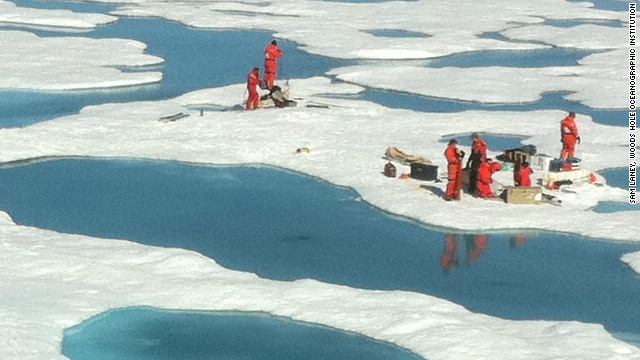
Researchers were amazed to discover a colossal 100 kilometer (62 miles) stretch of phytoplankton blooming under Arctic ice, north of Alaska, in July last year.

It had previously been assumed that sea ice blocked the sunlight necessary for the growth of marine plants. But four times more phytoplankton was found under the ice than in ice-free waters nearby.

Scientists now believe that pools of melting ice actually function like skylights and magnifying glasses, focusing sunlight into sea water, providing the perfect conditions for the intense phytoplankton bloom, which makes the water look like pea soup.

Undiscovered until the 1970s, the ocean’s phytoplankton is now understood to be responsible for about as much of the oxygen in our atmosphere as plants on land.

The ecological consequences of the polar bloom are not yet fully understood but given phytoplankton’s position at the base of the food chain, it is expected to have implications for ocean animals that feed in the area.

It was a serendipitous discovery for scientists who, as part of NASA’s ICESCAPE program, were studying the impact of climate change in the Chukchi sea, where melt season changes are pronounced.

Making their way through meter-thick ice aboard the U.S. Coast Guard’s largest icebreaker Healy in July last year, scientists observed surprising amounts of fluorescing chlorophyll, indicating the presence of photosynthesizing plant life.

Tide turns towards undersea energy

“If someone had asked me before the expedition whether we would see under-ice blooms, I would have told them it was impossible,” said ICESCAPE mission leader Kevin Arrigo of Stanford University, at a press conference announcing the publication of findings in “Science” this month. “This discovery was a complete surprise.”

Donald Perovich, a U.S. Army geophysicist who studied the ice’s optical properties, described the under-ice area as looking “like a photographic negative”.

“Beneath the bare-ice areas that reflect a lot of sunlight, it was dark. Under the melt ponds, it was very bright,” he said.

The melt pools were found to let in four times as much light as snow-covered ice. Protected from ultraviolet rays, phytoplankton grows twice as fast under-ice as in the open ocean.

Using an automated microscope system called an Imaging FlowCytobot, Woods Hole Oceanographic Institution biologist Sam Laney took millions of photographs of the phytoplankton organisms, some of which he also found in brine channels inside the ice.

Antarctic ice shelves ‘tearing apart’, says study

The type of phytoplankton found near coasts can bloom rapidly when there are changes to the amounts of light and nutrients available. Some blooms are toxic for humans and marine life.

If the Arctic sea ice continues to thin, blooms might become more widespread and appear earlier, which could pose problems for migrating birds and whales, said Arrigo.

“It could make it harder and harder for migratory species to time their life cycles to be in the Arctic when the bloom is at its peak,” he said. “If their food supply is coming earlier, they might be missing the boat.”

“At this point we don’t know whether these rich phytoplankton blooms have been happening in the Arctic for a long time, and we just haven’t observed them before,” he said.

http://www.cnn.com/2012/06/10/world/phytoplankton-mega-bloom-eco-solutions/index.html?hpt=hp_c1

‘Depraved’ sex acts by penguins censored 100 years ago are now being published

Accounts of unusual sexual activities among penguins, observed a century ago by a member of Captain Scott’s polar team, are finally being made public.

Details, including “sexual coercion”, recorded by Dr George Murray Levick were considered so shocking that they were removed from official accounts.

However, scientists now understand the biological reasons behind the acts that Dr Levick considered “depraved”.

The Natural History Museum has published his unedited papers.

Dr Levick, an avid biologist, was the medical officer on Captain Scott’s ill-fated Terra Nova expedition to the South Pole in 1910. He was a pioneer in the study of penguins and was the first person to stay for an entire breeding season with a colony on Cape Adare.

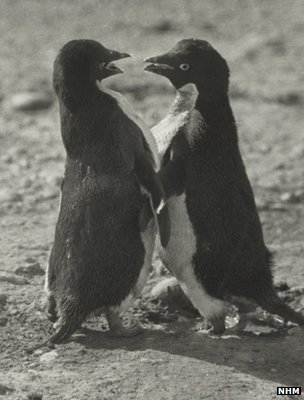
He recorded many details of the lives of adelie penguins, but some of their activities were just too much for the Edwardian sensibilities of the good doctor.

He was shocked by what he described as the “depraved” sexual acts of “hooligan” males who were mating with dead females. So distressed was he that he recorded the “perverted” activities in Greek in his notebook.

On his return to Britain, Dr Levick attempted to publish a paper entitled “the natural history of the adelie penguin”, but according to Douglas Russell, curator of eggs and nests at the Natural History Museum, it was too much for the times.

“He submitted this extraordinary and graphic account of sexual behaviour of the adelie penguins, which the academic world of the post-Edwardian era found a little too difficult to publish,” Mr Russell said.

The sexual behaviour section was not included in the official paper, but the then keeper of zoology at the museum, Sidney Harmer, decided that 100 copies of the graphic account should be circulated to a select group of scientists.

Mr Russell said they simply did not have the scientific knowledge at that time to explain Dr Levick’s accounts of what he termed necrophilia.

“What is happening there is not in any way analogous to necrophilia in the human context,” Mr Russell said. “It is the males seeing the positioning that is causing them to have a sexual reaction.

“They are not distinguishing between live females who are awaiting congress in the colony, and dead penguins from the previous year which just happen to be in the same position.”

Sexual coercion

Only two of the original 100 copies of Dr Levick’s account survive. Mr Russell and colleagues have now published a re-interpretation of Dr Levick’s findings in the journal Polar Record.

Mr Russell described how he had discovered one of the copies by accident.

“I just happened to be going through the file on George Murray Levick when I shifted some papers and found underneath them this extraordinary paper which was headed ‘the sexual habits of the adelie penguin, not for publication’ in large black type.

“It’s just full of accounts of sexual coercion, sexual and physical abuse of chicks, non-procreative sex, and finishes with an account of what he considers homosexual behaviour, and it was fascinating.”

The report and Dr Levick’s handwritten notes are now on display at the Natural History Museum for the first time. Mr Russell believes they show a man who struggled to understand penguins as they really are.

“He’s just completely shocked. He, to a certain extent, falls into the same trap as an awful lot of people in seeing penguins as bipedal birds and seeing them as little people. They’re not. They are birds and should be interpreted as such.”

https://mail.google.com/mail/?shva=1#inbox/137d4ea2cdc8413a

Thanks to Kedmobee for bringing this to the attention of the It’s Interesting community.


New study offers evidence of ‘old person smell’

The Smell of Age: Perception and Discrimination of Body Odors of Different Ages

“Our natural body odor goes through several stages of age-dependent changes in chemical composition as we grow older. Similar changes have been reported for several animal species and are thought to facilitate age discrimination of an individual based on body odors, alone. We sought to determine whether humans are able to discriminate between body odor of humans of different ages. Body odors were sampled from three distinct age groups: Young (20–30 years old), Middle-age (45–55), and Old-age (75–95) individuals. Perceptual ratings and age discrimination performance were assessed in 41 young participants. There were significant differences in ratings of both intensity and pleasantness, where body odors from the Old-age group were rated as less intense and less unpleasant than body odors originating from Young and Middle-age donors. Participants were able to discriminate between age categories, with body odor from Old-age donors mediating the effect also after removing variance explained by intensity differences. Similarly, participants were able to correctly assign age labels to body odors originating from Old-age donors but not to body odors originating from other age groups. This experiment suggests that, akin to other animals, humans are able to discriminate age based on body odor alone and that this effect is mediated mainly by body odors emitted by individuals of old age.”

http://blogs.discovermagazine.com/discoblog/2012/06/06/ncbi-rofl-study-proves-old-person-smell-is-real/

Stoned mom arrested after driving with 5 month old baby on roof


The following is a break down of some seriously bad parenting at the hands of 19-year-old teen mom Catalina Clouser from Phoenix, Arizona.

On Friday night Clouser and her boyfriend had been smoking a little weed at a public park. After this they decided to head to a store and buy some beer with Catalina’s baby in the car. Hey boyfriend was pulled over and popped for DUI. Being upset over that whole situation, Clouser decided to take herself and her child to a friend’s house where she, “admittedly smoked one or two additional bowls of marijuana.”

After getting stoned Clouser thought it would be a good idea to head on home with her infant son asleep in the car seat. It wasn’t until she got home that she became aware that her son was missing. According to Phoenix Police officer James Holmes:

“It appears the suspect put the baby on the roof of the car and drove off, forgetting he was still on the roof.”

Freaked out, Clouser started dialing up friends frantically attempting to retrace her steps trying to figure out the location of her son. Once she pieced together what had happened officers were already on the scene. Holmes added:

“The officers did find that the car seat was damaged. There were scrapes on the car seat, obviously from a fall. We’re thinking that based on her possible impairment, she just didn’t realize that she had placed that baby at one o’clock in the morning on top of the car when she took off.”

Both Holmes and local station KTVK have reported that the 5-week-old infant is, “perfectly OK,” and that he has been placed in the care of Arizona Child Protective Services.

Catalina Clouser was arrested and has been charged with aggravated DUI and child abuse.

http://starcasm.net/archives/158865