
Rare Frog Sports Thumb-Spikes for Sex and Combat


A rare Japanese frog sports spikes protruding from a set of pseudo-thumbs, a scientist has discovered. The built-in weaponry helps the males grab onto females during sex and duel with competitors over mates, the researcher said.
Unlike most four-toed frogs, the endangered Otton frog (Babina subaspera) has a “fifth finger.” In both males and females, this extra digit encases a sharp spine, but in males, this spike is more prominent, researcher Noriko Iwai from the University of Tokyo found.
Iwai believes the thumb-dagger evolved to allow males to anchor to the female during mating. And field observations in southern Japan’s Amami islands, the frog’s only home, showed that the males indeed jab their spikes into the sides of the females to hold on duringamplexus — a form of pseudocopulation in which the males mount the female and fertilize her eggs as, or soon after, she lays them.
A rare Japanese frog sports spikes protruding from a set of pseudo-thumbs, a scientist has discovered. The built-in weaponry helps the males grab onto females during sex and duel with competitors over mates, the researcher said.
Unlike most four-toed frogs, the endangered Otton frog (Babina subaspera) has a “fifth finger.” In both males and females, this extra digit encases a sharp spine, but in males, this spike is more prominent, researcher Noriko Iwai from the University of Tokyo found.
Iwai believes the thumb-dagger evolved to allow males to anchor to the female during mating. And field observations in southern Japan’s Amami islands, the frog’s only home, showed that the males indeed jab their spikes into the sides of the females to hold on duringamplexus — a form of pseudocopulation in which the males mount the female and fertilize her eggs as, or soon after, she lays them.
But it appears the frogs also use the spikes for male-to-male combat over females and breeding nests. The researcher found they wrestle with each other in an embrace while stabbing at each other with the spines.
“While the pseudo-thumb may have evolved for mating, it is clear that they’re now used for combat,” Iwai explained in a statement. “The males demonstrated a jabbing response with the thumb when they were picked up, and the many scars on the male spines provided evidence of fighting.”
The spike, however, does not appear to cause lethal injuries during duels. Iwai noted a previous study of another frog with pseudo-thumb spikes, Hypsiboas rosenbergi, found that many males died after being stabbed in the eyes and ear drums by an opponent. Otton frogs don’t appear to jab their rivals in these critical areas, and they have a raised patch on their sides that seems to guard against serious injury, according to the study.
“It seems that the intensity of combat in Otton frogs is finely balanced so as not to result in critical or mortal injuries, yet it remains aggressive enough to establish a clear victor,” Iwai wrote in a paper published Oct. 18 in the Journal of Zoology.
http://www.livescience.com/24078-rare-frog-sports-thumb-spikes-for-sex-and-combat.html
Hundreds Of Deer Mysteriously Jumping To Their Deaths Off Idaho Bridge
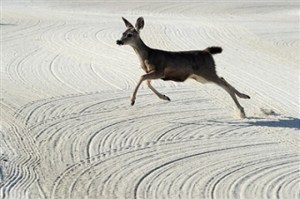
Idaho wildlife officials are puzzled as to why hundreds of deer have jumped off a bridge to their deaths.
Motorists tell officials they have witnessed deer jumping off High Bridge and plunging more than 100 feet to their deaths while they are driving by.
“I’ve seen it myself and some of our staff have seen it too,” Evin Oneale, a manager with the Idaho Fish and Game Development, told KBOI-TV.
Oneale believes that the deer are just trying to jump away from the oncoming cars.
“The first thing a deer is going to do is try and get away,” he told the station. “They jump over what they think is just into the barrow pit, but it’s a 120-foot fall to the river below.”
The station reports the Idaho Fish and Game, along with Idaho’s Department of Transportation, built an underpass for the animals back in 2010 in an effort to help curb the deer jumping. Officials say it has worked but warn motorists to slow down as to not startle the deer into jumping.
Brazil aims to clone endangered animals

Conservationists in Brazil are poised to try cloning eight animals that are under pressure, including jaguars and maned wolves.
Other conservation groups have welcomed the plan, but say the priority should always be to preserve species in the wild by minimising hunting and maintaining habitats.
“While cloning is a tool of last resort, it may prove valuable for some species,” says Ian Harrison of the Biodiversity Assessment Unit at Conservation International in Arlington, Virginia. “Experimenting with it now, using species that are not at immediate risk of extinction, is important.”
None of the targeted animals are critically endangered, but Brazil’s agricultural research agency, Embrapa, wants a headstart. Working with the Brasilia Zoological Garden, it has collected around 420 tissue samples, mostly from carcasses.
The eight species live in the Cerrado, a tropical savannah. They will be cloned and kept in captivity as a reserve in case wild populations collapse.
Within a month, Embrapa hopes to begin cloning the maned wolf (Chrysocyon brachyurus), which is classed as “Near Threatened” on the IUCN Red List of endangered species. About 13,000 remain across South America.
As well as jaguars and maned wolves, the researchers hope to clone black lion tamarins (Leontopithecus chrysopygus), bush dogs (Speothos venaticus), coatis, collared anteaters (Tamandua tetradactyla), gray brocket deer (Mazama gouazoupira) and bison.
There are no plans to release cloned animals into the wild, says Embrapa’s Carlos Frederico Martins. Being clones, they would lack the genetic variability of wild populations.
Embrapa created Brazil’s first cloned animal in 2001, a cow called Vitória that died last year. It has since cloned over 100 animals, mainly cows and horses.
Rare animals have been cloned before, including the ox-like gaur, a wild sheep called a mouflon, a wild cow called the banteng, and even an extinct mountain goat – the Pyrenean ibex – that died at birth. Since then, more versatile cloning techniques have been developed, increasing the chances of success.
“The key is foresight, to just save a little piece of skin, blood or other living cells before the genes from these individuals are lost from the planet forever. A freezer the size of a standard refrigerator could store the genetics for all the pandas in China, or all the mountain gorillas in Africa,” says Robert Lanza of Advanced Cell Technology in Marlborough, Massachusetts, who headed the group that produced the gaur. “If you have the genetic material you can produce sperm, for instance, and reintroduce genetic diversity whenever you want.”
Rhiannon Lloyd of the University of Portsmouth, UK, runs a facility that stores DNA of threatened and extinct species. She backs Embrapa’s plan: “Collecting from dead specimens prevents the valuable information within their cells being lost forever.”
Man finds mummified bat in his breakfast cereal
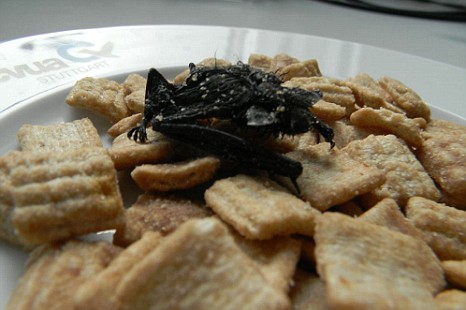
The hungry German man’s start to the day was completely ruined when he discovered the dead bat in his bowl of cereal at his home in Stuttgart.
He was left feeling more horrified than hungry when he realised the mummified mammal was not a Halloween themed toy.
The incident was reported to health officials who are attempting to establish how the errant bat managed to fly into the box of corn flakes.
They believe the bat may have flown into the plastic packaging by mistake and suffocated to death.
Scientists are investigating whether the bat had flown into the box of Mini-Zimties cereal at the factory or after they had been opened.
Food safety official Jorg Sturmer said: ‘I have never seen anything like it. This really is an unusual case.’
Last month, a live frog was found jumping around a Waitrose salad bag bought by a family in Hampshire.
Chimp and human gut bacteria are nearly identical

Humans share about 99 percent of our genomes with chimpanzees. Now, research finds we share something else: gut bacteria.
The bacterial colonies that populate the chimpanzee intestinal tract are mirror images of those found in the human gut, researchers report today (Nov. 13) in the journal Nature Communications. The findings suggest gut bacteria patterns evolved before chimps and humans split and went their evolutionarily separate ways.
Human gut bacteria are crucial to health, with infants relying on healthy microbe populations to influence the developing immune system. Problems with microbe populations may also contribute to obesity and inflammatory bowel diseases.
Three intestinal ecosystems
In 2011, researchers learned that everyone’s gut bacteria fall into one of three different types, almost analogous to blood types. In each type, certain bacteria dominate. These types weren’t linked to any personal characteristics such as geographic area, age or gender. Researchers dubbed these distinct bacterial ecosystems “enterotypes.” (“Entero” means gut or intestine.)
“No one really knows why these three enterotypes exist,” said study researcher Andrew Moeller, a doctoral student at Yale University.
Along with his adviser Howard Ochman and their colleagues, Moeller want to understand how these enterotypes arose. They could be distinctly human, he told LiveScience, which would suggest they arose relatively recently, perhaps in response to the development of agriculture. Or they could be ancient, shared among our closest primate relatives.
The researchers analyzed gut bacteria samples from 35 chimpanzees from Gombe Stream National Park in Tanzania. The chimpanzees were all in the subspecies Pan troglodytes schweinfurthii, the eastern chimpanzee, which arose approximately the same time as Homo sapiens.
Shared bacteria
The researchers found that, just like humans, chimps’ guts harbor one of three distinct types of bacterial colonies. Even more intriguingly, these enterotypes matched humans’ precisely. In type 1, for example, both humans and chimps show a predominance of Bacteroides, Faecalibacterium and Parabacteroides.
There were some differences. For example, in humans and chimps, enterotype 2 is marked by an overabundance of bacteria called Lachnospiraceae. In humans, the bacteria Prevotellae is also prevalent in type 2. In chimps, Prevotellae appears in significant numbers in all three enterotypes, perhaps because it is associated with a high-carbohydrate diet.
Other differences could help explain certain human health issues. By comparing human and chimpanzee gut bacteria, the researchers found many of the bacteria present only in humans are linked to diseases such as inflammatory bowel diseases, conditions that cause pain, diarrhea and vomiting.
Seven of the chimps in the study were tested repeatedly over eight years, and their gut microbes were found to change from type to type over that time period. No one has ever tested humans for changes over a period longer than two weeks, Moeller said, but the results suggest our enterotypes may shift over time, too.
Our shared history
The similarities between chimp and human colonies suggest enterotypes predate our species, which in turn suggests that none of the three ecosystems are better than the others, Moeller said. [Gallery: Tiny, Nasty Bugs That Make Us Sick]
“Before we found this in chimpanzees, there was a possibility that enterotypes were a product of modernization, which could mean they have some negative effects on health,” he said. “I don’t think there’s any reason to think one enterotype is going to have an effect on health that’s going to be better” than the others.
Moeller and his colleagues are now examining gorilla fecal samples to find out where they stand as slightly more distant primate relatives to humans.
“The next step is to try to find out the processes and mechanisms responsible for producing these three community states,” Moeller said, “which is kind of a lofty goal, but I think more sampling will actually reveal why these communities exist.”
http://www.livescience.com/24738-chimp-human-gut-bacteria-identical.html
Pioneering self-contained ‘smart village’ offers world model for rural poverty relief

An innovative, high-tech “smart village” built in Malaysia provides a potential global template for addressing rural poverty in a sustainable environment, say international experts meeting in California’s Silicon Valley.
Rimbunan Kaseh, a model community built north-east of Kuala Lumpur, consists of 100 affordable homes, high-tech educational, training and recreational facilities, and a creative, closed-loop agricultural system designed to provide both food and supplementary income for villagers.
Malaysian Dato’ Tan Say Jim detailed the project Monday at a special meeting in San Jose of the Global Science and Innovation Advisory Council (GSIAC) — a unique assembly of all-star international and Malaysian experts and leaders created to guide sustainable Malaysian development.
The “smart village,” located on 12 hectares in the Malaysian state of Pahang, includes a four-level aquaculture system whereby water cascades through a series of tanks to raise, first, fish sensitive to water quality, then tilapia (“the world’s answer to affordable protein,” says Mr. Tan), then guppies and finally algae. The latter two products are used to feed the larger fish.
Filtered fish tank wastewater is then used to irrigate trees, grain fields and crops such as flowers and fresh produce, the plants grown individually in novel hydroponic devices. The “auto-pot” is a three-piece plastic container that automatically detects soil moisture levels and waters plants precisely as required, reducing needs for costly fertilizers and pesticides as well as water.
Organic waste is composted to encourage worms and other organisms on which free-range chickens feed together with the home-grown grains.
In addition to access to reliable food supplies, villagers augment their monthly income by an estimated $400 to $650.
“It is a complete loop; a modern farm — one that could even exist on the rooftop of a building,” says Mr. Tan of IRIS Corporation Berhad, which spearheads the public-private partnership.
The energy-efficient homes (roughly 100 square meters – 1,000 square feet) require 10 days to construct, in part from post-consumer materials, and cost between 50,000 to 60,000 Malaysian Ringgit ($16,000 to $20,000).
The village’s solar-generated power is complemented by biomass energy and mini-hydro electricity.
Rounding out the design: a community hall, resource centre, places of worship, playgrounds and educational facilities equipped with 4G Internet service supporting both e-learning and e-health services.
Photos of the “smart village” are available for download online at https://dl.dropbox.com/u/3960397/smart%20village%20photos.zipA video depicting home construction is online here: http://www.youtube.com/watch?v=OvXaWmlB6Wg
“With this project we stimulate rural growth with modern agriculture activities, we balance development and economic activities between the urban and rural areas, we provide income and we improve living standards,” says Mr. Tan.
Malaysia is looking to scale up the smart village initiative, replicating the Rimbunan Kaseh model at as many as 12 sites in the short to medium term.
“This model offers a great opportunity to create holistic change for people in the worse circumstances in Malaysia and other nations as well,” says Ellis Rubinstein, President and Chief Executive Officer of the New York Academy of Sciences (NYAS), which co-chairs the GSIAC Secretariat with the Malaysian Industry-Government Group on High Technology (MIGHT).
Says Mr. Rubinstein: “Integrated smart communities could transform services available to Malaysia’s citizenry while creating thousands of jobs, complementing GSIAC’s unprecedented alliance to improve education in that country at every level from ‘Cradle to Career’.
Says Dato’ Zakri Abdul Hamid (Dr. A.H. Zakri), Science Advisor to Prime Minister of Malaysia and co-chair of of MIGHT: “GSIAC has provided us with an unprecedented opportunity to advance our local capacities in both scale and effectiveness. Thanks to the New York Academy of Sciences, we have a chance to work with a partnership of many of the world’s leading multinational companies – usually competitors but, for us, coming together – and experts from universities around the world.
“This alliance gives us confidence we can take up in Malaysia the best practices so far demonstrated anywhere in the world. It opens the door to major foreign investment. And it gives us a chance that no other government – either regional or national – has anywhere else in the world: to develop a staged, integrated solution to our citizen’s needs that will dramatically increase efficiencies of scale as well as metrics of performance and impact just by virtue of being an integrated, fully thought out plan from the outset.”
Assembled last year, GSIAC is composed of leading education, economics, business, science and technology experts from Malaysia, China, India, Russia, Japan, Korea, The Netherlands, the UK and the USA, including two Nobel laureates, each volunteering to help the Asian country achieve an environmentally-sustainable, high-income economy driven by knowledge and innovation.
http://www.eurekalert.org/pub_releases/2012-07/migf-ps071212.php
Thanks to Kebmodee for bringing this to the attention of the It’s Interesting community.
World’s First 3D Printing Photo Booth Dispenses A 3D Figure Of You
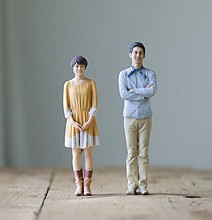
Imagine this…What if you went to a photo booth in a mall or a movie theater and you put in a dollar, pulled the curtain, and sat down to get your photo taken by the machine. What if instead of spitting out the usual black and white strip of four or five photos, it dispensed a small mini-me figure of you. This actually exists (except it costs more than a dollar right now). The world’s first 3D printing photo booth is taking reservations. People will soon be making history by having their photo taken this way in Japan from now until mid-January. You can read World’s First 3D Printing Photo Booth To Open In Japan to get more details. If more than one person gets in the photo booth, it will create more than one figure. The cost right now is between $260 – $530 for each figure depending on what size you want it to create.
http://www.bitrebels.com/technology/worlds-first-3d-printing-photo-booth/
Anti-computer virus software pioneer John McAfee wanted for murder in Belize

Police in Belize want to question U.S. anti-computer virus software pioneer John McAfee in connection with the murder of a neighbor he had been quarrelling with, but they say he remains a person of interest at this time and is not a suspect.
McAfee, who invented the anti-virus software that bears his name, has homes and businesses in Belize, and is believed to have settled in the country sometime around 2010.
“He is a person of interest at this time,” said Marco Vidal, head of Belize’s police Gang Suppression Unit. “It goes a bit beyond that, not just being a neighbor.”
Police officers were looking for the software engineer, said Miguel Segura, the assistant commissioner of police.
Asked if McAfee was a suspect, he said: “At this point, no. Our job … is to get all the evidence beyond reasonable doubt that Mr A is the one that killed Mr B.”
“He (McAfee) … can assist the investigation, so there is no arrest warrant for the fellow,” added Segura, who heads the Criminal Investigation Branch.
McAfee’s neighbor, Gregory Viant Faull, a 52-year-old American, was found on Sunday lying dead in a pool of blood after apparently being shot in the head.
McAfee has been embroiled in controversy in Belize before.
His premises were raided in May after he was accused of holding firearms, though most were found to be licensed. The final outcome of the case is pending.
McAfee also owns a security company in Belize as well as several properties and an ecological enterprise.
Reuters was unable to contact McAfee on Monday.
Segura said McAfee had been at odds with Faull for some time. He accused his neighbor of poisoning his dogs earlier this year and filed an official complaint.
“There was some conflict there between (them) … prior to the death of the gentleman,” Segura said. “But those dogs didn’t have a post mortem to see if the toxicology would confirm what type of poison, if any.”
McAfee previously accused the police Gang Suppression Unit of killing his dogs during the May raid.
McAfee was one of Silicon Valley’s first entrepreneurs to amass a fortune by building a business off the Internet.
The former Lockheed systems consultant started McAfee Associates in 1989, initially distributing its anti-virus software as “shareware” on Internet bulletin boards.
He took the company public in 1992 and left two years later following accusations that he had hyped the arrival of a virus known as Michelango, which turned out to be a dud, to scare computer users into buying his company’s products.
http://www.huffingtonpost.com/2012/11/13/john-mcafee-belize-murder_n_2119941.html
Thanks to SRW for bringing this to the attention of the It’s Interesting community.
Snuggery

She makes her clients acknowledge that no sex will be involved during the session (sexual arousal is fine), but for $60 anyone can snuggle up with 29-year-old Jackie Samuel for an entire hour.
“You feel more calm for days afterward,” said the Western New York native. “It has numerous health benefits.”
Indeed, The Snuggery’s website extols the “psychological and physical benefits of non-sexual touch,” which Samuel claims are “unquestionably supported” by science.
She isn’t technically licensed to do what she does — “I couldn’t find anybody else who was doing what I was doing,” she says — but Samuel is an expert in “Cuddle Sutra,” having mastered over 100 non-sexual positions.
And besides, do you really need to be trained on how to hold someone? “I would hope it’s something everybody knows how to do,” Samuel said. “I just think we kind of lose interest or the drive in our society.”
Samuel hopes to change that, making the world a gentler place, “one snuggle at a time.”
 It's Interesting