The myth of antioxidants and vitamins?

20081210_antioxidants

The hallowed notion that oxidative damage causes aging and that vitamins might preserve our youth is now in doubt.

•For decades researchers assumed that highly reactive molecules called free radicals caused aging by damaging cells and thus undermining the functioning of tissues and organs.
•Recent experiments, however, show that increases in certain free radicals in mice and worms correlate with longer life span. Indeed, in some circumstances, free radicals seem to signal cellular repair networks.
•If these results are confirmed, they may suggest that taking antioxidants in the form of vitamins or other supplements can do more harm than good in otherwise healthy individuals.

David Gems’s life was turned upside down in 2006 by a group of worms that kept on living when they were supposed to die. As assistant director of the Institute of Healthy Aging at University College London, Gems regularly runs experiments on Caenorhabditis elegans, a roundworm that is often used to study the biology of aging. In this case, he was testing the idea that a buildup of cellular damage caused by oxidation—technically, the chemical removal of electrons from a molecule by highly reactive compounds, such as free radicals—is the main mechanism behind aging. According to this theory, rampant oxidation mangles more and more lipids, proteins, snippets of DNA and other key components of cells over time, eventually compromising tissues and organs and thus the functioning of the body as a whole.

Gems genetically engineered the roundworms so they no longer produced certain enzymes that act as naturally occurring antioxidants by deactivating free radicals. Sure enough, in the absence of the antioxidants, levels of free radicals in the worms skyrocketed and triggered potentially damaging oxidative reactions throughout the worms’ bodies.

Contrary to Gems’s expectations, however, the mutant worms did not die prematurely. Instead they lived just as long as normal worms did. The researcher was mystified. “I said, ‘Come on, this can’t be right,’” he recalls. “‘Obviously something’s gone wrong here.’” He asked another investigator in his laboratory to check the results and do the experiment again. Nothing changed. The experimental worms did not produce these particular antioxidants; they accumulated free radicals as predicted, and yet they did not die young—despite suffering extreme oxidative damage.

Other scientists were finding similarly confounding results in different lab animals. In the U.S., Arlan Richardson, director of the Barshop Institute for Longevity and Aging Studies at the University of Texas Health Science Center in San Antonio, genetically engineered 18 different strains of mice, some of which produced more of certain antioxidant enzymes than normal and some of which produced fewer of them than normal. If the damage caused by free radical production and subsequent oxidation was responsible for aging, then the mice with extra antioxidants in their bodies should have lived longer than the mice missing their antioxidant enzymes. Yet “I watched those goddamn life span curves, and there was not an inch of difference between them,” Richardson says. He published his increasingly bewildering results in a series of papers between 2001 and 2009.

Meanwhile, a few doors down the hall from Richardson, physiologist Rochelle Buffenstein has spent the past 11 years trying to understand why the longest-living rodent, the naked mole rat, is able to survive up to 25 to 30 years—around eight times longer than a similarly sized mouse. Buffenstein’s experiments have shown that naked mole rats possess lower levels of natural antioxidants than mice and accumulate more oxidative damage to their tissues at an earlier age than other rodents. Yet paradoxically, they live virtually disease-free until they die at a very old age.

To proponents of the long-standing oxidative damage theory of aging, these findings are nothing short of heretical. They are, however, becoming less the exception and more the rule. Over the course of the past decade, many experiments designed to further support the idea that free radicals and other reactive molecules drive aging have instead directly challenged it. What is more, it seems that in certain amounts and situations, these high-energy molecules may not be dangerous but useful and healthy, igniting intrinsic defense mechanisms that keep our bodies in tip-top shape. These ideas not only have drastic implications for future antiaging interventions, but they also raise questions about the common wisdom of popping high doses of antioxidant vitamins. If the oxidative-damage theory is wrong, then aging is even more complicated than researchers thought—and they may ultimately need to revise their understanding of what healthy aging looks like on the molecular level.

“The field of aging has been gliding along on this set of paradigms, ideas about what aging is, that to some extent were kind of plucked out of the air,” Gems says. “We should probably be looking at other theories as well and considering, fundamentally, that we might have to look completely differently at biology.”

The Birth of a Radical Theory
The oxidative damage, or free radical, theory of aging can be traced back to Denham Harman, who found his true calling in December 1945, thanks to the Ladies’ Home Journal. His wife, Helen, brought a copy of the magazine home and pointed out an article on the potential causes of aging, which he read. It fascinated him.

Back then, the 29-year-old chemist was working at Shell Development, the research arm of Shell Oil, and he did not have much time to ponder the issue. Yet nine years later, after graduating from medical school and completing his training, he took a job as a research associate at the University of California, Berkeley, and began contemplating the science of aging more seriously. One morning while sitting in his office, he had an epiphany—“you know just ‘out the blue,’” he recalled in a 2003 interview: aging must be driven by free radicals.

Although free radicals had never before been linked to aging, it made sense to Harman that they might be the culprit. For one thing, he knew that ionizing radiation from x-rays and radioactive bombs, which can be deadly, sparks the production of free radicals in the body. Studies at the time suggested that diets rich in food-based antioxidants muted radiation’s ill effects, suggesting—correctly, as it turned out—that the radicals were a cause of those effects. Moreover, free radicals were normal by-products of breathing and metabolism and built up in the body over time. Because both cellular damage and free radical levels increased with age, free radicals probably caused the damage that was responsible for aging, Harman thought—and antioxidants probably slowed it.

Harman started testing his hypothesis. In one of his first experiments, he fed mice antioxidants and showed that they lived longer. (At high concentrations, however, the antioxidants had deleterious effects.) Other scientists soon began testing it, too. In 1969 researchers at Duke University discovered the first antioxidant enzyme produced inside the body—superoxide dismutase—and speculated that it evolved to counter the deleterious effects of free radical accumulation. With these new data, most biologists began accepting the idea. “If you work in aging, it’s like the air you breathe is the free radical theory,” Gems says. “It’s ubiquitous, it’s in every textbook. Every paper seems to refer to it either indirectly or directly.”

Still, over time scientists had trouble replicating some of Harman’s experimental findings. By the 1970s “there wasn’t a robust demonstration that feeding animals antioxidants really had an effect on life span,” Richardson says. He assumed that the conflicting experiments—which had been done by other scientists—simply had not been controlled very well. Perhaps the animals could not absorb the antioxidants that they had been fed, and thus the overall level of free radicals in their blood had not changed. By the 1990s, however, genetic advances allowed scientists to test the effects of antioxidants in a more precise way—by directly manipulating genomes to change the amount of antioxidant enzymes animals were capable of producing. Time and again, Richardson’s experiments with genetically modified mice showed that the levels of free radical molecules circulating in the animals’ bodies—and subsequently the amount of oxidative damage they endured—had no bearing on how long they lived.

More recently, Siegfried Hekimi, a biologist at McGill University, has bred roundworms that overproduce a specific free radical known as superoxide. “I thought they were going to help us prove the theory that oxidative stress causes aging,” says Hekimi, who had predicted that the worms would die young. Instead he reported in a 2010 paper in PLOS Biology that the engineered worms did not develop high levels of oxidative damage and that they lived, on average, 32 percent longer than normal worms. Indeed, treating these genetically modified worms with the antioxidant vitamin C prevented this increase in life span. Hekimi speculates that superoxide acts not as a destructive molecule but as a protective signal in the worms’ bodies, turning up the expression of genes that help to repair cellular damage.

In a follow-up experiment, Hekimi exposed normal worms, from birth, to low levels of a common weed-controlling herbicide that initiates free radical production in animals as well as plants. In the same 2010 paper he reported the counterintuitive result: the toxin-bathed worms lived 58 percent longer than untreated worms. Again, feeding the worms antioxidants quenched the toxin’s beneficial effects. Finally, in April 2012, he and his colleagues showed that knocking out, or deactivating, all five of the genes that code for superoxide dismutase enzymes in worms has virtually no effect on worm life span.

Do these discoveries mean that the free radical theory is flat-out wrong? Simon Melov, a biochemist at the Buck Institute for Research on Aging in Novato, Calif., believes that the issue is unlikely to be so simple; free radicals may be beneficial in some contexts and dangerous in others. Large amounts of oxidative damage have indisputably been shown to cause cancer and organ damage, and plenty of evidence indicates that oxidative damage plays a role in the development of some chronic conditions, such as heart disease. In addition, researchers at the University of Washington have demonstrated that mice live longer when they are genetically engineered to produce high levels of an antioxidant known as catalase. Saying that something, like oxidative damage, contributes to aging in certain instances, however, is “a very different thing than saying that it drives the pathology,” Melov notes. Aging probably is not a monolithic entity with a single cause and a single cure, he argues, and it was wishful thinking to ever suppose it was one.

Shifting Perspective
Assuming free radicals accumulate during aging but do not necessarily cause it, what effects do they have? So far that question has led to more speculation than definitive data.

“They’re actually part of the defense mechanism,” Hekimi asserts. Free radicals might, in some cases, be produced in response to cellular damage—as a way to signal the body’s own repair mechanisms, for example. In this scenario, free radicals are a consequence of age-related damage, not a cause of it. In large amounts, however, Hekimi says, free radicals may create damage as well.

The general idea that minor insults might help the body withstand bigger ones is not new. Indeed, that is how muscles grow stronger in response to a steady increase in the amount of strain that is placed on them. Many occasional athletes, on the other hand, have learned from painful firsthand experience that an abrupt increase in the physical demands they place on their body after a long week of sitting at an office desk is instead almost guaranteed to lead to pulled calves and hamstrings, among other significant injuries.

In 2002 researchers at the University of Colorado at Boulder briefly exposed worms to heat or to chemicals that induced the production of free radicals, showing that the environmental stressors each boosted the worms’ ability to survive larger insults later. The interventions also increased the worms’ life expectancy by 20 percent. It is unclear how these interventions affected overall levels of oxidative damage, however, because the investigators did not assess these changes. In 2010 researchers at the University of California, San Francisco, and Pohang University of Science and Technology in South Korea reported in Current Biology that some free radicals turn on a gene called HIF-1 that is itself responsible for activating a number of genes involved in cellular repair, including one that helps to repair mutated DNA.

Free radicals may also explain in part why exercise is beneficial. For years researchers assumed that exercise was good in spite of the fact that it produces free radicals, not because of it. Yet in a 2009 study published in the Proceedings of the National Academy of Sciences USA, Michael Ristow, a nutrition professor at the Friedrich Schiller University of Jena in Germany, and his colleagues compared the physiological profiles of exercisers who took antioxidants with exercisers who did not. Echoing Richardson’s results in mice, Ristow found that the exercisers who did not pop vitamins were healthier than those who did; among other things, the unsupplemented athletes showed fewer signs that they might develop type 2 diabetes. Research by Beth Levine, a microbiologist at the University of Texas Southwestern Medical Center, has shown that exercise also ramps up a biological process called autophagy, in which cells recycle worn-out bits of proteins and other subcellular pieces. The tool used to digest and disassemble the old molecules: free radicals. Just to complicate matters a bit, however, Levine’s research indicates that autophagy also reduces the overall level of free radicals, suggesting that the types and amounts of free radicals in different parts of the cell may play various roles, depending on the circumstances.

The Antioxidant Myth
If free radicals are not always bad, then their antidotes, antioxidants, may not always be good—a worrisome possibility given that 52 percent of Americans take considerable doses of antioxidants daily, such as vitamin E and beta-carotene, in the form of multivitamin supplements. In 2007 the Journal of the American Medical Association published a systematic review of 68 clinical trials, which concluded that antioxidant supplements do not reduce risk of death. When the authors limited their review to the trials that were least likely to be affected by bias—those in which assignment of participants to their research arms was clearly random and neither investigators nor participants knew who was getting what pill, for instance—they found that certain antioxidants were linked to an increased risk of death, in some cases by up to 16 percent.

Several U.S. organizations, including the American Heart Association and the American Diabetes Association, now advise that people should not take antioxidant supplements except to treat a diagnosed vitamin deficiency. “The literature is providing growing evidence that these supplements—in particular, at high doses—do not necessarily have the beneficial effects that they have been thought to,” says Demetrius Albanes, a senior investigator at the Nutritional Epidemiology Branch of the National Cancer Institute. Instead, he says, “we’ve become acutely aware of potential downsides.”

It is hard to imagine, however, that antioxidants will ever fall out of favor completely—or that most researchers who study aging will become truly comfortable with the idea of beneficial free radicals without a lot more proof. Yet slowly, it seems, the evidence is beginning to suggest that aging is far more intricate and complex than Harman imagined it to be nearly 60 years ago. Gems, for one, believes the evidence points to a new theory in which aging stems from the overactivity of certain biological processes involved in growth and reproduction. But no matter what idea (or ideas) scientists settle on, moving forward, “the constant drilling away of scientists at the facts is shifting the field into a slightly stranger, but a bit more real, place,” Gems says. “It’s an amazing breath of fresh air.”

http://www.nature.com/scientificamerican/journal/v308/n2/full/scientificamerican0213-62.html

Senior citizen gaming clubs in Taiwan are betting on when terminally ill patients will die

Taipei+101,+Taipei,+Taiwan+-+508m

Families of terminally ill patients are making bets to predict the date their relatives will die.

The punters are wagering on a macabre game which has sprung up in Taiwan.

According to China Press, senior citizens’ clubs have set up more than 10 gaming houses in Taizhong City as the bizarre trend has taken off.

Gamblers – including cancer patients’ family members and even the doctors – have lodged NT$100m (£2.1m) with bookies.

It is reported that those who want to take part in the game have to pay a membership fee of NT$2,000 (£43) to the bookies.

The bookies then visit hospitals to seek permission from the patients’ family.

Then they take the punters to the hospital on their next visit to observe the patients.

According to the rules, the bookies win if the cancer patients die within a month.

However, if they die between one and six months after the bets were placed, the gamblers would be paid thre times their wager.

Reports said police were investigating the gaming houses.

Taichung is the third largest city in Taiwan.

http://www.mirror.co.uk/news/weird-news/taiwan-pensioners-bet-on-when-terminally-ill-1521938

DARPA eyes pop-up deep sea sensors with project Upward Falling Payloads

nextgov-medium

In a proposal almost as fanciful as the fictional 20,000 Leagues Under the Sea by Jules Verne, the Defense Advanced Research Projects Agency kicked off a research project last Friday to develop sensor systems that could be placed miles below the surface of the ocean and activated when needed by a remote command.

DARPA said it wants to develop a system that can store unmanned sensors such as waterborne or airborne cameras, decoys, network nodes, beacons and jammers, in watertight capsules that can withstand pressure at depths up to six kilometers (3.7 miles) and then be launched to the surface “after years of dormancy.”

Nearly half of the world’s oceans have depths deeper than 4 kilometers (2.5 miles), DARPA said, “which provides a “vast area for concealment of storage” and this concealment “also provides opportunity to surprise maritime targets from below, while its vastness provides opportunity to simultaneously operate across great distance,” DARPA said.

The agency said it envisions the subsystems of its Upward Falling Payloads projects will consist of a sensor payload, a “riser” providing pressure tolerant encapsulation of the payload and a communication system triggering launch of the payload stored on a container with an inner, 4-7/8 inch diameter and a length of 36 inches.

In the first stage of the three-phase project expected to cost no more than $1.75 million, DARPA wants researchers to concentrate on a communications system that avoids “false triggers” of the deep-sea systems and can operate at long distances from the submerged sensors. Proposals for this phase also should detail the design of a capsule and riser system that will work after sitting for years on the seabed, and potential sensor systems for military or humanitarian use.

The second phase of the project calls for the communication system to “wake up” the system on the seabed and launch it, with tests planned the Western Pacific in 2015 and 2016,though tests also could be conducted in the Atlantic or offshore from Hawaii, DARPA said.

In the third phase, planned for 2017, DARPA plans tests of a completely integrated and distributed Upward Falling Payloads system at full depth in the Western Pacific.

Proposals are due March 12 and DARPA expects to make an award in June.

http://www.nextgov.com/defense/2013/01/darpa-eyes-pop-deep-sea-sensors/60655/

Thanks to Kebmodee for bringing this to the attention of the It’s Interesting community.

Application of Einstein’s theory of relatively to make a new type of clock may finally allow precise definition of the kilogram

sn-particlemass

A Rolex is nice, but this is a truly elegant timepiece. A new type of clock keeps time by weighing the smallest bits of matter, physicists report. Compared with standard atomic clocks, which work differently, the new clock keeps lousy time. However, by connecting mass and time the technique could lead to a quantum-mechanical redefinition of the kilogram.

“This gorgeous experiment shows that the road to redefining the kilogram is opening up,” says John Hall, a physicist at JILA, a laboratory run jointly by the University of Colorado, Boulder, and the National Institute of Standards and Technology.

A standard atomic clock takes advantage of the fact that an atom can absorb electromagnetic radiation such as light at certain frequencies as its internal structure jumps from one “quantum state” to another. The clock essentially exposes atoms to radiation tuned to such a frequency, which then serves as the ticking of the clock. The atomic clocks that keep official world time are accurate to 3 parts in 1016, so they would gain or lose less than a second in 100 million years.

It should be possible to keep time in a different way, says Holger Müller, a physicist at the University of California, Berkeley. Any massive particle must be described by a quantum wave that oscillates up and down even if the particle just sits there. The heavier the atom is, the higher the frequency of that flapping, which is known as the Compton frequency. In principle, the quantum oscillation can be used to keep time.

In practice, the Compton frequency for an atom is far too high to be measured by any electronic counter—something like a million-billion-billion cycles per second. So Müller, his student Shau-Yu Lan, and colleagues devised a way to track it in an experiment that exploits Albert Einstein’s theory of relativity, as they report online this week in Science.

The researchers start with a puff of cesium atoms that falls through space toward a detector. Along the way, the atoms encounter pulses of two opposing lasers with slightly different frequencies that gently nudge the atoms without making their inner structure change. The pulses split the cloud in two, and one half of the cloud falls as normal. The other gets pushed up away from the first half and then gets pushed back toward it to catch up.

Here’s where the relativity enters. From the perspective of the un-nudged half of the cloud, the second half moves away and then moves back. Because that second half is moving at a few centimeters per second, its time should appear to slow down just a bit thanks to the weird time dilation predicted by Einstein’s theory of special relativity. So the quantum wave for that half of the cloud oscillates slightly slower than the one for the first half of the cloud.

When the clouds recombine, that difference in oscillations affects how they overlap and “interfere.” If the researchers tune the difference in the two lasers’ frequency just right, the recombining waves will interfere “constructively” so that the cloud falls into the detector. And in that condition, a simple equation relates the “difference frequency,” which can be read out like a clock’s ticking, to the Compton frequency of the atoms and the much lower average frequency of the two lasers.

This is almost what the researchers want, except for the presence of the pesky average frequency of the lasers. So long as that frequency remains as an independent input, the whole scheme relies on whatever clock is used to set it, and is not itself an independent clock. To get around that problem, the researchers employ an elaborate feedback system called a frequency comb that fixes the average frequency of the lasers at a known multiple of the difference frequency. The average laser frequency then drops out of the equation, leaving the difference frequency set to a known fraction of the Compton frequency. The rate of the clock’s ticking is thus set by the cesium atom’s mass alone.

The experiment is a “tour de force,” says Hall, who shared the Nobel Prize in physics in 2005 for his role in developing the frequency comb. However, the rig’s precision is only a part in 100 million, he says, so any claim that it can compete with atomic clocks “leads one to believe that smoking a certain substance is legal in California.”

The real value of the approach may come in redefining the kilogram, Hall says. The kilogram is the last physical unit in the International System of Units defined by a physical artifact, a platinum-iridium cylinder kept by the International Bureau of Weights and Measures in Sèvres, France. But that standard has been getting steadily lighter over the decades as it is repeatedly cleaned, he says.

The measurement of the Compton frequency offers another way to define the unit. Researchers could simply define Planck’s constant, the number that needs to be multiplied by that frequency to get an atom’s mass. A measurement of an atom’s Compton frequency would then give an exact value of its mass in kilograms. In fact, Müller’s experiment can be reinterpreted as a measurement of Planck’s constant within the existing unit system, Hall says. A team led by François Biraben of the École Normale Supérieure in Paris has used a very similar technique to produce a better measurement, he adds.

Even if the kilogram is redefined in this way, it will still take work to translate it to the macroscopic scale of everyday life. “There’s a long way to go from a microscopic mass of an atom to something you can take to the supermarket to guarantee that when you buy a kilogram of sugar, it’s a kilogram,” says Steven Cundiff, a physicist at JILA. Researchers with a kilogram-definition initiative called the Avogadro Project are trying bridge this gap by fashioning spheres of silicon containing precise numbers of atoms. If scientists can nail down the mass of the silicon atom, the spheres would translate that mass to the macroscopic scale.

http://news.sciencemag.org/sciencenow/2013/01/new-type-of-clock-keeps-time-by-.html?ref=hp

Researchers look down a different path for new antidepressants

hippneuron-640x447

As a teenager growing up in New Mexico, Zach Weinberg had the same thing for breakfast every day of high school. Next to his tortilla and cream cheese, which he insists is delicious, was a small, round, yellow pill – an antidepressant called Lexapro. By his senior year, the only thing different was the color of his pill, now a shiny white. This one was Wellbutrin. He’d traded one antidepressant for another. If the pills work, they certainly don’t work for long. Now, at age 23, he’s frustrated at still having to play around with different drug combinations and doses.

The odds are that you know someone in the same situation. According to the National Institutes of Health, approximately one in 10 men and one in four women in the U.S. will suffer from depression at some point in their lives. Clinical depression can come at any time, lasting anywhere from months to years, and is characterized by low self-esteem and a loss of interest in things that were once enjoyable.

Along with various forms of therapy, antidepressant drugs are the most effective treatment. But even when they work, they come with side effects – such as weight gain and trouble sleeping – that can make the symptoms of depression worse. So for people like Weinberg, choosing between one kind of antidepressant and another isn’t really much of a choice.

But that may be changing. New insights into how traditional antidepressants – including the wildly popular SSRIs, or selective serotonin reuptake inhibitor, drugs like Prozac, Paxil and Lexapro – work inside the brain are stimulating the development of a new generation of medications that may work faster and more effectively.

Contrary to what their developers originally thought, many antidepressants have a surprising, indirect way of altering brain chemistry: by stimulating the growth of new neurons and protecting those neurons from dying. “The SSRI hypothesis is really falling apart,” says Paul Currie, a neuroscientist at Reed College in Portland, Ore. He explains that these new ideas have researchers trying something a little different to treat depression.

SSRIs work by manipulating serotonin, one of the most important chemical messengers in the brain. Serotonin is at least partly responsible for everything from eating disorders to the pretty colors and patterns people see while on psychedelic drugs.

When serotonin is released from one neuron and picked up by another in the course of transmitting a message between them, some is taken back up into the original neuron. By blocking this mechanism, SSRIs force more serotonin to circulate in the system, supposedly reducing feelings of depression.

Similar drugs use the same reuptake-blocking technique with other neurotransmitters, usually dopamine and norepinephrine. The success of drugs that target this system provides the basis of the monoamine hypothesis of depression – the idea that depression is a result of a chemical imbalance. That’s why decades of research have been aimed at balancing out our monoamine neurotransmitters, including serotonin.

But it takes a week or two for antidepressants to have any noticeable effect, suggesting that it’s not that immediate boost in serotonin that’s making people feel better. Recently, studies have suggested a different explanation: using antidepressants seems to correlate with having more new neurons in the hippocampus, an area of the brain responsible for many memory processes. Those suffering from depression tend to lose neurons in their hippocampi, so researchers have started to think that the effectiveness of monoamine drugs actually comes from their repairing of damaged brain areas.

Rene Hen is one of those curious researchers. A neuroscientist at Columbia University, Hen used radiation to block neurogenesis – the process of growing, repairing, and protecting new neurons – in mice. Later, when given antidepressants, these mice still showed signs of anxiety and depression, unlike the mice that were generating new neurons. This suggested that neurogenesis is actually essential for antidepressants to have any effect. Instead of waiting for the slower, indirect effect on neurogenesis patients get from SSRIs, researchers are now experimenting with drugs that take more direct routes to stimulate neuron growth.

“If you don’t have to do it through the back door, then absolutely that’s the way to go,” says Reed’s Currie. The aim now is to nail down the indirect effect that Hen identified and make it as direct as possible.

And the first drugs specifically targeting neurogenesis for all sorts of disorders, including depression, are starting to appear. In 2010, Andrew Pieper, a psychiatrist at the University of Iowa, ran a massive screening test on 1,000 small molecules. He discovered eight that had positive effects on neurogenesis in the hippocampus. He picked one, called P7C3, and ran with it. When given to mice that lacked a gene necessary for neurogenesis, P7C3 helped them create new neurons and keep them alive.

“There’s a huge unmet need for treatments that block cell death,” Pieper says. And the hope is that treatments for depression derived from P7C3 will work faster, better, and with fewer side effects than SSRIs. Although Peiper and his team have only tested P7C3 on mice, he’s optimistic about its effects in humans and is on the hunt for a commercial partner to develop it.

Neuralstem Inc., a Maryland-based pharmaceutical company, has just announced that their first round of human clinical testing on a similar drug was successful. Their drug, NSI-189, targets neurogenesis in the hippocampus by actually creating new neurons and has been successful in animal models, but these are the first tests in humans.

Despite the early success of these treatments, other scientists are concerned that a drug targeting neurogenesis might be meddling with that system prematurely. “I’m a little worried that, again, we have an oversimplified model,” Currie says. It’s like stirring up a bowl of soup, he continues, “without any thought as to what makes it taste good.”

Brian Luikart at Dartmouth College’s Geisel School of Medicine agrees. “One possibility,” he says, “is that there are global changes in the brain that enhance neurogenesis in the hippocampus.” If that’s true, then more neurogenesis could just be one of many effects of SSRIs without being the key to their success. Although the links between neurogenesis and antidepressants are well established, there is still no evidence to suggest that solely enhancing neurogenesis can help fight depression in humans. “Increasing neurogenesis does not increase happiness,” he says.

Luikart also worries that, while a neurogenesis drug may have fewer side effects, the ones it does have could be even more damaging – especially for cancer patients. A drug that keeps neurons alive could potentially do the same to tumor cells.

But Pieper says he hasn’t seen any negative effects. Neuralstem also says there haven’t been any health concerns in their trials. And even if there are side effects like those Luikart is worried about, it might be worth the risk for those with severe depression.

Neurogenesis drugs are still years from being commercially available, however. Pieper’s is still in pre-clinical testing, and Neuralstem’s, while farther along, is still years away from patients. Until then, Zach Weinberg and the rest of us are just going to have to stick with our reuptake inhibitors and cream cheese tortillas.

Shiny happy neurons

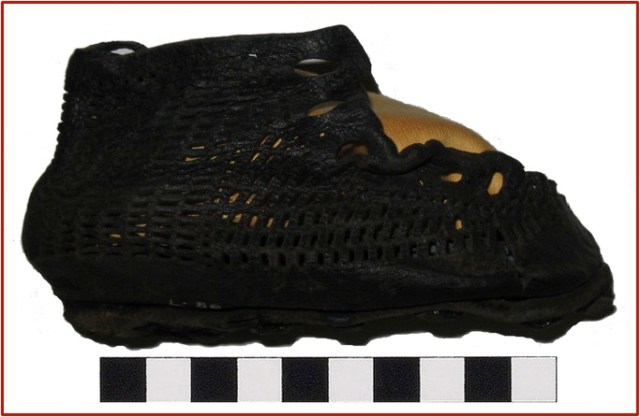
Roman kids wore shoes that reflected their parents’ status.

roman-fancy-shoe-130107

Children and infants living in and around Roman military bases around the first century wore shoes that revealed the kids’ social status, according to new research presented at the annual meeting of the Archaeological Institute of America. The teeny-tiny shoes, some sized for infants, not only reveal that families were part of Roman military life, but also show that children were dressed to match their parent’s place in the social hierarchy, said study researcher Elizabeth Greene of the University of Western Ontario.

“The role of dress in expressing status was prominent even for children of the very youngest ages,” Greene said.

Just as today’s modern kid might rock a pair of shoes covered in their favorite superheroes, or that light up with every step, ancient Roman kids of well-off families wore more decorative shoes than their commoner contemporaries, Greene’s research reveals. Over 4,000 shoes have been found at Vindolanda, a Roman army fort in northern Britain that was occupied from the first to fourth centuries.

In every time period of the fort’s operation, even the very early frontier days, children’s shoes show up in crumbled domestic spaces, official military buildings and rubbish heaps, Greene said.

“We don’t even have a period, not even Period 1, where we’re free of children’s shoes,” she said.

From this pile of footwear, Greene and her colleagues traced what types of children’s shoes were found where. They discovered that the decorations on the shoes corresponded to the places they were uncovered. In the barracks, for example, children’s shoes mimicked the common boot of adult soldiers.

Thanks to wooden tablets found at the site, the researchers know which building housed Flavius Cerialis, the prefect of the Ninth Cohort of Batavians around A.D. 100. Flavius’ family, including his wife, Sulpicia Lepidina, may have had a role in public life around the base, Greene said. Supporting this idea, the house contained an elaborate infant shoe in the exact style of a high-status man’s boot.

The shoe is for a child too young to walk, but it boasts a full set of iron studs on the sole, just as a man’s boot would. The expensive material suggests the shoe was high quality, Greene said. The upper part of the shoe is leather, cut into an elaborate fishnet pattern. Not only does the pattern show off workmanship, it would have revealed colored socks underneath, which the ancient Romans also used to denote status.

Such a shoe for an infant suggests the owner wore formal dress and would have been shown off at parades and similar events, Greene said. Even as a baby, the offspring of the base’s bigwig would have been expected to follow in his footsteps.

Elsewhere around the base, shoes were less elaborate. Sixteen children’s shoes with at least partially intact upper sections were found in the barracks from the period of about A.D. 105 to A.D. 120. Many were the basic “fell boot” of the Roman military, a simple, high-ankle shoe without decoration. Other shoes found around the base were equipped with “carbatina,” the Roman equivalent of Velcro. These simple shoes were worn by men, women and children and were easily laced and slipped on and off, Greene said. The shoes could also be tightened or loosened, extending their use for a growing child.

In the centurion, or officer’s quarters, archaeologists found two carbatina shoes with more-complex patterning than usual, again supporting the notion that higher-status parents dressed their children in nicer shoes.

Only one shoe, an infant’s that was found in the barracks, did not fit this pattern, Greene said. The sandal uses little leather, so may not have been expensive, but it does have decorative triangular tabs and rosette patterns unusual for the shoe of a soldier’s child. Researchers aren’t sure why this one odd shoe was in the barracks. [Photos: Gladiators of the Roman Empire]

On the whole, however, the shoes show that families accompanied soldiers and had a role in military life, even from the earliest days of occupation, Greene said. What’s more, their children were locked into their social class early on.

“Even the infant children of the prefect were held to the expectations of dress according to one’s class,” Greene said.

http://www.livescience.com/26047-roman-kids-shoes-statues.html

Many researchers taking a different view of pedophilia

13xmIBc_1_www_large_thumb

Despite a stable home life in suburban Chicago, Paul Christiano was tortured by urges he knew could land him in prison. In 1999, he was caught buying child pornography. Now 36, he said he has never molested a child, but after five years of state-ordered therapy, the attraction remains. (Alex Garcia, Chicago Tribune / December 14, 2012)

As a young boy, Paul Christiano loved the world of girls — the way they danced, how their spindly bodies tumbled in gymnastics.

In adolescence, as other boys ogled classmates, he was troubled to find himself fantasizing about 7- to 11-year-olds.

His desires remained stuck in time as he neared adulthood. Despite a stable home life in suburban Chicago, he was tortured by urges he knew could land him in prison.

“For having these feelings, I was destined to become a monster,” he said. “I was terrified.”

In 1999, Christiano was caught buying child pornography. Now 36, he said he has never molested a child, but after five years of state-ordered therapy, the attraction remains.

“These people felt they could snuff out the desire, or shame me into denying it existed,” he said. “But it’s as intrinsic as the next person’s heterosexuality.”

In the laboratory, researchers are coming to the same conclusion.

Like many forms of sexual deviance, pedophilia once was thought to stem from psychological influences early in life. Now, many experts view it as a sexual orientation as immutable as heterosexuality or homosexuality. It is a deep-rooted predisposition — limited almost entirely to men — that becomes clear during puberty and does not change.

The best estimates are that between 1% and 5% of men are pedophiles, meaning that they have a dominant attraction to prepubescent children.

Not all pedophiles molest children. Nor are all child molesters pedophiles. Studies show that about half of all molesters are not sexually attracted to their victims. They often have personality disorders or violent streaks, and their victims are typically family members.

By contrast, pedophiles tend to think of children as romantic partners and look beyond immediate relatives. They include chronic abusers familiar from the headlines — Catholic priests, coaches and generations of Boy Scout leaders.

Other pedophiles are “good people who are struggling,” said Dr. Fred Berlin, a psychiatrist who heads the Johns Hopkins Sexual Behaviors Consultation Unit. “They’re tortured souls fighting like heck not to do this. We do virtually nothing in terms of reaching out to these folks. We drive it underground.”

Some of the new understanding of pedophilia comes from studies done on convicted sex criminals at the Center for Mental Health and Addiction in Toronto, where researchers use a procedure known as phallometry to identify men whose peak attraction is to children.

A man sits alone in a room viewing a series of images and listening to descriptions of various sexual acts with adults and children, male and female, while wearing a device that monitors blood flow to his penis.

Like men attracted to adults, nearly all pedophiles respond most strongly to one gender or the other — females far more often than males.

In searching for causes of pedophilia, researchers have largely dismissed the popular belief that abuse in childhood plays an important role. Studies show that few victims grow up to be abusers, and only about a third of offenders say they were molested.

Scientists at the Toronto center have uncovered a series of associations that suggest pedophilia has biological roots.

Among the most compelling findings is that 30% of pedophiles are left-handed or ambidextrous, triple the general rate. Because hand dominance is established through some combination of genetics and the environment of the womb, scientists see that association as a powerful indicator that something is different about pedophiles at birth.

“The only explanation is a physiological one,” said James Cantor, a leader of the research.

Researchers have also determined that pedophiles are nearly an inch shorter on average than non-pedophiles and lag behind the average IQ by 10 points — discoveries that are consistent with developmental problems, whether before birth or in childhood.

In a 2008 study, Cantor’s team conducted MRI brain scans on 65 pedophiles. Compared with men with criminal histories but no sex offenses, they had less white matter, the connective circuitry of the brain.

The evidence also points to what Cantor explained as “cross wiring”: Seeing a child sets off the same neural response that men typically experience around an attractive woman.

More evidence of brain involvement comes from scattered examples of men with brain tumors or neurological diseases affecting inhibition.

In one case, a 40-year-old teacher in Virginia with no history of sexual deviance suddenly became interested in child pornography and was arrested for molesting his prepubescent stepdaughter.

The night before his sentencing, he showed up at an emergency room with a bad headache. An MRI revealed a tumor compressing his brain’s right frontal lobe.

When the tumor was removed, his obsession faded, according to Dr. Russell Swerdlow, a neurologist on the case. A year later he again became sexually fixated on children. The tumor was growing back.

Swerdlow and others said the case suggests that the man’s attraction to children may have always been present — the tumor simply took away the man’s ability to control it.

Strong impulse control may help explain why some pedophiles never break the law.

Most clinicians have given up on changing the sexual orientation of pedophiles in favor of teaching the how to resist their unacceptable desires.

Experts believe that pedophiles who also have a significant attraction to adults stand the best chance of staying out of trouble, because of their capacity for some sexual fulfillment that is legal. For others, injections of hormones to reduce sex drive are often recommended.

Most pedophiles, however, don’t receive any attention until they’ve been arrested.

In an attempt to change that, sex researchers in Germany launched an unusual media campaign in 2005.

“You are not guilty because of your sexual desire, but you are responsible for your sexual behavior,” said billboards urging them to contact the Institute of Sexology and Sexual Medicine in Berlin. “There is help! Don’t become an offender!”

More than 1,700 men have responded to the print, television and online ads for Project Dunkelfeld — literally “dark field.” As of August, 80 had completed a one-year program aimed at teaching them to control their impulses. Some received hormone shots. Compared to men still on the waiting list, those who received treatment were deemed less likely to molest children, according to an analysis of risk factors.

The German researchers promise patients confidentiality. About half of those assessed admitted to having already molested a child.

Though extolled by many researchers, the same program could not be conducted in the United States or many other countries, where clinicians and others are required by law to notify authorities if they suspect a child has been or could be harmed.

There have been some grass-roots efforts to bring pedophilia out of the shadows. Anton Schweighofer, a psychologist in British Columbia, said he recently referred one of his patients to Virtuous Pedophiles, an online support group for men who have never acted on their desires and want to keep it that way.

“I just don’t want to get myself in trouble,” said the man, a factory worker who spoke on the condition that he not be identified. “I really don’t want to harm anybody.”

For many pedophiles, a fundamental part of life will always be a shameful secret.

In his late teens, Christiano taught gymnastics and supervised hundreds of young girls. He fasted at work to distract himself from his erotic feelings.

“My hand never slipped,” he said. “There were students I loved and adored. In a perfect world, I could sweep them off their feet and live happily ever after.”

In this world, however, he has tried to commit suicide three times, he said.

In 1999, he stepped into a federal sting operation when he ordered pornography. He avoided prison but was permanently added to the Illinois sex offender registry.

Once lauded in the Chicago press for his promise as a dance choreographer, Christiano now lives off unemployment, help from his parents and low-paying jobs. He has lost apartments and jobs because of his felony.

“PEDO PIECE OF GARBAGE,” read one of many emails he received after an activist group posted a notice about his case online.

His mother, Jennifer Christiano, said that as far back as she could remember, he had always been different from other boys — an odd and creative soul who loved to perform and seemed to worship his female classmates.

“I can’t tell you how hard it is,” she said. “He’s my only child. He’ll never truly be happy. He’ll never have someone he can truly love and who can love him back.”

http://www.latimes.com/news/local/la-me-pedophiles-20130115,0,197689.story?page=1&track=lat-pick

Thanks to Dr. Lutter for bringing this to the attention of the It’s Interesting community.

Indian man buys $230,000 solid gold shirt

gold-shirt-guy

India has long had a love affair with gold. But one businessman there is so infatuated with the precious metal, he dropped about $230,000 on solid gold shirt.

More than two dozen goldsmiths toiled for 15 days for lender Datta Phuge, who custom ordered the seven-pound top to wear for New Year’s festivities, according to the Pune Mirror. The shirt is crafted from 14,000 22-karat gold rings linked together and comes with six Swarovski crystal buttons and a belt also made of gold.

Phuge said he considers the shirt “an investment which will keep appreciating.”

“People buy cars and go on holidays abroad,” he told the Mirror. “For me, gold is the ultimate passion. That is the reason I have spent a whopping amount of money on the shirt.”

That kind of thinking isn’t unique in India, where gold represents wealth and financial security in much the way that owning a home does in the United States. HSBC recently predicted that gold prices would jump this year thanks in part to demand from Indian customers like Phuge.

To ring in 2013, Phuge planned to trot out the shirt along with 11 pounds of gold accessories including chains, bracelets and rings, the Mirror reported.

He just custom ordered a gold case to suitably dress up his Nokia phone as well, it said.

As for any potential thieves or muggers out there, he doesn’t seem to be worried.

“I have my own security system in place,” he told the Mirror. “I always move around with bodyguards.”

http://www.latimes.com/business/money/la-fi-mo-india-gold-shirt-20130104,0,4008091.story

45 year old deaf Belgian twins win right to die after going blind

Verbessem-brothers_2451135b

The two men, 45, from the village of Putte, near the city of Mechelen outside Brussels, were both born deaf and sought euthanasia after finding that they would also soon go blind.

But their local hospital refused to end their lives by lethal injection because doctors there did not accept that the twins were suffering unbearable pain, the criteria for legal euthanasia under Belgian law.

“There is a law but that is clearly open to various interpretations. If any blind or deaf are allowed to euthanise, we are far from home. I do not think this was what the legislation meant by ‘unbearable suffering’,” doctors at the first hospital said.

Eventually the two brothers found doctors at Brussels University Hospital in Jette who accepted their argument that they were unable to bear the thought of not being able to see each other again.

The twin brothers had spent their entire lives together, sharing a flat and both working as cobblers.

Doctors “euthanised” the two men by lethal injection on December 14 last year and because the operation took place outside their local hospital each man was billed 180 euros for the cost of transporting their bodies home.

Neighbours and friends in the village of Putte said that the twins had to overcome strong resistance from their elderly parents to their demands for a mercy killing.

Dirk Verbessem, the older brother of Marc and Eddy, had defended the decision of his brothers to die.

“Many will wonder why my brothers have opted for euthanasia because there are plenty of deaf and blind that have a ‘normal’ life,” he said. “But my brothers trudged from one disease to another. They were really worn out.”

Mr Verbessem said his twin brothers were going blind with glaucoma and that Eddy had a deformed spine and had recently undergone heart surgery.

“The great fear that they would no longer be able to see, or hear, each other and the family was for my brothers unbearable,” he said.

Professor Wim Distelmans, the doctor that took the decision to “euthanise” the twins has also defended the decision. “It is certain that the twins meet all the conditions for euthanasia,” he said.

Chris Gastmans, professor of medical ethics at the Catholic University of Leuven, has criticised the decision and has concerns over the wider implications for the welfare of disabled people.

“I will not enter the legal discussion but I am left with questions,” he said.

“Is this the only humane response that we can offer in such situations? I feel uncomfortable here as ethicist. Today it seems that euthanasia is the only right way to end life. And I think that’s not a good thing. In a society as wealthy as ours, we must find another, caring way to deal with human frailty.”

Under Belgian law, euthanasia is allowed if the person wishing to end his life is able to make their wishes clear and a doctor judges that he is suffering unbearable pain.

The case is unusual because neither of the men was terminally ill nor suffering physical pain.

Just days after the twins were killed by doctors, Belgium’s ruling Socialists tabled a new legal amendment that will allow the euthanasia of children and Alzheimer’s sufferers.

If passed later this year, the new law will allow euthanasia to be “extended to minors if they are capable of discernment or affected by an incurable illness or suffering that we cannot alleviate”.

In 2002, Belgium was the second country in the world after the Netherlands to legalise euthanasia in but it currently only applies to people over the age of 18.

Some 1,133 cases of euthanasia – mostly for terminal cancer – were recorded in 2011, according to the last official figures.

In 2011, it emerged that people killed by euthanasia in Belgium are having their organs harvested for transplant surgery.

http://www.telegraph.co.uk/news/worldnews/europe/belgium/9800378/Belgian-twins-had-first-request-to-die-refused.html

Astronomers discover largest known structure in the universe

universe_largest_structure

Astronomers have discovered the largest known structure in the universe – a group of quasars so large it would take 4 billion years to cross it while traveling at speed of light.

The immense scale also challenges Albert Einstein’s Cosmological Principle, the assumption that the universe looks the same from every point of view, researchers said.

The findings by academics from Britain’s University of Central Lancashire were published in the journal Monthly Notices of the Royal Astronomical Society and reported on the society’s website on Friday.

Quasars are believed to be the brightest objects in the universe, with light emanating from the nuclei of galaxies from the early days of the universe and visible billions of light-years away.

“Since 1982 it has been known that quasars tend to group together in clumps or ‘structures’ of surprisingly large sizes, forming large quasar groups or LQGs,” the society said.

This newly discovered large quasar group has a dimension of 500 megaparsecs, each megaparsec measuring 3.3 million light-years.

Because the LQG is elongated, its longest dimension is 1,200 megaparsecs, or 4 billion light-years, the society said.

That size is 1,600 times larger than the distance from Earth’s Milky Way to the nearest galaxy, the Andromeda.

“While it is difficult to fathom the scale of this LQG, we can say quite definitely it is the largest structure ever seen in the entire universe,” Roger Clowes, leader of the research team, said in a statement. “This is hugely exciting – not least because it runs counter to our current understanding of the scale of the universe.”

Clowes said the team would continue to investigate the phenomenon with particular interest in the challenge to the Cosmological Principle, which has been widely accepted since Einstein, whose work still forms the basis for much of modern cosmology.

Thanks to Kebmodee for bringing this to the attention of the It’s Interesting community.

http://www.reuters.com/article/2013/01/12/space-quasars-idUSL1E9CC08B20130112