Sea Level Could Rise 5 Feet in New York City by 2100

sea level nyc

The U.S.’s largest metropolis and the entire east coast could face frequent destruction unless the region takes previously unthinkable actions

By Mark Fischetti

By 2100 devastating flooding of the sort that Superstorm Sandy unleashed on New York City could happen every two years all along the valuable and densely populated U.S. east coast—anywhere from Boston to Miami.

And unless extreme protection measures are implemented, people could again die.

Hyperbole? Hardly. Even though Sandy’s storm surge was exceptionally high, if sea level rises as much as scientists agree is likely, even routine storms could cause similar destruction. Old, conservative estimates put the increase at two feet (0.6 meter) higher than the 2000 level by 2100. That number did not include any increase in ice melting from Greenland or Antarctica—yet in December new data showed that temperatures in Antarctica are rising three times faster than the rate used in the conservative models. Accelerated melting has also been reported in Greenland. Under what scientists call the rapid ice-melt scenario, global sea level would rise four feet (1.2 meters by the 2080s, according to Klaus Jacob, a research scientist at Columbia University’s Lamont–Doherty Earth Observatory. In New York City by 2100 “it will be five feet, plus or minus one foot,” Jacob says.

Skeptics doubt that number, but the science is solid. The projection comes in part from the realization that the ocean does not rise equally around the planet. The coast from Cape Cod near Boston to Cape Hatteras in North Carolina is a hot spot—figuratively and literally. In 2012 Asbury Sallenger, a coastal hazards expert at the U.S. Geological Survey (USGS), reported that for the prior 60 years sea level along that section of the Atlantic coast had increased three to four times faster than the global average. Looking ahead to 2100, Sallenger indicated that the region would experience 12 to 24 centimeters—4.7 to 9.4 inches—of sea level rise above and beyond the average global increase.

Sallenger (who died in February) was careful to point out that the surplus was related only to ocean changes—such as expansion of water due to higher temperature as well as adjustments to the Gulf Stream running up along the coast brought about by melting Arctic ice—not changes to the land.

Unfortunately, that land is also subsiding. Since North American glaciers began retreating 20,000 years ago, the crust from New York City to North Carolina has been sinking, as the larger continent continues to adjust to the unloading. The land will continue to subside by one to 1.5 millimeters (0.04 to 0.06 inch) a year, according to S. Jeffress Williams, a coastal marine geologist with the USGS and the University of Hawaii at Mānoa. The boundary zone where rising crust to the north changes to falling crust to the south runs roughly west to east from central New York State through Massachusetts.

Certain municipalities such as Atlantic City, N.J., are sinking even faster because they are rapidly extracting groundwater. Cities around Chesapeake Bay, such as Norfolk, Va., and Virginia Beach, are subsiding faster still because sediment underneath them continues to slump into the impact crater that formed the bay 35 million years ago.

When all these factors are taken into account, experts say, sea level rise of five feet (1.5 meters) by 2100 is reasonable along the entire east coast. That’s not really a surprise: the ocean was 20 to 26 feet (six to eight meters) higher during the most recent interglacial period.

Now for the flooding: Sandy’s storm surge topped out at about 11 feet (3.4 meters) above the most recent average sea level at the lower tip of Manhattan. But flood maps just updated by the Federal Emergency Management Agency in January indicate that even an eight-foot (2.5-meter) surge would cause widespread, destructive flooding. So if sea level rises by five feet (1.5 meters_, a surge of only three feet is needed to inflict considerable damage.

How frequently could that occur? Municipalities rarely plan for anything greater than the so-called one-in-100-year storm—which means that the chances of such a storm hitting during any given year is one in 100. Sandy was a one-in-500-year storm. If sea level rises by five feet, the chance in any year of a storm bringing a three-foot surge to New York City will increase to as high as one in three or even one in two, according to various projections. The 100-year-height for a storm in the year 2000 would be reached by a two-year storm in 2100.

With hundreds of people still homeless in Sandy’s wake, coastal cities worldwide are watching to see how New York City will fend off rising seas. Scientists and engineers have proposed solutions to pieces of the complex puzzle, and a notable subset of them on the New York City Panel on Climate Change are rushing to present options to Mayor Michael Bloomberg by the end of May. But extensive interviews with those experts leads to several controversial and expensive conclusions: Long-term, the only way to protect east coast cities against storm surges is to build massive flood barriers (pdf). The choices for protecting the long stretches of sandy coastlines between them—New Jersey, Maryland, the Carolinas, Florida—are even more limited.

As for sea level rise, retreat from low-lying shores may be the best option. Despite the gut reaction of “No, we won’t go,” climate forces already in motion may leave few options.
http://www.scientificamerican.com/article.cfm?id=fischetti-sea-level-could-rise-five-feet-new-york-city-nyc-2100

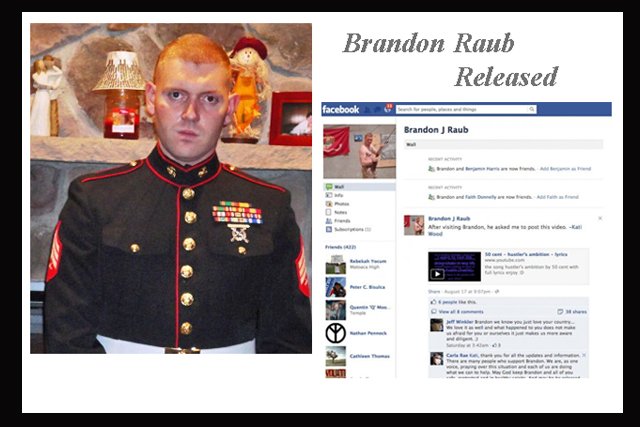
Brandon J. Raub

brandon-raub-released_s640x427

A former Marine involuntarily detained for psychiatric evaluation for posting strident anti-government messages on Facebook has received an outpouring of support from people who say authorities are trampling on his First Amendment rights.

Brandon J. Raub, 26, has been in custody since FBI, Secret Service agents and police in Virginia’s Chesterfield County questioned him Thursday evening about what they said were ominous posts talking about a coming revolution. In one message earlier this month according to authorities, Raub wrote: “Sharpen my axe; I’m here to sever heads.”

Police – acting under a state law that allows emergency, temporary psychiatric commitments upon the recommendation of a mental health professional – took Raub to the John Randolph Medical Center in Hopewell. He was not charged with any crime.

A Virginia-based civil liberties group, The Rutherford Institute, dispatched one of its attorneys to the hospital to represent Raub at a hearing Monday. A judge ordered Raub detained for another month, Rutherford executive director John Whitehead said.

“For government officials to not only arrest Brandon Raub for doing nothing more than exercising his First Amendment rights but to actually force him to undergo psychological evaluations and detain him against his will goes against every constitutional principle this country was founded upon,” Whitehead said.

Raub’s mother, Cathleen Thomas, said by telephone that the government had overstepped its bounds.

“The bottom line is his freedom of speech has been violated,” she said.

Thomas said her son, who served tours as a combat engineer in Iraq and Afghanistan, is “concerned about all the wars we’ve experienced” and believes the U.S. government was complicit in the Sept. 11 terrorist attacks. One of his Facebook posts, she said, pictured the gaping hole in the Pentagon and asked “where’s the plane?”

Whitehead said he found nothing alarming in Raub’s social media commentaries. “The posts I read that supposedly were of concern were libertarian-type posts I see all the time,” he said.

The big concern, Whitehead said, is whether government officials are monitoring citizens’ private Facebook pages and detaining people with whom they disagree.

Dee Rybiski, an FBI spokeswoman in Richmond, said there was no Facebook snooping by her agency.

“We received quite a few complaints about what were perceived as threatening posts,” she said. “Given the circumstances with the things that have gone on in the country with some of these mass shootings, it would be horrible for law enforcement not to pay attention to complaints.”

Whitehead said some of the posts in question were made on a closed Facebook page that Raub had recently created so he questioned whether anyone from the public would have complained about them.

“Support Brandon Raub” Facebook pages have drawn significant interest, and other Internet sites had numerous comments from people outraged by the veteran’s detention.

Raub’s supporters characterized the detention as an arrest, complaining he was handcuffed and whisked away in a police cruiser without being served a warrant or read his rights. But authorities say it wasn’t an arrest because Raub doesn’t face criminal charges.

Col. Thierry Dupuis, the county police chief, said Raub was taken into custody upon the recommendation of mental health crisis intervention workers. He said the action was taken under the state’s emergency custody statute, which allows a magistrate to order the civil detention and psychiatric evaluation of a person who is considered potentially dangerous.

He said Raub was handcuffed because he resisted officers’ attempts to take him into custody.

http://www.huffingtonpost.com/2012/08/21/brandon-j-raub-marine-detained_n_1817484.html

Thanks to Dr. Mike Moore for bringing this to the attention of the It’s Interesting community.

Trouble With Math? Maybe You Should Get Your Brain Zapped

sn-math

by Emily Underwood
ScienceNOW

If you are one of the 20% of healthy adults who struggle with basic arithmetic, simple tasks like splitting the dinner bill can be excruciating. Now, a new study suggests that a gentle, painless electrical current applied to the brain can boost math performance for up to 6 months. Researchers don’t fully understand how it works, however, and there could be side effects.

The idea of using electrical current to alter brain activity is nothing new—electroshock therapy, which induces seizures for therapeutic effect, is probably the best known and most dramatic example. In recent years, however, a slew of studies has shown that much milder electrical stimulation applied to targeted regions of the brain can dramatically accelerate learning in a wide range of tasks, from marksmanship to speech rehabilitation after stroke.

In 2010, cognitive neuroscientist Roi Cohen Kadosh of the University of Oxford in the United Kingdom showed that, when combined with training, electrical brain stimulation can make people better at very basic numerical tasks, such as judging which of two quantities is larger. However, it wasn’t clear how those basic numerical skills would translate to real-world math ability.

To answer that question, Cohen Kadosh recruited 25 volunteers to practice math while receiving either real or “sham” brain stimulation. Two sponge-covered electrodes, fixed to either side of the forehead with a stretchy athletic band, targeted an area of the prefrontal cortex considered key to arithmetic processing, says Jacqueline Thompson, a Ph.D. student in Cohen Kadosh’s lab and a co-author on the study. The electrical current slowly ramped up to about 1 milliamp—a tiny fraction of the voltage of an AA battery—then randomly fluctuated between high and low values. For the sham group, the researchers simulated the initial sensation of the increase by releasing a small amount of current, then turned it off.

For roughly 20 minutes per day over 5 days, the participants memorized arbitrary mathematical “facts,” such as 4#10 = 23, then performed a more sophisticated task requiring multiple steps of arithmetic, also based on memorized symbols. A squiggle, for example, might mean “add 2,” or “subtract 1.” This is the first time that brain stimulation has been applied to improving such complex math skills, says neuroethicist Peter Reiner of the University of British Columbia, Vancouver, in Canada, who wasn’t involved in the research.

The researchers also used a brain imaging technique called near-infrared spectroscopy to measure how efficiently the participants’ brains were working as they performed the tasks.

Although the two groups performed at the same level on the first day, over the next 4 days people receiving brain stimulation along with training learned to do the tasks two to five times faster than people receiving a sham treatment, the authors reported in Current Biology. Six months later, the researchers called the participants back and found that people who had received brain stimulation were still roughly 30% faster at the same types of mathematical challenges. The targeted brain region also showed more efficient activity, Thompson says.

The fact that only participants who received electrical stimulation and practiced math showed lasting physiological changes in their brains suggests that experience is required to seal in the effects of stimulation, says Michael Weisend, a neuroscientist at the Mind Research Network in Albuquerque, New Mexico, who wasn’t involved with the study. That’s valuable information for people who hope to get benefits from stimulation alone, he says. “It’s not going to be a magic bullet.”

Although it’s not clear how the technique works, Thompson says, one hypothesis is that the current helps synchronize neuron firing, enabling the brain to work more efficiently. Scientists also don’t know if negative or unintended effects might result. Although no side effects of brain stimulation have yet been reported, “it’s impossible to say with any certainty” that there aren’t any, Thompson says.

“Math is only one of dozens of skills in which this could be used,” Reiner says, adding that it’s “not unreasonable” to imagine that this and similar stimulation techniques could replace the use of pills for cognitive enhancement.

In the future, the researchers hope to include groups that often struggle with math, such as people with neurodegenerative disorders and a condition called developmental dyscalculia. As long as further testing shows that the technique is safe and effective, children in schools could also receive brain stimulation along with their lessons, Thompson says. But there’s “a long way to go,” before the method is ready for schools, she says. In the meantime, she adds, “We strongly caution you not to try this at home, no matter how tempted you may be to slap a battery on your kid’s head.”

http://news.sciencemag.org/sciencenow/2013/05/trouble-with-math-maybe-you-shou.html?ref=hp

As the Earth warms, 400 year old frozen plants are being revived

plants

Plants that were frozen during the “Little Ice Age” centuries ago have been observed sprouting new growth, scientists say. Samples of 400-year-old plants known as bryophytes have flourished under laboratory conditions. Researchers say this back-from-the-dead trick has implications for how ecosystems recover from the planet’s cyclic long periods of ice coverage. The findings appear in Proceedings of the National Academy of Sciences.

They come from a group from the University of Alberta, who were exploring an area around the Teardrop Glacier, high in the Canadian Arctic. The glaciers in the region have been receding at rates that have sharply accelerated since 2004, at about 3-4m per year. That is exposing land that has not seen light of day since the so-called Little Ice Age, a widespread climatic cooling that ran roughly from AD 1550 to AD 1850.

“We ended up walking along the edge of the glacier margin and we saw these huge populations coming out from underneath the glacier that seemed to have a greenish tint,” said Catherine La Farge, lead author of the study.

Bryophytes are different from the land plants that we know best, in that they do not have vascular tissue that helps pump fluids around different parts of the organism. They can survive being completely desiccated in long Arctic winters, returning to growth in warmer times, but Dr La Farge was surprised by an emergence of bryophytes that had been buried under ice for so long.

“When we looked at them in detail and brought them to the lab, I could see some of the stems actually had new growth of green lateral branches, and that said to me that these guys are regenerating in the field, and that blew my mind,” she told BBC News. “If you think of ice sheets covering the landscape, we’ve always thought that plants have to come in from refugia around the margins of an ice system, never considering land plants as coming out from underneath a glacier.”

But the retreating ice at Sverdrup Pass, where the Teardrop Glacier is located, is uncovering an array of life, including cyanobacteria and green terrestrial algae. Many of the species spotted there are entirely new to science.

“It’s a whole world of what’s coming out from underneath the glaciers that really needs to be studied,” Dr La Farge said.

“The glaciers are disappearing pretty fast – they’re going to expose all this terrestrial vegetation, and that’s going to have a big impact.”

http://www.bbc.co.uk/news/science-environment-22656239

MERS-CoV: Middle East respiratory syndrome coronavirus – poorly understood and on the rise

MERS-CoV

Saudi Arabia reported today that five more people have been infected with the Middle East respiratory syndrome coronavirus (MERS-CoV), as if to underline yesterday’s warning from the head of the World Health Organization (WHO) that the novel virus is a global threat.

In a brief statement, the Saudi Ministry of Health (MOH) said, “Within the framework of the epidemiological surveillance of the novel Coronavirus (MERS-CoV), the Ministry of Health (MOH) has announced that five novel Coronavirus cases have been recorded among citizens in the Eastern Region, ranging in age from 73 to 85 years, but they have all chronic diseases.”

Also, two more deaths from MERS have been reported in the past few days. Yesterday Agence France Presse (AFP) reported the death of France’s first MERS-CoV patient, a 65-year-old man whose illness was first reported on May 8. And on May 26 the Saudi MOH announced the death of an 81-year-old woman.

With today’s Saudi announcement, the unofficial global case count has reached 49; the death toll stands at 24, according to the US Centers for Disease Control and Prevention (CDC). Unofficially, Saudi Arabia has had 37 cases, with 18 deaths.

WHO concern
Deep concern about MERS-CoV was expressed yesterday by WHO Director-General Margaret Chan, MD, MPH, as she closed the annual World Health Assembly (WHA), the WHO’s policy-making body.

“Looking at the overall global situation, my greatest concern right now is the novel coronavirus,” she said as quoted in a WHO press release. “We understand too little about this virus when viewed against the magnitude of its potential threat. Any new disease that is emerging faster than our understanding is never under control.

“These are alarm bells and we must respond. The novel coronavirus is not a problem that any single affected country can keep to itself or manage all by itself. The novel coronavirus is a threat to the entire world.”

The WHO plans to send a second team to Saudi Arabia in coming weeks to help investigate the mysterious virus, according to a May 25 Arab News story that quoted Chan. The source of the pathogen remains unknown, but several case clusters have shown that it can spread between people in close contact.

“Without that proper risk assessment, we cannot have clarity on the incubation period, on the signs and symptoms of the disease, on the proper clinical management and then, last but not least, on travel advice,” Chan told Arab News.

The WHO, which sent a group of experts to Saudi Arabia earlier this month, will provide a fresh risk assessment ahead of this year’s Haj pilgrimage, which will take place in October, the story said.

Details on deaths
Concerning the five new cases, the Saudi MOH left many questions unanswered, including whether the patients are part of a hospital-centered outbreak of MERS-CoV that began in April in the Al-Ahsa region of Eastern province. The cluster has been reported to include 22 cases with 10 deaths. The statement gave no information on the patients’ conditions, gender, where they live, or how long they have been sick.

The French patient who died became ill on Apr 23, six days after he returned home from a vacation in Dubai, United Arab Emirates. Another person contracted the virus after sharing a hospital room with him from Apr 27 to 29.

The 81-year-old Saudi woman who died was among the previously announced cases in Al-Ahsa governorate, the Saudi MOH said in a May 26 statement. It said she was suffering from chronic kidney failure and other chronic diseases.

Her case appears to be the one announced by the WHO on May 18. That announcement said the 81-year-old’s illness was the 22nd case in the hospital-centered cluster in Al-Ahsa.

The May 26 MOH statement also said that nine other case-patients have recovered and been discharged from hospitals since the first MERS-CoV in Saudi Arabia, which occurred in June 2012.

MERS-CoV designation

In other developments, the WHO announced today that it is accepting the name MERS-CoV for the novel virus, despite a general aversion to geographic references in the names of newly discovered viruses.

“Given the experience in previous international public health events, WHO generally prefers that virus names do not refer to the region or place of the initial detection of the virus,” the agency said in a statement. “This approach aims at minimizing unnecessary geographical discrimination that could be based on coincidental detection rather than on the true area of emergence of a virus.”

The name was proposed by the Coronavirus Study Group of the International Committee on Taxonomy of Viruses, the WHO noted. The statement said the term emerged from consultations with a large group of scientists and represents an acceptable consensus

Patent issues
Also today, a story in BMJ offered more details on intellectual property issues related to MERS-CoV. Albert Osterhaus, DVM, PhD, head of viriology at Erasmus Medical Center in the Netherlands, told the journal that Erasmus has applied for patents on MERS-CoV genetic sequences and on possible related products such as diagnostics and vaccines.

Erasmus scientists were the first to analyze the virus and identify it as novel last year, after an Egyptian physician working in Saudi Arabia sent them a sample. Last week Chan and Saudi officials complained that restrictions imposed by Erasmus on use of MERS-CoV samples that it has supplied to other labs were impeding the investigation of the outbreak.

Erasmus officials have rejected the criticism and said they have supplied samples to all labs that want to use it for public health research and are equipped to handle if safely. But Osterhaus told BMJ, “We have patent applications submitted and that is on the sequences and the possibilities to eventually make diagnostics, vaccines, antivirals, and the like. It’s quite a normal thing if you find something new to patent it.”

He added that Erasmus has not made a deal with any company yet, because it’s too early. “At the end of the day, if you want something to happen for the benefit of public health—including making a vaccine, antivirals, whatever—you need to have at least some intellectual property. Otherwise the companies will not be interested,” he said.

http://www.cidrap.umn.edu/cidrap/content/other/sars/news/may2813corona.html

The Virtual Therapist

_67807883_face_research

_67807877_virtualshrink

Ellie is a creation of ICT, and could serve as an important diagnostic and therapeutic tool for veterans with Post-Traumatic Stress Disorder.

By Alastair Leithead
BBC News, Los Angeles

The University of Southern California’s Institute for Creative Technologies is leading the way in creating virtual humans. The result may produce real help for those in need.

The virtual therapist sits in a big armchair, shuffling slightly and blinking naturally, apparently waiting for me to get comfortable in front of the screen.

“Hi, I’m Ellie,” she says. “Thanks for coming in today.”

She laughs when I say I find her a little bit creepy, and then goes straight into questions about where I’m from and where I studied.

“I’m not a therapist, but I’m here to learn about people and would love to learn about you,” she asks. “Is that OK?”

Ellie’s voice is soft and calming, and as her questions grow more and more personal I quickly slip into answering as if there were a real person in the room rather than a computer-generated image.

“How are you at controlling your temper?” she probes. “When did you last get into an argument?”

With every answer I’m being watched and studied in minute detail by a simple gaming sensor and a webcam.

How I smile, which direction I look, the tone of my voice, and my body language are all being precisely recorded and analysed by the computer system, which then tells Ellie how best to interact with me.

“Wizard of Oz mode” is how researcher Louis-Philippe Morency describes this experiment at the University of Southern California’s Institute for Creative Technologies (ICT).

In the next room his team of two are controlling what Ellie says, changing her voice and body language to get the most out of me.

Real people come in to answer Ellie’s questions every day as part of the research, and the computer is gradually learning how to react in every situation.

It is being taught how to be human, and to respond as a doctor would to the patients’ cues.

Soon Ellie will be able to go it alone. That opens up a huge opportunity for remote therapy sessions online using the knowledge of some of the world’s top psychologists.

But Dr Morency doesn’t like the expression “virtual shrink”, and doesn’t think this method will replace flesh-and-blood practitioners.

“We see it more as being an assistant for the clinician in the same way you take a blood sample which is analysed in a lab and the results sent back to the doctor,” he said.

The system is designed to assess signs of depression or post-traumatic stress, particularly useful among soldiers and veterans.

“We’re looking for an emotional response, or perhaps even any lack of emotional response,” he says.

“Now we have an objective way to measure people’s behaviour, so hopefully this can be used for a more precise diagnosis.”

The software allows a doctor to follow a patient’s progress over time. It objectively and scientifically compares sessions.

“The problem we have, particularly with the current crisis in mental health in the military, is that we don’t have enough well trained providers to handle the problem,” says Skip Rizzo, the associate director for medical virtual reality at the ICT.

“This is not a replacement for a live provider, but it might be a stop-gap that helps to direct a person towards the kind of care they might need.”

The centre does a lot of work with the US military, which after long wars in Iraq and Afghanistan has to deal with hundreds of thousands of troops and veterans suffering from various levels of post-traumatic stress disorder.

“We have an issue in the military with stigma and a lot of times people feel hesitant talking about their problems,” he says. A virtual counselling tool can alleviate some of this reluctance.

“We see this as a way for service members or veterans to talk openly and explore their issues.”

The whole lab is running experiments with virtual humans. To do so, it blends a range of technologies and disciplines such as movement sensing and facial recognition.

Dr Morency has won awards for his work into the relationship between psychology and minute physical movements in the face.

“People who are anxious fidget with their hands more, and people who are distressed often have a shorter smile with less intensity. People who are depressed are looking away a lot more,” he says.

Making computer-generated images appear human isn’t easy, but if believable they can be powerful tools for teaching and learning. To that end, the lab is involved in several different projects to test the limits and potential of virtual interactions.

In the lab’s demonstration space a virtual soldier sits behind a desk and responds to a disciplinary scenario as part of officer training.

The team have even built a Wild West style saloon, complete with swinging doors and bar.

Full-size characters appear on three projection screens and interact with a real person walking in, automatically responding to questions and asking their own to play out a fictional scenario.

Downstairs, experiments are creating 3D holograms of a human face.

Throughout the building, the work done is starting to blur the lines between the real world and the virtual world.

And the result just may be real help for humans who need it.

http://www.bbc.co.uk/news/magazine-22630812

Many thanks to Jody, for bringing this to the attention of the It’s Interesting community.

Everest crowds: The world’s highest traffic jam

trash

Long lines up Everest.

long-lines-up-everest_fe2

By Jon Kelly
BBC News Magazine

Six decades after it was conquered, mountaineers complain that the summit of Mount Everest has become virtually gridlocked with climbers. How did the world’s highest mountain become so congested?

In May 1953 Edmund Hillary and Tenzing Norgay stood alone together at the very top of the world.

Nowadays, the same spot is rather less desolate.

Thanks to advances in mountaineering equipment and the indefatigable efforts of Sherpa guides, more climbers than ever are reaching the peak of Mount Everest – a landmark that was once believed to be impossible to surmount.

According to National Geographic, in 1990 18% of summit attempts were successful. By 2012 that figure stood at 56%.

But this has come at a cost. Critics say the summit has become as congested as a five-lane motorway during bank holiday weekend.

On a single day in 2012, no fewer than 234 climbers reached the peak. By contrast, as recently as 1983 the most successful ascents in a single day was eight, and a decade later that figure stood at 40.

This year some complained of waiting two-and-a-half hours in queues at bottlenecks on their way to the summit.

A striking photograph by German mountaineer Ralf Dujmovits – which showed a queue hundreds-long snaking its way up during 2012 – ignited a debate about whether the procession was ruining enjoyment of the ascent.

Westerners can pay anything from $10,000 (£6,600) to $100,000 (£66,000) for permits to climb the mountain and guides to accompany them, and a sizeable tourist industry has sprung up around the base – bringing with it complaints about litter and poor sanitation for miles around.

“There were just people everywhere,” says Ayisha Jessa, 31, a keen climber from London who recently visited Everest’s base camp. At the nearby village of Namachi, she says, “it’s completely commercialised – everything is intended for the Western traveller”.

For many serious climbers, all this has served to devalue Everest.

“It isn’t a wilderness experience – it’s a McDonald’s experience,” says Graham Hoyland, an experienced mountaineer and author of The Last Hours on Everest, an account of the ill-fated 1924 ascent by George Mallory and Andrew Irvine.

Advances in weather forecasting mean climbers time their attempts to the same few days each year, worsening the bottlenecks. A better understanding of altitude sickness has also helped more mountaineers ascend 8,848m (29,029ft) to the summit.

For their financial outlay, Westerners are given a plentiful supply of oxygen and, very often, a Nepalese mountain guide assigned specifically to ensure they get to the top.

The tour parties also ascend using fixed ropes, which help less accomplished climbers but are believed by many elite mountaineers to detract from the sport.

Thanks to all this assistance, more than 3,000 individuals have scaled the mountain since 1953.

They include Californian Jordan Romero, who in 2010 became the youngest person to climb Everest aged 13, and 80-year old Yuichiro Miura from Japan, who set the most recent record for the oldest summiteer. An 81-year-old, Nepalese Min Bahadur Sherchan, is attempting to snatch Miura’s title.

“Normally, as long as they are not too ill or too weak, nearly everyone – if they have enough money and patience – can get up Everest,” says Eberhard Jurgalski, who has attempted to chronicle every Everest ascent since 1953.

“Also, if the weather hasn’t been good for a few weeks it becomes much more crowded on the days you can climb.”

Some worry that the influx of inexperienced climbers on to such potentially hazardous terrain could have tragic consequences.

“You have people going up there who don’t know how to operate the ropes or use the crampons,” says Hoyland. “There’s a huge disaster waiting to happen.”

In 1996, eight people died within 36 hours near the summit. In 2012, some 10 lives were lost on the mountain, three of them Sherpas.

So it’s not surprising that tensions have built up.

According to Hoyland, experienced climbers have grown frustrated that long queues of amateurs using fixed ropes are slowing them down.

Tempers on the mountain boiled over in April when a scuffle broke out at 7,470m (24,500ft) between two well-known European climbers, Ueli Steck and Simone Moro, and a group of Nepalese mountain guides.

While complaints are still made about litter and human waste on the mountain, a series of clean-up expeditions has improved the environmental situation, Hoyland says.

But as Nepalese authorities face calls to take further action, proposals to remedy Everest’s congestion have sharply divided climbers.

One expedition company has suggested installing a ladder at the Hillary Step, a rocky outcrop just before the summit, where only one person can go up or down at any one time. But purists complain this would lessen the challenge of scaling the mountain.

Another proposed solution would be to limit the number of climbers. Until 1985, the Nepalese authorities allowed only one expedition on each route to the summit at any one time, and in theory this practice could be revived.

Others suggest, candidates for a permit could be required to undergo training or at least demonstrate mountaineering experience. “If everyone going up had at least a little bit of an idea about the culture of climbing, that would make a big difference,” says Hoyland.

But the notion of imposing quotas sits uneasily with many in the free-spirited world of mountaineering.

Sir Chris Bonington, who reached the summit aged 50 in 1985, says he is grateful that he was there at a time when crowds were restricted.

However, while he believes there is much that can be done to improve Everest’s management, he feels uneasy with the idea of denying to others the opportunity he enjoyed.

“If you say there are only 100 or 200 people coming each year, that’s a lot of people who will never be able to share the incredible personal experience of getting to the top of the mountain,” Sir Chris says.

Restricting the number of visitors would also have a major impact on those who rely on tourism for their income.

“It’s a mountain that people live on, and the local community is completely supported by the climbers,” says Jessa.

The debate will rumble on. And as long as the memory of Hillary and Norgay’s achievement persists, the crowds will keep coming.

http://www.bbc.co.uk/news/magazine-22680192

German railways to test anti-graffiti drones

drone

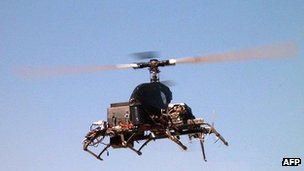
Germany’s national railway company, Deutsche Bahn, plans to test small drones to try to reduce the amount of graffiti being sprayed on its property. The idea is to use airborne infra-red cameras to collect evidence, which could then be used to prosecute vandals who deface property at night.

A company spokesman said drones would be tested at rail depots soon. But it is not yet clear how Germany’s strict anti-surveillance laws might affect their use.

Graffiti is reported to cost Deutsche Bahn about 7.6m euros (£6.5m; $10m) a year. German media report that each drone will cost about 60,000 euros and fly almost silently, up to 150m (495ft) above ground. The BBC’s Stephen Evans in Berlin says using cameras to film people surreptitiously is a sensitive issue in Germany, where privacy is very highly valued.

When Google sent its cameras through the country three years ago to build up its “Street View” of 20 cities, many people objected to their houses appearing online. Even Foreign Minister Guido Westerwelle said: “I will do all I can to prevent it”.

Such was the opposition that Google was compelled to give people an opt-out. If householders indicated that they did not want their homes shown online, then the fronts of the buildings would be blurred. More than 200,000 householders said that they did want their homes blanked out on Street View.

A Deutsche Bahn spokesman told the BBC that its drones would be used in big depots where vandals enter at night and spray-paint carriages. The drones would have infra-red sensors sophisticated enough for people to be identified, providing key evidence for prosecutions.

But it seems the cameras would be tightly focused within Deutsche Bahn’s own property – people or property outside the depots would not be filmed, so easing any privacy concerns.

The drone issue is also sensitive in Germany because earlier this month the defence ministry halted an expensive project to develop Germany’s own surveillance drone, called Euro Hawk. The huge unmanned aircraft would be used abroad but would need to be able to fly in German airspace, if only to take off and land on their way to and from the land to be watched, our correspondent reports.

But it became clear that the air traffic authorities were not going to grant that permission. The reasoning was that Germany’s military drones would be unable to avoid collisions with other, civilian aircraft.

Small drones on private land do not need permission from air traffic controllers – big drones do.

So Germany seems to be entering a legal grey area – it is not clear when the flight of a drone may become so extensive that the wider authorities need to intervene, Stephen Evans reports.

http://www.bbc.co.uk/news/world-europe-22678580

‘Sidewalk Skiing’ in Saudi Arabia

A new racing craze in Saudi Arabia is putting Hollywood stunts to shame.

Extreme motorsport lovers are flocking to the desert in the northern city of Hail to witness “sidewalk skiing”, the technique where the driver balances the car on two wheels while people cling on the outside of the moving vehicle.

One of the stunts, performed by a group of young Saudi men who call themselves the “Impossible Group”, kicks off as a small sedan drives off a ramp so it speeds on just two wheels.

”I raise the car on two wheels and drive it on the right and left sides. I do a lot of acrobatic movements, including taking the tires off [while driving] to jump on the sidewalks of the road while driving on two wheels, driving in the desert, lots of things really, with small and large cars, and any car,” says the driver and team leader Captain al-Mustaheel, nicknamed “Captain Impossible”.

Team members then climb out of the car and take two of its tires off before placing them back on the wheels.

“The movements are frankly exhilarating; creating happiness with little danger and creativity, and the audience enjoys it. Unlike the hand break turn movements, unlike accidents, it is possible to get into a minor accidents. Risk is involved in everything, but there’s not much danger in this,” explains a member of the “Impossible Group” who goes by the nickname “Shahoot”.

Members of the group ride on top of the car as it cruises down the desert highway, followed by an entourage of vehicles.

“In the eyes of the viewer, these movements are dangerous. It is not dangerous, it’s normal, except if the speed is high. There are dangers even if they are driving on four wheels, but when driving at the speed of 20, 30, 40 (km per hour) at the event, and with the presence of the public along with safety measures and support in place, things are good,” says “Captain Impossible”.

“Our role with ‘Captain Impossible’ is to take the tires off. He is versed in professional leadership-driving. We are not afraid because we are taking security measures and drive safely. God willing, we will excel, and if there was no creativity, there will be no development,” echoes “Shahoot”.

“Captain Impossible” who enjoys life in the fast lane hopes someday he’ll be able to develop his driving skills even further.
“I have a high capacity and have a good concentration, and I hope to go outside Saudi Arabia to the United States, Britain, Qatar, the United Arab Emirates, Dubai, Bahrain, any country where there is space [for Motorsports] and big companies that embrace the talent,” he says.

The open roads in Saudi Arabia’s desert provide an ideal location for car racing and home to the annual Hail Baja Rally.

http://english.alarabiya.net/en/life-style/variety/2013/05/24/-Sidewalk-Skiing-the-new-craze-for-Saudi-racing-daredevils.html

Study: Early humans loved to eat brains

antelope1-4_3_rx404_c534x401

Early members of the human family enjoyed digging into the heads of antelope and wildebeests.

Sets of animal bones recently unearthed in Kenya, believed to be the earliest evidence of hominid hunting, show previous members of the human family enjoyed digging into the heads of antelope and wildebeests, as well as snacking on gazelle meat.

They knew a thing or two about butchery, too, cutting the animals into parts before selecting the meatiest bones.

Scientists also have found a disproportionate number of animal skulls in the area, suggesting our ancestors scavenged the untouched heads from carcasses left behind by big cats after their own meals.

Dents inside the skulls indicate they dug in with stones to get at the delicious, juicy brains inside. According to a study of the findings, this nutrient-rich brain tissue may have helped homo erectus support larger bodies, bigger brains, and travel longer distances.

http://www.usatoday.com/story/news/nation/2013/05/05/evolution-early-humans-ate-brains/2136493/