One-third of Republicans in Louisiana believe Obama was responsible for the US Government’s poor response to Hurricane Katrina

katrina

A large number of Louisiana Republicans think President Barack Obama is to blame for the federal government’s poor response to Hurricane Katrina, according to a new Public Policy Polling survey released Wednesday — despite the fact that the storm occurred three years before he took office.

The Democratic-leaning polling firm, which provided its results to Talking Points Memo, found that 29 percent of Louisiana Republicans said Obama was responsible for the Katrina response. Twenty-eight percent put the blame on President George W. Bush, whose administration did in fact oversee the federal response to Katrina. Nearly half (44 percent) of the Louisiana Republicans polled didn’t know who to blame.

Bush was heavily criticized at the time for the government’s response to Katrina, a storm that caused 1,833 fatalities, damaged an estimated $81 billion in property, and ranks among the five deadliest hurricanes in United States history. He remained on vacation in Texas as the hurricane rocked the Gulf Coast, before belatedly cutting his trip short and returning to Washington. An infamous photo of Bush peering out the window of Air Force One at the wreckage was also attacked as insensitive, and the former president himself later acknowledged the photo was a “huge mistake” in a 2010 interview.

Bush’s approval ratings plunged in the months following the disaster, and his administration was dogged by suggestions that race was a factor in its response efforts.

During a live concert for hurricane relief, rapper Kanye West said, “George Bush doesn’t care about black people,” a moment Bush later said was the “most disgusting moment” of his presidency. Condoleezza Rice, who served as Bush’s secretary of state, recalled in her memoir that there was clearly “a race problem” during Katrina, although she disputed allegations that Bush or his administration were racist.

http://www.huffingtonpost.com/2013/08/21/obama-hurricane-katrina_n_3790612.html

University of Iowa researchers uncover mechanism of infective endocarditis

heart infection

University of Iowa researchers have discovered what causes the lethal effects of staphylococcal infective endocarditis – a serious bacterial infection of heart valves that kills approximately 20,000 Americans each year. According to the UI study, the culprits are superantigens — toxins produced in large quantities by Staphylococcus aureus bacteria — which disrupt the immune system, turning it from friend to foe.

“The function of a superantigen is to ‘mess’ with the immune system,” says Patrick Schlievert, PhD, UI professor and chair of microbiology at the UI Carver College of Medicine. “Our study shows that in endocarditis, a superantigen is over-activating the immune system, and the excessive immune response is actually contributing very significantly to the destructive aspects of the disease, including capillary leakage, low blood pressure, shock, fever, destruction of the heart valves, and strokes that may occur in half of patients.”

Other superantigens include toxic shock syndrome toxin-1, which Schlievert identified in 1981 as the cause of toxic shock syndrome.

Staph bacteria is the most significant cause of serious infectious diseases in the United States, according to the Centers for Disease Control and Prevention (CDC), and infective endocarditis is the most serious complication of staph bloodstream infection. This dangerous condition affects approximately 40,000 people annually and has a death rate of about 50 percent. Among patients who survive the infection, approximately half will have a stroke due to the damage from the aggressive infection of the heart valves.

Despite the serious nature of this disease, little progress has been made over the past several decades in treating the deadly condition.

The new study, led Schlievert, and published Aug. 20 in the online open-access journal mBio, suggests that blocking the action of superantigens might provide a new approach for treating infective endocarditis.

“We have high affinity molecules that neutralize superantigens and we have previously shown in experimental animals that we can actually prevent strokes associated with endocarditis in animal models. Likewise, we have shown that we can vaccinate against the superantigens and prevent serious disease in animals,” Schlievert says.

“The idea is that either therapeutics or vaccination might be a strategy to block the harmful effects of the superantigens, which gives us the chance to do something about the most serious complications of staph infections.”

The UI scientists used a strain of methicillin resistant staph aureus (MRSA), which is a common cause of endocarditis in humans, in the study. They also tested versions of the bacteria that are unable to produce superantigens. By comparing the outcomes in the animal model of infection with these various bacteria, the team proved that the lethal effects of endocarditis and sepsis are caused by the large quantities of the superantigen staphylococcal enterotoxin C (SEC) produced by the staph bacteria.

The study found that SEC contributes to disease both through disruption of the immune system, causing excessive immune response to the infection and low blood pressure, and direct toxicity to the cells lining the heart.

Low blood flow at the infection site appears to be one of the consequences of the superantigen’s action. Increasing blood pressure by replacing fluids reduced the formation of so-called vegetations – plaque-like meshwork made up of cellular factors from the body and bacterial cells — on the heart valves and significantly protected the infected animals from endocarditis. The researchers speculate that increased blood flow may act to wash away the superantigen molecules or to prevent the bacteria from settling and accumulating on the heart valves.

In addition to Schlievert, the research team included Wilmara Salgado-Pabon, PhD, the first author on the study, Laura Breshears, Adam Spaulding, Joseph Merriman, Christopher Stach, Alexander Horswill, and Marnie Peterson.

The research was funded in part by grants from the National Institutes of Health (AI74283, AI57153, AI83211, and AI73366).

http://www.infectioncontroltoday.com/news/2013/08/bacterial-toxins-cause-deadly-heart-disease.aspx

U.N. panel says it’s more certain that humans drive global warming

Global-warming1

Scientists are increasingly convinced that human activity is behind the increase in global temperatures since the 1950s, which has boosted sea levels and the odds of extreme storms, according to a leaked draft of an upcoming U.N. report.

“It is extremely likely that human influence on climate caused more than half of the observed increase in global average surface temperature from 1951 to 2010,” according to a summary of the draft obtained by CNN. “There is high confidence that this has warmed the ocean, melted snow and ice, raised global mean sea level and changed some climate extremes in the second half of the 20th century.”

That conclusion comes from the upcoming report of the U.N. Intergovernmental Panel on Climate Change, the fifth in a series of multiyear reports seen as a benchmark on the subject. The panel’s last report, in 2007, concluded that it was 90% certain that rising temperatures were due to human activity; the new draft raises that figure to 95%.

The science of global warming is politically controversial but generally accepted as fact by most researchers, who point to heat-trapping carbon emissions from the burning of fossil fuels as the major cause. A May study of research papers published between 1991 and 2011 found that more than 97% of those that expressed an opinion on the cause of increasing temperatures supported that consensus.

The panel’s report is slated for release in sections, starting in September.

http://www.cnn.com/2013/08/20/world/un-climate/index.html?hpt=hp_t2

New research shows that male humpback whales sing in unison to attract females

sn-whalesong_0

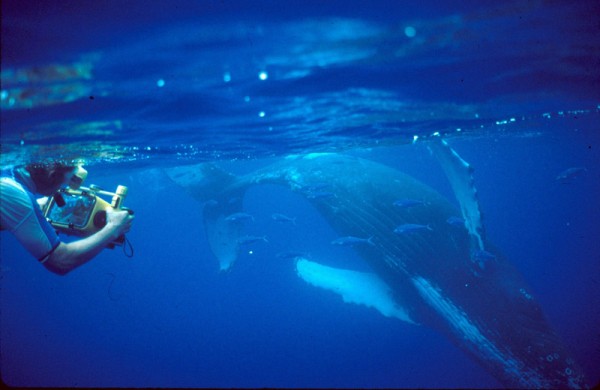
The mournful, curiously repetitious yet ever-changing songs of male humpback whales have long puzzled scientists. The tunes are part of the males’ mating displays, but researchers don’t know their exact function, or which males in a population are doing the singing. Now, scientists who’ve been studying the giant marine mammals in Hawaii for almost 40 years report that even sexually immature males join older males in singing, apparently as a way to learn the music and to amplify the song. The beefed-up, all-male choruses may attract more females to the areas where the songsters hang out.

Scientists generally thought that only adult male humpbacks (Megaptera novaeangliae) sing, says Louis Herman, a marine mammal biologist emeritus at the University of Hawaii, Manoa, and the lead author of the new study. “But that’s just because you can’t easily tell which ones are mature and which ones are immature,” he says. “We know that mature males are larger than immature ones, so we had to figure out an unobtrusive way to measure them in the open ocean.”

Herman and his team hit on a technique by looking at 20th century whaling records. Biologists with whaling operations in the Southern Ocean had the opportunity to measure many humpbacks killed during the commercial hunts. They determined, based on the weight of males’ testes, that the whales reached sexual maturity at a body length of 11.2 meters. Working independently, whaling biologists in Japan, who also measured killed whales, reached a similar conclusion; they described 11.3 meters as the break point between adolescents and adults.

To determine the lengths of living male humpbacks, Herman’s group analyzed digital videos that they made between 1998 and 2008 of 87 of the whale singers. The males were recorded as they sang in the waters off the Hawaiian islands of Maui, Lanai, Molokai, and Kahoolawe during their winter mating season. A swimmer carried the camera in one hand and in the other hand carried a sonar device, which measured the distance from the camera to the whale. The swimmer began filming when the whale assumed a horizontal position (singing whales are typically canted with their heads downward), so that he or she could capture the full body length of the whale while keeping the camera’s axis perpendicular to the whale and close to its midline. The researchers calculated the whales’ body lengths from these images and the distance measurements.

The scientists found that the whales varied in length from 10.7 meters to 13.6 meters. Using 11.3 meters as the boundary for sexually mature adults, the researchers counted 74 humpback singers as mature and 13 as immature. The team has been following individual humpbacks (which are identified by the unique markings on their tail flukes) for decades, and its analysis also showed that some individual males have been singing for 17 to 20 years. “It is a lifelong occupation for them,” says Herman, who notes that male calves and probably 1-year-old males don’t join in.

During the winter months in Hawaii, the male humpbacks assemble in areas that the researchers call arenas, where the males sing and compete for females. Typically, the singers are widely dispersed around their arenas, which may help amp up the reach of the chorus. Males also sing in other social situations, such as while escorting a female humpback and her calf.

When chorusing at the arenas, immature and mature whales are engaged in an unintentional mutual benefits game, Herman and his colleagues argue. By singing with the big boys, the youngsters indirectly learn the songs and the social rules of the mating grounds. The older males, in turn, gain an extra voice in their asynchronous chorus, his team reports in an upcoming issue of Behavioral Ecology and Sociobiology. “We know that the females don’t respond to an individual male’s song,” Herman says. “It’s not like a songbird’s song, designed to attract a female and repel other males. The humpbacks’ songs are meant to attract females to the arena.” That is, they tell the gals where the boys are. And another voice, even one of a young, inexperienced male, may help carry the message, he says.

The findings strengthen the still controversial idea that gatherings of male humpback whales may be similar to some birds’ lek mating systems, such as those of the sage grouse, which also feature male assemblages. If proved, humpbacks would be the first whale known to have this type of system.

“This is great stuff,” says Phillip Clapham, a cetacean biologist at the National Marine Mammal Laboratory in Seattle, Washington. He applauds the idea of the males’ chorus serving to “collectively ‘call in’ the females.” He adds that “we’ve known for many years that only male humpbacks sing, but no one had ever managed to figure out a way to determine the maturational class of the singers, so this is a significant advance.”

Now all Herman and his team have to do is determine which of the male singers in the chorus a female actually mates with—an event the researchers have yet to see.

http://news.sciencemag.org/plants-animals/2013/08/mens-chorus%E2%80%94-whales

Thanks to Dr. Rajadhyaksha for bringing this to the attention of the It’s Interesting community.

Ohio man orders gun safe on Internet and discovers almost 300 pounds of marijuana inside

HT_pot_in_gun_safe_ml_130816_16x9_608

Authorities in Ohio say a man who ordered a gun safe online opened it up only to discover 280 pounds of marijuana inside.

Shelby County Sheriff John Lenhart in western Ohio says the safe was made in Nogales, Mexico and that it was sent by truck to Ohio.

He says the marijuana has a street value of $420,000.

Federal authorities who are investigating say the truck driver who brought the shipment into the United States is now missing.

The Ohio sheriff says that truck was carrying a full shipment of safes, but none of the others contained any drugs.

He says the safe with the marijuana was delivered to Ohio in June, but authorities have kept quiet about it while they looked into how the safe got into the U.S.

http://abcnews.go.com/US/wireStory/gun-safe-ohio-man-filled-marijuana-19995543

At 123, Bolivian Carmelo Flores Laura may be the oldest human who ever lived

Carmelo Flores Laura

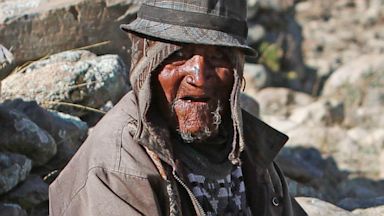
Carmelo Flores Laura, a Bolivian cattle and sheep herder, was born in 1890 — 123 years ago — according to Bolivian public records. That’s a year before the invention of the rotary-dial telephone and two years before the first Ferris wheel spun at the Chicago World’s Fair.

If the records are accurate, Flores is the oldest living person ever documented.

Associated Press reporters recently visited Flores at his straw-roofed hut near Bolivia’s Lake Titicaca. Although he has no teeth and is nearly deaf, Flores walks without a cane and speaks in a firm voice, the news agency reported.

“I see a bit dimly,” Flores told the AP. “I had good vision before. But I saw you coming.”

A Bolivian official presented as evidence of Flores’ age a registry listing his birthdate as July 16, 1890. He said Flores’ birth predates the existence of birth certificates in Bolivia by 50 years.

A Guinness World Records spokeswoman told the AP that she knew of no claim being filed for Flores. But if his age is correct, the Bolivian has bested by one year Jeanne Calment, a French woman who died in 1997 at the verified age of 122.

Flores chalks up his long life to a lot of walking.

“I go out with the animals,” said the longtime sheep and cattle herder.

He eats barley, instead of rice or noodles, and drinks water that originates on Illampu, the fourth-highest mountain in Bolivia.

As the Los Angeles Times reported in an obituary after Calment’s death, the French woman credited her longevity to an occasional glass of port wine and eating plenty of olive oil.

Calment smoked until 1995, when she became too blind to light her own cigarettes and disliked asking anyone else to do it for her.

On her 121st birthday, in 1996, she released a CD, “Time’s Mistress,” which showcased her reminiscences over a background of rap and other music.

As for Flores, he says he very much misses his wife, who died more than a decade ago. One of his children is still living, 67-year-old Cecilio. Most of his 40 grandchildren and 19 great-grandchildren have moved away from his small Bolivian hamlet.

http://www.latimes.com/world/worldnow/la-fg-wn-bolivia-oldest-person-123-20130815,0,4445976.story

New mammalian species discovered: olinguito

oliguito

A small mammal with fluffy red-orange fur, a short bushy tail, and an adorable rounded face has leapt onto the raccoon family tree.

Scientists at the Smithsonian in Washington announced Thursday the discovery of a new species of mammal called the olinguito (pronounced oh-lin-GHEE-toe). If you’re a fan of long technical names, this one is Bassaricyon neblina.

Such a discovery is rare. The olinguito is the first mammalian carnivore species to be newly identified in the Americas in 35 years, according to Kristofer Helgen, curator of mammals at the Smithsonian’s National Museum of Natural History. His research group’s study on the creature is being published in the journal ZooKeys.

Researchers argue that the olinguito should be considered the smallest living member of the raccoon family, which includes other animals that make us go “awww” such as coatis and kinkajous. The Smithsonian describes the olinguito’s appearance as a cross between a house cat and a teddy bear.

This animal had been seen before by humans, Helgen said, but it had been “a case of mistaken identity.”

“It was in museums, it’s been in zoos, and its DNA had even been sequenced, but no one had connected the pieces and looked close enough to realize, basically, the significance of this remarkable and this beautiful animal,” Helgen said.

Previously, scientists had assumed that olinguitos were members of their sister species, the olingos, Helgen said. Olingos are larger, less furry and have longer faces than the newly discovered species.

Helgen began his detective work in pursuit of the new species when he set out about a decade ago to comprehensive study of olingos.

Behind the scenes at the Chicago Field Museum in 2003, he remembers pulling out a drawer of skins and skulls that didn’t look like any animal he had ever seen before, or that had been reported by zoologists. The teeth and skull were smaller and shaped differently than olingos, and the coat was denser.

Records indicated to Helgen that such specimens came from the northern Andes about 5,000 to 9,000 feet above sea level, which is much higher than olingo habitats.

Helgen and colleagues worked with Miguel Pinto, a zoologist in Ecuador, who had shot a few seconds of video that appeared to depict the animal.

They teamed up in Ecuador in 2006, using Pinto’s knowledge of cloud forest habitats to pick the best spots to investigate. Cloud forests are “cloaked in fog,” Helgen said.

On their very first night on the pursuit, the team found a real, living olinguito.

Seeing the fluffy tree-dweller for the first time, Helgen felt “sheer elation, just incredible excitement but at the same time almost disbelief. This animal had been missed by everyone.”

Even people who live in the Andes had the same confusion about olinguitos being olingos, because humans don’t hunt them and the creatures stay in the trees, Helgen said.

The researchers found out that the olinguito primarily eats fruits, but also insects and nectar, and its activity is mostly at night. The animal lives in the trees and can jump from one to another. Mothers raise a single baby at a time.

At about 2.5 feet long from nose tip to tail tip, the olinguito weighs about 2 pounds and is a little smaller than a house cat.

DNA analysis confirmed that while olinguitos and olingos both belong to the raccoon family, they are “sister groups,” in the same way that humans are closely related to chimpanzees.

The olinguito’s misty high-elevation habitats in Colombia and Ecuador, and the tendency for the animal to stay in the trees, have helped keep the species relatively obscure to scientists until now, Helgen said.

It turns out, according to Helgen, there are four subspecies of olinguitos, differing in color — shades of reds, orange and browns — and size and living in various sections of the Andes.

New species of mice, bats and shrews are more commonly discovered, but these animals are tiny and hard to tell apart, Helgen said.

Prior to the olinguito, the most recent mammal to be discovered in the Americas was a small weasel from the Andes — the same area and habitat where the olinguitos live, he said.

“It shows us that there’s a long way to go to exploring the whole world, but especially maybe these cloud forests,” Helgen said. More olinguitos may be found in other South American countries with cloud forests in the future, according to the Smithsonian.

The olinguito is not yet considered an endangered species, but there are threats to its home environment, Helgen said. Many have such forests been chopped down.

“We also kind of hope that in telling this story to the world about the olinguito, that this beautiful new animal serves as something of an ambassador for those embattled cloud forest habitats.”

Helgen’s group has “discovered” the olinguito, but it been evolving as an independent species for about 3 to 4 million years, he said.

One olinguito whose history Helgen’s group studied was exhibited in the United States during its lifetime as if it were an olingo. The creature came from the mountains of Colombia to the Louisville Zoo in 1967, courtesy of a German couple with a love of raccoon family members, Helgen said. It was also in the Smithsonian National Zoo in Washington and the Bronx Zoo, where it passed away.

DNA from this olinguito shows that it is clearly not an olingo, Helgen said.

The wife of the animal’s keeper told Helgen, “We always thought there was something strange about that olingo,” he said.

She told Helgen this particular animal moved from zoo to zoo because she wouldn’t breed with the olingos around her.

“It wasn’t because she was fussy, it was because she was not at all even the same species,” Helgen said.

With the olinguito research announcement, the oddball animal’s aloofness has been vindicated.

http://www.cnn.com/2013/08/15/world/americas/new-mammal-smithsonian/index.html?hpt=hp_c2

Congressman Eni F.H. Faleomavaega: “It’s Time to Change the Redskins’ Racist Name”

Washington-Redskins

It is time that the National Football League and NFL Commissioner Roger Goodell face the reality that the continued use of the word “redskin” is unacceptable. It is a racist, derogatory term and patently offensive to Native Americans. The Native American community has spent millions of dollars over the last two decades trying earnestly to fight the racism that is perpetuated by this slur. The fact that the NFL and Commissioner Goodell continue to deny this is a shameful testament of the mistreatment of Native Americans for so many years. It is quite obvious that once the American public understands why the word “redskins” is so offensive, they will know that the word should never be used again.

The origin of the term “Redskins” is commonly attributed to the historical practice of trading Native American Indian scalps and body parts as bounties and trophies. For example, in 1749, the British bounty on the Mi’kmaq Nation of what is now Maine and Nova Scotia, was a straightforward “ten Guineas for every Indian Micmac taken or killed, to be paid upon producing such Savage taken or his scalp.”

Just as devastating was the Phips Proclamation, issued in 1755 by Spencer Phips, Lieutenant Governor and Commander in Chief of the Massachusetts Bay Province, who called for the wholesale extermination of the Penobscot Indian Nation.

By vote of the General Court of the Province, settlers were paid out of the public treasury for killing and scalping the Penobscot people. The bounty for a male Penobscot Indian above the age of 12 was 50 pounds, and his scalp was worth 40 pounds. The bounty for a female Penobscot Indian of any age and for males under the age of 12 was 25 pounds, while their scalps were worth 20 pounds. These scalps were called “redskins.”

The question is quite simple: suppose that a “redskin” scalp that was brought for payment was your mother, your wife, your daughter, your father, your husband, or your son? The fact is Native Americans are human beings, not animals.

The current Chairman and Chief of the Penobscot Nation, Chief Kirk Francis, recently declared in a joint statement that “redskins” is “not just a racial slur or a derogatory term,” but a painful “reminder of one of the most gruesome acts of . . . ethnic cleansing ever committed against the Penobscot people.” The hunting and killing of Penobscot Indians, as stated by Chief Francis, was “a most despicable and disgraceful act of genocide.”

Recently, I and nine Members of Congress explained the violent history and disparaging nature of the term “redskins” in a letter to Mr. Dan Snyder, owner of the Washington football franchise. Similar letters were sent to Mr. Frederick Smith, President and CEO of FedEx (a key sponsor for the franchise), and to Mr. Roger Goodell, Commissioner of the National Football League.

As of today, Mr. Snyder has yet to respond. Mr. Smith ignored our letter as well, opting instead to have a staff member cite contractual obligations as FedEx’s reason for its silence on the subject.

Mr. Goodell, however, in a dismissive manner, declared that the team’s name “is a unifying force that stands for strength, courage, pride and respect.” In other words, the NFL is telling everyone—Native Americans included—that they cannot be offended because the NFL means no offense. Essentially, Mr. Goodell attempts to wash away the stain from a history of persecution against Native American peoples by spreading twisted and false information concerning the use of the word “redskins” by one of the NFL’s richest franchises.

Mr. Goodell’s response is indicative of the Washington football franchise’s own racist and bigoted beginnings. The team’s founder, George Preston Marshall, is identified by historians as the driving force behind the effort to prevent African Americans from playing in the NFL. And once African Americans were allowed to play in 1946, Marshall was the last club owner to field an African American player – a move he reluctantly made some 14 years later in 1962. It should be noted that Secretary of the Interior Stewart Udall and U.S. Attorney General Robert F. Kennedy presented Marshall with an ultimatum – unless Marshall signed an African American player, the government would revoke his franchise’s 30-year lease on the use of the D.C. Stadium.

Congressman Tom Cole, the Representative from Oklahoma, Co-Chair of the Congressional Native American Caucus, and a member of the Chikasaw Nation, states: “This is the 21st century. This is the capital of political correctness on the planet. It is very, very, very offensive. This isn’t like warriors or chiefs. It’s not a term of respect, and it’s needlessly offensive to a large part of our population. They just don’t happen to live around Washington, D.C.”

Congresswoman Betty McCollum, the Representative from Minnesota and Co-Chair of the Congressional Native American Caucus, states that Mr. Goodell’s letter “is another attempt to justify a racial slur on behalf of [Mr.] Dan Snyder,” owner of the Washington franchise, “and other NFL owners who appear to be only concerned with earning ever larger profits, even if it means exploiting a racist stereotype of Native Americans. For the head of a multi-billion dollar sports league to embrace the twisted logic that ‘[r]edskin’ actually ‘stands for strength, courage, pride, and respect’ is a statement of absurdity.”

Congresswoman Eleanor Holmes Norton, the Representative from the District of Columbia, states that Mr. Snyder “is a man who has shown sensibilities based on his own ethnic identity, [yet] who refuses to recognize the sensibilities of American Indians.”

Recently, in an interview with USA Today Sports, Mr. Snyder defiantly stated, “We’ll never change the name. It’s that simple. NEVER – you can use caps.” Mr. Snyder’s statement is totally inconsistent with the NFL’s diversity policy, which states:

Diversity is critically important to the NFL. It is a cultural and organizational imperative about dignity, respect, inclusion and opportunity . . . The overall objective of the [NFL’s] diversity effort is to create a culturally progressive and socially reflective organization that represents, supports and celebrates diversity at all levels.

It is critically important that the NFL promote its Commitment to Diversity, and uphold its moral responsibility to disavow the usage of racial slurs. Just as important is the moral responsibility of the NFL’s 31 other football club owners to collectively have the necessary courage to stand up and speak out against the use of this derogatory term. Mr. Snyder, more than anyone else in the NFL, should display greater sensitivity and appreciation for a people who have been maligned and mistreated for hundreds of years.

Ms. Suzan Harjo, President of the Morning Star Institute – a national Native American rights organization – and a member of the Cheyenne and Hodulgee Muscogee tribes, summed it up best when she stated: “[Redskins] is the worst thing in the English language you can be called if you are a native person.” This is not just a statement, but a direct invitation for Mr. Snyder and the NFL to do the right thing. I challenge Mr. Snyder to be reasonable, and to realize the harmful legacy that his franchise’s name perpetuates.

In an attempt to correct the long-standing usage of the term “redskins,” the bill H.R. 1278 entitled, “The Non-Disparagement of Native American Persons or Peoples in Trademark Registration Act of 2013” was introduced. This bill would cancel the federal registrations of trademarks using the word “redskin” in reference to Native Americans. The Trademark Act of 1946 – more commonly known as the Lanham Act – requires that the U.S. Patent and Trademark Office (PTO) not register any trademark that “[c]onsists of or comprises . . . matter which may disparage . . . persons, living or dead…or bring them into contempt, or disrepute.” 15 U.S.C. §1502(a).

Native American tribes have a treaty, trust and special relationship with the United States. Because of the duty of care owed to the Native American people by the federal government, it is incumbent upon the federal government to ensure that the Lanham Act is strictly enforced in order to safeguard Indian tribes and citizens from racially disparaging federal trademarks.

Accordingly, the Patent and Trademark Office has rejected applications submitted by the Washington franchise for trademarks which proposed to use the term “redskins” – three times in 1996 and once in 2002. The PTO denied the applications on grounds that “redskins” is a racial slur that disparages Native Americans.

In 1992, seven prominent Native American leaders petitioned the Trademark Trial and Appeal Board (TTAB) to cancel the federal registrations for six trademarks using “redskins.” The TTAB in 1999 ruled that the term “redskins” may, in fact, disparage American Indians, and cancelled the registrations. On appeal, a federal court reversed the TTAB’s decision, holding that the petitioners waited too long after coming of age to file their petition. A new group of young Native Americans petitioned the TTAB to cancel the registrations of the offending trademarks in 2006. The TTAB held a hearing on March 7, 2013. A final decision is pending.

H.R. 1278 is supported by a number of major Native American organizations, including the National Congress of American Indians (NCAI) – the oldest, largest and most representative American Indian and Alaska Native organization serving tribal governments and communities. Mr. Jefferson Keel, a member of the Chikasaw Nation and President of NCAI, stated that our efforts as Members of Congress will hopefully accomplish “what Native American people, nations, and organizations have tried to do in the courts for almost twenty years – end the racist epithet that has served as the [name] of the Washington’s pro football franchise for far too long.”

The Native American Rights Fund (NARF) – the oldest and largest nonprofit law firm dedicated to asserting and defending the rights of Indian tribes, organizations, and individuals nationwide – also supports the call to change the Washington franchise’s racist name. NARF recently issued a statement describing our efforts as “a clear signal that some [M]embers of Congress do not take anti-Native stereotyping and discrimination lightly. These Representatives now join Native American nations, organizations and people who have lost patience with the intransigence of the Washington pro football franchise in holding on to the indefensible – a racial epithet masquerading as a team name.”

Despite the Native American community’s best efforts before administrative agencies and the courts, the term “redskins” remains a federally registered trademark. It has been well over twenty years and this matter is still before the courts. This injustice is the result of negligence and a cavalier attitude demonstrated by an administrative agency charged with the responsibility of not allowing racist or derogatory terms to be registered as trademarks. Since the federal government made the mistake in registering the disparaging trademark, it is now up to Congress to correct it.

Congressman Eni F.H. Faleomavaega has represented the territory of American Samoa in the United States Congress since 1989. Faleomavaega is a member of the House Committee on Natural Resources, and serves on the Subcommittee on Indian and Alaska Native Affairs. Faleomavaega is also a member of the Congressional Native American Caucus.

http://indiancountrytodaymedianetwork.com/2013/07/30/its-time-change-redskins-racist-name

After cardiac arrest, a final surge of brain activity could contain vivid experience, new research in rodents suggests.

sn-brain

What people experience as death creeps in—after the heart stops and the brain becomes starved of oxygen—seems to lie beyond the reach of science. But the authors of a new study on dying rats make a bold claim: After cardiac arrest, the rodents’ brains enter a state similar to heightened consciousness in humans. The researchers suggest that if the same is true for people, such brain activity could be the source of the visions and other sensations that make up so-called near-death experiences.

Estimated to occur in about 20% of patients who survive cardiac arrest, near-death experiences are frequently described as hypervivid or “realer-than-real,” and often include leaving the body and observing oneself from outside, or seeing a bright light. The similarities between these reports are hard to ignore, but the conversation about near-death experiences often bleeds into metaphysics: Are these visions produced solely by the brain, or are they a glimpse at an afterlife outside the body?

Neurologist Jimo Borjigin of the University of Michigan, Ann Arbor, got interested in near-death experiences during a different project—measuring the hormone levels in the brains of rodents after a stroke. Some of the animals in her lab died unexpectedly, and her measurements captured a surge in neurochemicals at the moment of their death. Previous research in rodents and humans has shown that electrical activity surges in the brain right after the heart stops, then goes flat after a few seconds. Without any evidence that this final blip contains meaningful brain activity, Borjigin says “it’s perhaps natural for people to assume that [near-death] experiences came from elsewhere, from more supernatural sources.” But after seeing those neurochemical surges in her animals, she wondered about those last few seconds, hypothesizing that even experiences seeming to stretch for days in a person’s memory could originate from a brief “knee-jerk reaction” of the dying brain.

To observe brains on the brink of death, Borjigin and her colleagues implanted electrodes into the brains of nine rats to measure electrical activity at six different locations. The team anesthetized the rats for about an hour, for ethical reasons, and then injected potassium chloride into each unconscious animal’s heart to cause cardiac arrest. In the approximately 30 seconds between a rat’s last heartbeat and the point when its brain stopped producing signals, the team carefully recorded its neuronal oscillations, or the frequency with which brain cells were firing their electrical signals.

The data produced by electroencephalograms (EEGs) of the nine rats revealed a highly organized brain response in the seconds after cardiac arrest, Borjigin and colleagues report online today in the Proceedings of the National Academy of Sciences. While overall electrical activity in the brain sharply declined after the last heartbeat, oscillations in the low gamma frequency (between 25 and 55 Hz) increased in power. Previous human research has linked gamma waves to waking consciousness, meditative states, and REM sleep. These oscillations in the dying rats were synchronized across different parts of the brain, even more so than in the rat’s normal waking state. The team also noticed that firing patterns in the front of the brain would be echoed in the back and sides. This so-called top-down signaling, which is associated with conscious perception and information processing, increased eightfold compared with the waking state, the team reports. When you put these features together, Borjigin says, they suggest that the dying brain is hyperactive in its final seconds, producing meaningful, conscious activity.

The team proposed that such research offers a “scientific framework” for approaching the highly lucid experiences that some people report after their brushes with death. But relating signs of consciousness in rat brains to human near-death experiences is controversial. “It opens more questions than it answers,” says Christof Koch, a neuroscientist at the Allen Institute for Brain Science in Seattle, Washington, of the research. Evidence of a highly organized and connected brain state during the animal’s death throes is surprising and fascinating, he says. But Koch, who worked with Francis Crick in the early 1980s to hypothesize that gamma waves are a hallmark of consciousness, says the increase in their frequency doesn’t necessarily mean that the rats were in a hyperconscious state. Not only is it impossible to project any mental experience onto these animals, but their response was also “still overlaid by the anesthesiology,” he says; this sedation likely influenced their brain response in unpredictable ways.

Others share Koch’s concerns. “There is no animal model of a near-death experience,” says critical care physician Sam Parnia of Stony Brook University School of Medicine in New York. We can never confirm what animals think or feel in their final moments, making it all but impossible to use them to study our own near-death experiences, he believes. Nonetheless, Parnia sees value in this new study from a clinical perspective, as a step toward understanding how the brain behaves right before death. He says that doctors might use a similar approach to learn how to improve blood flow or prolong electrical activity in the brain, preventing damage while resuscitating a patient.

Borjigin argues that the rat data are compelling enough to drive further study of near-death experiences in humans. She suggests monitoring EEG activity in people undergoing brain surgery that involves cooling the brain and reducing its blood supply. This procedure has prompted near-death experiences in the past, she says, and could offer a systematic way to explore the phenomenon.

read more here: http://news.sciencemag.org/brain-behavior/2013/08/probing-brain%E2%80%99s-final-moments

Thanks to Kebmodee for bringing this to the attention of the It’s Interesting community.

A video called ‘One Day in June’ was posted on the Norwegian Prime Minister’s Facebook page on Sunday.

It shows Jens Stoltenberg wearing a taxi driver’s uniform and sunglasses, driving passengers around the streets of the Norwegian capital, only confirming his identity when asked.

“So, you have begun driving a taxi,” deadpans a passenger after realising who his chauffeur is. “Have you quit as prime minister?” asks another.

Mr Stoltenberg, who has led the Nordic country for the past eight years, said the stunt was an opportunity to speak to voters candidly.

“It’s important to listen to people’s opinions,” he said. “In taxis, people really say what they mean.”

Discussions ranged from education to oil policy after surprised passengers took advantage of their driver’s identity to air their views on the government.

Norway’s parliamentary election is set for 9 September.

Mr Stoltenberg’s Labour Party is behind in the opinion polls but he said he would not be taking up driving for a living if he lost.

http://www.telegraph.co.uk/news/worldnews/europe/norway/10236939/Norwegian-PM-surprises-voters-by-posing-as-taxi-driver.html