Laboratory-grown vaginas implanted in patients

Scientists have now reported the first human recipients of laboratory-grown vaginal organs. A research team led by Anthony Atala, M.D., director of Wake Forest Baptist Medical Center’s Institute for Regenerative Medicine, describes in the Lancet long-term success in four teenage girls who received vaginal organs that were engineered with their own cells.

“This pilot study is the first to demonstrate that vaginal organs can be constructed in the lab and used successfully in humans,” said Atala. “This may represent a new option for patients who require vaginal reconstructive surgeries. In addition, this study is one more example of how regenerative medicine strategies can be applied to a variety of tissues and organs.”

The girls in the study were born with Mayer-Rokitansky-Küster-Hauser (MRKH) syndrome, a rare genetic condition in which the vagina and uterus are underdeveloped or absent. The treatment could also potentially be applied to patients with vaginal cancer or injuries, according to the researchers.

The girls were between 13 and 18 years old at the time of the surgeries, which were performed between June 2005 and October 2008. Data from annual follow-up visits show that even up to eight years after the surgeries, the organs had normal function.

“Tissue biopsies, MRI scans and internal exams using magnification all showed that the engineered vaginas were similar in makeup and function to native tissue, said Atlantida-Raya Rivera, lead author and director of the HIMFG Tissue Engineering Laboratory at the Metropolitan Autonomous University in Mexico City, where the surgeries were performed.

In addition, the patients’ responses to a Female Sexual Function Index questionnaire showed they had normal sexual function after the treatment, including desire and pain-free intercourse.

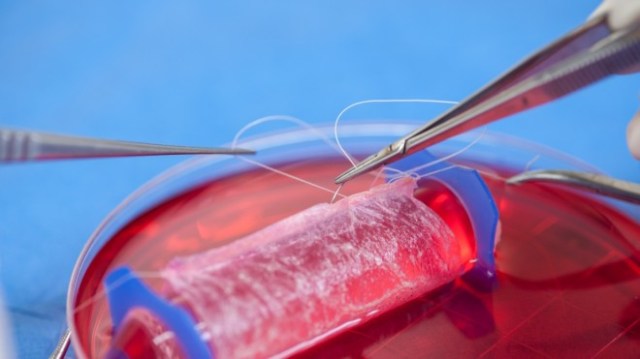
The organ structures were engineered using muscle and epithelial cells (the cells that line the body’s cavities) from a small biopsy of each patient’s external genitals. In a Good Manufacturing Practices facility, the cells were extracted from the tissues, expanded and then placed on a biodegradable material that was hand-sewn into a vagina-like shape. These scaffolds were tailor-made to fit each patient.

About five to six weeks after the biopsy, surgeons created a canal in the patient’s pelvis and sutured the scaffold to reproductive structures. Previous laboratory and clinical research in Atala’s lab has shown that once cell-seeded scaffolds are implanted in the body, nerves and blood vessels form and the cells expand and form tissue. At the same time the scaffolding material is being absorbed by the body, the cells lay down materials to form a permanent support structure — gradually replacing the engineered scaffold with a new organ.

Followup testing on the lab-engineered vaginas showed the margin between native tissue and the engineered segments was indistinguishable and that the scaffold had developed into tri-layer vaginal tissue.

Current treatments for MRHK syndrome include dilation of existing tissue or reconstructive surgery to create new vaginal tissue. A variety of materials can be used to surgically construct a new vagina — from skin grafts to tissue that lines the abdominal cavity. However, these substitutes often lack a normal muscle layer and some patients can develop a narrowing or contracting of the vagina.

The researchers say that with conventional treatments, the overall complication rate is as high as 75 percent in pediatric patients, with the need for vaginal dilation due to narrowing being the most common complication.

Before beginning the pilot clinical study, Atala’s team evaluated lab-built vaginas in mice and rabbits beginning in the early 1990s. In these studies, scientists discovered the importance of using cells on the scaffolds. Atala’s team used a similar approach to engineer replacement bladders that were implanted in nine children beginning in 1998, becoming the first in the world to implant laboratory-grown organs in humans. The team has also successfully implanted lab-engineered urine tubes (urethras) into young boys.

The team said the current study is limited because of its size, and that it will be important to gain further clinical experience with the technique and to compare it with established surgical procedures.

Co-researchers were James J. Yoo, M.D., Ph.D., and Shay Soker, Ph.D., Wake Forest Baptist, and Diego R. Esquiliano M.D., Reyna Fierro-Pastrana P.hD., Esther Lopez-Bayghen Ph.D., Pedro Valencia M.D., and Ricardo Ordorica-Flores, M.D.,Children’s Hospital Mexico Federico Gomez Metropolitan Autonomous University, Mexico.

http://www.sciencedaily.com/releases/2014/04/140410194326.htm

Thanks to Dr. Lutter for bringing this to the attention of the It’s Interesting community.

Lunar eclipse and Mars opposition April 15th, with ideal time to view Mars on April 8

April 15th is usually known for one reason only: Tax Day. However, this year citizens of North and South America are in for something a little more special. On the cosmic schedule this April are a full lunar eclipse and a Mars opposition. So how does all that work exactly? And what does it mean?

To begin with, a full lunar eclipse occurs when the Earth is situated directly between the sun and the moon. Hence, the Earth casts its shadow straight on the surface of the usually bright full moon. On April 15th commencing at 1:58am the moon will be shifting into the Earth’s Umbra. Umbra is a word derived from Latin meaning “shade” or “shadow.” At this point the moon will only begin to be covered by the shadow as it assumes a reddish hue. From here on in the moon is in the process of a complete eclipse. The second phase of the eclipse will begin at around 3:07am when the moon will be exactly within the Earth’s Umbra and covered completed. This phase of the eclipse lasts over an hour until 4:25am. Then the third phase begins as the moon exists the Umbra.

The eclipse will be completely over by 5:33am. Lunar eclipses can be seen with the naked eye, binoculars, telescopes and require no special equipment as the solar eclipse does. The lunar eclipse and Mars opposition comprise a valuable and dear experience to star gazers in the Western hemisphere. However, astrologers will not be the only ones appreciate the beauty which these events offer.

What is a Mars opposition? Well, as the planets in the solar system revolve in elliptical patterns they are sometimes closer and further away from other planets. In this case, Mars is closer to Earth than it has been since 2007. Many still remember back in 2003 when Mars was extremely bright and visible to the naked eye for weeks. This event is similar except that the proximity of Mars is smaller at this time. Mars will be a mere 50 million miles away. On April 8th, as the sun is setting in the west, gazers should look directly to the east and there will discover a bright red dot on the celestial fabric. It is said that Mars will appear brighter even than the Sirius- that bright star within Canis Major which philosophers often look up to when deep in thought outside at night.

Mars will appear bright throughout the spring and summer though April 8th is the ideal night to catch a glimpse. Throughout the lunar eclipse it will also be brightly visible along with Saturn, Venus and Jupiter. It seems that the sky will be smiling down for tax day.

Many cultures both ancient and recent have looked up into the sky and deciphered these signs written in the stars. The Moon stands for the feminine, reflective side of people while the Sun is the masculine and active. Mars is the planet not only of war but of motivation and unstoppable force. Jupiter stands for justice, glory and honor, Venus for love and attraction and Saturn is the taskmaster who commands the attention of these aspects and puts them into action. For those who rely on the stars to plan certain events, this may be a very special night to commence.

With a lunar eclipse and Mars opposition, April is turning out to be a very powerful month. Be sure to make the most of it. With Mars in such a strong position, remember to wait for the right moment to make a move. With the lunar eclipse, remember to take time to reflect on thoughts and emotions. All in all, humanity is made of the stars and planets. Perhaps on April 15th the stars will be looking back down at Earth instead of the other way around.

Lunar Eclipse and Mars Opposition

Thanks to Da Brayn for bringing this to the attention of the It’s Interesting community.

Video that causes natural visual hallucinations

This video has been carefully designed to create a strong natural hallucination. Use full screen for best results.

If you follow the video’s instructions, when you look away you will continue to see wavy lines in your wall or on the floor. When the video ends and you look away, your brain still expects to see the waves, and therefore it creates them for you. Saying the letters out loud doesn’t really play a role, it just ensures that you are focusing on the center of the screen, where you can best receive the stimulus.

The resultant hallucination is temporary and should wear off within a couple of minutes.

Thanks to Kebmodee for bringing this to the attention of the It’s Interesting community.

Humans will be kept between life and death in the first suspended animation trials

At a hospital in Pittsburgh, surgeons are now allowed to place patients into a state of suspended animation. If a patient arrives with a traumatic injury, and attempts to restart their heart have failed — if they’re on the doorstep of death — they will have their blood replaced with a cold saline solution, which stops almost all cellular activity. At this point, the patient is clinically dead — but if the doctors can fix the injury within a few hours, they can be returned to life from suspended animation by replacing the saline with blood.

Or at least, that’s the theory. The technique of suspended animation (or “emergency preservation and resuscitation” as non-sci-fi doctors prefer to call it) was first trialed on pigs in 2002. Hasan Alam, working with his colleagues at the University of Michigan Hospital, drugged up a pig, created a massive hemorrhage to simulate the effect of a massive gunshot wound, and then replaced its blood with a cold saline solution, cooling the pig’s cells to just 10 Celsius (50F). After the injury was treated, the pig was gradually warmed back up by replacing the saline with blood. Usually the pig’s heart started beating on its own, and despite the pig being dead for a few hours, there was no physical or cognitive impairment. Now, it’s time to try it out on humans. [Research paper: dx.doi.org/10.1067/msy.2002.125787 – “Learning and memory is preserved after induced asanguineous hyperkalemic hypothermic arrest in a swine model of traumatic exsanguination”]

Roughly once a month, UPMC Presbyterian Hospital in Pittsburgh receives a patient who has suffered a cardiac arrest after some kind of traumatic injury (gunshot, stabbing, etc.), and hasn’t responded to normal methods of restarting their heart. Because there’s currently no other kind of treatment, and because these kinds of wounds are nearly always fatal, the surgeons don’t need consent to carry out the suspended animation. The technique will be used on 10 patients, with the outcome compared against 10 people who didn’t. Samuel Tisherman, the surgeon who is leading the trial, told New Scientist that they’ll then refine their technique and try it out on 10 more patients — at which point, there should be enough data to work out whether suspended animation is worth rolling out to other hospitals.

The process is much the same for humans as it was for pigs. The first step is to replace all of the blood in the heart and brain — the two areas most sensitive to hypoxia — with with cold saline. Then, the saline is pumped around the rest of the body. After 15 minutes, the patient’s temperature reaches 10C — they have no blood, no brain activity, and they’re not breathing. Technically they’re dead — but because the metabolism of your cells slow down at low temperatures, they can survive for a few hours using anaerobic respiration (usually it’s just a few minutes). ”We’ve always assumed that you can’t bring back the dead. But it’s a matter of when you pickle the cells,” said Peter Rhee, who helped developed the suspended animation technique.

For now, this process is only being used for cardiac arrests following traumatic injuries, but in the future Tisherman says he hopes to use the technique for other conditions as well. The other big question, of course, is whether this technique can be used to suspend animation for more than just a couple of hours. If I have my blood replaced with saline, and then use cryonics to cool my body down yet further, could I be “dead” for a few months or weeks or years before being warmed up again? If sci-fi has taught us anything, it’s that suspended animation (or stasis as it’s sometimes called) is one of the most potentially exciting technologies — not only for rich people trying to extend their lives, but for the possibly centuries-long journeys that our first interstellar explorers will embark upon.

http://www.extremetech.com/extreme/179296-humans-will-be-kept-between-life-and-death-in-the-first-suspended-animation-trials

Darth Vader nominated to run for president in Ukraine by Internet Party

darth

Transitional authorities in Kiev and acting president Alexander Turchninov are getting ready to hold a proper presidential election that will establish a new legitimate head for the Ukraine’s recently ousted government.

As the Sunday deadline for nominating candidates drew to a close the race got an 11th hour dark horse addition this weekend as Darth Vader submitted the paperwork required to run.

Mr. Vader was nominated by the Internet Party of Ukraine, notes Voice of Russia via Interfax. The Central Election Commission of Ukraine confirmed Darth Vader’s entry into the race. A complete application along with the required 2.5 million hryvni as a monetary deposit were submitted Saturday.

The addition of Darth Vader brings the field of candidates to 14, and the election is set for May 25.

Whoever is ultimately elected Ukraine’s next president will take on the challenge of confronting Russia’s Vladimir Putin, who clearly wants to reassemble the Soviet Empire and has been clear about his desire to retake eastern Ukraine, seeing anti-Russian Ukrainians there as a rebel uprising to be squashed.

And if there’s one candidate in this race who knows a thing or two about empires and rebel uprisings, it’s Darth Vader.

http://www.deathandtaxesmag.com/217820/darth-vader-nominated-to-run-for-president-in-ukraine-by-internet-party/

14 year old boy shows U.S. government a simple way to save 100s of millions of dollars

A 14-year-old Indian origin boy is making headlines across the nation for his incredibly simple economic proposal that could save the US government hundreds of millions of dollars per year.

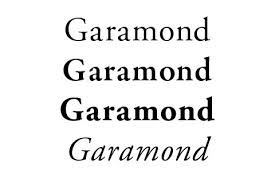
Suvir Mirchandani, a middle schooler from Pittsburgh, discovered that simply by switching the font used on printouts, his school district could reduce its consumption of ink by 24%, thus saving themselves as much as $21,000 each year without having to buy as many ink cartridges. The font Mirchandani says is the most cost-effective? Garamond.

Ever since sixth grade, Mirchandani noticed that he was constantly getting handouts for tests, assignments, lessons, and so on. Knowing that using up so much paper was wasteful – if just one student is getting so many sheets, extrapolate it for an entire class, school, or school district – he became determined to find a way to cut back on all the printing.

He discovered that the school district had already thought of such things, but the best they could come up with was to do double-sided printing as much as possible, and to implement a strict recycling policy. But those measures would only go so far – the purchasing of ink on a nearly constant basis was still an incredible financial hurdle.

In fact, according to an interview Mirchandani gave to CNN, French perfume costs only half as much as ink when compared by volume. A specific bottle of Chanel No. 5 costs less than $40, while a cartridge of ink the exact same size can cost upwards of $75.

Mirchandani began analyzing the words printed on these handouts, and found the most commonly used letters: e, t, a, o, r. He then took each of these and printed them with four different, commonly used fonts: Times New Roman, Century Gothic, Comic Sans MS, and Garamond. Then, using a software called APFill ® Ink Coverage, he could find out how much ink was used to create each letter on a piece of paper.

By enlarging each letter, in each font, on a piece of paper, it became clear to Mirchandani that the thinner Garamond font was obviously using the least amount of ink. The fact that it’s so much thinner means it uses significantly less ink, which ultimately saves money in the long run.

Saving $21,000 for a school district is one thing, however. Taking the same principle and applying it to an entire nation, Mirchandani realized that the US could save as much as $234 million annually by switching to this practice, a sizeable chunk out of the nation’s $1.8 billion yearly printing expenditure. The federal government alone would save about $136 million off of the $467 million it spends on Ink every year, according to the General Services Administration.

So far, the government has not said whether or not they’ll definitively implement Mirchandani’s proposal, but they are apparently looking into it. Gary Somerset, the media and public relations manager for the Government Printing Office, has been quoted as saying that the boy’s work was “remarkable,” but could not say if it would actually be put to use.

Switch to Garamond, save hundreds of millions of dollars per year on ink, claims Pittsburgh teenager

Costco forces 25 tons of edible peanut butter to be dumped in landfill instead of donated to food banks


Peanut butter dumped in New Mexico landfill after Costco refuses to sell it or let it be donated. The dumped peanut butter was deemed safe even though it came from the Sunland plant linked to a 2012 salmonella outbreak.

Nearly a million jars of peanut butter were dumped at a New Mexico landfill this week to expedite the sale of a bankrupt peanut-processing plant that was at the heart of a 2012 salmonella outbreak and nationwide recall.

Bankruptcy trustee Clarke Coll said he had no other choice after Costco Wholesale refused to take shipment of the Sunland Inc. product and declined requests to let it be donated to food banks or repackaged or sold to brokers who provide food to institutions like prisons.

“We considered all options,” Coll said. “They didn’t agree.”

Melinda Joy Pattison, executive director of the Food Bank of Eastern New Mexico, on Friday called the dumping of the peanut butter “horrendous.” She said as long as there was nothing wrong with the peanut butter, her operation would have found a way to store it, remove the labels and distribute it to the people who depend on the food bank.

“Those trucks carrying it to the dump went right by the front door of my food bank,” she said. “It wasn’t like it would have been out of the way.”

Pattison said peanut butter is a major source of protein and a staple for hungry people. Her food bank places single-serve peanut butter cups in packages it gives to children whose parents rely on its services.

“For it to just be deliberately thrown away is disappointing,” she said.

Costco officials did not return telephone calls seeking comment. But court filings indicate the product was made with $2.8 million worth of Valencia peanuts owned by Costco and had been sitting in the warehouse since the company shut down and filed for bankruptcy last fall.

After extensive testing, Costco agreed to a court order authorizing the trustee to sell it the peanut butter. But after getting eight loads, Costco rejected it as “not merchantable” because of leaky peanut oil.

Coll said “all parties agreed there’s nothing wrong with the peanut butter from a health and safety issue,” but court records show that on a March 19 conference call Costco said “it would not agree to any disposition … other than destruction.”

So instead of selling or donating the peanut butter, with a value estimated at $2.6 million, the estate paid about $60,000 to haul the 950,000 jars of nut butter — or about 25 tons — to the Curry County landfill in Clovis, where public works director Clint Bunch says it “will go in with our regular waste and covered with dirt.”

The last of 58 truckloads was expected Friday, the same day Golden Boy Foods of Canada was to close on its $26 million purchase of the plant.

Sunland made peanut butter under a number of different labels for retailers like Costco, Kroger and Trader Joe’s, along with products under its own name. But the plant was shut down in September 2012 after its products were linked to 41 salmonella cases in 20 states.

It later reopened for about five months, but shut down last October after the company’s Chapter 7 bankruptcy filing.

Sunland processed Valencia peanuts, a sweet variety of peanut unique to the region and preferred for natural butters because it is flavorful without additives.

Sonya Warwick, spokeswoman for New Mexico’s largest food bank, declined to comment directly on the situation, but she noted that rescued food accounted for 74 percent of what Roadrunner Food Bank distributed across New Mexico last year.

“Our fleet picks up rescued food from hundreds of locations weekly and brings it back to the food bank,” she said. “Before distributing it, volunteers help label, sort or repack it for distribution to partner agencies across the state.

“Access to rescued food allows us to provide a more well-rounded and balanced meal to New Mexicans experiencing hunger.”

http://www.csmonitor.com/Business/Latest-News-Wires/2014/0328/Peanut-butter-dumped-in-landfill.-Costco-blamed

8 ancients beliefs now backed by modern science

The Earth may not be flat nor is it the center of the universe, but that doesn’t mean old-world intellectuals got everything wrong. In fact, in recent years, modern science has validated a number of teachings and beliefs rooted in ancient wisdom that, up until now, had been trusted but unproven empirically.

A full 55 pages of Arianna Huffington’s new book, Thrive: The Third Metric to Redefining Success and Creating a Life of Well-Being, Wisdom, and Wonder, are dedicated to these scientific breakthroughs that often confirm the power of ancient psychology and contemplative practices. On an intuitive level, we’ve known for centuries that these lifestyle practices can help us lead happy, healthy and balanced lives. But now, with the support of hard science, we can embrace these pieces of ancient wisdom and start really living them.

Here are eight ancient beliefs and practices that have been confirmed by modern science.

1. Helping others can make you healthier.

In their never-ending search for the best way to live, Greek philosophers argued over the relative benefits of hedonic and eudaimonic happiness. Hedonic well-being sees happiness as a factor of increased pleasure and decreased pain, while eudaimonic (“human flourishing”) happiness has more to do with having a larger purpose or meaning in life. A recent study from University of North Carolina at Chapel Hill psychologist Barbara Fredrickson may reveal which form of happiness is more beneficial for health and well-being.

The study, which was published in the Proceedings of the National Academy of Sciences last year, found that while both types of happiness can make you feel good, the latter could promote physical health and longevity as well. Using phone interviews, questionnaires and blood samples, the study explored how the two forms of happiness affected individuals on a genetic level. Participants with more hedonic and less eudaimonic well-being were found to have a lower production of virus-attacking antibodies, while those with more eudaimonic well-being experienced an increase in antibody production.

2. Acupuncture can restore balance to your body.

The traditional Chinese medicine technique is believed to address imbalances in a person’s qi (pronounced chi), the circulating energy within every living thing. Whether or not you believe in the existence of this energy flow, a new study published in Archives of Internal Medicine found that the age-old practice may be an effective way to relieve migraines, arthritis and other chronic pains.

Analyzing previous research data from approximately 18,000 subjects, researchers found that acupuncture was more effective than sham acupuncture and standard western care when treating various types of pain, including migraines and chronic back pain.

3. We need the support of a community in order to thrive.

Traditional Buddhist teachings suggest that community is a key component in any happy, fulfilled life. A 2010 study conducted by Brigham Young University and University of North Carolina at Chapel Hill researchers confirmed this belief, concluding that a healthy social life promotes longevity.

In analyzing the 148 studies — involving more than 300,000 individual participants — available on the subject, the researchers discovered that those with stronger social relationships maintained a 50 percent increased likelihood of survival. The effect of social relationships on mortality risk is even greater than the effect of exercise or obesity.

4. Tai chi can help alleviate a variety of health conditions.

This ancient Chinese martial art is based on the belief that achieving balance with one’s mind and body creates an overall sense of peace and harmony, naturally inspiring a long life. A report in the May 2009 issue of Harvard Women’s Health Watch summarized several studies confirming that this “moving meditation” practice can help prevent and treat many age-related health problems alongside standard treatment in older adults. A number of studies in the past decade have found tai chi to be helpful for those suffering from arthritis, low bone density and heart disease.

5. Meditation can help you reduce stress and discover inner peace.

Stemming from ancient Eastern origins, the practice of meditation is believed to help still the mind and reach a heightened level of awareness, improving health and well-being as a byproduct. Science is now proving the health benefits of meditation. The latest study from a team of Harvard Medical School scientists reveals how this mind-body practice can affect genes that control stress levels and immune function.

Harvard psychiatrist John Denniger and his team used neuro-imaging and genomics technology to measure potential physiological changes in each subject more accurately. After observing the high-stress individuals as they followed the study’s prescribed yoga and meditation practices, the team noticed an improved mitochondrial energy production, utilization and resiliency, which help to reduce the stress linked to health conditions like hypertension and infertility.


6. Compassion is the key to a meaningful life.

Tibetan Buddhist tradition includes a practice called metta, or loving-kindness. A 2012 study from Emory University found that compassion meditation based on this Tibetan model can effectively boost one’s ability to empathize with others by way of reading their facial expressions.

Another loving-kindness meditation study from 2011 found that, over time, this practice increased participants’ positive emotions that allowed them to find a deeper sense of mindfulness, their purpose in life, the network of support surrounding them, and their health. These components helped increase their overall life satisfaction.

7. Accepting what you can’t change is key to reducing suffering.

According to Buddhist teachings, one must accept the things they cannot change in order to reduce suffering. Now, scientists have found that this belief rings true, especially for older adults who are working through difficult life changes.

Researchers from Deakin University in Australia found that facing the realities of living with assistance and losing a degree of independence helps seniors live longer and feel far happier. Their study, which was published in the Journal of Happiness Studies last year, compared feelings of life satisfaction and perceived control of older adults living with assistance and those living in the community. Their analysis revealed that the ability to accept the inevitable (as well as maintain low-level control) in an assisted living setting was a significant predictor of life satisfaction. The researchers concluded, “In order to protect the well-being of older individuals, adaptation involves both a sense of control and the active acceptance of what cannot be changed.”

8. All you need is love.

If there is one thing that a variety of ancient wisdom traditions can agree on, it’s the value of love in maintaining a happy, meaningful life. And a group of Harvard researchers, on a mission to uncover the true roots of life fulfillment, conducted a 75-year study that reached the same conclusion.

The Harvard Grant Study, led by psychiatrist George Vaillant, followed the life trajectories of 268 male students in order to answer life’s universal questions of growth, development, value and purpose. Vaillant considers the most meaningful finding of the study to be that a happy life revolves around loving relationships. He explained that there are two pillars of happiness: “One is love. The other is finding a way of coping with life that does not push love away.”

http://www.huffingtonpost.com/2014/03/21/8-ancient-beliefs-now-bac_n_4995877.html

Beaked Whales Smash Deep-Dive Record

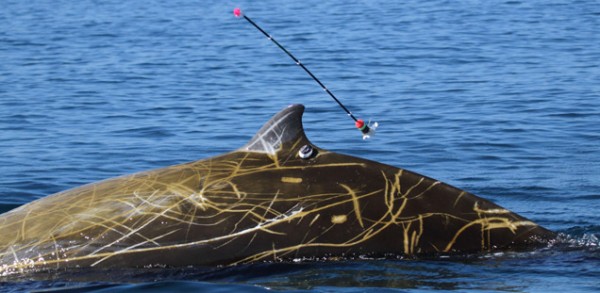
Cuvier’s beaked whales (Ziphius cavirostris) just shattered their own deep-diving record—as well as that of elephant seals, which were the previous record-holders. The little-known species of beaked whales, cigar-shaped cetaceans with prominent snouts and which range from tropical to northern temperate seas, has long been considered one of the most extreme divers in the ocean, capable of reaching a depth of 1888 meters and staying below for 95 minutes. But a new study that tracked eight individuals off the coast of southern California via satellite tags, as in the photo above, shows they can do much more. (Male Cuvier’s beaked whales have tusks, and the scars on the back of the male in the photo are from fighting with other males.) One whale dove to 2992 meters below the surface, breaking the deep-dive record of a southern elephant seal that was tracked to 2388 meters. Another Cuvier’s beaked whale in the study remained below the surface for 2 hours and 17 minutes. Unlike elephant seals and deep-diving sperm whales, which remain at the surface for an extended period after their dives, the beaked whales headed back into the depths less than 2 minutes later, the scientists report online today in PLOS ONE. The beaked whales in the study made their deep dives about seven times a day, foraging for squid and fish; they spent more time at the surface at night. By better understanding this species’ diving behaviors, the scientists hope to solve an ongoing mystery: Why are Cuvier’s beaked whales particularly sensitive to military sonar operations? Sixty-nine percent of all recorded strandings of marine mammals that were associated with such operations involved this species. Yet these eight whales were tagged and followed on a U.S. Navy sonar training range, leading the scientists to suggest that Cuvier’s beaked whales in this area may have adapted to human noise—perhaps, in part, by becoming the most extreme of extreme divers.

http://news.sciencemag.org/plants-animals/2014/03/scienceshot-beaked-whales-smash-deep-dive-record

Thanks to Dr. Rajadhyaksha for bringing this to the attention of the It’s Interesting community.
Norman Borlaug statue unveiled at U.S. Capitol on his 100th birthday

The leaders of both Iowa and the nation celebrated the legend of Norman Borlaug, Iowa’s native son, at a ceremony today intended to honor the man credited with saving a billion people from starvation.

At the unveiling of a statue of Borlaug in the U.S. Capitol’s National Statuary Hall, members of Iowa’s Congressional delegation praised Borlaug for the impression he and his work left on the world, which they said would inspire numerous others to seek the next breakthrough in agriculture.

“As Norman would remind us, ‘our reward for our labors is not what we take from this planet, but what we give back,’” Democratic U.S Rep. Bruce Braley said.

“Really the tribute the legacy of Norman Borlaug will be the thousands and thousands of people trying to replicate what he did, and that is the next breakthrough,” Republican U.S. Rep. Tom Latham said.

Republican U.S. Sen. Chuck Grassley issued a similar sentiment.

“As a farmer myself I’ve seen firsthand how Dr. Borlaug’s innovations have transformed agriculture,” Grassley said. “Dr. Borlaug will continue to inspire generations of scientists and frmers to innovate and lift up those mired by poverty.”

Iowa Gov. Terry Branstad called Borlaug a “fitting representative for the state of Iowa.”

“He was a son, a brother, a father, a grandfather, and a cousin whose legacy continues to make his family proud and we are glad to honor his family with this celebration,” Branstad said. “Dr. Borlaug was a farmer, a humanitarian, a scientist, and an educator, and his inspiration lives on in the many organizations, like the World Food Prize, that honor those who feed a growing world population.”

Norman Ernest Borlaug (March 25, 1914 – September 12, 2009) was an American biologist, humanitarian and Nobel laureate who has been called “the father of the Green Revolution”, “agriculture’s greatest spokesperson” and “The Man Who Saved A Billion Lives”. He is one of seven people to have won the Nobel Peace Prize, the Presidential Medal of Freedom and the Congressional Gold Medal and was also awarded the Padma Vibhushan, India’s second highest civilian honor.

Borlaug received his B.Sc. Biology 1937 and Ph.D. in plant pathology and genetics from the University of Minnesota in 1942. He took up an agricultural research position in Mexico, where he developed semi-dwarf, high-yield, disease-resistant wheat varieties.

During the mid-20th century, Borlaug led the introduction of these high-yielding varieties combined with modern agricultural production techniques to Mexico, Pakistan, and India. As a result, Mexico became a net exporter of wheat by 1963. Between 1965 and 1970, wheat yields nearly doubled in Pakistan and India, greatly improving the food security in those nations. These collective increases in yield have been labeled the Green Revolution, and Borlaug is often credited with saving over a billion people worldwide from starvation. He was awarded the Nobel Peace Prize in 1970 in recognition of his contributions to world peace through increasing food supply.

Later in his life, he helped apply these methods of increasing food production to Asia and Africa.

Borlaug continually advocated increasing crop yields as a means to curb deforestation. The large role he played in both increasing crop yields and promoting this view has led to this methodology being called by agricultural economists the “Borlaug hypothesis”, namely that increasing the productivity of agriculture on the best farmland can help control deforestation by reducing the demand for new farmland. According to this view, assuming that global food demand is on the rise, restricting crop usage to traditional low-yield methods would also require at least one of the following: the world population to decrease, either voluntarily or as a result of mass starvations; or the conversion of forest land into crop land. It is thus argued that high-yield techniques are ultimately saving ecosystems from destruction.

Borlaug’s name is nearly synonymous with the Green Revolution, against which many criticisms have been mounted over the decades by environmentalists and some nutritionalists. Throughout his years of research, Borlaug’s programs often faced opposition by people who consider genetic crossbreeding to be unnatural or to have negative effects. Borlaug’s work has been criticized for bringing large-scale monoculture, input-intensive farming techniques to countries that had previously relied on subsistence farming. These farming techniques reap large profits for U.S. agribusiness and agrochemical corporations such as Monsanto Company and have been criticized for widening social inequality in the countries owing to uneven food distribution while forcing a capitalist agenda of U.S. corporations onto countries that had undergone land reform.

Other concerns of his critics and critics of biotechnology in general include: that the construction of roads in populated third-world areas could lead to the destruction of wilderness; the crossing of genetic barriers; the inability of crops to fulfill all nutritional requirements; the decreased biodiversity from planting a small number of varieties; the environmental and economic effects of inorganic fertilizer and pesticides; the amount of herbicide sprayed on fields of herbicide-resistant crops.

Borlaug dismissed most claims of critics, but did take certain concerns seriously. He stated that his work has been “a change in the right direction, but it has not transformed the world into a Utopia”. Of environmental lobbyists he stated, “some of the environmental lobbyists of the Western nations are the salt of the earth, but many of them are elitists. They’ve never experienced the physical sensation of hunger. They do their lobbying from comfortable office suites in Washington or Brussels. If they lived just one month amid the misery of the developing world, as I have for fifty years, they’d be crying out for tractors and fertilizer and irrigation canals and be outraged that fashionable elitists back home were trying to deny them these things”.