A Brief History of Exploding Whales

A dead blue whale washed up on the shore of a small fishing town in Newfoundland last week. A bloated, beached, blubbery bomb of a blue whale. As of 3:30 pm Eastern Time today, the carcass is still intact, but onlookers are worried that it might soon explode.

The concerned marine science communicators at Upwell and Southern Fried Science have created a website devoted to monitoring this situation:

HasTheWhaleExplodedYet.com

Blue whales are the largest animals on earth. This one has reportedly ballooned to twice its original size. In the process of decomposition, methane and other gases accumulate in the body of the whale. The buildup of pressure, plus the disintegration of the whale’s flesh, could cause the whole body to burst.

The town of Trout River, on whose rocky shore the carcass rests, is bracing for what will come next—explosion or not, the 81-foot-long corpse is just plain gross, and it cannot remain out in the open indefinitely. Emily Butler, the clerk of Trout River, says the town is at a loss as to how to deal with the problem. “It’s only going to be a matter of time before it warms up and the smell becomes unbearable,” she told reporters on Monday.

Jack Lawson, a scientist affiliated with the Canadian fisheries department, told the media that his main concern was neither the stench nor the possibility of an explosion. He warned that the worst thing would be for a person to get too close to the whale and fall inside it: “The [whale] skin is starting to lose its integrity and if someone were to walk along, say, the chin — that is full of all that gas — they could fall in the whale. The insides will be liquefied. Retrieving them would be very difficult.”

“I have fallen through the side of a whale up to my chest,” he added. “It’s not very nice.”

It’s not exactly uncommon for whales to wash up on land, but the disruptiveness of such an event depends on how populated that land is by humans. In the case of Trout River, which only has 600 residents but swells with tourists at this time of year, it’s very disruptive.

According to Canadian news, the whale is one of nine that died earlier this month after becoming trapped by offshore ice floes. Three of these whales have washed up on Newfoundland beaches.

Sometimes beached whales erupt on their own, but sometimes humans blow them up first—as was the case in Florence, Oregon, in 1970. The town of Florence may have been the first to confront the dilemma that faces Trout River today.

Oregon officials thought their whale was too big to cut up or burn; they ended up hiring a highway engineer named Paul Thornton, from the state’s transportation department, to devise a plan. Thornton decided on using dynamite to blast the whale to bits. He figured that the blown-up pieces of blubber would scatter into the sea and whatever remained would be scavenged by birds and crabs.

What he did not figure was that the Oregon whale explosion of 1970 would generate one of the most-watched Internet videos in history and become the highlight of his career.

In an obituary for Thornton, who died in October 2013, Elizabeth Chuck of NBC News describes what happened that day:

Bystanders were moved back a quarter of a mile before the blast, but were forced to flee as blubber and huge chunks of whale came raining down on them. Parked cars even further from the scene got smashed by pieces of dead whale. No one was hurt, but the small pieces of whale remains were flecked onto anyone in the area.

To make matters worse, a large section of whale carcass never moved from the blast site at all. In the end, highway crews buried all the pieces and particles of the whale.

Broadcast journalist Paul Linnman, who had been on the scene, recalls that “the piece that flattened the car was about coffee-table size.”

Today, Oregon’s policy for dealing with dead beached whales is to bury them in the sand.

The world now knows that blowing up whales on purpose is best avoided. However, dead whales can still detonate on their own. In 2004, for example, the carcass of a sperm whale was being towed through the streets of Tainan City, Taiwan, when its belly burst, splattering blood and guts on nearby people, cars, and storefronts.

A similar, albeit less messy, mishap occurred with a beached sperm whale in the Faroe Islands last November. The marine biologist who probed the carcass was dressed for the occasion; he later told reporters that the explosion, which was triggered when he tried to cut the whale open, “wasn’t a shock.” Still, as the video below shows, the whale spewed furiously.

And here’s a video of what happened in Uruguay a few months ago, when a dead whale fell as it was being hoisted by a crane onto a truck bed:
Time-Lapse Footage of a Supercell Thunderstorm

A group of stormchasers captured some beautiful and terrifying footage of a supercell thunderstorm developing over Wyoming this weekend.

As far as thunderstorms go, supercells are the least common, but they’re responsible for most of the violent tornadoes in the U.S. In addition to extreme winds, they also dump torrential rain and hailstones that are bigger than golf balls — causing flash floods and a whole lot of damage. Their rising, spinning vortices of air — rotating updrafts called mesocyclones — can reach speeds of over 100 miles an hour (about 160 km/h) and sometimes last hours.

The Basehunters out of Norman, Oklahoma, created this epic time-lapse video from Wright to Newcastle in the northwestern part of Wyoming on Sunday.

Some degree of buoyancy is required, although the most critical ingredients for a supercell are moderate to strong wind speed and directional shear between the surface and about 20,000 feet (or 6 km).

Read more at http://www.iflscience.com/environment/time-lapse-footage-supercell-thunderstorm#LXl80zXQQ5yzpfGS.99

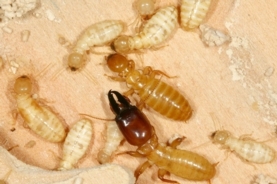
Termite Genome Reveals Details of “Caste System”

The genome of the termite has just been sequenced, and it is revealing several clues about how the pests create their rigid social order.

For instance, the new genome, detailed today (May 20) in the journal Nature Communications, uncovers some of the underpinnings of termites’ caste system, as well as the roots of the males’ sexual staying power.

Like other social insects— such as ants, honeybees and some wasps — termites live in highly structured “caste systems,” with each creature programmed to perform a rigidly defined job. A select few termite kings and queens reproduce, while drones and soldiers work, defend the colony or care for young.

Yet termites evolved their social structure independently from ants and bees, which belong to an order known as Hymenoptera.

To understand how this happened, Jürgen Liebig, a behavioral biologist at Arizona State University, and his colleagues collected dampwood termites(Zootermopsis nevadensis nuttingi) that lived in Monterey, California. The researchers then sequenced the genome of the insects and measured how those genes were expressed, or turned on and off.

The research revealed several insights about termite sexual and social behavior.

Termite society is roughly half males and half females. Termites have sexually active kings as well as queens, and kings make sperm throughout their lifetimes. Dampwood termite males also have testes that shrivel and grow seasonally.

Ants and honeybees, in contrast, live in predominantly female societies, and ant sex is a one-time affair.

“Their societies generally consist of females — the males are only there to fly out, mate and die,” Liebig told Live Science.

Sure enough, the termites had more gene variants associated with sperm production and degradation, and those genes were expressed to a greater extent than in ants, Liebig said. That finding suggested those genetic differences contributed to male termites’ sexual longevity.

The termite genome also contains a high fraction of genes that are turned off by chemical tags, or methyl groups, the researchers found. In honeybees, this process of methylation sets the fate of individual animals, determining their place in the caste system. The new findings suggest a similar process may be at play in termites.

In addition, both ants and termites communicate via chemical smell signals sensed by receptors on their antennas.

But while ants venture out for food, these particular termites spend their whole lives dining on one piece of wood.

The new analysis revealed that the termites have far fewer cell types for recognizing individual chemicals, probably because they rarely face off against foreign termites or search for food. They simply don’t need to recognize as many smells, Liebig said.

However, some termite species, such as Australian mound-building termites, do forage and encounter foreigners along the way, so as a follow-up, the team would like to see if those termites can detect a greater array of chemicals, Liebig said.

http://www.scientificamerican.com/article/termite-genome-reveals-details-of-caste-system/

New research shows that orangutans formulate and share future plans with others in their troop.

Very few animals have revealed an ability to consciously think about the future—behaviors such as storing food for the winter are often viewed as a function of instinct. Now a team of anthropologists at the University of Zurich has evidence that wild orangutans have the capacity to perceive the future, prepare for it and communicate those future plans to other orangutans.

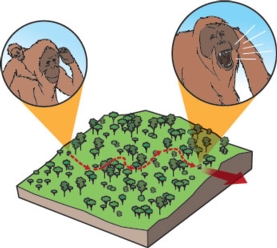
The researchers observed 15 dominant male orangutans in Sumatra for several years. These males roam through immense swaths of dense jungle, emitting loud yells every couple of hours so that the females they mate with and protect can locate and follow them. The shouts also warn away any lesser males that might be in the vicinity. These vocalizations had been observed by primatologists before, but the new data reveal that the apes’ last daily call, an especially long howl, is aimed in the direction they will travel in the morning—and the other apes take note. The females stop moving when they hear this special 80-second call, bed down for the night, and in the morning begin traveling in the direction indicated the evening before.

The scientists believe that the dominant apes are planning their route in advance and communicating it to other orangutans in the area. They acknowledge, however, that the dominant males might not intend their long calls to have such an effect on their followers. Karin Isler, a Zurich anthropologist who co-authored the study in PLOS ONE last fall, explains, “We don’t know whether the apes are conscious. This planning does not have to be conscious. But it is also more and more difficult to argue that they [do not have] some sort of mind of their own.”
BRAINY BEASTS
1 Capuchin monkeys appear to have a sense of fairness, insisting on receiving as good a food reward as their peers for performing the same job.

2 Scrub jays can relocate food that has been hidden for months and may even remember how long it has been stored. The jays also anticipate potential thefts and will relocate their food if they think another jay has spotted it.

3 Rhesus macaques will not pull a chain that brings them food if they think it will harm a fellow monkey.

4 Male voles may be able to predict when a female will be most fertile and, at the opportune time, revisit the location where she was last seen.

5 Bonobos and orangutans can use tools to retrieve food and then save their tools for later use.

http://www.scientificamerican.com/article/orangutans-share-their-future-plans-with-others/

Japanese soft drink manufacturer will deliver a can of ‘Pocari Sweat’ to the lunar surface in 2015

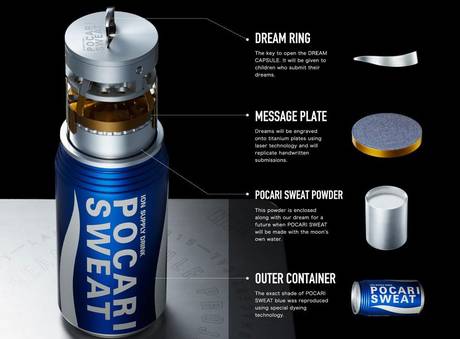
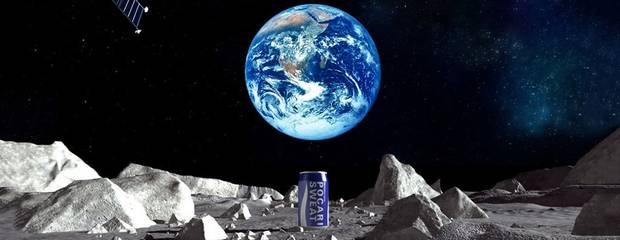
The Tokyo-based Otsuka Pharmaceutical (their drinks are sold for their health benefits, but they also develop their own drugs) says it wants to use private space companies to deliver a 1kg ‘Dream Capsule’ in the shape of a can of their most popular soft drink, Pocari Sweat, to the lunar surface.

As well as a small amount of Pocari Sweat in powdered form, the titanium can will also contain numerous disks with “messages by children from all over Asia” etched into their surfaces. “The time capsule contains the childrens’ dreams,” claims the company.

Children who submit their messages to the company will also be given a ‘dream ring’ – a special ring pull that opens up the can. Otsuka say that they hope this will inspire the young people to become astronauts and travel back to the Moon to one day re-read their dreams (and drink some tasty Pocari Sweat as well).

Despite the overt or even extreme commercialism of the project it also has a serious scientific goal, and in addition to delivering Pocari Sweat, Otsuka will be hoping to place the first privately-launched lander on the Moon.

The company will be working with a Pittsburgh-based firm named Astrobotic Technology to send their capsule on the 236,121 mile trip to the Earth’s satellite, with the mission planned to take place in October 2015. Astrobotic will use a Falcon 9 rocket to make the trip – the hopefully-reusable launcher under development by Elon Musk’s private space company, SpaceX.

If Astrobotic and Otsuka manage to complete the mission they’ll also be able to claim the multi-million dollar bounty offered by Google’s Lunar X competition. The search giant announced the prize back in 2007 as a spur for private space companies, offering $20 million to the first team to “land a robot on the surface of the Moon, travel 500 meters over the lunar surface, and send images and data back to the Earth.”

Astrobotic’s involvement in the project is particularly ironic as the company, which reportedly charges upwards of half a million dollars to send items to the Moon, is mainly interested in developing technologies designed to clean up debris in space – instead they’ll be dumping what some will view as trash on the lunar surface.

Although Otsuka’s ambitions sound like the extreme end of the PR stunt spectrum (althoughm how does it compare to projecting a loaf of bread onto a beloved public sculpture?) space advertising has a storied – if controversial – history.

In 1993, an American company named Space ­Marketing Inc proposed launching a 1 kilometre squared illuminated billboard into low orbit, which would have appeared as big and as bright as the Moon in the night’s sky. Public outcry scuppered the plans and the US government subsequently introduced a ban on advertising in space.

However, the legislation was later amended to allow “unobtrusive” sponsorships, a change that meant Pizza Hut was ablle to pull off an advertising coup in 2001 by delivering a vacuum-sealed pizza (it was salami flavour – pepperoni didn’t have the necessary shelf life) to astronauts aboard the International Space Station (ISS).

Otsuka and Pocari Sweat have also tried this sort of stunt before, and in the same year as Pizza Hut made the ultimate home delivery, the Japanese company created the first high-definition commercial in space, filming two Russian cosmonauts drinking Pocari Sweat and gazing pensively out of the window at the surface of the Earth below. In this context, delivering a can to the Moon’s surface seems like a small step for advertising, rather than a giant leap.

http://www.independent.co.uk/life-style/gadgets-and-tech/the-first-advert-on-the-moon-japanese-soft-drink-manufacturer-will-deliver-a-can-of-pocari-sweat-to-the-lunar-surface-in-2015-9382535.html

Medicine’s Top Earners Are Not the M.D.s

Though the recent release of Medicare’s physician payments cast a spotlight on the millions of dollars paid to some specialists, there is a startling secret behind America’s health care hierarchy: Physicians, the most highly trained members in the industry’s work force, are on average right in the middle of the compensation pack.

That is because the biggest bucks are currently earned not through the delivery of care, but from overseeing the business of medicine.

The base pay of insurance executives, hospital executives and even hospital administrators often far outstrips doctors’ salaries, according to an analysis performed for The New York Times by Compdata Surveys: $584,000 on average for an insurance chief executive officer, $386,000 for a hospital C.E.O. and $237,000 for a hospital administrator, compared with $306,000 for a surgeon and $185,000 for a general doctor.

And those numbers almost certainly understate the payment gap, since top executives frequently earn the bulk of their income in nonsalary compensation. In a deal that is not unusual in the industry, Mark T. Bertolini, the chief executive of Aetna, earned a salary of about $977,000 in 2012 but a total compensation package of over $36 million, the bulk of it from stocks vested and options he exercised that year. Likewise, Ronald J. Del Mauro, a former president of Barnabas Health, a midsize health system in New Jersey, earned a salary of just $28,000 in 2012, the year he retired, but total compensation of $21.7 million.

The proliferation of high earners in the medical business and administration ranks adds to the United States’ $2.7 trillion health care bill and stands in stark contrast with other developed countries, where top-ranked hospitals have only skeleton administrative staffs and where health care workers are generally paid less. And many experts say it’s bad value for health care dollars.

“At large hospitals there are senior V.P.s, V.P.s of this, that and the other,” said Cathy Schoen, senior vice president for policy, research and evaluation at the Commonwealth Fund, a New York-based foundation that focuses on health care. “Each one of them is paid more than before, and more than in any other country.”

She added, “The pay for the top five or 10 executives at insurers is pretty astounding — way more than a highly trained surgeon.”

She said that executive salaries in health care “increased hugely in the ‘90s” and that the trend has continued. For example, in addition to Mr. Del Mauro’s $21.7 million package, Barnabas Health listed more than 20 vice presidents who earned over $350,000 on its latest available tax return; the new chief executive earned about $3 million. Data released by Medicare show that Barnabas Health’s hospitals bill more than twice the national average for many procedures. (In 2006, the hospital paid one of the largest Medicare fines ever to settle fraud charges brought by federal prosecutors.)

Hospitals and insurers maintain that large pay packages are necessary to attract top executives who have the expertise needed to cope with the complex structure of American health care, where hospitals and insurers undertake hundreds of negotiations to set prices.

Ellen Greene, a spokeswoman for Barnabas Health, said Mr. Del Mauro’s retirement package was “a function of over four decades of service and reflects his exceptional legacy.” Nearly $14 million was a cumulative payout from a deferred retirement plan, she said, and the remainder included base compensation, a bonus and an incentive plan

Ms. Greene also said Barnabas’s compensation program follows I.R.S. rules and is established by an executive compensation committee with “guidance from a nationally recognized compensation consultant.”

In many areas, the health care industry is home to the top earning executives in the nonprofit sector.

And studies suggest that administrative costs make up 20 to 30 percent of the United States health care bill, far higher than in any other country. American insurers, meanwhile, spent $606 per person on administrative costs, more than twice as much as in any other developed country and more than three times as much as many, according to a study by the Commonwealth Fund.

As a result of the system’s complexity, there are many jobs descriptions for positions that often don’t exist elsewhere: medical coders, claims adjusters, medical device brokers, drug purchasers — not to mention the “navigators” created by the Affordable Care Act.

Among doctors, there is growing frustration over the army of businesspeople around them and the impact of administrative costs, which are reflected in inflated charges for medical services.

“Most doctors want to do well by their patients,” said Dr. Abeel A. Mangi, a cardiothoracic surgeon at the Yale School of Medicine, who is teaming up with a group at the Yale School of Management to better evaluate cost and outcomes in his department. “Other constituents, such as device manufacturers, pharmaceutical companies and even hospital administrators, may not necessarily have that perspective.”

Doctors are beginning to push back: Last month, 75 doctors in northern Wisconsin took out an advertisement in The Wisconsin State Journal demanding widespread health reforms to lower prices, including penalizing hospitals for overbuilding and requiring that 95 percent of insurance premiums be used on medical care. The movement was ignited when a surgeon, Dr. Hans Rechsteiner, discovered that a brief outpatient appendectomy he had performed for a fee of $1,700 generated over $12,000 in hospital bills, including $6,500 for operating room and recovery room charges.

It’s worth noting that the health care industry is staffed by some of the lowest as well as highest paid professionals in any business. The average staff nurse is paid about $61,000 a year, and an emergency medical technician earns just about minimum wage, for a yearly income of $27,000, according to the Compdata analysis. Many medics work two or three jobs to make ends meet.

“It’s stressful, dirty, hard work, and the burnout rate is high,” said Tom McNulty, a 19-year-old college student who volunteers for an ambulance corps outside Rochester. Though he finds it fulfilling, he said he would not make it a career: “Financially, it’s not feasible.”

Elisabeth Rosenthal is a reporter for The New York Times who is writing a series about the cost of health care, “Paying Till It Hurts.”

Thanks to Ray Gaudette for bringing this to the attention of the It’s Interesting community.

Physicists discover a surprisingly straightforward way to turn light into matter

By Jonathan Webb

The design, published in Nature Photonics, adapts technology used in fusion research.

Several locations could now enter a race to convert photons into positrons and electrons for the very first time.

This would prove an 80-year-old theory by Breit and Wheeler, who themselves thought physical proof was impossible.

Now, according to researchers from Imperial College London, that proof is within reach.

Prof Steven Rose and his PhD student, Oliver Pike, told the BBC it could happen within a year.

“With a good experimental team, it should be quite doable,” said Mr Pike.

If the experiment comes to fruition, it will be the final piece in a puzzle that began in 1905, when Einstein accounted for the photoelectric effect with his model of light as a particle.

Several other basic interactions between matter and light have been described and subsequently proved by experiment, including Dirac’s 1930 proposal that an electron and its antimatter counterpart, a positron, could be annihilated upon collision to produce two photons.

Breit and Wheeler’s theoretical prediction of the reverse – that two photons could crash together and produce matter (a positron and an electron) – has been difficult to observe.

“The reason this is very hard to see in the lab is that you need to throw an awful lot of photons together – because the probability of any two of them interconverting is very low,” Prof Rose explained.

His team proposes gathering that vast number of very high-energy photons by firing an intense beam of gamma-rays into a further cloud of photons, created within a tiny, gold-lined cylinder.

That cylinder is called a “hohlraum”, German for “hollow space”, because it contains a vacuum, and it is usually used in nuclear fusion research. The cloud of photons inside it is made from extraordinarily intense X-rays and is about as hot as the Sun.

Hitting this very dense cloud of photons with the powerful gamma-ray beam raises the probability of collisions that will make matter – and history.

“It’s pretty amazing really,” said Mr Pike. He says it took some time to realise the value of the scheme, which he and two colleagues initially jotted down on scrap paper over several cups of coffee.

“For the first 12 hours or so, we didn’t quite appreciate its magnitude.”

But their subsequent calculations showed that the design, theoretically at least, has more than enough power to crack the challenge set by Breit and Wheeler in the 1930s.

“All the ingredients are there,” agrees Sir Peter Knight, an emeritus professor at Imperial College who was not involved in the research but describes it as a “really clever idea”.

“I think people will seriously start to have a crack at this,” Prof Knight told BBC News, though he cautioned that there were a lot of things to get right when putting the design into practice.

“If it’s done in a year, then they’ve done bloody well! I think it might take a bit longer.”

Some healthy scientific competition may speed up the process.

There are at least three facilities with the necessary equipment to test out the new proposal, including the Atomic Weapons Establishment in Oldham.

“The race to carry out and complete the experiment is on,” said Mr Pike.

http://www.bbc.com/news/science-environment-27470034

Thanks to Da Brayn for bringing this to the attention of the It’s Interesting community.

Fossil Whale Offers Clues to Origins of ‘Seeing With Sound’

When you’re trying to track a fish in the murky ocean, forget about using your eyes—use your ears. Dolphins, orcas, and other toothed whales—known as odontocetes—pinpoint their prey by producing high-frequency sounds that bounce around their marine environment and reveal exactly where tricky fish are trying to hide. But when did whales evolve this sonarlike ability, known as echolocation? A newly named, 28-million-year-old whale may hold the answer.

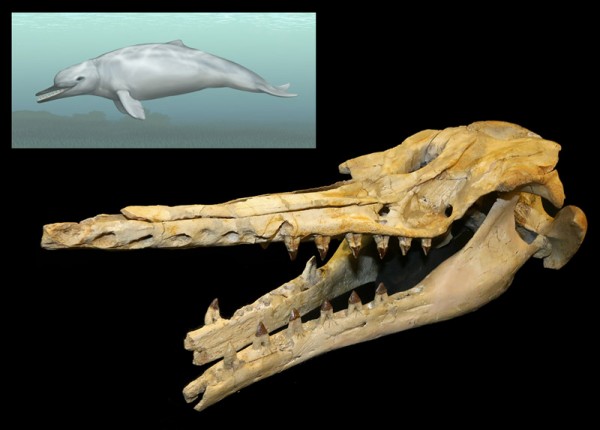
Found in South Carolina among rocks dating back to the Oligocene epoch and christened Cotylocara macei, the fossil whale is named after Mace Brown, a curator at the College of Charleston’s Mace Brown Natural History Museum in South Carolina who acquired the specimen for his private collection about a decade ago. It was in that private accumulation of fossils that Jonathan Geisler, a paleontologist at the New York Institute of Technology College of Osteopathic Medicine in Old Westbury, first saw the skull. “I knew it was special then,” he says.

The only known specimen of the early odontocete includes a nearly complete skull and jaw, three neck vertebrae, and fragments of seven ribs. It’s the skull that makes Cotylocara so remarkable. While the whale’s soft tissue rotted away long ago, the skull bones show several features—such as a downturned snout and a slight asymmetry of the skull—that suggest Cotylocara was one of the earliest whales to use echolocation, Geisler’s team reports online today in Nature.

The strongest pieces of evidence for this hypothesis, Geisler explains, are cavities at the base of the snout and on top of the skull that probably held air sinuses. “These air sinuses are thought to have important roles in the production of high-frequency vocalizations that living odontocetes use for echolocation,” Geisler says, possibly helping direct returning sound waves or store air that can be used to make continuous sound.

“I think the authors have a good case for inferring that Cotylocara had some ability to produce some sound from its forehead, just as living toothed whales do today,” says Nicholas Pyenson, a marine mammal paleontologist at the Smithsonian Institution’s National Museum of Natural History in Washington, D.C. But even if Cotylocara made those sounds, could it have heard them? Living whales have specialized ear bones that let them hear the high-frequency sounds bouncing off their prey. The only known skull of Cotylocara doesn’t have well-preserved ear bones, and, therefore, knowing whether the whale could have actually used echolocation for hunting is unclear. “Overall, the description of Cotylocara underscores the need to investigate the inner ear of fossil Oligocene cetaceans in much more detail, because that’s where the answer will be,” Pyenson says.

Nevertheless, the whale’s probable sound-producing abilities give Cotylocara an important place in whale evolution. Whale’s biological sonar is thought to have evolved only once along the ancestral line leading to today’s toothed whales, Geisler notes. Cotylocara lies along that evolutionary stem, as do other Oligocene fossil whales that have already been found. The skull features that allowed Cotylocara to create sound, Geisler says, “can now be investigated in other fossil whales to more fully understand the evolution of echolocation.” For now, the evolutionary epic of whale echolocation is only just beginning to be heard.

http://news.sciencemag.org/paleontology/2014/03/fossil-whale-offers-clues-origins-seeing-sound

Thanks to Dr. Rajadhyaksha for bringing this to the attention of the It’s Interesting community.

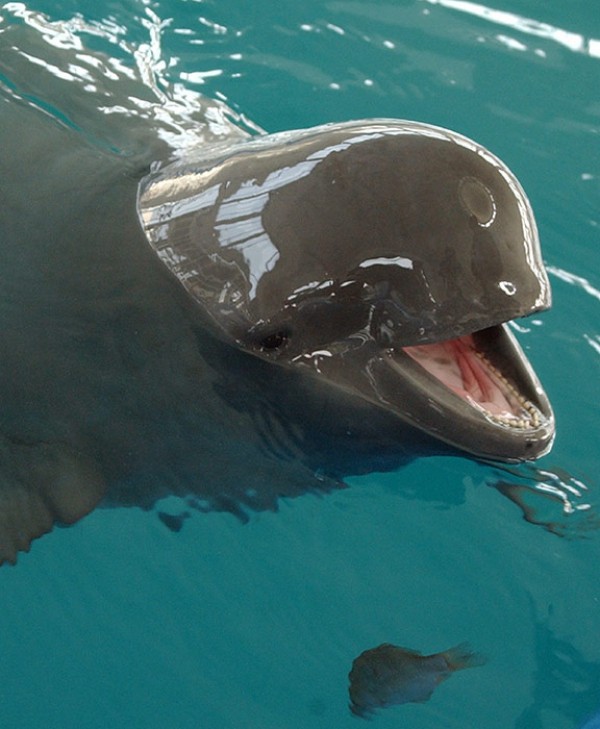
New research shows that whales and dolphins can’t taste anything except salt

Tastes are a privilege. The oral sensations not only satisfy foodies, but also on a primal level, protect animals from toxic substances. Yet cetaceans—whales and dolphins—may lack this crucial ability, according to a new study. Mutations in a cetacean ancestor obliterated their basic machinery for four of the five primary tastes, making them the first group of mammals to have lost the majority of this sensory system.

The five primary tastes are sweet, bitter, umami (savory), sour, and salty. These flavors are recognized by taste receptors—proteins that coat neurons embedded in the tongue. For the most part, taste receptor genes present across all vertebrates.

Except, it seems, cetaceans. Researchers uncovered a massive loss of taste receptors in these animals by screening the genomes of 15 species. The investigation spanned the two major lineages of cetaceans: Krill-loving baleen whales—such as bowheads and minkes—were surveyed along with those with teeth, like bottlenose dolphins and sperm whales.

The taste genes weren’t gone per se, but were irreparably damaged by mutations, the team reports online this month in Genome Biology and Evolution. Genes encode proteins, which in turn execute certain functions in cells. Certain errors in the code can derail protein production—at which point the gene becomes a “pseudogene” or a lingering shell of a trait forgotten. Identical pseudogene corpses were discovered across the different cetacean species for sweet, bitter, umami, and sour taste receptors. Salty tastes were the only exception.

“The loss of bitter taste is a complete surprise, because natural toxins typically taste bitter,” says zoologist Huabin Zhao of Wuhan University in China who led the study. All whales likely descend from raccoon-esque raoellids, a group of herbivorous land mammals that transitioned to the sea where they became fish eaters. Plants range in flavors—from sugary apples to tart, poisonous rhubarb leaves—and to survive, primitive animals learned the taste cues that signal whether food is delicious or dangerous. Based on the findings, taste dissipated after this common ancestor became fully aquatic—53 million years ago—but before the group split 36 million years ago into toothed and baleen whales.

“Pseudogenes arise when a trait is no longer needed,” says evolutionary biologist Jianzhi Zhang of the University of Michigan, Ann Arbor, who was not involved in the study. “So it still raises the question as to why whales could afford to lose four of the five primary tastes.” The retention of salty taste receptors suggests that they have other vital roles, such as maintaining sodium levels and blood pressure.

But dulled taste perception might be dangerous if noxious substances spill into the water. Orcas have unwittingly migrated into oil spills, while algal toxins created by fertilizer runoff consistently seep into the fish prey of dolphins living off the Florida coast.

“When you have a sense of taste, it dictates whether you swallow or not,” says Danielle Reed, a geneticist at the Monell Chemical Senses Center in Philadelphia, Pennsylvania. She was not involved with the current work, but co-authored a 2012 paper that found the first genetic inklings that umami and sweet taste receptors were missing in cetaceans, albeit in only one species—bottlenose dolphins.

Flavors are typically released by chewing, but cetaceans tend to swallow their food whole. “The message seems clear. If you don’t chew your food and prefer swallowing food whole, then taste really becomes irrelevant,” Reed says.

http://news.sciencemag.org/biology/2014/05/whales-cant-taste-anything-salt

Thanks to Dr. Rajadhyaksha for bringing this to the attention of the It’s Interesting community.

Recently Spotted 103-Year-Old Orca Is Bad News For SeaWorld

1216x700

SeaWorld could be in trouble because of “Granny,” the world’s oldest known living orca. The 103-year-old whale (also known as J2) was recently spotted off Canada’s western coast with her pod — her children, grandchildren and great-grandchildren. But while the Granny sighting is thrilling for us, it’s problematic for SeaWorld.

First of all, SeaWorld has claimed that “no one knows for sure how long killer whales live,” when simple figures or even living and thriving examples — like Granny — can give us a pretty good idea. The Whale and Dolphin Conservation project estimates that whales born in captivity only live to 4.5 years old, on average; many of SeaWorld’s orcas die before they reach their 20s. Perhaps because of their reduced lifespans, the whales are forced to breed continuously and at perilously young ages, which could also diminish their overall health.

Another key aspect of an orca’s life — which is missing in captivity — is the ability to swim up to 100 miles per day. When Granny was spotted earlier this week, she had just finished an 800-mile trek from northern California along with her pod. According to animal welfare advocates, long-distance swimming is integral to orcas’ psychological health and well-being; SeaWorld, however, has gone on record claiming that orcas do not need to swim hundreds of miles regularly, ostensibly to defend the parks’ cruel practice of keeping massive, powerful orcas confined to cramped tanks.

Since Granny was first spotted (as early as the 1930s), she’s believed to have mothered two calves, who in turn have had calves of their own. (One of her grandchildren, Canuck, reportedly died at the age of 4 after being captured and held at SeaWorld). As her pod has grown, Granny has kept up with them — without being separated through human intervention — and traveled astonishing distances with her pod annually. Orcas at SeaWorld are routinely separated from their pods, which has been known to cause huge mental and emotional strain and can prevent calves from developing normally.

Granny doesn’t simply represent an impressive feat of nature; she embodies what’s wrong with SeaWorld by being a living example of what’s right in the wild. While it’s true that most wild orcas don’t live as long as Granny has, their lifespans are still dramatically longer than those of SeaWorld’s whales (the NOAA estimates that wild female orcas, like Granny, live an average of 50 to 60 years). Their lives are also filled with much more swimming, exploration, variety and bonding with family.

https://www.thedodo.com/recently-spotted-103-year-old–547381307.html#recently-spotted-103-year-old–547381307.html