Live to 100: Number of centenarians has doubled


Edward Rondthaler was born on June 9, 1905, in Bethlehem, Pennsylvania, and died in 2009 at the age of 104. He was a noted typographer, earning a national reputation for helping to usher in the age of photographic typesetting, according to The New York Times. Photographic typesetting was an easier way to print than hot-metal type. He credited cold showers with his longevity. He died at home in Cedar City, Utah.


A 116-year-old Japanese woman named Misao Okawa from Osaka is still alive. She was born March 5, 1898, and had three children. Her husband died in 1931. She kept in shape throughout much of her life. At 102, she said she did leg squats to keep healthy. She didn’t start using a wheelchair until she turned 110. She currently lives in a nursing home.


Ann Nixon Cooper became famous after President-elect Barack Obama used her story on election night 2008 to talk about the country’s progress. “She was born just a generation past slavery,” Obama said. “At a time when women’s voices were silenced and their hopes dismissed, she lived to see them stand up and speak out and reach for the ballot.” She died in 2009 of “natural causes” at age 107. The secret to her long life, she said, was being cheerful. “I’ve always been a happy person, a giggling person, a wide-mouthed person.” She also kept fit — dancing the electric slide until age 103.


Jeanne Calment was born on February 21, 1875, and lived to the age of 122 in Arles, France (home of the painter Vincent Van Gogh, whom she met as a little girl). At 85, she took up fencing lessons. At 100, she was still riding her bike. She said she ate more than two pounds of chocolate a week and only quit smoking at age 120, not for health reasons, but because she could not see well enough to light her cigarettes. She credited her longevity to port wine, her sense of humor and a diet rich in olive oil. She died in August 1997.


Jiroemon Kimura was born April 19, 1897, and died June 12, 2013, at the age of 116. The retired Japanese postman attributed his long life to light eating, not smoking and work in the sunshine. After his postal career, he worked on a farm. “I am always looking up towards the sky; that is how I am.” Of his six siblings, five lived to the age of 90. He died of natural causes.


In this March 31, 2010 photo, Mississippi Winn listens to a speaker during her 113th birthday party at Magnolia Manor Nursing Home in Shreveport, La. Winn, who was believed to be the oldest living African-American in the U.S. and the seventh-oldest living person in the world, died Friday, Jan. 14, 2011.
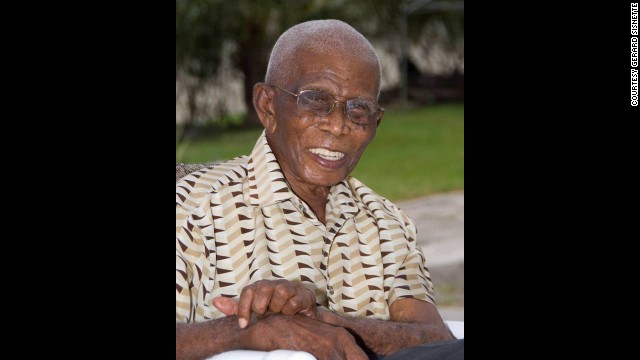

The oldest verified living man in the Western Hemisphere, James Sisnett, died in his sleep in Barbados on Thursday, May 23, 2013.


SYDNEY, AUSTRALIA – OCTOBER 18: Ruth Frith aged 100 competes in the Throws Pentathlon during the Sydney 2009 World Masters Games at the Sydney Olympic Park Athletic Centre on October 18, 2009 in Sydney, Australia.


Fauja Singh is recognized as the first 100-year-old to ever run a marathon. The great-grandfather, now 103, continues to run or walk every day. Nicknamed the “Turbaned Tornado,” he took up running to overcome his grief after the death of his wife and a son. He ran his first marathon at age 89. The key to life: “Laughter and happiness,” he says. “That’s your remedy for everything.”

It is Her Majesty’s custom to send a personal greeting to her subjects on their 100th birthdays. These days the Queen of England has a lot more letters to write.

That’s because a record number of people are living to 100 and beyond in the United Kingdom — and worldwide. In fact, one-third of babies born in the UK in 2013 are expected to live to 100, according to their Office of National Statistics. In the United States, the population has seen similar trends.

As this centenarian population grows, scientists want a better understanding of how and why those people do eventually die.

A new study finds that these 100+ types are more likely to have “old age” listed as their cause of death than chronic diseases, according to lead author Dr. Catherine Evans.

The study, published in the most recent edition of PLOS Medicine, finds that most centenarians die from pneumonia or general frailty rather than cancer or heart disease. Chronic diseases are more likely to kill people who only make it to their 80s and 90s.

To get at this information, Evans examined data from the death records of people in the United Kingdom who died between 2001 and 2010. She looked at a group of 35,867 people who were between 100 and 115 when they died. The median age of death was 101.

Evans said she was surprised at how large that 100+ population is. It has nearly doubled every decade since the 1950s in the UK. Globally the 100+ population is projected to grow to about 18 million people by the end of the century.

Looking at where these centenarians died showed that the majority ended their days in a care home (61%) or hospital (27%). They were less likely to die at home (10%) or in hospice care (0.2%).

Earlier studies show the elderly prefer to die at home, so the study authors argue that as this population grows there is an “urgent need to ensure adequate long-term care and responsive community care services to support people living with extreme longevity in these care settings.”

Since the elderly are often frail, earlier studies have shown that “home” isn’t necessarily about the brick and mortar where a person’s family lived. Home, Evans suggests, may be more of a “metaphor for where you feel safe and secure, and where your loved ones are nearby.”

While this study specifically looked at the British population, the number of centenarians has grown all around the world.

Dr. Ronald D. Adelman, who works with many of these old-old people as the medical director of Cornell’s Wright Center on Aging, said that the study is an important tool to understand a population that’s often overlooked.

“When it comes to the elderly there are really three groups we look at,” explained Adelman. “Those who are considered old, who are 65 to 74 years of age; the older, between ages 75 to 84; and the old-old, which are those people over the age of 85.

“But when you look at centenarians, that really is an expanding group, and the important thing is to get their advance directives, to make sure these people express how they want to be treated in their later years, so they can live a better quality of life and be more comfortable. Where do they want to live, how do they want to live and what’s best for them?”

Because of advances made in medical technology, and the fact many people entering their golden years are more health-conscious than ever before, Adelman says it’s time society takes the elderly, including centenarians, seriously because this older age group will continue to grow and need care.

“To be honest, 65 is no longer old,” noted Adelman. “Ten thousand Americans are turning 65 every day. There are 77 million baby boomers, who were born between 1946 and 1964. They are more educated, they have the best health literacy than prior generations, they exercise, they eat right and they are living longer, healthier lives.

“We need to be able to provide them the best care and services possible, as they age into their 80s, 90s and beyond.”

http://www.cnn.com/2014/06/04/health/centenarian-death/index.html?hpt=hp_c3

Scientists at Duke University say the world is on the brink of its sixth great extinction

Is the end near? Scientists at Duke University say the world is on the brink of its sixth great extinction, since certain species of plants and animals are now dying out at least 1,000 times faster than they did before humans came into existence.

The study, published Thursday in the journal Science, measured the the rate at which species are disappearing from Earth. In 1995, the researchers found that the pre-human rate of extinctions was roughly 1. Now, that rate is about 100 to 1,000.

Stuart Pimm, the study’s lead author, said habitat loss is mostly to blame for the increasing death rates. As humans continue to alter and destroy more land, animals and plants are increasingly being displaced from their natural habitats. Climate change is also a factor, he added.

“Whether we avoid it or not will depend on our actions,” Pimm warned.

Thanks to Da Brayn for bringing this to the attention of the It’s Interesting community.

http://theweek.com/article/index/262400/speedreads-earth-is-nearing-sixth-great-extinction-alarming-survey-says#axzz33DjJqxZg

Americans Less Fearful Of Storms Named After Women

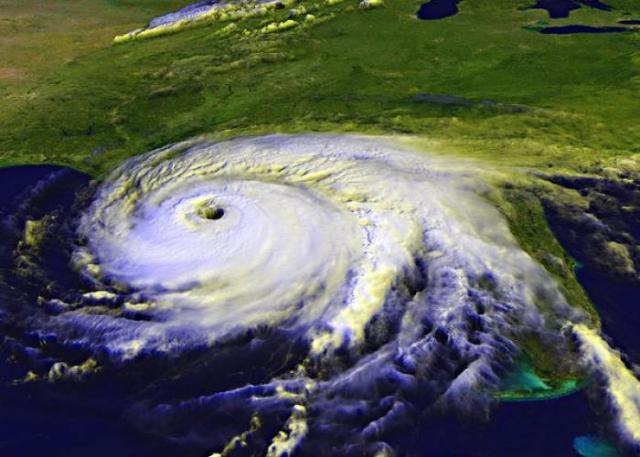
A study published Monday suggests Americans are less afraid of hurricanes with female names.

This is a real study in the Proceedings of the National Academy of Sciences — not The Onion.

Researchers at the University of Illinois and Arizona State looked at deaths caused by hurricanes between 1950 — when storms were first named — and 2012.

Even after tossing out Katrina and Audrey, particularly deadly storms that would have skewed their model, they found that hurricanes with female names caused an average of 45 deaths, compared with 23 deaths from storms with male names.

In order to back up their findings, the scientists surveyed hundreds of individuals and found that, even on paper, they were less fearful of storms they thought would hit like a girl.

“People imagining a ‘female’ hurricane were not as willing to seek shelter,” said study co-author Sharon Shavitt in a statement. “The stereotypes that underlie these judgments are subtle and not necessarily hostile toward women — they may involve viewing women as warmer and less aggressive than men.”

Hurricanes were traditionally given women’s names, but the National Hurricane Center began the practice of alternating male and female monikers in 1979.

The study suggests that changing a hurricane’s name from Charley to Eloise “could nearly triple its death toll.”

Not everyone is buying it. No two storms are alike, and there could be plenty of other factors that determine how people respond to them.

Hugh Gladwin, an anthropologist at Florida International University, told USA Today the results are “very problematic and misleading.”

But Laura Wattenberg, the creator of the popular naming site BabyNameWizard.com, notes that names do have subtle psychological effects on behavior.

“With a hurricane, you can have 40 million people affected by the same name at the same time,” Wattenberg says. “Even a tiny difference that’s spurred by the reaction to a name could end up having an effect.”

Although a great deal of care is devoted to choosing names for practically everything that has one — babies, consumer products, movies — nothing is as randomly named as a hurricane. Names are selected months and years in advance and then assigned in alphabetical order. There’s no telling which named storm will prove to be a real menace.

Wattenberg suggests choosing names that really pack a punch, “names of villains or markers of fear and evil to get people to act.

“Perhaps our public policy is that we should be naming all the hurricanes Voldemort,” she says.

http://www.npr.org/blogs/thetwo-way/2014/06/02/318277196/study-americans-less-fearful-of-storms-named-after-women?sc=17&f=1001&utm_source=iosnewsapp&utm_medium=Email&utm_campaign=app

Parenting Rewires the Male Brain

By Elizabeth Norton

Cultures around the world have long assumed that women are hardwired to be mothers. But a new study suggests that caring for children awakens a parenting network in the brain—even turning on some of the same circuits in men as it does in women. The research implies that the neural underpinnings of the so-called maternal instinct aren’t unique to women, or activated solely by hormones, but can be developed by anyone who chooses to be a parent.

“This is the first study to look at the way dads’ brains change with child care experience,” says Kevin Pelphrey, a neuroscientist at Yale University who was not involved with the study. “What we thought of as a purely maternal circuit can also be turned on just by being a parent—which is neat, given the way our culture is changing with respect to shared responsibility and marriage equality.”

The findings come from an investigation of two types of households in Israel: traditional families consisting of a biological mother and father, in which the mother assumed most of the caregiving duties, though the fathers were very involved; and homosexual male couples, one of whom was the biological father, who’d had the child with the help of surrogate mothers. The two-father couples had taken the babies home shortly after birth and shared caregiving responsibilities equally. All participants in the study were first-time parents.

Researchers led by Ruth Feldman, a psychologist and neuroscientist at Bar-Ilan University in Ramat Gan, Israel, visited with the families in their homes, videotaping each parent with the child and then the parents and children alone. The team, which included collaborators at the Tel Aviv Sourasky Medical Center in Israel, also took saliva samples from all parents before and after the videotaped sessions to measure oxytocin—a hormone that’s released at times of intimacy and affection and is widely considered the “trust hormone.” Within a week of the home visit, the participants underwent functional magnetic resonance imaging scanning to determine how their brains reacted to the videotapes of themselves with their infants.

The mothers, their husbands, and the homosexual father-father couples all showed the activation of what the researchers term a “parenting network” that incorporated two linked but separate pathways in the brain. One circuit encompasses evolutionarily ancient structures such as the amygdala, insula, and nucleus accumbens, which handle strong emotions, attention, vigilance, and reward. The other pathway turns up in response to learning and experience and includes parts of the prefrontal cortex and an area called the superior temporal sulcus.

In the mothers, activation was stronger in the amygdala-centered network, whereas the heterosexual fathers showed more activity in the network that’s more experience-dependent. At first glance, Feldman says, the finding would seem to suggest that mothers are more wired up to nurture, protect, and possibly worry about their children. The fathers, in contrast, might have to develop these traits through tending, communicating, and learning from their babies what various sounds mean and what the child needs.

“It’s as if the father’s amygdala can shut off when there’s a woman around,” Feldman observes. It could be assumed, she says, that this circuitry is activated only by the rush of hormones during conception, pregnancy, and childbirth.

But the brains of the homosexual couples, in which each partner was a primary caregiver, told a different story. All of these men showed activity that mirrored that of the mothers, with much higher activation in the amygdala-based network, the team reports online today in the Proceedings of the National Academy of Sciences.

This finding argues strongly that the experience of hands-on parenting, with no female mother anywhere in the picture, can configure a caregiver’s brain in the same way that pregnancy and childbirth do, Feldman says.

She adds that in the heterosexual fathers, the activation of the amygdala-based network was proportional to the amount of time they spent with the baby, though the activity wasn’t as high as in the mothers or in the two-father couples.

Feldman does not believe that the brain activity of the primary-caregiving fathers differed because they were gay. Previous imaging studies, she notes, show no difference in brain activation when homosexual and heterosexual participants viewed pictures of their loved ones.

Future studies, Pelphrey says, might focus more closely on this question. “But it’s clear that we’re all born with the circuitry to help us be sensitive caregivers, and the network can be turned up through parenting.”

http://news.sciencemag.org/brain-behavior/2014/05/parenting-rewires-male-brain

This Mouthguard Knows If You’re At Risk Of Concussion

When Anthony Gonzales received a hard tackle while playing rugby in 2011, he didn’t know if he had a concussion — despite showing possible symptoms. His story is a common one among young athletes — a dangerous prospect if you consider the potential consequences of an undetected head injury.

The Centers for Disease Control and Prevention report that each year, American emergency departments treat an estimated 173,285 sports- and recreation-related traumatic brain injuries (TBIs), including concussions, among athletes aged 19 and younger. Though symptoms can be subtle and difficult to detect, these head injuries can lead to lifelong cognitive problems that affect memory, behavior, and emotions. If repeated within a short period of time, head trauma can cause more serious brain problems or even death.

To help reduce the number of athletes who return to play too early and risk worsening an existing injury, Gonzales and fellow Arizona State University alum Bob Merriman developed the FITGuard, a mouthguard that indicates when a blow to the head is serious enough to warrant further attention.

The FITGuard has a green LED strip on the front that turns blue when it detects a medium force impact and red when there’s an above-50 percent chance the athlete has suffered a concussion. The athlete can then use an app to download a data log showing why the guard is displaying a given color. The data will also be uploaded to a central database to help the FIT team improve the device.

“[The FITGuard] will allow parents, coaches and leagues to follow their normal concussion protocol while having some quantitative data to support their conclusion,” Gonzales said in the video above. “We want to provide them with the tools to make informed decisions about the safety of athletes and reduce the traumatic effects of brain injury.”

The company has so far won several thousand dollars in grant funding, begun software development and produced several prototypes. If it works as planned, the FITGuard could be a big step forward in the proper treatment and diagnosis of head injuries, protecting athletes and helping relieve anxious parents and coaches.

While the issue of concussion prevention has received increased attention in recent years, including a $30 million donation by the NFL to the National Institutes of Health for medical research, sports-related brain injuries remain common, with the majority of cases involving young athletes. President Obama even hosted a summit on youth sports concussions this week at the White House to call attention to the issue.

The FITGuard is one of many recent strategies to limit the effects of head trauma, including new and improved helmets and stricter enforcement of concussion protocol, which generally consists of a medical examination for any changes in a player’s behavior, thinking, or physical functioning.

Though they haven’t brought their product to market yet, Gonzales has high hopes for his product: “Our device, made right here in the good old U.S.A., is the next step in sports evolution.”

http://www.huffingtonpost.com/2014/06/03/concussion-mouth-guard-fitguard_n_5399966.html?ncid=fcbklnkushpmg00000063

First pants worn by horse riders in Central Asia 3,000 years ago

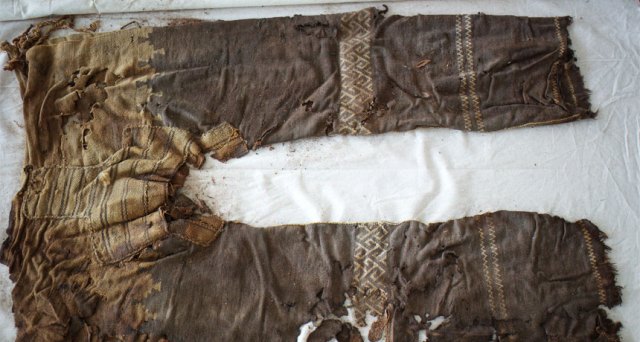
Two men whose remains were recently excavated from tombs in western China put their pants on one leg at a time, just like the rest of us. But these nomadic herders did so between 3,300 and 3,000 years ago, making their trousers the oldest known examples of this innovative apparel, a new study finds.

With straight-fitting legs and a wide crotch, the ancient wool trousers resemble modern riding pants, says a team led by archaeologists Ulrike Beck and Mayke Wagner of the German Archaeological Institute in Berlin. The discoveries, uncovered in the Yanghai graveyard in China’s Tarim Basin, support previous work suggesting that nomadic herders in Central Asia invented pants to provide bodily protection and freedom of movement for horseback journeys and mounted warfare, the scientists report May 22 in Quaternary International.

“This new paper definitely supports the idea that trousers were invented for horse riding by mobile pastoralists, and that trousers were brought to the Tarim Basin by horse-riding peoples,” remarks linguist and China authority Victor Mair of the University of Pennsylvania.

Previously, Europeans and Asians wore gowns, robes, tunics, togas or — as observed on the 5,300-year-old body of Ötzi the Iceman — a three-piece combination of loincloth and individual leggings.

A dry climate and hot summers helped preserve human corpses, clothing and other organic material in the Tarim Basin. More than 500 tombs have been excavated in a graveyard there since the early 1970s.

Earlier research on mummies from several Tarim Basin sites, led by Mair, identified a 2,600-year-old individual known as Cherchen Man who wore burgundy trousers probably made of wool. Trousers of Scythian nomads from West Asia date to roughly 2,500 years ago.

Mair suspects that horse riding began about 3,400 years ago and trouser-making came shortly thereafter in wetter regions to the north and west of the Tarim Basin. Ancient trousers from those areas are not likely to have been preserved, Mair says.

Horse riding’s origins are uncertain and could date to at least 4,000 years ago, comments archaeologist Margarita Gleba of University College London. If so, she says, “I would not be surprised if trousers appeared at least that far back.”

The two trouser-wearing men entombed at Yanghai were roughly 40 years old and had probably been warriors as well as herders, the investigators say. One man was buried with a decorated leather bridle, a wooden horse bit, a battle-ax and a leather bracer for arm protection. Among objects placed with the other body were a whip, a decorated horse tail, a bow sheath and a bow.

Beck and Wagner’s group obtained radiocarbon ages of fibers from both men’s trousers, and of three other items in one of the tombs.

Each pair of trousers was sewn together from three pieces of brown-colored wool cloth, one piece for each leg and an insert for the crotch. The tailoring involved no cutting: Pant sections were shaped on a loom in the final size. Finished pants included side slits, strings for fastening at the waist and woven designs on the legs.

Beck and Wagner’s team calls the ancient invention of trousers “a ground-breaking achievement in the history of cloth making.”

First pants worn by horse riders 3,000 years ago

Evolution silences crickets in Hawaii

Scientists investigating the silence of the crickets in Hawaii have uncovered a bizarre evolutionary story that is part horror movie, part Cyrano de Bergerac.

In the most recent edition of the journal Current Biology, researchers from Scotland’s University of St. Andrews report on the separate but nearly simultaneous quieting of chirping crickets on Kauai and Oahu.

As lead researcher Nathan Bailey explained, Hawaii crickets appear to have abandoned their chirplike mating songs to avoid parasitoid flies. The flies, which are attracted to male cricket song, would lay larvae that would then burrow into the host crickets, killing them within a week.

Adaptive crickets survived and reproduced by silencing their own songs but positioning themselves — like Christian to Cyrano — next to crickets who continued to use their chirps to woo female crickets.

The silent flatwing crickets are present on both Oahu and Kauai. At first, Bailey and his team believed that a single population of silent crickets evolved on one island and spread to the other. However, further investigation made it clear that the crickets came from separate populations but adopted the same trait around the same time.

“This is an exciting opportunity to detect genomic evolution in real time in a wild system, which has usually been quite an challenge owing to the long timescales over which evolution acts,” Bailey said in a release. “With the crickets, we can act as relatively unobtrusive observers while the drama unfolds in the wild.”

http://www.staradvertiser.com/news/breaking/20140531_Evolution_silences_some_isle_cricket_populations.html?mobile=true

Thanks to Da Brayn for bringing this to the attention of the It’s Interesting community.

Indian court asked to rule on whether Hindu guru dead or meditating

The family and followers of one of India’s wealthiest Hindu spiritual leaders are fighting a legal battle over whether he is dead or simply in a deep state of meditation.

His Holiness Shri Ashutosh Maharaj, the founder of the Divya Jyoti Jagrati Sansthan religious order with a property estate worth an estimated £100 million, died in January, according to his wife and son.

However, his disciples at his Ashram have refused to let the family take his body for cremation because they claim he is still alive.

According to his followers, based in the Punjab city of Jalandhar, he simply went into a deep Samadhi or meditation and they have frozen his body to preserve it for when he wakes from it.

His body is currently contained in a commercial freezer at their Ashram.

The late – or living – guru, who was in his seventies, established his sect in 1983 to promote “self-awakening to global peace” and to create a world “wherein every individual becomes an embodiment of truth, fraternity and justice through the eternal science of self-realisation”.

Today the group has thousands of followers around the world and owns dozens of large properties throughout India, the United States, South America, Australia, the Middle East and Europe, including its British headquarters in Hayes, Middlesex.

While he is thought to have died from a heart attack, his devotees believe he has simply drifted into a deeper form of the meditation he promotes as a pathway to self-realisation.

A statement on the group’s website reads: “His Holiness Shri Ashutosh Maharaj ji has been in deep meditative state (Samadhi) since 29th January 2014.”

According to one of his aides, who asked not to be named, “Maharaj has been in deep meditation. He has spent many years meditating in sub-zero temperatures in the Himalayas, there is nothing unusual in it. He will return to life as soon as he feels and we will ensure his body is preserved until then”, he said.

His body is held in a guarded room in a deep freezer on his 100 acre retreat in Nurmahal, Jalandhar, where only a few elders and sect doctors are allowed to enter.

Although Punjab Police initially confirmed his death, the Punjab High Court later dismissed its status report and local governmental officials said it was a spiritual matter and that the guru’s followers cannot be forced to believe he is dead.

Now his wife and son have filed a court application calling for an investigation into the circumstances of his death and for his body to be released for cremation.

http://www.telegraph.co.uk/news/worldnews/asia/india/10860998/Indian-court-asked-to-rule-on-whether-Hindu-guru-dead-or-meditating.html

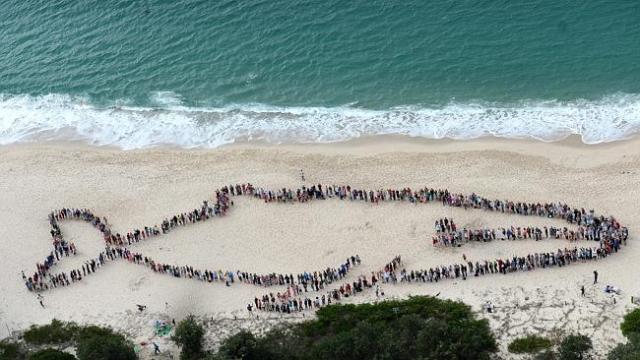
Over 1000 people form Human Whale at Shoal Bay to mark the start of whale watching season

More than 1000 people took part in forming the “humungous human humpback” to mark the official start of whale-watching season.

Now in its third year, the event also celebrated the end of Japanese whaling in the Southern Ocean.

“It’s a good trick for the area,” local couple Ellie and Ian Jackson said. “It’s the biggest it’s been.”

Like hundreds of other families, they brought their three children Lilia, 4, Evie, 2, and five-month-old Rafe, who patiently waited in position until a helicopter flew overhead capturing the 100m-long whale for posterity.

Destination Port Stephens chairman Michael Aylmer said more than 50,000 visitors came to Nelsons Bay each year for the whales, putting $10 million into the local economy.

”Around 17,000 whales are expected to be seen off Port Stephens … as they migrate for the winter,” he said.

http://www.dailytelegraph.com.au/news/nsw/whale-of-a-figure-at-shoal-bay-kicks-off-the-watching-season/story-fni0cx12-1226939198306

Dead pigs fly out of truck in Iowa City

Iowa City police and a semi driver ended up in a messy situation after a load of dead pigs was tossed from a semi onto Highway 1 Thursday evening.

The semi driver says he was slowing for a stoplight when the “greasy” pigs started flying out of the back of the trailer, which had an open top. The pigs ended up in the eastbound lanes of Highway 1 near the intersection of Sunset Street.

“It started raining pigs,” the semi driver said.

Police shut down a portion of the road while a skid loader scooped up the pigs and put them back in the truck. As of seven o’clock the area remained blocked while police and the driver figured out how to clean up the mess left on the roadway, which carried a heavy stench and maggots.

A passing driver said he saw more pigs on the roadway in various spots as he was driving in from Kalona.

Read more: http://www.kcrg.com/subject/news/public-safety/pigs-fly-out-of-truck-in-iowa-city-create-mess-20140529#ixzz33KR3HuFF