Scientists learn that mice nest together to confuse paternity and reduce infanticide

mice

It is a cruel world out there, particularly for young animals born into social groups where infanticide occurs. This dark side of evolution is revealed when adults – often males – kill offspring to promote their own genes being passed on, by reducing competition for resources or making females become sexually receptive more quickly.

This behaviour proves expensive for females, who have evolved strategies to avoid this fate. One strategy is to join forces with other females to physically ward off killer males. A more interesting strategy is to mate with several males, known as “polyandry”, so fathers can’t distinguish their young from others’, which means they avoid killing pups so that they don’t accidently kill their own.

Now, researchers at the University of Zurich have found a new type of infanticide counter-strategy: mothers can achieve paternity confusion even if they don’t mate with multiple males, through nesting with other females, which they call “socially mediated polyandry”. And such a strategy might be happening close to home, in the unassuming house mouse.

Yannick Auclair and his colleagues put their theory to the test on a wild population of mice living in an old agricultural building outside Zurich. They measured the genetic relationships within litters and found a complex picture of female social relationships and mating patterns. These allowed them to identify mothers nesting alone or with others and those who mated with one or more males. To examine the risk of infanticide for pups born into these different types of litters, they assessed survival until just before weaning, which is about two weeks after birth.

Direct observations of infanticide are extremely rare in natural systems. But studying an enclosed population without the presence of a predator meant that infanticide becomes the most likely cause of death for young pups. And indeed, from the corpses of pups that were recovered, most gave direct evidence – missing limbs or holes in the skull – of this harsh fate.

The results of the study were published in the journal Behavioral Ecology. The researchers found that pups born to females nesting alone and who had only one mate had the lowest survival rate (50% surviving, the rest presumably killed by males who were confident they were not the father). Meanwhile, those born to females nesting together were better off (80% surviving).

Key evidence supporting their theory was that some of these communal litters were composed of pups whose mothers had actually only mated once, but the different females had different mates. These litters had similar survival to those where paternity was mixed for individual mothers, suggesting that mothers can achieve the same survival benefits of communal nesting without mating with multiple males.

There were also a few communal litters (nine of the 90 studied) where the different females had mated with the same male and, as such, featured multiple mothers but no paternity confusion. These litters had worse survival rate (40% surviving) suggesting that – as predicted by the theory – paternity confusion is a more important driving factor of communal nesting than the physical warding off of males.

According to Elise Huchard of CNRS Montpelier: “This study presents an interesting idea, and an interesting system to test it.” Yet the data raise more questions than they answer – and additional experiments or comparative work would be insightful.

For example, it is not clear whether higher survival in litters with multiple fathers might actually reflect variation among females if, as in the case of mouse lemurs, higher-quality females have more mates. Dieter Lukas of Cambridge University concurs that the theory is interesting, but believes it is too early to assess its generality.

Infanticide occurs across diverse mammal systems – from meerkats and rabbits, to lions and gorillas – and comparative analyses could help assess how this theory fares among the many hypotheses about the evolution of infanticide.

Communal nesting may have evolved as an alternative to mating with multiple mates (which is costly when males harass females during mating or transmit disease) as a strategy to avoid infanticide through paternity confusion. “We don’t know whether other social behaviours may have evolved through similar ways,” said Auclair.

Comparative analyses will lead to new insights and future research on the nest-box population will also address such interesting questions as how females choose their nesting partners – and why some still nest alone even if this comes at a cost to offspring survival.

http://theconversation.com/whos-your-daddy-mice-nest-together-to-confuse-paternity-and-reduce-infanticide-31796

70 year old man flies hot air balloon underground to set new world record

An Australian hot air balloon pilot succeeded in flying a balloon deep underground a cave in Croatia, a feat he believes is a world first.

On Sept. 18, Ivan Trifonov, 70, descended into Mamet Cave on Velebit Mountain in Croatia, and managed to come back up about 25 minutes later.

Using a specially designed balloon for the stunt, Trifonov was able to navigate the cave, which is 675 feet deep and 200 feet wide at the top. Instead of a basket Trifinov sat in a small steel frame, perched above twin
gas tanks.

Trifonov filmed the stunt from multiple angles and is expected to submit it into the Guinness Book of World Records. If accepted, it would be Trifonov’s fifth world record.

“It was very hard and I don’t think anyone else will ever repeat this venture,” he said.

Trifonov has also previously flown a hot air balloon over the South Pole.

http://abc7.com/hobbies/air-balloon-pilot-flies-underground-to-set-world-record/329281/

Comedy club uses facial recognition to charge by the laugh

comdey club

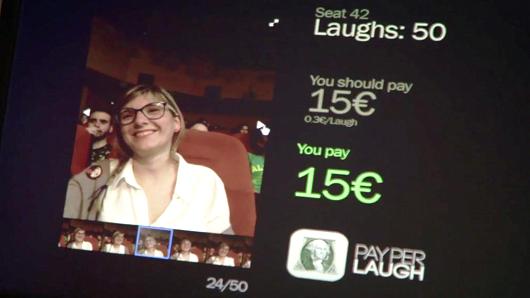
One Barcelona comedy club is experimenting with using facial recognition technology to charge patrons by the laugh.

The comedy club, Teatreneu, partnered with the advertising firm The Cyranos McCann to implement the new technology after the government hiked taxes on theater tickets, according to a BBC report. In 2012, the Spanish government raised taxes on theatrical shows from 8 to 21 percent.

Cyranos McCann installed tablets on the back of each seat that used facial recognition tech to measure how much a person enjoyed the show by tracking when each patron laughed or smiled.

Each giggle costs approximately 30 Euro cents ($0.38). However, if a patron hits the 24 Euros mark, which is about 80 laughs, the rest of their laughs are free of charge.

There’s also a social element. Get this, at the end of the show the patron can also check their laughter account and share their info on social networks. The comedy club in conjunction with their advertising partner even created a mobile app to be used as a system of payment.

While law enforcement has been developing and using facial recognition technology for quite sometime, more industries are beginning to experiment with it.

Some retailers, for example, are considering using the technology to gauge how people might feel while shopping in a certain section of a store.

The U.K. company NEC IT Solutions is even working on technology that would help retailers to identify V.I.P patrons, such as celebrities or preferred customers.

According to a recent report on EssentialRetail.com, the premium department store Harrod’s has been testing facial recognition during the last two years, albeit, the company has been primarily testing it for security reasons.

Facebook also uses facial recognition technology to suggest tags of people who are in images posted on its site.

http://www.cnbc.com/id/102078398

Ebola’s Family Tree: Disease May Have Existed For 23 Million Years, Much Longer Than Previously Believed

A family of viruses that Ebola belongs to may have existed over 20 million years ago, according to a new study published in the journal PeerJ.

Researchers from the University of Buffalo found that Filoviruses did not begin appearing 10,000 years ago as previously thought, but in fact have been around for much longer. The Ebola virus belongs to the family of filoviruses, also known as the Filoviridae family. “Filoviruses are far more ancient than previously thought,” said Derek Taylor, lead author of the study and a professor of biological sciences at the University of Buffalo, in the press release. “These things have been interacting with mammals for a long time, several million years.”

Despite the fact that scientists around the world are frantically searching for a cure and better treatment for Ebola, there’s still much to learn about the deadly virus. The authors of the study argue that better understanding Ebola’s evolutionary roots could “affect design of vaccines and programs that identify emerging pathogens.”

The study focused not on Ebola specifically, but the ancestors and family of Ebola to better understand where it may have come from. Both the Ebola virus and Marburg virus — also a hemorrhagic fever virus that belongs to the Filoviridae family — were found to be tied to ancient evolutionary lines, and they shared a common ancestor 16 to 23 million years ago. The authors discovered this by examining viral fossil genes, which are bits of genetic material that animals acquire from viruses during infection. They found Filovirus-like genes in rodents, particularly hamsters and voles, which means that the filovirus family is likely as old as these rodents’ common ancestor. The genetic material in these fossils were more closely related to Ebola than Marburg, meaning the two lines had already begun to diverge during the Miocene Epoch, a time period that occurred five to 23 million years ago. During this time, there were also warmer climates, as well as the first appearances of kelp forests and grasslands on Earth.

“These rodents have billions of base pairs in their genomes, so the odds of a viral gene inserting itself at the same position in different species at different times are very small,” Taylor said. “It’s likely that the insertion was present in the common ancestor of these rodents.”

The Filoviridae family is defined by viruses that form virions, or filamentous infectious viral particles. The Ebola virus and Marburg virus are the most well-known among this group, and they are both severe viruses that cause hemorrhagic fevers in both animals and humans (essentially, they’re deadly diseases that lead to fever and bleeding).

Taylor believes that the study may help in the fight against Ebola by widening our knowledge about its history, and identifying what species are most likely to be hosts of the virus. “When they first started looking for reservoirs for Ebola, they were crashing through the rainforest, looking at everything — mammals, insects, other organisms,” Taylor said. “The more we know about the evolution of filovirus-host interactions, the more we can learn about who the players might be in the system.”

Source: Taylor D, Ballinger M, Zhan J, Hanzly L, Bruenn J. Evidence that ebolaviruses and cuevaviruses have been diverging from marburgviruses since the Miocene. PeerJ. 2014.

http://www.medicaldaily.com/ebolas-family-tree-disease-may-have-existed-23-million-years-much-longer-previously-307958

Scientists publish new evidence of that awareness may persist several minutes after clinical death, which was previously thought impossible

Bright+light

The largest ever medical study into near-death and out-of-body experiences has discovered that some awareness may continue even after the brain has shut down.

Scientists at the University of Southampton spent four years examining more than 2000 people who suffered cardiac arrest from 15 hospitals in the UK, US and Austria. They found that of 360 people who had been revived after experiencing cardiac arrest, about 40 percent of them had some sort of “awareness” during the period when they were “clinically dead.”

One man’s memory of what he saw “after death” was spot-on in describing what actually happened during his resuscitation. The 57-year-old recalled leaving his body and watching his resuscitation from the corner of the room. He reported hearing two beeps come from a machine that went off every three minutes — indicating that his conscious experience during the time he had no heartbeat lasted for around three minutes. According to the researchers, that suggests the man’s brain may not have shut down completely, even after his heart stopped.

“This is paradoxical, since the brain typically ceases functioning within 20-30 seconds of the heart stopping and doesn’t resume again until the heart has been restarted,” study co-author Dr. Sam Parnia, a professor of medicine at Stony Brook University and former research fellow at Southampton University, said in a written statement.

Parnia added that it’s possible even more patients in the study had mental activity following cardiac arrest but were unable to remember events during the episode as a result of brain injury or the use of sedative drugs.

“We know the brain can’t function when the heart has stopped beating,” said Dr Sam Parnia, a former research fellow at Southampton University, now at the State University of New York, who led the study.

“But in this case, conscious awareness appears to have continued for up to three minutes when the heart wasn’t beating, even though the brain typically shuts down within 20 to 30 seconds after the heart has stopped.

Although many could not recall specific details, some themes emerged. One in five said they had felt an unusual sense of peace while nearly one third said time had slowed down or speeded up.

Some recalled seeing a bright light and others recounted feelings of fear, drowning or being dragged through deep water.

Dr Parnia believes many more people may have experiences when they are close to death but drugs or sedatives used in resuscitation may stop them remembering.

“Estimates have suggested that millions of people have had vivid experiences in relation to death but the scientific evidence has been ambiguous at best.

“Many people have assumed that these were hallucinations or illusions but they do seem to have corresponded to actual events.

“These experiences warrant further investigation.”

Dr David Wilde, a research psychologist at Nottingham Trent University, is currently compiling data on out-of-body experiences in an attempt to discover a pattern that links each episode.

“There is some good evidence here that these experiences are happening after people have medically died.

“We just don’t know what is going on. We are still in the dark about what happens when you die.”

The study was published in the journal Resuscitation.

http://www.resuscitationjournal.com/article/S0300-9572(14)00739-4/abstract

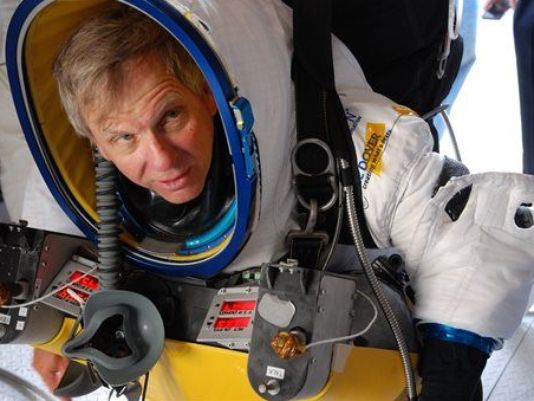
Google executive Alan Eustace jumps 130,000ft from edge of space, setting new record

A 57-year-old Google executive is the world’s new space daredevil.

Alan Eustace yesterday traveled more than 25 miles up to the top of the stratosphere in a balloon and then parachuted back down to earth in Roswell, NM, at speeds of up to 822mph.

In doing so, Eustace not only broke the sound barrier and set off his own personal sonic boom, he broke the altitude record set by Felix Baumgartner two years ago.

For the record, Eustace hit an altitude of 135,890 feet, besting Baumgartner’s 128,110 feet.

“It was amazing,” says Eustace, who is also a pilot. “It was beautiful. You could see the darkness of space and you could see the layers of atmosphere, which I had never seen before.”

Eustace got help from a company called Paragon Space Development Corporation, which has been working on a commercial spacesuit tailored for exactly these kinds of stratospheric trips.

http://www.usatoday.com/story/news/2014/10/25/google-exec-sets-space-jump-record/17899465/

American Military Intelligence reveals that Adolf Hitler regularly used crystal methamphetamines

Last year, newly published letters written by Nobel prize winner Heinrich Böll appeared to confirm that Nazi troops took crystal methamphetamines in order to stay awake and motivated, despite the desperate conditions they faced on the front line.

Now, new research has revealed that Adolf Hitler was himself a regular user of the drug, now a Class A, prized among addicts for its feeling of euphoria but feared for its mental destructiveness.

According to a 47-page wartime dossier compiled by American Military Intelligence, the Fuhrer was a famous hypochondriac and took over 74 different medications, including methamphetamines.

It claims that Hitler took the drug before his final meeting with Italian fascist leader Mussolini in July of 1943, during which he apparently ranted non-stop for two hours.

Hitler eased the pain of his final days in his bunker with nine injections of a drug called Vitamultin, too, which contained among its ingredients meth-amphetamine.

The dossier – which is the subject of a new documentary Hitler’s Hidden Drug Habit – goes on to claim that the Fuhrer became addicted to drugs after seeking the medical advice of Berlin-based Dr Morell in 1936.

He was initially prescribed a drug called Mutaflor in order to relieve the pain of his stomach cramps.

He was then prescribed Brom-Nervacit, a barbiturate, Eukodal, a morphine-based sedative, bulls’ semen to boost his testosterone, stimulants Coramine and Cardiazol, and Pervitin, an ‘alertness pill’ made with crystal meth-amphetamine.

His reliance on medication became costly, and by the end of 1943, Hitler was dependant on a mentally debilitating cocktail of uppers and downers.

“Morell was a quack and a fraud and a snake oil salesman,” Bill Panagopoulos, an American collector who discovered the dossier, said.

“He should not have been practising medicine anywhere outside a veterinary clinic.”

“Some [of the drugs] were innocuous, some not so innocuous, some poisonous. Did he develop a dependence on any of these drugs? Which of these drugs, if any, were addictive? And did he become addicted to them? I’d be interested to know what the combination of these medications would do to someone who’s otherwise in good health.”

http://www.independent.co.uk/news/people/hitler-was-a-regular-user-of-crystal-meth-american-military-intelligence-dossier-reveals-9789711.html

Leading pack led astray in farcical Bangalore half marathon

Former Asian medalists Suresh Kumar Patel, Inderjit Patel and Soji Mathew got the shock of their life on Sunday while leading the race in half marathon when the pilot vehicle reportedly missed the U-turn on Old-airport road, leading to the trio abandoning the race in the Bengaluru marathon.

Suresh, who finished sixth in the recent Asian Games, and Soji, a former Asian cross-country champion, finally had to beg morning joggers for Rs 20 to enable them to hop on to the metro from the Indiranagar station and return to MG Road.

“There were no officials on the road where we supposed to take a U-turn (at 16km). We were following the pilot vehicle and we had covered around 20 kilometers in one hour as we were going at a pace of 2 minutes, 59 seconds per kilometer. We were hoping to finish soon when the officials asked us to turn back. At that point there was no point in continuing the race and we decided to stop,” Inderjit Patel told TOI.

http://timesofindia.indiatimes.com/sports/more-sports/athletics/Leading-pack-led-astray-in-farcical-Bangalore-half-marathon/articleshow/44884022.cms

Ayahuasca – possible new aid to psychotherapy?

Imagine discovering a plant that has the potential to help alleviate post-traumatic stress disorder, suicidal thoughts and paralyzing anxiety. That’s what some believe ayahuasca can do, and this psychedelic drink is attracting more and more tourists to the Amazon.

If you Google “ayahuasca,” you’ll find a litany of stories about Hollywood celebrities espousing its benefits, as well as the dangers of this relatively unstudied substance that triggers hallucinations.

On this Sunday’s episode of “This Is Life,” Lisa Ling goes inside an ayahuasca ceremony in Peru and talks to the men and women who are drinking this potent brew in hopes that it will alleviate their mental and emotional traumas.

Here are six things to know about ayahuasca, which some call a drug and others call a medicine:

War vets are seeking it for PTSD

Former Marine Lance Cpl. Ryan LeCompte organizes trips to Peru for war veterans, like himself, who are seeking ayahuasca as a possible treatment for PTSD and other emotional and mental trauma suffered after multiple combat deployments.

He says he’s aware of the risks, as there’s very little known about ayahuasca’s effect on the body, but he says “it’s a calculated risk.”

“Ayahuasca is a way to give relief to those who are suffering,” says LeCompte, who says many veterans are not satisfied with the PTSD treatment they receive when they return from combat.

“It’s just, ‘Here’s a pill, here’s a Band-Aid.’ The ayahuasca medicine is a way to, instead of sweeping your dirt under the rug, you know, these medicines force you to take the rug outside and beat it with a stick until it’s clean,” LeCompte explains. “And that’s how I prefer to clean my house.”

Libby, an airman 1st class, is one of the veterans who accompanied LeCompte to Peru to try ayahuasca for her PTSD diagnosis, which includes sexual trauma while on active duty. She says antidepressants made her more suicidal.

“I would like to wish not to die all the time,” she said, when asked why she was seeking ayahuasca. “I want that to go away”

It’s endorsed by some Hollywood celebrities

As more ayahuasca centers pop up in the United States, not surprisingly, celebrities including Sting and Lindsay Lohan have spoken publicly about their experiences with the substance — albeit illegal outside of religious purposes in the United States.

Lohan, who has struggled with addiction, called her ayahuasca experience “eye-opening” and “intense.” “I saw my whole life in front of me, and I had to let go of past things that I was trying to hold on to that were dark in my life,” she said on her OWN reality series “Linsday.”

Sting said he and his wife, Trudie Styler, traveled to a church in the Amazon where they tried ayahuasca, which the British singer said made him feel like he was “wired to the entire cosmos.”

It’s not a cure
Those of have tried ayahuasca say that any benefits — like with other drugs or medicine — must be combined with therapy.

“If you think you’re just going to take ‘joy juice’ … you’re nuts,” explained author and ayahuasca expert Peter Gorman, who settled in Iquitos, Peru, during the first wave of ayahuasca tourism in the 1990s.

“The five years of work to get rid of [mental trauma] is still gonna be on you.”

Gorman, author of “Ayahuasca in My Blood,” explains that ayahuasca can help “dislodge that negative energy” and show people what their life could be like without the negativity.

“[Then] you can go back home and work on getting rid of it.”

And it used to be taken by only the shaman

Gorman says ayahuasca traditions in the Amazon have changed since Western tourists began seeking its benefits.

“Traditionally, the shaman drinks [ayahuasca], he accesses other realms of reality to find out where the dissonance is, that if the shaman corrects, will eliminate the [symptoms] — could be physical, could be emotional, could be bad luck,” Gorman explains. “[Then] we Americans come, and we said we insist on drinking the damn stuff — we want our lives changed and we want that experience, so that certainly set things right on its head.”

You can even buy ayahuasca powders and extracts online and in the local markets in the Peruvian Amazon, but Gorman warns “you don’t know what it would be.”

As more and more Western tourists consume ayahuasca, Gorman says it has him worried. “I’ve had this feeling in my bones for five or six years that something could go slightly wrong here that could sour a lot of stuff.”

Some ayahuasca tourists have died

In April, 19-year-old Briton Henry Miller died after taking part in an ayahuasca ceremony in Colombia, according to various media reports. And Kyle Nolan, an 18-year-old from northern California, died under similar circumstances in August 2012 in Peru.

The shaman who provided Nolan with the ayahuasca and who initially lied about his death was sentenced to three years in prison, his mother, Ingeborg Oswald, told CNN.

There have been other reported deaths, as well as reports of physical and sexual assaults. Writer Lily Kay Ross says she survived sexual abuse by an ayahuasca shaman.

“We have to take seriously the potential for harm alongside the huge potential for benefit,” Ross says on a video on a fundraising website for the Ethnobotanical Stewardship Council. “Standards of safety and ethics would go a long way in making sure that this kind of abuse isn’t experienced by anyone else.”

Ron Wheelock, an American shaman who leads an ayahuasca healing center in the Peruvian Amazon, says he fears there may be more deaths.

“I hate to say it, yes there probably will be,” he told Lisa Ling. “It’s in the cards”

There’s a movement to create safe ayahuasca

Through IndieGogo.com, the Ethnobotanical Stewardship Council is raising money to create a health guide for ayahuasca centers in the Amazon, so tourists know which centers are safe and harvesting the plants in a sustainable manner that supports the local communities.

The idea would be to put the ESC’s logo outside ayahuasca ceremony sites to signify those centers that meet the council’s criteria for safety and sustainability.

In addition, there are efforts to study the medicinal benefits of ayahuasca so that it can be regulated and legalized in the United States, explains Rick Doblin, executive director of the Multidisciplinary Association of Psychedelic Studies.

“At a time when drug policy is being reevaluated, when marijuana looks like it’s on the road toward legalization, when psychedelic medicine is moving forward through the FDA and we can envision a time when psychedelics are available as prescription medicines, how ayahuasca should be handled in a regulatory context is really up in the air,” Doblin said.

http://www.cnn.com/2014/10/22/health/ayahuasca-medicine-six-things/index.html?hpt=hp_t2