Another bison attack at Yellowstone Park

By Jethro Mullen

Visitors to Yellowstone Park seem to be having trouble taking in the message that it’s not a good idea to get too close to the wild bison that roam the wilderness.

The latest person to find out the hard way is a 43-year-old Mississippi woman who tried to take a selfie with one of the hairy beasts near a trail on Tuesday.

She and her daughter turned their backs to the bison, which was about 6 yards away, to take a photo with it, according to the National Park Service.

“They heard the bison’s footsteps moving toward them and started to run, but the bison caught the mother on the right side, lifted her up and tossed her with its head,” the park service said in a statement Wednesday.

Her family drove her from the site of the attack, near the Fairy Falls trailhead, to the Old Faithful Clinic in the park for treatment. She was released with minor injuries.

The woman is the fifth person injured after approaching a bison in Yellowstone so far this season — and the third whose dangerous encounter resulted from photo-taking.

Park authorities make an effort to warn people not to get too close to animals.

“The family said they read the warnings in both the park literature and the signage, but saw other people close to the bison, so they thought it would be OK,” said Colleen Rawlings, a ranger in the park’s Old Faithful District. “People need to recognize that Yellowstone wildlife is wild, even though they seem docile. This woman was lucky that her injuries were not more severe.”

A 16-year-old girl from Taiwan was gored by a bison in May while posing for a photo near Old Faithful, Yellowstone’s famous geyser. She suffered serious but not life-threatening injuries from the attack.

And a 62-year-old Australian man was taking pictures within 5 feet of a bison near Old Faithful Lodge on June 2 when the animal charged and tossed him into the air several times, according to park officials. He was taken to a hospital for further medical treatment.

Park authorities instruct visitors not to go within 25 yards of bison and other large animals — and 100 yards away from bears and wolves.

“Bison can sprint three times faster than humans can run and are unpredictable and dangerous,” park officials warn.

On June 23, a 19-year-old Georgia woman was walking with friends to their car after a late-night swim in the Firehole River when they saw a bison lying about 10 feet away. The animal charged the teen and tossed her in the air, leaving her with minor injuries, the park service said.

Just over a week later, a 68-year-old Georgia woman was hospitalized after being attacked by a bison while hiking on Storm Point Trail.

As the woman passed the bison, it charged and gored her. She was taken by helicopter ambulance to a hospital outside the park.

Almost 5,000 bison live in Yellowstone, the only place in the United States where the animals have lived continuously since prehistoric times.

https://itsinterestingdotcom.wordpress.com/wp-admin/post-new.php

Psychiatry’s Identity Crisis

psych

By Richard A Friedman, a professor of clinical psychiatry at Weill Cornell Medical College

American psychiatry is facing a quandary: Despite a vast investment in basic neuroscience research and its rich intellectual promise, we have little to show for it on the treatment front.

With few exceptions, every major class of current psychotropic drugs — antidepressants, antipsychotics, anti-anxiety medications — basically targets the same receptors and neurotransmitters in the brain as did their precursors, which were developed in the 1950s and 1960s.

Sure, the newer drugs are generally safer and more tolerable than the older ones, but they are no more effective.

Even the new brain stimulatory treatments like repetitive transcranial magnetic stimulation don’t come close to the efficacy of electroconvulsive treatment, developed in the 1940s. (Deep brain stimulation is promising as a treatment for intractable depression, but it is an invasive treatment and little is known about its long-term safety or efficacy.)

At the same time, judging from research funding priorities, it seems that leaders in my field are turning their backs on psychotherapy and psychotherapy research. In 2015, 10 percent of the overall National Institute of Mental Health research funding has been allocated to clinical trials research, of which slightly more than half — a mere 5.4 percent of the whole research allotment — goes to psychotherapy clinical trials research.

As a psychiatrist and psychopharmacologist who loves neuroscience, I find this trend very disturbing. First, psychotherapy has been shown in scores of well-controlled clinical trials to be as effective as psychotropic medication for very common psychiatric illnesses like major depression and anxiety disorders; second, a majority of Americans clearly prefer psychotherapy to taking medication. For example, in a meta-analysis of 34 studies, Dr. R. Kathryn McHugh at McLean Hospital found that patients were three times more likely to want psychotherapy than psychotropic drugs.

Finally, many of our patients have histories of trauma, sexual abuse, the stress of poverty or deprivation. There is obviously no quick biological fix for these complex problems.

Still, there has been a steady decline in the number of Americans receiving psychotherapy along with a concomitant increase in the use of psychotropic medication in those who are treated in the outpatient setting. These trends are most likely driven by many factors, including cost and the limited availability that most Americans have to mental health practitioners. It is clearly cheaper and faster to give a pill than deliver psychotherapy.

The doubling down on basic neuroscience research seems to reflect the premise that if we can unravel the function of the brain, we will have a definitive understanding of the mind and the causes of major psychiatric disorders. Indeed, an editorial in May in one of the most respected journals in our field, JAMA Psychiatry, echoed this view: “The diseases that we treat are diseases of the brain,” the authors wrote.

Even if this premise were true — and many would consider it reductionist and simplistic — an undertaking as ambitious as unraveling the function of the brain would most likely take many years. Moreover, a complete understanding of neurobiology is unlikely to elucidate the complex interactions between genes and the environment that lie at the heart of many mental disorders. Anyone who thinks otherwise should remember the Decade of the Brain, which ended 15 years ago without yielding a significant clue about the underlying causes of psychiatric illnesses.

Sure, we now have astounding new techniques for studying the brain, like optogenetics, in which neurons can be controlled by light, allowing researchers to understand how neurons work alone and in networks. But no one thinks breakthrough biological treatments are just around the corner.

More fundamentally, the fact that all feelings, thoughts and behavior require brain activity to happen does not mean that the only or best way to change — or understand — them is with medicine. We know, for instance, that not all psychiatric disorders can be adequately treated with biological therapy. Personality disorders, like borderline and narcissistic personality disorders, which are common and can cause impairment and suffering comparable to that of severe depression, are generally poorly responsive to psychotropic drugs, but are very treatable with various types of psychotherapy.

There is often no substitute for the self-understanding that comes with therapy. Sure, as a psychiatrist, I can quell a patient’s anxiety, improve mood and clear psychosis with the right medication. But there is no pill — and probably never will be — for any number of painful and disruptive emotional problems we are heir to, like narcissistic rage and paralyzing ambivalence, to name just two.

This requires patients to re-experience the circumstances of their traumatic event, which is meant to desensitize them and teach them that their belief that they are in danger is no longer true.

But we know that many patients with PTSD do not respond to exposure, and many of them find the process emotionally upsetting or intolerable.

Dr. John C. Markowitz, a professor of clinical psychiatry at Columbia University, recently showed for the first time that PTSD is treatable with a psychotherapy that does not involve exposure. Dr. Markowitz and his colleagues randomly assigned a group of patients with PTSD to one of three treatments: prolonged exposure, relaxation therapy and interpersonal psychotherapy, which focuses on patients’ emotional responses to interpersonal relationships and helps them to solve problems and improve these relationships. His federally funded study, published in May’s American Journal of Psychiatry, reported that the response rate to interpersonal therapy (63 percent) was comparable to that of exposure therapy (47 percent).

PTSD is a serious public mental health problem, particularly given the rates of PTSD in our veterans returning from war. This study now gives clinicians a powerful new therapy for this difficult-to-treat disorder. Imagine how many more studies like Dr. Markowitz’s might be possible if the federal funding of psychotherapy research were not so stingy.

The brain is notoriously hard to study and won’t give up its secrets easily. In contrast, psychotherapy research can yield relatively quick and powerful results. Given the critically important value — and popularity — of therapy, psychotherapy research deserves a much larger share of research dollars than it currently receives.

Don’t get me wrong. I’m all for cutting-edge neuroscience research — and lots of it. But we are more than a brain in a jar. Just ask anyone who has benefited from psychotherapy.

The Healing Power of Caring and Hope in Psychotherapy

By Allen Frances, MD

There are 3 consistent research findings that should make a world of difference to therapists and to the people they treat.

1. Psychotherapy works at least as well as drugs for most mild to moderate problems and, all things being equal, should be used first

2. A good relationship is much more important in promoting good outcome than the specific psychotherapy techniques that are used

3. There is a very high placebo response rate for all sorts of milder psychiatric and medical problems

This is partly a “time effect”—people come for help at particularly bad times in their lives and are likely to improve with time even if nothing is done. But placebo response also reflects the magical power of hope and expectation. And the effect is not just psychological—the body often actually responds to placebo just as it would respond to active medication.

These 3 findings add up to one crucial conclusion—the major focus of effective therapy should be to establish a powerfully healing relationship and to inspire hope. Specific techniques help when they enhance the primary focus on the relationship; they hurt when they distract from it.

The paradox is that therapists are increasingly schooled in specific techniques to the detriment of learning how to heal. The reason is clear—it is easy to manualize technique, hard to teach great healing.

I have, therefore, asked a great healer, Fanny Marell, a Swedish social worker and licensed psychotherapist, to share some of her secrets. Ms Marell writes:

Many therapists worry so much about assessing symptoms, performing techniques, and filling out forms that they miss the wonderful vibrancy of a strong therapeutic relationship.

Thinking I can help someone just by asking about concerns, troubles, and symptoms is like thinking that I can drive a car solely by looking in the rearview mirror. Dreams, hopes, and abilities are seen out of the front window of the car and help us together to navigate the road ahead. Where are we going? Which roads will you choose and why? It surely will not be the same roads I would take. We are different—we have to find your own best direction.

If we focus only on troubles and diagnosis, we lose the advantage of capitalizing on the person’s strengths and resources. If I am to help someone overcome symptoms, change behaviors, and climb out of difficult situations, I need to emphasize also all the positives he brings to the situation. Therapy without conversations about strengths and hopes is not real therapy.

And often most important: Does the patient have a sense of humor? Laugh together! Be human. No one wants a perfect therapist. It is neither credible nor human.

Symptom checklists and diagnoses play a role but they do not give me an understanding of how this person/patient understands his world and her troubles.

And don’t drown in manuals, missing the person while applying the technique.

People come to me discouraged and overwhelmed—their hopes and dreams abandoned. Early in our time together, I ask many detailed questions about how they would like life to change. What would you do during the day? Where would you live? What would your relationship to your family be like? What would you do in your spare time? What kind of social circle would you have? By getting detailed descriptions, I get concrete goals (eg, I want to go to school, argue less with my parents, spend more time with friends).

Almost always, working with the family is useful; sometimes it is absolutely necessary. What would be a good life for your child? How would it affect you?

Sometimes our dreams are big, perhaps even too extravagant; sometimes they are small and perhaps too cautious. But dreams always become more realistic and realizable when they are expressed. Sharing a dream and making it a treatment goal helps the person make a bigger investment in the treatment, and to take more responsibility for it. He becomes the driver and the therapist may sit in the back seat.

Because my first conversation is not just about symptoms and troubles, we start off on a basis of realistic hope and avoid a negative spiral dominated only by troubles. Problems have to be faced, but from a position of strength, not despair and helplessness.

Having a rounded view of the person’s problems and strengths enriches the therapeutic contact and creates a strong alliance.

Thanks, Ms Marell, for terrific advice. Some of the best natural therapists I have known have been ruined by psychotherapy training—becoming so preoccupied learning and implementing technique that they lost the healing warmth of their personalities.

Therapy should always be an exciting adventure, an intense meeting of hearts and minds. You can’t learn to be an effective therapist by reading a manual and applying it mechanically.

I would tell therapists I supervised never to apply what we discussed to their next session with the patient, lest they would always be a week behind. Therapy should be informed by technique, but not stultified by it.

See more at: http://www.psychiatrictimes.com/blogs/couch-crisis/magical-healing-power-caring-and-hope-psychotherapy?GUID=C523B8FD-3416-4DAC-8E3C-6E28DE36C515&rememberme=1&ts=16072015#sthash.2AOArvAW.dpuf

Virtual human designed to help patients feel comfortable talking about themselves with therapists

By Suzanne Allard Levingston

With her hair pulled back and her casual office attire, Ellie is a comforting presence. She’s trained to put patients at ease as she conducts mental health interviews with total confidentiality.

She draws you into conversation: “So how are you doing today?” “When was the last time you felt really happy?” She notices if you look away or fidget or pause, and she follows up with a nod of encouragement or a question: “Can you tell me more about that?”

Not bad for an interviewer who’s not human.

Ellie is a virtual human created by scientists at the University of Southern California to help patients feel comfortable talking about themselves so they’ll be honest with their doctors. She was born of two lines of findings: that anonymity can help people be more truthful and that rapport with a trained caregiver fosters deep disclosure. In some cases, research has shown, the less human involvement, the better. In a 2014 study of 239 people, participants who were told that Ellie was operating automatically as opposed to being controlled by a person nearby, said they felt less fearful about self-disclosure, better able to express sadness and more willing to disclose.

Getting a patient’s full story is crucial in medicine. Many technological tools are being used to help with this quest: virtual humans such as Ellie, electronic health records, secure e-mail, computer databases. Although these technologies often smooth the way, they sometimes create hurdles.

Honesty with doctors is a bedrock of proper care. If we hedge in answering their questions, we’re hampering their ability to help keep us well.

But some people resist divulging their secrets. In a 2009 national opinion survey conducted by GE, the Cleveland Clinic and Ochsner Health System, 28 percent of patients said they “sometimes lie to their health care professional or omit facts about their health.” The survey was conducted by telephone with 2,000 patients.

The Hippocratic Oath imposes a code of confidentiality on doctors: “I will respect the privacy of my patients, for their problems are not disclosed to me that the world may know.”

Nonetheless, patients may not share sensitive, potentially stigmatizing health information on topics such as drug and alcohol abuse, mental health problems and reproductive and sexual history. Patients also might fib about less-fraught issues such as following doctor’s orders or sticking to a diet and exercise plan.

Why patients don’t tell the full truth is complicated. Some want to disclose only information that makes the doctor view them positively. Others fear being judged.

“We never say everything that we’re thinking and everything that we know to another human being, for a lot of different reasons,” says William Tierney, president and chief executive of the Regenstrief Institute, which studies how to improve health-care systems and is associated with the Indiana University School of Medicine.

In his work as an internist at an Indianapolis hospital, Tierney has encountered many situations in which patients aren’t honest. Sometimes they say they took their blood pressure medications even though it’s clear that they haven’t; they may be embarrassed because they can’t pay for the medications or may dislike the medication but don’t want to offend the doctor. Other patients ask for extra pain medicine without admitting that they illegally share or sell the drug.

Incomplete or incorrect information can cause problems. A patient who lies about taking his blood pressure medication, for example, may end up being prescribed a higher dose, which could send the patient into shock, Tierney said.

Leah Wolfe, a primary care physician who trains students, residents and faculty at the Johns Hopkins School of Medicine in Baltimore, said that doctors need to help patients understand why questions are being asked. It helps to normalize sensitive questions by explaining, for example, why all patients are asked about their sexual history.

“I’m a firm believer that 95 percent of diagnosis is history,” she said. “The physician has a lot of responsibility here in helping people understand why they’re asking the questions that they’re asking.”

Technology, which can improve health care, can also have unintended consequences in doctor-patient rapport. In a recent study of 4,700 patients in the Journal of the American Medical Informatics Association, 13 percent of patients said they had kept information from a doctor because of concerns about privacy and security, and this withholding was more likely among patients whose doctors used electronic health records than those who used paper charts.

“It was surprising that it would actually have a negative consequence for that doctor-patient interaction,” said lead author Celeste Campos-Castillo of the University of Wisconsin at Milwaukee. Campos-Castillo suggests that doctors talk to their patients about their computerized-record systems and the security measures that protect those systems.

When given a choice, some patients would use technology to withhold information from providers. Regenstrief Institute researchers gave 105 patients the option to control access to their electronic health records, broken down into who could see the record and what kind of information they chose to share. Nearly half chose to place some limits on access to their health records in a six-month study published in January in the Journal of General Internal Medicine.

While patient control can empower, it can also obstruct. Tierney, who was not involved as a provider in that study, said that if he had a patient who would not allow him full access to health information, he would help the patient find another physician because he would feel unable to provide the best and safest care possible.

“Hamstringing my ability to provide such care is unacceptable to me,” he wrote in a companion article to the study.

Technology can also help patients feel comfortable sharing private information.

A study conducted by the Veterans Health Administration found that some patients used secure e-mail messaging with their providers to address sensitive topics — such as erectile dysfunction and sexually transmitted diseases — a fact that they had not acknowledged in face-to-face interviews with the research team.

“Nobody wants to be judged,” said Jolie Haun, lead author of the 2014 study and a researcher at the Center of Innovation on Disability and Rehabilitation Research at the James A. Haley VA Hospital in Tampa. “We realized that this electronic form of communication created this somewhat removed, confidential, secure, safe space for individuals to bring up these topics with their provider, while avoiding those social issues around shame and embarrassment and discomfort in general.”

USC’s Ellie shows promise as a mental health screening tool. With a microphone, webcam and an infrared camera device that tracks a person’s body posture and movements, Ellie can process such cues as tone of voice or change in gaze and react with a nod, encouragement or question. But the technology can neither understand deeply what the person is saying nor offer therapeutic support.

“Some people make the mistake when they see Ellie — they assume she’s a therapist and that’s absolutely not the case,” says Jonathan Gratch, director for virtual human research at USC’s Institute for Creative Technologies.

The anonymity and rapport created by virtual humans factor into an unpublished USC study of screenings for post-traumatic stress disorder. Members of a National Guard unit were interviewed by a virtual human before and after a year of service in Afghanistan. Talking to the animated character elicited more reports of PTSD symptoms than completing a computerized form did.

One of the challenges for doctors is when a new patient seeks a prescription for a controlled substance. Doctors may be concerned that the drug will be used illegally, a possibility that’s hard to predict.

Here, technology is a powerful lever for honesty. Maryland, like almost all states, keeps a database of prescriptions. When her patients request narcotics, Wolfe explains that it’s her office’s practice to check all such requests against the database that monitors where and when a patient filled a prescription for a controlled substance. This technology-based information helps foster honest give-and-take.

“You’ve created a transparent environment where they are going to be motivated to tell you the truth because they don’t want to get caught in a lie,” she said. “And that totally changes the dynamics.”

It is yet to be seen how technology will evolve to help patients share or withhold their secrets. But what will not change is a doctor’s need for full, open communication with patients.

“It has to be personal,” Tierney says. “I have to get to know that patient deeply if I want to understand what’s the right decision for them.”

Dolphins hitching rides on whales

Animals often have symbiotic relationships. Egrets hang out on the backs of many large animals, picking parasites in exchange for free food and transportation. Plovers act as dentists, eating the leftover food inside the mouths of crocodiles.

But this relationship is baffling. Sometimes dolphins hitch rides on the backs of humpback whales — and it’s very possible that the only thing either party is getting out of it is a little bit of fun.

The above photo of a dolphin riding piggyback on a whale garnered lots of attention when it was posted a few years ago on Facebook by the Whale and Dolphin People Project and it’s making the rounds again this week.

According to the description that came with the photo:

“This is one of the strangest cetacean photos I’ve ever seen. It was taken by Lori Mazzuca in Hawaii. She said that the dolphin and humpback whale were playing gently together. The game seemed to be about how long the dolphin could stay atop the whale’s head while the whale swam. When the dolphin finally slipped off, it joined another dolphin and they began to leap with joy.”
The creature lovers at Discovery News were a little suspicious that the image may have been Photoshopped or altered in some way. So they asked some experts to weigh in.

“Both dolphins and humpback whales can be extremely playful with each other and other species,” said Diana Reiss, a cognitive psychologist and dolphin researcher at Hunter College in New York. “It is very possible that this is play, but without seeing it first-hand, I really don’t know.”

“Based on the description, I believe play would be the best explanation,” agreed Ken Ramirez, vice president of animal care and training at Shedd Aquarium in Chicago. “If this were a video, there would be far more information to allow for better interpretation. But it is believed that the ‘surfing’ or bow riding that dolphins exhibit in front of boats may have had its genesis in riding in front or in the wake of big whales.

“What we may be seeing here is that type of surfing, but in this case the whale chose to give the dolphin a different type of ride.”

It’s not quite as clear as the image above, but here’s a video taken in Maui, Hawaii, of a bottlenose dolphin allegedly riding on a humpback whale.

Read more: http://www.mnn.com/earth-matters/animals/stories/why-do-dolphins-hitch-rides-whales#ixzz3gI81gckF

Sharks discovered living inside volcano

Brennan Phillips and some colleagues were recently on an expedition to Kavachi volcano, an active underwater volcano near the Solomon Islands in the South Pacific. But they weren’t prepared for what they saw deep inside the volcanic crater:

Sharks!

Hammerheads and silky sharks, to be specific, contentedly swimming around despite the sizzling water temperatures and biting acidity.

Volcanic vents such as these can release fluids above 800 degrees Fahrenheit and have a similar acidity to vinegar, according to the Marine Education Society of Australasia.

“The idea of there being large animals like sharks hanging out and living inside the caldera of the volcano conflicts with what we know about Kavachi, which is that it erupts,” Phillips, a biological oceanography Ph.D. student at the University of Rhode Island.

This brings up some perplexing questions about what the animals do if the volcano decides to wake up:

“Do they leave?” Phillips asks. “Do they have some sign that it’s about to erupt? Do they blow up sky-high in little bits?”

The volcano wasn’t erupting when Phillips’ team arrived, meaning it was safe to drop an 80-pound camera into the water to take a look around. After about an hour of recording, the team fished the camera out and watched the video.

First, the video showed some jellyfish, snappers, and small fish. Then, a hammerhead swam into view, and the scientists erupted in cheers. They also saw a cool-looking stingray.

http://www.businessinsider.com/sharks-found-swimming-near-active-underwater-volcano-2015-7

New study identifies potential new class of more rapidly acting antidepressant medications

A new study by researchers at University of Maryland School of Medicine has identified promising compounds that could successfully treat depression in less than 24 hours while minimizing side effects. Although they have not yet been tested in people, the compounds could offer significant advantages over current antidepressant medications.

The research, led by Scott Thompson, PhD, Professor and Chair of the Department of Physiology at the University of Maryland School of Medicine (UM SOM), was published this month in the journal Neuropsychopharmacology.

“Our results open up a whole new class of potential antidepressant medications,” said Dr. Thompson. “We have evidence that these compounds can relieve the devastating symptoms of depression in less than one day, and can do so in a way that limits some of the key disadvantages of current approaches.”

Currently, most people with depression take medications that increase levels of the neurochemical serotonin in the brain. The most common of these drugs, such as Prozac and Lexapro, are selective serotonin reuptake inhibitors, or SSRIs. Unfortunately, SSRIs are effective in only a third of patients with depression. In addition, even when these drugs work, they typically take between three and eight weeks to relieve symptoms. As a result, patients often suffer for months before finding a medicine that makes them feel better. This is not only emotionally excruciating; in the case of patients who are suicidal, it can be deadly. Better treatments for depression are clearly needed.

Dr. Thompson and his team focused on another neurotransmitter besides serotonin, an inhibitory compound called GABA. Brain activity is determined by a balance of opposing excitatory and inhibitory communication between brain cells. Dr. Thompson and his team argue that in depression, excitatory messages in some brain regions are not strong enough. Because there is no safe way to directly strengthen excitatory communication, they examined a class of compounds that reduce the inhibitory messages sent via GABA. They predicted that these compounds would restore excitatory strength. These compounds, called GABA-NAMs, minimize unwanted side effects because they are precise: they work only in the parts of the brain that are essential for mood.

The researchers tested the compounds in rats that were subjected to chronic mild stress that caused the animals to act in ways that resemble human depression. Giving stressed rats GABA-NAMs successfully reversed experimental signs of a key symptom of depression, anhedonia, or the inability to feel pleasure. Remarkably, the beneficial effects of the compounds appeared within 24 hours – much faster than the multiple weeks needed for SSRIs to produce the same effects.

“These compounds produced the most dramatic effects in animal studies that we could have hoped for,” Dr. Thompson said. “It will now be tremendously exciting to find out whether they produce similar effects in depressed patients. If these compounds can quickly provide relief of the symptoms of human depression, such as suicidal thinking, it could revolutionize the way patients are treated.”

In tests on the rats’ brains, the researchers found that the compounds rapidly increased the strength of excitatory communication in regions that were weakened by stress and are thought to be weakened in human depression. No effects of the compound were detected in unstressed animals, raising hopes that they will not produce side effects in human patients.

“This work underscores the importance of basic research to our clinical future,” said Dean E. Albert Reece, MD, PhD, MBA, who is also the vice president for Medical Affairs, University of Maryland, and the John Z. and Akiko K. Bowers Distinguished Professor and Dean of the School of Medicine. “Dr. Thompson’s work lays the crucial groundwork to transform the treatment of depression and reduce the tragic loss of lives to suicide.”

http://www.news-medical.net/news/20150714/New-study-identifies-potential-antidepressant-medications-with-few-side-effects.aspx

Antidepressant Clinical Trials Exclude about 80% of People with Depression

A provocative new study suggests that more than 80 percent of people with depression in the general population aren’t eligible for clinical trials of antidepressant drugs.

Researchers comment that at least five patients would need to be screened to enroll just one patient meeting the typical inclusion and exclusion criteria for antidepressant registration trials (ARTs).

Drs. Sheldon Preskorn and Matthew Macaluso of University of Kansas School of Medicine-Wichita and Dr. Madhukar Trivedi of Southwestern Medical School in Dallas led the study.

The investigation illuminates some major differences between patients with depression seen in everyday clinical practice and those enrolled in ARTs. This awareness is meaningful as ARTs commonly lead to FDA drug approval for depression medications.

The study appears in the Journal of Psychiatric Practice.

Antidepressant registration trials use certain inclusion and exclusion criteria to create a group of patients with similar characteristics. These criteria increase the chances of detecting true drug effects, while reducing “false signals” of safety problems or side effects.

For example, ARTs commonly exclude patients with other medical problems — if their illness worsened during the study, it might raise inaccurate safety concerns about the drug being studied.

To find out how these inclusion and exclusion criteria affect patient selection for ARTs, the researchers analyzed more than 4,000 patients from the Sequenced Treatment Alternatives to Relieve Depression (STAR*D) study.

Funded by the National Institute of Mental Health, STAR*D was the largest and longest study of depression treatment ever conducted. To ensure that the “real world” population of patients with depression was represented, STAR*D used minimal exclusion criteria.

The researchers found that more than 82 percent of STAR*D patients would not be eligible for enrollment in current ARTs, based on a list of “usual” inclusion and exclusion criteria. Fourteen percent would be excluded on the basis of age alone–that’s because most ARTs exclude patients older than 65. Another 15 percent would be excluded because their depression was less severe than a commonly used cutoff point.

More than 20 percent of STAR*D patients would be excluded from ARTs because of a “clinically significant or unstable general medical condition.” Twenty-one percent of women would be excluded because they were not using birth control to prevent pregnancy during the study.

Because many ARTs use stricter criteria, the true exclusion rate is probably even higher, the authors note.

For example, more recent studies have used even higher severity thresholds for enrollment, which would eliminate more than 90 percent of the STAR*D population. The researchers also point out that all of the STAR*D patients had obviously agreed to participate in that research study — which is something many people with depression might be unwilling to do.

The researchers hope their work will help drug developers understand how inclusion and exclusion criteria may affect enrollment in ARTs, and help them in developing an appropriate recruitment plan and timeline.

“The timelines in most drug studies are unrealistically short and their recruitment plans are often woefully inadequate, resulting in studies that take longer than expected to complete and frequent budget overruns,” the researchers write.

Failure to consider the effort needed for ART recruitment might lead to lost revenue, delays in bringing a drug to market, or failure to develop a potentially effective medication.

The findings may also help to explain to healthcare practitioners why ARTs tend to overestimate the benefits of antidepressant treatment in “real world” patients with depression. “Obviously,” the researchers add, “the more patients who are excluded from the ARTs, the greater the chances that the results will not generalize to the routine clinical practice.”

http://psychcentral.com/news/2015/07/15/antidepressant-clinical-trials-exclude-many-people-with-depression/86887.html

Analysis of an artist’s drawings as he proceeds through LSD hallucinogenic experience

The following nine drawings were made a half century ago by an artist under the influence of LSD, or acid, during an experiment designed to investigate the psychedelic drug’s effects . The unnamed artist was given two 50-microgram doses of LSD, one 65 minutes after the other, and had access to an activity box full of crayons and pencils. The subject of his art was the assisting doctor who administered the drug. Though records of the identity of the principal researcher have been lost, it was probably a University of California-Irvine psychiatrist, Oscar Janiger. Janiger, known for his LSD research, died in 2001.

“I believe the pictures are from an experiment conducted by the psychiatrist Oscar Janiger starting in 1954 and continuing for seven years, during which time he gave LSD to over 100 professional artists and measured its effects on their artistic output and creative ability. Over 250 drawings and paintings were produced,” said Andrew Sewell, a physician at Yale School of Medicine who has done research on psychedelic drugs.

During the experiment, the artist reported how he felt the acid was affecting him as he drew each sketch. To add some modern understanding of how LSD affects the brain to the artist’s scrawlings, we reached out to Sewell and a few other psychologists for insight on what was probably going on in the artist’s head.

Attending doctor’s observations: The first drawing is done 20 minutes after the first dose. Patient chooses to start drawing with charcoal.

Artist’s Comment: “Condition normal … no effect from the drug yet.”

Analysis: According to Duncan Blewett and Nick Chwelos, psychiatrists who conducted extensive LSD research in the 1950s, symptoms set in sometime between 15 minutes and two hours after taking the drug, and usually after about half an hour.

“The period of waiting for the drug to have an effect is important, since the psychological set which is established at that time can determine much of what follows,” they wrote in 1959 in “The Handbook for the Therapeutic Use of LSD.” “Boredom on the part of either the subject or therapist must be avoided. The therapist should also aim at preventing the development of a pattern in which the subject is waiting intently for any change which might be ascribed to the drug. Finally, the therapist should be particularly careful to prevent the build-up of apprehension in the subject.”
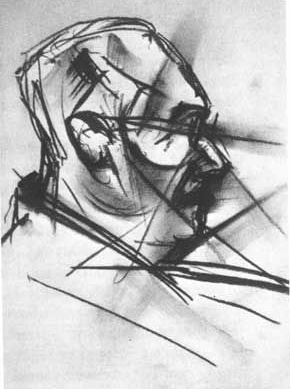
Observations: Eighty-five minutes after first dose, 20 minutes after second dose. The patient seems euphoric.

Artist’s comment: “I can see you clearly, so clearly. This… you… it’s all … I’m having a little trouble controlling this pencil. It seems to want to keep going.”

Analysis: Research suggests that “LSD experiences may wildly enhance artists’ creative potential without necessarily enhancing the mechanisms needed to harness that creativity toward artistic ends,” anthropologist Marlene Dobkin de Rios wrote in her book “LSD, Spirituality and the Creative Process” (Park Street Press, 2003).

In other words, artistic technique doesn’t necessarily keep pace with the flow of ideas during an acid trip. But practice can help. “With practice, most of Janinger’s artists became adept at working under its influence,” said Sewell.
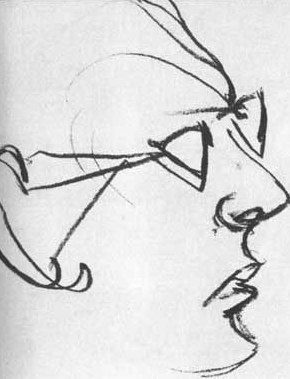
Observations: Two hours, 30 minutes after first dose, 85 minutes after second dose. The patient appears very focused on the business of drawing.

Artist’s comment: “Outlines seem normal, but very vivid everything is changing color. My hand must follow the bold sweep of the lines. I feel as if my consciousness is situated in the part of my body that’s now active my hand, my elbow… my tongue.”

Analysis: “Janiger believed that LSD favored the prepared mind and that formal artist training would be the best preparation to handle the creative explosion that came from LSD use,” Sewell told Life’s Little Mysteries. “He ultimately concluded that the art was no better or worse, but it was different. LSD is not a creativity tool, nor does it unlock creativity. Rather, it makes accessible parts of the individual not normally available.

“People who are already artists or craftsmen when they take LSD benefit from it, but uncreative people are not suddenly made so. He also concluded that although LSD could be a powerful instrument to free the artist from conceptual ruts, it did little to facilitate the development of technique.”

Observations: Two hours, 32 minutes after first dose. The patient seems gripped by his pad of paper.

Artist’s comment: “I’m trying another drawing. The outlines of the model are normal, but now those of my drawing are not. The outline of my hand is going weird, too. It’s not a very good drawing, is it? I give up I’ll try again …”

Analysis: When under the influence of LSD, “some people describe a kind of frustration with language or art that does not allow for a 3-D experience ,” Erika Dyck, medical historian and author of the book “Psychedelic Psychiatry” (Johns Hopkins University Press, 2008), told Life’s Little Mysteries.
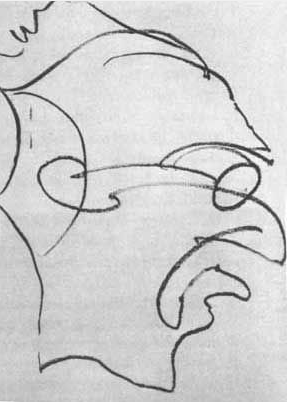
Observations: Two hours, 35 minutes after first dose. The patient follows quickly with another drawing. Upon completing it, he starts laughing, then becomes startled by something on the floor.

Artist’s comment: “I’ll do a drawing in one flourish … without stopping … one line, no break!’

Analysis: “Paintings produced under the influence of LSD tend to have the following characteristics,” Sewell said. “The artist’s work tends to fill all available space and resists being contained within its borders; alternately, figures may shrink or become embedded in a matrix. Figure and ground becomes a continuum, with less differentiation between object and subject. The object is in continuous movement, with greater vibrancy and motion. There is greater intensity of color and light. There is an elimination of detail and extraneous elements. Objects may be depicted symbolically or as abstractions. They may also become more fragmented, disorganized, and distorted.”

Observations: Two hours, 45 minutes after first dose. The patient tries to climb into the activity box, and is generally agitated responds slowly to the suggestion that he might like to draw some more. He has become largely nonverbal. Patient mumbles inaudibly to a tune (sounds like “Thanks for the Memory”). He changes medium to tempera.

Artist’s comment: “I am … everything is … changed … They’re calling … your face … interwoven … who is…”

Analysis: “Common reactions to LSD include a retreat into often less verbal forms of communication, more abstract ideas,” Dyck said, “or, at the very least, ideas that are difficult to describe or even paint in a conventional way.”
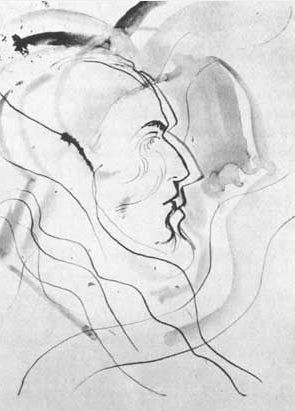
Observations: Four hours, 25 minutes after the first dose. The patient retreated to the bunk, spending approximately two hours lying, waving his hands in the air. His return to the activity box is sudden and deliberate, changing media to pen and watercolor. He makes the last half-a-dozen strokes of the drawing while running back and forth across the room.

Artist’s comment: “This will be the best drawing, like the first one, only better. If I’m not careful I’ll lose control of my movements, but I won’t, because I know, I know.” [Repeats “I know” several more times.]

Analysis: A group of Italian scientists led by G. Tonini also investigated LSD-influenced art making. “When done under the influence of these drugs, [the art] reflected psychopathological manifestations markedly similar to those observed in schizophrenia,” Tonini wrote in 1955.
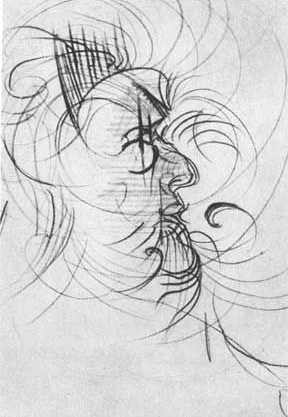
Observations: Five hours, 45 minutes after the first dose. The patient continues to move about the room, intersecting the space in complex variations. It’s an hour and a half before he settles down to draw again he appears to be over the effects of the drug.

Artist’s comment: “I can feel my knees again; I think it’s starting to wear off. This is a pretty good drawing this pencil is mighty hard to hold.” (He is holding a crayon.)

Analysis: “LSD can give people a different perspective than the one they usually have,” Sewell said. “What they do with that is up to them. It is not a ‘creativity pill.’ The best analogy is travel. It can broaden the mind … or not. It depends where you go and what you do there.”
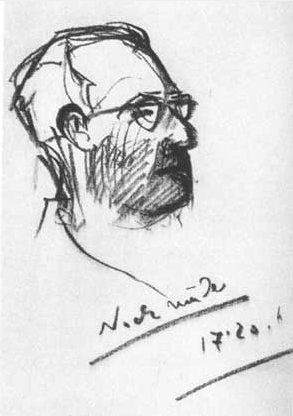
Observations: Eight hours after the first dose. The patient sits on the bunk bed. He reports that the intoxication has worn off except for the occasional distorting of our faces. We ask for a final drawing, which he performs with little enthusiasm.

Artist’s comment: “I have nothing to say about this last drawing. It is bad and uninteresting. I want to go home now.”

Analysis: In a later interview, Janiger said that after the artists in his studies were done tripping, “99 percent expressed the notion that this was an extraordinary, valuable tool for learning about art and the way one learns about painting or drawing. Almost all personally agreed they would take it again.”

“In 1971, Carl Hertzel, a professor of art history at Pitzer College in Claremont, undertook a stylistic assessment of the artwork, which was published by the Lang Art Gallery also in 1971,” Sewell said. “In 1986, 25 of the original artists participated in an exhibit called, ‘The Enchanted Loom: LSD and Creativity’ in which they commented on their own artwork, mostly positively.”

http://www.livescience.com/33166-slideshow-scientists-analyze-drawings-acid-trip-artist.html

How LSD works in the brain

by Natalie Wolchover

The main theory of psychedelics, first fleshed out by a Swiss researcher named Franz Vollenweider, is that drugs like LSD and psilocybin, the active ingredient in “magic” mushrooms, tune down the thalamus’ activity. Essentially, the thalamus on a psychedelic drug lets unprocessed information through to consciousness, like a bad email spam filter. “Colors become brighter , people see things they never noticed before and make associations that they never made before,” Sewell said.

LSD, or acid, and its mind-bending effects have been made famous by pop culture hits like “Fear and Loathing in Las Vegas,” a film about the psychedelic escapades of writer Hunter S. Thompson. Oversaturated colors, swirling walls and intense emotions all supposedly come into play when you’re tripping. But how does acid make people trip?

Life’s Little Mysteries asked Andrew Sewell, a Yale psychiatrist and one of the few U.S.-based psychedelic drug researchers, to explain why LSD short for lysergic acid diethylamide does what it does to the brain.

His explanation begins with a brief rundown of how the brain processes information under normal circumstances. It all starts in the thalamus, a node perched on top of the brain stem, right smack dab in the middle of the brain. “Most sensory impressions are routed through the thalamus, which acts as a gatekeeper, determining what’s relevant and what isn’t and deciding where the signals should go,” Sewell said.

“Consequently, your perception of the world is governed by a combination of ‘bottom-up’ processing, starting … with incoming signals, combined with ‘top-down’ processing, in which selective filters are applied by your brain to cut down the overwhelming amount of information to a more manageable and relevant subset that you can then make decisions about.

“In other words, people tend to see what they’ve been trained to see, and hear what they’ve been trained to hear.”

The main theory of psychedelics, first fleshed out by a Swiss researcher named Franz Vollenweider, is that drugs like LSD and psilocybin, the active ingredient in “magic” mushrooms, tune down the thalamus’ activity. Essentially, the thalamus on a psychedelic drug lets unprocessed information through to consciousness, like a bad email spam filter. “Colors become brighter , people see things they never noticed before and make associations that they never made before,” Sewell said.

n a recent paper advocating the revival of psychedelic drug research, psychiatrist Ben Sessa of the University of Bristol in England explained the benefits that psychedelics lend to creativity. “A particular feature of the experience is … a general increase in complexity and openness, such that the usual ego-bound restraints that allow humans to accept given pre-conceived ideas about themselves and the world around them are necessarily challenged. Another important feature is the tendency for users to assign unique and novel meanings to their experience together with an appreciation that they are part of a bigger, universal cosmic oneness.”

But according to Sewell, these unique feelings and experiences come at a price: “disorganization, and an increased likelihood of being overwhelmed.” At least until the drugs wear off, and then you’re left just trying to make sense of it all.

http://www.livescience.com/33167-how-acid-lsd-make-people-trip.html?li_source=pm&li_medium=most-popular&li_campaign=related_test