Swearing Is Good For You—And Chimps Do It, Too

By Simon Worrall

wearing is usually regarded as simply lazy language or an abusive lapse in civility. But as Emma Byrne shows in her book, Swearing Is Good for You: The Amazing Science of Bad Language, new research reveals that profanity has many positive virtues, from promoting trust and teamwork in the office to increasing our tolerance to pain.

When National Geographic caught up with Byrne at her home in London, she explained why humans aren’t the only primates that can curse and why, though women are swearing more today than before, it is still regarded by many as “unfeminine.”

You write, “I’ve had a certain pride in my knack for colorful and well-timed swearing.” Tell us about your relationship to bad language, and in what sense it is good for us?

My first memory of being punished for swearing was calling my little brother a four-letter word, twat, which I thought was just an odd pronunciation of the word twit. I must have been about eight at the time; my brother was still pre-school. My mother froze, then belted me round the ear. That made me realize that some words had considerably more power than others, and that the mere shift in a vowel was enough to completely change the emotional impact of a word.

I’ve always had a curiosity about things I’ve been told I am not meant to be interested in, which is why I wound up in a fairly male-dominated field of artificial intelligence for my career. There’s a certain cussedness to my personality that means, as soon as someone says, “No, that’s not for you,” I absolutely have to know about it.

My relationship with swearing is definitely one example. I tend to use it as a way of marking myself out as being more like my male colleagues, like having a working knowledge of the offside rule in soccer. It’s a good way of making sure that I’m not seen as this weird, other person, based on my gender.

There’s great research coming out of Australia and New Zealand, which is perhaps not surprising, that says that jocular abuse, particularly swearing among friends, is a strong signal of the degree of trust that those friends share. When you look at the transcripts of these case studies of effective teams in sectors like manufacturing and IT, those that can joke with each other in ways that transgress polite speech, which includes a lot of swearing, tend to report that they trust each other more.

One of the reasons why there’s probably this strong correlation is that swearing has such an emotional impact. You’re demonstrating that you have a sophisticated theory of mind about the person that you’re talking to, and that you have worked out where the limit is between being shocking enough to make them giggle or notice you’ve used it but not so shocking that they’ll be mortally offended. That’s a hard target to hit right in the bullseye. Using swear words appropriate for that person shows how well you know them; and how well you understand their mental model.

You were inspired to write this book by a study carried out by Dr. Richard Stephens. Tell us about the experiment, and why it was important in our understanding of swearing.

Richard Stephens works out of Keele University in the U.K. He’s a behavioral psychologist, who is interested in why we do things that we’ve been told are bad for us. For years, the medical profession has been saying that swearing is incredibly bad for you if you’re in pain. It’s what’s called a “catastrophizing response,” focusing on the negative thing that’s happened. His take on this was, if it’s so maladaptive, why do we keep doing it?

He initially had 67 volunteers, although he’s replicated this multiple times. He stuck their hands in ice water and randomized whether or not they were using a swear word or a neutral word and compared how long they could keep their hands in ice water. On average, when they were swearing they could keep their hands in the iced water for half as long again as when they were using a neutral word. This shows that the results are anything but maladaptive. Swearing really does allow you to withstand pain for longer.

Have men always sworn more than women? And, if so, why?

Definitely not! Historians of the English language describe how women were equally praised for their command of exceedingly expressive insults and swearing, right up to the point in 1673 when a book by Richard Allestree was published titled The Ladies Calling.” Allestree says that women who swear are acting in a way that is biologically incompatible with being a woman and, as a result, will begin to take on masculine characteristics, like growing facial hair or becoming infertile. He wrote, “There is no sound more odious to the ears of God than an oath in the mouth of a woman.”

Today we are horribly still in the same place on men versus women swearing. Although women are still considered to swear less than men, we know from studies that they don’t. They swear just as much as men. But attitudinal surveys show that both men and women tend to judge women’s swearing much more harshly. And that judgement can have serious implications. For example, when women with breast cancer or arthritis swear as a result of their condition, they’re much more likely to lose friends, particularly female friends. Whereas men who swear about conditions like testicular cancer tend to bond more closely with other men using the same vocabulary. The idea that swearing is a legitimate means of expressing a negative emotion is much more circumscribed for women.

I was fascinated to discover that it’s not just humans that swear—primates do it, too! Tell us about Project Washoe.

Out in the wild, chimps are inveterate users of their excrement to mark their territory or show their annoyance. So the first thing you do, if you want to teach a primate sign language, is potty train them. That means, just like human children at a similar age, that they end up with a taboo around excrement. In Project Washoe, the sign for “dirty” was bringing the knuckles up to the underside of the chin. And what happened spontaneously, without the scientists teaching them, was that the chimps started to use the sign for “dirty” in exactly the same way as we use our own excremental swear words.

Washoe was a female chimpanzee that was originally adopted by R. Allen Gardner and Beatrix T. Gardner in the 1960s. Later, she was taken on by a researcher in Washington State called Roger Fouts. Washoe was the matriarch to three younger chimps: Loulis, Tatu, and Dar. By the time they brought in Loulis, the youngest, the humans had stopped teaching them language, so they looked to see if the chimps would transmit language through the generations, which they did.

Not only that: as soon as they had internalized the toilet taboo, with the sign “dirty” as something shameful, they started using that sign as an admonition or to express anger, like a swear word. When Washoe and the other chimps were really angry, they would smack their knuckles on the underside of their chins, so you could hear this chimp-teeth-clacking sound.

Washoe and the other chimps would sign things like “Dirty Roger!” or “Dirty Monkey!” when they were angry. The humans hadn’t taught them this! What had happened is that they had internalized that taboo, they had a sign associated with that taboo, so all of a sudden that language was incredibly powerful and was being thrown about, just like real excrement is thrown about by wild chimpanzees.

You say, “swearing is a bellwether—a foul-beaked canary in the coalmine—that tells us what our social taboos are.” Unpack that idea for us, and how it has changed over the centuries.

The example that most people will be familiar with in English-speaking countries is blasphemy. There are still parts of the U.S. that are more observant of Christianity than others but, in general, the kinds of language that would have resulted in censorship in other eras is now freely used in print and TV media. However, the “n-word,” which was once used as the title of an Agatha Christie book and even in nursery rhymes, is now taboo because there is a greater awareness that it is a painful reminder of how African-Americans suffered because of racism over the centuries. In some communities, where that usage is reclaimed, they are saying that if I use it, it immunizes me against its negative effects.

That is an example of a word that has fallen out of general conversation and literature into the realm of the unsayable. It’s quite different from the copulatory or excretory swearing in that it is so divisive. The great thing about the copulatory and excretory swearing is that they are common to the entire human race.


In the digital world, you can swear at someone without actually being face to face. Is this changing the way we curse? And what will swearing in tomorrow’s world look like?

One of the difficulties with swearing in online discourse is that there is no face-to-face repercussion, so it allows people to lash out without seeing the person that they’re speaking to as fully human. But it’s not swearing that is the problem. It’s possible to say someone is worth less as a human being based on their race, gender or sexuality using the most civil of language. For example, when Donald Trump called Hillary Clinton “a nasty woman” rather than using the c-word, most of us were able to break the code. We knew what he meant but because he hadn’t sworn it was seen as acceptable discourse.

In the future, I think that swearing will inevitably be reinvented; we’ve seen it change so much over the years. As our taboos change, that core of language that has the ability to surprise, shock or stun the emotional side of the brain will change, too. But I can’t predict where those taboos will go.

https://news.nationalgeographic.com/2018/01/science-swearing-profanity-curse-emma-byrne/

What happens in the brain before a bungee jump

Surjo R. Soekadar, psychiatrist and neuroscientist at the University of Tübingen, and his doctoral candidate Marius Nann have for the very first time succeeded in measuring the readiness potential, outside a laboratory and under extreme conditions, namely prior to a 192-meter bungee jump.

The readiness potential is a characteristic electrical voltage shift in the brain that indicates an upcoming willful act, and that appears even before a person becomes aware of his/her own conscious decision to act. The results of the study will be published in an international journal later this spring but are now available online: https://www.biorxiv.org/content/early/2018/01/27/255083 (DOI:
https://doi.org/10.1101/255083)

The readiness potential was first described in 1964 by Hans-Helmut Kornhuber and Lüder Deecke, who measured the brain waves of a test person over hundreds of finger movements and under strict laboratory conditions. Despite numerous studies, the readiness potential has never been measured in a real-life situation: Since the voltage shift is in the range of only a few millionths of a volt, only measurements under laboratory conditions were considered possible.

To advance the development of brain-machine interfaces, the researchers from Tübingen wanted to find out whether the readiness potential can be assessed in everyday environments. In addition, they were interested in whether the willpower necessary for initiating an act would influence the characteristics of the brain potential. For the study, two semi-professional cliff divers agreed to have their brain waves recorded before jumping from the second tallest bungee jumping platform in Europe, the 192-meter Europa Bridge near Innsbruck in Austria.

After only a few jumps, the researchers were able to measure the readiness potential beyond any doubt. “Once again, the current experiment shows that the boundaries of the possible are shifting and that neurotechnology might soon be part of our everyday life,” Soekadar says. “The small number of jumps necessary for the experiment shows that the readiness potential prior to a bungee jump is very well expressed”, Nann explains.

This article has been republished from materials provided by The University of Tuebingen. Note: material may have been edited for length and content. For further information, please contact the cited source.

Reference:
Nann, M., Cohen, L. G., Deecke, L., & Soekadar, S. R. (2018). To jump or not to jump: The Bereitschaftspotential required to jump into 192-meter abyss. arXiv preprint arXiv:1801.07244.

https://www.technologynetworks.com/neuroscience/news/taking-neuroscience-over-the-edge-exploring-the-brains-readiness-potential-prior-to-a-bungee-jump-296942?utm_campaign=Newsletter_TN_BreakingScienceNews&utm_source=hs_email&utm_medium=email&utm_content=60306590&_hsenc=p2ANqtz-8cO5QFZovVgMC9zlBl6UK9zld0IglpGEZRtDFFBjG_caWEqxM9VD_6ZqqTZPoGcZiMaQbIw-Kb5k_J2FTQkKGb0Odu3g&_hsmi=60306590

New research shows Dark Matter could be collapsing into different structures in our universe than previously thought


Dark matter is normally thought to form a spherical halo (illustrated in blue) around galaxies like the Milky Way. Two physicists suggest that dark matter could collapse into more complex structures.

BY EMILY CONOVER

Clumps of dark matter may be sailing through the Milky Way and other galaxies.

Typically thought to form featureless blobs surrounding entire galaxies, dark matter could also collapse into smaller clumps — similar to normal matter condensing into stars and planets — a new study proposes. Thousands of collapsed dark clumps could constitute 10 percent of the Milky Way’s dark matter, researchers from Rutgers University in Piscataway, N.J., report in a paper accepted in Physical Review Letters.

Dark matter is necessary to explain the motions of stars in galaxies. Without an extra source of mass, astronomers can’t explain why stars move at the speeds they do. Such observations suggest that a spherical “halo” of invisible, unidentified massive particles surrounds each galaxy.

But the halo might be only part of the story. “We don’t really know what dark matter at smaller scales is doing,” says theoretical physicist Matthew Buckley, who coauthored the study with physicist Anthony DiFranzo. More complex structures might be hiding within the halo.

To collapse, dark matter would need a way to lose energy, slowing particles as gravity pulls them into the center of the clump, so they can glom on to one another rather than zipping right through. In normal matter, this energy loss occurs via electromagnetic interactions. But the most commonly proposed type of dark matter particles, weakly interacting massive particles, or WIMPs, have no such way to lose energy.

Buckley and DiFranzo imagined what might happen if an analogous “dark electromagnetism” allowed dark matter particles to interact and radiate energy. The researchers considered how dark matter would behave if it were like a pared-down version of normal matter, composed of two types of charged particles — a dark proton and a dark electron. Those particles could interact — forming dark atoms, for example — and radiate energy in the form of dark photons, a dark matter analog to particles of light.

The researchers found that small clouds of such dark matter could collapse, but larger clouds, the mass of the Milky Way, for example, couldn’t — they have too much energy to get rid of. This finding means that the Milky Way could harbor a vast halo, with a sprinkling of dark matter clumps within. By picking particular masses for the hypothetical particles, the researchers were able to calculate the number and sizes of clumps that could be floating through the Milky Way. Varying the choice of masses led to different levels of clumpiness.

In Buckley and DiFranzo’s scenario, the dark matter can’t squish down to the size of a star. Before the clumps get that small, they reach a point where they can’t lose any more energy. So a single clump might be hundreds of light-years across.

The result, says theoretical astrophysicist Dan Hooper of Fermilab in Batavia, Ill., is “interesting and novel … but it also leaves a lot of open questions.” Without knowing more about dark matter, it’s hard to predict what kind of clumps it might actually form.

Scientists have looked for the gravitational effects of unidentified, star-sized objects, which could be made either of normal matter or dark matter, known as massive compact halo objects, or MACHOs. But such objects turned out to be too rare to make up a significant fraction of dark matter. On the other hand, says Hooper, “what if these things collapse to solar system‒sized objects?” Such larger clumps haven’t have been ruled out yet.

By looking for the effects of unexplained gravitational tugs on stars, scientists may be able to determine whether galaxies are littered with dark matter clumps. “Because we didn’t think these things were a possibility, I don’t think people have looked,” Buckley says. “It was a blind spot.”

Up until now, most scientists have focused on WIMPs. But after decades of searching in sophisticated detectors, there’s no sign of the particles (SN: 11/12/16, p. 14). As a result, says theoretical physicist Hai-Bo Yu of the University of California, Riverside, “there’s a movement in the community.” Scientists are now exploring new ideas for what dark matter might be.

M.R. Buckley and A. DiFranzo. Collapsed dark matter structures. Physical Review Letters, in press, 2018.

Clumps of dark matter could be lurking undetected in our galaxy

Improper childhood sleep can increase the chance of obesity and later-life cancer

Is your child having a tough time sleeping properly? You may need to keep a check on his/her body mass index (BMI) as a new research suggests that there is a co-relation between the two and can lead to cancer in adulthood.

“Childhood obesity very often leads to adult obesity. This puts them at greater risk of developing obesity-related cancers in adulthood,” said study lead author Bernard Fuemmeler, Professor and Associate Director for Cancer Prevention and Control at the Virginia Commonwealth University.

For the study, researchers enrolled 120 children, with an average age of eight, whose mothers had participated in the Newborn Epigenetic Study both pre-birth and during early childhood.

To track the sleep-wake cycle, the children wore accelerometers continuously for 24 hours a day for a period of at least five days.

They found that shorter sleep duration, measured in hours, was associated with a higher BMI z-score (body mass index adjusted for age and sex).

Each additional hour of sleep was associated with a .13 decrease in BMI z-score and with a 1.29 cm decrease in waist circumference.

More fragmented rest-activity rhythms and increased intradaily variability — a measure of the frequency and extent of transitions between sleep and activity — were also associated with greater waist circumferences.

The study results, to be presented at Obesity and Cancer: Mechanisms Underlying Etiology and Outcomes, indicate that while sleep duration is important, examining markers of sleep quality may also be useful in designing childhood obesity prevention strategies.

“Today, many children are not getting enough sleep. There are a number of distractions, such as screens in the bedroom, that contribute to interrupted, fragmented sleep. This, perpetuated over time, can be a risk factor for obesity,” Fuemmeler said.

“Because of the strong links between obesity and many types of cancer, childhood obesity prevention is cancer prevention.”

http://indianexpress.com/article/lifestyle/health/proper-sleep-in-children-may-prevent-cancer-later-5040630/

Mardi Gras beads block New Orleans drains

Officials in New Orleans have discovered the hidden cost of the city’s annual Mardi Gras celebrations after drains in the city became blocked. Workers have reportedly removed more than 42 tons of the festival’s signature plastic beads from storm drains around five blocks of the city centre.

Thanks to Pete Cuomo for bringing this to the It’s Interesting community.

A front end loader removes trash that was left on Boubon Street after last night’s Mardi Gras Celebration, Early Wednesday morning Feb. 25, 2009, in New Orleans. (AP Photo/Brian Lawdermilk)

Norway’s melting ice is revealing priceless ancient artifacts


An iron arrowhead, possibly dating back a millennia or more, emerging from an ice patch in the mountains of Norway.

by MICHAEL D’ESTRIES

Ancient artifacts preserved in snow and ice over thousands of years in Norway’s mountains are emerging at an unprecedented rate, and archaeologists are scrambling to collect them all before it’s too late.

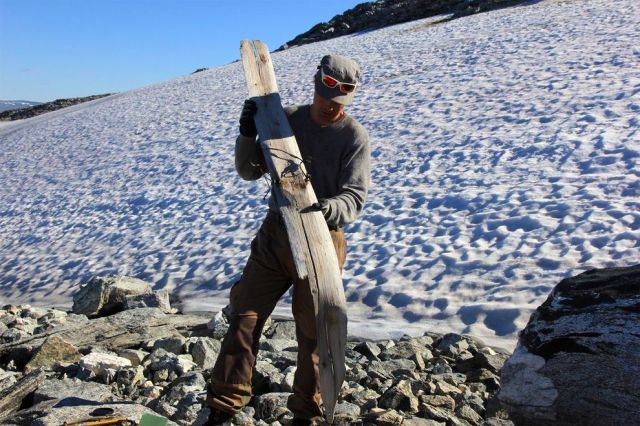
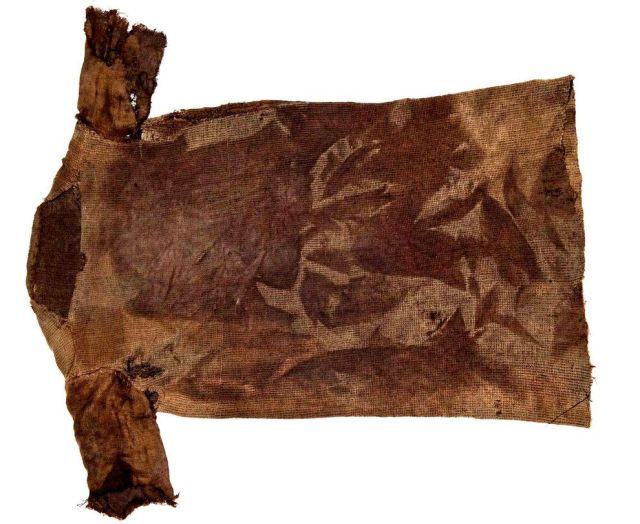
The finds are truly remarkable: iron arrowheads dating back to 1,500 years, tunics from the Iron Age, and even the remains of a wooden ski complete with leather binding left behind sometime in the year 700 A.D. Some of the oldest objects were dropped more than 6,000 years ago.

The catalyst behind the sudden emergence of these ancient relics is climate change, with lower winter precipitation and warmer summers dramatically reducing the alpine ice that acts as a time capsule for lost treasures.

“The ice is a time machine,” Lars Pilö, an archaeologist who works for the Oppland County council told Archaeology in 2013. “When you’re really lucky, the artifacts are exposed for the first time since they were lost.”


A ski with leather binding recovered from an ice patch in the Norwegian mountains. Analysis later determined that the artifact dates back to 700 A.D.

Unlike glaciers, which tend to crush and grind objects as they move down a mountain, the majority of artifacts coming out of Norway are being recovered from ice patches. These isolated non-moving accumulations of ice and snow are significant to the archeological record because of their extreme stability, with many containing layers of seasonal snowpack dating back thousands of years.

In 2017, a study of the ice of the Juvfonne snow patch in Jotunheimen, Norway was discovered to be an astounding 7,600 years old.


An Iron Age tunic recovered from the Lendbreen ice patch in August 2011.

Despite their remote setting and scarce visits from modern day humans, ice patches for thousands of years were veritable hot spots for ancient hunters. In the summer, reindeer herds often crowd together on the islands of snow and ice to escape pesky, biting botflies, which have a strong aversion to the cooler temperatures. In the past, hunters would follow, losing or forgetting precious equipment along the way that was later buried and preserved in the winter snows.

Some items, such as the 1,600-year-old knife shown in the video below, look as if they were lost only a few decades ago.

Because ice patches in the past have contracted and expanded due to temperature shifts, many of the objects recovered have likely one time or another been exposed and then reburied by snow and ice. They also have a tendency to be carried by meltwater. As explained on the Secrets of the Ice Facebook page, the 2,600-year-old arrows shown in the image below were washed downslope far from the place they were originally lost.


Arrows discovered in the scree of an ice patch were later determined to date back to 600 B.C.

Some of the most exciting finds are those objects found emerging from the surface of the ice, a sign that they have previously been untouched by melting, according to researchers from the Oppland County Council. These artifacts are generally exceptionally preserved, with organic materials such as leather and fabric still present. It’s also an indication of the severity of anthropogenic global warming, with certain ice patches in Norway estimated to have retreated to levels last seen during the Stone Age.

“It’s very impressive when you can say this melting ice is 5,000 years old, and this is the only moment in the last 7,000 years that the ice has been retreating,” Albert Hafner, an archaeologist at the University of Bernsays Hafner, told Archaeology. “Ice is the most emotional way to show climate change.”


The preserved remains of a 3400-year-old hide shoe discovered on an ice patch in 2006. Over the last 30 years, some 2,000 artifacts have been recovered from Norway’s melting ice fields.

Unfortunately for archaeologists, the rate of ice loss coupled with the extremely small annual windows of opportunity to scour the alpine patches, means some newly exposed items will break down and disappear before anyone has a chance to study them.

“This material is like the library of Alexandria. It is incredibly valuable and it’s on fire now,” George Hambrecht, an anthropologist at the University of Maryland, College Park, told New Scientist.


Archaeologists are in a race against time to discover and preserve ancient artifacts exposed to the elements. Here, a team member searches the edge of a retreating ice patch for potential relics from the past.

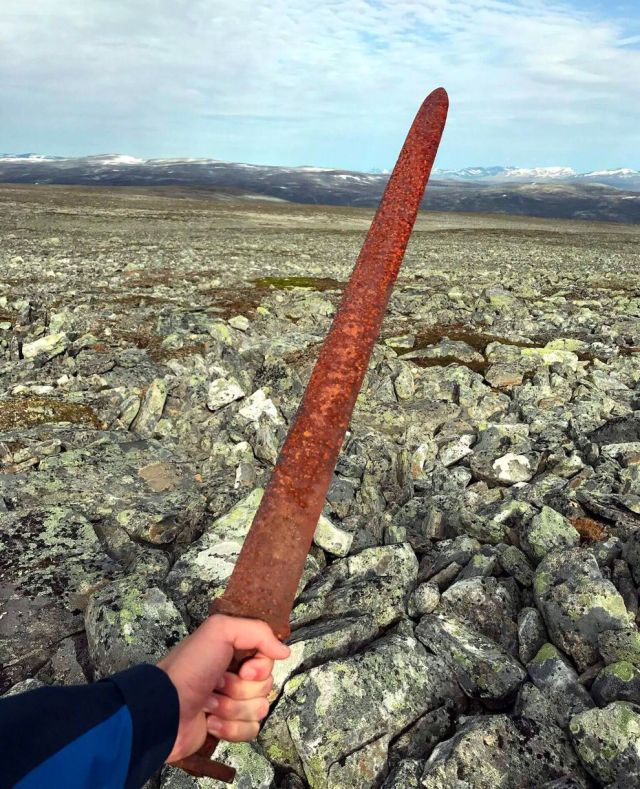
Right now you might be thinking, “I want to help find and preserve these incredible artifacts!,” and we agree, it sounds like quite the adventure to take a romp into the Norwegian wilderness and possibly stumble upon a well-preserved Viking Sword (see below). The reality, however, is that field work can sometimes be laborious and uncomfortable, with every day at the mercy of Mother Nature’s fickle moods.

That said, the Oppland County Council did accept volunteers last spring and it’s possible, especially with so many finds emerging from the ice each year, that others may be called upon to assist.

“We may not find much (or we could strike the jackpot, who knows),” Lars Pilø wrote last April in the Secrets blog. “It all depends on the melting conditions, and they develop over the summer and during fieldwork. If we are unlucky, the scenery and the team spirit make up for the lack of finds.”

To learn more about the work underway at Norway’s precious ice patches, visit the Secrets of the Ice blog here: http://secretsoftheice.com/


A Viking sword discovered in 2017, and dating back to c. AD 850-950.

https://www.mnn.com/earth-matters/climate-weather/blogs/ancient-artifacts-are-emerging-norways-melting-ice

Rebel Polish cow joins a herd of wild bison

by CHRISTIAN COTRONEO

If you happen to be in Poland’s sprawling Bialowieza Forest, you might be lucky enough to catch a glimpse of its most storied residents: a herd of wild bison.

And you might even spot a strange, new addition to that herd. No, your eyes are not deceiving you. This isn’t forest magic.

That’s a cow.

And how did a farm animal end up joining a herd of fiercely independent — and very much endangered — beasts?

According to Poland’s TVN24 news portal, the cow escaped from her pen at a nearby farm last fall. Back in November, the fugitive farm animal was spotted again, keeping the unlikeliest of company.

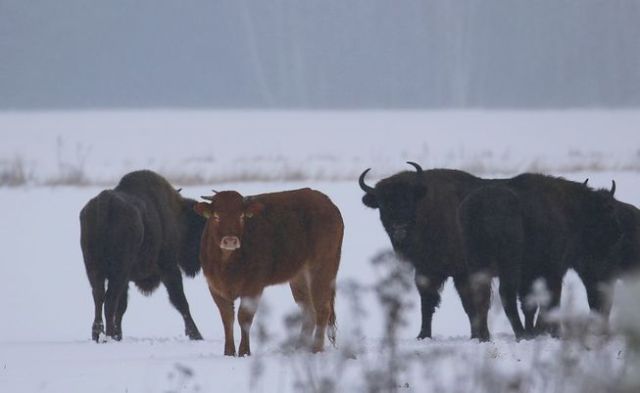
“It’s not unusual to see bison near the Bialowieza Forest, but one animal caught my eye,” Adam Zbyryt, the bird expert who spotted the cow told TVN24 back then. “It was a completely different light-brown shade from the rest of the herd. Bison are chestnut or dark brown.”

The cow fit the description of one that had gone missing from the farm: a reddish-grown Limousin cow.

Then winter set in — and most assumed the cow, who wasn’t naturally built for the elements like her hardy friends, would perish.

But earlier this week, Rafal Kowalczyk, director of the Mammal Research Institute at the Polish Academy of Sciences, came upon an astonishing sight: the very same cow, still healthy and seemingly well-fed, and still making time with his wild friends.

Somehow, the runaway cow had managed to thrive over the winter, even as the bison herd hadn’t fully welcomed her into the fold.

Indeed, the images show a cow just at the fringe of the herd. Let’s call her a persistent cow, who may owe her life to the bison.

“She is not very integrated with the group, as bison act like one organism and she stands out,” Kowalczyk told the Polish news station. But wolves, he added, were likely discouraged from attacking her thanks to the daunting company she kept.

But the cow still faces an uncertain future, mostly because her very presence puts an already minuscule bison herd in danger. There are just 600 of these behemoths left in Bialowieza Forest, a UNESCO heritage site spanning some 350,000 acres between Poland and Belarus. For the bison, the primeval forest is their last stronghold in Europe, having been hunted to near-extinction over the last century.

If, as Kowalczyk points out, the bison do accept this insistent cow into their herd, it could lead to mating, which could contaminate the herd with hybrids.

Then there’s the real possibility of the cow dying a particularly painful death during childbirth, as a baby bison may be too much for her bovine birth canal.

It’s hard to blame the cow.

Who wouldn’t peer over the fence at these magnificent animals and not dream of running with them? Besides, by several accounts, she was earmarked for slaughter.

But it does leave a lingering question: What to do with this little dreamer?

Likely, she will have to return to the farm. Or, even better, a sanctuary might step in, thanks to the soaring popularity if this “rebel” cow.

But before then, this cow leaves us all with a little bovine inspiration: There’s no dream too big, too far — or even too weird.

https://www.mnn.com/earth-matters/animals/stories/cow-bison-poland-forest

Some stroke patients can be successfully treated up to 16 hours after stroke

The time window for treating stroke patients may be considerably longer than doctors previously thought. Results from a multi-center clinical trial published Jan. 24 in the New England Journal of Medicine show that certain stroke patients can be successfully treated up to 16 hours after stroke.

Key to the success of the treatment was the use of advanced brain imaging that can identify stroke patients who still have salvageable brain tissue if blood flow can be restored. The study demonstrated that physically removing brain clots up to 16 hours after symptom onset in these selected patients led to improved outcomes compared to standard medical therapy.

University of Iowa Hospitals and Clinics was one of 38 stroke centers involved in the new study known as the Endovascular Therapy Following Imaging Evaluation for the Ischemic Stroke (DEFUSE 3) trial. The trial was led by researchers at Stanford University School of Medicine in California and funded by the National Institute of Neurological Disorders and Stroke (NINDS), part of the National Institutes of Health. The findings also were presented Jan. 24 at the International Stroke Conference in Los Angeles.

“This study will provide us with the opportunity to offer a life-saving and life-changing therapy to thousands of people,” says Santiago Ortega, MD, clinical assistant professor and neurointerventional surgery director in the UI Department of Neurology and principal investigator for the UI DEFUSE 3 study site. “As the top enrolling center in the study, the UI was an important contributor to this advance in the field of stroke and improving the treatment of this devastating disease.”


Saving brain tissue

Ischemic stroke occurs when a cerebral blood vessel becomes blocked, cutting off the delivery of oxygen and nutrients to brain tissue. The area immediately surrounding the blockage is known as the core. When a stroke occurs, brain tissue in the core typically cannot be saved, and the core can expand over time. However, physicians have long believed that tissue in the area surrounding the core (known as the ischemic penumbra) can potentially be saved based on how quickly blood flow can be restored.

The key to the new study was an advanced brain scan called perfusion imaging, which measures blood flow in brain tissue. Perfusion imaging can identify patients with brain tissue that can still be salvaged by removing the blockage.

Using an automated software to analyze perfusion MRI or CT scans, the DEFUSE 3 researchers identified patients thought to have salvageable tissue up to 16 hours after stroke onset. The participants were randomized to either receive endovascular thrombectomy plus standard medical therapy or medical therapy alone.

Endovascular thrombectomy, or the physical removal of the blockage, is currently approved for use up to six hours following onset of stroke symptoms. The DEFUSE 3 researchers discovered that this intervention can be effective up to 16 hours after symptoms begin in this select group of patients. The findings also showed that patients in the thrombectomy group had substantially better outcomes 90 days after treatment compared to those in the medical therapy control group. For example, 45 percent of the patients treated with the clot removal procedure achieved functional independence compared to 17 percent in the control group. Thrombectomy treatment was also associated with improved survival. According to the results, 14 percent of the treated group had died within 90 days of the study, compared to 26 percent in the control group.

The DEFUSE 3 results along with other recent trials are so compelling they have provided a basis for significant changes in the guidelines for managing acute stroke. The new guidelines, announced Jan. 24 by the American Heart Association/American Stroke Association, recommend thrombectomy in eligible patients six to 16 hours after a stroke.


DEFUSE 3 study at UI

The DEFUSE 3 study was supported by NINDS’ StrokeNet, a network of hospitals providing research infrastructure for multi-site clinical trials in stroke care. The UI is one of StrokeNet’s 25 Regional Coordinating Centers (RCC), and the UI site enrolled the highest number of participants (15 of 182) in the DEFUSE 3 study. Enrique Leira, MD, director of the UI Comprehensive Stroke Center is the principal investigator for the StrokeNet UIRCC. Leira, along with Harold Adams, MD, UI professor of neurology, have been instrumental in establishing the UI Comprehensive Stroke Center as a national leader in stroke care.

“UI Comprehensive Stroke Center team has worked hard on developing an acute endovascular protocol and infrastructure to expedite the assessment and treatment of patients suffering from this devastating disease in our state,” Ortega says. “Numerous members from different departments including, EMS personnel, emergency medicine physicians and nurses, radiology technologists, neurologists, anesthesiologist and OR nurses, and neurointerventional surgeons are constantly involved in the process and deserve recognition for their important contributions to the success of this study.”

Colin Derdeyn, MD, professor and DEO of the UI Department of Radiology, who also served on the DEFUSE 3 central steering committee, adds his praise for the study team’s work.

“Our success in this trial is related to several factors, one being Dr. Ortega’s great leadership and the work of his team, of which I am glad to be a part. Another major reason is the incredible network built by Dr. Adams and Dr. Leira to provide fast, state-of-the-art care to patients affected by acute stroke across Iowa,” Derdeyn says. “I am not aware of another institution in the country that supports so many small rural hospitals and accepts so many stroke patients in transfer for advanced care and access to really important trials like this.”

https://medcom.uiowa.edu/theloop/news/stroke-patients-can-be-successfully-treated-up-to-16-hours-after-stroke

The Humanity Star is now orbiting Earth

The universe has some added sparkle — now that a shiny, spherical satellite is traveling around our planet.

The newly launched satellite, dubbed the Humanity Star, resembles a disco ball. Its mission: to serve as a focal point for humanity and reminder about our fragile place in the universe.
“No matter where you are in the world, or what is happening in your life, everyone will be able to see the Humanity Star in the night sky,” said Peter Beck, founder of the private company Rocket Lab, in a statement.

“My hope is that all those looking up at it will look past it to the vast expanse of the universe and think a little differently about their lives, actions and what is important for humanity.”
The satellite is made from carbon fiber and has 65 reflective panels that reflect sunlight back to Earth. The Humanity Star spins rapidly, creating a blinking flashing effect.

https://www.cnn.com/2018/01/25/world/humanity-star-launch-trnd/index.html

Why roosters don’t go deaf from their crowing

by Noel Kirkpatrick

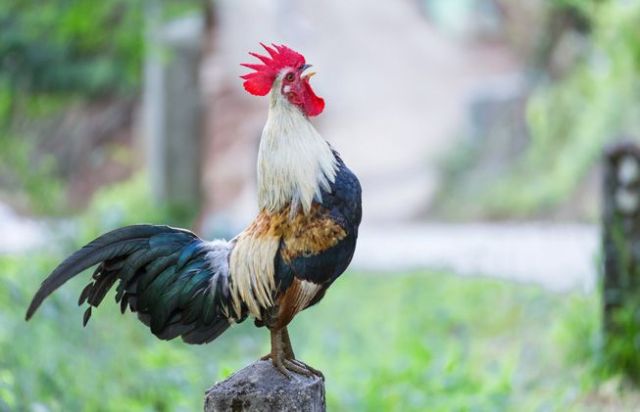
There’s a reason a rooster’s crow rouses the farm from a night’s slumber: It can be a very, very loud noise. It’s so loud, in fact, that you have to wonder how roosters don’t lose their hearing.

Which is exactly what researchers from the University of Antwerp and the University of Ghent in Belgium were wondering when they undertook this study in the journal Zoology.

https://www.sciencedirect.com/science/article/pii/S0944200617301976

The secret? Roosters can’t really hear themselves cock-a-doodle-doo.


A crow for your ears only

Our ears are delicate. A sound louder than 120 decibels — which is roughly the sound of a chainsaw — can cause permanent hearing loss. The air pressure waves from the noise can, over prolonged exposure, harm or even kill the cells that convert sound waves into the noises our brains can process. At 130 decibels, all it takes is half a second to cause a bit of hearing damage.

Given that roosters can crow at least as loud as 100 decibels, or the decibel level of a jackhammer, you’d expect them to experience some modicum of deafness over the course of their lifetimes. Instead, they continue to hear just fine — and to greet the new day with a blaring hoot.

To figure out just how loud the roosters got, and how they were able to keep their hearing, researchers strapped microphones to the heads of three roosters, with the receiving end pointed at their ears. This was done to measure the sound levels that the roosters themselves would hear when they crowed. The crows were also measured from a distance away. And one other measurement was taken: the researchers performed micro-CT scans on roosters and hens so they could pick apart the geometry of how sounds bounce around in their respective ear canals.

The decibels levels were all over 100 decibels, meaning loud enough to potentially cause damage. One rooster even hit 140 decibels, or the sound level on an aircraft carrier deck, and easily loud enough to cause some damage.

It turns out that roosters keep themselves safe from their own crows with an anatomy adaptation. When they open their beaks to the fullest, a quarter of the ear canal closes and soft tissue covers 50 percent of the eardrum. Basically, they have built-in earplugs that protect them from their own noises. Hens are also protected. Like roosters, the hens’ ear canals also close up, but not as much as their male counterparts’ do.

This built-in protective ability makes sense from an evolutionary perspective. Crowing also serves as a warning to other roosters that this particular group of hens is spoken for — so superlatives rule. The loudest rooster would end up being seen as the most fit to mate with the hens.

https://www.mnn.com/earth-matters/animals/stories/roosters-dont-go-deaf-their-own-crowing