Retinal device restores sight to blind mice


Researchers report they have developed in mice what they believe might one day become a breakthrough for humans: a retinal prosthesis that could restore near-normal sight to those who have lost their vision.

That would be a welcome development for the roughly 25 million people worldwide who are blind because of retinal disease, most notably macular degeneration.

The notion of using prosthetics to combat blindness is not new, with prior efforts involving retinal electrode implantation and/or gene therapy restoring a limited ability to pick out spots and rough edges of light.

The current effort takes matters to a new level. The scientists fashioned a prosthetic system packed with computer chips that replicate the “neural impulse codes” the eye uses to transmit light signals to the brain.

“This is a unique approach that hasn’t really been explored before, and we’re really very excited about it,” said study author Sheila Nirenberg, a professor and computational neuroscientist in the department of physiology and biophysics at Weill Medical College of Cornell University in New York City. “I’ve actually been working on this for 10 years. And suddenly, after a lot of work, I knew immediately that I could make a prosthetic that would work, by making one that could take in images and process them into a code that the brain can understand.”

Nirenberg and her co-author Chethan Pandarinath (a former Cornell graduate student now conducting postdoctoral research at Stanford University School of Medicine) report their work in the Aug. 14 issue of Proceedings of the National Academy of Sciences. Their efforts were funded by the U.S. National Institutes of Health and Cornell University’s Institute for Computational Biomedicine.

The study authors explained that retinal diseases destroy the light-catching photoreceptor cells on the retina’s surface. Without those, the eye cannot convert light into neural signals that can be sent to the brain.

However, most of these patients retain the use of their retina’s “output cells” — called ganglion cells — whose job it is to actually send these impulses to the brain. The goal, therefore, would be to jumpstart these ganglion cells by using a light-catching device that could produce critical neural signaling.

But past efforts to implant electrodes directly into the eye have only achieved a small degree of ganglion stimulation, and alternate strategies using gene therapy to insert light-sensitive proteins directly into the retina have also fallen short, the researchers said.

Nirenberg theorized that stimulation alone wasn’t enough if the neural signals weren’t exact replicas of those the brain receives from a healthy retina.

“So, what we did is figure out this code, the right set of mathematical equations,” Nirenberg explained. And by incorporating the code right into their prosthetic device’s chip, she and Pandarinath generated the kind of electrical and light impulses that the brain understood.

The team also used gene therapy to hypersensitize the ganglion output cells and get them to deliver the visual message up the chain of command.

Behavioral tests were then conducted among blind mice given a code-outfitted retinal prosthetic and among those given a prosthetic that lacked the code in question.

The result: The code group fared dramatically better on visual tracking than the non-code group, with the former able to distinguish images nearly as well as mice with healthy retinas.

“Now we hope to move on to human trials as soon as possible,” said Nirenberg. “Of course, we have to conduct standard safety studies before we get there. And I would say that we’re looking at five to seven years before this is something that might be ready to go, in the best possible case. But we do hope to start clinical trials in the next one to two years.”

Results achieved in animal studies don’t necessarily translate to humans.

Dr. Alfred Sommer, a professor of ophthalmology at Johns Hopkins University in Baltimore and dean emeritus of Hopkins’  Bloomberg School of Public Health, urged caution about the findings.

“This could be revolutionary,” he said. “But I doubt it. It’s a very, very complicated business. And people have been working on it intensively and incrementally for the last 30 years.”

“The fact that they have done something that sounds a little bit better than the last set of results is great,” Sommer added.  “It’s terrific. But this approach is really in its infancy. And I guarantee that it will be a long time before they get to the point where they can really restore vision to people using prosthetics.”

Other advances may offer benefits in the meantime, he said. “We now have new therapies that we didn’t have even five years ago,” Sommer said. “So we may be reaching a state where the amount of people losing their sight will decline even as these new techniques for providing artificial vision improve. It may not be as sci-fi. But I think it’s infinitely more important at this stage.”

http://health.usnews.com/health-news/news/articles/2012/08/13/retinal-device-restores-sight-to-blind-mice

Thanks to Kebmodee for bringing this to the attention of the It’s Interesting community.

Digital pills enter the marketplace


Digestible microchips embedded in drugs may soon tell doctors whether a patient is taking their medications as prescribed. These sensors are the first ingestible devices approved by the US Food and Drug Administration (FDA). To some, they signify the beginning of an era in digital medicine.

“About half of all people don’t take medications like they’re supposed to,” says Eric Topol, director of the Scripps Translational Science Institute in La Jolla,California. “This device could be a solution to that problem, so that doctors can know when to rev up a patient’s medication adherence.” Topol is not affiliated with the company that manufactures the device, Proteus Digital Health in Redwood City,California, but he embraces the sensor’s futuristic appeal, saying, “It’s like big brother watching you take your medicine.”

The sand-particle sized sensor consists of a minute silicon chip containing trace amounts of magnesium and copper. When swallowed, it generates a slight voltage in response to digestive juices, which conveys a signal to the surface of a person’s skin where a patch then relays the information to a mobile phone belonging to a healthcare-provider.

Currently, the FDA, and the analogous regulatory agency in Europe have only approved the device based on studies showing its safety and efficacy when implanted in placebo pills. But Proteus hopes to have the device approved within other drugs in the near future. Medicines that must be taken for years, such as those for drug resistant tuberculosis, diabetes, and for the elderly with chronic diseases, are top candidates, says George Savage, co-founder and chief medical officer at the company.

“The point is not for doctors to castigate people, but to understand how people are responding to their treatments,” Savage says. “This way doctors can prescribe a different dose or a different medicine if they learn that it’s not being taken appropriately.”

Proponents of digital medical devices predict that they will provide alternatives to doctor visits, blood tests, MRIs and CAT scans. Other gadgets in the pipeline include implantable devices that wirelessly inject drugs at pre-specified times, and sensors that deliver a person’s electrocardiogram to their smartphone.

In his book published in January, The Creative Destruction of Medicine, Topol says that the 2010s will be known as the era of digital medical devices. “There are so many of these new technologies coming along,” Topol says, “it’s going to be a new frontier for rendering care.”

Thanks to Kedmobee for bringing this to the attention of the It’s Interesting community.
http://blogs.nature.com/news/2012/07/digital-pills-make-their-way-to-market.html

Narrative Science: Can computers write convincing journalism stories?

Computer applications can drive cars, fly planes, play chess and even make music.

But can an app tell a story?

Chicago-based company Narrative Science has set out to prove that computers can tell stories good enough for a fickle human audience. It has created a program that takes raw data and turns it into a story, a system that’s worked well enough for the company to earn its own byline on Forbes.com.

Kristian Hammond, Narrative Science’s chief technology officer, said his team started the program by taking baseball box scores and turning them into game summaries.

“We did college baseball,” Hammond recalled. “And we built out a system that would take box scores and historical information, and we would write a game recap after a game. And we really liked it.”

Narrative Science then began branching out into finance and other topics that are driven heavily by data. Soon, Hammond says, large companies came looking for help sorting huge amounts of data themselves.

“I think the place where this technology is absolutely essential is the area that’s loosely referred to as big data,” Hammond said. “So almost every company in the world has decided at one point that in order to do a really good job, they need to meter and monitor everything.”

Narrative Science hasn’t disclosed how much money is being made or whether a profit is being turned with the app. The firm employs about 30 people. At least one other company, based in North Carolina, is working on similar technology.

Meanwhile, Hammond says Narrative Science is looking to eventually expand into long form news stories.

That’s an idea that’s unsettling to some journalism experts.

Kevin Smith, head of the Society of Professional Journalists Ethics Committee, says he laughed when he heard about the program.

“I can remember sitting there doing high school football games on a Friday night and using three-paragraph formulas,” Smith said. “So it made me laugh, thinking they have made a computer that can do that work.”

Smith says that, ultimately, it’s going to be hard for people to share the uniquely human custom of story telling with a machine.

“I can’t imagine that a machine is going to tell a story and present it in a way that other human beings are going to accept it,” he said. “At least not at this time. I don’t see that happening. And the fact that we’re even attempting to do it — we shouldn’t be doing it.”

Other experts are not as concerned. Greg Bowers, who teaches at the Missouri School of Journalism, says computers don’t have the same capacity for pitch, emotion and story structure.

“I’m not alarmed about it as some people are,” Bowers said. “If you’re writing briefs that can be easily replicated by a computer, then you’re not trying hard enough.”

http://www.cnn.com/2012/05/11/tech/innovation/computer-assisted-writing/index.html?hpt=hp_c2

Wiring the Brain to Treat Depression


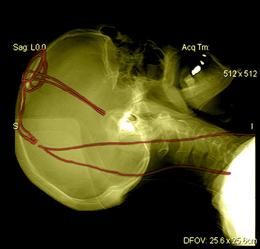
The procedure starts with a surgeon drilling two holes in the patient’s skull. “Every bone and tooth in my head was rattling,” says Lisa Battiloro, who was awake, but not in pain, during the eight-hour operation.

Neurologists asked her questions and issued commands as they pinpointed the exact spot in her brain for electrical stimulation. At one point, “I suddenly felt hopeful and optimistic about the future,” recalls Ms. Battiloro, who had battled severe depression for more than a decade. That’s when the doctors knew they had found Brodmann 25, an area deep in the cerebral cortex associated with negative mood. They secured the electrodes in place, then sedated Ms. Battiloro while they ran an extension wire under the skin, down the side of her head and into her chest, where they implanted a battery pack to supply her brain with a mild electrical current.

Within two months, Ms. Battiloro says, her depression had lifted considerably. Now, nearly four years later, it hasn’t returned. “My friends and family are amazed,” say Ms. Battiloro, 41, of Boynton Beach, Fla. “I’m a new and improved Lisa.”

Deep brain stimulation, sometimes called a pacemaker for the brain, has helped halt tremors in more than 100,000 patients with Parkinson’s disease and other movement disorders since 1997. Now, researchers are reporting encouraging results using the procedure for psychiatric conditions as well. Ms. Battiloro was one of 17 patients in a study published this month in the Archives of General Psychiatry. After two years of DBS, 92% reported significant relief from their major depression or bipolar disorder and more than half were in remission, with no manic side effects.

“We are seeing dramatic effects in the small numbers of subjects, and they are not just getting well, they are getting well without side effects and without relapsing,” says neurologist Helen Mayberg, who led the study at Emory University in Atlanta.

read more here:  http://online.wsj.com/article/SB10001424052970204555904577164813955136748.html#articleTabs=article


New Computer Chip Mimics the Human Brain

“Imagine traffic lights that can integrate sights, sounds and smells and flag unsafe intersections before disaster happens,” said Dharmendra Modha, the project leader for IBM Research. “Or imagine cognitive co-processors that turn servers, laptops, tablets and phones into machines that can interact better with their environments.”

IBM on Thursday announced it has created a chip designed to imitate the human brain’s ability to understand its surroundings, act on things that happen around it and make sense of complex data.

Instead of requiring the type of programming that computers have needed for the past half-century, the experimental chip will let a new generation of computers, called “cognitive computers,” learn through their experiences and form their own theories about what those experiences mean.

The chips revealed Thursday are a step in a project called SyNAPSE (Systems of Neuromorphic Adaptive Plastic Scalable Electronics). The two chip prototypes are a step toward letting computers “reason” instead of reacting solely based on data that has been pre-programmed, IBM says.

read more here:  http://www.cnn.com/2011/TECH/innovation/08/18/ibm.brain.chip/index.html?hpt=hp_t2

http://www.pcmag.com/article2/0,2817,2391320,00.asp


The Computers Are Taking Over Wall Street

This past week, the Dow swung back and forth more than 400 points on four straight days.  Trading volume is at or near record levels, and the majority of  trading is now done through the phenomenon of ‘High Frequency Trading’ on large server farms based in New Jersey and elsewhere.

High frequency trading is what it name implies: buying large volumes of shares and selling them off quickly to make few cents per share or less in profit. It is also known as algorithmic trading where proprietary formulas on computers look for anomalies in a vast number of stocks and trade accordingly.  These trades happen several times a minute.

 High-frequency trading makes up 53% of all trading in U.S. stock markets, up from 21% in 2005, said Larry Tabb, president and CEO of market research firm Tabb Group. Other estimates put it even higher, at around 65%.

Gary Wedbush, executive vice president and head of capital markets at Wedbush Securities, told Bloomberg News on Friday that more than 80% of the firm’s orders since Aug. 1 have come from high-frequency trading clients, at five times the typical volume.

Nearly everyone on Wall Street is involved in algorithmic trading in some form, Tabb said, including large banks, hedge funds and mutual funds.

“These firms often piggyback on large orders, so it can amplify a stock’s movement,” Arnuk said.

The Securities and Exchange Commission in a report blamed high-frequency trading in part for the May 6, 2010 “flash crash,” when the Dow fell nearly 1,000 points in minutes.

High frequency trading is also associated with flash trading, in which traders can see incoming buy and sell orders and put in their orders milliseconds before them and accordingly profit. High frequency trading has also been linked to the related  practice of front running where an algorithm or trader sees orders before they are filled and acts on the information….sort of like insider trading. Front running is illegal.

http://money.cnn.com/2011/08/12/markets/high_frequency_trading/index.htm?source=cnn_bin&hpt=hp_bn3

Optogenetics

Optogenetics is a relatively new technique for communicating with the brain.  It involves implantation of light-sensitive genes into animals and then hooking up fiber-optic cables to specific areaa of the brain. 

Researchers have used this technique to completely restore movement in mice with Parkinson’s disease, and to reduce anxiety in other mouse models.   

Researchers are now trying to develop a less invasive method that doesn’t go deeper than the outer surface of the brain.

Eventually, two-way traffic may be possible with this technique, in which a machine can both send and receive information from the brain.

Read about it in Wired and the NYT below.

http://www.wired.com/magazine/2009/10/mf_optigenetics

http://www.nytimes.com/2011/05/17/science/17optics.html?_r=2&src=dayp

A bionic arm controlled by the patient’s own nerves


After an amputation, the nerves are left like programmed data cables floating in space.  Dr. Todd Kuiken, director of the Center for Bionic Medicine and director of Amputee Services at The Rehabilitation Institute of Chicago, has led a team that has made prosthetic limbs that utilize the body’s own remaining limb-controlling nerves after an amputation to allow them to control prosthetics just by thinking.  The person thinks about what they want to move, which send impulses to the salvaged nerves that have been implanted into chest muscle.  The resulting tiny changes in chest muscle activity are then translated into electical impulses that move the limb in the same manner that the person was thinking to move it.

http://pagingdrgupta.blogs.cnn.com/2011/02/17/bionic-arm-gives-hope-for-amputees/?hpt=C1