Toyota thinks hover cars may be in our future

If you asked a guy in the 1960s what he thought we’d be driving today, he’d probably think about what he’d seen in a popular TV science-fiction show of the time and say “a hover car.”

But 1960s guy would probably be a little disappointed that what people are actually driving are cars that look a bit like his mid-60s Mustang but a thousand pounds heavier.

Somewhere inside Toyota there’s a team of engineers who still have that 1960s innocence, as Toyota managing officer Hiroyoshi Yoshiki has just revealed the company is working on a real-life hover car, or at least investigating the potential.

According to The Verge (via Jalopnik), the project is underway at one of Toyota’s “most advanced” research and development areas.

Unfortunately, we’re not going to have something approximating the Jetsons’ car, nor even Luke Skywalker’s speeder any time soon. The car won’t so much be hovering in free space as “a little bit away” from the road. This is more likely to mean microns than inches, but the aim is to reduce road friction.

Without turning the car into a giant aircraft wing this probably isn’t a simple process, as friction is rather important to a car’s ability to go, stop and corner. And losing contact with the road entirely needs lots of energy and usually lots of speed, too — think jet aircraft, rather than a Toyota Yaris.

Yoshiki, speaking at Bloomberg’s Next Big Thing Summit in San Francisco, wouldn’t elaborate further on the company’s ideas, so it’s unknown how close such an idea is to reality. Nor did he reveal how long Toyota has worked on the idea — so we’re not expecting flying Priuses any time soon.

Thanks to Da Brayn for bringing this to the attention of the It’s Interesting community.

http://news.discovery.com/autos/future-of-transportation/toyota-thinks-hover-cars-might-be-a-thing-140613.htm

NASA unveils model of warp-drive starship, which is currently impossible.

NASA’s Harold White has been working since 2010 to develop a warp drive that will allow spacecraft to travel at speeds faster than light — 186,000 miles per second.

White, who heads NASA’s Advanced Propulsion Team, spoke about his conceptual starship at a conference last fall. But interest in his project reached a new level this week when he unveiled images of what the craft might look like.

Created by artist Mark Rademaker, who based them on White’s designs, the images show a technologically detailed spacecraft that wouldn’t look out of place in a “Star Trek” movie. Rademaker says creating them took more than 1,600 hours.

For now, warp speed is only possible in TV and movies, with both “Star Trek” and “Star Wars” referencing an idea that was completely speculative at the time. White has fittingly named the concept spacecraft IXS Enterprise, for the starship famously piloted by Captain James T. Kirk in the “Star Trek” TV series and movies.

At the SpaceVision 2013 Space Conference last November in Phoenix, White talked about his design, the concepts behind it and the progress that’s been made in warp-drive development over the decades. He discussed the idea of a “space warp,” a loophole in the theory of general relativity that would allow for massive distances to be traveled very quickly, reducing travel times from thousands of years to days.

In his speech, White described space warps as faraway galaxies that can bend light around them. They work on the principle of bending space both in front of and behind a spacecraft. This would essentially allow for the empty space behind the craft to expand, both pushing and pulling it forward at the same time. The concept is similar to that of an escalator or moving walkway.

“There’s no speed limit on the expansion and contraction of space,” White said at the conference. “You can actually find a way to get around what I like to call the 11th commandment: Thou shall not exceed the speed of light.”

It’s the idea of space warps that inspired physicist Miguel Alcubierre in 1994 to first theorize a mathematical model of a warp drive that would be able to bend space and time. While studying Alcubierre’s equations, White decided to design his own retooled version of the Alcubierre Drive. His recently unveiled design has much less empty space than the first concept model, increasing its efficiency.

The warp drive that White’s team has been working on would literally transcend space, shortening the distance between two points and allowing the craft to break the speed of light. This would be a spaceship with no speed limit.

Because travel into space has been extremely limited due to existing means of propulsion, such a technology could blow open the possibilities of space exploration. It could allow for study of the farthest reaches of space, parts that scientists once considered unimaginable.

Although the technology to create the spacecraft or the warp drive doesn’t yet exist, the artistic renderings Rademaker created could potentially be a model of what’s to come — the first spacecraft to break the speed-of-light barrier and journey beyond our solar system.

In his design, White says he drew from Matthew Jeffries’ 1965 sketches of the Enterprise from “Star Trek,” saying parts of that ship were mathematically correct. He worked with Rademaker and graphic designer Mike Okuda to update the math and produce what he believes to be a viable spacecraft.

According to NASA, there hasn’t been any proof that a warp drive can exist, but the agency is experimenting nonetheless. Although the concept doesn’t violate the laws of physics, that doesn’t guarantee that it will work.

“We’re starting to talk about what the next chapter for human space exploration going to be,” White said at SpaceVision.

http://www.cnn.com/2014/06/12/tech/innovation/warp-speed-spaceship/index.html

U.S. military planning to build robots with morals

defense-large

The Office of Naval Research will award $7.5 million in grant money over five years to university researchers from Tufts, Rensselaer Polytechnic Institute, Brown, Yale and Georgetown to explore how to build a sense of right and wrong and moral consequence into autonomous robotic systems.

“Even though today’s unmanned systems are ‘dumb’ in comparison to a human counterpart, strides are being made quickly to incorporate more automation at a faster pace than we’ve seen before,” Paul Bello, director of the cognitive science program at the Office of Naval Research told Defense One. “For example, Google’s self-driving cars are legal and in-use in several states at this point. As researchers, we are playing catch-up trying to figure out the ethical and legal implications. We do not want to be caught similarly flat-footed in any kind of military domain where lives are at stake.”

The United States military prohibits lethal fully autonomous robots. And semi-autonomous robots can’t “select and engage individual targets or specific target groups that have not been previously selected by an authorized human operator,” even in the event that contact with the operator is cut off, according to a 2012 Department of Defense policy directive.

“Even if such systems aren’t armed, they may still be forced to make moral decisions,” Bello said. For instance, in a disaster scenario, a robot may be forced to make a choice about whom to evacuate or treat first, a situation where a bot might use some sense of ethical or moral reasoning. “While the kinds of systems we envision have much broader use in first-response, search-and-rescue and in the medical domain, we can’t take the idea of in-theater robots completely off the table,” Bello said.

Some members of the artificial intelligence, or AI, research and machine ethics communities were quick to applaud the grant. “With drones, missile defines, autonomous vehicles, etc., the military is rapidly creating systems that will need to make moral decisions,” AI researcher Steven Omohundro told Defense One. “Human lives and property rest on the outcomes of these decisions and so it is critical that they be made carefully and with full knowledge of the capabilities and limitations of the systems involved. The military has always had to define ‘the rules of war’ and this technology is likely to increase the stakes for that.”

“We’re talking about putting robots in more and more contexts in which we can’t predict what they’re going to do, what kind of situations they’ll encounter. So they need to do some kind of ethical reasoning in order to sort through various options,” said Wendell Wallach, the chair of the Yale Technology and Ethics Study Group and author of the book Moral Machines: Teaching Robots Right From Wrong.

The sophistication of cutting-edge drones like British BAE Systems’s batwing-shaped Taranis and Northrop Grumman’s X-47B reveal more self-direction creeping into ever more heavily armed systems. The X-47B, Wallach said, is “enormous and it does an awful lot of things autonomously.”

But how do you code something as abstract as moral logic into a bunch of transistors? The vast openness of the problem is why the framework approach is important, says Wallach. Some types of morality are more basic, thus more code-able, than others.

“There’s operational morality, functional morality, and full moral agency,” Wallach said. “Operational morality is what you already get when the operator can discern all the situations that the robot may come under and program in appropriate responses… Functional morality is where the robot starts to move into situations where the operator can’t always predict what [the robot] will encounter and [the robot] will need to bring some form of ethical reasoning to bear.”

It’s a thick knot of questions to work through. But, Wallach says, with a high potential to transform the battlefield.

“One of the arguments for [moral] robots is that they may be even better than humans in picking a moral course of action because they may consider more courses of action,” he said.

Ronald Arkin, an AI expert from Georgia Tech and author of the book Governing Lethal Behavior in Autonomous Robots, is a proponent of giving machines a moral compass. “It is not my belief that an unmanned system will be able to be perfectly ethical in the battlefield, but I am convinced that they can perform more ethically than human soldiers are capable of,” Arkin wrote in a 2007 research paper (PDF). Part of the reason for that, he said, is that robots are capable of following rules of engagement to the letter, whereas humans are more inconsistent.

AI robotics expert Noel Sharkey is a detractor. He’s been highly critical of armed drones in general. and has argued that autonomous weapons systems cannot be trusted to conform to international law.

“I do not think that they will end up with a moral or ethical robot,” Sharkey told Defense One. “For that we need to have moral agency. For that we need to understand others and know what it means to suffer. The robot may be installed with some rules of ethics but it won’t really care. It will follow a human designer’s idea of ethics.”

“The simple example that has been given to the press about scheduling help for wounded soldiers is a good one. My concern would be if [the military] were to extend a system like this for lethal autonomous weapons – weapons where the decision to kill is delegated to a machine; that would be deeply troubling,” he said.

This week, Sharkey and Arkin are debating the issue of whether or not morality can be built into AI systems before the U.N. where they may find an audience very sympathetic to the idea that a moratorium should be placed on the further development of autonomous armed robots.

Christof Heyns, U.N. special rapporteur on extrajudicial, summary or arbitrary executions for the Office of the High Commissioner for Human Rights, is calling for a moratorium. “There is reason to believe that states will, inter alia, seek to use lethal autonomous robotics for targeted killing,” Heyns said in an April 2013 report to the U.N.

The Defense Department’s policy directive on lethal autonomy offers little reassurance here since the department can change it without congressional approval, at the discretion of the chairman of the Joint Chiefs of Staff and two undersecretaries of Defense. University of Denver scholar Heather Roff, in an op-ed for the Huffington Post, calls that a “disconcerting” lack of oversight and notes that “fielding of autonomous weapons then does not even raise to the level of the Secretary of Defense, let alone the president.”

If researchers can prove that robots can do moral math, even if in some limited form, they may be able to diffuse rising public anger and mistrust over armed unmanned vehicles. But it’s no small task.

“This is a significantly difficult problem and it’s not clear we have an answer to it,” said Wallach. “Robots both domestic and militarily are going to find themselves in situations where there are a number of courses of actions and they are going to need to bring some kinds of ethical routines to bear on determining the most ethical course of action. If we’re moving down this road of increasing autonomy in robotics, and that’s the same as Google cars as it is for military robots, we should begin now to do the research to how far can we get in ensuring the robot systems are safe and can make appropriate decisions in the context they operate.”

Thanks to Kebmodee for bringing this to the attention of the It’s Interesting community.

http://www.defenseone.com/technology/2014/05/now-military-going-build-robots-have-morals/84325/?oref=d-topstory


‘Mind pilots’ steer plane sim with thoughts alone


Electrodes attached to a cap convert brain waves into signals that can be processed by the flight simulator for hands-free flying.

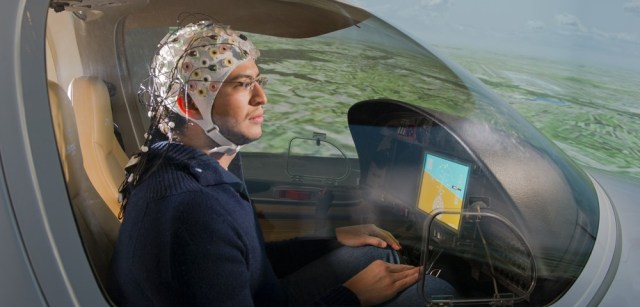
New research out of the Technische Universität München (TUM) in Germany is hinting that mind control might soon reach entirely new heights — even by us non-mutants. They’ve demonstrated that pilots might be able to fly planes through the sky using their thoughts alone.

The researchers hooked study participants to a cap containing dozens of electroencephalography (EEG) electrodes, sat them down in a flight simulator, and told them to steer the plane through the sim using their thoughts alone. The cap read the electrical signals from their brains and an algorithm then translated those signals into computer commands.

Seven people underwent the experiment and, according to the researchers, all were able to pilot the plane using their thoughts to such a degree that their performance could have satisfied some of the criteria for getting a pilot’s license.

What’s more, the study participants weren’t all pilots and had varying levels of flight experience. One had no cockpit experience at all.

We have, of course, seen similar thought-control experiments before — an artist who can paint with her thoughts http://www.cnet.com/news/paralyzed-artist-paints-with-mind-alone/) and another who causes water to vibrate (http://www.cnet.com/news/artist-vibrates-water-with-the-power-of-thought/), for example, as well as a quadcopter controlled by brainwaves (http://www.cnet.com/news/mind-controlled-quadcopter-takes-to-the-air/) and a thought-powered typing solution (http://www.cnet.com/news/indendix-eeg-lets-you-type-with-your-brain/). But there’s something particularly remarkable about the idea of someone actually flying an airplane with just the mind.

The research was part of an EU-funded program called ” Brainflight.” “A long-term vision of the project is to make flying accessible to more people,” aerospace engineer Tim Fricke, who heads the project at TUM, explained in a statement. “With brain control, flying, in itself, could become easier. This would reduce the workload of pilots and thereby increase safety. In addition, pilots would have more freedom of movement to manage other manual tasks in the cockpit.”

One of the outstanding challenges of the research is to provide feedback from the plane to the “mind pilots.” This is something normal pilots rely upon to gauge the state of their flight. For example, they would feel resistance from the controls if they begin to push the plane to its limits. TUM says the researchers are currently looking for ways to deliver such feedback to the pilots.

Thanks to Kebmodee for bringing this to the attention of the It’s Interesting community.

http://www.cnet.com/news/mind-pilots-steer-a-plane-with-thoughts-alone/

New phone app might be able to predict onset of manic behavior in people in bipolar disorder

by Joe Palca

There are smartphone apps for monitoring your diet, your drugs, even your heart. And now a Michigan psychiatrist is developing an app he hopes doctors will someday use to predict when a manic episode is imminent in patients with bipolar disorder.

People with the disorder alternate between crushing depression and wild manic episodes that come with the dangerous mix of uncontrollable energy and impaired judgment.

There are drugs that can prevent these episodes and allow people with bipolar disorder to live normal lives, according to Dr. Melvin McInnis, a psychiatrist at the University of Michigan Medical Center. But relapses are common.

“We want to be able to detect that well in advance,” McInnis says. “The importance of detecting that well in advance is that they reach a point where their insight is compromised, so they don’t feel themselves that anything is wrong.”

Early detection would give doctors a chance to adjust a patient’s medications and stave off full-blown manic episodes.

McInnis says researchers have known for some time that when people are experiencing a manic or depressive episode, their speech patterns change. Depressed patients tend to speak slowly, with long pauses, whereas people with a full-blown manic attack tend to speak extremely rapidly, jumping from topic to topic.

“It occurred to me a number of years ago that monitoring speech patterns would be a really powerful way to devise some kind of an approach to have the ability to predict when an episode is imminent,” says McInnis.

So he and some computer science colleagues invented a smartphone app. The idea is that doctors would give patients the app. The app would record whenever they spoke on the phone. Once a day, the phone would send the recorded speech to a computer in the doctor’s office that would analyze it for such qualities as speed, energy and inflection.

Right now the app is being tested with 12 or 15 volunteers who are participating in a longitudinal study of bipolar disorder.

McInnis and his colleagues presented preliminary results at this year’s International Conference on Acoustics, Speech and Signal Processing, and so far, things are looking encouraging. McInnis says the software is reasonably good at detecting signs of an impending manic attack. It’s not quite as good catching an oncoming depression.

For now, this app is only intended for patients with bipolar disorder, but McInnis thinks that routinely listening for changes in speech could be an important tool for early detection of a variety of diseases.

Scientists at Duke University say the world is on the brink of its sixth great extinction

Is the end near? Scientists at Duke University say the world is on the brink of its sixth great extinction, since certain species of plants and animals are now dying out at least 1,000 times faster than they did before humans came into existence.

The study, published Thursday in the journal Science, measured the the rate at which species are disappearing from Earth. In 1995, the researchers found that the pre-human rate of extinctions was roughly 1. Now, that rate is about 100 to 1,000.

Stuart Pimm, the study’s lead author, said habitat loss is mostly to blame for the increasing death rates. As humans continue to alter and destroy more land, animals and plants are increasingly being displaced from their natural habitats. Climate change is also a factor, he added.

“Whether we avoid it or not will depend on our actions,” Pimm warned.

Thanks to Da Brayn for bringing this to the attention of the It’s Interesting community.

http://theweek.com/article/index/262400/speedreads-earth-is-nearing-sixth-great-extinction-alarming-survey-says#axzz33DjJqxZg

Study Finds Pedophiles’ Brains Wired to Find Children Attractive

Pedophiles’ brains are “abnormally tuned” to find young children attractive, according to a new study published this week. The research, led by Jorge Ponseti at Germany’s University of Kiel, means that it may be possible to diagnose pedophiles in the future before they are able to offend.

The findings, published in scientific journal Biology Letters, discovered that pedophiles have the same neurological reaction to images of those they find attractive as those of people with ordinary sexual predilections, but that all the relevant cerebral areas become engaged when they see children, as opposed to fellow adults. The occipital areas, prefrontal cortex, putamen, and nucleus caudatus become engaged whenever a person finds another attractive, but the subject of this desire is inverted for pedophiles.

While studies into the cognitive wiring of sex offenders have long been a source of debate, this latest research offers some fairly conclusive proof that there is a neural pattern behind their behavior.

The paper explains: “The human brain contains networks that are tuned to face processing, and these networks appear to activate different processing streams of the reproductive domain selectively: nurturing processing in the case of child faces and sexual processing in the case of sexually preferred adult faces. This implies that the brain extracts age-related face cues of the preferred sex that inform appropriate response selection in the reproductive domains: nurturing in the case of child faces and mating in the case of adult faces.”

Usually children’s faces elicit feelings of caregiving from both sexes, whereas those of adults provide stimuli in choosing a mate. But among pedophiles, this trend is skewed, with sexual, as opposed to nurturing, emotions burgeoning.

The study analyzed the MRI scans of 56 male participants, a group that included 13 homosexual pedophiles and 11 heterosexual pedophiles, exposing them to “high arousing” images of men, women, boys, and girls. Participants then ranked each photo for attractiveness, leading researchers to their conclusion that the brain network of pedophiles is activated by sexual immaturity.

The critical new finding is that face processing is also tuned to face cues revealing the developmental stage that is sexually preferred,” the paper reads.

Dr. James Cantor, associate professor at the University of Toronto’s Faculty of Medicine, said he was “delighted” by the study’s results. “I have previously described pedophilia as a ‘cross-wiring’ of sexual and nurturing instincts, and this data neatly verifies that interpretation.”

Cantor has undertaken extensive research into the area, previously finding that pedophiles are more likely to be left-handed, 2.3 cm shorter than the average male, and 10 to 15 IQ points lower than the norm.

He continued: “This [new] study is definitely a step in the right direction, and I hope other researchers repeat this kind of work. There still exist many contradictions among scientists’ observations, especially in identifying exactly which areas of the brain are the most central to pedophilia. Because financial support for these kinds of studies is quite small, these studies have been quite small, permitting them to achieve only incremental progress. Truly definitive studies about what in the brain causes pedophilia, what might detect it, and what might prevent it require much more significant support.”

Ponseti said that he hoped to investigate this area further by examining whether findings could be emulated when images of children’s faces are the sole ones used. This could lead to gauging a person’s predisposition to pedophilia far more simply than any means currently in place. “We could start to look at the onset of pedophilia, which is probably in puberty at about 12 or 14 years [old],” he told The Independent.

While Cantor is correct in citing the less than abundant size of the study, the research is certainly significant in providing scope for future practicable testing that could reduce the number of pedophilic crimes committed. By being able to run these tests and examine a person’s tendency toward being sexually attracted to underage children, rehabilitative care and necessary precautions could be taken to safeguard children and ensure that those at risk of committing a crime of this ilk would not be able to do so.

http://www.thedailybeast.com/articles/2014/05/23/study-finds-pedophiles-brains-wired-to-find-children-attractive.html#

LA Sheriff Secretly Recorded All of Compton From Above

In 2012, a private company working with the LA County Sheriff’s Department flew a civilian plane rigged with multiple high-powered video cameras over the city of Compton, recording “video of everything that happened inside that 10-square-mile municipality,” all without telling residents, according to The Atlantic. Expanding on a previous piece by the Center for Investigative Reporting, The Atlantic says that the project was a test-run of sorts by the company, Persistent Surveillance Systems, eager to show off its tech to the country’s largest sheriff’s department. (Neither article says how long the plane was in the air or exactly how many times it flew and recorded, but the head of the company himself brags that “We literally watched all of Compton during the time that we were flying, so we could zoom in anywhere within the city of Compton and follow cars and see people.”)

They didn’t tell Compton because Compton might not have liked it.

Ohio-based PSS sells surveillance equipment (known as wide area surveillance) that uses cameras mounted on the underside of planes to record video, allowing police to pause, rewind, and zoom in on footage that’s been recorded in real-time, like a much creepier DVR. The Sheriffs were “persuaded” by Ross McNutt (the Air Force veteran who owns PSS) to let him fly a plane outfitted with cameras over Compton in response to a chain of horrible crimes terrorizing the city’s residents: a string of necklace-jackings. The plan was to have McNutt’s aircraft hover over areas where reported thefts had taken place, and to look for anything that might help investigators.

“Our whole system costs less than the price of a single police helicopter and costs less for an hour to operate than a police helicopter. But at the same time, it watches 10,000 times the area that a police helicopter could watch,” McNutt told CIR. While the tech sounds futuristic (in a dystopian way), it is thankfully still limited: the cameras are not powerful enough yet to recognize faces. (Nowhere near as fancy/invasive as the license-plate recognition software that the LAPD uses.) McNutt himself predicts that technology will advance within the next few years, so don’t even sweat it.

At no point was any of this revealed to the residents of Compton because the cops knew they wouldn’t much care for having their entire city recorded. “A lot of people do have a problem with the eye in the sky, the Big Brother, so in order to mitigate any of those kinds of complaints, we basically kept it pretty hush-hush,” says LA County Sheriff Sgt. Doug Iketani, the project’s supervisor.

http://la.curbed.com/archives/2014/04/la_sheriff_secretly_recorded_all_of_compton_from_above.php

Thanks to Kebmodee for bringing this to the attention of the It’s Interesting community.

New research suggests that a third of patients diagnosed as vegetative may be conscious with a chance for recovery

Imagine being confined to a bed, diagnosed as “vegetative“—the doctors think you’re completely unresponsive and unaware, but they’re wrong. As many as one-third of vegetative patients are misdiagnosed, according to a new study in The Lancet. Using brain imaging techniques, researchers found signs of minimal consciousness in 13 of 42 patients who were considered vegetative. “The consequences are huge,” lead author Dr. Steven Laureys, of the Coma Science Group at the Université de Liège, tells Maclean’s. “These patients have emotions; they may feel pain; studies have shown they have a better outcome [than vegetative patients]. Distinguishing between unconscious, and a little bit conscious, is very important.”

Detecting human consciousness following brain injury remains exceedingly difficult. Vegetative patients are typically diagnosed by a bedside clinical exam, and remain “neglected” in the health care system, Laureys says. Once diagnosed, “they might not be [re-examined] for years. Nobody questions whether or not there could be something more going on.” That’s about to change.

Laureys has collaborated previously with British neuroscientist Adrian Owen, based at Western University in London, Ont., who holds the Canada Excellence Research Chair in Cognitive Neuroscience and Imaging. (Owen’s work was featured in Maclean’s in October 2013.) Together they co-authored a now-famous paper in the journal Science, in 2006, in which a 23-year-old vegetative patient was instructed to either imagine playing tennis, or moving around her house. Using functional magnetic resonance imaging, or fMRI, they saw that the patient was activating two different parts of her brain, just like healthy volunteers did. Laureys and Owen also worked together on a 2010 follow-up study, in the New England Journal of Medicine, where the same technique was used to ask a patient to answer “yes” or “no” to various questions, presenting the stunning possibility that some vegetative patients might be able to communicate.

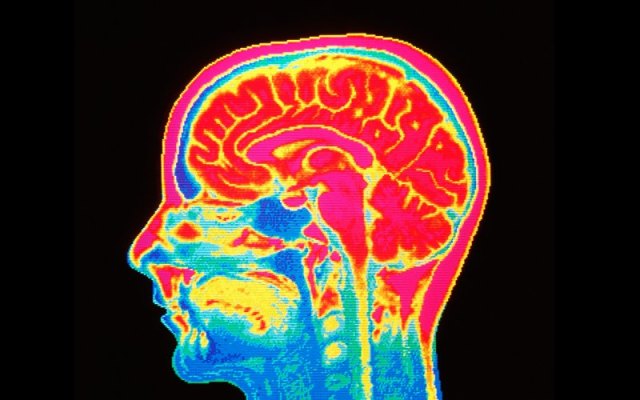
In the new Lancet paper, Laureys used two functional brain imaging techniques, fMRI and positron emission tomography (PET), to examine 126 patients with severe brain injury: 41 of them vegetative, four locked-in (a rare condition in which patients are fully conscious and aware, yet completely paralyzed from head-to-toe), and another 81 who were minimally conscious. After finding that 13 of 42 vegetative patients showed brain activity indicating minimal consciousness, they re-examined them a year later. By then, nine of the 13 had improved, and progressed into a minimally conscious state or higher.

The mounting evidence that some vegetative patients are conscious, even minimally so, carries ethical and legal implications. Just last year, Canada’s Supreme Court ruled that doctors couldn’t unilaterally pull the plug on Hassan Rasouli, a man in a vegetative state. This work raises the possibility that one day, some patients may be able to communicate through some kind of brain-machine interface, and maybe even weigh in on their own medical treatment. For now, doctors could make better use of functional brain imaging tests to diagnose these patients, Laureys believes. Kate Bainbridge, who was one of the first vegetative patients examined by Owen, was given a scan that showed her brain lighting up in response to images of her family. Her health later improved. “I can’t say how lucky I was to have the scan,” she said in an email to Maclean’s last year. “[It] really scares me to think what would have happened if I hadn’t had it.”

https://ca.news.yahoo.com/one-third-of-vegetative-patients-may-be-conscious–study-195412300.html

Food Wars Could Rage by 2050

Within a few more decades, dire food shortages may lead to global-scale conflict, warned a top plant scientist in the U.S. Agency for International Development (USAID). There may not be enough land, water and energy to sustain the potential 9 billion people who are projected to share the Earth by 2050.

“Food issues could become as politically destabilizing by 2050 as energy issues are today,” said Fred Davies, senior science adviser for tUSAID’s bureau of food security, in a press release.

Biotechnology, improved breeding and advances in farming techniques may not be capable of keeping up with the growing human population, according to Davies. Even if farm production can be increased through technology, those innovations may not trickle down to small-scale farmers, the very people who most need help to stave off starvation.

Recent history shows that even massive increases in production don’t solve hunger. In the middle of the last century, the “Green Revolution” dramatically increased crop yields. New varieties of wheat and other grains produced bumper crops, but required purchases of expensive seed, fertilizer and other materials.

Hypothetically, food abounded for all after the agricultural advances, and hunger was indeed reduced in many regions. Yet starvation continued because of economic inequalities and lack of access to food supplies. Plus, subsistence farmers couldn’t afford the new technologies or compete with the large farms that could afford fertilizers and high-yielding seeds.

Now, after less than a century, the human population has grown rapidly, fueled by the bountiful harvests of Green Revolution technology. Once again, the global food system approaches its maximum production limit, but this time, technology may not be up to the challenge, as Davies warned.

One way to partially address the challenge could be to shift farm production toward profitable horticultural crops, like chili peppers, as opposed to bulk commodities, such as corn, suggested Davies.

“A greater emphasis is needed in high-value horticultural crops,” Davies said. “Those create jobs and economic opportunities for rural communities and enable more profitable, intense farming.”

In many cultures, sociologists have observed that increasing wealth correlates to decreasing birth rates, a phenomenon known as the demographic-economic paradox. Although a wealthier nation, such as Japan, could support more children, citizens tend to actually have fewer kids.

By lifting people out of poverty, the food wars of the future could be averted, as long as those wealthier future people don’t demand the same amounts of resource-intensive foods, such as beef, that current rich populations enjoy.

http://news.discovery.com/earth/weather-extreme-events/food-wars-could-rage-by-2050-140418.htm

Thanks to Da Brayn for bringing this to the attention of the It’s Interesting community.