Japan Plans to Build a Space Elevator by 2050

A Japanese company could astound the world by 2050, building the first elevator to space.

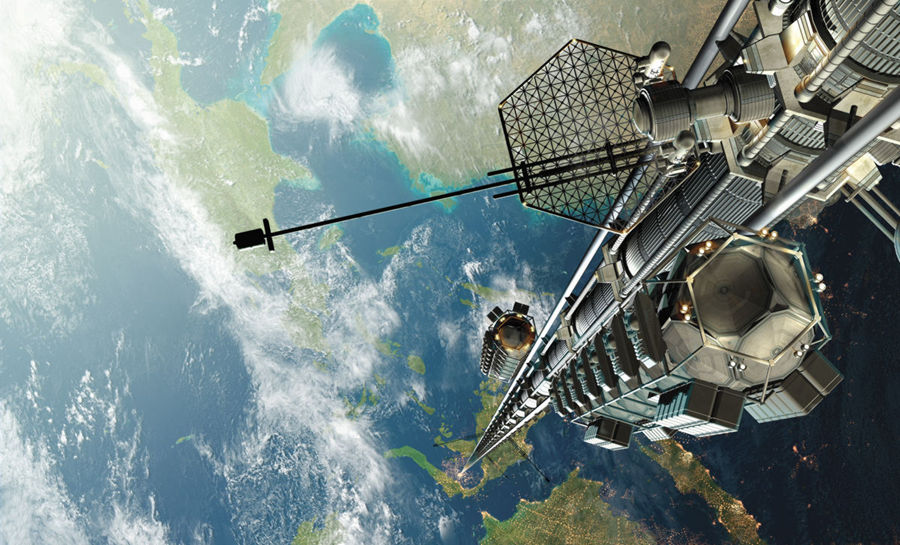
According to The Daily Yomiuri, Tokyo construction company, Obayashi Corporation, hopes to erect a space elevator by 2050. The futuristic space lift would ferry passengers and cargo along a carbon nanotube ribbon from a terrestrial terminal to a spaceport nearly a quarter of the way to the moon.

The company says it plans to create 59,652-mile-long, carbon-nanotube cable that would include an anchor in space. The terminal station would house laboratories and living space, while the life would have the capacity to ferry upwards of 30 people to the station at 124 miles per hour. The trip would translate to a nearly eight-day long trip to reach the station. Magnetic linear motors are one possible means of propulsion for the car, according to Obayashi. Solar power generation facilities would also be set up around the terminal station to transmit power to the ground, the company noted.

Company: Space elevator could be built by 2050

The State Column | Saturday, February 25, 2012

A Japanese company could astound the world by 2050, building the first elevator to space.

According to The Daily Yomiuri, Tokyo construction company, Obayashi Corporation, hopes to erect a space elevator by 2050. The futuristic space lift would ferry passengers and cargo along a carbon nanotube ribbon from a terrestrial terminal to a spaceport nearly a quarter of the way to the moon.

The company says it plans to create 59,652-mile-long, carbon-nanotube cable that would include an anchor in space. The terminal station would house laboratories and living space, while the life would have the capacity to ferry upwards of 30 people to the station at 124 miles per hour. The trip would translate to a nearly eight-day long trip to reach the station. Magnetic linear motors are one possible means of propulsion for the car, according to Obayashi. Solar power generation facilities would also be set up around the terminal station to transmit power to the ground, the company noted.


The company did not release details regarding the cost of the project, simply saying it remains in the planning phase.

“At this moment, we cannot estimate the cost for the project,” an Obayashi official said in a statement. “However, we’ll try to make steady progress so
that it won’t end just up as simply a dream.”

The announcement comes as a number of individuals have proposed a similar project, noting that a floating station near the Earth’s equator could serve as a launching point. However, a string of issues have largely left the proposal in the theoretical stages.

Among the issues engineers would have to confront includes the long transit times required by riding a space elevator. Engineers note that passage through the Van Allen belt would constitute a radiation hazard. A recently released study suggests that a space elevator would be subject to wobbles caused by gravitational tugs from the moon and sun, as well as solar wind. A space elevator would also constitute a navigational hazard for aircraft and low Earth orbit space craft. The project could also be subject to a terrorist attack.

Because building a space elevator involves achieving a number of technological breakthroughs, not the least of which is the mass production of carbon nanotubes, the matter of how much it would cost is a matter of debate. Bradley Carl Edwards, who conducted a study of space elevators for NASA, suggested that the total cost of construction would be about $10 billion in a 2005 IEEE Spectrum article. But the tradeoff, he suggests, is lowering the costs of space travel by orders of magnitude, to the current cost of shipping people and cargo across the Pacific Ocean.

Of note, David Smitherman of NASA/Marshall’s Advanced Projects Office has compiled plans for such an elevator that could turn science fiction into reality. His publication, Space Elevators: An Advanced Earth-Space Infrastructure for the New Millennium, is based on findings from a space infrastructure conference held at the Marshall Space Flight Center.

“The system requires the center of mass be in geostationary orbit,” said Smitherman. “The cable is basically in orbit around the Earth.”

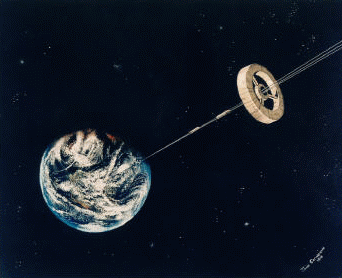
A space elevator is essentially a long cable extending from our planet’s surface into space with its center of mass at geostationary Earth orbit (GEO), 35,786 km in altitude. Electromagnetic vehicles traveling along the cable could serve as a mass transportation system for moving people, payloads, and power between Earth and space.

The NASA plan would call for a base tower approximately 50 km tall — the cable would be tethered to the top. To keep the cable structure from tumbling to Earth, it would be attached to a large counterbalance mass beyond geostationary orbit, perhaps an asteroid moved into place for that purpose. Four to six “elevator tracks” would extend up the sides of the tower and cable structure going to platforms at different levels. These tracks would allow electromagnetic vehicles to travel at speeds reaching thousands of kilometers-per-hour.

Conceptual designs place the tower construction at an equatorial site. The extreme height of the lower tower section makes it vulnerable to high winds. An equatorial location is ideal for a tower of such enormous height because the area is practically devoid of hurricanes and tornadoes and it aligns properly with geostationary orbits

Obayashi, the company, is just days away from completing work on Japan’s tallest structure, the Tokyo Sky Tree, which will stand 2,080 feet. The tower will serve as a digital broadcasting antenna as well as a sightseeing attraction that allows uninterrupted views of the Japanese capital and beyond.

Read more: http://www.thestatecolumn.com/articles/2012/02/25/company-space-elevator-could-be-built/#ixzz1nS5v1S89

The 2012 Space Elevator Conference will be held this summer in Washington State:  http://spaceelevatorconference.org/default.aspx
Wiring the Brain to Treat Depression


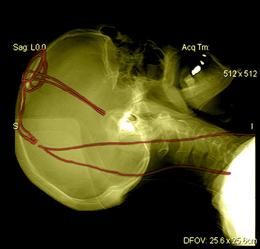
The procedure starts with a surgeon drilling two holes in the patient’s skull. “Every bone and tooth in my head was rattling,” says Lisa Battiloro, who was awake, but not in pain, during the eight-hour operation.

Neurologists asked her questions and issued commands as they pinpointed the exact spot in her brain for electrical stimulation. At one point, “I suddenly felt hopeful and optimistic about the future,” recalls Ms. Battiloro, who had battled severe depression for more than a decade. That’s when the doctors knew they had found Brodmann 25, an area deep in the cerebral cortex associated with negative mood. They secured the electrodes in place, then sedated Ms. Battiloro while they ran an extension wire under the skin, down the side of her head and into her chest, where they implanted a battery pack to supply her brain with a mild electrical current.

Within two months, Ms. Battiloro says, her depression had lifted considerably. Now, nearly four years later, it hasn’t returned. “My friends and family are amazed,” say Ms. Battiloro, 41, of Boynton Beach, Fla. “I’m a new and improved Lisa.”

Deep brain stimulation, sometimes called a pacemaker for the brain, has helped halt tremors in more than 100,000 patients with Parkinson’s disease and other movement disorders since 1997. Now, researchers are reporting encouraging results using the procedure for psychiatric conditions as well. Ms. Battiloro was one of 17 patients in a study published this month in the Archives of General Psychiatry. After two years of DBS, 92% reported significant relief from their major depression or bipolar disorder and more than half were in remission, with no manic side effects.

“We are seeing dramatic effects in the small numbers of subjects, and they are not just getting well, they are getting well without side effects and without relapsing,” says neurologist Helen Mayberg, who led the study at Emory University in Atlanta.

read more here:  http://online.wsj.com/article/SB10001424052970204555904577164813955136748.html#articleTabs=article


New Computer Chip Mimics the Human Brain

“Imagine traffic lights that can integrate sights, sounds and smells and flag unsafe intersections before disaster happens,” said Dharmendra Modha, the project leader for IBM Research. “Or imagine cognitive co-processors that turn servers, laptops, tablets and phones into machines that can interact better with their environments.”

IBM on Thursday announced it has created a chip designed to imitate the human brain’s ability to understand its surroundings, act on things that happen around it and make sense of complex data.

Instead of requiring the type of programming that computers have needed for the past half-century, the experimental chip will let a new generation of computers, called “cognitive computers,” learn through their experiences and form their own theories about what those experiences mean.

The chips revealed Thursday are a step in a project called SyNAPSE (Systems of Neuromorphic Adaptive Plastic Scalable Electronics). The two chip prototypes are a step toward letting computers “reason” instead of reacting solely based on data that has been pre-programmed, IBM says.

read more here:  http://www.cnn.com/2011/TECH/innovation/08/18/ibm.brain.chip/index.html?hpt=hp_t2

http://www.pcmag.com/article2/0,2817,2391320,00.asp


The Computers Are Taking Over Wall Street

This past week, the Dow swung back and forth more than 400 points on four straight days.  Trading volume is at or near record levels, and the majority of  trading is now done through the phenomenon of ‘High Frequency Trading’ on large server farms based in New Jersey and elsewhere.

High frequency trading is what it name implies: buying large volumes of shares and selling them off quickly to make few cents per share or less in profit. It is also known as algorithmic trading where proprietary formulas on computers look for anomalies in a vast number of stocks and trade accordingly.  These trades happen several times a minute.

 High-frequency trading makes up 53% of all trading in U.S. stock markets, up from 21% in 2005, said Larry Tabb, president and CEO of market research firm Tabb Group. Other estimates put it even higher, at around 65%.

Gary Wedbush, executive vice president and head of capital markets at Wedbush Securities, told Bloomberg News on Friday that more than 80% of the firm’s orders since Aug. 1 have come from high-frequency trading clients, at five times the typical volume.

Nearly everyone on Wall Street is involved in algorithmic trading in some form, Tabb said, including large banks, hedge funds and mutual funds.

“These firms often piggyback on large orders, so it can amplify a stock’s movement,” Arnuk said.

The Securities and Exchange Commission in a report blamed high-frequency trading in part for the May 6, 2010 “flash crash,” when the Dow fell nearly 1,000 points in minutes.

High frequency trading is also associated with flash trading, in which traders can see incoming buy and sell orders and put in their orders milliseconds before them and accordingly profit. High frequency trading has also been linked to the related  practice of front running where an algorithm or trader sees orders before they are filled and acts on the information….sort of like insider trading. Front running is illegal.

http://money.cnn.com/2011/08/12/markets/high_frequency_trading/index.htm?source=cnn_bin&hpt=hp_bn3

Google Mobile Facial Recognition Application


Google has announced plans to introduce a mobile application that would allow users to snap pictures of people’s faces in order to access their personal information.

In order to be identified by the software, people would have to check a box agreeing to give Google permission to access their pictures and profile information.

Google has had the technical capabilities to implement this type of search engine for years, but has delayed its release due to concerns about how privacy advocates might receive the product.

http://www.cnn.com/2011/TECH/mobile/03/31/google.face/index.html?hpt=C2

Tomorrow is Judgement Day…..

According to the Oakland, California – based Broadcast Ministry Family Radio (www.familyradio.com), tomorrow at around 6 pm New Zealand time there will be a great earthquake that spreads throughout the Earth.  Tomorrow, Jesus is going to appear and take 3% of humankind to heaven – the true Christians who were chosen by God long ago.  The rest of us will endure 153 more days of sheer horror until we are all annihiliated on October 21st, the official end of the world.

Followers and the Family Radio Ministry are so convinced of the accuracy of these predictions that they have given up their jobs, families and possessions to join the nationwide tour, known as the caravan ministry. Their buses, placards and clothing brandish the “Awesome News.”

http://www.salon.com/news/religion/?story=/politics/war_room/2011/05/15/may_21_end_of_world

http://blogs.courier-journal.com/faith/2011/05/05/after-derby-at-least/

http://newsfeed.time.com/2011/01/03/judgement-day-will-may-21-2011-be-the-end-of-the-world/

Optogenetics

Optogenetics is a relatively new technique for communicating with the brain.  It involves implantation of light-sensitive genes into animals and then hooking up fiber-optic cables to specific areaa of the brain. 

Researchers have used this technique to completely restore movement in mice with Parkinson’s disease, and to reduce anxiety in other mouse models.   

Researchers are now trying to develop a less invasive method that doesn’t go deeper than the outer surface of the brain.

Eventually, two-way traffic may be possible with this technique, in which a machine can both send and receive information from the brain.

Read about it in Wired and the NYT below.

http://www.wired.com/magazine/2009/10/mf_optigenetics

http://www.nytimes.com/2011/05/17/science/17optics.html?_r=2&src=dayp