Risk of robot uprising wiping out human race to be studied


Centre for the Study of Existential Risk(CSER) will study dangers posed by biotechnology, artificial life, nanotechnology and climate change.

The scientists said that to dismiss concerns of a potential robot uprising would be “dangerous”.

Fears that machines may take over have been central to the plot of some of the most popular science fiction films.

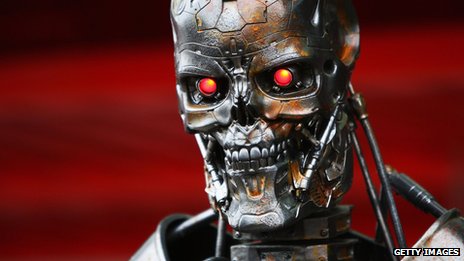
Perhaps most famous is Skynet, a rogue computer system depicted in the Terminator films.

Skynet gained self-awareness and fought back after first being developed by the US military.

But despite being the subject of far-fetched fantasy, researchers said the concept of machines outsmarting us demanded mature attention.

“The seriousness of these risks is difficult to assess, but that in itself seems a cause for concern, given how much is at stake,” the researchers wrote on a website set up for the centre.

The CSER project has been co-founded by Cambridge philosophy professor Huw Price, cosmology and astrophysics professor Martin Rees and Skype co-founder Jaan Tallinn.

“It seems a reasonable prediction that some time in this or the next century intelligence will escape from the constraints of biology,” Prof Price told the AFP news agency.

“What we’re trying to do is to push it forward in the respectable scientific community.”

He added that as robots and computers become smarter than humans, we could find ourselves at the mercy of “machines that are not malicious, but machines whose interests don’t include us”.

Survival of the human race permitting, the centre will launch next year.

http://www.bbc.co.uk/news/technology-20501091

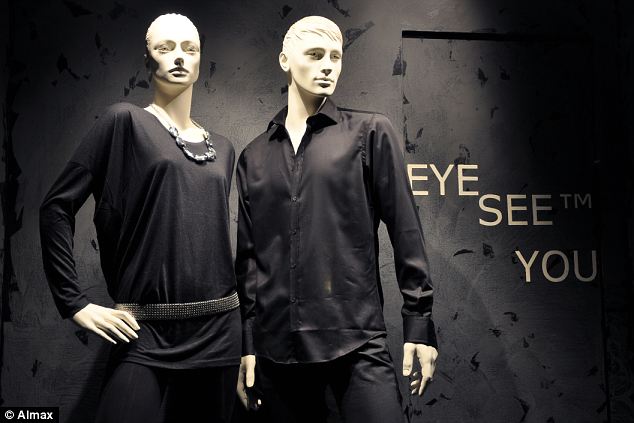
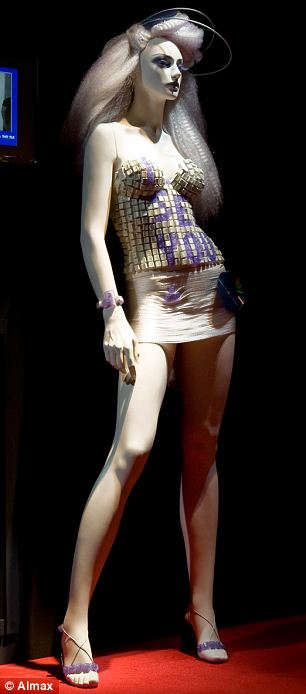
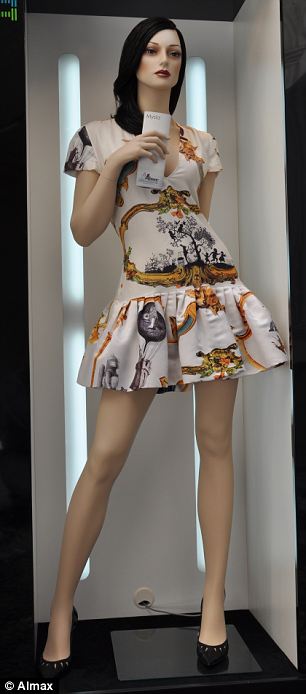
The mannequin that spies on you

Mannequins in fashion boutiques are now being fitted with secret cameras to ‘spy’ on shoppers’ buying habits.

Benetton is among the High Street fashion chains to have deployed the dummies equipped with technology adapted from security systems used to identify criminals at airports.

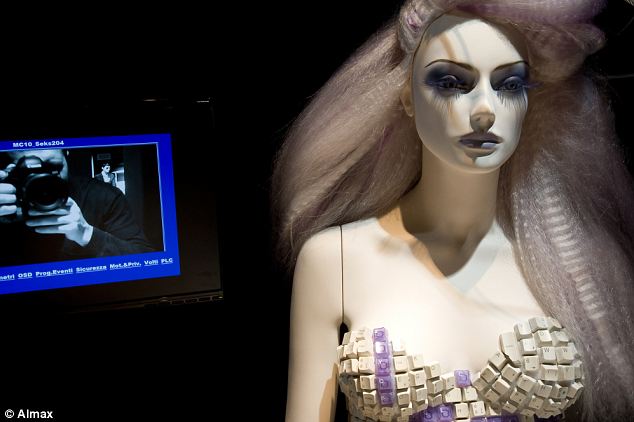
From the outside, the $3,200 (£2,009) EyeSee dummy looks like any other mannequin, but behind its blank gaze it hides a camera feeding images into facial recognition software that logs the age, gender and race of shoppers.

This information is fed into a computer and is ‘aggregated’ to offer retailers using the system statistical and contextual information they can use to develop their marketing strategies.

Its makers boast: ‘From now on you can know how many people enter the store, record what time there is a greater influx of customers (and which type) and see if some areas risk to be overcrowded.

However, privacy campaigners have denounced the system as ‘creepy’ and said that such surveillance is an instance of profit trumping privacy.

The device is marketed by Italian mannequin maker Almax and has already spurred shops into adjusting window displays, floor layours and promotions, Bloomberg reported.

With growth slowing in the luxury goods industry, the technology taps into retailers’ desperation to personalise their offers to reach increasingly picky customers.

Although video profiling of customers is not new, Almax claims its offering is better at providing data because it stands at eye level with customers, who are more likely to look directly at the mannequins.

The video surveillance mannequins have been on sale for almost a year, and are already being used in three European countries and in the U.S.

Almax claims information from the devices led one outlet to adjust window displays after they found that men shopping in the first two days of a sale spent more than women, while another introduced a children’s line after the dummy showed youngsters made up more than half its afternoon traffic.

A third retailer placed Chinese-speaking staff by a particular entrance after it found a third of visitors using that door after 4pm were Asian.

Almax chief executive Max Catanese refused to name which retailers were using the new technology, telling Bloomberg that confidentiality agreements meant he could not disclose the names of clients.

But he did reveal that five companies – among them leading fashion brands – are using ‘a few dozen’ of the mannequins, with orders for at least that many more.

Almax is now hoping to update the technology to allow the mannequins – and by extension the retailers who operate them – to listen in on what customers are saying about the clothes on display.

Mr Catanese told Bloomberg the company also plans to add screens next to the dummies to prompt passers-by about products that fit their profile, similar to the way online retailers use cookies to personalise web browsing.

Almax insists that its system does not invade the privacy of shoppers since the camera inside the mannequin is ‘blind’, meaning that it does not record the images of passers-by, instead merely collecting data about them.

In an emailed statement, Mr Catanese told MailOnline: ‘Let’s say I pass in front of the mannequin. Nobody will know that “Max Catanese” passed in front of it.

‘The retailer will have the information that a male adult Caucasian passed in front of the mannequin at 6:25pm and spent 3 minutes in front of it. No sensible/private data, nor image is collected.

‘Different is the case if a place (shop, department store, etc.) is already covered by security cameras (by the way, basically almost every retailer in the world today).

‘In those cases we could even provide the regular camera as the data and customers images are already collected in the store which are authorised to do so.

‘In any case, just to avoid questions, so far we only offer the version with blind camera.’

Nevertheless, privacy groups are concerned about the roll-out of the technology. Emma Carr, deputy director of civil liberties campaign group Big Brother Watch, said: ‘Keeping cameras hidden in a mannequin is nothing short of creepy.

‘The use of covert surveillance technology by shops, in order to provide a personalised service, seems totally disproportionate.

‘The fact that the cameras are hidden suggests that shops are fully aware that many customers would object to this kind of monitoring.

‘It is not only essential that customers are fully informed that they are being watched, but that they also have real choice of service and on what terms it is offered.

‘Without this transparency, shops cannot be completely sure that their customers even want this level of personalised service.

‘This is another example of how the public are increasingly being monitored by retailers without ever being asked for their permission. Profit trumps privacy yet again.’

Read more: http://www.dailymail.co.uk/sciencetech/article-2235848/The-creepy-mannequin-stares-Fashion-retailers-adapt-airport-security-technology-profile-customers.html#ixzz2CsSISqiB

Thanks to Kebmodee for bringing this to the attention of the It’s Interesting community.

Pioneering self-contained ‘smart village’ offers world model for rural poverty relief


An innovative, high-tech “smart village” built in Malaysia provides a potential global template for addressing rural poverty in a sustainable environment, say international experts meeting in California’s Silicon Valley.

Rimbunan Kaseh, a model community built north-east of Kuala Lumpur, consists of 100 affordable homes, high-tech educational, training and recreational facilities, and a creative, closed-loop agricultural system designed to provide both food and supplementary income for villagers.

Malaysian Dato’ Tan Say Jim detailed the project Monday at a special meeting in San Jose of the Global Science and Innovation Advisory Council (GSIAC) — a unique assembly of all-star international and Malaysian experts and leaders created to guide sustainable Malaysian development.

The “smart village,” located on 12 hectares in the Malaysian state of Pahang, includes a four-level aquaculture system whereby water cascades through a series of tanks to raise, first, fish sensitive to water quality, then tilapia (“the world’s answer to affordable protein,” says Mr. Tan), then guppies and finally algae. The latter two products are used to feed the larger fish.

Filtered fish tank wastewater is then used to irrigate trees, grain fields and crops such as flowers and fresh produce, the plants grown individually in novel hydroponic devices. The “auto-pot” is a three-piece plastic container that automatically detects soil moisture levels and waters plants precisely as required, reducing needs for costly fertilizers and pesticides as well as water.

Organic waste is composted to encourage worms and other organisms on which free-range chickens feed together with the home-grown grains.

In addition to access to reliable food supplies, villagers augment their monthly income by an estimated $400 to $650.

“It is a complete loop; a modern farm — one that could even exist on the rooftop of a building,” says Mr. Tan of IRIS Corporation Berhad, which spearheads the public-private partnership.

The energy-efficient homes (roughly 100 square meters – 1,000 square feet) require 10 days to construct, in part from post-consumer materials, and cost between 50,000 to 60,000 Malaysian Ringgit ($16,000 to $20,000).

The village’s solar-generated power is complemented by biomass energy and mini-hydro electricity.

Rounding out the design: a community hall, resource centre, places of worship, playgrounds and educational facilities equipped with 4G Internet service supporting both e-learning and e-health services.

Photos of the “smart village” are available for download online at https://dl.dropbox.com/u/3960397/smart%20village%20photos.zipA video depicting home construction is online here: http://www.youtube.com/watch?v=OvXaWmlB6Wg

“With this project we stimulate rural growth with modern agriculture activities, we balance development and economic activities between the urban and rural areas, we provide income and we improve living standards,” says Mr. Tan.

Malaysia is looking to scale up the smart village initiative, replicating the Rimbunan Kaseh model at as many as 12 sites in the short to medium term.

“This model offers a great opportunity to create holistic change for people in the worse circumstances in Malaysia and other nations as well,” says Ellis Rubinstein, President and Chief Executive Officer of the New York Academy of Sciences (NYAS), which co-chairs the GSIAC Secretariat with the Malaysian Industry-Government Group on High Technology (MIGHT).

Says Mr. Rubinstein: “Integrated smart communities could transform services available to Malaysia’s citizenry while creating thousands of jobs, complementing GSIAC’s unprecedented alliance to improve education in that country at every level from ‘Cradle to Career’.

Says Dato’ Zakri Abdul Hamid (Dr. A.H. Zakri), Science Advisor to Prime Minister of Malaysia and co-chair of of MIGHT: “GSIAC has provided us with an unprecedented opportunity to advance our local capacities in both scale and effectiveness. Thanks to the New York Academy of Sciences, we have a chance to work with a partnership of many of the world’s leading multinational companies – usually competitors but, for us, coming together – and experts from universities around the world.

“This alliance gives us confidence we can take up in Malaysia the best practices so far demonstrated anywhere in the world. It opens the door to major foreign investment. And it gives us a chance that no other government – either regional or national – has anywhere else in the world: to develop a staged, integrated solution to our citizen’s needs that will dramatically increase efficiencies of scale as well as metrics of performance and impact just by virtue of being an integrated, fully thought out plan from the outset.”

Assembled last year, GSIAC is composed of leading education, economics, business, science and technology experts from Malaysia, China, India, Russia, Japan, Korea, The Netherlands, the UK and the USA, including two Nobel laureates, each volunteering to help the Asian country achieve an environmentally-sustainable, high-income economy driven by knowledge and innovation.

http://www.eurekalert.org/pub_releases/2012-07/migf-ps071212.php

Thanks to Kebmodee for bringing this to the attention of the It’s Interesting community.

Scottish wildcat soon to be extinct

Scottish wildcats may be the next species to be wiped out from the earth, as conservationists say the numbers of pure-bred cats may have fallen to about 35 individuals.

According to the Daily Mail, a team from the Scottish Wildcat Association (SWA) reviewed 2,000 records of camera trap sightings, eyewitness reports and road kills.

The analysis suggested there could be just 35 wildcats – also known as the Highland Tiger.

Other research also estimated there could be less than 400 pure-bred cats.

A report funded by the Scottish Natural Heritage (SNH) estimated there were 150 breeding pairs left.

Disease and inter-breeding with domestic and feral cats are said to be among the main threats to pure-bred wildcats.


The SWA said licensed trapping of the mammals should be allowed so blood samples could be taken in an effort to better understand the state of the population. It has also suggested relocating pure wildcats to areas where there are fewer risks.

http://www.phenomenica.com/2012/09/scottish-wildcats-may-become-extinct-only-35-left.html

Maryland installs cameras to take pictures of cameras


Many people find speed cameras frustrating, and some in the region are taking their rage out on the cameras themselves.

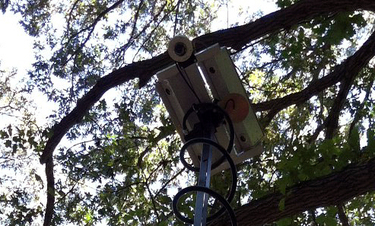
But now there’s a new solution: cameras to watch the cameras.

One is already in place, and Prince George’s County Police Maj. Robert V. Liberati hopes to have up to a dozen more before the end of the year.

“It’s not worth going to jail over a $40 ticket or an arson or destruction of property charge,” says Liberati.

Liberati is the Commander of the Automated Enforcement Section, which covers speed and red-light cameras.

Since April, six people have damaged speed cameras.

On April 6, someone pulled a gun out and shot a camera on the 11400 block of Duley Station Road near U.S. 301 in Upper Marlboro, Md.

Two weeks later, a speed camera was flipped over at 500 Harry S. Truman Drive, near Prince George’s Community College. Police believe several people were involved because of the weight of the camera itself.

Then in May, someone walked up to a camera on Brightseat Road near FedEx Field, cut off one of the four legs, and left.

“I guess that makes a statement, but we were able to just attach another leg,” says Liberati.

But when someone burned down a speed camera on Race Track Road near Bowie State College on July 3, Liberati and his colleagues began to rethink their strategy.

“It costs us $30,000 to $100,000 to replace a camera. That’s a significant loss in the program. Plus it also takes a camera off the street that operates and slows people down. So there’s a loss of safety for the community,” says Liberati

The Prince George’s County Police Department decided it needed to catch the vandals, or at least deter them.

“The roads are choked, there are lots of drivers on them. I think traffic itself is the cause of frustration (towards speed cameras). But, we have a duty to make the roads safe, even if takes a couple extra minutes to get to your destination. Unfortunately, that’s the Washington area, the place we live in,” says Liberati.

Speed cameras themselves can’t be used for security because under Maryland law speed cameras can only take pictures of speeding, says Liberati.

“We’ve taken the additional step of marking our cameras to let people know that there is surveillance.”

Liberati says the cameras aren’t a case of Big Brother nor a cash grab, police are simply trying to keep the public safe from reckless drivers.

http://www.wtop.com/41/3034979/New-cameras-to-watch-cameras-that-watch-you

‘Smart Carpet’ detects falls and unfamiliar footsteps

A team at the University of Manchester in the UK has developed a carpet that can detect when someone has fallen over or when unfamiliar feet walk across it.

Optical fibres in the carpet’s underlay create a 2D pressure map that distorts when stepped on. Sensors around the carpet’s edges then relay signals to a computer which is used to analyse the footstep patterns. When a change is detected – such as a sudden stumble and fall – an alarm can be set to sound.

By monitoring footsteps over time, the system can also learn people’s walking patterns and watch out for subtle changes, such as a gradual favouring of one leg over the other. It could then be used to predict the onset of mobility problems in the elderly, for example.

The carpet could also be used as an intruder alert, says team member Patricia Scully. “In theory, we could identify footsteps of individuals and the shoes they are wearing,” she says.

But it needn’t all be about feet. The system is designed to be versatile, meaning that different sensors could instead be used to provide early warning of chemical spillages or fire.

http://www.newscientist.com/blogs/onepercent/2012/09/smart-carpet-detects-falls—a.html?DCMP=OTC-rss&nsref=online-news

Floating seascrapers of the future?

Touted as an eco-friendly floating city, the Seascraper (pictured in an artist’s conception) is among a raft of concepts for  sustainable offshore settlements. With more than seven billion people on  the planet, mass migrations to cities, and increased risks of flooding  and sea level rise, more and more architects and innovators seem to be  weighing anchor.

(Related: “Sea Levels Rising Fast on U.S. East Coast.'”)

The  Seascraper—a self-sufficient community of homes, offices, and  recreational space—was designed with the intention of slowing urban  sprawl, according to its designers.

The  vessel’s energy independence would come from underwater turbines  powered by deep-sea currents as well as from a photovoltaic skin that could  collect solar energy. The concave hull would collect rainwater and  allow daylight to reach lower levels. Fresh water would come from  treated and recycled rainwater via an onboard desalination plant.

This  green machine would also help keep marine populations afloat, so to  speak, with a buoyant base that serves as a reef and discharges fish  food in the form of nutrients pumped from the deep sea, the U.S. design  team says.

http://news.nationalgeographic.com/news/2012/07/pictures/120730-future-floating-cities-science-green-environment/

Retinal device restores sight to blind mice


Researchers report they have developed in mice what they believe might one day become a breakthrough for humans: a retinal prosthesis that could restore near-normal sight to those who have lost their vision.

That would be a welcome development for the roughly 25 million people worldwide who are blind because of retinal disease, most notably macular degeneration.

The notion of using prosthetics to combat blindness is not new, with prior efforts involving retinal electrode implantation and/or gene therapy restoring a limited ability to pick out spots and rough edges of light.

The current effort takes matters to a new level. The scientists fashioned a prosthetic system packed with computer chips that replicate the “neural impulse codes” the eye uses to transmit light signals to the brain.

“This is a unique approach that hasn’t really been explored before, and we’re really very excited about it,” said study author Sheila Nirenberg, a professor and computational neuroscientist in the department of physiology and biophysics at Weill Medical College of Cornell University in New York City. “I’ve actually been working on this for 10 years. And suddenly, after a lot of work, I knew immediately that I could make a prosthetic that would work, by making one that could take in images and process them into a code that the brain can understand.”

Nirenberg and her co-author Chethan Pandarinath (a former Cornell graduate student now conducting postdoctoral research at Stanford University School of Medicine) report their work in the Aug. 14 issue of Proceedings of the National Academy of Sciences. Their efforts were funded by the U.S. National Institutes of Health and Cornell University’s Institute for Computational Biomedicine.

The study authors explained that retinal diseases destroy the light-catching photoreceptor cells on the retina’s surface. Without those, the eye cannot convert light into neural signals that can be sent to the brain.

However, most of these patients retain the use of their retina’s “output cells” — called ganglion cells — whose job it is to actually send these impulses to the brain. The goal, therefore, would be to jumpstart these ganglion cells by using a light-catching device that could produce critical neural signaling.

But past efforts to implant electrodes directly into the eye have only achieved a small degree of ganglion stimulation, and alternate strategies using gene therapy to insert light-sensitive proteins directly into the retina have also fallen short, the researchers said.

Nirenberg theorized that stimulation alone wasn’t enough if the neural signals weren’t exact replicas of those the brain receives from a healthy retina.

“So, what we did is figure out this code, the right set of mathematical equations,” Nirenberg explained. And by incorporating the code right into their prosthetic device’s chip, she and Pandarinath generated the kind of electrical and light impulses that the brain understood.

The team also used gene therapy to hypersensitize the ganglion output cells and get them to deliver the visual message up the chain of command.

Behavioral tests were then conducted among blind mice given a code-outfitted retinal prosthetic and among those given a prosthetic that lacked the code in question.

The result: The code group fared dramatically better on visual tracking than the non-code group, with the former able to distinguish images nearly as well as mice with healthy retinas.

“Now we hope to move on to human trials as soon as possible,” said Nirenberg. “Of course, we have to conduct standard safety studies before we get there. And I would say that we’re looking at five to seven years before this is something that might be ready to go, in the best possible case. But we do hope to start clinical trials in the next one to two years.”

Results achieved in animal studies don’t necessarily translate to humans.

Dr. Alfred Sommer, a professor of ophthalmology at Johns Hopkins University in Baltimore and dean emeritus of Hopkins’  Bloomberg School of Public Health, urged caution about the findings.

“This could be revolutionary,” he said. “But I doubt it. It’s a very, very complicated business. And people have been working on it intensively and incrementally for the last 30 years.”

“The fact that they have done something that sounds a little bit better than the last set of results is great,” Sommer added.  “It’s terrific. But this approach is really in its infancy. And I guarantee that it will be a long time before they get to the point where they can really restore vision to people using prosthetics.”

Other advances may offer benefits in the meantime, he said. “We now have new therapies that we didn’t have even five years ago,” Sommer said. “So we may be reaching a state where the amount of people losing their sight will decline even as these new techniques for providing artificial vision improve. It may not be as sci-fi. But I think it’s infinitely more important at this stage.”

http://health.usnews.com/health-news/news/articles/2012/08/13/retinal-device-restores-sight-to-blind-mice

Thanks to Kebmodee for bringing this to the attention of the It’s Interesting community.
Digital pills enter the marketplace


Digestible microchips embedded in drugs may soon tell doctors whether a patient is taking their medications as prescribed. These sensors are the first ingestible devices approved by the US Food and Drug Administration (FDA). To some, they signify the beginning of an era in digital medicine.

“About half of all people don’t take medications like they’re supposed to,” says Eric Topol, director of the Scripps Translational Science Institute in La Jolla,California. “This device could be a solution to that problem, so that doctors can know when to rev up a patient’s medication adherence.” Topol is not affiliated with the company that manufactures the device, Proteus Digital Health in Redwood City,California, but he embraces the sensor’s futuristic appeal, saying, “It’s like big brother watching you take your medicine.”

The sand-particle sized sensor consists of a minute silicon chip containing trace amounts of magnesium and copper. When swallowed, it generates a slight voltage in response to digestive juices, which conveys a signal to the surface of a person’s skin where a patch then relays the information to a mobile phone belonging to a healthcare-provider.

Currently, the FDA, and the analogous regulatory agency in Europe have only approved the device based on studies showing its safety and efficacy when implanted in placebo pills. But Proteus hopes to have the device approved within other drugs in the near future. Medicines that must be taken for years, such as those for drug resistant tuberculosis, diabetes, and for the elderly with chronic diseases, are top candidates, says George Savage, co-founder and chief medical officer at the company.

“The point is not for doctors to castigate people, but to understand how people are responding to their treatments,” Savage says. “This way doctors can prescribe a different dose or a different medicine if they learn that it’s not being taken appropriately.”

Proponents of digital medical devices predict that they will provide alternatives to doctor visits, blood tests, MRIs and CAT scans. Other gadgets in the pipeline include implantable devices that wirelessly inject drugs at pre-specified times, and sensors that deliver a person’s electrocardiogram to their smartphone.

In his book published in January, The Creative Destruction of Medicine, Topol says that the 2010s will be known as the era of digital medical devices. “There are so many of these new technologies coming along,” Topol says, “it’s going to be a new frontier for rendering care.”

Thanks to Kedmobee for bringing this to the attention of the It’s Interesting community.
http://blogs.nature.com/news/2012/07/digital-pills-make-their-way-to-market.html

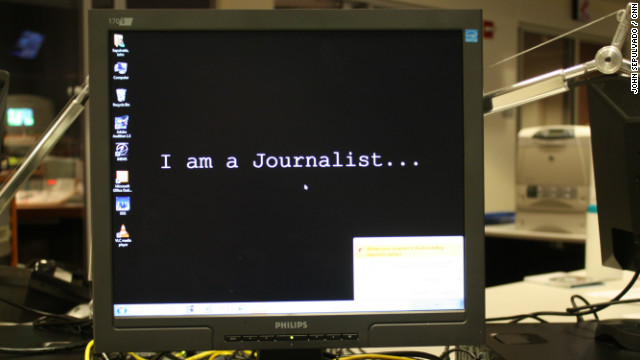
Narrative Science: Can computers write convincing journalism stories?

Computer applications can drive cars, fly planes, play chess and even make music.

But can an app tell a story?

Chicago-based company Narrative Science has set out to prove that computers can tell stories good enough for a fickle human audience. It has created a program that takes raw data and turns it into a story, a system that’s worked well enough for the company to earn its own byline on Forbes.com.

Kristian Hammond, Narrative Science’s chief technology officer, said his team started the program by taking baseball box scores and turning them into game summaries.

“We did college baseball,” Hammond recalled. “And we built out a system that would take box scores and historical information, and we would write a game recap after a game. And we really liked it.”

Narrative Science then began branching out into finance and other topics that are driven heavily by data. Soon, Hammond says, large companies came looking for help sorting huge amounts of data themselves.

“I think the place where this technology is absolutely essential is the area that’s loosely referred to as big data,” Hammond said. “So almost every company in the world has decided at one point that in order to do a really good job, they need to meter and monitor everything.”

Narrative Science hasn’t disclosed how much money is being made or whether a profit is being turned with the app. The firm employs about 30 people. At least one other company, based in North Carolina, is working on similar technology.

Meanwhile, Hammond says Narrative Science is looking to eventually expand into long form news stories.

That’s an idea that’s unsettling to some journalism experts.

Kevin Smith, head of the Society of Professional Journalists Ethics Committee, says he laughed when he heard about the program.

“I can remember sitting there doing high school football games on a Friday night and using three-paragraph formulas,” Smith said. “So it made me laugh, thinking they have made a computer that can do that work.”

Smith says that, ultimately, it’s going to be hard for people to share the uniquely human custom of story telling with a machine.

“I can’t imagine that a machine is going to tell a story and present it in a way that other human beings are going to accept it,” he said. “At least not at this time. I don’t see that happening. And the fact that we’re even attempting to do it — we shouldn’t be doing it.”

Other experts are not as concerned. Greg Bowers, who teaches at the Missouri School of Journalism, says computers don’t have the same capacity for pitch, emotion and story structure.

“I’m not alarmed about it as some people are,” Bowers said. “If you’re writing briefs that can be easily replicated by a computer, then you’re not trying hard enough.”

http://www.cnn.com/2012/05/11/tech/innovation/computer-assisted-writing/index.html?hpt=hp_c2