Choking allegations against doctor began at Parkland Memorial Hospital

zafarmand-s

By BROOKS EGERTON
Staff Writer
begerton@dallasnews.com

You look like the movie star Julia Roberts, the doctor told the hospital patient. She told police that he urged her to act — to pretend she “was sedated and begging him not to leave.”

Then the doctor grabbed one of her breasts and squeezed her neck “to the point that she had trouble breathing,” according to a police report. He asked “if she liked being choked.”

When Dr. Alireza Atef-Zafarmand came back to her room later that day in 2006, the woman called a nurse for help. The nurse called Parkland Memorial Hospital’s police force. Paul Nix was one of the officers who responded.

“She seemed very credible” and “very rattled,” said Nix, who recalled details of the matter as soon as The Dallas Morning News made a brief, general inquiry. “I believed her that something went wrong.”

But the police case — like many other sexual abuse allegations at Parkland reviewed by The News — went nowhere. “Eyewitnesses made statements that the accusations of choking and groping were untrue,” hospital leaders said in a written statement last month.

Police reports released by Parkland, however, do not support that claim. They refer to a single witness who was simply unable to confirm anything besides verbal contact. And Nix, who left Parkland in 2007, questioned whether there was a witness.

Parkland’s statement denied mishandling the police case, saying there was no effort “to suppress or overlook incidents of alleged assault.” However, it said Atef-Zafarmand committed verbal misconduct and that the hospital failed to discipline him for that.

“The evidence suggests he should have been promptly removed from Parkland,” the statement said. “We are confident that should a similar incident arise today, the offending physician would quickly be removed.”

Atef-Zafarmand told The News that he never touched the patient but did tell her she looked like the movie star.

“I asked her, ‘Do you have the same talent?’” the 47-year-old kidney specialist said. “A lot of people, they take it as a compliment.”

Atef-Zafarmand said he first spoke to the woman in a hallway and followed her to her ninth-floor room. She wasn’t his patient, he said, and he didn’t know her name or reason for hospitalization.

In the ensuing months, his medical superiors disciplined him for several incidents of misconduct that occurred outside the public hospital. Yet Parkland and its academic affiliate, UT Southwestern Medical Center, still let Atef-Zafarmand graduate from his training program in 2007.

The UTSW faculty member who oversaw the training program said Atef-Zafarmand was going to be expelled a few months before graduation, according to university records. But the faculty member was overruled by Dr. Greg Fitz, who has since become dean of UTSW’s medical school.

After Atef-Zafarmand graduated, some UTSW officials endorsed him to Dallas-area private hospitals. For example, the man who issued the expulsion warning, Dr. Biff Palmer, ranked him “excellent” in all categories, including ethical conduct.

Fitz and Palmer declined interview requests. In a written statement, UTSW said it never received reports from Parkland or elsewhere that Atef-Zafarmand “acted in a sexually inappropriate manner with any patient.” It added: “Based on the facts available at the time, UTSW acted appropriately.”

Since Atef-Zafarmand began working in private practice, two other women have told Dallas police that he choked and sexually assaulted them. He did not respond to questions about these allegations.

None of the cases has led to criminal charges or discipline by the Texas Medical Board, the state agency that licenses doctors.

After attending medical school in his native Iran, Atef-Zafarmand came to Dallas in 2004 for a three-year fellowship in kidney disease. He spent much of his time at Parkland, along with about 1,000 other doctors in postgraduate training. They reported to UTSW faculty members and worked under a Parkland contract that says harassment, abuse and disrespectful or unprofessional conduct “would be cause for immediate termination.”

But the consequences for Atef-Zafarmand fell far short of that mark. UTSW records show he was counseled three times in the first five months of his fellowship for “poor work ethic,” showing disrespect to a supervisor and “unprofessional conduct directed toward a patient.”

Trouble surfaced again in January 2006. Late one night, Parkland police got a call for help from the ninth floor. A patrol officer interviewed the female patient and soon notified Nix, the sergeant on duty. Nix re-interviewed the woman and said he heard none of the shifting, dreamlike tales that heavily medicated people sometimes tell. Nor did he hear any vague allegations or threats of lawsuit.

“She was very detailed, very specific,” said Nix, who is now chief deputy to the sheriff of Hardeman County, northwest of Dallas. “She never wavered from the story.”

Police records show that Nix consulted one of the patient’s physicians, who also found her to be credible. She “was not on any medications that would normally cause one to hallucinate,” the physician was quoted as saying.

Nix recalled alerting a lieutenant at home around midnight. A higher-level supervisor also was notified, “and I want to say they called Dr. [Ron] Anderson,” Parkland’s chief executive at the time. “It was a big brouhaha.”

Smith Lawrence, then Parkland’s police chief, said he didn’t remember the case but did recall investigating other sexual abuse allegations around the same time. “You’d catch hell for that,” he said, referring to investigations of doctors.

Lawrence retired in 2008, when he was in his early 70s, and declined to be interviewed in detail. “When I left Parkland, I made it my last mission to leave all that stuff behind,” he said.

He suggested that The News contact CaSandra Williams, who was his top aide and now heads the police department at Texas Health Presbyterian Hospital Dallas. She did not respond to interview requests. Parkland has retained responsibility for her officer’s license, state records show. It would not say why.

Atef-Zafarmand said police questioned him the day after the patient complained. “That’s impossible,” he recalled telling them. “There must be a mistake.”

An officer took him to the patient’s room, and she identified him as her attacker. He said she told him, “When you talked to me, I felt that something is getting to my brain, and I knew that you were doing it.”

The woman seemed “scared to death,” Atef-Zafarmand said. “It was a very disturbing situation.”

He said police never asked him to take a lie-detector test.

“That would have been an option,” Nix said, because Parkland frequently dealt with a contracted polygraph operator, primarily when evaluating job candidates. He said he was not involved in the case after the first night and knew no details of the investigation.

Not seeking a polygraph sounds odd, said Fred Price, who was a Parkland police detective until the year before the incident and is now a Dallas County courtroom bailiff. “They used the snot out of that polygraph when I worked there,” he said.

Atef-Zafarmand said Parkland officials told him that the patient had previously been hospitalized for psychiatric problems. Legal experts say that releasing such information could violate her privacy rights under HIPAA, the Health Information Portability and Accountability Act.

A senior hospital executive, Atef-Zafarmand said, apologized for the necessity of the police investigation and told him officials believed he was innocent. The executive also warned him not to make unnecessary remarks.

“That is one of my personal problems,” Atef-Zafarmand said. “I do a lot of unnecessary things.”

Atef-Zafarmand insisted that witnesses would have seen him if he had touched the patient. There was a second patient in the room, he said, and she had a relative visiting.

Statements from Parkland officials and hospital records contradict each other on this point. For more than a year, the hospital had refused to release police records on the case. After it finally did so on Jan. 18, officials said they were sharing copies of all police reports.

Those reports made no mention of eyewitnesses. But a Parkland statement to The News, four days later, said police had dropped the case after eyewitnesses said the assault allegation was “untrue.”

After The News asked Parkland whether it had released all records, the hospital produced a one-page document that it said had been accidentally withheld. It was labeled the “final page” of the police file and referred to a single, unnamed witness. Nothing else in the file references a witness.

This witness, described as the patient’s roommate, heard Atef-Zafarmand’s “Julia Roberts” remark and role-playing request, according to the one-page document. But “roommate could not provide any additional information to confirm the complainant’s allegation of physical contact.” There is no reference to anyone calling the allegation “untrue.”

There are other discrepancies. The “reporting officer” box on the form was left blank, meaning no one took responsibility for writing the final page. Nix said he could not remember ever seeing such an omission on a Parkland police report.

“That’s very stinky,” said Nix, who reviewed the police file released to The News.

Equally strange, he said, is the final page’s reference to a roommate. He said the patient didn’t have one when Atef-Zafarmand first visited her. She got one later that day. “[She] now has a roommate and that also makes her feel better,” says Nix’s contemporaneous police report.

That corresponds to the other records Parkland initially released. The group of reports begins with an overview, written by the first responder that makes no mention of anyone having information except the patient and the nurse she’d asked for help.

The final page said it “appears the conduct was not appropriate, but not illegal in any manner.” The criminal case was closed on Jan. 29, 2006, one day after Nix’s report.

Police records don’t show that an investigator was ever assigned to the case, although they do name one officer who began interviewing Atef-Zafarmand. That officer was Kenneth Cheatle, then a lieutenant and now Parkland’s police chief. There are no reports in the file from him.

Parkland would not give The News written statements from the patient, roommate or suspect, even though the newspaper agreed to have all patient-identifying information blacked out.

“The whole investigation,” Nix said, “is completely missing.”

A few months after the choking report, Atef-Zafarmand faced trouble again. These accusations came from another hospital where UTSW doctors work, the Dallas VA Medical Center. He was moonlighting in its urgent care center, earning extra money while doing kidney research.

This time Atef-Zafarmand was accused of harassing female co-workers — other doctors in residency training and at least one hospital employee. VA officials terminated him and notified UTSW, according to medical center records that the Texas attorney general ordered released to The News. (UTSW tried to withhold the records, saying they belonged to a medical committee that needed secrecy to promote frank evaluation of trainees.)

“Dr. Atef made sexually suggestive remarks,” said a June 2006 letter from the VA to the physician’s lawyer, “and, in every instance, attempted to or did in fact make inappropriate physical contact with the residents under the guise of a ‘study’ that he was doing.”

When top UTSW lawyer Leah Hurley released the VA correspondence, she said she had produced all public records related to sexual misconduct allegations against Atef-Zafarmand. The News twice responded that records appeared to be missing, leading Hurley each time to disclose more documents.

These documents included material showing that UTSW had placed the doctor on probation because of the VA matter. In doing so, his fellowship supervisor warned that “any other allegations of this nature or similar in nature would not be tolerated and would be grounds for dismissal.”

Atef-Zafarmand said UTSW helped replace the VA income by giving him moonlighting work at Parkland and the university’s own St. Paul hospital.

In late 2006, he submitted a required annual report to the Texas Medical Board. On it, according to records released by Parkland, he said he had not been disciplined by any health-care entity. He signed his name next to a warning that it’s a crime “to submit a false or misleading statement to a governmental agency.”

Atef-Zafarmand did not respond to recent News questions about the submission. But earlier, he did tell the newspaper he understood that adverse actions must be reported to the medical board.

More trouble surfaced in early 2007. Records say Atef-Zafarmand approached a young radiology technician in the gift shop of UTSW’s other hospital, Zale Lipshy. He asked if she was interested in psychiatry and invited her to participate in a study. She agreed and went with him to his nearby office.
“You asked her a series of questions such as ‘Can you act like someone else?’” says a reprimand letter that UTSW gave Atef-Zafarmand. “You asked her to take deep breaths and to picture herself in a place that made her feel completely relaxed. You moved her arms and legs to make sure that she was completely relaxed.

“She reports that she ultimately fell to the floor.”

According to the letter, Atef-Zafarmand never obtained UTSW’s permission to conduct such research or the young woman’s written consent to participate. Federal law generally requires researchers to meet both conditions.

The letter notes similarities between the incident and the VA findings. It also mentions a prior complaint at Parkland, without details.

And it raises the possibility of other incidents: “Although we have not been able to verify this information, we have received reports from at least one woman unaffiliated with UT Southwestern that you approached her at a local bar and made similar statements” to those made to the radiology technician.

Atef-Zafarmand’s conduct at Parkland, the VA and in his office was “unprofessional and will not be tolerated,” the letter says. He was warned not to contact the technician, not to invite anyone to his office for research participation, and “not to engage in the activity of hypnotizing anyone while on the UT Southwestern campus.”

The letter says Atef-Zafarmand denied asking the woman to take part in a study. “You indicated that you had a personal interest” in her and “had been very straightforward with her regarding your intentions.”

That’s absurd, the woman told The News. Roxann Neal said the doctor approached her again, in her work area, to ask that she leave with him. He said he wanted to “buy a gift for me to tell me thank you for helping” with the study.

Neal recalled realizing early in their first encounter “that something was wrong,” leading her “to play along and get out of there.” She said the state medical board should strip Atef-Zafarmand of his license. “I don’t think he has the morals that a physician needs to have.”

Texas law generally prevents the medical board from revealing whether it has received complaints about a doctor.

Atef-Zafarmand did not appeal the reprimand at the time but later sought to minimize it and, in 2010, tried unsuccessfully to have it rescinded, other UTSW records say. An email from Atef-Zafarmand said the woman “had no concern about issues such as sexual harassment” and mistakenly suspected he was conducting research not related to kidneys.

The email attributed these statements to Vernon Mullen, who headed UTSW’s office of equal opportunity and minority affairs. He “told me that the issue was a misunderstanding and there was nothing to worry about,” Atef-Zafarmand wrote.

Mullen retired in 2011, UTSW said. He did not respond to an interview request.

Atef-Zafarmand told The News he never harassed or engaged in sexual misconduct with anyone and never touched fellow trainees. He said he did invite some of them to try breathing exercises that promote relaxation but did not bother those who declined.

He also said he had tried for several months, without success, to obtain all of UTSW’s records about him.

“I am talking to you right now as a victim, not as the person who did the offense,” Atef-Zafarmand said in an interview late last year. “I think that the way they have it structured over there, when you get on the spot on something, they ruin your brain.”

That, he said, is why he decided to speak with the newspaper. “That’s why when you called me about abuse, I said, ‘Yeah, there is abuse, but not what you think.’ I was the abused one.”

He said his experiences at Parkland and UTSW “changed my personality,” leading him to fear being open with hospital co-workers and unwilling to date them.

Atef-Zafarmand finished his training in June 2007, receiving a Parkland certificate saying he “discharged the duties with honor.” The document was signed by Palmer, his UTSW training program director; Anderson, the hospital’s CEO; and Dr. Lauren McDonald, then chair of Parkland’s governing board.

Later that year, Atef-Zafarmand went to work for McDonald’s employer — Dallas Nephrology Associates, a prominent group of kidney specialists. McDonald said she played no role in hiring him and was unaware of any misconduct allegations. The group’s chief executive issued a statement saying he, too, knew nothing about them.

Dallas Nephrology helped Atef-Zafarmand get permission to treat patients at several Dallas-area hospitals, he told UTSW. But in applying for these privileges, he failed to disclose the reprimand to at least some of them. The reprimand letter had cautioned that it would be part of his permanent UTSW file and “subject to disclosure to requesters such as medical boards, potential employers etc.”

Atef-Zafarmand acknowledged this failure in a 2008 email that asked Palmer for help. “In two places, Baylor and Presby Dallas, I did not get a chance to fix the applications ahead of time before they brought it up to me,” he wrote. He attached an email he previously sent to Presbyterian that said he didn’t know he was ever on probation and added: “I did not try to hide any fact from you.”

Palmer responded that he couldn’t help with the disclosure failure, but “I can attest that you have successfully completed the program.”

Later, when another faculty member took over as training program director, she asked Palmer how he responded when hospitals and prospective employers asked about Atef-Zafarmand’s history. “I have generally put he is qualified in all categories,” Palmer responded. “When asked whether he was ever in trouble during fellowship such as probation, I report he received a letter of reprimand.”

“Letter of reprimand for unprofessional behavior, correct?” the new director asked.

“I never specify, but yes,” Palmer wrote back.

Baylor Health Care System ultimately awarded Atef-Zafarmand privileges at its Garland hospital. When The News asked why, the system gave a written answer: “All of this physician’s professional references recommended him.”

There is no indication in medical board records that he was ever allowed to treat patients at Presbyterian. Its officials declined to comment.

The two most recent abuse allegations against Atef-Zafarmand arose from encounters outside hospitals. Both were reported to Dallas police within 24 hours.

In July 2010, a 21-year-old woman said he attacked her after they had lunch at his condo near downtown. He “started rubbing her shoulders,” according to a police report, “and then started choking her from behind.”

The woman said he forced her to the floor, pulled her pants off and raped her. He “pressed both his thumbs on the veins in her neck,” she told police, causing her “to come in and out of consciousness about three times.”

In July 2011, an 18-year-old woman said he reached into her shorts at a Dallas nightclub and penetrated her with a finger. She had agreed to spend the evening with him for $400 but had not been paid and had not consented to sexual contact, a police report says.

“She told the susp[ect] to stop,” according to the report, then vomited and was ejected from the club. Atef-Zafarmand walked her to his car, where he allegedly put out a cigarette on her chest and choked her. “She does not remember what took place after that and woke up” at his condo, the report says. A detective later photographed injuries to her neck, arms and one breast.

Records released by Dallas police show no sign that the doctor was questioned in either case. Both accusers ultimately decided not to pursue prosecution, the records say.

In 2011, Atef-Zafarmand left Dallas Nephrology. He has since worked a series of temporary jobs, both in the Dallas area and in North Dakota.

http://res.dallasnews.com/graphics/2013_02/parkland/#day1main

Dallas Parkland Memorial Hospital caregivers accused of sexually abusing patients

Parkland Memorial Hospital is the nation’s largest healthcare facility ever forced into federal oversight to remedy patient-safety dangers. How did the landmark Dallas County public hospital reach this precipice? The problems have been years in the making.

By BROOKS EGERTON
Staff Writer
begerton@dallasnews.com

The nurse aide was accused of raping a grandmother who could barely walk. Doctors moved her from Parkland Memorial Hospital to another facility, where caregivers caught the man trying to track her down. Parkland fired him for “unsatisfactory work performance” and moved on.

Hospital police overlooked or ignored potential evidence and never filed charges. Hospital administrators failed to alert state regulators, as required by law. And Manuel Rodriguez went to work for a hospice company, caring for dying people in their homes. He denies wrongdoing, and Parkland said its police force found no evidence to support the rape allegation.

Parkland Memorial Hospital faces an April 2013 federal deadline to prove it is safe. How did Dallas’s landmark public hospital reach this precipice? Read First, do no harm, a compilation of The Dallas Morning News’ coverage of Parkland’s patient-safety crisis. The case is one of at least 25 in recent years in which patients accused Parkland caregivers of sexual abuse. Parkland’s in-house police force — which controls all criminal investigations of hospital staff — made no arrests. One caregiver was ticketed and fined.

Parkland has made it difficult to see how the cases were handled. The public hospital has sued the Texas attorney general in an effort to shield records. For a year, hospital officials refused to release any police investigative reports to The Dallas Morning News and would not answer most questions. Last month, they again declined interview requests, but did release a four-page statement and a selection of police records.

But the newspaper, using other sources, had already pieced together extensive details about several cases. All showed signs of poor police work, with one going officially uninvestigated for a year. Some patients and front-line workers involved in the cases alleged cover-ups.

Parkland adamantly disagrees. “To suggest that there has been a systemic or even inadvertent effort to suppress or overlook incidents of alleged assault at Parkland is to suggest a falsehood,” hospital leaders said in their Jan. 22 statement to The News.

Parkland Feb. 1, 2013 email statement to “opinion leaders and media” Parkland stressed that the Rodriguez case was “discussed with the Dallas County district attorney’s office.” It did not mention that the discussion occurred in December, nearly two years after the rape report. Parkland police officials met with prosecutors only after The News asked the district attorney’s office whether it had been consulted about any of the accused caregivers. It had not, and the DA’s office did not do any official investigations, its spokeswoman Debbie Denmon said.

Parkland’s statement also said the hospital now asks the district attorney’s office to review every sexual assault allegation, “regardless of whether the police believe it is substantiated.”

The investigative records that Parkland released last month show that detectives took logical steps in several cases and amply documented reasons for dropping them. For example, some accusers made vague, shifting allegations, and some seemed delirious.

But other cases were closed with little or no investigation, deemed to be medical procedures or bathing assistance that patients misunderstood. In the four cases about which The News had already pieced together the most information, the newly released investigative records raised further questions about police conduct.

PARKLAND AND CMS

Mike Malaise, senior vice president/external affairs, Parkland Memorial Hospital, in a Feb. 1 statement:

“In the normal course of regulatory oversight, the U.S. Centers for Medicare and Medicaid Services and the Texas State Department of Health Services investigate incidents such as those under review by the Morning News. In reviewing some of these cases, those agencies did find deficiencies in reporting, documentation or procedures surrounding the incidents. At no time did those agencies suggest that police handling of the incidents was insufficient or inappropriate.”

David Wright, deputy regional administrator, U.S. Centers for Medicare and Medicaid Services, in an email response to The News later that day:

“We have neither the authority nor expertise to review the adequacy of law enforcement investigations from any jurisdiction. Our investigations focus solely on the hospital’s compliance with the Medicare Conditions of Participation.” The Parkland statement did not address questions asked of hospital leaders: How many sexual abuse cases have come to light recently, since the newspaper last sought police records under the Public Information Act? What were the allegations? How did Parkland respond?

There has been at least one new case, the newspaper learned. Government regulators found in December that a psychiatric aide had been inappropriately touching a patient. Hospital police filed no charges.

These are the first accounts to emerge alleging deliberate mistreatment at Parkland, which collects about $425 million annually from Dallas County taxpayers. The News’ three-year investigation of the hospital previously documented harm stemming from error, under-staffing, lax supervision or, occasionally, psychiatric aides’ violent reaction to combative patients.

U.S. health officials intervened in 2011, putting Parkland under a rare form of probation that could force it to close unless systemic change is documented in the next three months. Federal monitors have reported significant progress by the hospital in some areas as well as ongoing patient-safety breakdowns. They have said nothing publicly about possible crimes committed by caregivers.

In late 2011, when the newspaper began researching sexual abuse allegations, Parkland said there had been 15 such complaints against employees in the previous four years. Abuse, as defined by Parkland, ranges from verbal or visual sexual harassment to rape — it’s “anything that forces a person into unwanted sexual contact or attention.”

Police substantiated no wrongdoing in 13 of the 15 cases, said Dr. Thomas Royer, who was Parkland’s interim chief executive at the time. The other two “were found to be assaults but not sexual,” he added. “Those people have been dealt with through the HR process.”

Records show that in one of those cases, the suspect was not a caregiver but a patient. In the other case, Parkland police accused a nurse aide of improperly touching a patient near her genitals and ticketed the man in 2011 for Class C misdemeanor assault. He was fined the maximum $500 penalty by a justice of the peace.

It’s a Class A misdemeanor to intentionally or knowingly make offensive physical contact with people who are “substantially unable” to protect themselves because of disease or injury, Austin criminal justice expert Eric Nichols said. It’s a first-degree felony if such contact causes serious mental or physical injury to a disabled person.

Three women recall their suffering at the hands of Manuel Rodriguez, a nurse aide accused of raping a patient at Parkland Memorial Hospital. In general, such misconduct “is judged very harshly by jurors and members of the community,” said Nichols, a former federal prosecutor and former Texas deputy attorney general. The maximum penalty for a Class A misdemeanor is a year in jail. The maximum for a first-degree felony is life in prison.

The aide resigned from Parkland — which failed, as it did in the Rodriguez case, to make a required report to regulators.

There’s no good way to compare the number of abuse cases at Parkland to those at other hospitals, most of which are private. In Dallas County, the DA’s office says it does not keep statistics on the types of cases filed by different police departments.

But sexual abuse of patients has been documented around the country since at least the 1970s. And predators in health-care settings, experts say, are the same as predators everywhere: They choose victims who are particularly vulnerable — physically or mentally or because their credibility can be questioned. They take advantage of institutions with a culture “of not paying attention,” said Boston College nursing professor Ann Wolbert Burgess, who co-edited a textbook on patient exploitation.

Patients are doubly vulnerable, she said. Predators have extraordinary access to their bodies. Hospital managers may assume that accusers — because of illness or medication — imagined or misunderstood a caregiver’s actions.

Burgess, a consultant on patient-abuse issues, said criminal prosecutions can be difficult or impossible because of limited evidence and victims’ disabilities. Another reason “is the hospital does not want negative publicity.”

Courtney Underwood Newsome, the Dallas area’s most prominent advocate for sex-crime victims, reviewed Parkland records obtained by The News and said she could not believe all the cases were unfounded. She cited research showing that most sexual abuse allegations are never reported to police and, of those that are, fewer than 10 percent are false.

“They [Parkland] are fighting to survive,” Underwood Newsome said, “and no one wants to see them fail.” But “there appears to be an egregious lack of action,” one that will “lead people to question what, in addition to criminal behavior, is being swept under the rug.”

Underwood Newsome co-founded the Dallas Area Rape Crisis Center and has led efforts to expand the number of hospitals offering victims full forensic examinations, which seek evidence such as an attacker’s bodily fluids. Until 2010, Parkland was the only place in Dallas County providing this service.

She questioned whether Parkland police should handle serious criminal allegations against their fellow employees. “There is always going to be a question regarding the conflict of interest,” she said.

In-house police forces like Parkland’s also face questions about whether they have the time and expertise for specialized investigations, former Dallas Police Chief Ben Click said. There are times when they should ask for outside help but don’t, he said, because “egos come into play.”

State records say Parkland has 59 licensed officers — more than some Dallas suburbs, such as Highland Park and University Park. The hospital’s force includes one veteran officer with his own history of sexual misconduct: Duane Stubbe, who served deferred-adjudication probation for exposing himself to a Collin County girl.
Parkland officials acknowledged knowing about Stubbe’s misdemeanor criminal case. Separately, they have praised their police department for preventing sex crime. In 2009, a magazine for Parkland employees said officers monitor “potentially dangerous individuals” who have medical appointments.

“Whether you’re running errands or going to your grocery store, predators can be anywhere,” the magazine quoted Lt. Rick Roebuck as saying. “I’m glad that at least while they’re here, we can make sure Parkland remains safe.”

Fred Price, who retired as a Parkland detective in 2005, said his fellow officers were generally “sincere.” But “you just knew you walked on eggshells” when investigating insiders.

Co-workers “would definitely try to cover up” for each other, said Price, who’s now a Dallas County courtroom bailiff. And management “would always believe any employee, especially a doctor, over any policeman.”

Here’s how Manuel Rodriguez got a nurse aide job in 2010 on Parkland’s eighth-floor neurology unit, according to hospital records:

He made the lowest possible passing score on a basic math test. No one else was considered for the position. Another male aide was in the process of being terminated — after being accused, for the third time in three years, of sexually abusing female patients.

Rodriguez’s personnel file shows no sign that he underwent a background check or provided any work history. He was 53 at the time and, after a career as a printer, had just spent a few weeks training at Parkland to become a certified aide.

His boss tried to fire him within 90 days, citing emails in which he complained about understaffing and accused nurses of not helping patients who’d lost control of their bowels. “Our unit’s patients and staff do not need an employee such as this,” the boss wrote to a personnel official. “I made a poor decision in hiring him.”

For reasons not explained in the personnel file, Rodriguez kept his job. And, in March 2011, the disabled grandmother was delivered to his care after fainting at a workers’ compensation hearing. A conveyor belt injury had left her in chronic pain and largely unable to use the right side of her body, including her dominant right hand. She lost her job, car, home and ability to live independently.

Rodriguez was her most helpful caregiver at first. “He brought me blankets,” said the woman, who is in her mid-50s. “He gave me a lot of attention.”

But the aide soon began to seem too familiar with his hands, “using lots of talcum powder.” And late one night, after she’d been in Parkland about a week, “he said he was going to give me a bath, and I told him, no, I didn’t want to.”

“He dragged me to the bathroom,” the woman told The News. Then, through sobs, she described how she refused when he “tried to put his thing in my mouth,” and how he went on to pin her down in bed and vaginally rape her.

Afterward, she said, he cleaned their genitals and put her bed sheets in the linen drop.

Police records say the woman tried to cry out during the attack but couldn’t make much noise, both because of her medical condition and because Rodriguez put his hand over her mouth. She remembered being restrained by terror, too: Rodriguez, she said, showed her that he had access to her medical records, so he knew where she lived with relatives. A Parkland detective verified that Rodriguez had looked up her address in the computer, a police report says.

“He threatened to kill not just me but them,” she said. “I didn’t know what to do.”

So at first, she told no one. Doctors sent her for therapy related to her workplace injury at UT Southwestern Medical Center’s Zale Lipshy hospital, next door to Parkland. There, she said, she finally felt safe enough to tell an employee what Rodriguez had done.

A Parkland police officer was summoned to her Zale room. It was the afternoon of March 29, 2011 — six days after the alleged rape, according to a Parkland police report.

KYE R. LEE/The Dallas Morning News

A disabled Dallas woman says she was raped last year by Manuel Rodriguez, a nurse aide at Parkland Memorial Hospital. Parkland fired the man, but its police force filed no charges. The woman’s daughter was present when a hospital police officer first responded to the rape complaint and described him as ‘really rude.’ She tried to get help from Dallas police instead, to no avail.“The policeman was really rude,” recalled one of the woman’s daughters, who was present for the interview. He raised his voice repeatedly, she said, demanding to know “why didn’t she say anything before.”

The daughter told him she was going to contact the Dallas Police Department, “and he said there’s no point in calling them because they have no jurisdiction over us.” She later called anyway and found out that Parkland was, indeed, a law force unto itself. DPD says it gets involved only if it responds first to a major crime in progress or if Parkland seeks help.

Hospital police did not immediately arrange for a physical examination of the woman, ask her to undergo a rape exam or refer her to a counselor. At the daughter’s insistence, Parkland agreed to see the woman two days after she reported being raped.

Two Parkland officers escorted her from Zale back to their hospital to have a rape exam done, police records say. But a Parkland nurse told them that “because of the extended time that had elapsed, the test could not be performed.” The hospital did test her for possible exposure to sexual diseases.

In its statement to The News, Parkland said a rape exam “only has clinical or evidentiary value within 96 hours after an alleged assault.” Underwood Newsome, the Rape Crisis Center’s co-founder, called that claim “completely unfounded.”

Texas law says police must request a rape exam when an accuser comes forward within 96 hours; after that, “the law enforcement agency may request” one. Experts say it often makes sense to perform rape exams beyond 96 hours, especially if the accuser, like the one in this case, has had limited physical activity.

“It is important to remember that evidence collection beyond the cutoff point is conceivable and may be warranted in particular cases,” says an evidence protocol published by the U.S. Justice Department.

A basic physical examination “should be performed in all cases of sexual assault, regardless of the length of time which may have elapsed,” says a Texas attorney general’s protocol. One reason is to check for internal injuries. Also, “evidence may still be gathered” — for example, by taking photographs of bruises.

While waiting for the two officers at Zale, the grandmother’s room phone rang. It was Rodriguez, taunting that he had been to court before and “nothing happened to him that time either,” a UTSW police report quoted the woman as saying. In the same call, she told The News, he also made the sound of a gun.

Nurses moved her to a different room and put her on the “no info” list, preventing anyone from knowing where she was unless she told them. She spoke with a Parkland counselor, whose notes describe her as tearful, fearful and intensely depressed.

Bruises on a Parkland patient’s arm, photographed in 2011 at a Parkland counseling center two weeks after the victim was allegedly raped by Parkland nurse aide Manuel Rodriguez. The photo comes from her medical records.“Don’t leave me,” she begged the counselor. “I feel like I’m dying.”

Parkland suspended Rodriguez the following day, April 1. On April 2, according to UTSW police records, he showed up at Zale, apparently unaware she had already been discharged. Dressed in street clothes and a white ball cap, he asked to see the woman and gave nurses his name. They refused to help him and alerted police, but Rodriguez left before officers arrived.

Marsha Newberry, who is a friend of Rodriguez’s and one of his ex-wives, said he called her about the suspension. He denied wrongdoing, described the patient as “crazy” and said “she claimed that he was trying to track her down in another building. He was like, ‘I’ve never even been in that building.’”

One example Rodriguez gave of the patient’s behavior: “She would just, like, not have any clothes on and open up the sheets and try to pull him down on her, and he was like, ‘I can’t do this. I’m here to take care of you.’” According to Newberry, Rodriguez said he also received a love letter from the patient but didn’t show it to anyone before destroying it.

Rodriguez, who has never been convicted of a crime, declined an interview request. He referred The News to his longtime lawyer, Dennis Croman, who said the patient had “mental problems” and might not be “altogether competent.” He did not elaborate.

For months before her hospitalization, the woman was treated by a psychiatrist at Parkland’s outpatient Victim Intervention Program. He diagnosed her with major depression and post-traumatic stress disorder, including nightmares and flashbacks, which he said stemmed from her work injury, disability and pain. He saw her again on April 7 and noted that she was “distraught” because of a sexual assault at Parkland that had “significantly exacerbated symptoms.”

Other therapists who later saw the woman briefly offered varying diagnoses, according to her medical records, which she let The News review. One said she talked about a childhood belief in “aliens.” Another said she described elaborate visions, but he thought she was faking mental and physical symptoms for financial gain. The woman told The News that doctors, generally working through translators, had asked her to visualize as part of stress-reduction therapy. She said she knew the difference between the imaginary and the reality of rape.

During the April 7 visit, Victim Intervention Program staff took photographs of the woman in a wheelchair — the only photos that appear in medical records she’s been able to obtain. Two weeks had passed since the alleged rape, but bruises were still visible on her calves and upper arms. Parkland also gave her a brochure from the Texas Association Against Sexual Assault that explains how vulnerable the disabled are to sexual abuse. The association offers a similar pamphlet for police that urges patience with the disabled, who are often reluctant to report abuse for fear of losing health care and may be “considered less credible.”

On April 8, intervention program staff contacted the detective assigned to the woman’s case. The detective wrote a report saying that she learned two things from the call: “The patient was being treated for a work-related shoulder injury that was traumatic,” and had previously been sexually assaulted without reporting it to police. There is no mention of her bruises in this report or any other police records released by Parkland.

The detective, Darlene Griffin, closed the case that day. “We have no physical evidence to support a sexual assault against the victim,” she wrote.

“Investigation believes that there are inconsistencies with the statement of the patient,” she added. “However, investigation cannot conclude that an offense did not occur.”

Griffin’s report gave no examples of inconsistencies and made no reference to the patient’s mental status. The News, in hours of interviews with the patient over several months, detected no inconsistencies. It found no sign in her medical records that caregivers doubted the truthfulness of her rape report.

The newspaper did find, deep in a box of her personal papers, hospital menus from the day after the alleged rape. “I am dirty,” says a note she scrawled near references to peach halves and grilled chicken breast. The note curses Rodriguez by name and adds, “He raped me.”

Griffin’s report noted that Rodriguez, during the week of the alleged rape, had accessed personal contact information for another of his female patients. He called her after she was discharged and said he was sorry “he couldn’t help her with her bath,” the report says.

An unsigned memo dated April 12 told Rodriguez to return to duty. “Although the allegations were determined to be unfounded, you are strongly cautioned to exercise prudent judgment so similar situations are avoided,” his boss wrote. “However, should we substantiate any of these allegations in the future or continue to receive additional complaints, further corrective action may be taken not to exclude termination.”

That week, the neurology boss also drafted a memo for all of her staff. It decreed that aides could no longer care for patients of the opposite sex unless another caregiver was present.

A nursing administrator responded by noting that problems could also arise when caregivers worked alone with patients of the same gender. Parkland’s patient relations department, the administrator wrote, “is currently investigating a complaint by a male patient against a male provider regarding inappropriate touching.”

Rodriguez was fired in late April, ending an 11-month tenure at Parkland. Records released by the hospital do not detail reasons for the firing beyond his “unsatisfactory” job performance.

“He said something about how they fired him because he wouldn’t write down a statement” admitting he violated a procedure, Newberry said. He told her he refused because “I did everything I was supposed to do.”

She said he was “heartbroken.” “He was just like, ‘I cannot believe I’ve lost my job because of some stupid woman.’”

Croman, Rodriguez’s lawyer, said he talked with two Parkland detectives during the criminal investigation.

“We tried to cooperate with them and give them what information we knew,” Croman said. “They just determined that it wasn’t worth pursuing.”

The detective’s report contradicts this. “The suspect has been non-cooperative,” Griffin wrote. “Investigation did not receive communication from the suspect attorney.”

The International Association of Chiefs of Police says sexual assault investigations should be treated not as “he said, she said” cases, but as “he said, they said” matters. Detectives should look for a pattern of unreported crimes “by interviewing the suspect’s social circles, current and former partners,” says the association’s list of recommended best practices.

OTHER PARKLAND ACCUSATIONS Here are other examples of sexual abuse allegations against Parkland Memorial Hospital caregivers. Parkland’s police force filed charges only in the first case.

KHASRO HASAN

Position: Nurse aide
Background: He told Parkland that he worked as a nurse in Iraq and as a translator for U.S. military officials.
Tenure at Parkland: Seven months in 2010-11
Accusations: In January 2011, a patient accused him of groping her breast and pubic areas “more than once.”
His response: He denied wrongdoing to Parkland police and The Dallas Morning News. He told the newspaper that a vindictive co-worker manufactured the accusations. According to police records, he admitted touching the patient’s abdomen and head without consent. He said he was trying to help her with pain. An aide’s duties don’t include treatment.
Outcome: Hasan quit his job. Parkland police later charged him with Class C misdemeanor assault. He was convicted in a justice of the peace court and assessed the maximum penalty: a $500 fine.
Today: Parkland did not make a required report to regulators. Hasan avoided being put on the state’s list of aides who are unemployable because of abuse. He said he is no longer working in health care.
PETER SARMIE

Position: Neurology unit nurse aide
Background: He told Parkland that he studied to be a mechanic in the West African nation of Liberia before becoming a certified aide in Texas.
Tenure at Parkland: 2007-10
Accusations: He put his hand in a patient’s vagina while bathing her in 2010. “This is the third complaint received for the same type of behavior,” Parkland told him.
His response: “All of it was investigated and employee was found not guilty,” he wrote to his superiors. Sarmie reiterated these denials in an interview with The Dallas Morning News. Male aides, he said, are vulnerable to false accusations when assigned to female patients who need assistance with bathing and dressing.
Outcome: He was fired for “repetitive at risk behavior/reckless conduct that jeopardizes the life and/or welfare of another individual.”
Today: He lives in Rhode Island and said he is working as a nurse aide.

ARLO TABADA

Position: Intensive care unit nurse
Background: His resume says he worked as a physician in his native Philippines before getting a U.S. nursing degree in 2008.
Tenure at Parkland: 2008-12
Accusations: In January 2012, a patient said, Tabada woke her in the middle of the night, while she was intubated, for bathing. “I felt a pinch on my nipple,” she told the nurse’s supervisor. Then he “started to rub my back” with a hot towel and “had his hand on my pubic area.” The patient added that she’d never been bathed by a male nurse before.
His response: Tabada and an aide, who helped with the bathing, denied wrongdoing to Parkland. He reiterated that denial to The News. Having female caregivers bathe female patients “might be the best scenario,” he added. But “sometimes it’s just not practical” given Parkland’s “heavy load” of patients.
Outcome: Both caregivers returned to work after a one-day investigation by Parkland police. A psychiatrist said the patient’s allegations were “likely due to delirium given that she was on propofol,” a sedative and hypnotic agent. Tabada told The News he agreed to take a polygraph test, but police “didn’t pursue it.”
Today:Parkland fired Tabada in July 2012 for seizing an emergency-call button from another ICU patient. He said the patient was repeatedly demanding painkillers ahead of schedule, disrupting care of others in the short-staffed unit. “I made a mistake,” Tabada told Parkland. He still has his Texas nursing license and would not say whether he is currently working as a caregiver elsewhere.

MORE INCIDENTS

Because Parkland withheld or blacked out large portions of many records, it’s impossible to identify most of the other accused caregivers and their jobs. Here are examples of patients’ accusations and how hospital police responded:
December 2010, second floor: A caregiver performed an invasive exam without consent. The patient grabbed the caregiver’s hand “and pulled it out.” Records released by Parkland show no sign that any police investigation resulted. Ten months later, the supervisor of criminal investigations created a report that declared, without elaboration: “This was a medical procedure not an assault.”
February 2012, emergency room: A clothed caregiver pressed his erect penis into the patient’s genital area during an exam. The patient was upset and terminated the exam. Here’s why a Parkland detective said he closed the case as unfounded: The caregiver “would have to slouch or get on his knees” to do what he was accused of, and the patient said he was standing.
March 2012, emergency room: A caregiver “fondled the nipple on her left breast three different times” while attaching testing equipment to her chest. The caregiver denied touching any part of the breast. Both parties agreed to take a polygraph. “After interviewing both parties and polygraphing one, we came to the conclusion that there was no assault,” a detective wrote. “The polygraph showed there was no deception.”

SOURCE: Parkland police and personnel records; Dallas Morning News research. Records released by Parkland don’t show whether its police followed this advice. But The News found a pattern of abuse allegations in Rodriguez’s past and support for what he allegedly told the disabled grandmother — that he’d been to court before.

Oralia “Lala” Boatright, a divorced mother of two, lived with Rodriguez in the early 1990s, in his hometown of Irving. Police there arrested him twice after she accused him of assault.

In 1991, according to a police report, he grabbed her by the throat when she tried to leave him. An officer took him to jail after she said she “was afraid if the police left, the assault would continue.” Municipal court records show the case was dismissed but don’t say why.

A 1992 police report said he pinned her down on a bed with his knees to keep her from leaving home, then pushed her into a glass table. Hospital records say she received treatment for a gash near her right eye, in the company of an unidentified man.

That man was Rodriguez, Boatright told The News. She recalled a nurse asking whether she’d been assaulted and being so afraid that she claimed it was just an accident. Three days later, after moving out of his house for good, she gave police a written statement. It said he had previously held her at gunpoint.

“He kept an old antique shotgun that his dad gave him behind the bedroom door,” Boatright said in an interview. “He pointed it at me and says, ‘You’re not going anywhere. Do you understand?’” Her response: “OK, OK, I promise. Don’t do anything — my son’s in the next room.”

She said he put the gun down and taunted her: “I broke you, didn’t I?”

Police deemed the 1992 case serious enough to send to the district attorney’s office for prosecution. A judge found Rodriguez innocent, for reasons that county records don’t explain. Boatright said she didn’t know the case went to trial, because she went into hiding and didn’t leave a forwarding address.

Rodriguez called Boatright a “maniac” who deliberately injured herself, according to his friend Newberry. “She told him she was going to get him put away” and “jumped into the glass coffee table,” Newberry said, recounting his story. “He said, ‘I didn’t touch the girl.’”

Newberry was married to Rodriguez for about eight years. When filing for divorce in 2004, she accused him of cruelty and adultery. The cruelty, she told The News, was strictly verbal. “He was never physical with me.”

Rodriguez was briefly married in the mid-1990s to Sandy Jackson, who accused him of harassment while their divorce was pending. When she contacted Irving police, she said he had called her about 25 times that day and knocked on her door, trying to get her to move back in with him.

An officer told him to leave Jackson alone, according to police records, prompting Rodriguez to reply: “But I want to talk to her.” He agreed to stop bothering her but did not, records say. Police then referred the matter to the city attorney, but Irving officials recently said there was no record of prosecution.

Jackson told officers that Rodriguez “was violent towards her during their marriage,” but she did not call police then. She told The News that she feared complaining would lead to more violence and that she spoke up only after securing a place of her own.

“One time I thought I was going to end up in the bottom of Grapevine Lake because he hit me so hard,” Jackson said in an interview. They were in his sailboat, she explained, and he was barking orders while doing no work. When she protested, “he hit me right on the pelvic bone,” and “half my body went over the railing.”

Jackson said Rodriguez sometimes bragged that his common names and lack of a middle name made him hard to track. “He was very bold about that,” she said. “He would just tell me, ‘How the hell is anybody ever going to catch up to me?’”

The News learned of the Parkland rape allegation in late 2011, about eight months after it was made. The newspaper sought information from the Texas Department of State Health Services, which licenses hospitals and which Parkland should have notified within 48 hours.

DSHS said it had never been notified and began investigating. It isn’t clear what steps the state agency took, but it did not interview Rodriguez and found no fault with Parkland.

Agency spokeswoman Carrie Williams said she could not discuss investigative details. But in general, she said, Parkland’s past failures to report abuse allegations made it difficult for DSHS to determine what happened and contributed to the agency’s decision to fine the hospital a record $1 million last year.

“They really protect the workers there,” Rodriguez’s accuser said of Parkland. “And the patients, where does that leave us? In their hands, where they can do what they want.”

Rodriguez went to work in early 2012 for a home-health firm based in Arlington. Officials there said he wanted more work than was available and quit after a few months. He gave no notice, they said, and simply failed to show up at a home where a patient was waiting for help.

Since then, he has been working for Hospice Plus, a Dallas-based company that cares for the terminally ill. Its chief executive, Dr. Bryan White, said he knew of no problems with Rodriguez. He declined to comment on whether the company received information from Parkland about the aide. “We followed our policies and procedures,” White added.

The Parkland patient who accused Rodriguez began to cry when told of his hospice work. She said she suspects the hospital views her as someone who just wants money.

“I don’t want money. I don’t want any of that. I want justice,” she said, sobbing. “I want justice so this doesn’t keep happening to so many other women.”

Police officer remains on Parkland’s force after sexual misconduct findings
He served probation for indecent exposure and was later fired, but the hospital hired him back.
By BROOKS EGERTON
Staff Writer
begerton@dallasnews.com

Parkland Memorial Hospital police officials promoted Officer Duane Stubbe after his first incident of sexual misconduct. They warned him after the second. They fired him after the third.

And two months later, they gave him back his gun, badge and previous salary. He remains on Parkland’s police force today, enforcing the law at primary-care clinics.

The troubles date to 1996, when Stubbe was arrested for being naked in front of three middle-school girls during a slumber party at his home. In 1998, he was found not guilty on two misdemeanor charges of indecent exposure and agreed to plead no contest to a third. A Collin County judge put him on six months of deferred-adjudication probation.

Parkland Memorial Hospital
Duane Mark Stubbe, a longtime Parkland Hospital police officer, is shown in a 1998 booking photo from Collin County. He was arrested in 1996 for indecent exposure, and again in 1998 for a probation violation.Stubbe was required to leave home, undergo sex-offender treatment and submit to polygraph testing. When tested, he “failed when asked his sexual intent during the commission of the offense,” court records say.

Prosecutors sought to revoke his probation. Stubbe sought to withdraw his plea, claiming he hadn’t understood its consequences or the evidence against him. He had always “maintained his innocence,” his lawyer argued.

A judge rejected both efforts in early 1999. Stubbe completed probation with no conviction record.

The Texas Commission on Law Enforcement Officer Standards and Education then moved to suspend Stubbe’s license. It got a late start because Stubbe had failed to make a required report of his arrest; he didn’t disclose the criminal case until after his probation began.

Parkland intervened on the officer’s behalf. Kenneth Cheatle — then his lieutenant and now Parkland’s police chief — wrote a letter praising Stubbe. So did CaSandra Williams, who was assistant chief at the time and now heads the police department at Texas Health Presbyterian Hospital Dallas.

Smith Lawrence, then Parkland’s chief and now retired, went to Austin and testified before an administrative law judge. He said he’d recently promoted Stubbe to a supervisory job “entirely based on merit.” The officer “enjoys the support of both his superiors and peers.”

The three supervisors did not respond to requests for comment.

Stubbe, who declined to comment for this story, also testified in Austin and gave this version of what happened at the slumber party: He was sleeping naked and unaware of the sleepover when a noise from his stepdaughter’s room woke him. He went to investigate, opened her door and saw the girls. “He immediately closed the door,” he said, and two of the three girls did not see him nude.

But two of the girls, who are now young women, told The Dallas Morning News that they did see full frontal nudity. They said Stubbe entered the room naked, told the girls to quiet down and then briefly lingered there. The two did not testify in Austin.

Parkland Memorial Hospital
Image from the Parkland Hospital newsletter, released in Sept. 2012, showing Officer Duane Stubbe, a member of Parkland Memorial Hospital’s police force, who has his own history of sex crime: He was sentenced to six months of probation in 1998 for indecent exposure, and state regulators later suspended his officer’s license. Stubbe has worked as an officer for the hospital since 1994.In his testimony, Stubbe said “he has learned his lesson and is truly remorseful,” the administrative judge wrote. The police officer said suspension would cost him his job and hurt his family.

It would also hurt Parkland, Stubbe asserted, because he was the hospital police force’s only member specially trained to deal with mentally ill people.

The law enforcement commission agreed to a six-month probated suspension, which began in early 2000 and allowed Stubbe to keep working.

By late 2000, he was in trouble again. Parkland supervisors cited Stubbe for refusing to help a patient who’d lost her purse. And in early 2001, he was written up for failures including an “unsatisfactory” report on the use of force and not telling the Secret Service when a psychiatric patient threatened President-elect George W. Bush.

Stubbe received a “final warning” in April 2001, for sexually harassing another officer. He grabbed the man, according to personnel records, and made comments such as “You need to quit looking at me like you want me to … [expletive] you.”

The records show that Stubbe was fired the following month for similar sexual comments. He told a fellow supervisor, for example, “I’ll do it if you [perform oral sex on me].”

Termination paperwork also cited “inappropriate incidents” with his Parkland-issued gun, such as taking it out during a meeting, sliding it across a table and telling a subordinate, “You shoot him.”

There is no sign in records Parkland released that Stubbe denied doing any of these things. Nor is there any explanation for why, two months after his firing, he was rehired. He appealed his firing, the hospital said in a statement to The News, and Lawrence “agreed to allow him back onto the police force.”

Stubbe, 48, has received excellent evaluations in recent years.

That is little consolation to the two young women who attended the slumber party. Both said they were upset to learn that Stubbe was still working as a police officer. One said she worked in health care and had considered getting additional training at Parkland.

Now, she said, she’s afraid to go there. “You don’t know you’re safe.”

http://res.dallasnews.com/graphics/2013_02/parkland/#day1main
Former Dallas Cowboys NFL quarterback Jon Kitna finds ‘gold mine’ at his troubled old high school

Kitna-desk2-jpg_055221

Before he left the Dallas Cowboys to come home again, Jon Kitna had one request of the two principals who run Lincoln High School:

Give me your worst students.

The other teachers told him to stop. This was last February and it was going to be hard enough to teach three algebra classes in the middle of a semester. He was two months gone from an NFL career that went for 16 years, after all. Yes, this was his old high school, the one where he was a star quarterback in the early 1990s, but didn’t the new football coach understand what he was getting into?

Didn’t he see the numbers? Didn’t he know that four of every five of the students were on free or reduced lunches? That finding a meal was more important than understanding negative integers? Inspiring the best students was going to be difficult enough. Save himself, they advised. Start slow. Make it easy.

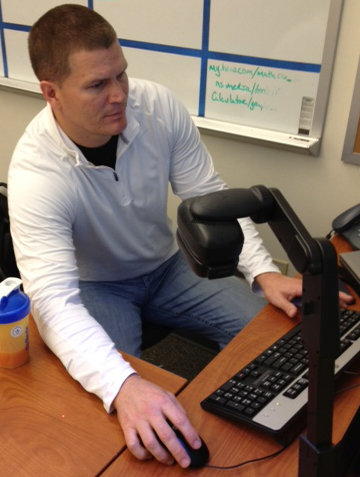
Kitna shook his head. Easy wasn’t the point. At 6-foot-4 with a buzz cut and a body built for football, he fills the classroom doorways. He would not be intimidated. And how could they understand this was the only job he ever wanted – that his time in the NFL was a daily preparation for this moment? No, coming home was supposed to be as hard.

And so again he told the principals to have the other math teachers select the students they didn’t want – the ones who didn’t listen, who didn’t try, who didn’t care. He would take them all. The principals nodded. Lists were made, class rolls prepared. The new football coach was handed three dream teams of troublemakers. They wished him luck.

Only something happened in those three algebra classes, something no one could have imagined. The students who didn’t listen suddenly did. Those who never did work turned in assignments. And when the results of the math assessments came in, Kitna’s students were second best in the school. It wasn’t because their teacher was an NFL quarterback. Many of them didn’t have televisions at home. They had little idea who Jon Kitna was. No, this was something else. Something bigger. Something one of those two principals, Pat Erwin, considers in his office one recent day and finally calls: “The Kitna effect.”

He doesn’t have to be here, of course. Sixteen years as an NFL quarterback brought him more than $20 million. It gave him big homes and nice cars. It allowed his wife Jennifer and three children to never need again. When he walked away from the Cowboys after the 2011 season, he could have gone to the golf course or the broadcast booth or even one of those sprawling high schools with a giant stadium in a suburb of Dallas if he only wanted to coach.

“I don’t think that’s what my purpose was,” Kitna says. “This is my challenge. This is what I was meant to do.”

He is sitting at a teacher’s desk in the front of a classroom not long before his Algebra I class. Everything has changed in 20 years. Things seem worse now. There are so many more drugs. The poverty shocks him.

Yet people he knows from the old days say the school was more violent when he was a student. Gangs roamed the halls. He remembers the gangs but many of those kids were also his friends and they shielded him from what they were doing. Perhaps his memories are sanitized. Maybe because he was surrounded by wealth for so long the hardship here is all the more unsettling.

He sat with his team in a pregame study hall one fall day and told the players to close their books. Something was missing. What was it? He could sense they wanted to learn. He could see them working in school. They tried hard at football practice. And yet simple homework assignments went unfinished. Grades that had improved then mysteriously dropped. For every step forward there was a stumble.

“What is the disconnect?” he asked.

For several moments no one said anything. Then slowly the stories spilled out. Terrible stories. Heartbreaking stories. The players told of homes without parents. They said nobody in the house asked to see their homework. They talked of barely existing at all. They said the only place anyone seemed to care was at school. And they told him that even then he was the only one to whom they could relate.

“It was eye-opening,” Kitna says. “It was tearful to hear kids say: ‘My parents when I am doing my homework tell me to stop doing my homework and go sell drugs.’ Or to hear a kid say: ‘I don’t ever eat because I want my mom to eat and only one of us can eat.’ ”

For a moment Kitna is silent.

Then he stops and looks up wistfully.

“All that being said, I’m on a gold mine,” he continues. “This place is a freaking gold mine because these kids are super, uber-talented. Not just athletically. You’ve got kids who can sing and blow the pipes off of things. You see kids who can do acting and drama-type stuff and arts that are just amazing.

“People [in the NFL] said I got credited for being a great leader, they [said] ‘even as a backup people are drawn to you.’ And they’d say ‘why?’ Because I went here. It’s because I went here. I’m thoroughly convinced of that because if you go here you don’t just get to be one kind of person, you have to be able to adapt and intermix yourself into all different kinds of cultures and situations.”

A buzzer sounds. Time for class. The room begins to fill. The kids are laughing. A few say “hello.” One asks what they are going to work on that day. Kitna watches them and smiles. “I’m on a gold mine here,” he says again.

It takes a village to change a culture, and Kitna has filled his coaching staff with friends and associates he has known over the years. This includes former Oregon State player Casey Kjos, a cousin who he raised as a son, and Eric Boles, his teammate at Central Washington University who played briefly in the NFL. Jennifer and his brother’s wife take care of details like making meals for the team during training camp because they figure the players will otherwise not eat. Since the school had little money for things like uniforms and equipment they took over the booster club and website, and set up a 501(c)(3) and began soliciting donations.

To show his seriousness, Kitna spent $150,000 to fill the weight room with equipment as nice as that in any NFL practice facility. He had the walls painted and named it after his old Lincoln teammate and longtime NFL safety Lawyer Milloy. Soon others followed. Carson Palmer, a teammate in Cincinnati, bought two industrial washers for uniforms. Current Cowboys quarterback Tony Romo provided the money for new jerseys. Calvin Johnson, his old receiver in Detroit paid for new equipment as did Cowboys linebacker DeMarcus Ware. Since the kids didn’t have their own spikes for practice, the Cowboys boxed up dozens of cleats. When Nike took over the NFL uniform contract in the spring, the Seahawks sold their now useless game pants to Lincoln at $1 a pair so the team could have practice uniforms.

Several times, Erwin, the co-principal, has walked into the school on Saturday mornings and found Kitna washing uniforms.

“I think what he is trying to do is see what can happen to kids in a high-poverty area when you put them in a world-class setting,” Erwin says.

But inspiring kids who come from nothing is not as easy as wearing Marshawn Lynch’s pants and Dez Bryant’s old cleats. For every moment of joy comes a day that makes no sense.

Not long after he arrived, Kitna took the football team to Seattle for a series of 7-on-7 drills at the University of Washington. When he sent notes to the parents, only three called to ask about the trip.

Then when the bus returned to Lincoln at 11:30 p.m., Kitna was stunned to discover not one parent or relative had come to meet them. He and the coaches split the players up and drove them home. It was 12:15 a.m. when Kitna dropped off the last of the players in his car. And as the door shut and the player waved good bye, Kitna wept.

“I could never fathom that my son would leave for school at 6:30 a.m. with no money for food and some coach I never met or know is going to take him to the University of Washington for 7-on-7 drills and I don’t even know what that means and then not have any transportation when he gets back,” he says. “That’s when it hit me how hard this was going to be.”

And yet he keeps pushing because this is all he knows to do, walking through the halls with a computer bag over his shoulder, nodding to kids, calling them: “Dude.”

“Jon does everything he has with his whole heart,” says Boles, who is one of his assistants. “I told him: ‘You are responsible to the kids but you are not responsible for them. You can’t control it, Jon.’ But his belief is: If they can make one decision a week or one decision a day that is better than the day before then you are making an impact.”

Or as the other co-principal, Greg Eisnaugle, says as he stands in the hall one day: “He just exudes positivism. He makes the kids feel they are worthy.

Then Eisnaugle pauses.

“Have you met Rayshaun Miller?” he asks.

On the dream team of troublemakers, Rayshaun Miller was a lottery pick. He rolled through his first year and a half at Lincoln tormenting teachers so much that many threw their hands up in frustration. The tales of his arrogance and disrespect filled the main office. Once Erwin found him in the hallway boasting of his 4.4 time in the 40-yard dash and how he would tear through opponents on the football field.

“How will we know, Rayshaun?” Erwin said. “You can’t stay eligible.”

But there is also something compelling about Miller. He is bright. While most teenagers find it difficult to connect with adults, he makes eye contact. His handshake is firm. He likes to talk. This is the student Kitna met when he arrived last February, not the one who drove the teachers mad. At the time Miller was failing pretty much everything. Kitna said he would pick him up at his house at 6:30 every morning and drive him to school where they would work on algebra before the students arrived. Later in the day, he was in Kitna’s class, which gave him more than two hours of math daily with the new coach.

His grades soared. The kid who was failing got A’s and B’s. The kid who mocked his teachers waved good morning. When other students fought, he broke them apart. Soon word came to the office of a new, different Rayshaun Miller. And everyone wondered just what had happened.

Miller stands in the weight room after school one day and says: “I got my act together.”

He was born in Sacramento, Calif., and was sent to live with his father in Tacoma when he was 6 to escape the violence of his old neighborhood. He hasn’t seen his mother or brother since. He says he carried the anger over this for a long time. It was Kitna, he says, who told him he couldn’t use his background as a reason for giving up.

“He taught me there is no excuse for not trying,” Miller says.

Then Miller starts to talk about his old self, the one who tried to fail. He tells a story of a time he mocked a student for getting an A in a class. He remembers calling the student “stupid.”

Now, in the weight room, Miller laughs.

“Can you believe that?” he says. “I called someone ‘stupid’ for getting an A.”

Football was a miracle for Kitna. Even he never imagined he’d be in the NFL. It took years to become the starting quarterback at Lincoln. Nobody was waiting with a scholarship when he graduated. His parents helped him pull the money together to go to Central Washington, an NAIA school halfway across the state, where he found himself at the bottom of a long list of quarterbacks. Eventually he became the starter. His senior year, Central won the NAIA national championship, which got him mild acclaim in Washington but did nothing to further his career.

Assuming he was done with football, Kitna finished his teaching degree and began pursuing the dream he and Jennifer talked so much about: teaching and coaching. Lincoln was actually looking for a head football coach. He applied but was turned down.

Then a few days later Dennis Erickson showed up on Central’s campus.

The Seahawks coach at the time was there to give a tryout to his nephew, Jamie Christian, who was one of Central’s receivers. The tryout was a family favor, yet what amazed Erickson was the quarterback whose throws looked like rockets zooming into Christian’s hands. The Seahawks offered Kitna a contract and a spot in their 1996 training camp. He made the practice squad and after the season was placed on the roster of the Barcelona Dragons of the World League. Barcelona won the league title on home turf. Kitna was MVP of the championship game and left the field to chants of “Keeetna! Keeetna! Keeetna!” He was anonymous no more.

He made Seattle’s roster in 1997 and became the team’s starting quarterback in 1998. In 2001 he went to Cincinnati, then to Detroit in 2006 where he threw for 4,000 yards two consecutive seasons, eventually landing in Dallas in 2009.

Yet while this became his football narrative, it was never the story he wanted to tell. Rather the one he repeats, offering to anyone who will listen, is more complicated. It starts with a young college student from Tacoma who understood little about who he was. He went to parties. He drank until he was drunk. He stole. Boles, who speaks to companies about their image, once told a group from 7-Eleven: “You guys can invoice Jon Kitna because he stole so much from you.”
Boles was going through a religious awakening at this time. And he talked to Kitna a lot about what he learned. One night Jennifer, who was Kitna’s girlfriend at the time, came home to find him in bed with another woman. In the midst of the ensuing argument, Boles’ words suddenly made sense. And what came from that night was a different Kitna. The drinking stopped along with the stealing and the partying. His expressions of faith were overt, manifesting itself in T-shirts with slogans like “God Athletic Department” or caps with crosses. His bookshelf filled with spiritual texts.

His purpose became clear. He would teach. He would go back into the cities, to the worst of neighborhoods and he would make children better. He would tell them about choices and respect and responsibility. He was going to change lives.

With Lincoln being a public school, faith is not a part of the lesson plan. Kitna understands this and seems to respect it. After all, he is teaching in a district where students come from all over the world and from a variety of religions. And don’t the lessons he is trying to teach apply to everyone regardless of belief?

“Character is an every day, all the time thing,” Kitna says. “It’s who you really are. It’s not what you turn on and off when you’re around a coach or at home with your parents.”

He has a philosophy that he took from a team chaplain in Detroit. He calls it “the four pillars of manhood,” with each represented by a letter that forms the acronym: “R.E.A.L.” as in: A R.E.A.L. man…

Rejects passivity
Empathizes with others
Accepts responsibility
Leads courageously

And while R.E.A.L. is gender specific and targeted first toward the Lincoln football players, Kitna believes it to be a message that can be embraced by all the students. Who doesn’t need to be reminded to show empathy or courage or take responsibility for mistakes? Virtues are virtues, whether they are taught by a preacher or a math teacher or a football coach.

“Win with grace, lose with dignity,” Kitna says.

He sighs when he hears the complaints about NFL players celebrating touchdowns and sacks – mocking the failures of the opponent on that particular play. If people want to change this, he says, the time to do so isn’t when the players are in the NFL. It’s too late then. You have to reach them when they are teenagers.

And the lessons are harsh. One day this fall Kitna was told of a football player who watched another student draw a derogatory picture of a classmate. The football player had nothing to do with the drawing but he laughed. Kitna had a meeting with the player, the teacher and the student who was the target of the drawing.

“Well you didn’t do anything to help the situation,” Kitna told the player. “You didn’t reject passivity.”

Then he suspended the player for two series in the upcoming game.

Later that week, a group of football players surrounded a group of girl volleyball players from a different school who had come to Lincoln for a match. Two of the players danced suggestively in front of the girls. When Kitna found out about it the next day, he gathered the team together.

“Who was there?” he asked.

Two players raised their hands.

“Who else was there?” he demanded.

Eventually five more players stood before him with hands raised. “You who did it, you are out a half,” Kitna said. “And you who didn’t do anything about it, you are out for two series.”

Months later, now, Kitna shakes his head. Lincoln lost its starting quarterback, a starting defensive lineman, starting center, a starting receiver and a starting linebacker for parts of that next game. The other team returned a punt for a touchdown, perhaps in part because special teams practice was canceled for the meeting about the volleyball incident. The replacement quarterback had a pass intercepted for a touchdown and Lincoln lost. It was a critical defeat in a 5-5 season.

“They got to feel the impact of losing a football game because of the decisions we make,” he says. “But the greater things was [that] the freshmen got to see it. ‘Coach doesn’t play, he really means this.’ ”

In the classroom a projection device turns on, the lights go dim and Kitna stands before his Algebra 1 class with a problem to solve. Behind him, on a screen, is a drawing of a yellow cab with the following question:

“A taxicab company charges a flat fee of $1.85 plus an additional .40 cents per quarter mile. A: Write a formula to find the total cost for cab fare. B: Use this formula to find the cost for one person to travel eight miles.”

The students unpack their bags, pull pencils from holders and take school-owned calculators from felt caddies that hang on the wall but already something is wrong. Kitna can sense it. Then it hits him: Almost none of them have been inside a taxicab. They are staring at him because they don’t understand the question.

Before the first X or fraction or set of parentheses can be scribbled on paper, Kitna must explain taxicabs. He shrugs. Teaching is making him a very patient man. Carefully, he explains the concept of a taxi meter.

He had to give up two of the algebra classes this fall because the demands of building the football program became too much. He replaced them with weight training which gives him more time with the football players. He thinks it’s important that they see him as much as possible.

But there is also a part of him that loves this class. And there are so many stories, like the one of the girl who barely spoke for the first few weeks who is now one of the best students. He can see the recognition. He can feel learning. This makes him happy. For, yes, he is sitting on a gold mine.

http://sports.yahoo.com/news/nfl–former-nfl-qb-jon-kitna-finds-%E2%80%98gold-mine%E2%80%99-at-a-school-where-other-teachers-only-saw-problems-194739063.html;_ylt=Ar6kvx3k_zQSjPSgERE96qY5nYcB;_ylu=X3oDMTRqMWdwbDRoBG1pdANMSVNUUyBNaXhlZCBMaXN0IEZQIEV4cGVydHMEcGtnAzIxOTE5NTcxLWE1YjgtM2ExMS04OGY2LTIzNWRmY2ZkMWM0YQRwb3MDMwRzZWMDTWVkaWFCTGlzdE1peGVkTFBDQVRlbXAEdmVyAzAwNDljNzIzLTRhYjQtMTFlMi1hZmJkLTNmOTY0NmQ5Y2ZmNw–;_ylg=X3oDMTFpNzk0NjhtBGludGwDdXMEbGFuZwNlbi11cwRwc3RhaWQDBHBzdGNhdANob21lBHB0A3NlY3Rpb25z;_ylv=3

Thanks to Kebmodee for bringing this to the attention of the It’s Interesting community.

Artificial muscle is 200 times stronger than real muscle


They’re small but mighty. The tiny artificial muscles created by an international team of researchers are 200 times stronger than human muscle fibers of comparable size.

In the future, improved versions of the muscles could go into the next generation of motors for robots arms, flaps on airplane wings, medical devices — any inanimate thing that moves.

“There’s a lot of excitement,” said Richard Vaia, who studies high-tech materials at the Air Force Research Laboratory at Wright-Patterson Air Force Base in Ohio. Vaia was not involved in the making of the new muscle.

Researchers around the world have been trying to create artificial muscles that work more the way natural muscles do, to allow for more-delicate movements than current mechanisms can achieve.

Ray Baughman, a nanotechnology researcher at the University of Texas at Dallas, led the team that made the new muscle, which he sometimes calls a yarn because of the way it’s woven.  The muscles would work well in small medical devices, he said. His lab in Texas has thought of another creative use for them, too: “We’ve been playing with yarns to open and close blinds depending on the temperature of the room,” he told TechNewsDaily.

In the farther future, artificial muscles could give robots more natural-looking facial expressions, Baughman said.

The lab wants to try to manufacture longer ropes of the muscle, so it can weave a protective fabric for firefighters’ uniforms. The fabric would automatically seal its pores when faced with a sudden flash, Baughman said.

Baughman’s new muscles are made of ropes of carbon nanotubes, a super-tiny, high-tech material that researchers are adding to everything from water filters to experimental airplane parts. Baughman said he and his team twisted the nanotubes — “quite similarly to the way people insert twists into common wool or cotton fibers” — into thicker yarns. They then filled the hollow space in the nanotubes with different materials, including paraffin, the wax that goes in candles.

To get the muscles to contract, researchers heated them briefly. When heated, the paraffin wax expanded, pushing against the nanotube walls and making them fatter and shorter. As the wax cooled again, it shrank, and the nanotubes became narrower and longer. The muscles were able to shorten and then lengthen again every 25 milliseconds, or 25 thousandths of a second, Baughman said. Such fast contractions mean the muscles are able to perform a lot of work, he said.

The combination of carbon nanotubes and wax impresses Vaia. “The novel thing was how they utilized the properties of the two, came up with the correct processing to put them together,” he said.

Right now, Baughman’s lab knows how to make a muscle fiber that’s one kilometer (0.62 miles) long, but Baughman hopes one day to weave fabrics that require miles of fiber.

He also is looking to make the muscles react to chemicals instead of heat. Heat-driven motors are energy-inefficient, so chemical-driven muscles might be more practical.

Baughman and his colleagues wrote about their work Nov. 15 in the journal Science.

http://www.livescience.com/24811-strong-artificial-muscle.html

Texas man texts about danger of texting while driving just before he plunges off cliff

A college student from Texas believes he is lucky to be alive after a terrible crash. He was texting and driving when his truck flew off of a cliff.

Chance Bothe’s truck plunged off of a bridge and into a ravine. One of the last things he typed indicated what almost happened to him.

He wrote, “I need to quit texting, because I could die in a car accident.”

After the crash, Chance had a broken neck, a crushed face, a fractured skull, and traumatic brain injuries. Doctors had to bring him back to life three times . Now, 6 months later, he’s finally able to talk about what happened.

“They just need to understand, don’t do it. Don’t do it. It’s not worth losing your life,” he said. “I went to my grandmother’s funeral not long ago, and I kept thinking, it kept jumping into my head, I’m surprised that’s not me up in that casket. I came very close to that, to being gone forever.”

Chance’s father said, if he had a child just learning to drive, he would disable texting and Internet on their phone.

As of August 1st, drivers in Alabama will face a $25 fine the first time they are caught texting behind the wheel.

Death by Lap Dance in El Paso


 A man is dead after allegedly suffering from a heart attack at a The Red Parrot Strip Club in east El Paso County Friday night. Our sources say the man most likely suffered from a heart attack while getting a lap dance.

He was taken to the hospital where he later died.

The El Paso Sheriff’s Office says there were no signs of foul play, but they are still investigating.

http://fox8.com/2012/05/14/man-dies-while-receiving-lap-dance/


Cheeus

In Dallas, Texas Dan and Sarah Bell discovered a Jesus shaped Cheeto in 2009. Nicknaming the Cheeto “Cheesus,” Sarah noticed that one of the chips looked oddly familiar “I was putting them in my hand and I had eaten most of the ones in my hand, and one was left lying there. And I said, ‘Oh my gosh, look at this. It really looks like a person in a robe praying.”

CBS News reported the Cheeto in question is about 2 inches tall and missing a right arm. Other than that, one might see a distinct robe, long hair and a man praying.

The couple looks at the Cheeto as memento as a momento from god of how blessed they are. For now they are keeping the “Cheesus” in a plastic box and contemplating a possible eBay auction. In the past, a piece of toast with the likeness of Mother Mary ingrained in the bread sold for $28,000. The Bell’s said they just be happy with $25.

http://www.manolith.com/2009/05/18/cheesus-jesus-likeness-found-in-cheetos-bag/