Iron Man suit being developed by U.S. Army

iron-man

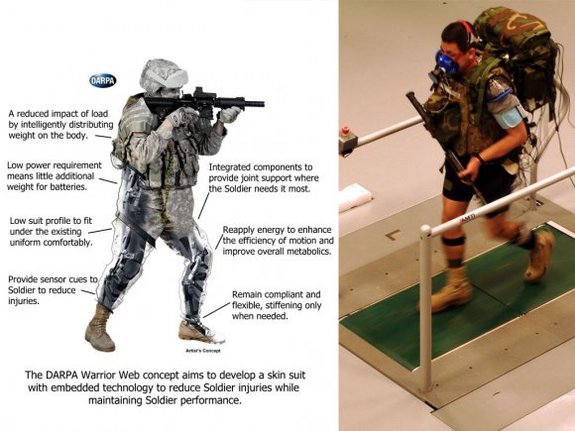
Researchers at the Massachusetts Institute of Technology, the U.S. Army Research, Development and Engineering Command (RDECOM) and other groups from business and academia are joining forces to create a Tactical Assault Light Operator Suit, or TALOS, that “promises to provide superhuman strength with greater ballistic protection,” according to a statement released by the U.S. Army.

The most amazing features of the suit include integrated 360-degree cameras not unlike Google Glass (but with night vision capabilities), sensors that can detect injuries and apply a wound-sealing foam, and — get ready for this — a bulletproof exoskeleton made of magnetorheological fluids that can change from liquid to solid in milliseconds when a magnetic field or electrical current is applied.

If it all reminds you of the liquid-metal shapeshifter T-1000 from “Terminator” or some other sci-fi character, you’re not alone. “It sounds exactly like ‘Iron Man,'” Gareth McKinley, a professor at MIT, told NPR. “The other kind of things that you see in the movies I think that would be more realistic at the moment would be the kind of external suit that Sigourney Weaver wears in ‘Aliens,’ where it’s a large robot that amplifies the motions and lifting capability of a human.”

The developers from RDECOM, MIT and elsewhere are researching “every aspect making up this combat armor suit,” Lt. Col. Karl Borjes, a RDECOM science adviser, said in the U.S. Army statement. “It’s advanced armor. It’s communications, antennas. It’s cognitive performance. It’s sensors, miniature-type circuits. That’s all going to fit in here, too.”

Not everyone, however, is enamored with the super-advanced gizmos being proposed for the soldiers of tomorrow. “My sense is it is an up-armored Pinocchio,” Scott Neil, a retired special forces master sergeant and Silver Star recipient, told the Tampa Tribune. “Now the commander can shove a monkey in a suit and ask us to survive a machine gun, IED [improvised explosive device] and poor intelligence all on the same objective. And when you die in it, as it melds to your body, you can bury them in it.”

Even believers in the TALOS suit acknowledge its limitations. “The acronym TALOS was chosen deliberately,” McKinley said. “It’s the name of the bronze armored giant from ‘Jason and the Argonauts.’ Like all good superheroes, Talos has one weakness. For the Army’s TALOS, the weak spot is either the need to carry around a heavy pump for a hydraulic system, or lots of heavy batteries. We don’t have Iron Man’s power source yet.”

For would-be sci-fi superheroes who are ready for their very own TALOS, the wait may prove excruciating: Though various components of the suit are currently in development, the Army hopes to have a prototype ready next year, and an advanced model won’t be developed until at least two years after that.

http://www.livescience.com/40325-army-iron-man-suit-talos.html

New urine-powered phone chargers

hydrogen-from-urine-for-cars

British scientists said they have harnessed the power of urine and are able to charge a mobile phone with enough electricity to send texts and surf the Internet.

Researchers from the University of Bristol and Bristol Robotics Laboratory in south west England said they had created a fuel cell that uses bacteria to break down urine to generate electricity, in a study published in the Royal Society of Chemistry journal Physical Chemistry Chemical Physics.

“No one has harnessed power from urine to do this so it’s an exciting discovery,” said engineer Ioannis Ieropoulos Tuesday.

“The beauty of this fuel source is that we are not relying on the erratic nature of the wind or the sun; we are actually reusing waste to create energy.

“One product that we can be sure of an unending supply is our own urine,” he added.

The team grew bacteria on carbon fibre anodes and placed them inside ceramic cylinders.

The bacteria broke down chemicals in urine passed through the cylinders, building up a small amount of electrical charge which was stored on a capacitor.

Ieropoulos hoped that the cell, which is currently the size of a car battery, could be developed for many applications.

“Our aim is to have something that can be carried around easily,” he explained.

“So far the microbial fuel power stack (MFC) that we have developed generates enough power to enable SMS messaging, web browsing and to make a brief phone call.

“The concept has been tested and it works – it’s now for us to develop and refine the process so that we can develop MFCs to fully charge a battery.”

They hope the technology will eventually be used to power domestic devices.

Read more: http://www.foxnews.com/world/2013/07/17/scientists-power-mobile-phone-using-urine/#ixzz2ZJII394D

How technology may change the human face over the next 100,000 years

Faces-of-the-Future-4

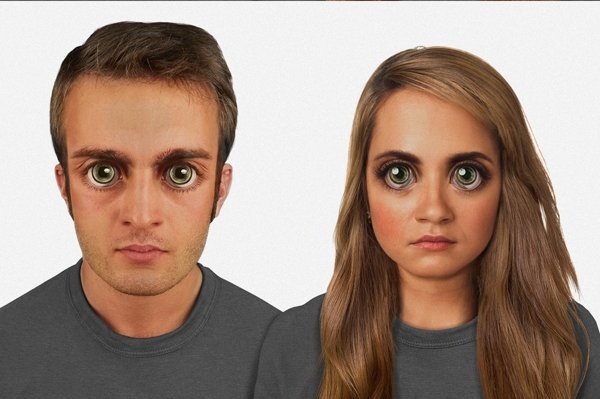
Designer Lamm’s depiction of how the human face might look in 100,000 years

We’ve come along way looks-wise from our homo sapien ancestors. Between 800,000 and 200,000 years ago, for instance, rapid changes in Earth climate coincided with a tripling in the size of the human brain and skull, leading to a flattening of the face. But how might the physiological features of human beings change in the future, especially as new, wearable technology like Google Glass change the way we use our bodies and faces? Artist and researcher Nickolay Lamm has partnered with a computational geneticist to research and illustrate what we might look like 20,000 years in the future, as well as 60,000 years and 100,000 years out. His full, eye-popping illustrations are at the bottom of this post.

Lamm says this is “one possible timeline,” where, thanks to zygotic genome engineering technology, our future selves would have the ability to control human biology and human evolution in much the same way we control electrons today.

Lamm speaks of “wresting control” of the human form from natural evolution and bending human biology to suit our needs. The illustrations were inspired by conversations with Dr. Alan Kwan, who holds a PhD in computational genomics from Washington University.

Kwan based his predictions on what living environments might look like in the future, climate and technological advancements. One of the big changes will be a larger forehead, Kwan predicts – a feature that has already expanding since the 14th and 16th centuries. Scientists writing in the British Dental Journal have suggested that skull-measurement comparisons from that time show modern-day people have less prominent facial features but higher foreheads, and Kwan expects the human head to trend larger to accommodate a larger brain.

Kwan says that 60,000 years from now, our ability to control the human genome will also make the effect of evolution on our facial features moot. As genetic engineering becomes the norm, “the fate of the human face will be increasingly determined by human tastes,” he says in a research document. Eyes will meanwhile get larger, as attempts to colonize Earth’s solar system and beyond see people living in the dimmer environments of colonies further away from the Sun than Earth. Similarly, skin will become more pigmented to lesson the damage from harmful UV radiation outside of the Earth’s protective ozone. Kwan expects people to have thicker eyelids and a more pronounced superciliary arch (the smooth, frontal bone of the skull under the brow), to deal with the effects of low gravity.

The remaining 40,000 years, or 100,000 years from now, Kwan believes the human face will reflect “total mastery over human morphological genetics. This human face will be heavily biased towards features that humans find fundamentally appealing: strong, regal lines, straight nose, intense eyes, and placement of facial features that adhere to the golden ratio and left/right perfect symmetry,” he says.

Eyes will seem “unnervingly large” — as least from our viewpoint today — and will feature eye-shine and even a sideways blink from the re-introduced plica semilunaris to further protect from cosmic ray effects.

There will be other functional necessities: larger nostrils for easier breathing in off-planet environments, denser hair to contain heat loss from a larger head — features which people may have to weigh up against their tastes for what’s genetically trendy at the time. Instead of just debating what to name a child as new parents do today, they might also have to decide if they want their children to carry the most natural expression of a couple’s DNA, such as their eye-color, teeth and other features they can genetically alter.

Excessive Borg-like technological implants would start to become untrendy, though, as people start to increasingly value that which makes us look naturally human. That “will be ever more important to us in an age where we have the ability to determine any feature,” Kwan says.

Wearable technology will still be around, but in far more subtle forms. Instead of Google Glass and iWatch, people will seek discrete implants that preserve the natural human look – think communication lenses (a technologically souped up version of today’s contacts) and miniature bone-conduction devices implanted above the ear. These might have imbedded nano-chips that communicate to another separate device to chat with others or for entertainment.

The bird’s eye view of human beings in 100,000 years will be people who want to be wirelessly plugged in, Kwan says, but with minimal disruption to what may then be perceived as the “perfect” human face.

His Predictions:

In 20,000 years: Humans have a larger head with a forehead that is subtly too large. A future “communications lens” will be manifested as a the yellow ring around their eyes. These lenses will be the ‘Google Glass’ of the future.

In 60,000 years: Human beings have even larger heads, larger eyes and pigmented skin. A pronounced superciliary arch makes for a darker area below eyebrows. Miniature bone-conduction devices may be implanted above the ear now to work with communications lenses.

In 100,000 years: The human face is proportioned to the ‘golden ratio,’ though it features unnervingly large eyes. There is green “eye shine” from the tapetum lucidum, and a more pronounced superciliary arch. A sideways blink of the reintroduced plica semilunaris seen in the light gray areas of the eyes, while miniature bone-conduction devices implanted above the ear work with the communications lenses on the eyes.

Thanks to Ray Gaudette for bringing this to the attention of the It’s Interesting community.

http://news.yahoo.com/human-face-might-look-100-171207969.html

Are we on the cusp of a solar energy boom?

Solar_graphsolar

Solar power is getting much easier to store — and at a much cheaper price

The total solar energy hitting the Earth each year is equivalent to 12.2 trillion watt-hours. That’s over 20,000 times more than the total energy all of humanity consumes each year.

And yet photovoltaic solar panels, the instruments that convert solar radiation into electricity, produce only 0.7 percent of the energy the world uses.

So what gives?

For one, cost: The U.S. Department of Energy estimates an average cost of $156.90 per megawatt-hour for solar, while conventional coal costs an average of $99.60 per MW/h, nuclear costs an average of $112.70 per MW/h, and various forms of natural gas cost between $65.50 and $132 per MW/h. So from an economic standpoint, solar is still uncompetitive.

And from a technical standpoint, solar is still tough to store. “A major conundrum with solar panels has always been how to keep the lights on when the sun isn’t shining,” says Christoph Steitz and Stephen Jewkes at Reuters.

But thanks to huge advancements, solar’s cost and technology problems are increasingly closer to being solved.

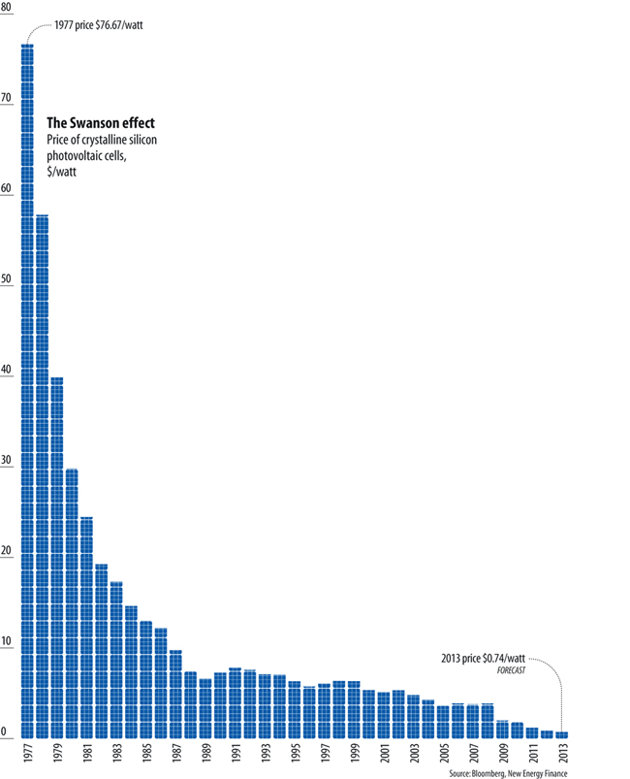
The percentage of light turned into electricity by a photovoltaic cell has increased from 8 percent in the first Cadmium-Telluride cells in the mid-1970s to up to 44 percent in the most efficient cells today, with some new designs theoretically having up to 51 percent efficiency. That means you get a lot more bang for your buck. And manufacturing costs have plunged as more companies have entered the market, particularly in China. Prices have fallen from around $4 per watt in 2008 to just $0.75 per watt last year to just $0.58 per watt today.

If the trend stays on track for another 8-10 years, solar generated electricity in the U.S. would descend to a level of $120 per MW/h — competitive with coal and nuclear — by 2020, or even 2015 for the sunniest parts of America. If prices continue to fall over the next 20 years, solar costs would be half that of coal (and have the added benefits of zero carbon emissions, zero mining costs, and zero scarcity).

Scientists have made huge advances in thermal storage as well, finding vastly more efficient ways to store solar energy. (In one example, solar energy is captured and then stored in beds of packed rocks.)

Lower costs and better storage capacity would mean cheap, decentralized, plentiful, sustainable energy production — and massive relief to global markets that have been squeezed in recent years by the rising cost of fossil fuel extraction, a burden passed on to the consumer. All else being equal, falling energy prices mean more disposable income to save and invest, or to spend.

The prospect of widespread falling energy costs could be a basis for a period of strong economic growth. It could help us replace our dependence on foreign oil with a robust, decentralized electric grid, where energy is generated closer to the point of use. This would mean a sustainable energy supercycle — and new growth in other industries that benefit from falling energy costs.

Indeed, a solar boom could prove wrong those who claim that humanity has over-extended itself and that the era of growth is over.

Thanks to Ray Gaudette for bringing this to the attention of the It’s Interesting community.

http://news.yahoo.com/cusp-solar-energy-boom-075000286.html

NASA funds development of 3D printer to make food in space, starting with a pizza

meal_worms_3d
Delicious Uncle Sam’s Meal Cubes are laser-sintered from granulated mealworms; part of this healthy breakfast.
mendel_small_si

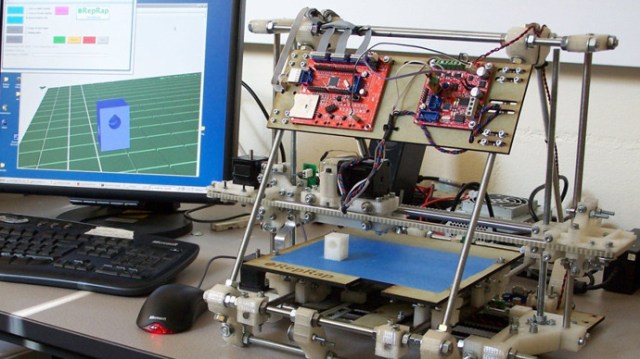
NASA is funding research into 3D printed food which would provide astronauts with meals during long space flights. The futuristic food printers would use cartridges of powder and oils which would have a shelf life of 30 years.

While the idea may seem like something out of a Sci-Fi movie, the process of printing food has already been proven possible. The brains behind the innovation, Anjan Contractor, previously printed chocolate in a bid to prove his concept.

Contractor and his company, Systems & Materials Research Corporation, will now use NASA’s $125,000 grant to attempt to print a pizza. The grant was applied for on March 28, 2013. The pizza printer is still in the conceptual stage, and will begin to be built in two weeks.

The printer will first print a layer of dough, which will be cooked while being printed. Tomato powder will then be mixed with water and oil to print a tomato sauce. The topping for the pizza will be a “protein layer” which could come from any source – animals, milk, or plants.

The concept is to use basic “building blocks” of food in replaceable powder cartridges. Each block will be combined to create a range of foods which can be created by the printer. The cartridges will have a shelf life of 30 years – more than long enough to enable long-distance space travel.

Contractor and his team hope the 3D printer will be used not only by NASA, but also by regular Earthlings. His vision would mean the end of food waste, due to the powder’s long shelf life.

“I think, and many economists think, that current food systems can’t supply 12 billion people sufficiently, ” he said, as quoted by Quartz.

“So we eventually have to change our perception of what we see as food.” There are some conveniences which would come along with the printer. For example, recipes could be traded with others through software. Each recipe would have a set of instructions which tells the printer which cartridge of powder to mix with which liquids, and at what rate and how it should be sprayed.

Another perk includes personalized nutrition.

“If you’re male, female, someone is sick—they all have different dietary needs. If you can program your needs into a 3D printer, it can print exactly the nutrients that person requires,” Contractor said.

Contractor plans on keeping the software portion of his 3D printer entirely open-source, so that anyone can look at its code. He believes this will allow people to find creative uses for the hardware.

http://rt.com/usa/nasa-3d-pizza-printer-590/

18 year old Eesha Khare awarded 2nd place in Intel International Science and Engineering Fair for inventing an improved supercapacitor that could provide super-fast charging of portable electronic devices in the future

intelscience_610x427
Top winner Ionut Budisteanu, 19, of Romania (center) with second-place winners Eesha Khare, 18, of Saratoga, Calif., (left) and Henry Lin, 17, of Shreveport, La., celebrate their awards at the Intel International Science and Engineering Fair.

Khare, an 18-year-old from California, won the Intel Foundation Young Scientist Award and $50,000 for her participation in the Intel International Science and Engineering Fair run by the Society for Science & the Public. Think of it as the world’s largest science fair. Khare took home one of the top prizes for “a tiny device that fits inside cell phone batteries, allowing them to fully charge within 20-30 seconds.”

The official title of Khare’s project is “Design and Synthesis of Hydrogenated TiO2-Polyaniline Nanorods for Flexible High-Performance Supercapacitors.” Her objective reads:

With the rapid growth of portable electronics, it has become necessary to develop efficient energy-storage technology to match this development. While batteries are currently used for energy-storage, they suffer from long charging times and short cycle life. Electrochemical supercapacitors have attracted attention as energy-storage devices because they bridge the gap between current alternatives of conventional capacitors and batteries, offering higher energy density than conventional capacitors and higher power density than batteries. Despite these advantages, supercapacitor energy density is much lower than batteries and increasing energy density remains a key challenge in supercapacitor research. The goal of this work was to design and synthesize a supercapacitor with increased energy density while maintaining power density and long cycle life.

Khare’s supercapacitor can last for 10,000 charge and recharge cycles. She has used it to power an LED as a proof of concept, but envisions its future use in phones, portable electronic devices, and even car batteries.

Curious about how she did it? Put your science hat on. “To improve supercapacitor energy density, I designed, synthesized, and characterized a novel core-shell nanorod electrode with hydrogenated TiO2 (H-TiO2) core and polyaniline shell,” she writes. Essentially, that translates to a much improved supercapacitor.

The 1,600 participants were whittled down to 3 top winners. Besides Khare, Romanian student Ionut Budisteanu came in first by using artificial intelligence to create a model for a low-cost, self-driving car. Henry Lin, a 17-year-old from Louisiana, received the same award as Khare for his project that simulated thousands of clusters of galaxies.

http://news.cnet.com/8301-17938_105-57585337-1/teens-science-project-could-charge-phones-in-20-seconds/

Chaac Ha Water Collector: Students-Designed Water-Collector, Harvests 2.5L of Drinking Water Each Night From Dew

dew

dew

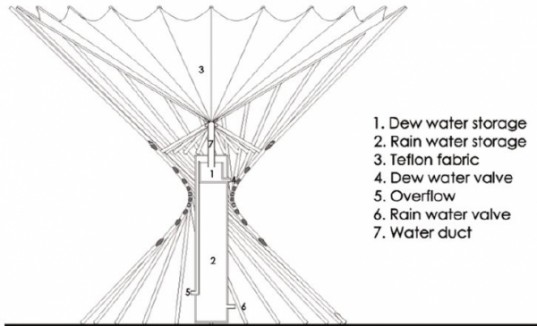
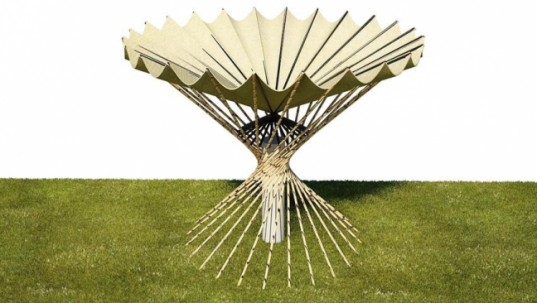
With an idea to provide clean water consistently to rural Mexican communities where access is limited, students in the Yucatan region of Southern Mexico designed Chaac Ha Water Collector. This concept had won an award for its innovative ways of harvesting water. Along with rainwater, it can also collect up to 2.5 liters of water each night from dew alone. Amazingly, this water-harvesting concept is portable.

The Chaac Ha design-students named it after the Mayan god of rain.

On observing natural processes, the students had designed this concept. While designing the structure and texture of the membrane that captures the water, they had derived their ideas from bromeliads, which draw moisture and nutrients from the atmosphere. The bromeliad leaves are hydrophobic; their microscopic irregularities facilitate water to channel into a single reservoir. Likewise, the students have used Teflon in the case of Chaac Ha design. Its structure resembles spider web and it is inflatable for full portability.

Last year, the Chaac Ha system was recognized with the Autodesk Sustainability Workshop award. The awarded students were Diana Carolina Vega Basto, Luis Didier Cox Tamay, Andy Francisco Arjona Massa, Cindy Beatriz, Shirley Molina, and Álvaro Jesús Buenfil Ovando, from the Universidad Autónoma de Yucatán, Mérida.

Thanks to Kebmodee for bringing this to the attention of the It’s Interesting community.

http://www.designntrend.com/articles/3894/20130418/chaac-ha-students-designed-water-collector-harvests-2-5l-drinking.htm

Brain implants: Restoring memory with a microchip

130507101540-brain-implants-human-horizontal-gallery

William Gibson’s popular science fiction tale “Johnny Mnemonic” foresaw sensitive information being carried by microchips in the brain by 2021. A team of American neuroscientists could be making this fantasy world a reality. Their motivation is different but the outcome would be somewhat similar. Hailed as one of 2013’s top ten technological breakthroughs by MIT, the work by the University of Southern California, North Carolina’s Wake Forest University and other partners has actually spanned a decade.

But the U.S.-wide team now thinks that it will see a memory device being implanted in a small number of human volunteers within two years and available to patients in five to 10 years. They can’t quite contain their excitement. “I never thought I’d see this in my lifetime,” said Ted Berger, professor of biomedical engineering at the University of Southern California in Los Angeles. “I might not benefit from it myself but my kids will.”

Rob Hampson, associate professor of physiology and pharmacology at Wake Forest University, agrees. “We keep pushing forward, every time I put an estimate on it, it gets shorter and shorter.”

The scientists — who bring varied skills to the table, including mathematical modeling and psychiatry — believe they have cracked how long-term memories are made, stored and retrieved and how to replicate this process in brains that are damaged, particularly by stroke or localized injury.

Berger said they record a memory being made, in an undamaged area of the brain, then use that data to predict what a damaged area “downstream” should be doing. Electrodes are then used to stimulate the damaged area to replicate the action of the undamaged cells.

They concentrate on the hippocampus — part of the cerebral cortex which sits deep in the brain — where short-term memories become long-term ones. Berger has looked at how electrical signals travel through neurons there to form those long-term memories and has used his expertise in mathematical modeling to mimic these movements using electronics.

Hampson, whose university has done much of the animal studies, adds: “We support and reinforce the signal in the hippocampus but we are moving forward with the idea that if you can study enough of the inputs and outputs to replace the function of the hippocampus, you can bypass the hippocampus.”

The team’s experiments on rats and monkeys have shown that certain brain functions can be replaced with signals via electrodes. You would think that the work of then creating an implant for people and getting such a thing approved would be a Herculean task, but think again.

For 15 years, people have been having brain implants to provide deep brain stimulation to treat epilepsy and Parkinson’s disease — a reported 80,000 people have now had such devices placed in their brains. So many of the hurdles have already been overcome — particularly the “yuck factor” and the fear factor.

“It’s now commonly accepted that humans will have electrodes put in them — it’s done for epilepsy, deep brain stimulation, (that has made it) easier for investigative research, it’s much more acceptable now than five to 10 years ago,” Hampson says.

Much of the work that remains now is in shrinking down the electronics.

“Right now it’s not a device, it’s a fair amount of equipment,”Hampson says. “We’re probably looking at devices in the five to 10 year range for human patients.”

The ultimate goal in memory research would be to treat Alzheimer’s Disease but unlike in stroke or localized brain injury, Alzheimer’s tends to affect many parts of the brain, especially in its later stages, making these implants a less likely option any time soon.

Berger foresees a future, however, where drugs and implants could be used together to treat early dementia. Drugs could be used to enhance the action of cells that surround the most damaged areas, and the team’s memory implant could be used to replace a lot of the lost cells in the center of the damaged area. “I think the best strategy is going to involve both drugs and devices,” he says.

Unfortunately, the team found that its method can’t help patients with advanced dementia.

“When looking at a patient with mild memory loss, there’s probably enough residual signal to work with, but not when there’s significant memory loss,” Hampson said.

Constantine Lyketsos, professor of psychiatry and behavioral sciences at John Hopkins Medicine in Baltimore which is trialing a deep brain stimulator implant for Alzheimer’s patients was a little skeptical of the other team’s claims.

“The brain has a lot of redundancy, it can function pretty well if loses one or two parts. But memory involves circuits diffusely dispersed throughout the brain so it’s hard to envision.” However, he added that it was more likely to be successful in helping victims of stroke or localized brain injury as indeed its makers are aiming to do.

The UK’s Alzheimer’s Society is cautiously optimistic.

“Finding ways to combat symptoms caused by changes in the brain is an ongoing battle for researchers. An implant like this one is an interesting avenue to explore,” said Doug Brown, director of research and development.

Hampson says the team’s breakthrough is “like the difference between a cane, to help you walk, and a prosthetic limb — it’s two different approaches.”

It will still take time for many people to accept their findings and their claims, he says, but they don’t expect to have a shortage of volunteers stepping forward to try their implant — the project is partly funded by the U.S. military which is looking for help with battlefield injuries.

There are U.S. soldiers coming back from operations with brain trauma and a neurologist at DARPA (the Defense Advanced Research Projects Agency) is asking “what can you do for my boys?” Hampson says.

“That’s what it’s all about.”

http://www.cnn.com/2013/05/07/tech/brain-memory-implants-humans/index.html?iref=allsearch

Michigan judge holds himself in contempt of court for his cell phone

bk052

A Michigan judge whose smartphone disrupted a hearing in his own courtroom has held himself in contempt and paid $25 for the infraction. Judge Raymond Voet has a posted policy at Ionia County 64A District Court stating that electronic devices causing a disturbance during court sessions will result in the owner being cited with contempt, the Sentinel-Standard of Ionia and MLive.com reported.

On Friday afternoon, during a prosecutor’s closing argument as part of a jury trial, Voet’s new smartphone began to emit sounds requesting phone voice commands. Voet said he thinks he bumped the phone, and the embarrassment likely left his face red.

“I’m guessing I bumped it. It started talking really loud, saying ‘I can’t understand you. Say something like Mom,'” he said.

Voet has used a Blackberry mobile phone for years, and said he wasn’t as familiar with the operation of the new touchscreen, Windows-based phone.

“That’s an excuse, but I don’t take those excuses from anyone else. I set the bar high, because cellphones are a distraction and there is very serious business going on,” he said. “The courtroom is a special place in the community, and it needs more respect than that.”

Over the years, the judge whose court is about 110 miles northwest of Detroit has taken phones away from police officers, attorneys, witnesses, spectators and friends. During a break in the trial, Voet held himself in contempt, fined himself and paid the fine.

“Judges are humans,” Voet said. “They’re not above the rules. I broke the rule and I have to live by it.”

http://www.wxow.com/story/21977920/judge-holds-self-in-contempt-for-his-smartphone

New cell phone app designed to prevent incest in Iceland

dynamic_resize

A new cellphone app touts itself as a way for Iceland’s singles to avoid sleeping with relatives — as the isolated country’s small population of 320,000 means most people are related. The acquaintances just have to bump their phones together and it tells them instantly if they’re family. Three Icelandic engineers designed the app with the help of the Book of Icelanders that contains data from 720,000 people born in Iceland.

News of Iceland says, “Everyone has heard of (or experienced) it when someone goes all in with someone and then later runs into that person at a family gathering some other time. This new app might just prevent such awkward moments.”

Its slogan: “Bump the app before you bump in bed.”

The app is available for Android phones and will be available for iPhone soon.

http://cnews.canoe.ca/CNEWS/WeirdNews/2013/04/18/20753176.html