New synthetic chameleon skin could lead to instant wardrobe changes

Technology could lead to the transformation of clothes, cars, buildings and even billboards.

Chameleons are one of the few animals in the world capable of changing their color at will. Scientists have only recently figured out how these shifty creatures perform their kaleidoscopic act, and now they have developed a synthetic material that can mimic the color-changing ability of chameleon skin, reports Gizmodo.

Though it may seem magical, the chameleon’s trick is quite simple. It turns out that chameleons have a layer of nanocrystals in their skin cells that can reflect light at different wavelengths depending on their spacing. So when the skin is relaxed, it takes on one color. But when it stretches, the color changes. Chameleons merely need to flex their skin in subtle ways to alter their appearance.

Learning to mimic this animal’s ability could lead to more than just new forms of advanced camouflage. Imagine if you could change the color of your wardrobe instantly, or if your car could get a new “paint job” at any time. Buildings lined with synthetic chameleon skin could alter their appearance in moments without architectural changes, or billboards could flash new messages at the drop of a hat.

All of these technologies could now be just around the corner thanks to the development of “flexible photonic metastructures for tunable coloration” that essentially work like artificial chameleon skin.

Basically, the material involves tiny rows of ridges that are etched onto a silicon film a thousand times thinner than a human hair. Each of these ridges reflects a specific wavelength of light, so it’s possible to finely tune the wavelength of light that is reflected by simply manipulating the spacing between the ridges.

The technology does not yet have a direct commercial application — it’s still in the beginning stages — but it may not be long before chameleon-like surfaces cover everything around us. More can be read about the technology in the journal Optica, where the new research was published.

Read more: http://www.mnn.com/green-tech/research-innovations/stories/new-synthetic-chameleon-skin-could-lead-to-instant-wardrobe#ixzz3VoTTwf8P

The Health Concerns in Wearable Tech

In 1946, a new advertising campaign appeared in magazines with a picture of a doctor in a lab coat holding a cigarette and the slogan, “More doctors smoke Camels than any other cigarette.” No, this wasn’t a spoof. Back then, doctors were not aware that smoking could cause cancer, heart disease and lung disease.

In a similar vein, some researchers and consumers are now asking whether wearable computers will be considered harmful in several decades’ time.

We have long suspected that cellphones, which give off low levels of radiation, could lead to brain tumors, cancer, disturbed blood rhythms and other health problems if held too close to the body for extended periods.

Yet here we are in 2015, with companies like Apple and Samsung encouraging us to buy gadgets that we should attach to our bodies all day long.

While there is no definitive research on the health effects of wearable computers (the Apple Watch isn’t even on store shelves yet), we can hypothesize a bit from existing research on cellphone radiation.

The most definitive and arguably unbiased results in this area come from the International Agency for Research on Cancer, a panel within the World Health Organization that consisted of 31 scientists from 14 countries.

After dissecting dozens of peer-reviewed studies on cellphone safety, the panel concluded in 2011 that cellphones were “possibly carcinogenic” and that the devices could be as harmful as certain dry-cleaning chemicals and pesticides. (Note that the group hedged its findings with the word “possibly.”)

The W.H.O. panel concluded that the farther away a device is from one’s head, the less harmful — so texting or surfing the Web will not be as dangerous as making calls, with a cellphone inches from the brain. (This is why there were serious concerns about Google Glass when it was first announced and why we’ve been told to use hands-free devices when talking on cellphones.)

A longitudinal study conducted by a group of European researchers and led by Dr. Lennart Hardell, a professor of oncology and cancer epidemiology at Orebro University Hospital in Sweden, concluded that talking on a mobile or cordless phone for extended periods could triple the risk of a certain kind of brain cancer.

There is, of course, antithetical research. But some of this was partly funded by cellphone companies or trade groups.

One example is the international Interphone study, which was published in 2010 and did not find strong links between mobile phones and an increased risk of brain tumors. The Centers for Disease Control and Prevention concluded in 2014 that “more research is needed before we know if using cell phones causes health effects.”

Continue reading the main story
Another study, in The BMJ, which measured cellphone subscription data rather than actual use, said there was no proof of increased cancer. Yet even here, the Danish team behind the report acknowledged that a “small to moderate increase” in cancer risk among heavy cellphone users could not be ruled out.

But what does all this research tell the Apple faithful who want to rush out and buy an Apple Watch, or the Google and Windows fanatics who are eager to own an alternative smartwatch?

Dr. Joseph Mercola, a physician who focuses on alternative medicine and has written extensively about the potential harmful effects of cellphones on the human body, said that as long as a wearable does not have a 3G connection built into it, the harmful effects are minimal, if any.

“The radiation really comes from the 3G connection on a cellphone, so devices like the Jawbone Up and Apple Watch should be O.K.,” Dr. Mercola said in a phone interview. “But if you’re buying a watch with a cellular chip built in, then you’ve got a cellphone attached to your wrist.” And that, he said, is a bad idea.

(The Apple Watch uses Bluetooth and Wi-Fi to receive data, and researchers say there is no proven harm from those frequencies on the human body. Wearables with 3G or 4G connections built in, including the Samsung Gear S, could be more harmful, though that has not been proved. Apple declined to comment for this article, and Samsung could not be reached for comment.)

Researchers have also raised concerns about having powerful batteries so close to the body for extended periods of time. Some reports over the last several decades have questioned whether being too close to power lines could cause leukemia (though other research has also negated this).

So what should consumers do? Perhaps we can look at how researchers themselves handle their smartphones.

While Dr. Mercola is a vocal proponent of cellphone safety, he told me to call him on his cell when I emailed about an interview. When I asked him whether he was being hypocritical, he replied that technology is a fact of life, and that he uses it with caution. As an example, he said he was using a Bluetooth headset during our call.

In the same respect, people who are concerned about the possible side effects of a smartwatch should avoid placing it close to their brain (besides, it looks a little strange). But there are some people who may be more vulnerable to the dangers of these devices: children.

While researchers debate about how harmful cellphones and wearable computers actually are, most agree that children should exercise caution.

Continue reading the main story
In an email, Dr. Hardell sent me research illustrating that a child’s skull is thinner and smaller than an adult’s, which means that children’s brain tissues are more exposed to certain types of radiation, specifically the kind that emanates from a cellphone.

Children should limit how much time they spend talking on a cellphone, doctors say. And if they have a wearable device, they should take it off at night so it does not end up under their pillow, near their brain. Doctors also warn that women who are pregnant should be extra careful with all of these technologies.

But what about adults? After researching this column, talking to experts and poring over dozens of scientific papers, I have realized the dangers of cellphones when used for extended periods, and as a result I have stopped holding my phone next to my head and instead use a headset.

That being said, when it comes to wearable computers, I’ll still buy the Apple Watch, but I won’t let it go anywhere near my head. And I definitely won’t let any children I know play with it for extended periods of time.While researchers debate about how harmful cellphones and wearable computers actually are, most agree that children should exercise caution.

In an email, Dr. Hardell sent me research illustrating that a child’s skull is thinner and smaller than an adult’s, which means that children’s brain tissues are more exposed to certain types of radiation, specifically the kind that emanates from a cellphone.

Children should limit how much time they spend talking on a cellphone, doctors say. And if they have a wearable device, they should take it off at night so it does not end up under their pillow, near their brain. Doctors also warn that women who are pregnant should be extra careful with all of these technologies.

But what about adults? After researching this column, talking to experts and poring over dozens of scientific papers, I have realized the dangers of cellphones when used for extended periods, and as a result I have stopped holding my phone next to my head and instead use a headset.

That being said, when it comes to wearable computers, I’ll still buy the Apple Watch, but I won’t let it go anywhere near my head. And I definitely won’t let any children I know play with it for extended periods of time.

The eternity drive: Why DNA could be the future of data storage

By Peter Shadbolt, for CNN

How long will the data last in your hard-drive or USB stick? Five years? 10 years? Longer?

Already a storage company called Backblaze is running 25,000 hard drives simultaneously to get to the bottom of the question. As each hard drive coughs its last, the company replaces it and logs its lifespan.

While this census has only been running five years, the statistics show a 22% attrition rate over four years.

Some may last longer than a decade, the company says, others may last little more than a year; but the short answer is that storage devices don’t last forever.

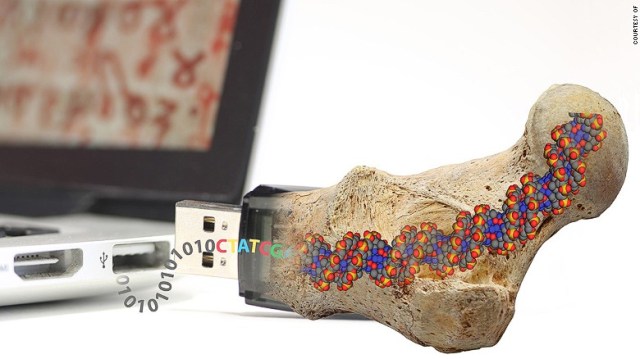
Science is now looking to nature, however, to find the best way to store data in a way that will make it last for millions of years.

Researchers at ETH Zurich, in Switzerland, believe the answer may lie in the data storage system that exists in every living cell: DNA.

So compact and complex are its strands that just 1 gram of DNA is theoretically capable of containing all the data of internet giants such as Google and Facebook, with room to spare.

In data storage terms, that gram would be capable of holding 455 exabytes, where one exabyte is equivalent to a billion gigabytes.

Fossilization has been known to preserve DNA in strands long enough to gain an animal’s entire genome — the complete set of genes present in a cell or organism.

So far, scientists have extracted and sequenced the genome of a 110,000-year-old polar bear and more recently a 700,000-year-old horse.

Robert Grass, lecturer at the Department of Chemistry and Applied Biosciences, said the problem with DNA is that it degrades quickly. The project, he said, wanted to find ways of combining the possibility of the large storage density in DNA with the stability of the DNA found in fossils.

“We have found elegant ways of making DNA very stable,” he told CNN. “So we wanted to combine these two stories — to get the high storage density of DNA and combine it with the archaeological aspects of DNA.”

The synthetic process of preserving DNA actually mimics processes found in nature.

As with fossils, keeping the DNA cool, dry and encased — in this case, with microscopic spheres of glass – could keep the information contained in its strands intact for thousands of years.

“The time limit with DNA in fossils is about 700,000 years but people speculate about finding one-million-year storage of genomic material in fossil bones,” he said.

“We were able to show that decay of our DNA and store of information decays at the same rate as the fossil DNA so we get to similar time frames of close to a million years.”

Fresh fossil discoveries are throwing up new surprises about the preservation of DNA.

Human bones discovered in the Sima de los Huesos cave network in Spain show maternally inherited “mitochondrial” DNA that is 400,000 years old – a new record for human remains.

The fact that the DNA survived in the relatively cool climate of a cave — rather than in a frozen environment as with the DNA extracted from mammoth remains in Siberia – has added to the mystery about DNA longevity.

“A lot of it is not really known,” Grass says. “What we’re trying to understand is how DNA decays and what the mechanisms are to get more insight into that.”

What is known is that water and oxygen are the enemy of DNA survival. DNA in a test tube and exposed to air will last little more than two to three years. Encasing it in glass — an inert, neutral agent – and cooling it increases its chances of survival.

Grass says sol-gel technology, which produces solid materials from small molecules, has made it a relatively easy process to get the glass around the DNA molecules.

While the team’s work invites immediate comparison with Jurassic Park, where DNA was extracted from amber fossils, Grass says that prehistoric insects encased in amber are a poor source of prehistoric DNA.

“The best DNA comes from sources that are ceramic and dry — so teeth, bones and even eggshells,” he said.

So far the team has tested their storage method by preserving just 83 kilobytes of data.

“The first is the Swiss Federal Charter of 1291 — it’s like the Swiss Magna Carta — and the other was the Archimedes Palimpsest; a copy of an Ancient Greek mathematics treatise made by a monk in the 10th century but which had been overwritten by other monks in the 15th century.

“We wanted to preserve these documents to show not just that the method works, but that the method is important too,” he said.

He estimates that the information will be readable in 10,000 years’ time, and if frozen, as long as a million years.

The cost of encoding just 83Kb of data cost about $2,000, making it a relatively expensive process, but Grass is optimistic that price will come down over time. Advances in technology for medical analysis, he said, are likely to help with this.

“Already the prices for human genome sequences have dropped from several millions of dollars a few years ago to just hundreds of dollars now,” Grass said.

“It makes sense to integrate these advances in medical and genome analysis into the world of IT.”

http://www.cnn.com/2015/02/25/tech/make-create-innovate-fossil-dna-data-storage/index.html?utm_source=feedburner&utm_medium=feed&utm_campaign=Feed%3A+rss%2Fcnn_latest+%28RSS%3A+Most+Recent%29

Laser-transformed metal repels water

Water often damages metals, causing rust, wear and decay.

Thanks to an innovative laser process, however, metal is getting its revenge.

University of Rochester scientists Chunlei Guo and Anatoliy Vorobyev have developed a technique using extremely precise laser patterns that renders metals superhydrophobic: in other words, incredibly water-repellent.

Imagine a much more powerful Teflon — except that Guo and Vorobyev’s material isn’t a coating but part of the metal itself. Water actually bounces off the surface and rolls away.

The possibilities are many, Guo says. Kitchenware, of course. Airplanes: No more worrying about de-icing, because water won’t be able to freeze on aircraft in the first place.

And sanitation in poor countries, an idea close to the heart of the Bill and Melinda Gates Foundation, which helped fund the project. Thanks to the surface’s repellent properties, it’s essentially self-cleaning.

Ironically, Guo was inspired by a project in which he and a team treated a variety of materials to make them superhydrophilic — that is, water-attracting.

“We worked with a variety of materials — not just metal but semiconductors, glass, other things,” he said. Even on a vertical surface, “the effect was very strong. If I drop a drop of water on the bottom of this surface, it would actually shoot up against gravity, uphill. So that really motivated us to look into this reverse process.”

In their paper, the two compared the surface to that of a lotus leaf, which has “a hierarchical structure containing a larger micro-scale structure” and is superhydrophobic.

“Our structure sort of mimics, in some way, this natural (arrangement) of the lotus leaf,” Guo said.

And like the lotus leaf, because the laser-patterned metal is so water-repellent, it has self-cleaning properties. In an experiment, Guo dumped some household dust from a vacuum cleaner on a treated surface. Just a few drops of water collected the dust, and the metal remained dry.

In their work, the scientists used platinum, titanium and brass as sample metals, but Guo says he believes it could work for a wide variety of metals — not to mention other substances.

The process is still very much of the lab. It took the scientists an hour to treat a 1-inch-by-1-inch sample and required extremely short bursts of the laser lasting a femtosecond, or a millionth of a billionth of a second.

But Guo is optimistic about ramping up the process for industrial use, and he says the goal for the sanitation project is to “really push the technology out” in the next two or three years.

And then?

“I do believe down the line we will be able to make it accessible to everyday life,” he said.

Watch out, water.

The scientists’ paper was published in the Journal of Applied Physics. The project was also funded by the U.S. Air Force Office of Scientific Research.

http://www.cnn.com/2015/01/22/us/feat-metal-repels-water-rochester/index.html

‘Gecko Gloves’ by Stanford students will let you scale glass walls like Spider-Man

You don’t have to be a superhero like Spider-Man to climb on walls. Researchers have developed “Gecko Gloves” that can help humans climb on glass walls.

The Gecko Gloves have been created by Elliot Hawkes, a mechanical engineering student at the Stanford University. The gloves have very similar scientific principles as found in the sticky toes of geckos.

Hawkes reveals that he is working with a group of engineers who are developing reusable and controllable adhesive materials that can bond with smooth surfaces such as glass, but also release with the use of minimal effort. With the help of the synthetic adhesive, Hawkes and his team created a device that can enable a person to climb on glass walls.

“It’s a lot of fun, but also a little weird, because it doesn’t feel like you should be gripping glass,” says Hawkes. “You keep expecting to slip off, and when you don’t, it surprises you. It’s pretty exhilarating.”

Hawkes explains that each gecko handheld pad is coated with 24 adhesive tiles. Each tile is covered with sawtooth-shape polymer structures, which measures about 100 micrometers long, or about the width of a normal human hair.

The handheld pads are also connected to degressive springs that become less stiff when the pad is stretched, which means that when the springs are pulled they apply similar force to the adhesive tiles and causes the sawtooth-like structure to flatten. When the load tension is released it reduces grip.

Some experts suggest that the Gecko Gloves can be applied in many fields. It can be used to manufacture robots, which carries glass panels. Mark Cutkosky, who is the senior author of the paper, suggests that they are also working on a project with the U.S. National Aeronautics and Space Administration (NASA), which will involve applying the Gecko Gloves to robotic arms of a spacecraft. With the help of the Gecko Gloves, the robotic arm will be able to catch hold of space debris like solar panels and fuel tanks and move it accordingly.

Researchers of the latest study suggest that previous work of gecko or synthetic adhesives showed that adhesive strength is reduced when size increases. However, in the Gecko Gloves, the springs make it possible to sustain the same adhesive power at all sizes ranging from a square millimeter to the size of a human hand.

The latest version of the Gecko Gloves can support around 200 pounds, or about 90 kilograms (kg). However, if the size is increased by 10 times it can support about 2,000 pounds, or 900 kg.

The research has been published in the journal Royal Society Interface.

http://www.techtimes.com/articles/22769/20141224/gecko-gloves-by-stanford-students-will-let-you-scale-glass-walls-want-to-be-spider-man.htm

NASA uses 3D printer to email wrench to the International Space Station

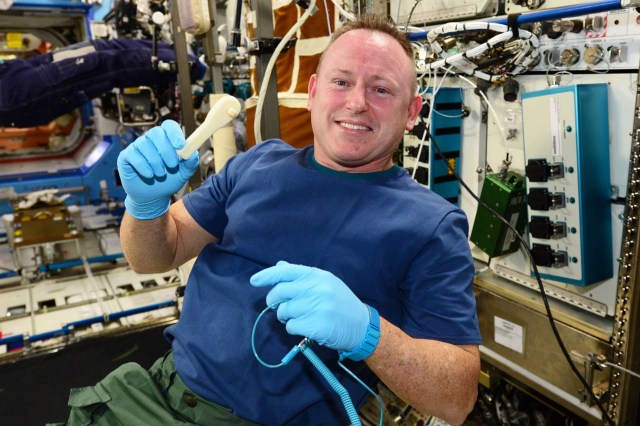
When International Space Station commander Barry Wilmore needed a wrench, Nasa knew just what to do. They “emailed” him one. This is the first time an object has been designed on Earth and then transmitted to space for manufacture.

Made In Space, the California company that designed the 3D printer aboard the ISS, overheard Wilmore mentioning the need for a ratcheting socket wrench and decided to create one. Previously, if an astronaut needed a specific tool it would have to be flown up on the next mission to the ISS, which could take months.

This isn’t the first 3D printed object made in space, but it is the first created to meet the needs of an astronaut. In November astronauts aboard the ISS printed a replacement part for the recently installed 3D printer. A total of 21 objects have now been printed in space, all of which will be brought back to Earth for testing.

“We will use them to characterise the effects of long-term microgravity on our 3D-printing process, so that we can model and predict the performance of objects that we manufacture in space in the future,” explained Mike Chen from Made in Space.

Chen also explained the process of sending hardware to space. First, the part is designed by Made In Space in CAD software and converted into a file-format for the 3D printer. This file is then sent to Nasa before being transmitted to the ISS. In space the 3D printer receives the code and starts manufacturing.

“On the ISS this type of technology translates to lower costs for experiments, faster design iteration, and a safer, better experience for the crew members, who can use it to replace broken parts or create new tools on demand,” Chen said.

http://www.wired.co.uk/news/archive/2014-12/19/3d-printed-space-wrench

Pizza Hut’s Subconscious Menu Aims to Guess What You Want Before You Know You Do

Pizza Hut incorporating retina tracking into the ordering process, in what it is calling the first Subconscious Menu.

Powered by Tobii, a Swedish company that specializes in eye-tracking technology, Pizza Hut’s new system presents customers with images of ingredients on a screen. Based on how long a customer’s eyes remain on different items, the system generates an order meant to represent what he or she subconsciously wants.

The Subconscious Menu, which has been under development for about six months and is currently being piloted in the U.K., was selected by Pizza Hut as the method that best leverages technology to improve the experience for customers.

Thanks to Kebmodee for bringing this to the attention of the It’s Interesting community.

http://time.com/3613220/pizza-huts-subconscious-menu/#3613220/pizza-huts-subconscious-menu/

What commercial aircraft will look like in 2050

by Ashley Dove-Jay

The aircraft industry is expecting a seven-fold increase in air traffic by 2050, and a four-fold increase in greenhouse gas emissions unless fundamental changes are made. But just how “fundamental” will those changes need to be and what will be their effect on the aircraft we use?

The crucial next step towards ensuring the aircraft industry becomes greener is the full electrification of commercial aircraft. That’s zero CO2 and NOx emissions, with energy sourced from power stations that are themselves sustainably fuelled. The main technological barrier that must be overcome is the energy density of batteries, a measure of how much power can be generated from a battery of a certain weight.

Tesla CEO Elon Musk has said that once batteries are capable of producing 400 Watt-hours per kilogram, with a ratio of power cell to overall mass of between 0.7-0.8, an electrical transcontinental aircraft becomes “compelling”.

Given that practical lithium-ion batteries were capable of achieving energy-densities of 113Wh/kg in 1994, 202Wh/kg in 2004, and are now capable of approximately 300Wh/kg, it’s reasonable to assume that they will hit 400Wh/kg in the coming decade.

Another aspect is the exponential fall in the cost of solar panels, which have already become the cheapest form of power in most US states. The expected 70% reduction in cost of lithium-ion batteries by 2025, and the rapid rise seen in the cost of kerosene-based jet fuel means that there will be a large and growing disparity in the costs of running aircraft that will greatly favour electrification. As is often the case, the reasons that will slow transition are not technological, but are rooted in the economic and political inertia against overturning the status-quo.

Biofuels while we wait

Considering the average service-life of passenger and freight aircraft are around 21 and 33 years respectively, even if all new aircraft manufactured from tomorrow were fully electric, the transition away from fossil-fuelled aircraft would take two to three decades.

In the meantime, biofuel offers carbon emissions reductions of between 36-85%, with the variability depending on the type of land used to grow the fuel crops. As switching from one fuel to another is relatively straightforward, this is a low-hanging fruit worth pursuing before completely phasing out combustion engines.

Even though a biofuel-kerosene jet fuel blend was certified in 2009, the aircraft industry is in no hurry to implement change. There are minor technological hurdles and issues around scaling up biofuel production to industrial levels, but the main constraint is price – parity with fossil fuels is still ten years away.

The adoption of any new aircraft technology – from research, to design sketches, to testing and full integration – is typically a decade-long process. Given that the combustion engine will be phased out by mid-century, it would seem to make more economic and environmental sense to innovate in other areas: airframe design, materials research, electric propulsion design and air traffic control.

Bringing aircraft to life

In terms of the cost of computational power, computer technology is advancing more each hour today than it did in its entire first 90 years. With this in mind we can project that the equivalent of a US$1,000 computer today will by 2023 be more powerful than the potential brainpower of a human and, by 2045, will surpass the brainpower equivalent to all human brains combined.

The miniaturisation of digital electronics over the past half-century has followed a similar exponential trend, with the size of transistor gates reducing from approximately 1,000 nanometres in 1970 to 23 nanometres today. With the advent of transistors made of graphene showing great promise, this is expected to fall further to about 7 nanometres by 2025. By comparison, a human red blood cell is approximately 6,200-8,200 nanometres wide.

Putting together this increase in computational power and decrease in circuit size, and adding in the progress made with 3D-printing, at some point in the next decade we will be able to produce integrated computers powerful enough to control an aircraft at the equivalent of the cellular level in near real-time – wireless interlinking of nano-scale digital devices.

Using a biologically-inspired digital “nervous system” with receptors arranged over the aircraft sensing forces, temperatures, and airflow states could drastically improve the energy efficiency of aircraft, when coupled to software and hardware mechanisms to control or even change the shape of the aircraft in response.

Chopping the tail

Once electric aircraft are established, the next step will be to integrate a gimballed propulsion system, one that can provide thrust in any direction. This will remove the need for the elevators, rudders, and tailplane control surfaces that current designs require, but which add significant mass and drag.

The wings we are already designing are near their peak in terms of aerodynamic efficiency, but they still do no justice to what nature has achieved in birds. Aircraft design templates are a century old – constrained by the limitations of the day then, but technology has since moved on. We no longer need to build wings as rigid structures with discrete control surfaces, but can turn to the natural world for inspiration. As Richard Feynman said:

I think nature’s imagination is so much greater than man’s, she’s never going to let us relax.

http://www.iflscience.com/technology/what-commercial-aircraft-will-look-2050

Brain decoder can eavesdrop on your inner voice

brainy_2758840b

Talking to yourself used to be a strictly private pastime. That’s no longer the case – researchers have eavesdropped on our internal monologue for the first time. The achievement is a step towards helping people who cannot physically speak communicate with the outside world.

“If you’re reading text in a newspaper or a book, you hear a voice in your own head,” says Brian Pasley at the University of California, Berkeley. “We’re trying to decode the brain activity related to that voice to create a medical prosthesis that can allow someone who is paralysed or locked in to speak.”

When you hear someone speak, sound waves activate sensory neurons in your inner ear. These neurons pass information to areas of the brain where different aspects of the sound are extracted and interpreted as words.

In a previous study, Pasley and his colleagues recorded brain activity in people who already had electrodes implanted in their brain to treat epilepsy, while they listened to speech. The team found that certain neurons in the brain’s temporal lobe were only active in response to certain aspects of sound, such as a specific frequency. One set of neurons might only react to sound waves that had a frequency of 1000 hertz, for example, while another set only cares about those at 2000 hertz. Armed with this knowledge, the team built an algorithm that could decode the words heard based on neural activity alone (PLoS Biology, doi.org/fzv269).

The team hypothesised that hearing speech and thinking to oneself might spark some of the same neural signatures in the brain. They supposed that an algorithm trained to identify speech heard out loud might also be able to identify words that are thought.

Mind-reading

To test the idea, they recorded brain activity in another seven people undergoing epilepsy surgery, while they looked at a screen that displayed text from either the Gettysburg Address, John F. Kennedy’s inaugural address or the nursery rhyme Humpty Dumpty.

Each participant was asked to read the text aloud, read it silently in their head and then do nothing. While they read the text out loud, the team worked out which neurons were reacting to what aspects of speech and generated a personalised decoder to interpret this information. The decoder was used to create a spectrogram – a visual representation of the different frequencies of sound waves heard over time. As each frequency correlates to specific sounds in each word spoken, the spectrogram can be used to recreate what had been said. They then applied the decoder to the brain activity that occurred while the participants read the passages silently to themselves.

Despite the neural activity from imagined or actual speech differing slightly, the decoder was able to reconstruct which words several of the volunteers were thinking, using neural activity alone (Frontiers in Neuroengineering, doi.org/whb).

The algorithm isn’t perfect, says Stephanie Martin, who worked on the study with Pasley. “We got significant results but it’s not good enough yet to build a device.”

In practice, if the decoder is to be used by people who are unable to speak it would have to be trained on what they hear rather than their own speech. “We don’t think it would be an issue to train the decoder on heard speech because they share overlapping brain areas,” says Martin.

The team is now fine-tuning their algorithms, by looking at the neural activity associated with speaking rate and different pronunciations of the same word, for example. “The bar is very high,” says Pasley. “Its preliminary data, and we’re still working on making it better.”

The team have also turned their hand to predicting what songs a person is listening to by playing lots of Pink Floyd to volunteers, and then working out which neurons respond to what aspects of the music. “Sound is sound,” says Pasley. “It all helps us understand different aspects of how the brain processes it.”

“Ultimately, if we understand covert speech well enough, we’ll be able to create a medical prosthesis that could help someone who is paralysed, or locked in and can’t speak,” he says.

Several other researchers are also investigating ways to read the human mind. Some can tell what pictures a person is looking at, others have worked out what neural activity represents certain concepts in the brain, and one team has even produced crude reproductions of movie clips that someone is watching just by analysing their brain activity. So is it possible to put it all together to create one multisensory mind-reading device?

In theory, yes, says Martin, but it would be extraordinarily complicated. She says you would need a huge amount of data for each thing you are trying to predict. “It would be really interesting to look into. It would allow us to predict what people are doing or thinking,” she says. “But we need individual decoders that work really well before combining different senses.”

http://www.newscientist.com/article/mg22429934.000-brain-decoder-can-eavesdrop-on-your-inner-voice.html

Comedy club uses facial recognition to charge by the laugh

comdey club

One Barcelona comedy club is experimenting with using facial recognition technology to charge patrons by the laugh.

The comedy club, Teatreneu, partnered with the advertising firm The Cyranos McCann to implement the new technology after the government hiked taxes on theater tickets, according to a BBC report. In 2012, the Spanish government raised taxes on theatrical shows from 8 to 21 percent.

Cyranos McCann installed tablets on the back of each seat that used facial recognition tech to measure how much a person enjoyed the show by tracking when each patron laughed or smiled.

Each giggle costs approximately 30 Euro cents ($0.38). However, if a patron hits the 24 Euros mark, which is about 80 laughs, the rest of their laughs are free of charge.

There’s also a social element. Get this, at the end of the show the patron can also check their laughter account and share their info on social networks. The comedy club in conjunction with their advertising partner even created a mobile app to be used as a system of payment.

While law enforcement has been developing and using facial recognition technology for quite sometime, more industries are beginning to experiment with it.

Some retailers, for example, are considering using the technology to gauge how people might feel while shopping in a certain section of a store.

The U.K. company NEC IT Solutions is even working on technology that would help retailers to identify V.I.P patrons, such as celebrities or preferred customers.

According to a recent report on EssentialRetail.com, the premium department store Harrod’s has been testing facial recognition during the last two years, albeit, the company has been primarily testing it for security reasons.

Facebook also uses facial recognition technology to suggest tags of people who are in images posted on its site.

http://www.cnbc.com/id/102078398