Enormous alien planet discovered in most distant orbit ever seen

2D9859993-exoplanet-hd106906b_blocks_desktop_large

An enormous alien planet — one that is 11 times more massive than Jupiter — was discovered in the most distant orbit yet found around a single parent star.

The newfound exoplanet, dubbed HD 106906 b, dwarfs any planetary body in the solar system, and circles its star at a distance that is 650 times the average distance between the Earth and the sun. The existence of such a massive and distantly orbiting planet raises new questions about how these bizarre worlds are formed, the researchers said.

“This system is especially fascinating because no model of either planet or star formation fully explains what we see,” study lead researcher Vanessa Bailey, a fifth-year graduate student in the University of Arizona’s department of astronomy, said in a statement.

In the most commonly accepted theories of planet formation, it is thought that planets that orbit close to their parent star, such as Earth, began as small, asteroid-type bodies that clumped together in the primordial disk of gas and dust around the burgeoning star. Yet, this process operates too slowly to explain how giant planets form far away from their star, the researcher said.

Alternative hypotheses have suggested that distant giant planets may form in ways similar to mini binary star systems, Bailey said.

“A binary star system can be formed when two adjacent clumps of gas collapse more or less independently to form stars, and these stars are close enough to each other to exert a mutual gravitation attraction and bind them together in an orbit,” she explained.

In the HD 106906 system, the star and planet may have collapsed independently, but the materials that clumped together to form the planet were insufficient for it to grow large enough to ignite into a new star, Bailey said.

But, there are still problems with this scenario. For one, difference between the masses of two stars in a binary system is typically no more than a ratio of 10 to 1.

“In our case, the mass ratio is more than 100-to-1,” Bailey said. “This extreme mass ratio is not predicted from binary star formation theories — just like planet formation theory predicts that we cannot form planets so far from the host star.”

Researchers are also keen to study the new planet, because leftover material from when the planet and star formed can still be detected.

“Systems like this one, where we have additional information about the environment in which the planet resides, have the potential to help us disentangle the various formation models,” Bailey said. “Future observations of the planet’s orbital motion and the primary star’s debris disk may help answer that question.”

The planet HD 106906 b is only 13 million years old, and is still glowing from the residual heat from its formation,” the researchers said. By comparison, Earth formed 4.5 billion years ago, which makes it roughly 350 times older than the newfound exoplanet.

The planet was found using a thermal infrared camera mounted on the Magellan telescope in the Atacama Desert in Chile. The researchers used data from the Hubble Space Telescope to confirm their discovery.

The study, which has been accepted for publication in a future issue of The Astrophysical Journal Letters, could lead to a better understanding of distantly orbiting exoplanets.

“Every new directly detected planet pushes our understanding of how and where planets can form,” study co-investigator Tiffany Meshkat, a graduate student at Leiden Observatory in the Netherlands, said in a statement. “Discoveries like HD 106906 b provide us with a deeper understanding of the diversity of other planetary systems.”

http://www.nbcnews.com/science/enormous-alien-planet-discovered-most-distant-orbit-ever-seen-2D11703497

Thanks to Dr. D for bringing this to the attention of the It’s Interesting community.

Billionaire Dennis Tito plans trip around Mars and back with possible 2017 launch

MARS
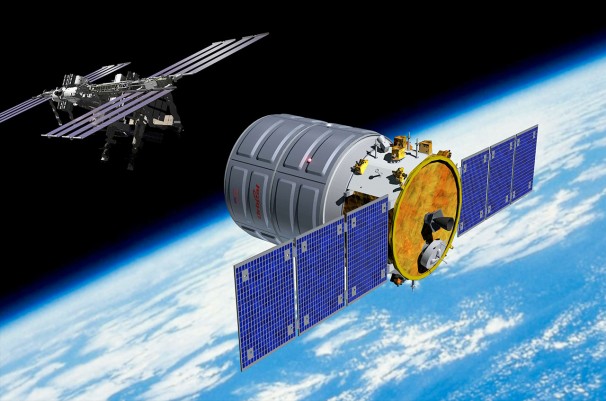
Orbital Sciences Corp. – Dennis Tito says U.S. should exploit rare alignment of planets to send astronauts to Mars. His organization would use the Orbital Sciences Corporation’s new Cygnus capsule, which recently made a successful trip to the international space station.

By Joel Achenbach

Billionaire Dennis Tito, tired of being told that we can’t send humans to Mars just yet, on Wednesday revealed his scheme for launching two astronauts to the red planet as early as December 2017.

Dubbed “Inspiration Mars,” the flyby mission would exploit a rare alignment of Earth and Mars that minimizes the time and the fuel it would take to get to Mars and back home again. The astronauts would come within 100 miles of the Martian surface before being slung back to Earth.

“It would be a voyage of around 800 million miles around the sun in 501 days,” Tito testified Wednesday at a hearing of the House subcommittee on space. “No longer is a Mars flyby mission just one more theoretical idea. It can be done. Not in a matter of decades, but in a few years.”

Tito is a former engineer who made a fortune in investment management and, in 2001, became the first person to pay his way into space, buying a seat on a Russian rocket. Now he’s pitching Inspiration Mars as a national priority for the United States. Grab this rare chance to go to Mars quickly or risk seeing China or Russia get there first, he told members of Congress.

Tito mentioned a backup plan that would offer Inspiration Mars four more years of development time. Another alignment of planets in 2021 offers a second chance to go to Mars fairly quickly, but the journey would last 80 days longer and require that the astronauts fly much closer to the sun, within the orbit of Venus, in one portion of the trip. That would add to the already considerable radiation hazards.

When Tito broached the idea of Inspiration Mars early this year, he thought he could use primarily private rockets and minimize the need for NASA involvement. But the feasibility study led Tito back to NASA. NASA is building a jumbo rocket, the Space Launch System, that is supposed to be ready for its inaugural, uncrewed test flight in 2017. The second launch, carrying a crew in NASA’s new Orion capsule for the first time, isn’t scheduled until 2021.

Tito’s plan would essentially borrow the SLS for the Mars mission, if NASA agreed. And NASA would have to pay for a lot of this. Tito described Inspiration Mars as a “philanthropic partnership with government.” He said private donors would probably give about $300 million for the mission, and the government would need to provide about $700 million — in addition to the money NASA is already spending, under current programs, on rocket and spacecraft development.

NASA reacted coolly to Tito’s proposal.

“Inspiration Mars’s proposed schedule is a significant challenge due to life support systems, space radiation response, habitats and the human psychology of being in a small spacecraft for over 500 days,” spokesman David Weaver said in a statement. “The agency is willing to share technical and programmatic expertise with Inspiration Mars but is unable to commit to sharing expenses with them. However, we remain open to further collaboration as their proposal and plans for a later mission develop.”

Tito’s Inspiration Mars Foundation released a feasibility study Wednesday that described the proposed mission architecture, which includes using the new Cygnus spacecraft developed by Dulles, Va.,-based Orbital Sciences.

The technological challenges of sending people to Mars, keeping them alive and returning them safely to Earth are considerable, but perhaps the greatest challenge in this case is the timing. There’s virtually no wiggle room for this mission. The Tito plan would require that NASA and the private partners adopt the project immediately and speed up work on certain key components.

The ideal planetary alignment of Mars and Earth happens once every 15 years, and it presents a narrow launch window. The mission would have to begin between Christmas Day 2017 and Jan. 5, 2018, to take advantage of the orbital dynamics of the planets.

“I think it’s totally implausible for 2017,” said John Logsdon, professor emeritus at George Washington University’s Space Policy Institute. He said there’s a slight chance that the 2021 backup mission could happen “if the stars align.”

Two launches would be required for the Mars flyby mission, according to the Inspiration Mars feasibility study. First, the big SLS rocket would launch into low-Earth orbit the empty Cygnus spacecraft, plus other hardware needed for the mission. Then, the two astronauts would blast into orbit on a commercial rocket and spacecraft that have yet to be identified (there is a competition underway among private companies to develop rockets and capsules to ferry NASA astronauts to the international space station).

The astronauts in their commercial capsule would rendezvous with the Inspiration Mars vehicle and climb inside the Cygnus spacecraft. The upper stage of the SLS would then ignite and rocket the Inspiration Mars vehicle to Mars. At the end of the mission, more than a year later, the crew would reenter the Earth’s atmosphere in a “pod” designed to survive the extreme speed and heat of reentry.

“We fully recognize what we’re asking is incredibly challenging. An in­cred­ibly hard thing to do,” Tito said in a conference call with reporters. He repeatedly mentioned the possibility that another country could beat the United States to Mars, saying that would be akin to the Soviet Union’s 1957 launch of the first satellite, Sputnik. “We firmly believe that Inspiration Mars is our last chance to be first in space and stay first in space,” Tito said.

“This will be one of the great historical events of the last 500 years,” he said. “This will, in my view, rock the world.”

http://www.washingtonpost.com/national/health-science/going-to-mars-billionaire-dennis-tito-plans-manned-mission-with-possible-2017-launch/2013/11/20/b859bc76-51e8-11e3-9fe0-fd2ca728e67c_story.html?hpid=z4

Thanks to Kebmodee for bringing this to the attention of the It’s Interesting community.

Lego-Man Travels To Space And Brings Back Photos And Videos

legoman3

legoman2

legoman 1

A Lego man has successfully gone where no Lego man has gone before – the edge of space and back down.

It’s all thanks to two friends, teacher Jon Chippindall, 31 and entrepreneur Ian Cunningham, 29, who met while studying aerospace engineering at Manchester University. Together, they created a homemade probe called The Meteor, that was attached to a balloon and sent into the stratosphere (or to the edge of it) with Lego Man and camera equipment all together.

The craft was launched from Mold in North Wales on Wednesday.

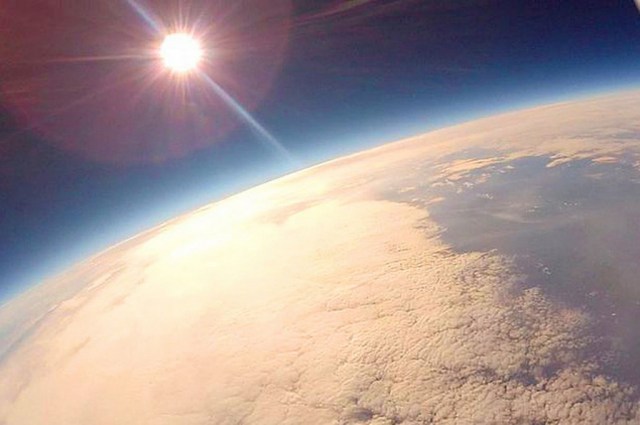
Within two hours it had reached 90,000ft above the Earth – three times the height of Mount Everest – where the balloon burst and the camera plunged back down.

It’s an exciting feat for both men.“It was really exhilarating to know that this thing had been to the edge of space and come back down, and that the technology had worked as it was supposed to,” Chippindall enthusiastically told media. Cunningham added, ““We knew we would get some pictures back from space, but didn’t expect anything as good as those.”

But it seem it’s Chippindall who’s looking at ways to use the homemade probe, which cost about 250gbp ($400) to make, to inspire youth to want to study sciences more.“I’m really, really keen on extra curricular activities in schools and think this could really inspire kids to study physics and other sciences,” he says and is already working on way to make that happen.

Lego-Man Travels To Space And Brings Back Photos And Videos

http://www.mirror.co.uk/news/weird-news/lego-man-space-pictures-video-2672869

Two billion planets in our galaxy may be suitable for life

Artist's impression of planets discovered by Kepler spacecraft

Our galaxy probably contains at least two billion planets that, like Earth, have liquid water on their surfaces and orbit around their parent stars in the “habitable zone” for life. The nearest, according to astronomers, could be a mere 12 light years away.

A new study, published on Monday in the Proceedings of the National Academy of Sciences, suggests that Earth-like planets capable of supporting life are far more common than previously thought. Using measurements from Nasa’s Kepler space observatory, scientists led by Erik Petigura at the University of California, Berkeley, estimated that 22% of our galaxy’s sun-like stars have rocky planets circling them in the zone where they get roughly the same amount of light energy as Earth receives from the sun. There are around 100bn stars in our galaxy, of which 10% are like the sun.

So far Kepler has studied more than 150,000 stars and identified more than 3,000 candidate planets, but many of these are “gas giants”, similar to Jupiter, that orbit close to their parent stars. If there is life out there, it is far more likely to have evolved on rocky planets with liquid water on their surfaces, similar to Earth.

To get their results, Petigura’s team looked for planets in Kepler data that had a radius up to double that of Earth. They searched for planets that orbited far enough from their star that liquid water would not evaporate, but not so far that the water would all freeze.

Subhanjoy Mohanty, an astrophysicist at Imperial College London who was not involved with the study, said: “This is the first estimate of the frequency of Earth-like planets around sun-like stars, in orbits large enough to lie in the habitable zone of their stars. The finding that roughly one in five sun-like stars may host such planets is an incredibly important one, probably exceeding the expectations of most cautious astronomers.”

He added that the latest analysis increased the chances that there might be life somewhere among the stars. “Previous analyses of Kepler data had shown that red dwarfs – the most common type of star in the galaxy, making up about 80% of the stellar population – very frequently harbour Earth-size planets, including in their habitable zones. This new study shows that the same is true around stars more like our own sun. This is certainly an added impetus for planned future missions which will study the atmospheres of these potentially habitable planets, enabling us to investigate whether they are in fact habitable or not, and also whether their atmospheres show actual biosignatures of existing life.”

Nasa also announced on Monday that the Kepler probe would be given a new lease of life, following fears that it would have to end its mission after only four years in space. In May 2013, scientists discovered that one of the gyroscopic wheels – known as “reaction wheels” – that kept the probe pointing in the right direction had stopped working and, try as they might, Nasa engineers could not restart it. Unable to point itself at the stars with any accuracy, the probe could no longer be used to collect data about the position of new exoplanets.

But it looks as though there could be a solution that involves reorienting the probe to look along the plane of the galaxy, which will allow it to remain stable with only two of its reaction wheels working. “The old saying ‘necessity is the mother of invention’ has rung true here, with engineers and scientists from Nasa and the spacecraft manufacturers having figured out this way to – we hope – recover much of the performance we thought we had lost. We are very excited,” said Bill Chaplin, an astrophysicist at the University of Birmingham in the UK.

If all goes well, the new Kepler mission – dubbed “K2” – will look for planets around smaller stars than the sun, and will also study the stars themselves. “There are a wealth of fantastically interesting targets for astrophysics that can be observed in the ecliptic plane, which were not accessible in the original Kepler field, notably brighter clusters of stars – where the common origins and distances to these stars make the clusters excellent laboratories for testing our understanding of stars – and young, star-forming regions,” said Chaplin.

http://www.theguardian.com/science/2013/nov/04/planets-galaxy-life-kepler

Thanks to Kebmodee for bringing this to the attention of the It’s Interesting community.

New research suggests that other universes may be pulling ours

universe

Is our universe merely one of billions? Evidence of the existence of ‘multiverse’ revealed for the first time by a cosmic map of background radiation data gathered by Planck telescope. The first ‘hard evidence’ that other universes exist has been claimed to have been found by cosmologists studying new Planck data released this past June. They have concluded that it shows anomalies that can only have been caused by the gravitational pull of other universes.

“Such ideas may sound wacky now, just like the Big Bang theory did three generations ago,” says George Efstathiou, professor of astrophysics at Cambridge University.”But then we got evidence and now it has changed the whole way we think about the universe.”

Scientists had predicted that it should be evenly distributed, but the map shows a stronger concentration in the south half of the sky and a ‘cold spot’ that cannot be explained by current understanding of physics. Laura Mersini-Houghton, theoretical physicist at the University of North Carolina at Chapel Hill, and Richard Holman, professor at Carnegie Mellon University, predicted that anomalies in radiation existed and were caused by the pull from other universes in 2005. Mersini-Houghton will be in Britain soon promoting this theory and, we expect, the hard evidence at the Hay Festival on May 31 and at Oxford on June 11.

Dr Mersini-Houghton believes her hypothesis has been proven from the Planck data that data has been used to create a map of light from when the universe was just 380,000 years old. “These anomalies were caused by other universes pulling on our universe as it formed during the Big Bang,” she says. “They are the first hard evidence for the existence of other universes that we have seen.”

Columbia University mathematician Peter Woit writes in his blog, Not Even Wrong, that in recent years there have been many claims made for “evidence” of a multiverse, supposedly found in the CMB data. “Such claims often came with the remark that the Planck CMB data would convincingly decide the matter. When the Planck data was released two months ago, I looked through the press coverage and through the Planck papers for any sign of news about what the new data said about these multiverse evidence claims. There was very little there; possibly the Planck scientists found these claims to be so outlandish that it wasn’t worth the time to look into what the new data had to say about them.

“One exception,” Woit adds, “was this paper, where Planck looked for evidence of ‘dark flow’. They found nothing, and a New Scientist article summarized the situation: ‘The Planck team’s paper appears to rule out the claims of Kashlinsky and collaborators,’ says David Spergel of Princeton University, who was not involved in the work. If there is no dark flow, there is no need for exotic explanations for it, such as other universes, says Planck team member Elena Pierpaoli at the University of Southern California, Los Angeles. “You don’t have to think of alternatives.'”

“Dark Flow” sounds like a new SciFi Channel series. It’s not! The dark flow is controversial because the distribution of matter in the observed universe cannot account for it. Its existence suggests that some structure beyond the visible universe — outside our “horizon” — is pulling on matter in our vicinity.

Back in the Middle Ages, maps showed terrifying images of sea dragons at the boundaries of the known world. Today, scientists have observed strange new motion at the very limits of the known universe – kind of where you’d expect to find new things, but they still didn’t expect this. A huge swath of galactic clusters seem to be heading to a cosmic hotspot and nobody knows why.

Cosmologists regard the microwave background — a flash of light emitted 380,000 years after the universe formed — as the ultimate cosmic reference frame. Relative to it, all large-scale motion should show no preferred direction. A 2010 study tracked the mysterious cosmic ‘dark flow’ to twice the distance originally reported. The study was led by Alexander Kashlinsky at NASA’s Goddard Space Flight Center in Greenbelt, Maryland.

“This is not something we set out to find, but we cannot make it go away,” Kashlinsky said. “Now we see that it persists to much greater distances – as far as 2.5 billion light-years away,” he added.

Dark flow describes a possible non-random component of the peculiar velocity of galaxy clusters. The actual measured velocity is the sum of the velocity predicted by Hubble’s Law plus a small and unexplained (or dark) velocity flowing in a common direction. According to standard cosmological models, the motion of galaxy clusters with respect to the cosmic microwave background should be randomly distributed in all directions. However, analyzing the three-year WMAP data using the kinematic Sunyaev-Zel’dovich effect, the authors of the study found evidence of a “surprisingly coherent” 600–1000 km/s flow of clusters toward a 20-degree patch of sky between the constellations of Centaurus and Vela.

The clusters appear to be moving along a line extending from our solar system toward Centaurus/Hydra, but the direction of this motion is less certain. Evidence indicates that the clusters are headed outward along this path, away from Earth, but the team cannot yet rule out the opposite flow.

“We detect motion along this axis, but right now our data cannot state as strongly as we’d like whether the clusters are coming or going,” Kashlinsky said.

The unexplained motion has hundreds of millions of stars dashing towards a certain part of the sky at over eight hundred kilometers per second. Not much speed in cosmic terms, but the preferred direction certainly is: most cosmological models have things moving in all directions equally at the extreme edges of the universe. Something that could make things aim for a specific spot on such a massive scale hasn’t been imagined before. The scientists are keeping to the proven astrophysical strategy of calling anything they don’t understand “dark”, terming the odd motion a “dark flow”.

A black hole can’t explain the observations – objects would accelerate into the hole, while the NASA scientists see constant motion over a vast expanse of a billion light-years. You have no idea how big that is. This is giant on a scale where it’s not just that we can’t see what’s doing it; it’s that the entire makeup of the universe as we understand it can’t be right if this is happening.

The hot X-ray-emitting gas within a galaxy cluster scatters photons from the cosmic microwave background (CMB). Because galaxy clusters don’t precisely follow the expansion of space, the wavelengths of scattered photons change in a way that reflects each cluster’s individual motion.

This results in a minute shift of the microwave background’s temperature in the cluster’s direction. The change, which astronomers call the kinematic Sunyaev-Zel’dovich (KSZ) effect, is so small that it has never been observed in a single galaxy cluster.

But in 2000, Kashlinsky, working with Fernando Atrio-Barandela at the University of Salamanca, Spain, demonstrated that it was possible to tease the subtle signal out of the measurement noise by studying large numbers of clusters.

In 2008, armed with a catalog of 700 clusters assembled by Harald Ebeling at the University of Hawaii and Dale Kocevski, now at the University of California, Santa Cruz, the researchers applied the technique to the three-year WMAP data release. That’s when the mystery motion first came to light.

The new study builds on the previous one by using the five-year results from WMAP and by doubling the number of galaxy clusters.

“It takes, on average, about an hour of telescope time to measure the distance to each cluster we work with, not to mention the years required to find these systems in the first place,” Ebeling said. “This is a project requiring considerable followthrough.”

According to Atrio-Barandela, who has focused on understanding the possible errors in the team’s analysis, the new study provides much stronger evidence that the dark flow is real. For example, the brightest clusters at X-ray wavelengths hold the greatest amount of hot gas to distort CMB photons. “When processed, these same clusters also display the strongest KSZ signature — unlikely if the dark flow were merely a statistical fluke,” he said.

In addition, the team, which now also includes Alastair Edge at the University of Durham, England, sorted the cluster catalog into four “slices” representing different distance ranges. They then examined the preferred flow direction for the clusters within each slice. While the size and exact position of this direction display some variation, the overall trends among the slices exhibit remarkable agreement.

The researchers are currently working to expand their cluster catalog in order to track the dark flow to about twice the current distance. Improved modeling of hot gas within the galaxy clusters will help refine the speed, axis, and direction of motion.

Future plans call for testing the findings against newer data released from the WMAP project and the European Space Agency’s Planck mission, which is also currently mapping the microwave background.

Which is fantastic! Such discoveries force a whole new set of ideas onto the table which, even if they turn out to be wrong, are the greatest ways to advance science and our understanding of everything. One explanation that’s already been offered is that our universe underwent a period of hyper-inflation early in its existence, and everything we think of as the vast and infinite universe is actually a small corner under the sofa of the real expanse of reality. Which would be an amazing, if humbling, discovery.

The image at the top of the page shows the most distant object we have ever observed with high confidence, according to Wei Zheng, the leading astronomer of the team at Johns Hopkins University who that noticed the galaxy on multiple images from both the Hubble and Spitzer space telescopes. At 13.2-billion years old, we are technically seeing this galaxy when it was very young, but its light is only reaching Earth now.

http://www.dailygalaxy.com/my_weblog/2013/10/is-our-universe-one-of-billions-new-planck-data-has-anomalies-caused-by-unknown-gravitational-pull-t.html

Built-up earwax taken from a blue whale carcass offers insights into the creature’s life

earqwax

Using built-up earwax taken from a blue whale carcass, researchers have been able to reconstruct a picture of its life by the chemicals and hormones in its ears.

The whale in question was a male blue whale that died after it was struck by a ship near Santa Barbara, Calif., in 2007. Researchers removed a 10-inch ear plug from the carcass during a necropsy. They did a careful chemical analysis of it to measure what the whale had been exposed to in its lifetime. The study appeared in a recent edition of the journal Proceedings of the National Academies of Science.

The scientific community has been excited about the possibilities raised by the new method “once they get past the ‘eew!’ factor of it being earwax,” says Stephen Trumble, lead author on the paper and a biology professor at Baylor University in Waco, Texas.

Baleen whales are known to accumulate layers of earwax in their ear canal. These create a waxy plug that can be over a foot long. The earwax is laid down in layers, a dark one when the animal is feeding and a light one when the animal is migrating and eats very little. The layers are routinely used to determine whale ages.

Now by analyzing the chemicals, pollutants and other matter that accumulated in that wax, researchers were able to build a very complete picture of the animal’s life and exposure to chemicals.

The whale was likely born around 1995. It was exposed to large concentrations of persistent organic pollutants such as DDT and other pesticides in the first six months of its life, most likely while it was still nursing. Many mammals are known to pass chemicals through milk and researchers believe that’s what happened to this whale.

DDT is one of a group of persistent organic pollutants that can take decades to break down in the environment. Although it was banned in the United States in 1972 it is still found in the world’s oceans, and was present at higher levels when this whale was born.
There were also two spikes in its exposure to mercury, around ages 5 and 10. The researchers think these might have occurred as the animal migrated past the coast of California, possibly exposing it to higher levels of pollution than it encountered in the open ocean and when passing less polluted land masses.

When it was about 10 years of age researchers believe it became sexually mature because of increases in testosterone. Its stress hormones spike right around that time, too, which the researchers believe might have been linked to breeding competition or social bonds it formed during this period.

The method offers researchers a much easier and more precise way of measuring what whales are exposed to than previous methods, which included examining whale blubber, blood, feces and blowhole spray, says Sascha Usenko, a professor of environmental chemistry and one of the Baylor researchers.

Since their paper was published they’ve been getting offers of whale earwax specimens, called plugs,from around the world. “We’re going to receive one hopefully this week that’s about three and a half feet long from a bowhead whale from Barrow, Alaska,” Trumble said.

http://www.usatoday.com/story/news/nation/2013/10/10/whale-earwax-gives-researchers-peek-whale-life/2861591/?utm_source=feedburner&utm_medium=feed&utm_campaign=Feed%3A+usatoday-NewsTopStories+(USATODAY+-+News+Top+Stories)

Young planet first to be discovered to be drifting through space without a star

planet

It’s just a newborn in planetary terms, and it’s drifting all alone in space without a star to orbit.

The solitary life of this newly discovered planet, with the catchy name PSO J318.5-22, has astronomers excited.

Only 80 light-years from Earth, the 12 million-year-old planet has properties similar to those of gas-giant planets orbiting young stars.

But because it is floating alone through space, rather than around a host star, astronomers can study it much more easily.

“We have never before seen an object free-floating in space that looks like this,” said Dr. Michael Liu of the Institute for Astronomy at the University of Hawaii at Manoa, who led the international team that discovered the planet.

“It has all the characteristics of young planets found around other stars, but it is drifting out there all alone. I had often wondered if such solitary objects exist, and now we know they do.”

While about a thousand planets have been discovered outside our solar system in the past decade by indirect means — such as observing the wobbling or dimming of their host stars as they orbit — only a handful of new planets have been directly imaged, all of them around young stars, according to a release from the Institute for Astronomy.

Young stars are those less than 200 million years old.

PSO J318.5-22’s solitary existence and its similarity to those directly observed planets makes it a rare find.

“Planets found by direct imaging are incredibly hard to study, since they are right next to their much brighter host stars. PSO J318.5-22 is not orbiting a star so it will be much easier for us to study,” said Dr. Niall Deacon of the Max Planck Institute for Astronomy in Germany and a co-author of the study.

“It is going to provide a wonderful view into the inner workings of gas-giant planets like Jupiter shortly after their birth.”

The astronomers stumbled across it as they sifted through a mountain of data produced by the Pan-STARRS 1 (PS1) wide-field survey telescope on Haleakala, Maui.

The planet, which has only six times the mass of Jupiter, was identified by its faint and unique heat signature.

The astronomers were actually searching for failed stars known as brown dwarfs when they came across PSO J318.5-22, which stood out because of its red color.

Subsequent infrared observations using other telescopes in Hawaii showed it was no brown dwarf, but rather a young, low-mass planet.

By monitoring the planet’s position for the next two years, using the Canada-France-Hawaii Telescope, the team was able directly to measure its distance from Earth.

This means the astronomers have placed it within a collection of young stars called the Beta Pictoris moving group that formed about 12 million years ago.

The star that lends its name to the group, Beta Pictoris, has another young gas-giant planet in orbit around it, the astronomers say.

But PSO J318.5-22, which appears to be even lower in mass than that planet, continues to wend its solitary way through the universe, unattached to any star.

http://www.cnn.com/2013/10/10/tech/space-new-planet/index.html?hpt=hp_c3

Life on Earth will be obliterated by the heat of the sun (1.75 to 3.25 billion years from now)

Solar Flare

The Earth will stay livable for another 1.75 to 3.25 billion years before ”a catastrophic and terminal extinction event for all life,” according to a new study.

After that, the planet will be in the Sun’s “hot zone” — meaning surface water would “evaporate.”

The study was published in the journal Astrobiology by astrobiologists at the University of East Anglia.

“We used stellar evolution models to estimate the end of a planet’s habitable lifetime by determining when it will no longer be in the habitable zone. We estimate that Earth will cease to be habitable somewhere between 1.75 and 3.25 billion years from now,” Andrew Rushby, from UEA’s school of Environmental Sciences and the leader of the research said on the UEA website. ”After this point, Earth will be in the ‘hot zone’ of the sun, with temperatures so high that the seas would evaporate. We would see a catastrophic and terminal extinction event for all life.

And life doesn’t necessarily mean humans — it can mean things as simple as micro-organisms.

“Of course conditions for humans and other complex life will become impossible much sooner — and this is being accelerated by anthropogenic climate change,” Rushby wrote. “Humans would be in trouble with even a small increase in temperature, and near the end only microbes in niche environments would be able to endure the heat.”

Rushby said that the most important part of figuring out the total habitable time for a planet is that it gives an idea of how long it takes for complex life to develop.

“Looking back a similar amount of time, we know that there was cellular life on earth. We had insects 400 million years ago, dinosaurs 300 million years ago and flowering plants 130 million years ago. Anatomically modern humans have only been around for the last 200,000 years — so you can see it takes a really long time for intelligent life to develop,” he wrote on his school site. “The amount of habitable time on a planet is very important because it tells us about the potential for the evolution of complex life — which is likely to require a longer period of habitable conditions.”

Trending Ottawa | Concordia | BlackBerry | Washington | NFL | Marois | Syria | Trudeau | Mulcair | Lotto 6/49 numbers | Ford | Harper
Life on Earth will be obliterated by the heat of the sun (1.75 to 3.25 billion years from now)
Republish ReprintReprintsRepublish OnlineRepublish OfflineNational Post Staff | 19/09/13 | Last Updated: 19/09/13 3:04 PM ET
More from National Post Staff

.
AP Photo/NASAThe Earth will stay livable for another 1.75 to 3.25 billion years before “a catastrophic and terminal extinction event for all life,” according to a new study.
TwitterGoogle+ LinkedIn Email CommentsMore
TumblrPinterestRedditDiggFarkItStumbleUpon
.The Earth will stay livable for another 1.75 to 3.25 billion years before ”a catastrophic and terminal extinction event for all life,” according to a new study.

After that, the planet will be in the Sun’s “hot zone” — meaning surface water would “evaporate.”

The study was published in the journal Astrobiology by astrobiologists at the University of East Anglia.

“We used stellar evolution models to estimate the end of a planet’s habitable lifetime by determining when it will no longer be in the habitable zone. We estimate that Earth will cease to be habitable somewhere between 1.75 and 3.25 billion years from now,” Andrew Rushby, from UEA’s school of Environmental Sciences and the leader of the research said on the UEA website. ”After this point, Earth will be in the ‘hot zone’ of the sun, with temperatures so high that the seas would evaporate. We would see a catastrophic and terminal extinction event for all life.

And life doesn’t necessarily mean humans — it can mean things as simple as micro-organisms.

Related
Two new planets are the closest NASA has come so far to finding another like Earth
More planets, more possible life: Discovery of planet around Alpha Centauri will accelerate search for E.T.
All humans may be ‘Martians’: Growing evidence that all life on Earth came ‘on a rock’ from Mars
Famed SETI astronomer retiring, says discovery of alien life ‘very close’
Memo on puported UFO discovery in New Mexico becomes most read file in FBI’s electronic reading room
.“Of course conditions for humans and other complex life will become impossible much sooner — and this is being accelerated by anthropogenic climate change,” Rushby wrote. “Humans would be in trouble with even a small increase in temperature, and near the end only microbes in niche environments would be able to endure the heat.”

Rushby said that the most important part of figuring out the total habitable time for a planet is that it gives an idea of how long it takes for complex life to develop.

“Looking back a similar amount of time, we know that there was cellular life on earth. We had insects 400 million years ago, dinosaurs 300 million years ago and flowering plants 130 million years ago. Anatomically modern humans have only been around for the last 200,000 years — so you can see it takes a really long time for intelligent life to develop,” he wrote on his school site. “The amount of habitable time on a planet is very important because it tells us about the potential for the evolution of complex life — which is likely to require a longer period of habitable conditions.”

.This, in turn, can help us search for how complex life would develop on other planets. Scientists are looking for an Earth-size planet that’s in the habitable zone or the so-called “Goldilocks” zone — that sweet spot that’s not too hot and not too cold where water, which is essential for life as know it, could exist on the surface.

“Looking at habitability metrics is useful because it allows us to investigate the potential for other planets to host life, and understand the stage that life may be at elsewhere in the galaxy.”

The Earth is actually near the outer edge of the habitable zone. Scientists say that it would be much more likely for complex life to exist on planets that are closer to the sun than us than further from it, though the strip of “Goldilocks” space, in intrastellar terms, is quite small.

“Interestingly, not many other predictions based on the habitable zone alone were available, which is why we decided to work on a method for this. Other scientists have used complex models to make estimates for the Earth alone, but these are not suitable for applying to other planets,” Rushby wrote.

In April, NASA unveiled new planetary results from its Kepler mission, showing two very Earth-like planets.

“Two of the newly discovered planets orbit a star smaller and cooler than the sun. Kepler-62f is only 40% larger than Earth, making it the exoplanet closest to the size of our planet known in the habitable zone of another star,” NASA explains in a release. “Kepler-62f is likely to have a rocky composition. Kepler-62e orbits on the inner edge of the habitable zone and is roughly 60% larger than Earth.”

The distant duo are the best candidates for habitable planets that astronomers have found so far, said William Borucki, the chief scientist for NASA’s Kepler telescope. Both are Earth-sized and in the habitable zone.

Another key planet, Kepler 22b, was unveiled on December 5, 2011. It’s 2.4 times the size of the Earth, orbiting a Sun-like star every 290 days. Another, Gliese 581d, was discovered around the same time.

“One of the planets that we applied our model to is Kepler 22b, which has a habitable lifetime of 4.3 to 6.1 billion years. Even more surprising is Gliese 581d which has a massive habitable lifetime of between 42.4 to 54.7 billion years. This planet may be warm and pleasant for 10 times the entire time that our solar system has existed!” Rushby wrote.

The planets were discovered by NASA’s Kepler space telescope, which measures fluctuations in the brightness of more than 150,000 stars in order to detect planets. Scientists then used ground-based telescopes to peer at the information the spacecraft has gathered in order to analyze and verify its discoveries.

However, none of the discovered planets are perfect Earth analogues, Rusby wrote.

“To date, no true Earth analogue planet has been detected. But it is possible that there will be a habitable, Earth-like planet within 10 light-years, which is very close in astronomical terms. However reaching it would take hundreds of thousands of years with our current technology.”

He says that the best bet to transplant the human race remains right next door. On Mars.

“If we ever needed to move to another planet, Mars is probably our best bet. It’s very close and will remain in the habitable zone until the end of the Sun’s lifetime — six billion years from now.”

http://news.nationalpost.com/2013/09/19/life-on-earth-will-be-obliterated-by-the-heat-of-the-sun-1-75-to-3-25-billion-years-from-now/

If The Sun Went Out, How Long Could Life On Earth Survive?

SolarProminence_0

If you put a steamy cup of coffee in the refrigerator, it wouldn’t immediately turn cold. Likewise, if the sun simply “turned off” (which is actually physically impossible), the Earth would stay warm—at least compared with the space surrounding it—for a few million years. But we surface dwellers would feel the chill much sooner than that.

Within a week, the average global surface temperature would drop below 0°F. In a year, it would dip to –100°. The top layers of the oceans would freeze over, but in an apocalyptic irony, that ice would insulate the deep water below and prevent the oceans from freezing solid for hundreds of thousands of years. Millions of years after that, our planet would reach a stable –400°, the temperature at which the heat radiating from the planet’s core would equal the heat that the Earth radiates into space, explains David Stevenson, a professor of planetary science at the California Institute of Technology.

Although some microorganisms living in the Earth’s crust would survive, the majority of life would enjoy only a brief post-sun existence. Photosynthesis would halt immediately, and most plants would die in a few weeks. Large trees, however, could survive for several decades, thanks to slow metabolism and substantial sugar stores. With the food chain’s bottom tier knocked out, most animals would die off quickly, but scavengers picking over the dead remains could last until the cold killed them.

Humans could live in submarines in the deepest and warmest parts of the ocean, but a more attractive option might be nuclear- or geothermal-powered habitats. One good place to camp out: Iceland. The island nation already heats 87 percent of its homes using geothermal energy, and, says astronomy professor Eric Blackman of the University of Rochester, people could continue harnessing volcanic heat for hundreds of years.

Of course, the sun doesn’t merely heat the Earth; it also keeps the planet in orbit. If its mass suddenly disappeared (this is equally impossible, by the way), the planet would fly off, like a ball swung on a string and suddenly let go.

http://www.popsci.com/science/article/2013-07/if-sun-went-out-how-long-could-life-earth-survive?cmpid=obinsite