

Brain scans hint excessive time online is tied to stark physical changes in the brain.
Read more here: http://www.scientificamerican.com/article.cfm?id=does-addictive-internet-use-restructure-brain

Brain scans hint excessive time online is tied to stark physical changes in the brain.
Read more here: http://www.scientificamerican.com/article.cfm?id=does-addictive-internet-use-restructure-brain

If your hand hurts, simply cross your arms to confuse your brain and reduce the perceived pain intensity.
Researchers believe this happens because of conflicting information between two of the brain’s maps: the one for your body and the one for external space.
Since the left hand typically performs actions on the left side of space (and the right hand performs on the right side), these two maps work together to create powerful impulses in response to stimuli. When the arms are crossed, however, the two maps are mismatched and information processing becomes weaker — resulting in less pain.

Saturn’s icy moon Enceladus is emerging as the most habitable spot beyond Earth in the Solar System for life as we know it.
“It has liquid water, organic carbon, nitrogen [in the form of ammonia], and an energy source,” says Chris McKay, an astrobiologist at NASA’s Ames Research Center in Moffett Field, California. Besides Earth, he says, “there is no other environment in the Solar System where we can make all those claims.”
NASA is planning to send probes to Enceladus to search for life.
The fastest way to get a mission there is via a gravity boost from Jupiter, which would cut the journey time from ten years to as little as seven.
The next Jupiter-assist window hits its peak in 2015-17, and then slams shut until the 2030s.
http://news.blogs.cnn.com/2011/06/24/scientists-saturn-moon-could-support-life/?&hpt=hp_c2

Professor Ning Li of China Agriculture University has successfully led a team that introduced the human gene for breast milk into cows.
Human genes were inserted in the DNA of Holstein dairy cows, and modified embryos were implanted into surrogate cows.
The offspring contained lysozyme, an anti-bacterial protein found in human breast milk that protects infants from infection during their first days of life.
They also created cattle containing lactoferrin, an immune system booster for babies that is found in human milk.
Fat content was raised by about 20% as well, and the level of milk solids was altered to make the final product as close to human milk as possible.
300 of these cattle have been produced.
Professor Li Ning, the director of the project, stated: “There are 1.5 billion people in the world who don’t get enough to eat. It’s our duty to develop science and technology, not to hold it back. We need to feed people first, before we consider ideals and convictions.”
The ultimate goal is to sell the milk as an alternative to cow milk, which is less nutritious than human milk. The modified milk is currently undergoing safety tests, but those who have tasted the milk say it is stronger tasting and sweeter than cow’s milk.
This isn’t the first genetically engineered food China has created. Known for having a more liberal approach toward genetically modified food, China has already created modified fruits and vegetables such as papayas and tomatoes, as well as insect-resistant rice and corn.

Scholars at Australia’s La Trobe University just released a study showing a correlation between caffeine intake and auditory hallucinations.
In layman’s terms: Lots of coffee might make you more likely to hear things that aren’t there.
read about it here: http://www.salon.com/news/feature/2011/06/08/coffee_hallucinations
and here is the study: http://www.sciencedirect.com/science/article/pii/S019188691000591X
Summing up the results from the experiment, Professor Simon Crowe concluded:
There is a link between high levels of stress and psychosis, and caffeine was found to correlate with hallucination proneness. The combination of caffeine and stress affect the likelihood of an individual experiencing a psychosis-like symptom.
It would be prudent to note that correlation isn’t the same as causation, and this study merely suggests the former.
This isn’t the first instance of scientists finding a link between caffeine intake and hallucinations. An even more alarming study was published in 2009, claiming that individuals who drink the equivalent of 315 milligrams of caffeine — that’s three cups of brewed coffee, or seven of the instant variety — are three times more likely to hear and see things that aren’t actually there.
http://www.livescience.com/3230-caffeine-hallucinations.html
Thanks to H.G.P. for bringing this to the attention of the It’s Interesting community.

Infants’ sleep patterns can be disrupted if their parents are constantly arguing, a new study finds.
Infants who heard regular blow-ups between parents when they were 9 months old continued to have troubled sleep patterns — marked by problems getting to sleep and staying asleep — even when they were 18-month-old toddlers.
More than 300 U.S. children and parents were stuydies, and all of the children were adopted at birth in order to control for any influence of genetics.

Pop quiz: True or false?
• The different cell types found in a given individual’s body contain different DNA.
• Mountains form by the piling up of pieces of rock.
• Some living parts of organisms are not made of cells.
More than half of the thousands of middle and high school students tested in nationwide examinations think the above statements are true (58 percent, 52 percent and 75 percent, respectively). They are not.
Read here about a new website for educators designed to help dispel common scientific myths during the intial stages of science education.


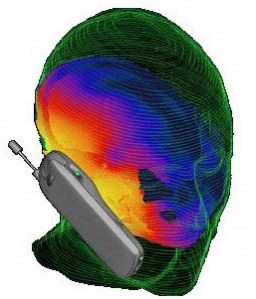
When it comes to radiation levels, all phones aren’t equal.
Below are lists of the models available from major carriers that emit the highest and lowest levels of radiofrequency energy.
Lowest radiation levels:
1. LG Quantum (AT&T): 0.35 watts per kilogram
2. Casio EXILIM (Verizon Wireless): 0.53 W/kg
3. Pantech Breeze II (AT&T, AT&T GoPhone): 0.55 W/kg
4. Sanyo Katana II (Kajeet): 0.55 W/kg
5. Samsung Fascinate (Verizon Wireless): 0.57 W/kg
6. Samsung Mesmerize (CellularONE, U.S. Cellular): 0.57 W/kg
7. Samsung SGH-a197 (AT&T GoPhone): 0.59 W/kg
8. Samsung Contour (MetroPCS): 0.60 W/kg
9. Samsung Gravity T (T-Mobile): 0.62 W/kg
10. (tie) Motorola i890 (Sprint); Samsung SGH-T249 (T-Mobile): 0.63 W/kg
Highest radiation levels:
1. Motorola Bravo (AT&T): 1.59 W/kg
2. Motorola Droid 2 (Verizon Wireless): 1.58 W/kg
3. Palm Pixi (Sprint): 1.56 W/kg
4. Motorola Boost (Boost Mobile): 1.55 W/kg
5. Blackberry Bold (AT&T, T-Mobile): 1.55 W/kg
6. Motorola i335 (Sprint): 1.55 W/kg
7. HTC Magic (T-Mobile): 1.55 W/kg
8. Motorola W385 (Boost Mobile, U.S. Cellular, Verizon Wireless): 1.54 W/kg
9. Motorola Boost i290 (Boost Mobile): 1.54 W/kg
10. (tie) Motorola DEFY (T-Mobile); Motorola Quantico (U.S. Cellular, MetroPCS); Motorola Charm (T-Mobile): 1.53 W/kg
http://edition.cnn.com/2011/TECH/mobile/06/01/cell.phones.radiation.levels/index.html?hpt=hp_p1
 It's Interesting