Study Finds Pedophiles’ Brains Wired to Find Children Attractive

Pedophiles’ brains are “abnormally tuned” to find young children attractive, according to a new study published this week. The research, led by Jorge Ponseti at Germany’s University of Kiel, means that it may be possible to diagnose pedophiles in the future before they are able to offend.

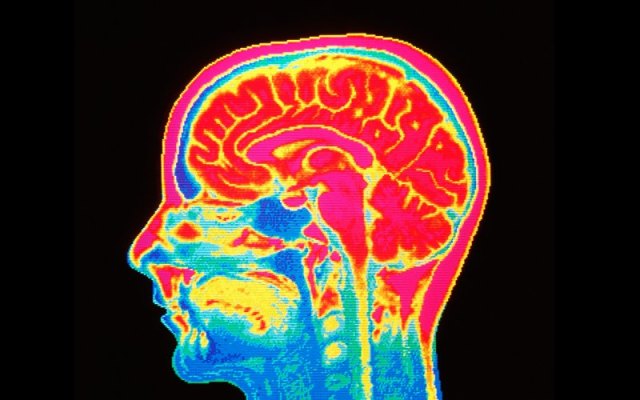
The findings, published in scientific journal Biology Letters, discovered that pedophiles have the same neurological reaction to images of those they find attractive as those of people with ordinary sexual predilections, but that all the relevant cerebral areas become engaged when they see children, as opposed to fellow adults. The occipital areas, prefrontal cortex, putamen, and nucleus caudatus become engaged whenever a person finds another attractive, but the subject of this desire is inverted for pedophiles.

While studies into the cognitive wiring of sex offenders have long been a source of debate, this latest research offers some fairly conclusive proof that there is a neural pattern behind their behavior.

The paper explains: “The human brain contains networks that are tuned to face processing, and these networks appear to activate different processing streams of the reproductive domain selectively: nurturing processing in the case of child faces and sexual processing in the case of sexually preferred adult faces. This implies that the brain extracts age-related face cues of the preferred sex that inform appropriate response selection in the reproductive domains: nurturing in the case of child faces and mating in the case of adult faces.”

Usually children’s faces elicit feelings of caregiving from both sexes, whereas those of adults provide stimuli in choosing a mate. But among pedophiles, this trend is skewed, with sexual, as opposed to nurturing, emotions burgeoning.

The study analyzed the MRI scans of 56 male participants, a group that included 13 homosexual pedophiles and 11 heterosexual pedophiles, exposing them to “high arousing” images of men, women, boys, and girls. Participants then ranked each photo for attractiveness, leading researchers to their conclusion that the brain network of pedophiles is activated by sexual immaturity.

The critical new finding is that face processing is also tuned to face cues revealing the developmental stage that is sexually preferred,” the paper reads.

Dr. James Cantor, associate professor at the University of Toronto’s Faculty of Medicine, said he was “delighted” by the study’s results. “I have previously described pedophilia as a ‘cross-wiring’ of sexual and nurturing instincts, and this data neatly verifies that interpretation.”

Cantor has undertaken extensive research into the area, previously finding that pedophiles are more likely to be left-handed, 2.3 cm shorter than the average male, and 10 to 15 IQ points lower than the norm.

He continued: “This [new] study is definitely a step in the right direction, and I hope other researchers repeat this kind of work. There still exist many contradictions among scientists’ observations, especially in identifying exactly which areas of the brain are the most central to pedophilia. Because financial support for these kinds of studies is quite small, these studies have been quite small, permitting them to achieve only incremental progress. Truly definitive studies about what in the brain causes pedophilia, what might detect it, and what might prevent it require much more significant support.”

Ponseti said that he hoped to investigate this area further by examining whether findings could be emulated when images of children’s faces are the sole ones used. This could lead to gauging a person’s predisposition to pedophilia far more simply than any means currently in place. “We could start to look at the onset of pedophilia, which is probably in puberty at about 12 or 14 years [old],” he told The Independent.

While Cantor is correct in citing the less than abundant size of the study, the research is certainly significant in providing scope for future practicable testing that could reduce the number of pedophilic crimes committed. By being able to run these tests and examine a person’s tendency toward being sexually attracted to underage children, rehabilitative care and necessary precautions could be taken to safeguard children and ensure that those at risk of committing a crime of this ilk would not be able to do so.

http://www.thedailybeast.com/articles/2014/05/23/study-finds-pedophiles-brains-wired-to-find-children-attractive.html#

Psychopaths: how can you spot one?

There are a few things we take for granted in social interactions with people. We presume that we see the world in roughly the same way, that we all know certain basic facts, that words mean the same things to you as they do to me. And we assume that we have pretty similar ideas of right and wrong.

But for a small – but not that small – subset of the population, things are very different. These people lack remorse and empathy and feel emotion only shallowly. In extreme cases, they might not care whether you live or die. These people are called psychopaths. Some of them are violent criminals, murderers. But by no means all.

Professor Robert Hare is a criminal psychologist, and the creator of the PCL-R, a psychological assessment used to determine whether someone is a psychopath. For decades, he has studied people with psychopathy, and worked with them, in prisons and elsewhere. “It stuns me, as much as it did when I started 40 years ago, that it is possible to have people who are so emotionally disconnected that they can function as if other people are objects to be manipulated and destroyed without any concern,” he says.

Our understanding of the brain is still in its infancy, and it’s not so many decades since psychological disorders were seen as character failings. Slowly we are learning to think of mental illnesses as illnesses, like kidney disease or liver failure, and developmental disorders, such as autism, in a similar way. Psychopathy challenges this view. “A high-scoring psychopath views the world in a very different way,” says Hare. “It’s like colour-blind people trying to understand the colour red, but in this case ‘red’ is other people’s emotions.”

At heart, Hare’s test is simple: a list of 20 criteria, each given a score of 0 (if it doesn’t apply to the person), 1 (if it partially applies) or 2 (if it fully applies). The list in full is: glibness and superficial charm, grandiose sense of self-worth, pathological lying, cunning/manipulative, lack of remorse, emotional shallowness, callousness and lack of empathy, unwillingness to accept responsibility for actions, a tendency to boredom, a parasitic lifestyle, a lack of realistic long-term goals, impulsivity, irresponsibility, lack of behavioural control, behavioural problems in early life, juvenile delinquency, criminal versatility, a history of “revocation of conditional release” (ie broken parole), multiple marriages, and promiscuous sexual behaviour. A pure, prototypical psychopath would score 40. A score of 30 or more qualifies for a diagnosis of psychopathy. Hare says: “A friend of mine, a psychiatrist, once said: ‘Bob, when I meet someone who scores 35 or 36, I know these people really are different.’ The ones we consider to be alien are the ones at the upper end.”

But is psychopathy a disorder – or a different way of being? Anyone reading the list above will spot a few criteria familiar from people they know. On average, someone with no criminal convictions scores 5. “It’s dimensional,” says Hare. “There are people who are part-way up the scale, high enough to warrant an assessment for psychopathy, but not high enough up to cause problems. Often they’re our friends, they’re fun to be around. They might take advantage of us now and then, but usually it’s subtle and they’re able to talk their way around it.” Like autism, a condition which we think of as a spectrum, “psycho­pathy”, the diagnosis, bleeds into normalcy.

We think of psychopaths as killers, criminals, outside society. People such as Joanna Dennehy, a 31-year-old British woman who killed three men in 2013 and who the year before had been diagnosed with a psychopathic personality disorder, or Ted Bundy, the American serial killer who is believed to have murdered at least 30 people and who said of himself: “I’m the most cold-blooded son of a bitch you’ll ever meet. I just liked to kill.” But many psychopathic traits aren’t necessarily disadvantages – and might, in certain circumstances, be an advantage. For their co-authored book, “Snakes in suits: When Psychopaths go to work”, Hare and another researcher, Paul Babiak, looked at 203 corporate professionals and found about four per cent scored sufficiently highly on the PCL-R to be evaluated for psychopathy. Hare says that this wasn’t a proper random sample (claims that “10 per cent of financial executives” are psychopaths are certainly false) but it’s easy to see how a lack of moral scruples and indifference to other people’s suffering could be beneficial if you want to get ahead in business.

“There are two kinds of empathy,” says James Fallon, a neuroscientist at the University of California and author of The Psychopath Inside: A Neuroscientist’s Personal Journey into the Dark Side of the Brain. “Cognitive empathy is the ability to know what other people are feeling, and emotional empathy is the kind where you feel what they’re feeling.” Autistic people can be very empathetic – they feel other people’s pain – but are less able to recognise the cues we read easily, the smiles and frowns that tell us what someone is thinking. Psychopaths are often the opposite: they know what you’re feeling, but don’t feel it themselves. “This all gives certain psychopaths a great advantage, because they can understand what you’re thinking, it’s just that they don’t care, so they can use you against yourself.” (Chillingly, psychopaths are particularly adept at detecting vulnerability. A 2008 study that asked participants to remember virtual characters found that those who scored highly for psychopathy had a near perfect recognition for sad, unsuccessful females, but impaired memory for other characters.)

Fallon himself is a case in point. In 2005, he was looking at brain scans of psychopathic murderers, while on another study, of Alzheimer’s, he was using scans of his own family’s brains as controls. In the latter pile, he found something strange. “You can’t tell just from a brain scan whether someone’s a psychopath,” he says, “but you can make a good guess at the personality traits they’ll have.” He describes a great loop that starts in the front of the brain including the parahippocampal gyrus and the amygdala and other regions tied to emotion and impulse control and empathy. Under certain circumstances they would light up dramatically on a normal person’s MRI scan, but would be darker on a psychopath’s.

“I saw one that was extremely abnormal, and I thought this is someone who’s way off. It looked like the murderers I’d been looking at,” he says. He broke the anonymisation code in case it had been put into the wrong pile. When he did, he discovered it was his own brain. “I kind of blew it off,” he says. “But later, some psychiatrist friends of mine went through my behaviours, and they said, actually, you’re probably a borderline psychopath.”

Speaking to him is a strange experience; he barely draws breath in an hour, in which I ask perhaps three questions. He explains how he has frequently put his family in danger, exposing his brother to the deadly Marburg virus and taking his son trout-fishing in the African countryside knowing there were lions around. And in his youth, “if I was confronted by authority – if I stole a car, made pipe bombs, started fires – when we got caught by the police I showed no emotion, no anxiety”. Yet he is highly successful, driven to win. He tells me things most people would be uncomfortable saying: that his wife says she’s married to a “fun-loving, happy-go-lucky nice guy” on the one hand, and a “very dark character who she does not like” on the other. He’s pleasant, and funny, if self-absorbed, but I can’t help but think about the criteria in Hare’s PCL-R: superficial charm, lack of emotional depth, grandiose sense of self-worth. “I look like hell now, Tom,” he says – he’s 66 – “but growing up I was good-looking, six foot, 180lb, athletic, smart, funny, popular.” (Hare warns against non-professionals trying to diagnose people using his test, by the way.)

“Psychopaths do think they’re more rational than other people, that this isn’t a deficit,” says Hare. “I met one offender who was certainly a psychopath who said ‘My problem is that according to psychiatrists I think more with my head than my heart. What am I supposed to do about that? Am I supposed to get all teary-eyed?’ ” Another, asked if he had any regrets about stabbing a robbery victim, replied: “Get real! He spends a few months in hospital and I rot here. If I wanted to kill him I would have slit his throat. That’s the kind of guy I am; I gave him a break.”

And yet, as Hare points out, when you’re talking about people who aren’t criminals, who might be successful in life, it’s difficult to categorise it as a disorder. “It’d be pretty hard for me to go into high-level political or economic or academic context and pick out all the most successful people and say, ‘Look, I think you’ve got some brain deficit.’ One of my inmates said that his problem was that he’s a cat in a world of mice. If you compare the brainwave activity of a cat and a mouse, you’d find they were quite different.”

It would, says Hare, probably have been an evolutionarily successful strategy for many of our ancestors, and can be successful today; adept at manipulating people, a psychopath can enter a community, “like a church or a cultural organisation, saying, ‘I believe the same things you do’, but of course what we have is really a cat pretending to be a mouse, and suddenly all the money’s gone”. At this point he floats the name Bernie Madoff.

This brings up the issue of treatment. “Psychopathy is probably the most pleasant-feeling of all the mental disorders,” says the journalist Jon Ronson, whose book, The Psychopath Test, explored the concept of psychopathy and the mental health industry in general. “All of the things that keep you good, morally good, are painful things: guilt, remorse, empathy.” Fallon agrees: “Psychopaths can work very quickly, and can have an apparent IQ higher than it really is, because they’re not inhibited by moral concerns.”

So psychopaths often welcome their condition, and “treating” them becomes complicated. “How many psychopaths go to a psychiatrist for mental distress, unless they’re in prison? It doesn’t happen,” says Hare. The ones in prison, of course, are often required to go to “talk therapy, empathy training, or talk to the family of the victims” – but since psychopaths don’t have any empathy, it doesn’t work. “What you want to do is say, ‘Look, it’s in your own self-interest to change your behaviour, otherwise you’ll stay in prison for quite a while.’ ”

It seems Hare’s message has got through to the UK Department of Justice: in its guidelines for working with personality-disordered inmates, it advises that while “highly psychopathic individuals” are likely to be “highly treatment resistant”, the “interventions most likely to be effective are those which focus on ‘self-interest’ – what the offender wants out of life – and work with them to develop the skills to get those things in a pro-social rather than anti-social way.”

If someone’s brain lacks the moral niceties the rest of us take for granted, they obviously can’t do anything about that, any more than a colour-blind person can start seeing colour. So where does this leave the concept of moral responsibility? “The legal system traditionally asserts that all people standing in front of the judge’s bench are equal. That’s demonstrably false,” says the neuroscientist David Eagleman, author of Incognito: The Secret Lives of the Brain. He suggests that instead of thinking in terms of blameworthiness, the law should deal with the likelihood that someone will reoffend, and issue sentences accordingly, with rehabilitation for those likely to benefit and long sentences for those likely to be long-term dangers. The PCL-R is already used as part of algorithms which categorise people in terms of their recidivism risk. “Life insurance companies do exactly this sort of thing, in actuarial tables, where they ask: ‘What age do we think he’s going to die?’ No one’s pretending they know exactly when we’re going to die. But they can make rough guesses which make for an enormously more efficient system.”

What this doesn’t mean, he says, is a situation like the sci-fi film Minority Report, in which people who are likely to commit crimes are locked up before they actually do. “Here’s why,” he says. “It’s because many people in the population have high levels of psychopathy – about 1 per cent. But not all of them become criminals. In fact many of them, because of their glibness and charm and willingness to ride roughshod over the people in their way, become quite successful. They become CEOs, professional athletes, soldiers. These people are revered for their courage and their straight talk and their willingness to crush obstacles in their way. Merely having psychopathy doesn’t tell us that a person will go off and commit a crime.” It is central to the justice system, both in Britain and America, that you can’t pre-emptively punish someone. And that won’t ever change, says Eagleman, not just for moral, philosophical reasons, but for practical ones. The Minority Report scenario is a fantasy, because “it’s impossible to predict what somebody will do, even given their personality type and everything, because life is complicated and crime is conceptual. Once someone has committed a crime, once someone has stepped over a societal boundary, then there’s a lot more statistical power about what they’re likely to do in future. But until that’s happened, you can’t ever know.”

Speaking to all these experts, I notice they all talk about psychopaths as “them”, almost as a different species, although they make conscious efforts not to. There’s something uniquely troubling about a person who lacks emotion and empathy; it’s the stuff of changeling stories, the Midwich Cuckoos, Hannibal Lecter. “You know kids who use a magnifying glass to burn ants, thinking, this is interesting,” says Hare. “Translate that to an adult psychopath who treats a person that way. It is chilling.” At one stage Ronson suggests I speak to another well-known self-described psychopath, a woman, but I can’t bring myself to. I find the idea unsettling, as if he’d suggested I commune with the dead.

http://www.telegraph.co.uk/culture/books/10737827/Psychopaths-how-can-you-spot-one.html

Thanks to Steven Weihing for bringing this to the attention of the It’s Interesting community.

18 Things Highly Creative People Do Differently

Creativity works in mysterious and often paradoxical ways. Creative thinking is a stable, defining characteristic in some personalities, but it may also change based on situation and context. Inspiration and ideas often arise seemingly out of nowhere and then fail to show up when we most need them, and creative thinking requires complex cognition yet is completely distinct from the thinking process.

Neuroscience paints a complicated picture of creativity. As scientists now understand it, creativity is far more complex than the right-left brain distinction would have us think (the theory being that left brain = rational and analytical, right brain = creative and emotional). In fact, creativity is thought to involve a number of cognitive processes, neural pathways and emotions, and we still don’t have the full picture of how the imaginative mind works.

And psychologically speaking, creative personality types are difficult to pin down, largely because they’re complex, paradoxical and tend to avoid habit or routine. And it’s not just a stereotype of the “tortured artist” — artists really may be more complicated people. Research has suggested that creativity involves the coming together of a multitude of traits, behaviors and social influences in a single person.

“It’s actually hard for creative people to know themselves because the creative self is more complex than the non-creative self,” Scott Barry Kaufman, a psychologist at New York University who has spent years researching creativity, told The Huffington Post. “The things that stand out the most are the paradoxes of the creative self … Imaginative people have messier minds.”

While there’s no “typical” creative type, there are some tell-tale characteristics and behaviors of highly creative people. Here are 18 things they do differently.

They daydream.
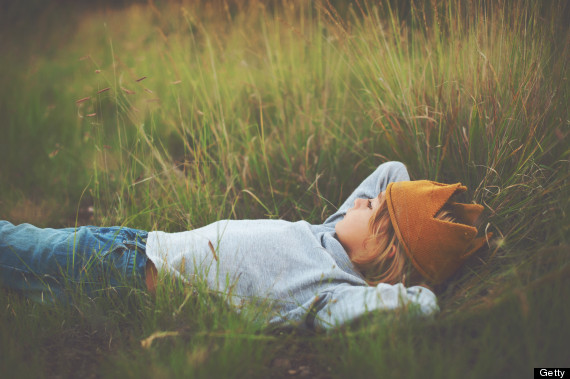
Creative types know, despite what their third-grade teachers may have said, that daydreaming is anything but a waste of time.

According to Kaufman and psychologist Rebecca L. McMillan, who co-authored a paper titled “Ode To Positive Constructive Daydreaming,” mind-wandering can aid in the process of “creative incubation.” And of course, many of us know from experience that our best ideas come seemingly out of the blue when our minds are elsewhere.

Although daydreaming may seem mindless, a 2012 study suggested it could actually involve a highly engaged brain state — daydreaming can lead to sudden connections and insights because it’s related to our ability to recall information in the face of distractions. Neuroscientists have also found that daydreaming involves the same brain processes associated with imagination and creativity.

They observe everything.

The world is a creative person’s oyster — they see possibilities everywhere and are constantly taking in information that becomes fodder for creative expression. As Henry James is widely quoted, a writer is someone on whom “nothing is lost.”

The writer Joan Didion kept a notebook with her at all times, and said that she wrote down observations about people and events as, ultimately, a way to better understand the complexities and contradictions of her own mind:

“However dutifully we record what we see around us, the common denominator of all we see is always, transparently, shamelessly, the implacable ‘I,'” Didion wrote in her essay On Keeping A Notebook. “We are talking about something private, about bits of the mind’s string too short to use, an indiscriminate and erratic assemblage with meaning only for its marker.”

They work the hours that work for them.

Many great artists have said that they do their best work either very early in the morning or late at night. Vladimir Nabokov started writing immediately after he woke up at 6 or 7 a.m., and Frank Lloyd Wright made a practice of waking up at 3 or 4 a.m. and working for several hours before heading back to bed. No matter when it is, individuals with high creative output will often figure out what time it is that their minds start firing up, and structure their days accordingly.

They take time for solitude.

In order to be open to creativity, one must have the capacity for constructive use of solitude. One must overcome the fear of being alone,” wrote the American existential psychologist Rollo May.

Artists and creatives are often stereotyped as being loners, and while this may not actually be the case, solitude can be the key to producing their best work. For Kaufman, this links back to daydreaming — we need to give ourselves the time alone to simply allow our minds to wander.

“You need to get in touch with that inner monologue to be able to express it,” he says. “It’s hard to find that inner creative voice if you’re … not getting in touch with yourself and reflecting on yourself.”

They turn life’s obstacles around.

Many of the most iconic stories and songs of all time have been inspired by gut-wrenching pain and heartbreak — and the silver lining of these challenges is that they may have been the catalyst to create great art. An emerging field of psychology called post-traumatic growth is suggesting that many people are able to use their hardships and early-life trauma for substantial creative growth. Specifically, researchers have found that trauma can help people to grow in the areas of interpersonal relationships, spirituality, appreciation of life, personal strength, and — most importantly for creativity — seeing new possibilities in life.

“A lot of people are able to use that as the fuel they need to come up with a different perspective on reality,” says Kaufman. “What’s happened is that their view of the world as a safe place, or as a certain type of place, has been shattered at some point in their life, causing them to go on the periphery and see things in a new, fresh light, and that’s very conducive to creativity.”

They seek out new experiences.

Creative people love to expose themselves to new experiences, sensations and states of mind — and this openness is a significant predictor of creative output.

“Openness to experience is consistently the strongest predictor of creative achievement,” says Kaufman. “This consists of lots of different facets, but they’re all related to each other: Intellectual curiosity, thrill seeking, openness to your emotions, openness to fantasy. The thing that brings them all together is a drive for cognitive and behavioral exploration of the world, your inner world and your outer world.”

They “fail up.”

Resilience is practically a prerequisite for creative success, says Kaufman. Doing creative work is often described as a process of failing repeatedly until you find something that sticks, and creatives — at least the successful ones — learn not to take failure so personally.

“Creatives fail and the really good ones fail often,” Forbes contributor Steven Kotler wrote in a piece on Einstein’s creative genius.

They ask the big questions.
Creative people are insatiably curious — they generally opt to live the examined life, and even as they get older, maintain a sense of curiosity about life. Whether through intense conversation or solitary mind-wandering, creatives look at the world around them and want to know why, and how, it is the way it is.

They people-watch.

Observant by nature and curious about the lives of others, creative types often love to people-watch — and they may generate some of their best ideas from it.

“[Marcel] Proust spent almost his whole life people-watching, and he wrote down his observations, and it eventually came out in his books,” says Kaufman. “For a lot of writers, people-watching is very important … They’re keen observers of human nature.”

They take risks.

Part of doing creative work is taking risks, and many creative types thrive off of taking risks in various aspects of their lives.

“There is a deep and meaningful connection between risk taking and creativity and it’s one that’s often overlooked,” contributor Steven Kotler wrote in Forbes. “Creativity is the act of making something from nothing. It requires making public those bets first placed by imagination. This is not a job for the timid. Time wasted, reputation tarnished, money not well spent — these are all by-products of creativity gone awry.”

They view all of life as an opportunity for self-expression.

Nietzsche believed that one’s life and the world should be viewed as a work of art. Creative types may be more likely to see the world this way, and to constantly seek opportunities for self-expression in everyday life.

“Creative expression is self-expression,” says Kaufman. “Creativity is nothing more than an individual expression of your needs, desires and uniqueness.”

They follow their true passions.

Creative people tend to be intrinsically motivated — meaning that they’re motivated to act from some internal desire, rather than a desire for external reward or recognition. Psychologists have shown that creative people are energized by challenging activities, a sign of intrinsic motivation, and the research suggests that simply thinking of intrinsic reasons to perform an activity may be enough to boost creativity.

“Eminent creators choose and become passionately involved in challenging, risky problems that provide a powerful sense of power from the ability to use their talents,” write M.A. Collins and T.M. Amabile in The Handbook of Creativity.

They get out of their own heads.

Kaufman argues that another purpose of daydreaming is to help us to get out of our own limited perspective and explore other ways of thinking, which can be an important asset to creative work.

“Daydreaming has evolved to allow us to let go of the present,” says Kaufman. “The same brain network associated with daydreaming is the brain network associated with theory of mind — I like calling it the ‘imagination brain network’ — it allows you to imagine your future self, but it also allows you to imagine what someone else is thinking.”

Research has also suggested that inducing “psychological distance” — that is, taking another person’s perspective or thinking about a question as if it was unreal or unfamiliar — can boost creative thinking.

They lose track of the time.
Creative types may find that when they’re writing, dancing, painting or expressing themselves in another way, they get “in the zone,” or what’s known as a flow state, which can help them to create at their highest level. Flow is a mental state when an individual transcends conscious thought to reach a heightened state of effortless concentration and calmness. When someone is in this state, they’re practically immune to any internal or external pressures and distractions that could hinder their performance.

You get into the flow state when you’re performing an activity you enjoy that you’re good at, but that also challenges you — as any good creative project does.

“[Creative people] have found the thing they love, but they’ve also built up the skill in it to be able to get into the flow state,” says Kaufman. “The flow state requires a match between your skill set and the task or activity you’re engaging in.”

They surround themselves with beauty.

Creatives tend to have excellent taste, and as a result, they enjoy being surrounded by beauty.

A study recently published in the journal Psychology of Aesthetics, Creativity, and the Arts showed that musicians — including orchestra musicians, music teachers, and soloists — exhibit a high sensitivity and responsiveness to artistic beauty.

They connect the dots.
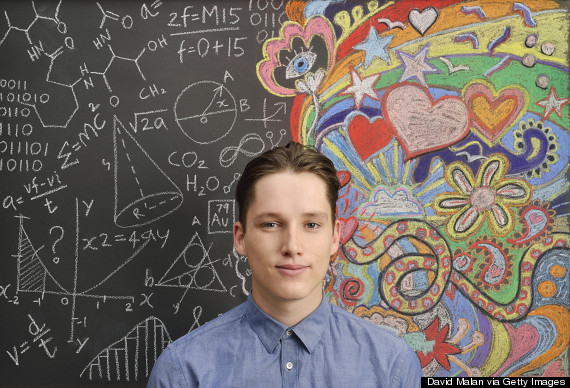
If there’s one thing that distinguishes highly creative people from others, it’s the ability to see possibilities where other don’t — or, in other words, vision. Many great artists and writers have said that creativity is simply the ability to connect the dots that others might never think to connect.

In the words of Steve Jobs:

“Creativity is just connecting things. When you ask creative people how they did something, they feel a little guilty because they didn’t really do it, they just saw something. It seemed obvious to them after a while. That’s because they were able to connect experiences they’ve had and synthesize new things.”

They constantly shake things up.

Diversity of experience, more than anything else, is critical to creativity, says Kaufman. Creatives like to shake things up, experience new things, and avoid anything that makes life more monotonous or mundane.

“Creative people have more diversity of experiences, and habit is the killer of diversity of experience,” says Kaufman.

They make time for mindfulness.

Creative types understand the value of a clear and focused mind — because their work depends on it. Many artists, entrepreneurs, writers and other creative workers, such as David Lynch, have turned to meditation as a tool for tapping into their most creative state of mind.

And science backs up the idea that mindfulness really can boost your brain power in a number of ways. A 2012 Dutch study suggested that certain meditation techniques can promote creative thinking. And mindfulness practices have been linked with improved memory and focus, better emotional well-being, reduced stress and anxiety, and improved mental clarity — all of which can lead to better creative thought.

http://www.huffingtonpost.com/2014/03/04/creativity-habits_n_4859769.html

Scientists have identified the age at which most childhood memories fade and are lost forever

child_2787607b

Most adults struggle to recall events from their first few years of life and now scientists have identified exactly when these childhood memories fade and are lost forever.

A new study into childhood amnesia – the phenomenon where early memories are forgotten – has found that it tends to take affect around the age of seven.

The researchers found that while most three year olds can recall a lot of what happened to them over a year earlier, these memories can persist while they are five and six, but by the time they are over seven these memories decline rapidly.

Most children by the age of eight or nine can only recall 35% of their experiences from under the age of three, according to the new findings.

The psychologists behind the research say this is because at around this age the way we form memories begins to change.

They say that before the age of seven children tend to have an immature form of recall where they do not have a sense of time or place in their memories.

In older children, however, the early events they can recall tend to be more adult like in their content and the way they are formed.

Children also have a far faster rate of forgetting than adults and so the turnover of memories tends to be higher, meaning early memories are less likely to survive.

The findings also help to explain why children can often have vivid memories of events but then have forgotten them just a couple of years later.

Professor Patricia Bauer, a psychologist and associate dean for research at Emory college of Arts and Science who led the study, said: “The paradox of children’s memory competence and adults’ seeming “incompetence” at remembering early childhood events is striking.

“Though forgetting is more rapid in the early childhood years, eventually it slows to adult levels.

“Thus memories that “survived” early childhood have some likelihood of being remembered later in life.”

Professor Bauer and her colleagues studied 83 children over several years for the research, which is published in the scientific journal Memory.

The youngsters first visited the laboratory at the age of three years old and discussed six unique events from their past, such as family outings, camping holidays, trips to the zoo, first day of school and birthdays.

The children then returned for a second session at the ages between five years old and nine years old to discuss the same events and were asked to recall details they had previously remembered.

The researchers found that between the ages of five and seven, the amount of the memories the children could recall remained between 63-72 per cent.

However, the amount of information the children who were 8 and nine years old dropped dramatically to 35 and 36 per cent.

When the researchers looked closely at the kind of details the children were and were not able to remember, they found marked age differences.

The memories of the younger children tended to lack autobiographical narrative such as place and time. Their memories also had less narrative, which the researchers believe may lead to a process known as “retrieval induced forgetting” – where the action of remembering causes other information to be forgotten.

As they children got older, however, the memories they recalled from early childhood tended to have these features.

Professor Bauer said: “The fact that the younger children had less-complete narratives relative to the older children, likely has consequences for the continued accessibility of early memories beyond the first decade of life.

“We may anticipate that memories that survive into the ninth or tenth year of life, when narrative skills are more developed, would continue to be accessible over time.”

http://www.telegraph.co.uk/science/science-news/10564312/Scientists-pinpoint-age-when-childhood-memories-fade.html

When doctors prescribe books to heal the mind

bibliotherapy_WEB

By Leah Price

More than 350 million people worldwide suffer from depression. Fewer than half receive any treatment; even fewer have access to psychotherapy. Around the turn of the millennium, antidepressants became the most prescribed kind of drug in the United States. In the United Kingdom, 1 in 6 adults has taken one.

But what if a scientist were to discover a treatment that required minimal time and training to administer, and didn’t have the side effects of drugs? In 2003, a psychiatrist in Wales became convinced that he had. Dr. Neil Frude noticed that some patients, frustrated by year-long waits for treatment, were reading up on depression in the meantime. And of the more than 100,000 self-help books in print, a handful often seemed to work.

This June, a program was launched that’s allowing National Health Service doctors across England to act upon Frude’s insight. The twist is that the books are not just being recommended, they’re being “prescribed.” If your primary care physician diagnoses you with “mild to moderate” depression, one of her options is now to scribble a title on a prescription pad. You take the torn-off sheet not to the pharmacy but to your local library, where it can be exchanged for a copy of “Overcoming Depression,” “Mind Over Mood,” or “The Feeling Good Handbook.” And depression is only one of over a dozen conditions treated. Other titles endorsed by the program include “Break Free from OCD,” “Feel the Fear and Do it Anyway,” “Getting Better Bit(e) by Bit(e),” and “How to Stop Worrying.”

The NHS’s Books on Prescription program is only the highest-profile example of a broader boom in “bibliotherapy.” The word is everywhere in Britain this year, although—or because—it means different things to different people. In London, a painter, a poet, and a former bookstore manager have teamed up to offer over-the-counter “bibliotherapy consultations”: after being quizzed about their literary tastes and personal problems, the worried well-heeled pay 80 pounds for a customized reading list. At the Reading Agency, a charity that developed and administers Books on Prescription, a second program called Mood-Boosting Books recommends fiction and poetry. The NHS’s public health and mental health budgets also fund nonprofits such as The Reader Organization, which gathers people who are unemployed, imprisoned, old, or just lonely to read poems and fiction aloud to one another.

At best, Books on Prescription looks like a win-win for both patients and book lovers. It boosts mental health while also bringing new library users in the door. Libraries loaned out NHS-approved self-help books 100,000 times in the first three months of the program; no doubt some of their borrowers must have picked up a novel or a memoir en route to the circulation desk. At worst, it’s hard to see what harm the program can do. Unlike drugs, books carry no risk of side effects like weight gain, dampened libido, or nausea (unless you read in the car).

For book lovers, an organization with as much clout as the NHS would seem to be a welcome ally. Yet its initiatives raise troubling questions about why exactly a society should value reading. What’s lost when a bookshelf is repurposed as a medicine cabinet—and when a therapist’s job gets outsourced to the page?

In 1916, the clergyman Samuel Crothers coined the term “bibliotherapy,” positing tongue-in-cheek that “a book may be a stimulant or a sedative or an irritant or a soporific.” In the intervening century, doctors, nurses, librarians, and social workers have more seriously championed “bibliopathy,” “bibliocounseling,” “biblioguidance,” and “literatherapy”—all variations on the notion that reading can heal.

Only recently, however, have the mental health effects of one genre—self-help books—been rigorously studied. As early as 1997, a randomized trial found bibliotherapy supervised by therapists no less effective in treating unipolar depression than individual or group therapy. More surprisingly, a 2007 literature review by the same researcher found that books treated anxiety just as effectively without a therapist’s guidance as with it. A 2004 meta-analysis comparing bibliotherapy for anxiety and depression to short-term talk therapy found books “as effective as professional treatment of relatively short duration.”

None of this means a book can outperform a therapist, even if it can underbid him. A 2012 meta-analysis of anxiety disorders concluding that “comparing self-help with waiting list gave a significant effect size of 0.84 in favour of self-help” nevertheless cautioned that “comparison of self-help with therapist-administered treatments revealed a significant difference in favour of the latter.” Translation: A book does worse than a therapist, but it’s better than nothing. And in the short term, at least, nothing is what many patients get.

Books on Prescription can be understood as an extension of larger changes in psychiatry over the past few decades. For most of the 20th century, psychodynamic therapy placed more emphasis on the therapist-patient relationship than on the content of the therapist’s words. More recently, insurers’ interest in cutting costs and researchers’ interest in protocols that can be measured and replicated have combined to nudge treatment toward short-term, standardized methods such as cognitive-behavioral therapy. Books take this trajectory to its logical conclusion. If your aim is less to help patients explore the underlying causes of their condition than to offer step-by-step instructions for managing it, then who cares whether the exercises emanate from a mouth, a manual, or even a smartphone app?

But even therapies like cognitive-behavioral therapy require the patient to feel recognized and understood by another human being. Asked how a printed page can mimic that face-to-face encounter, Frude comes up with an unexpected word: “magic.” The best books give the illusion of listening and caring, he explains, because authors who are also clinicians can draw on years of experience interacting with patients to leave each reader saying “that book was about me.” He does acknowledge that not every case fits books “off the peg” (or off the rack, as we say in the United States). But it’s a striking metaphor to choose—one that makes psychodynamic therapy sound like a luxury good as unattainable as Savile Row tailoring.

Where Frude sees magic, a cynic might smell pragmatism. Even short-term cognitive-behavioral therapy costs more than a $24.95 hardcover. But in any case, many patients read whether or not they have the NHS’s blessing. If recommended titles crowd out the misinformation that patients might otherwise stumble upon, whether in print or online, Books on Prescription will already have helped.

It’s hard not to notice that Books on Prescription was developed in the same years when American universities began to offer MOOCs, or massive open online courses. Even if an online course lacks the give-and-take of a seminar, it’s better than nothing. Like Books on Prescription, MOOCs scale up an activity whose face-to-face version was traditionally out of reach of the masses. Also like Books on Prescription, MOOCs create a cost-effective alternative that may eventually squeeze out personal contact even at the high end of the market.

That concern aside, it’s no surprise that self-help books can help the self. That literature might help, however, is a more controversial proposition. The other half of the Reading Agency’s two-pronged Reading Well initiative, Mood-Boosting Books, promotes fiction, poetry, and memoirs. Its annual list of “good reads for people who are anxious or depressed” mixes titles that represent characters experiencing anxiety or depression (Mark Haddon’s “A Spot of Bother”) with others calculated to combat those conditions. Some go for laughs (Sue Townsend’s “The Secret Diary of Adrian Mole Aged 13¾”); others, such as “A Street Cat Named Bob” and “The Bad Dog’s Diary,” read like printouts of PetTube.com. Others are darker and more demanding: Reading Well anointed Alice Munro’s short stories as a selection before the Nobel Prize Committee did.

The Reading Agency’s endorsement of imaginative reading stops short of recommending specific titles. Its website bristles with disclaimers that the works of literature are nominated by reading groups rather than tested by scientists. Yet the charity has given Mood-Boosting Books prestige—and the NHS has put hard cash behind them as well, providing some libraries with grants to purchase the recommended works of literature along with the “prescribed” self-help titles.

I ask Judith Shipman, who runs the Mood-Boosting Books program, whether recommending books “for people who are anxious or depressed” implies that poems or novels can treat those conditions. “I don’t think we could claim that they are therapy or a substitute for therapy,” she hazards after a long pause. “But for those who don’t quite need therapy, Mood-Boosting Books could be a nice little lift.”

Today it might seem commonplace to suggest that books are good for you. In the longer view, though, the hope that both literature and practical nonfiction can cure reverses an older belief by doctors that reading could cause physical and mental illness. In 1867, one expert cautioned that taking a book to bed could “injure your eyes, your brain, your nervous system.” Some social reformers proposed regulating books as if they were drugs. In 1883, the New York State Legislature debated whether to fine “any person who shall sell, loan, or give to any minor under sixteen years of age any dime novel or book of fiction, without first obtaining the written consent of the parent or guardian of such a minor.” As late as 1889, one politician called fiction “moral poison.”

As radio, TV, gaming, and eventually the Internet began to compete with books, though, fiction-reading came to look wholesome by comparison. Today, with only half of Americans reading any book for pleasure in a given year, reading is finding new champions from an unlikely quarter: science. This year, Science published a study concluding that reading about fictional characters increases empathy; in his 2011 book “The Better Angels of Our Nature,” the psychologist Steven Pinker correlated the rise of imaginative literature with a centuries-long decline in violence. And while correlation doesn’t imply causation, randomized trials have also attempted to link fiction-reading to physical health. In a 2008 study of 81 preteens, girls assigned fiction in which characters eat balanced breakfasts ended up with a lower body mass index than the control group. The Reading Well website itself cites a 2009 study that compared heart rates and muscle tension before and after various activities and found that reading is “68% better at reducing stress levels than listening to music; 100% more effective than drinking a cup of tea.” The numbers may be less telling than the fact that someone would think to compare books to tea in the first place.

It’s too early to predict the long-term effects of bibliotherapy programs. There’s little precedent for a government to make neuroscientists and psychiatrists the arbiters of what books should be read and why. And literary critics like me recoil from reducing the value of reading to a set of health metrics. But as library budgets shrink and any text longer than 140 characters gets crowded out by audio and video, white-coated experts may be the only ones prospective readers can hear. Racing to find out what happens next, seeing the world through a character’s eyes, wallowing in the play of language—all are becoming means to medical ends. Today, for an increasing number of people, the pleasures of reading require a doctor’s note.

http://www.bostonglobe.com/ideas/2013/12/22/when-doctors-prescribe-books-heal-mind/H2mbhLnTJ3Gy96BS8TUgiL/story.html

Could Pot Help Veterans With PTSD? Brain Scientists Say Maybe

pot

by Jon Hamilton

Veterans who smoke marijuana to cope with post-traumatic stress disorder may be onto something. There’s growing evidence that pot can affect brain circuits involved in PTSD.

Experiments in animals show that tetrahydrocannabinol, the chemical that gives marijuana its feel-good qualities, acts on a system in the brain that is “critical for fear and anxiety modulation,” says Andrew Holmes, a researcher at the National Institute on Alcohol Abuse and Alcoholism. But he and other brain scientists caution that marijuana has serious drawbacks as a potential treatment for PTSD.

The use of marijuana for PTSD has gained national attention in the past few years as thousands of traumatized veterans who fought in Iraq and Afghanistan have asked the federal government to give them access to the drug. Also, Maine and a handful of other states have passed laws giving people with PTSD access to medical marijuana.

But there’s never been a rigorous scientific study to find out whether marijuana actually helps people with PTSD. So lawmakers and veterans groups have relied on anecdotes from people with the disorder and new research on how both pot and PTSD works in the brain.

An Overactive Fear System

When a typical person encounters something scary, the brain’s fear system goes into overdrive, says Dr. Kerry Ressler of Emory University. The heart pounds, muscles tighten. Then, once the danger is past, everything goes back to normal, he says.

But Ressler says that’s not what happens in the brain of someone with PTSD. “One way of thinking about PTSD is an overactivation of the fear system that can’t be inhibited, can’t be normally modulated,” he says.

For decades, researchers have suspected that marijuana might help people with PTSD by quieting an overactive fear system. But they didn’t understand how this might work until 2002, when scientists in Germany published a mouse study showing that the brain uses chemicals called cannabinoids to modulate the fear system, Ressler says.

There are two common sources of cannabinoids. One is the brain itself, which uses the chemicals to regulate a variety of brain cells. The other common source is Cannabis sativa, the marijuana plant.

So in recent years, researchers have done lots of experiments that involved treating traumatized mice with the active ingredient in pot, tetrahydrocannabinol (THC), Ressler says. And in general, he says, the mice who get THC look “less anxious, more calm, you know, many of the things that you might imagine.”

Problems with Pot

Unfortunately, THC’s effect on fear doesn’t seem to last, Ressler says, because prolonged exposure seems to make brain cells less sensitive to the chemical.

Another downside to using marijuana for PTSD is side effects, says Andrew Holmes at the National Institute on Alcohol Abuse and Alcoholism. “You may indeed get a reduction in anxiety,” Holmes says. “But you’re also going to get all of these unwanted effects,” including short-term memory loss, increased appetite and impaired motor skills.

So for several years now, Holmes and other scientists have been testing drugs that appear to work like marijuana, but with fewer drawbacks. Some of the most promising drugs amplify the effect of the brain’s own cannabinoids, which are called endocannabinoids, he says. “What’s encouraging about the effects of these endocannabinoid-acting drugs is that they may allow for long-term reductions in anxiety, in other words weeks if not months.”

The drugs work well in mice, Holmes says. But tests in people are just beginning and will take years to complete. In the meantime, researchers are learning more about how marijuana and THC affect the fear system in people.

At least one team has had success giving a single dose of THC to people during something called extinction therapy. The therapy is designed to teach the brain to stop reacting to something that previously triggered a fearful response.

The team’s study found that people who got THC during the therapy had “long-lasting reductions in anxiety, very similar to what we were seeing in our animal models,” Holmes says. So THC may be most useful when used for a short time in combination with other therapy, he says.

As studies continue to suggest that marijuana can help people with PTSD, it may be unrealistic to expect people with the disorder to wait for something better than marijuana and THC, Ressler says. “I’m a pragmatist,” he says. “I think if there are medications including drugs like marijuana that can be used in the right way, there’s an opportunity there, potentially.”

http://www.npr.org/blogs/health/2013/12/23/256610483/could-pot-help-veterans-with-ptsd-brain-scientists-say-maybe

Sleep therapy becoming increasingly important in depression treatment

Insomnia-Electronic-Cigarettes

An insomnia therapy that scientists just reported could double the effectiveness of depression treatment is not widely available nor particularly well understood by psychiatrists or the public. The American Board of Sleep Medicine has certified just 400 practitioners in the United States to administer it, and they are sparse, even in big cities.

That may change soon, however. Four rigorous studies of the treatment are nearing completion and due to be reported in coming months. In the past year, the American Psychological Association recognized sleep psychology as a specialty, and the Department of Veterans Affairs began a program to train about 600 sleep specialists. So-called insomnia disorder is defined as at least three months of poor sleep that causes problems at work, at home or in relationships.

The need is great: Depression is the most common mood disorder, affecting some 18 million Americans in any given year, and most have insomnia.

“I think it’s increasingly likely that this kind of sleep therapy will be used as a possible complement to standard care,” said Dr. John M. Oldham, chief of staff at the Menninger Clinic in Houston. “We are the court of last resort for the most difficult-to-treat patients, and I think sleep problems have been extremely underrecognized as a critical factor.”

The treatment, known as cognitive behavioral therapy for insomnia, or CBT-I, is not widely available. Most insurers cover it, and the rates for private practitioners are roughly the same as for any psychotherapy, ranging from $100 to $250 an hour, depending on the therapist.

“There aren’t many of us doing this therapy,” said Shelby Harris, the director of the behavioral sleep medicine program at Montefiore Medical Center in the Bronx, who also has a private practice in Tarrytown, N.Y. “I feel like we all know each other.”

According to preliminary results, one of the four studies has found that when CBT-I cures insomnia — it does so 40 percent to 50 percent of the time, previous work suggests — it powerfully complements the effect of antidepressant drugs.

“There’s been a huge recognition that insomnia cuts across a wide variety of medical disorders, and there’s a need to address it,” said Michael T. Smith, a professor at the Johns Hopkins School of Medicine and president of the Society of Behavioral Sleep Medicine.

The therapy is easy to teach, said Colleen Carney, director of the sleep and depression lab at Ryerson University in Toronto, whose presentation at a conference of the Association for Behavioral and Cognitive Therapies in Nashville on Saturday raised hopes for depression treatment. “In the study we did, I trained students to administer the therapy,” she said in an interview, “and the patients in the study got just four sessions.”

CBT-I is not a single technique but a collection of complementary ideas. Some date to the 1970s, others are more recent. One is called stimulus control, which involves breaking the association between being in bed and activities like watching television or eating. Another is sleep restriction: setting a regular “sleep window” and working to stick to it. The therapist typically has patients track their efforts on a standardized form called a sleep diary. Patients record bedtimes and when they wake up each day, as well as their perceptions about quality of sleep and number of awakenings. To this the therapist might add common-sense advice like reducing caffeine and alcohol intake, and making sure the bedroom is dark and quiet.

Those three elements — stimulus control, restriction and common sense — can do the trick for many patients. For those who need more, the therapist applies cognitive therapy — a means of challenging self-defeating assumptions. Patients fill out a standard questionnaire that asks how strongly they agree with statements like: “Without an adequate night’s sleep, I can hardly function the next day”; “I believe insomnia is the result of a chemical imbalance”; and “Medication is probably the only solution to sleeplessness.” In sessions, people learn to challenge those beliefs, using evidence from their own experiences.

“If someone has the belief that if they don’t sleep, they’ll somehow fail the next day, I’ll ask, ‘What does failure mean? You’ll be slower at work, not get everything done, not make dinner?’ ” Dr. Harris said. “Then we’ll look at the 300 nights they didn’t sleep well over the past few years and find out they managed; it might not have been as pleasant as they liked, but they did not fail. That’s how we challenge those kinds of thoughts.”

Dr. Aaron T. Beck, an emeritus professor of psychiatry at the University of Pennsylvania who is recognized as the father of cognitive therapy for mental disorders, said the techniques were just as applicable to sleep problems. “In fact, I have used it myself when I occasionally have insomnia,” he said by email.

In short-term studies of a month or two, CBT-I has been about as effective as prescription sleeping pills. But it appears to have more staying power. “There’s no data to show that if you take a sleeping pill — and then stop taking it — that you’ll still be good six months later,” said Jack Edinger, a professor at National Jewish Health in Denver and an author, with Dr. Carney, of “Overcoming Insomnia: A Cognitive-Behavioral Therapy Approach.”

“It might happen, but those certainly aren’t the people who come through my door,” he said.

Dr. Edinger and others say that those who respond well to CBT-I usually do so quickly — in an average of four sessions, and rarely more than eight. “You’re not going to break the bank doing this stuff; it’s not a marriage,” he said. “You do it for a fixed amount of time, and then you’re done. Once you’ve got the skills, they don’t go away.”