Will we soon be able to CHAT with the dolphins?

This summer, it’s possible that we’ll be able to communicate directly with dolphins through a new device called the Cetacean Hearing and Telemetry, or CHAT, interface.

 CHAT is an iPhone-sized device with two hydrophones attached and a unique one-handed keyboard called a twiddler, which, when combined, is designed to be worn around a diver’s neck while swimming with wild dolphins.

Inside this box is a processor that contains a complex algorithm or pattern detector that might be able to learn to identify the fundamental units of dolphin acoustic communication.

This could enable humans to decode dolphin-speak and then reply.

http://www.independent.co.uk/environment/nature/whats-that-you-say-flipper-experts-develop-tools-to-talk-to-dolphins-2294834.html

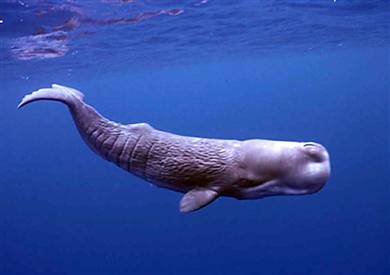
Do sperm whales have names?


Subtle variations in sperm whale calls suggest that individuals announce themselves with discrete personal identifiers. To put it another way, they might have names.

It’s long been known that sperm whales use click sequences, or codas, to communicate across miles of deep ocean. Scientists have now studied a particular coda made by sperm whales around the world. Called 5R, it’s composed of five consecutive clicks, and superficially appears to be identical in each whale. Analyzed closely, however, variations in click timing emerge. Each of the whales studied seems to have its own personal 5R riff and the differences were significant.

http://www.wired.com/wiredscience/2011/03/sperm-whale-names/#

The Water Flea has more genes than humans.

This tiny, near-microscopic water flea, daphnia-pulex, has more genes than humans. 

This freshwater zooplankton is the first crustacean to have its genome sequenced, and its 31,000 genes crowns it the animal with the most genes so far.  Humans have about 20,000 to 25,000 genes.

As well as having a massive number of genes, more than a third of them have never been seen before in other animals.

http://www.wired.com/wiredscience/2011/02/water-flea-genome/

http://www.newscientist.com/blogs/shortsharpscience/2011/02/diminutive-flea-packs-genetic.html 

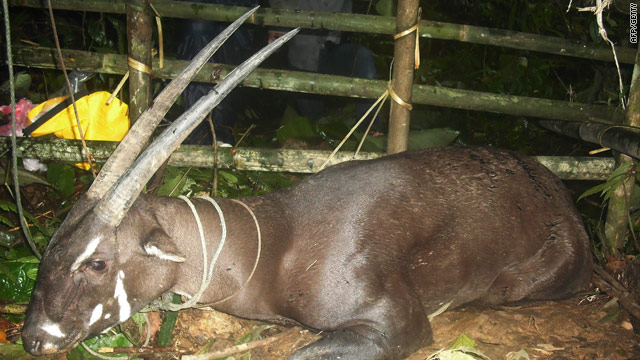
Asian Unicorn

Scientists have confirmed the first sighting in more than a decade of one of the world’s rarest animals — a horned forest-dwelling bovine –  the saola, sometimes called the Asian “unicorn.”

The animal was captured by villagers in Laos in August, according to the International Union for the Conservation of Nature.

The villagers took the saola back to their village in Bolikhamxay province and Laotian conservation authorities sent a team to check on the animal. The creature, likely weakened from its time in captivity, died shortly after that team arrived.

In Vietnam, 40,000 acres has been placed in reserve in order to protect the country’s saola population.  The new reserve is located in the Annamite Mountains, along the Laotian border. 

http://edition.cnn.com/2010/WORLD/asiapcf/09/17/laos.asian.unicorn.saola/index.html?iref=obinsite

The Optimism Bias – our brains may be hardwired for hope

The belief that the future will be much better than the past and present is known as the optimism bias. It abides in every race, region and socioeconomic bracket. A growing body of scientific evidence suggests that an optmistic outlook is hardwired into our brains.  People in good mental health expect the furure to be slightly better than it ends up being.  People with severe depression pessimistically predict things to turn out worse than they actually do.  Interestingly, people with mild depression are actually the most accurate in predicting the outcome of future events.    Read more: http://www.time.com/time/health/article/0,8599,2074067,00.html#ixzz1OMmtmfsW

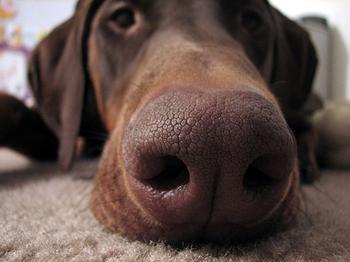
Dogs can sniff out colon cancer

Japanese scientists discovered that a Labrador Retriever could detect a chemical produced by colon cancer cells by smelling human breath, even in the early stages of the disease. 

The dog was almost as accurate as a colonoscopy.

The eight-year-old Labrador completed 74 sniff tests, consisting of sniffing five breath or stool samples at a time in which one was cancerous. The samples came from 48 people with confirmed colorectal cancer and 258 volunteers with no cancer. Half of the comparison samples came from people with bowel polyps, which are benign growths that are thought to be a precursor of colorectal cancer.

The dog correctly identified the cancerous samples in 33 out of 36 of the breath tests and 37 of 38 stool tests.

http://www.livescience.com/11708-dog-sniffs-bowel-cancer.html

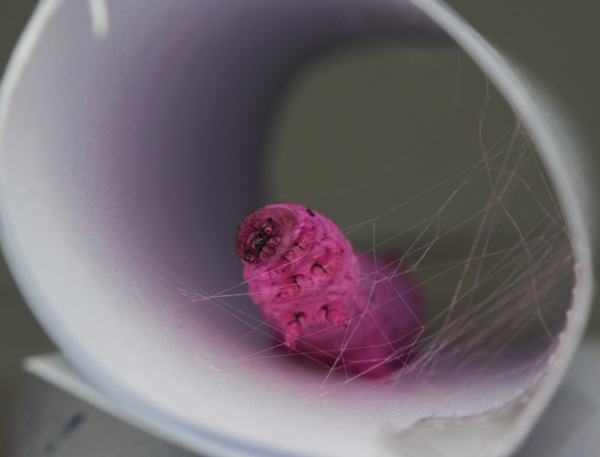
Fluorescent Silk


Silkworms can be put on a special diet of mullberries and fluorescent dye to produce fluorescent silk.   According to researchers at the Institute of Materials Research and Engineering (IMRE) in Singapore, the process is “simple and cheap enough to be translated to an industrial scale,” which would be more environmentally friendly by reducing consumption of water and dyes.  This approach could also potentially be adapted to create functional silk with antibacterial, anticoagulant or anti-inflammatory properties for use in wound-dressings.

http://www.newscientist.com/blogs/shortsharpscience/2011/03/silkworms-produce-fluorescent.html

Ulcers and Parkinson’s Disease

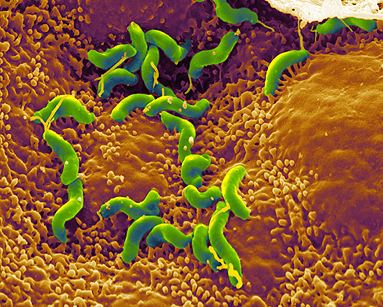
Researchers at a meeting of the American Society for Microbiology last week  reported that Helicobacter pylori, a bacterium that lives in the stomachs of about half the people in the world, may help trigger Parkinson’s disease.

Parkinson’s disease is a neurological disorder that kills dopamine-producing cells in parts of the brain that control movement.  About 60,000 new cases of the disease are diagnosed each year in the United States.

 H. pylori causes chronic low-level inflammation of the stomach lining and is strongly linked to the development of duodenal and gastric ulcers, and stomach cancer.

Previous studies suggested that people with Parkinson’s disease are more likely than healthy people to have had ulcers at some point in their lives and are more likely to be infected with H. pylori.

Middle-aged mice infected with H.pylori develop abnormal movement patterns over several months of infection.  Helicobacter-infected mice make less dopamine in parts of the brain that control movement, possibly indicating that dopamine-making cells are dying just as they do in Parkinson’s disease patients.

Young mice, on the other hand, don’t show any signs of movement problems after infection with the bacterium. 

The bacteria didn’t have to be alive to cause the problem. Feeding mice killed H. pylori produced the same effect, suggesting that some biochemical component of the bacterium is responsible.

A candidate for the disease-causing molecule is modified cholesterol. H. pylori  can’t make its own cholesterol, so it steals cholesterol from its host and then sticks a sugar molecule on it. The structure of the modified cholesterol resembles a toxin from a tropical cycad; people in Guam who have eaten the plant’s seeds have developed a disease called ALS-parkinsonism dementia complex.

http://www.healthzone.ca/health/newsfeatures/article/997548–a-strain-of-ulcer-causing-bacteria-could-lead-to-parkinson-s-study

Using Worms to Treat Disease


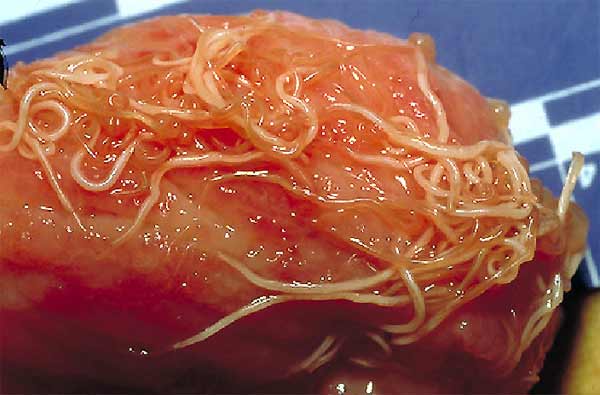
A father’s determination to help his son resulted in an experimental treatment for autism that uses roundworms to modulate inflammatory immune responses.  The worms might also be helpful for treating other diseases.

Read about it in this article, which also includes videos describing the work:   http://www.the-scientist.com/article/display/57941/

Giant Ant Hill Excavated

Ever wonder what the interior of a giant ant hill looks like? Wonder no more, as a group of researchers filled a giant ant hill with 10-tons of concrete and then conducted an excavation.

Beneath the surface, the megalopolis spans 50-square-meters and goes 8-meters into the earth.

And here’s the full show on Ants.  Pretty incredibly stuff.

Thanks to Kebmodee for bringing this to the attention of the It’s Interesting community.