Huge new flying frog discovered in Vietnam

new-flying-frog-discovered

A NEW SPECIES OF flying frog has been discovered close to Vietnam’s largest city, surprising researchers.

Dr Jodi Rowely, a biologist from the Australian Museum who led the discovery, was stunned to find the 10cm frog less than 100km from Ho Chi Minh City, one of South East Asia’s largest urban centres with a population of over 9 million people.

“To discover a previously unknown species of frog, I typically have to climb rugged mountains, scale waterfalls and push my way through dense and prickly rainforest vegetation,” says Jodi.

“I certainly didn’t expect to find a new species of frog sitting on a fallen tree in lowland forest criss-crossed by a network of paths made by people and water buffalo, and completely surrounded by a sea of rice paddies,” says Jodi.

New amphibian found near Ho Chi Minh City
The frog is bright green with a white belly and has been named Helen’s tree frog (Rhacophorus helenae) after Jodi’s mother. The discovery was published last month in The Journal of Herpetology.

Jodi said the large frog has likely evaded biologists until now by spending most of its time out of sight, in the canopy of large trees. The frog has webbed hands and feet like parachutes, allowing it to glide from tree to tree.

To date, the species had only been found in two patches of lowland forest close to Ho Chi Minh City. Lowland forests are among the most threatened habitats in the world. In 2011 the Javan Rhino which relied on lowland forests was confirmed extinct in Vietnam.

“The new species is at great risk due to ongoing habitat loss and degradation – the greatest threat to amphibians throughout Southeast Asia – but hopefully it has been discovered just in time to help protect it,” says Jodi.

http://www.australiangeographic.com.au/journal/huge-new-flying-frog-discovered-in-vietnam.htm?_tmc=s1fuf2HtTMTwOjr3WxI17LME68lov6cs-fubIOVdTCg

Pet Chicken ‘Cluck Cluck’ Saves Couple From Fire

A Wisconsin couple says a pet chicken named Cluck Cluck saved them from a fire. Dennis Murawska, 59, said Cluck Cluck woke his wife with loud clucking from its cage in the basement two floors below about 6:15am yesterday. They got out in time, and firefighters later saved the chicken. “We are used to hearing about a dog or cat or something, but we never heard of a chicken waking up a resident for a fire,” says the fire chief in Alama Center. “That’s pretty amazing.”

Cluck Cluck came from a nearby farm. When the chicken began wandering over to Murawska’s house, his neighbor said he could kill it because it wasn’t producing any eggs. But Murawska felt sorry for Cluck Cluck because she had a mutated foot and decided to keep her. He fed the bird and built a coop, and then his wife let Cluck Cluck into the basement on cold nights. “I spent way more money than I ever should’ve,” Murawska said by telephone. “I guess it paid off.”

http://www.newser.com/story/160053/pet-chicken-saves-couple-from-fire.html?utm_source=syn&utm_medium=goognews&utm_campaign=chan3_feed

Old termites blow themselves up to save the nest

sn-termites

When trekking through a forest in French Guiana to study termites, a group of biologists noticed unique spots of blue on the backs of the insects in one nest. Curious, one scientist reached down to pick up one of these termites with a pair of forceps. It exploded. The blue spots, the team discovered, contain explosive crystals, and they’re found only on the backs of the oldest termites in the colony. The aged termites carry out suicide missions on behalf of their nest mates.

After their initial observation, the team carried out field studies of Neocapritermes taracua termites and discovered that those with the blue spots also exploded during encounters with other species of termites or larger predators. The researchers report online today in Science that the secretions released during the explosion killed or paralyzed opponents from a competing termite species. However, if the scientists removed the blue crystal from the termites, their secretions were no longer toxic.

Back in their labs, scientists led by biochemist Robert Hanus of the Academy of Sciences of the Czech Republic in Prague went on to show that the blue termites always had shorter, worn-down mandibles than others from the same species, indicating that they were older. Then, the researchers removed the contents of the blue pouches and analyzed them. They contained a novel protein that is unusually rich with copper, suggesting that it’s an oxygen binding-protein. Rather than being toxic itself, it likely is an enzyme that converts a nontoxic protein into something toxic.

“What happens is when the termites explode, the contents of the back pouch actually interact with secretions from the salivary gland and the mixture is what is toxic,” explains Hanus. It’s the first time two interacting chemicals have been shown responsible for a defense mechanism in termites, he says.

Researchers already knew that many social insects change roles in their colony as they age. Moreover, it’s well known that a number of species of termites explode, often oozing sticky or smelly fluid onto their opponent. But in previously observed cases, the explosive or noxious material is found in the termites’ heads, and the suicide missions are the responsibility of a distinct caste of soldier termites, not aging workers. Since N. taracua have soldiers, it’s especially surprising to see workers exploding, says Hanus.

“This is a quirky, funny natural history,” says behavioral ecologist Rebeca Rosengaus of Northeastern University in Boston, who was not involved in the study. “What’s new and interesting here is that this is found to be an aspect of colony-related age organization,” says biologist James Traniello of Boston University. And the placement and chemistry of the blue crystals is unique, he says. The findings illustrate the vast diversity of social structures and defense mechanisms that the more than 3000 species of termites have evolved over time, Traniello says.

One question that remains is exactly how aging triggers the accumulation of the blue crystals. “We’re still not 100% sure what the role of the blue protein is,” says Hanus. “That’s definitely something which we want to perform further research on.”

http://news.sciencemag.org/sciencenow/2012/07/old-termites-blow-themselves-up-.html

Thanks to Dr. Rajadhyaksha for bringing this to the attention of the It’s Interesting community.

College Student’s Turtle Project

ap_clemson_turtle_ll_121227_wg

Clemson University student Nathan Weaver set out to determine how to help turtles cross the road. He ended up getting a glimpse into the dark souls of some humans.

Weaver put a realistic rubber turtle in the middle of a lane on a busy road near campus. Then he got out of the way and watched over the next hour as seven drivers swerved and deliberately ran over the animal. Several more apparently tried to hit it but missed.

“I’ve heard of people and from friends who knew people that ran over turtles. But to see it out here like this was a bit shocking,” said Weaver, a 22-year-old senior in Clemson’s School of Agricultural, Forest and Environmental Sciences.

To seasoned researchers, the practice wasn’t surprising.

The number of box turtles is in slow decline, and one big reason is that many wind up as roadkill while crossing the asphalt, a slow-and-steady trip that can take several minutes.

Sometimes humans feel a need to prove they are the dominant species on this planet by taking a two-ton metal vehicle and squishing a defenseless creature under the tires, said Hal Herzog, a Western Carolina University psychology professor.

“They aren’t thinking, really. It is not something people think about. It just seems fun at the time,” Herzog said. “It is the dark side of human nature.”

Jeffrey Collins/AP PhotoClemson University student Nathan Weaver… View Full Size Jeffrey Collins/AP PhotoClemson University student Nathan Weaver holds a fake turtle he is using in his research to try and save the animals, Dec. 12, 2012, in Clemson, S.C.
Herzog asked a class of about 110 students getting ready to take a final whether they had intentionally run over a turtle, or been in a car with someone who did. Thirty-four students raised their hands, about two-thirds of them male, said Herzog, author of a book about humans’ relationships with animals, called “Some We Love, Some We Hate, Some We Eat.”

Weaver, who became interested in animals and conservation through the Boy Scouts and TV’s “Crocodile Hunter” Steve Irwin, wants to figure out the best way to get turtles safely across the road and keep the population from dwindling further.

Among the possible solutions: turtle underpasses or an education campaign aimed at teenagers on why drivers shouldn’t mow turtles down.

The first time Weaver went out to collect data on turtles, he chose a spot down the road from a big apartment complex that caters to students. He counted 267 vehicles that passed by, seven of them intentionally hitting his rubber reptile.

He went back out about a week later, choosing a road in a more residential area. He followed the same procedure, putting the fake turtle in the middle of the lane, facing the far side of the road, as if it was early in its journey across. The second of the 50 cars to pass by that day swerved over the center line, its right tires pulverizing the plastic shell.

“Wow! That didn’t take long,” Weaver said.

Other cars during the hour missed the turtle. But right after his observation period was up, before Weaver could retrieve the model, another car moved to the right to hit the animal as he stood less than 20 feet away.

“One hit in 50 cars is pretty significant when you consider it might take a turtle 10 minutes to cross the road,” Weaver said.

Running over turtles even has a place in Southern lore.

In South Carolina author Pat Conroy’s semi-autobiographical novel “The Great Santini,” a fighter-pilot father squishes turtles during a late-night drive when he thinks his wife and kids are asleep. His wife confronts him, saying: “It takes a mighty brave man to run over turtles.”

The father denies it at first, then claims he hits them because they are a road hazard. “It’s my only sport when I’m traveling,” he says. “My only hobby.”

That hobby has been costly to turtles.

It takes a turtle seven or eight years to become mature enough to reproduce, and in that time, it might make several trips across the road to get from one pond to another, looking for food or a place to lay eggs. A female turtle that lives 50 years might lay over 100 eggs, but just two or three are likely to survive to reproduce, said Weaver’s professor, Rob Baldwin.

Snakes also get run over deliberately. Baldwin wishes that weren’t the case, but he understands, considering the widespread fear and loathing of snakes. But why anyone would want to run over turtles is a mystery to the professor.

“They seem so helpless and cute,” he said. “I want to stop and help them. My kids want to stop and help them. My wife will stop and help turtles no matter how much traffic there is on the road. I can’t understand the idea why you would swerve to hit something so helpless as a turtle.”

http://abcnews.go.com/US/wireStory/college-students-turtle-project-takes-dark-twist-18076298?page=2

Thanks to Kebmodee for bringing this to the attention of the It’s Interesting community.

Husband and wife live for 6 years with Idaho wolf pack

wolf 1

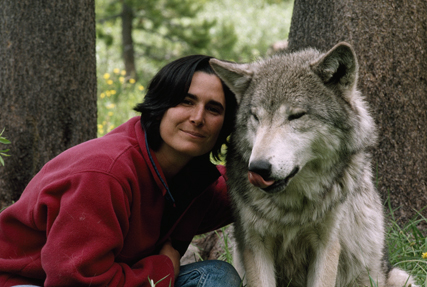
Jamie Dutcher socializing with the alpha male of The Sawtooth Pack.

Jamie Dutcher with the gray wolves of The Sawtooth Pack.

Veteran documentarians Jim and Jamie Dutcher, a mile in someone else’s shoes was six years living among a pack of wolves in an effort to better understand the creatures famously villainized in folklore and history.

From 1990 to 1996, husband and wife documentary team Jim and Jamie Dutcher lived without electricity and running water in a tent within a 25-acre enclosure on the outskirts of the Sawtooth Wilderness in Idaho, photographing and filming the Sawtooth Pack, a family of wolves maintained within the 25-acre territory. Present from the wolves’ cubhood on, the Dutchers gained the trust of the normally aloof and elusive animals, allowing them intimate insight into the lives of the creatures once hunted to the brink of extinction.

The Dutchers spent these years deeply entwined with the members of the wolf pack. While the wolves stayed in the enclosure, they were free to establish their own society, form bonds, resolve disputes, and choose their leaders, all under the respectful watch of the Dutchers. Acclimated to the presence of cameras and the pair of humans, the wolves exposed parts of their lives never before witnessed, revealing a creature of deep family bonds, playful curiosity, complex hierarchies, natural strength, and keen intelligence. The Dutchers were unable to capture the Sawtooth Pack wolves as hunters, but they did capture them as the participants in a sophisticated social structure centered around family—a feature of the wolves’ lives that resonates deeply with our own.

And the Dutchers’ discoveries are illuminating. Never has any other creature been as revered and reviled, captured our imaginations and our minds. Once cast as the “big bad wolf” and the enemy of cattle ranchers, our history with wolves is fraught with misunderstanding, violence, and controversy. Through this project, the members of the Sawtooth Pack have become ambassadors for wolves and the importance of education in the conservation efforts.

http://www.takepart.com/article/2012/09/24/documentarians-capture-stunning-intimate-photos-secret-lives-wolves

Strengthened link between climate change and volcanic eruptions established

volcano1

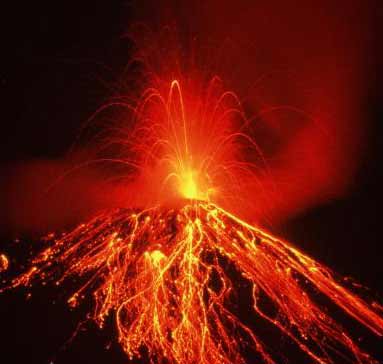
It has long been known that volcanic activity can cause short-term variations in climate. Now, researchers at the GEOMAR Helmholtz Centre for Ocean Research Kiel (Germany), together with colleagues from Harvard University have found evidence that the reverse process also occurs: Climate affects volcanic activity. “In times of global warming, the glaciers are melting on the continents relatively quickly. At the same time the sea level rises. The weight on the continents decreases, while the weight on the oceanic tectonic plates increases. The stress changes within in the earth to open more routes for ascending magma” says geophysicist Dr Marion Jegen from GEOMAR, who participated in the study. The rate of global cooling at the end of the warm phases is much slower, so there are less dramatic stress changes during these times.

“If you follow the natural climate cycles, we are currently at the end of a really warm phase. Therefore, things are volcanically quieter now. The impact from man-made warming is still unclear based on our current understanding” says GEOMAR volcanologist Dr Steffen Kutterolf, who has been with SFB 574 since its founding.
In 1991, it was a disaster for the villages nearby the erupting Philippine volcano Pinatubo. But the effects were felt even as far away as Europe. The volcano threw up many tons of ash and other particles into the atmosphere causing less sunlight than usual to reach the Earth’s surface. For the first few years after the eruption, global temperatures dropped by half a degree. In general, volcanic eruptions can have a strong short-term impact on climate. Conversely, the idea that climate may also affect volcanic eruptions on a global scale and over long periods of time is completely new.

Researchers at GEOMAR Helmholtz Centre for Ocean Research Kiel (Germany) and Harvard University in Massachusetts (USA) have now found strong evidence for this relationship from major volcanic eruptions around the Pacific Ocean over the past 1 million years. They have presented their results in the latest issue of the international journal Geology.

For more than ten years the project has been extensively exploring volcanoes of Central America. “Among others pieces of evidence, we have observations of ash layers in the seabed and have reconstructed the history of volcanic eruptions for the past 460,000 years,” says Kutterolf. Particular patterns started to appear. “There were periods when we found significantly more large eruptions than in others” says Kutterolf.

After comparing these patterns with the climate history, there was an amazing match. The periods of high volcanic activity followed fast, global temperature increases and associated rapid ice melting. To expand the scope of the discoveries, Dr Kutterolf and his colleagues studied other cores from the entire Pacific region. These cores had been collected as part of the International Integrated Ocean Drilling Program (IODP) and its predecessor programmes. They record more than a million years of the Earth’s history.

“In fact, we found the same pattern from these cores as in Central America” says Jegen. Together with colleagues at Harvard University, the geologists and geophysicists searched for a possible explanation. They found it with the help of geological computer models.

The next step is to investigate shorter-term historical variations to better understand implications for the present day.

For more information: Kutterolf, S., M. Jegen, J. X. Mitrovica, T. Kwasnitschka, A. Freundt, P. J. Huybers (2012): A detection of Milankovitch frequencies in global volcanic activity. Geology, G33419.1, dx.doi.org/10.1130/G33419.1 Journal reference: Geology

http://www.dailygalaxy.com/my_weblog/2012/12/ecoalert-strong-link-between-climate-change-and-volcanic-eruptions-discovered.html

Mass squid suicides in California

shutterstock_45976420

Thousands of jumbo squid have recently beached themselves on central California shores, committing mass “suicide.” But despite decades of study into the phenomenon in which the squid essentially fling themselves onto shore, the cause of these mass beachings have been a mystery.

But a few intriguing clues suggest poisonous algae that form so-called red tides may be intoxicating the Humboldt squid and causing the disoriented animals to swim ashore in Monterey Bay, said William Gilly, a marine biologist at Stanford University’s Hopkins Marine Station in Pacific Grove, Calif.

Each of the strandings has corresponded to a red tide, in which algae bloom and release an extremely potent brain toxin, Gilly said. This fall, the red tides have occurred every three weeks, around the same time as the squid beachings, he said. (The squid have been stranding in large numbers for years, with no known cause.)

For decades, beach lovers have reported bizarre mass strandings where throngs of Humboldt squid (Dosidicus gigas), also called jumbo squid, fling themselves ashore, said Hannah Rosen, a marine biology doctoral candidate at the Hopkins Marine Station.

“For some reason they just start swimming for the beach,” Rosen told LiveScience. “They’ll asphyxiate because they’re out of the water too long. People have tried to throw them back in the water, and a lot of times the squid will just head right back for the beach.”

Before this, scientists in 2002 and 2006 noticed mass squid strandings from the Gulf of Mexico all the way to Alaska, Gilly said.

But the cause of the mass squid deaths was an enigma. The strandings seem to happen whenever schools of squid invade new territory, leading some to suggest the creatures simply get lost and don’t realize they are out of the water until it is too late. The squid washing ashore are juvenile size, about 1 foot (0.3 meters) long, and hadn’t been traveled to Monterey Bay before this fall. This season’s stranding, which started Oct. 9, happened around the time Humboldt squid entered the bay.

Other scientists have proposed that red tides that release a lethal toxin called domoic acid may be intoxicating the squid and disorienting them. But when researchers tested the stranded squid for domoic acid, they found only trace amounts of the chemical, Gilly said.

The poisonous chemical mimics a brain chemical called glutamate in mammals, though domoic acid is 10,000 times more potent than glutamate. The similar structure means domoic acid can bind to glutamate receptors on neurons. In turn, the receptor opens channels that let calcium into the cell. At high levels the poison causes brain cells to go haywire and fire like crazy, so much that they fill up with calcium, burst and die, Gilly said. [10 Weird Facts About the Brain]

Humans who eat shellfish contaminated with this red-tide toxin get amnesic shellfish poisoning, because the toxin destroys their brain’s memory center called the hippocampus. Sea lions that eat similarly poisoned anchovies or krill go into seizures or become disoriented and behave bizarrely.

However, no one has tested the effects of lower levels of the chemical on squid.

Potential cause?

But new evidence points to the red tide as at least one cause of the mass strandings. While most sea life follows daily tidal or lunar cycles, the mass deaths seem to be happening every three weeks. That led one of Gilly’s graduate students, R. Russell Williams, to see if something in the environment was leading them astray.

“He was fixated in finding some kind of environmental signal,” Gilly said.

Russell found that red tides occurred every three weeks, around the same time as the squid strandings, suggesting a link, Gilly said.

While past researchers have only found trace levels of the toxic red-tide chemical in stranded squid, low doses of domoic could essentially be making the squid drunk. Combined with navigating unfamiliar waters, that could cause the mass die-offs.

“They could be tipped over the edge by something like domoic acid that might cloud their judgment,” Gilly said.

This isn’t the first time Gilly and his colleagues have been led on a CSI-like hunt for Humboldt squid. In 2011, they figured out why the elusive jumbo squid left their usual feeding grounds off the Baja California coast in the winter of 2009 to 2010. Apparently, the squid had moved north, following their prey, small, bioluminescent fish called lantern fish, which had also moved north due to El Niño weather patterns.

http://www.livescience.com/25550-mass-squid-suicide.html

Spider constructs fake spider to fool enemies

spiderfake

This isn’t a real spider. It’s a decoy spider built from twigs, leaves, debris and dead insects.

Researchers discovered the spider in the Peruvian Amazon, and even though its decoy looks like a medium-sized spider that’s about an inch across, the impressive fake was actually made by a tiny, tricky 5-millimeter spider. That spider behind the curtain is probably, the researchers say, a new species of Cyclosa, a genus known to pull similar stunts. But those creations are relatively un-spider-like–nothing at this level of detail. The smaller builder-spider even moves back and forth, giving the impression that the decoy spider is moving and, in the process, confusing predators into attacking the decoy instead.

http://www.popsci.com/science/article/2012-12/spider-builds-fake-spiders-psych-out-predators

Are Bacteria Making You Hungry?

hunry

Over the last half decade, it has become increasingly clear that the normal gastrointestinal (GI) bacteria play a variety of very important roles in the biology of human and animals. Now Vic Norris of the University of Rouen, France, and coauthors propose yet another role for GI bacteria: that they exert some control over their hosts’ appetites. Their review was published online ahead of print in the Journal of Bacteriology.

This hypothesis is based in large part on observations of the number of roles bacteria are already known to play in host biology, as well as their relationship to the host system. “Bacteria both recognize and synthesize neuroendocrine hormones,” Norris et al. write. “This has led to the hypothesis that microbes within the gut comprise a community that forms a microbial organ interfacing with the mammalian nervous system that innervates the gastrointestinal tract.” (That nervous system innervating the GI tract is called the “enteric nervous system.” It contains roughly half a billion neurons, compared with 85 billion neurons in the central nervous system.)

“The gut microbiota respond both to both the nutrients consumed by their hosts and to the state of their hosts as signaled by various hormones,” write Norris et al. That communication presumably goes both ways: they also generate compounds that are used for signaling within the human system, “including neurotransmitters such as GABA, amino acids such as tyrosine and tryptophan — which can be converted into the mood-determining molecules, dopamine and serotonin” — and much else, says Norris.

Furthermore, it is becoming increasingly clear that gut bacteria may play a role in diseases such as cancer, metabolic syndrome, and thyroid disease, through their influence on host signaling pathways. They may even influence mood disorders, according to recent, pioneering studies, via actions on dopamine and peptides involved in appetite. The gut bacterium, Campilobacter jejuni, has been implicated in the induction of anxiety in mice, says Norris.

But do the gut flora in fact use their abilities to influence choice of food? The investigators propose a variety of experiments that could help answer this question, including epidemiological studies, and “experiments correlating the presence of particular bacterial metabolites with images of the activity of regions of the brain associated with appetite and pleasure.”

1.V. Norris, F. Molina, A. T. Gewirtz. Hypothesis: bacteria control host appetites. Journal of Bacteriology, 2012; DOI: 10.1128/JB.01384-12

http://www.sciencedaily.com/releases/2012/12/121219142301.htm

Multi-Tasking Humpback Whales Sing While Feeding, Not Just Breeding

whale

Humpback whales are famed for their songs, most often heard in breeding season when males are competing to mate with females. In recent years, however, reports of whale songs occurring outside traditional breeding grounds have become more common. A new study may help explain why.

Humpbacks sing for their supper — or at least, they sing while they hunt for it.

The research, published December 19 in PLoS ONE, uncovers the whales’ little-understood acoustic behavior while foraging.

It also reveals a previously unknown behavioral flexibility on their part that allows the endangered marine mammals to balance their need to feed continuously with the competing need to exhibit mating behaviors such as song displays.

“They need to feed. They need to breed. So essentially, they multi-task,” said study co-author Ari S. Friedlaender, research scientist at Duke University’s Nicholas School of the Environment. “This suggests the widely held behavioral dichotomy of breeding-versus-feeding for this species is too simplistic.”

Researchers from the U.S. Naval Postgraduate School, the University of California-Santa Barbara and Duke tracked 10 humpback whales in coastal waters along the Western Antarctic Peninsula in May and June 2010. The peninsula’s bays and fjords are important late-season feeding grounds where humpbacks feast on krill each austral autumn before migrating to warm-water calving grounds thousands of miles away.

Using non-invasive multi-sensor tags that attach to the whales with suction cups, the researchers recorded the whales’ underwater movements and vocalizations as they foraged.

All 10 of the tags picked up the sounds of background songs, and in two cases, they recorded intense and continuous whale singing with a level of organization and structure approaching that of a typical breeding-ground mating display. The song bouts sometimes lasted close to an hour and in one case occurred even while sensors indicated the whale, or a close companion, was diving and lunging for food.

Humpbacks sing most frequently during breeding season, but are known to sing on other occasions too, such as while escorting mother-calf pairs along migratory routes. Though the reasons they sing are still not thoroughly understood, one distinction is clear: Songs sung in breeding grounds are quite different in duration, phrase type and theme structure from those heard at other locations and times.

“The fact that we heard mating displays being sung in late-season foraging grounds off the coast of Antarctica suggests humpback whale behavior may be more closely tied to the time of year than to physical locations. This may signify an ability to engage in breeding activities outside their traditional warm-water breeding grounds,” said Douglas P. Nowacek, Repass-Rogers University Associate Professor of Conservation Technology at Duke’s Nicholas School.

As the region’s climate warms, sea ice cover around the Western Antarctic Peninsula has thinned in recent years and the water stays open later in the foraging season, he explained. Whales are remaining there longer into austral autumn to feast on krill instead of heading off to warm-water breeding grounds, as many scientists previously believed.

“Mating may now be taking place at higher latitudes,” Nowacek said. “This merits further study.”

Alison K. Stimpert, research associate in oceanography at the Naval Postgraduate School, was lead author of the new study. Lindsey E. Peavey, a PhD Student at the University of California at Santa Barbara’s Bren School of Environmental Science and Management, co-authored it with Stimpert, Friedlaender and Nowacek.

Journal Reference:

1.Stimpert AK, Peavey LE, Friedlaender AS, Nowacek DP. Humpback Whale Song and Foraging Behavior on an Antarctic Feeding Ground. PLoS One, 2012 DOI: 10.1371/journal.pone.0051214

http://www.sciencedaily.com/releases/2012/12/121219174156.htm