Earth microbes may be able to survive on Mars, US study finds

mars

A hardy bacteria common on Earth was surprisingly adaptive to Mars-like low pressure, cold and carbon dioxide-rich atmosphere, a finding that has implications in the search for extraterrestrial life.

The bacteria, known as Serratia liquefaciens, is found in human skin, hair and lungs, as well as in fish, aquatic systems, plant leaves and roots.

“It’s present in a wide range of medium-temperature ecological niches,” said microbiologist Andrew Schuerger, with the University of Florida.

Serratia liquefaciens most likely evolved at sea level, so it was surprising to find it could grow in an experiment chamber that reduced pressure down to a Mars-like 7 millibars, Schuerger said.

Sea-level atmospheric pressure on Earth is about 1,000 millibars or 1 bar.

“It was a really big surprise,” Schuerger said. “We had no reason to believe it was going to be able to grow at 7 millibars. It was just included in the study because we had cultures easily on hand and these species have been recovered from spacecraft.”

In addition to concerns that hitchhiking microbes could inadvertently contaminate Mars, the study opens the door to a wider variety of life forms with the potential to evolve indigenously.

To survive, however, the microbes would need to be shielded from the harsh ultraviolet radiation that blasts the surface of Mars, as well as have access to a source of water, organic carbon and nitrogen.

NASA’s Curiosity Mars rover is five months into a planned two-year mission to look for chemistry and environmental conditions that could have supported and preserved microbial life.

Scientists do not expect to find life at the rover’s landing site – a very dry, ancient impact basin called Gale Crater near the Martian equator. They are however hoping to learn if the planet most like Earth in the solar system has or ever had the ingredients for life by chemically analyzing rocks and soil in layers of sediment.

So far, efforts to find Earth microbes that could live in the harsh conditions of Mars have primarily focused on so-called extremophiles which are found only in extreme cold, dry or acidic environments on Earth. Two extremophiles tested along with the Serratia liquefaciens and 23 other common microbes did not survive the experiment.

A follow-up experiment on about 10,000 other microbes retrieved from boring 12 to 21 meters into the Siberian permafrost found six species that could grow in the simulated Mars chamber, located at the Space Life Sciences Laboratory adjacent to NASA’s Kennedy Space Center in Florida.

The next step is to see how the microbes fare under even more hostile conditions.

http://english.sina.com/culture/p/2013/0110/547474.html

Adelie penguins: cool, efficient killing machines

Handout of an Adelie penguin carrying a video camera on its back stands in Langhovde
An Adelie penguin carrying a video camera on its back stands in Langhovde, Antarctica January 7, 2012, in this handout photo released by Japan’s National Institute of Polar Research’s Assistant Professor Yuuki Watanabe on January 23, 2013. REUTERS/Yuuki Watanabe/National Institute of Polar Research/Handout

Fish of the Antarctic, be very afraid. There’s an unlikely stealth predator on the loose – Adelie penguins.

Forget their ungainly waddling on land or comical bobbing at the ocean’s surface. As soon as these penguins dive into the icy Antarctic ocean, they become calculating, efficient killing machines, say Japanese researchers.

“You could say the penguins have an amazing stealth mode,” said Yuuki Watanabe, a researcher at Japan’s National Institute of Polar Research. “They’re great at sneaking up on their prey and taking them unaware.”

Watanabe this week released footage recorded in December 2010 showing a bird’s eye view of a hunt for fish and small crustaceans called krill, captured using a small video camera strapped to the backs of more than a dozen penguins.

“The krill wiggle their bodies about, they clearly make an attempt to swim off at full speed and escape,” Watanabe said of his findings, published in the U.S.-based Proceedings of the National Academy of Sciences this week.

“But that doesn’t make the slightest difference to the penguins. They just gobble up the krill that are trying to get away and swallow them whole.”

Using the “penguin cams,” which were set to automatically switch on when a penguin entered the water and shoot for 90 minutes, Watanabe and his team were able to capture the secrets of penguins on the hunt.

Additional information came from two accelerometers strapped to each bird that measured its head and body movements to calculate how fast it devoured its prey.

“We didn’t really know if the penguins caught krill one-by-one. I’d thought that maybe they just got into their stomachs when they were after some other prey,” Watanabe said. “But when we saw the footage it turned out the penguins were doing just that, eating these tiny little creatures one after the other.”

Not only that, the penguins didn’t swim randomly but hung poised on the edge of the ice until a thick swarm neared, then swooped into the water. Footage showed a penguin zooming under the ice and then deeper, its head snapping rapidly up as it fed.

The krill killing-rate was both fast and efficient. The penguins gobbled an average of two krill per second when the krill were clustered in swarms, a much faster rate than under general hunting conditions when the penguins consumed about 244 krill in roughly 90 minutes.

“I was so happy when I got the footage of a penguin going straight into a swarm of krill and gorging itself,” Watanabe said.

Penguin research completed, Watanabe now aims to repeat the same exercise with sharks.

http://www.newsdaily.com/stories/bre90n04i-us-japan-penguins-stealth/

First solar-powered vertebrate discovered – the salamander Ambystoma maculatum

solar

When you think about it, animals are weird. They ignore the abundant source of energy above their heads – the sun – and choose instead to invest vast amounts of energy in cumbersome equipment for eating and digesting food. Why don’t they do what plants do, and get their energy straight from sunlight?

The short answer is that many do. Corals are animals but have algae living in them that use sunlight to make sugar. Many other animals, from sponges to sea slugs, pull the same trick. One species of hornet can convert sunlight into electricity. There are also suggestions that aphids can harness sunlight, although most biologists are unconvinced.

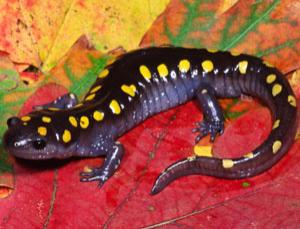
But all these creatures are only distantly related to us. No backboned animal has been found that can harness the sun – until now. It has long been suspected, and now there is hard evidence: the spotted salamander is solar-powered.

Plants make food using photosynthesis, absorbing light to power a chemical reaction that converts carbon dioxide and water into glucose and releases oxygen. Corals profit from this reaction by housing photosynthetic algae inside their shells.

Spotted salamanders, too, are in a long-term relationship with photosynthetic algae. In 1888, biologist Henry Orr reported that their eggs often contain single-celled green algae called Oophila amblystomatis. The salamanders lay the eggs in pools of water, and the algae colonise them within hours.

By the 1940s, biologists strongly suspected it was a symbiotic relationship, beneficial to both the salamander embryos and the algae. The embryos release waste material, which the algae feed on. In turn the algae photosynthesise and release oxygen, which the embryos take in. Embryos that have more algae are more likely to survive and develop faster than embryos with few or none.

Then in 2011 the story gained an additional twist. A close examination of the eggs revealed that some of the algae were living within the embryos themselves, and in some cases were actually inside embryonic cells. That suggested the embryos weren’t just taking oxygen from the algae: they might be taking glucose too. In other words, the algae were acting as internal power stations, generating fuel for the salamanders.

To find out if that was happening, Erin Graham of Temple University in Philadelphia, Pennsylvania and colleagues incubated salamander eggs in water containing radioactive carbon-14. Algae take up the isotope in the form of carbon dioxide, producing radioactive glucose.

Graham found that the embryos became mildly radioactive – unless kept in the dark. That showed that the embryos could only take in the carbon-14 via photosynthesis in the algae.

The algae do not seem to be essential to the embryos, but they are very helpful: embryos deprived of algae struggle. “Their survival rate is much lower and their growth is slowed,” says Graham.

It’s less clear how well the algae get on without the embryos. In the lab, they transform into dormant cysts. The salamander eggs are only around in spring, suggesting that in the wild, the algae spend the rest of the year as cysts. The ponds they live in dry up in summer, so the algae may sit out the rest of the year in the sediment.

Now that one vertebrate has been shown to use photosynthesis, Graham says there could well be others. “Anything that lays eggs in water would be a good candidate,” she says, as algae would have easy access to the eggs. So other amphibians, and fish, could be doing it. It’s much less likely that a mammal or bird could photosynthesise, as their developing young are sealed off from the outside world.

http://www.newscientist.com/article/dn23090-zoologger-the-first-solarpowered-vertebrate.html

Dung Beetle is the first animal found to use the Milky Way for navigation

BEETLE_2461355b

The dung beetle is now the first animal proven to use the light of the milky way for orientation and navigation, thanks to new research from Wits University. The vast and dim milky glow of our home galaxy apparently provides a good source of orientation when the Sun or a bright Moon isn’t available.

Dung beetles don’t have eyes thaf are sharp enough to clearly distinguish between exact constellations (from our current understanding of their eyes. They rely on the overall gradient of light to dark, that the light of the Milky Way provides, to get a sense of orientation. This allows them to make sure that when they are harvesting dung from a dung pile, that they continue moving away from it instead of accidently circling back into their competitors.

“The dung beetles don’t care which direction they’re going in; they just need to get away from the bun fight at the poo pile,” claims Professor Marcus Byrne from Wits University.

The researchers have previously published other findings on the dung beetle, including proving that dung beetles make use of the Sun, the Moon and polarised light for orientation and navigation.

For the first experiments, the dung beetles had their eyes covered up and blocked with “caps”, and were then observed. During the research, a seemingly new behavior was also discovered. The dung beetles were observed climbing to the top of their dung balls, and then using the higher position to locate the sources of light that they then used for orientation, the researchers labelled it as a “dance”.

To follow up on that first research, further experiments were then conducted under the simulated light and night sky of the Wits Planetarium. In the planetarium, the beetles were very clearly shown to be using the Mohawk of the Milky Way for orientation and navigation.

“We were sitting out in Vryburg (conducting experiments) and the Milky Way was this massive light source. We thought they have to be able to use this — they just have to!” said Byrne.

“Not all light sources are equally useful landmarks for a dung beetle. A moth keeping a constant angle between itself and a candle flame will move in a circle around the flame. However, a celestial body is too far away to change position relative to a dung beetle as it rolls its ball, with the result that the beetle keeps travelling in a straight line.”

It’s very likely that the dung beetles have some ‘hierarchy of preference’ as far as available light sources goes, but it’s not entirely clear yet what it is. If both a bright moon and the Milky Way were both visible, it’s assumed that the beetles would focus on one.

There have actually been quite a few animals that have been proven to make use of the stars as a way to orient themselves and navigate the world. The dung beetle is, for now, the only animal shown to use the Milky Way for this purpose.

Many species of birds have been found to make use of star light as a navigation tool (in addition to magnetoreception, smell, and vision), as well as species of insects, and very likely other animals also. There has been some research in recent years suggesting that as light pollution from human settlements has been increasing many species have been losing their ability to navigate properly, especially during important times such as when some species gather for mating. Anyone who has ever witnessed a large swarm or gathering around an artificial light source can attest to this.

Here’s some more information on the Milky Way, and observing it in the night’s sky:

“The Milky Way is the galaxy that contains our Solar System. This name derives from its appearance as a dim ‘milky’ glowing band arching across the night sky, in which the naked eye cannot distinguish individual stars. The term ‘Milky Way’ is a translation of the Classical Latin via lactea, from the Hellenistic Greek γαλαξίας κύκλος (pr. galaxías kýklos, ‘milky circle’). The Milky Way appears like a band because it is a disk-shaped structure being viewed from inside. The fact that this faint band of light is made up of stars was proven in 1610 when Galileo Galilei used his telescope to resolve it into individual stars. In the 1920s, observations by astronomer Edwin Hubble showed that the Milky Way is just one of many galaxies.”

“When observing the night sky, the term ‘Milky Way’ is limited to the hazy band of white light some 30 degrees wide arcing across the sky (although all of the stars that can be seen with the naked eye are part of the Milky Way Galaxy). The light in this band originates from un-resolved stars and other material that lie within the Galactic plane. Dark regions within the band, such as the Great Rift and the Coalsack, correspond to areas where light from distant stars is blocked by interstellar dust.”

“The Milky Way has a relatively low surface brightness. Its visibility can be greatly reduced by background light such as light pollution or stray light from the moon. It is readily visible when the limiting magnitude is +5.1 or better, while showing a great deal of detail at +6.1. This makes the Milky Way difficult to see from any brightly lit urban or suburban location but very prominent when viewed from a rural area when the moon is below the horizon.”

“The Galactic plane is inclined by about 60 degrees to the ecliptic (the plane of the Earth’s orbit). Relative to the celestial equator, it passes as far north as the constellation of Cassiopeia and as far south as the constellation of Crux, indicating the high inclination of Earth’s equatorial plane and the plane of the ecliptic relative to the Galactic plane. The north Galactic pole is situated at right ascension 12h 49m, declination +27.4° (B1950) near beta Comae Berenices, and the south Galactic pole is near alpha Sculptoris. Because of this high inclination, depending on the time of night and the year, the arc of Milky Way can appear relatively low or relatively high in the sky. For observers from about 65 degrees north to 65 degrees south on the Earth’s surface the Milky Way passes directly overhead twice a day.”

Read more at http://planetsave.com/2013/01/26/dung-beetle-uses-the-milky-way-for-navigation-first-animal-found-to-do-so/#wkpSTvZ3yUmblrMW.99
Planetsave (http://s.tt/1yZ5b)

Adoption at sea: sperm whales take in outcast bottlenose dolphin

dolphin-with-spinal-trouble-sperm-whales_63541_600x450

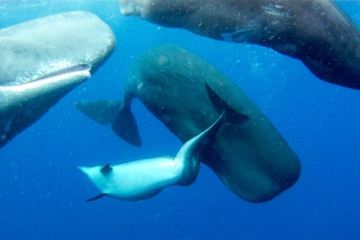
A group of sperm whales appear to have taken in a deformed bottlenose dolphin, marine researchers have discovered.

Behavioral ecologists Alexander Wilson and Jens Krause of Berlin’s Leibniz-Institute of Freshwater Ecology and Inland Fisheries came across the heartwarming scene some 15 to 20 kilometers off the Azores in the North Atlantic, as they observed the dolphin six times while it nuzzled and rubbed members of the group, reports the journal Science.

“It really looked like they had accepted the dolphin for whatever reason. They were being very sociable,” Wilson told the journal.

The dolphin’s unfortunate deformity — a spinal disfigurement, likely a birth defect, which gives its back half an “S” shape — could help explain how it’s come to be taken in by the sperm whale group, explains Science.

“Sometimes some individuals can be picked on. It might be that this individual didn’t fit in, so to speak, with its original group,” Wilson says, speculating that the deformity could have put the animal at a disadvantage among its own kind — perhaps it had a low social status, or just couldn’t keep up with the other dolphins.

Sperm whales swim more slowly than dolphins, notes the journal, and the pod designates one member to “babysit” the calves near the surface while the other adults dive deep.

But what was in it for the sperm whales? There’s no obvious advantage, Wilson tells Science.

In fact, as cetacean ecologist Mónica Almeida e Silva of the University of the Azores in Portugal tells the journal, sperm whales have good reasons not to like bottlenose dolphins. “Why would sperm whales accept this animal in their group?” she said. “It’s really puzzling to me.”

But maybe we shouldn’t draw too much from this apparent display of affection: as behavioral biologist Luke Rendell of the University of St. Andrews in the U.K. explained to Science, the briefness of the observation, and its rarity, as well as how little is known about these particular whales, makes it hard to interpret. They might simply enjoy the dolphin’s attentions, says Rendell, or “they could just be thinking, ‘Wow, this is a kind of weird calf’.”

Read more: http://newsfeed.time.com/2013/01/26/adoption-at-sea-sperm-whales-take-in-outcast-bottlenose-dolphin/#ixzz2J7iTuEgQ

Dog’s dinner was key to domestication

dog

Dogs now have an excuse for waiting under the dinner table: domestication may have adapted them to thrive on the starch-filled foods that their owners eat.

A study published in Nature found that dogs possess genes for digesting starches, setting them apart from their carnivore cousins — wolves.

The authors say the results support the contentious idea that dogs became domesticated by lingering around human settlements. “While it’s possible that humans might have gone out to take wolf pups and domesticated them, it may have been more attractive for dogs to start eating from the scrap heaps as modern agriculture started,” says Kerstin Lindblad-Toh, a geneticist at Uppsala University in Sweden, who led the work.

Canine-domestication researchers agree that all dogs, from beagles to border collies, are the smaller, more sociable and less aggressive descendants of wolves. But neither the time nor the location of the first domestication is known: fossils place the earliest dogs anywhere from 33,000 years ago in Siberia to 11,000 years ago in Israel, whereas DNA studies of modern dogs put domestication at least 10,000 years ago, and in either Southeast Asia or the Middle East. Many researchers believe that dogs were domesticated more than once, and that even after domestication, they occasionally interbred with wild wolves.

Lindblad-Toh and her team catalogued the genetic changes involved in domestication by looking for differences between the genomes of 12 wolves and 60 dogs from 14 different breeds. Their search identified 36 regions of the genome that set dogs apart from wolves — but are not responsible for variation between dog breeds.

Nineteen of those regions contained genes with a role in brain development or function. These genes, says Lindblad-Toh, may explain why dogs are so much more friendly than wolves. Surprisingly, the team also found ten genes that help dogs to digest starches and break down fats. Lab work suggested that changes in three of those genes make dogs better than meat-eating wolves at splitting starches into sugars and then absorbing those sugars.

Most humans have also evolved to more easily digest starches. Lindblad-Toh suggests that the rise of farming, beginning around 10,000 years ago in the Middle East, led to the adaptations in both species. “This is a striking sign of parallel evolution,” she says. “It really shows how dogs and humans have evolved together to be able to eat starch.”

However, Greger Larson, an evolutionary archaeologist at Durham University, UK, very much doubts that genes involved in digesting starches catalysed domestication, pointing out that the earliest dog fossils predate the dawn of agriculture. His team plans to analyse DNA preserved in dog fossils, to discover when the genetic variations involved in domestication first emerged.

Robert Wayne, a geneticist at the University of California, Los Angeles, who is also studying ancient dog genomes, says that starch metabolism could have been an important adaptation for dogs. However, he thinks that such traits probably developed after behavioural changes that emerged when humans first took dogs in, back when most of our forebears still hunted large game.

Nevertheless, the study adds to evidence that dogs should not eat the same food as wolves, says Wayne, who points out that dog food is rich in carbohydrates and low in protein compared with plain meat. “Every day I get an email from a dog owner who asks, should they feed their dog like a wolf,” says Wayne. “I think this paper answers that question: no.”

http://www.nature.com/news/dog-s-dinner-was-key-to-domestication-1.12280

Thanks to Dr. Lutter for bringing this to the attention of the It’s Interesting community.

Cat outperforms professionals and students in stock picking

Orlando the ginger cat

The Observer’s panel of stock-picking professionals has been undone in our 2012 investment challenge by a ginger feline called Orlando who spent time paw-ing over the FT.

The Observer portfolio challenge pitted professionals Justin Urquhart Stewart of wealth managers Seven Investment Management, Paul Kavanagh of stockbrokers Killick & Co, and Schroders fund manager Andy Brough against students from John Warner School in Hoddesdon, Hertfordshire – and Orlando.

Each team invested a notional £5,000 in five companies from the FTSE All-Share index at the start of the year. After every three months, they could exchange any stocks, replacing them with others from the index.

By the end of September the professionals had generated £497 of profit compared with £292 managed by Orlando. But an unexpected turnaround in the final quarter has resulted in the cat’s portfolio increasing by an average of 4.2% to end the year at £5,542.60, compared with the professionals’ £5,176.60.

While the professionals used their decades of investment knowledge and traditional stock-picking methods, the cat selected stocks by throwing his favourite toy mouse on a grid of numbers allocated to different companies.

The challenge raised the question of whether the professionals, with their decades of knowledge, could outperform novice students of finance – or whether a random selection of stocks chosen by Orlando could perform just as well as experienced investors.

The result indicates that the “random walk hypothesis”, popularised in economist Burton Malkiel’s book A Random Walk Down Wall Street, is perhaps truer than we thought. Burkiel’s book explores the idea that share prices move completely at random, making stock markets entirely unpredictable.

“It’s time to crack open the Whiskas,” said a good-humoured Justin Urquhart-Stewart. “The cat’s got talent.” To celebrate his success, Orlando’s owner, former Cash editor Jill Insley, has bought him a red collar in the style of Urquhart-Stewart’s omnipresent red braces.

All but one of Orlando’s stocks (Morrisons) rose during the last three months of the year, including specialist plastics and foam company Filtrona, which Orlando had hastily swapped for under-performing Scottish American Investment Trust in September.

By contrast, the professionals refused to swap any stocks at the end of the third quarter and paid the price. British Gas fell by 19% and Imagination Technologies dropped by 16.8%, dragging their portfolio down by an average 7.1%.

The students may have finished last, but displayed the best performance of all the teams in the final quarter, their portfolio increasing by an average 5.4%, including a fantastic performance of 17.4% for property company Savills.

Their trading decisions were key: at the end of the final quarter they swapped Mulberry for Aviva and Betfair for Tesco. In the final quarter, Aviva’s share price increased by 17% (compared with a rise of only 6.6% for Mulberry during that time) and Tesco rose by 1.2% (far superior to a fall in the Betfair share price of 5.4%).

Nigel Cook, deputy headteacher at John Hoddesdon School, said: “The mistakes we made earlier in the year were based on selecting companies in risky areas. But while our final position was disappointing, we are happy with our progress in terms of the ground we gained at the end and how our stock-picking skills have improved.”

A spokeswoman for Orlando said he was not available to give an interview because of a claws in his contract.

http://www.guardian.co.uk/money/2013/jan/13/investments-stock-picking

Baby Wasps Disinfect Cockroaches Before Eating Them

wasp-and-roach

If cockroaches had nightmares, the emerald cockroach wasp surely would deserve a prominent place therein.

These colorful, tiny parasitic wasps sting American cockroaches twice, once in the midsection to prevent them from running away, and a second time directly in the brain, to make the insects sluggish and zombielike. The wasps then drag the roaches by their antenna, akin to a human pulling a dog on a leash, into a protected nook and lay an egg on the roach. The egg ultimately hatches into larvae that devour the roach from the inside out.

About six weeks later, a young adult wasp emerges after spinning a cocoon inside the shell of the roach. But there’s a catch: What’s to prevent the cockroach “meat” from spoiling? Cockroaches are notoriously dirty animals, covered in bacteria that begin to spoil their flesh — and threaten to harm larval wasps — during this long incubation period.

A study published January 7 in the journal the Proceedings of the National Academy of Sciences found that these larval wasps secrete a surprising amount of potent antimicrobial compounds to prevent their cockroach bounty from spoiling.

“They virtually soak their cockroach host with the secretion to inhibit the growth of competitive microbes that would degrade their food and of pathogenic microbes that threaten their lives,” said study co-author Gudrun Herzner, a researcher at Germany’s University of Regensburg.

The study found that Ampulex compressa larvae secrete several types of antibiotics, specifically the chemicals mellein and micromolide, which inhibit the growth of bacteria, fungi and viruses, Herzner told LiveScience.

“On the one hand, the finding is surprising, because such a simple, little insect larva uses such a sophisticated strategy to ward off detrimental bacteria,” Herzner said. “The larvae are like little chemical plants that produce large amounts of different antimicrobial substances.”

However, she continued, it was not really a surprise to find that these parasitic wasps would have evolved to secrete some antimicrobial substances, given that the cockroach is the young wasp’s only food source, which would by itself spoil if not somehow preserved. The wasps live throughout the tropical regions of Africa, Asia and the Pacific.

Micromolide is considered a promising compound to treat Mycobacterium tuberculosis, the microbe that causes tuberculosis, Herzner said.

This is not the only example of insects producing antimicrobial compounds. The European beewolf wasp hunts honeybees, and coats their bodies in an oily substance that inhibits microbes from growing. Certain types of burying beetles also disinfect the carrion they use as larval food. But in both of these cases, the adult animal secretes the antimicrobial chemicals; the emerald cockroach wasp is a rare example of a larval insect making antibiotics, Herzner said.

http://www.livescience.com/26035-wasps-disinfect-cockroaches.html

A Cat’s 200-Mile Trek Home Leaves Scientists Guessing

20well-cat-tmagArticle

Nobody knows how it happened: an indoor housecat who got lost on a family excursion managing, after two months and about 200 miles, to return to her hometown.

Even scientists are baffled by how Holly, a 4-year-old tortoiseshell who in early November became separated from Jacob and Bonnie Richter at an R.V. rally in Daytona Beach, Fla., appeared on New Year’s Eve — staggering, weak and emaciated — in a backyard about a mile from the Richters’ house in West Palm Beach.

“Are you sure it’s the same cat?” wondered John Bradshaw, director of the University of Bristol’s Anthrozoology Institute. In other cases, he has suspected, “the cats are just strays, and the people have got kind of a mental justification for expecting it to be the same cat.”

But Holly not only had distinctive black-and-brown harlequin patterns on her fur, but also an implanted microchip to identify her.

“I really believe these stories, but they’re just hard to explain,” said Marc Bekoff, a behavioral ecologist at the University of Colorado. “Maybe being street-smart, maybe reading animal cues, maybe being able to read cars, maybe being a good hunter. I have no data for this.”

There is, in fact, little scientific dogma on cat navigation. Migratory animals like birds, turtles and insects have been studied more closely, and use magnetic fields, olfactory cues, or orientation by the sun.

Scientists say it is more common, although still rare, to hear of dogs returning home, perhaps suggesting, Dr. Bradshaw said, that they have inherited wolves’ ability to navigate using magnetic clues. But it’s also possible that dogs get taken on more family trips, and that lost dogs are more easily noticed or helped by people along the way.

Cats navigate well around familiar landscapes, memorizing locations by sight and smell, and easily figuring out shortcuts, Dr. Bradshaw said.

Strange, faraway locations would seem problematic, although he and Patrick Bateson, a behavioral biologist at Cambridge University, say that cats can sense smells across long distances. “Let’s say they associate the smell of pine with wind coming from the north, so they move in a southerly direction,” Dr. Bateson said.

Peter Borchelt, a New York animal behaviorist, wondered if Holly followed the Florida coast by sight or sound, tracking Interstate 95 and deciding to “keep that to the right and keep the ocean to the left.”

But, he said, “nobody’s going to do an experiment and take a bunch of cats in different directions and see which ones get home.”

The closest, said Roger Tabor, a British cat biologist, may have been a 1954 study in Germany which cats placed in a covered circular maze with exits every 15 degrees most often exited in the direction of their homes, but more reliably if their homes were less than five kilometers away.

New research by the National Geographic and University of Georgia’s Kitty Cams Project, using video footage from 55 pet cats wearing video cameras on their collars, suggests cat behavior is exceedingly complex.

For example, the Kitty Cams study found that four of the cats were two-timing their owners, visiting other homes for food and affection. Not every cat, it seems, shares Holly’s loyalty.

KittyCams also showed most of the cats engaging in risky behavior, including crossing roads and “eating and drinking substances away from home,” risks Holly undoubtedly experienced and seems lucky to have survived.

But there have been other cats who made unexpected comebacks.

“It’s actually happened to me,” said Jackson Galaxy, a cat behaviorist who hosts “My Cat From Hell” on Animal Planet. While living in Boulder, Colo., he moved across town, whereupon his indoor cat, Rabbi, fled and appeared 10 days later at the previous house, “walking five miles through an area he had never been before,” Mr. Galaxy said.

Professor Tabor cited longer-distance reports he considered credible: Murka, a tortoiseshell in Russia, traveling about 325 miles home to Moscow from her owner’s mother’s house in Voronezh in 1989; Ninja, who returned to Farmington, Utah, in 1997, a year after her family moved from there to Mill Creek, Wash.; and Howie, an indoor Persian cat in Australia who in 1978 ran away from relatives his vacationing family left him with and eventually traveled 1,000 miles to his family’s home.

Professor Tabor also said a Siamese in the English village of Black Notley repeatedly hopped a train, disembarked at White Notley, and walked several miles back to Black Notley.

Still, explaining such journeys is not black and white.

In the Florida case, one glimpse through the factual fog comes on the little cat’s feet. While Dr. Bradshaw speculated Holly might have gotten a lift, perhaps sneaking under the hood of a truck heading down I-95, her paws suggest she was not driven all the way, nor did Holly go lightly.

“Her pads on her feet were bleeding,” Ms. Richter said. “Her claws are worn weird. The front ones are really sharp, the back ones worn down to nothing.”

Scientists say that is consistent with a long walk, since back feet provide propulsion, while front claws engage in activities like tearing. The Richters also said Holly had gone from 13.5 to 7 pounds.

Holly hardly seemed an adventurous wanderer, though her background might have given her a genetic advantage. Her mother was a feral cat roaming the Richters’ mobile home park, and Holly was born inside somebody’s air-conditioner, Ms. Richter said. When, at about six weeks old, Holly padded into their carport and jumped into the lap of Mr. Richter’s mother, there were “scars on her belly from when the air conditioner was turned on,” Ms. Richter said.

Scientists say that such early experience was too brief to explain how Holly might have been comfortable in the wild — after all, she spent most of her life as an indoor cat, except for occasionally running outside to chase lizards. But it might imply innate personality traits like nimbleness or toughness.

“You’ve got these real variations in temperament,” Dr. Bekoff said. “Fish can by shy or bold; there seem to be shy and bold spiders. This cat, it could be she has the personality of a survivor.”

He said being an indoor cat would not extinguish survivalist behaviors, like hunting mice or being aware of the sun’s orientation.

The Richters — Bonnie, 63, a retired nurse, and Jacob, 70, a retired airline mechanics’ supervisor and accomplished bowler — began traveling with Holly only last year, and she easily tolerated a hotel, a cabin or the R.V.

But during the Good Sam R.V. Rally in Daytona, when they were camping near the speedway with 3,000 other motor homes, Holly bolted when Ms. Richter’s mother opened the door one night. Fireworks the next day may have further spooked her, and, after searching for days, alerting animal agencies and posting fliers, the Richters returned home catless.

Two weeks later, an animal rescue worker called the Richters to say a cat resembling Holly had been spotted eating behind the Daytona franchise of Hooters, where employees put out food for feral cats.

Then, on New Year’s Eve, Barb Mazzola, a 52-year-old university executive assistant, noticed a cat “barely standing” in her backyard in West Palm Beach, struggling even to meow. Over six days, Ms. Mazzola and her children cared for the cat, putting out food, including special milk for cats, and eventually the cat came inside.

They named her Cosette after the orphan in Les Misérables, and took her to a veterinarian, Dr. Sara Beg at Paws2Help. Dr. Beg said the cat was underweight and dehydrated, had “back claws and nail beds worn down, probably from all that walking on pavement,” but was “bright and alert” and had no parasites, heartworm or viruses. “She was hesitant and scared around people she didn’t know, so I don’t think she went up to people and got a lift,” Dr. Beg said. “I think she made the journey on her own.”

At Paws2Help, Ms. Mazzola said, “I almost didn’t want to ask, because I wanted to keep her, but I said, ‘Just check and make sure she doesn’t have a microchip.’” When told the cat did, “I just cried.”

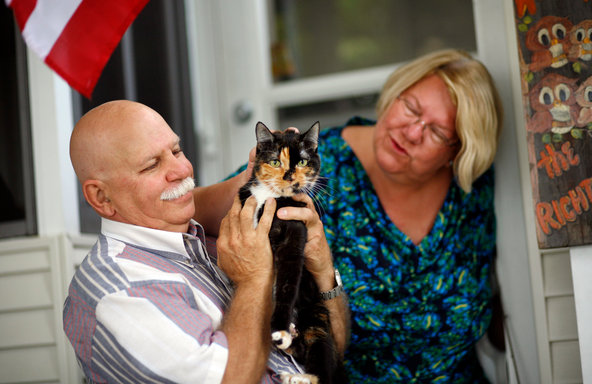
The Richters cried, too upon seeing Holly, who instantly relaxed when placed on Mr. Richter’s shoulder. Re-entry is proceeding well, but the mystery persists.

“We haven’t the slightest idea how they do this,” Mr. Galaxy said. “Anybody who says they do is lying, and, if you find it, please God, tell me what it is.”

Pet turtle escapes after 70 years

enhanced-buzz-26435-1357568305-5-1

Ed Schloeman’s parents purchased four eastern box turtles in the early 1940s, right around the time Schloeman was born.

When his parents died 15 years ago, the surviving turtle, Willie, went to Schloeman, who still lives in the Windsor Terrace neighborhood he grew up in, and who is now 70 years old.

“When my parents passed away I received that wonderful gift,” he told BuzzFeed.

Schloeman kept Willie, who’s about seven inches long with the species’ distinctive brown and yellow shell, in a “caged environment” in his back yard on East 2nd Street, a sloping street a block from Green-Wood Cemetery. But late last year, Willie vanished.

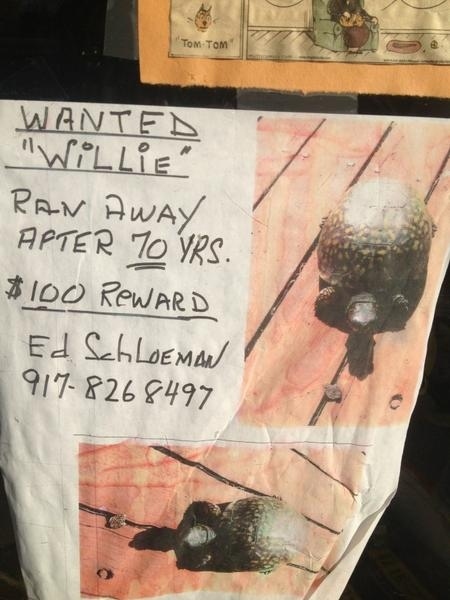
“He just got out somehow,” said Schloeman, who plastered the neighborhood with “Wanted” flyers, one of which BuzzFeed noticed on the door of the nearby Sean Casey Animal Rescue.

“He’s probably hibernating someplace somehow,” Schloeman, who sells fire suppression systems from his Brooklyn home.

Schloeman, a Vietnam veteran, is also active in a charity that brings Transcendental Meditation to soldiers suffering from post-traumatic stress.

“Hopefully if he unhibernates in April, a neighbor will find him,” he said.

Schloeman said Willie has no particular personality, and didn’t appear personally anguished over his disappearance.

“You can’t get close to a turtle,” he said.

http://www.buzzfeed.com/bensmith/turtle-escapes-after-70-years?utm_campaign=socialflow&utm_source=twitter&utm_medium=buzzfeed