Dogs can sniff out colon cancer

Japanese scientists discovered that a Labrador Retriever could detect a chemical produced by colon cancer cells by smelling human breath, even in the early stages of the disease. 

The dog was almost as accurate as a colonoscopy.

The eight-year-old Labrador completed 74 sniff tests, consisting of sniffing five breath or stool samples at a time in which one was cancerous. The samples came from 48 people with confirmed colorectal cancer and 258 volunteers with no cancer. Half of the comparison samples came from people with bowel polyps, which are benign growths that are thought to be a precursor of colorectal cancer.

The dog correctly identified the cancerous samples in 33 out of 36 of the breath tests and 37 of 38 stool tests.

http://www.livescience.com/11708-dog-sniffs-bowel-cancer.html

Fluorescent Silk


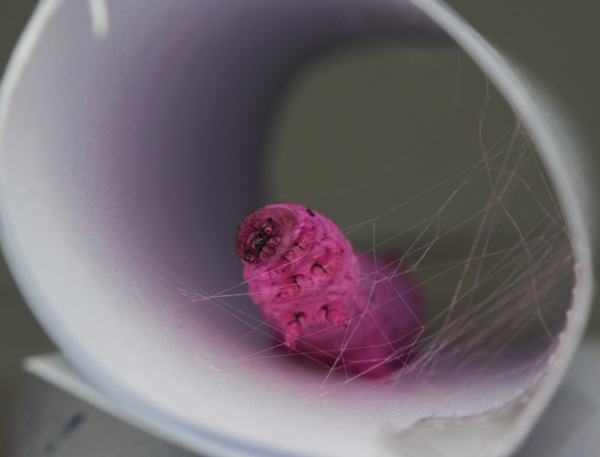
Silkworms can be put on a special diet of mullberries and fluorescent dye to produce fluorescent silk.   According to researchers at the Institute of Materials Research and Engineering (IMRE) in Singapore, the process is “simple and cheap enough to be translated to an industrial scale,” which would be more environmentally friendly by reducing consumption of water and dyes.  This approach could also potentially be adapted to create functional silk with antibacterial, anticoagulant or anti-inflammatory properties for use in wound-dressings.

http://www.newscientist.com/blogs/shortsharpscience/2011/03/silkworms-produce-fluorescent.html

Ulcers and Parkinson’s Disease

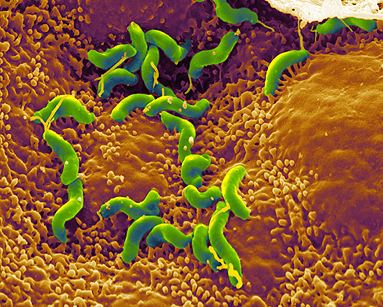
Researchers at a meeting of the American Society for Microbiology last week  reported that Helicobacter pylori, a bacterium that lives in the stomachs of about half the people in the world, may help trigger Parkinson’s disease.

Parkinson’s disease is a neurological disorder that kills dopamine-producing cells in parts of the brain that control movement.  About 60,000 new cases of the disease are diagnosed each year in the United States.

 H. pylori causes chronic low-level inflammation of the stomach lining and is strongly linked to the development of duodenal and gastric ulcers, and stomach cancer.

Previous studies suggested that people with Parkinson’s disease are more likely than healthy people to have had ulcers at some point in their lives and are more likely to be infected with H. pylori.

Middle-aged mice infected with H.pylori develop abnormal movement patterns over several months of infection.  Helicobacter-infected mice make less dopamine in parts of the brain that control movement, possibly indicating that dopamine-making cells are dying just as they do in Parkinson’s disease patients.

Young mice, on the other hand, don’t show any signs of movement problems after infection with the bacterium. 

The bacteria didn’t have to be alive to cause the problem. Feeding mice killed H. pylori produced the same effect, suggesting that some biochemical component of the bacterium is responsible.

A candidate for the disease-causing molecule is modified cholesterol. H. pylori  can’t make its own cholesterol, so it steals cholesterol from its host and then sticks a sugar molecule on it. The structure of the modified cholesterol resembles a toxin from a tropical cycad; people in Guam who have eaten the plant’s seeds have developed a disease called ALS-parkinsonism dementia complex.

http://www.healthzone.ca/health/newsfeatures/article/997548–a-strain-of-ulcer-causing-bacteria-could-lead-to-parkinson-s-study


Optogenetics

Optogenetics is a relatively new technique for communicating with the brain.  It involves implantation of light-sensitive genes into animals and then hooking up fiber-optic cables to specific areaa of the brain. 

Researchers have used this technique to completely restore movement in mice with Parkinson’s disease, and to reduce anxiety in other mouse models.   

Researchers are now trying to develop a less invasive method that doesn’t go deeper than the outer surface of the brain.

Eventually, two-way traffic may be possible with this technique, in which a machine can both send and receive information from the brain.

Read about it in Wired and the NYT below.

http://www.wired.com/magazine/2009/10/mf_optigenetics

http://www.nytimes.com/2011/05/17/science/17optics.html?_r=2&src=dayp

Using Worms to Treat Disease


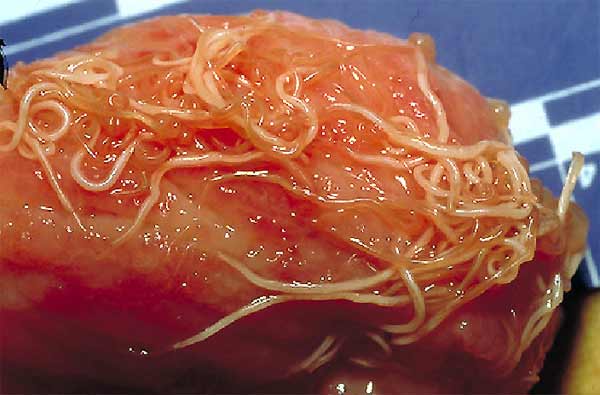
A father’s determination to help his son resulted in an experimental treatment for autism that uses roundworms to modulate inflammatory immune responses.  The worms might also be helpful for treating other diseases.

Read about it in this article, which also includes videos describing the work:   http://www.the-scientist.com/article/display/57941/

Treating depression in mothers helps their children.


Maternal major depression is an established risk factor for childhood pyschopathology.  It has now been established that children whose mothers are successfully treated for depression show progressive and marked improvement in their own behaviors, in terms of depressive symptoms and social functioning, even a year after their moms discontinue treatment.

This effect was seen without any form of treatment being given to the children.

Additionally, the faster mothers got better, the faster their kids improved – and the greater the degree of improvement experienced.

This work was recently published by Dr. Madhukar Trivedi, Professor of Psychiatry at UT Southwestern Medical Center of Dallas, Texas.

http://www.utsouthwestern.edu/utsw/cda/dept353744/files/638731.html

http://www.ncbi.nlm.nih.gov/pubmed/21406462

The new era of psychiatry – less talk and more pills.

These days, psychiatrists are talking less and prescribing more. Many of the nation’s 48,000 psychiatrists no longer provide talk therapy, the form of psychiatry popularized by Freud that has been a mainstay of psychiatry for decades. Instead, they just prescribe medication after a very brief consultation with the patient.  Psychiatric hospitals that once offered patients months of talk therapy now discharge them within days with only pills.

To learn more about the fundamental shifts in psychiatric care, read the full article in the New York Times, “Talk Doesn’t Pay, So Psychiatry Turns Instead to Drug Therapy,

Contaminated IV Fluids Kill Patients in Alabama Hospitals

Yesterday it was announced that 19 patients in Alabama hospitals were infected with serratia marcescens bacteria after being administered contaminated intravenous fluid.  Nine of these patients have died.

http://www.cnn.com/2011/HEALTH/03/29/alabama.hospitals.deaths/index.html?hpt=Sbin

Read here about serratia marcescens:  http://web.mst.edu/~microbio/BIO221_2004/S_marcescens.htm