Teen has to have stomach removed after drinking cocktail containing liquid nitrogen


An 18-year-old had part of her stomach removed and is seriously ill in hospital after drinking a cocktail with liquid nitrogen in it.

According to the West Morland Gazette the girl, from Heysham, named in media reports as Gabby Scanlon, had been on a night out with friends and developed severe stomach pain after drinking the alcohol mixture.

She is now said to be seriously ill but stable in hospital.

According to ITV news the drink also contained Jaegermeister.

Cooling liquid nitrogen has been used in some luxury cocktails around the world and freezes everything it comes into contact with.

A Lancashire Police spokesperson said: “The investigation is still in its early stages and we are still interviewing witnesses to establish the full facts.

“The premises involved have fully cooperated with all agencies and have suspended drinks involving liquid nitrogen.”

http://www.huffingtonpost.co.uk/2012/10/07/liquid-nitrogen-cocktail-lancashire-teen-stomach-removed_n_1946286.html?utm_hp_ref=mostpopular

Injection of heat-burning animal cells into people may help burn off body fat


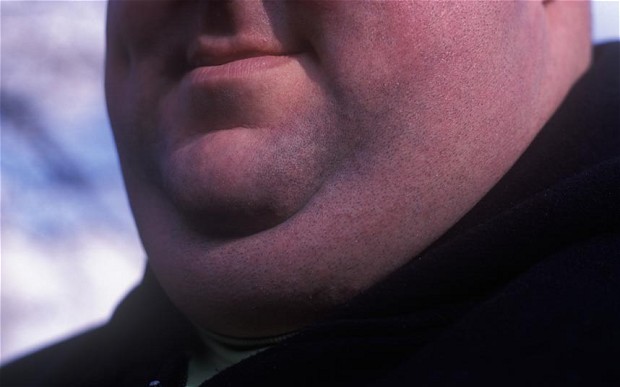
Scientists have developed an injection that could target stubborn spare tyres or double chins without affecting the rest of the body.

The researchers have found they can burn off excess fat in specific areas of the body by injecting tiny capsules filled with a modified type of heat-producing cell commonly found in animals and babies.

The cells release “signals” that alter the surrounding fat tissue so surplus calories are used up by producing body heat rather than being stored as fat.

Tests in animals have shown that injecting the capsules caused obese mice to lose up to 10 per cent of their body weight even when being fed a high calorie diet. The researchers are now planning to begin treating obese dogs later this year. If successful and found to be safe, it is hoped that the treatment could be available for use in humans in around six years.

The researchers believe the capsules, which are around three times the width of a human hair, could be injected into specific fat deposits such as the thighs, buttocks, arms or under the chin to reduce the amount of fat stored there.

It could solve the problem faced by many dieters who find that no matter how much weight they lose or how much they exercise, there are some areas of the body where fat stubbornly refuses to come off.

Dr Ouliana Ziouzenkova, who led the research at the department of human nutrition at Ohio State University, said: “We found the capsules completely remodelled the fat they were put into.

“Our goal was to achieve a way of targeting deleterious visceral fat that increases the risk for diseases like type 2 diabetes and cardiovascular disease.

“We have to prove that this is safe and effective in humans, but we could think about using it for body sculpturing. So if you wanted to remove a small amount of fat under your face like a double chin, or in their arms or legs, you could target these with a single injection.

“We have a grant now to carry out some work with obese dogs as it could also be of great benefit for veterinary purposes as there is a growing problem with obese pets.”

In a study published in the scientific journal Biomaterials, Dr Ziouzenkova and her colleagues used fatlike cells from mice that had been genetically modified to burn off excess energy as body temperature.

They found that by encasing these cells inside plastic-like microcapsules, they could be transplanted without being destroyed by the recipients immune system. Obese mice that received the capsules lost a tenth of their body fat in a month and after 80 days were 20 per cent less fat than mice that received empty capsules.

The cells are thought to cause this change by releasing signals known as thermogenic factors through pores in the capsules into the surrounding unhealthy body fat. These then changed the fat into heat producing cells known as thermocytes.

Thermocytes, sometimes called brown fat, are abundant in many small animals and in human babies where they help maintain body temperature by burning off energy as heat rather than storing it like normal fat. Humans, however, lose these cells as they grow older.

Dr Ziouzenkova believes that by transplanting cells from animals such as mice into adult humans, known as xenotransplantation, it may be possible to increase the number of thermocytes in adults and so help them reduce the amount of body fat they carry.

“Microcapsules are cost effective as it means the same cells can be used for different patients,” she said. “The capsules are like a plastic bag that have pores in them so the immune system cannot enter but the thermogenic factors can escape.

“The cells essentially become invisible to the immune system and so can start to change the fat around them.

“Xenotransplantation will reduce the cost of treatment and cells could be stored to specifically address patients needs. In our preliminary studies in animals, we observed only minor local inflammation caused by degraded capsules with a xenotransplant.

“If implanted cells from animals do not work in humans, however, we aim to modify human cells so they have the same effect.”

http://www.telegraph.co.uk/science/science-news/9591390/Injections-of-animal-cells-may-rid-dieters-of-their-double-chins.html

Political candidate in Brazil passed out cocaine with election leaflets


A Brazil city council candidate has been arrested after she was caught allegedly handing out cocaine with her election leaflets, according to reports.

Carme Cristina Lima, 32, was running for councillor of Itacoatiara, in Brazil’s northern state of Amazonas.

Police became suspicious when they saw a crowd allegedly gathering around Ms Lima’s car on the morning of election day on Sunday.

Officers searched her car and allegedly found hundreds of packets of cocaine attached to the candidate’s leaflets with instructions on how to vote for her.

Speaking to Brazil’s TNOnline website, police chief Daniel Ottoni said: “There was a large gathering of people around Ms Lima, but when they saw the police they all ran away.

“The candidate and another man also fled by car but officers caught up with them.

“According to locals, she had been distributing the drugs since early in the morning, on condition that people vote for her.”

Ms Lima was arrested for electoral corruption and drug dealing.

http://www.telegraph.co.uk/news/worldnews/southamerica/brazil/9593442/Brazil-candidate-handed-out-cocaine-with-election-leaflets.html

Marijuana farm the size of two football fields discovered in Chicago


Police in Chicago became farmers for a day Wednesday as they began to chop down a  marijuana farm as big as two football fields found in the city.

The farm, which contains about 1,500 plants and could have netted $7-10 million, was spotted by a police officer and county sheriff’s deputy in a helicopter as they headed back to their hangar, MyFoxChicago.com reports.

No arrests had been made as of Wednesday, and police were still trying to determine who owns the property that housed the grow site on the city’s far South Side. But police said they were hopeful that because of the size of the operation, informants or others might provide tips about those involved, including a man seen running from the area as the helicopter swooped low.

James O’Grady, the commander of the department’s narcotics division, tells The Associated Press they’ve never seen anything like it before, in part because Chicago’s harsh winters mean growers have a lot less time to plant, grow and harvest marijuana than their counterparts in less inclement places such as California and Mexico. The bumper crop was likely planted in spring, O’Grady said.

Add to that the urban sprawl: there are few spots in Chicago where such an operation could go unnoticed because of all the buildings, roads and residents. The growers took pains to ensure their crop was largely hidden by a canopy of trees and surrounding vegetation.

“Somebody put a lot of thought into it,” O’Grady said. “But they probably didn’t anticipate the helicopter.”

Chicago Police Officer Stan Kuprianczyk, a pilot, said police helicopters flew “over it all the time,” to and from their hangar, without spying the grow site. Yet somehow, a number of factors came together to allow Cook County Sheriff’s Deputy Edward Graney to spot the plants.

“We had the right altitude, the right angle, the right sunlight, and I happened to be glancing down,” said Graney. He said he initially spotted five plants or so through the trees before he asked Kuprianczyk to circle around for a closer look.

“We just happened to be right over a small hole in the trees and we looked down,” Kuprianczyk said.

They also happened to have the right training, Graney said, explaining that just a few weeks earlier a much smaller operation in suburban Chicago prompted them to fly over and videotape the scene so they might be able to recognize marijuana if they ever saw it from the air again.

So, by the time Graney spotted the marijuana plants, which are a much brighter shade of green than the surrounding vegetation, he had a pretty good idea what he was looking at.

Superintendent Garry McCarthy, whose officers are more used to intercepting shipments of marijuana grown elsewhere or discovering hydroponic growing operations inside buildings, said the discovery of the marijuana is significant in a larger fight against street violence.

Those involved with narcotics, whether it is marijuana, heroin or cocaine, purchase firearms with their profits and have shown they’re willing to use them to protect their business, he said.

“That’s where the violence comes in, the competition for the markets,” he said.

Read more: http://www.foxnews.com/us/2012/10/03/police-in-chicago-uncover-nearly-1000-pot-plants-in-city/?test=latestnews#ixzz28RCvlyQP

Black Mamba venom discovered to be a better painkiller than morphine


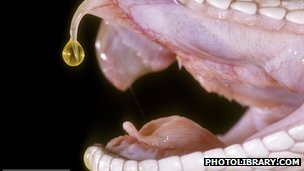
A painkiller as powerful as morphine, but without most of the side-effects, has been found in the deadly venom of the black mamba, say French scientists.

The predator, which uses neurotoxins to paralyse and kill small animals, is one of the fastest and most dangerous snakes in Africa.

However, tests on mice, reported in the journal Nature, showed its venom also contained a potent painkiller.

They admit to being completely baffled about why the mamba would produce it.

The researchers looked at venom from 50 species before they found the black mamba’s pain-killing proteins – called mambalgins.

Dr Eric Lingueglia, from the Institute of Molecular and Cellular Pharmacology near Nice, told the BBC: “When it was tested in mice, the analgesia was as strong as morphine, but you don’t have most of the side-effects.”

Morphine acts on the opioid pathway in the brain. It can cut pain, but it is also addictive and causes headaches, difficulty thinking, vomiting and muscle twitching. The researchers say mambalgins tackle pain through a completely different route, which should produce few side-effects.

He said the way pain worked was very similar in mice and people, so he hoped to develop painkillers that could be used in the clinic. Tests on human cells in the laboratory have also showed the mambalgins have similar chemical effects in people.

But he added: “It is the very first stage, of course, and it is difficult to tell if it will be a painkiller in humans or not. A lot more work still needs to be done in animals.”

Dr Nicholas Casewell, an expert in snake venom at the Liverpool School of Tropical Medicine, has recently highlighted the potential of venom as a drug source.

Commenting on this study he said: “It’s very exciting, it’s a really great example of drugs from venom, we’re talking about an entirely new class of analgesics.”

Dr Lingueglia said it was “really surprising” that black mamba venom would contain such a powerful painkiller.

Dr Casewell agreed that it was “really, really odd”. He suggested the analgesic effect may work in combination “with other toxins that prevent the prey from getting away” or may just affect different animals, such as birds, differently to mice.

The Royal Pharmaceutical Society’s Dr Roger Knaggs said: “We are witnessing the discovery of a novel mechanism of action which is not a feature of any existing painkillers.”

He cautioned that the mambalgins worked by injections into the spine so would need “significant development” before they could be used in people.

http://www.bbc.co.uk/news/health-19812064

Thanks to Kebmodee for bringing this to the It’s Interesting community.

Fecal transplant cures woman’s bacterial infection

After surviving a near-fatal car accident, Kaitlin Hunter found herself battling a devastating bacterial infection in her colon that also threatened her life.

The persistent infection was beaten through a little-known technique involving the transplant of fecal matter from Hunter’s mother, which put healthy bacteria back into her colon.

Following the July procedure, “I’ve been so happy,” said Hunter, 20, of Marietta, Georgia. “I’m cured.”

Her struggle began more than a year earlier when she was released from a hospital in Sacramento, California.

A June 2011 car accident fractured her lower spine, lacerated her liver and colon, and broke all 10 toes. Emergency crews used the Jaws of Life to cut Hunter from her dad’s car, and then she was flown to the hospital, where she spent the next month.

Upon her release, Hunter flew home to Georgia. It hadn’t been the summer vacation she imagined, but she thought she was getting better.

But “right when I got off the plane, I went to the hospital. I was having extremely bad stomach pain. A month later, we found out it was C. diff,” Hunter said, using the abbreviation for the bacteria clostridium difficile.

How it began

In the hospital after her accident, doctors followed standard care and put Hunter on antibiotics to prevent an infection.

In spite of the antibiotics — or possibly because of them — C. diff infected her colon, causing severe stomach pain, diarrhea and vomiting.

Hunter, who stands 5 feet 7 inches tall, lost 40 pounds during her struggle. Her weight plummeted to 85 pounds.

It’s believed that antibiotics, which kill harmful infection-causing bacteria, also weaken the beneficial, healthy bacteria percolating in the colon. With the colon’s defenses down, C. diff grows rampant, releasing a toxin and inflaming the colon.

C. diff infections kill about 14,000 people in the United States every year, according to the Centers for Disease Control and Prevention, and the number and severity of total cases have increased dramatically over the past decade.

Experts: Alcohol enemas ‘extremely dangerous’

Even though antibiotics put someone at risk of developing a C. diff infection, standard treatment still calls for prescribing more and different antibiotics to kill the C. diff and allow healthy bacteria to recolonize.

But for many people such as Hunter — who went through nine rounds of antibiotic treatments — the healthy bacteria never get the upper hand, and the C. diff just keeps coming back.

‘Brand-new’ treatment

Increasingly, doctors are taking a different approach. Instead of continued assaults on bacteria, “fecal matter transplants” recolonize the colon with new bacteria from a healthy donor.

“This is brand-new for most gastroenterologists,” said Dr. Suku George, Hunter’s treating physician. “We are very excited about this.”

George had never deposited fecal matter by colonoscopy into a patient until Hunter wanted to try it.

Hunter’s mother “donated” one of her stools for the procedure. Next, the hospital lab carefully diluted it, and George pumped the foreign fecal matter right into Hunter’s colon.

The result ended Hunter’s struggle with C. diff.

A study published in March reported a 91% cure rate after just one fecal matter transplant, and a 98% cure rate when combined with an additional round of antibiotics.

Remarkably, that study only included the sickest of patients. All 77 of the study participants already had a recurring C. diff infection, having tried and failed five rounds of antibiotic-only treatments over 11 months, on average.

The study used the colonoscopy method, which many believe is the most effective, because relatively large amounts of fecal matter can be placed deep inside the colon.

Other methods use either an enema or a nasogastric tube, which sends fecal matter through the nasal passage, down the throat and into the stomach.

Why polio hasn’t gone away yet

George tried the nasogastric tube on Hunter, using fecal material from her father, but the C. diff infection returned. He then asked for and received permission to perform the hospital’s first colonoscopic fecal transplant.

Looking ahead

Gastroenterologists pioneering the practice unanimously seem to agree that eventually a cleaner, commercially developed suppository will replace the crude feces and water mixtures currently in use.

“It’ll become a little more acceptable to hospitals and patients and more widely performed,” said Dr. Lawrence Brandt, a professor of medicine and surgery at New York’s Albert Einstein College of Medicine who was the lead author on the March study.”But for people that have recurring C. diff, it doesn’t really much matter, because these patients are so ill and so much want to get better. The fact that it’s stool, it doesn’t matter to them.”

To enroll in a fecal transplant study, visit clinicaltrials.gov.

Thanks to the future Dr. Goldman for bringing this to the attention of the It’s Interesting community.


Intoxicated woman steals ferry, screaming “I’m Jack Sparrow, I’m a pirate.”

A woman high on drugs and alcohol stole a 45-foot double-decker passenger ferry screaming “I’m Jack Sparrow, I’m a Pirate.” According to reports on Thursday, Alison Whelan and her friend caused thousands of dollars in damages when they commandeered the vessel.

Whelan and her friend Tristam Locke admitted that they had been on a two-day drinking binge and had consumed the deadly hallucinogenic drug, nightshade, as reported by The Telegraph. Whelan made her escape by unmooring the boat, untying several thick ropes “connecting the boat to the shore because she kept tripping over them.”

The ferry started “drifting like a pinball machine.” The two drunk ‘pirates’ were out of control “heading toward dozens of other moored vessels.” Whelan damaged numerous boats, making for a very expensive night. However, no booty for the self-proclaimed pirate has been reported as yet.

Whelan was heard taunting police and shouting “What are you going to do now? I believe this is out of your jurisdiction.” The two incorrigible hijackers were finally apprehended when the ferry came to rest about a mile upstream in still waters.

Whelan is a “chronic alcoholic who is awaiting a liver transplant.” She pleaded guilty to “aggravated vehicle taking and was jailed for 122 days.” When arrested she declared that she “would have ended up in St Tropez” if she hadn’t been captured.

http://www.examiner.com/article/weird-news-woman-steals-ferry-screaming-i-m-jack-sparrow-on-drunken-rampage

$7 Million in gold discovered in home of deceased recluse

Authorities in Carson City recently made an astounding discovery in the home of a local recluse whose body was found in his residence. Walter Samaszko Jr. had left only $200 in his bank account. But hidden throughout the house were other treasures – including gold bars and coins valued at $7 million.

“You never anticipate running into anything like this,” Carson City Clerk-Recorder Alan Glover told the Los Angeles Times. “It was a run-of-the-mill 1,200-square-foot tract home that still had orange shag carpet. This guy was everybody’s next-door neighbor.”

Samaszko, 69, was described by officials as a loner who went about his business and had few friends. He had been dead at least a month when neighbors called authorities. The victim, who suffered from heart trouble, had lived in the house since the 1960s, and his mother lived with him until her death in 1992.

Glover, who also serves as the local public administrator, was tasked with dealing with the effects of a man who had left no will and had no known living relatives. But during the home cleanup, workers struck gold.

“He was a hoarder – there was everything inside that home you could think of,” Glover said. “The workers found a crawl space from the garage. That led to everything else.

“He was apparently buying gold from a local coin dealer. We found it in sealed boxes marked ‘books.’ We also found gold wrapped in tinfoil stored in ammunition boxes,” Glover told The Times. “There was just more and more. We found a family silver set with rolls of U.S. $20s and Mexican five peso coins.”

The gold coins had been minted as early as the 1840s in such countries as Mexico, England, Austria and South Africa, he said.

Based on just the weight of the gold, Glover estimates the value at $7 million. Because some of the coins appear to be collector items, the value could go much higher, he said.

Officials eventually used a metal detector to search the backyard to make sure they had left no coin uncovered. Samaszko also had stock accounts of more than $165,000 and another $12,000 in cash at the house.

Then came the task of finding relatives. Investigators used list of people who attended Samaszko’s mother’s funeral to track down a first cousin who lives in San Rafael, Calif.

“This will be good for her,” Glover said. “She’s a substitute school teacher who lives in an apartment.”

He said the deceased remains an enigma. “He didn’t socialize. He wasn’t exactly a hermit – he shopped for groceries and talked with at least one elderly neighbor. In his garage was a 1968 Mustang he bought new.”

“He didn’t belong to anything. He just went his own way, with all that gold.”

http://www.latimes.com/news/nation/nationnow/la-na-nn-carson-city-gold-20120917,0,5763811.story

Dad runs triathlon carrying teenage daughter with cerebral palsy

A devoted father has completed a triathlon carrying his 13-year-old cerebral palsy-afflicted daughter across land and through water so that she could complete the gruelling event.

Rick van Beek’s feat of endurance and show of love for his daughter Madison have led many to call  the man from Byron Center, Michigan the ‘father of the century’.

But it is not the first race of its kind for van Beek, who said he has participated in more than 70 events, including half-marathons, triathlons and other outdoor races, as part of ‘Team Maddy’.

He and Maddy took part in the Sanford and Sun sprint triathlon on Sunday.

Together they completed the 0.3-mile swim, 12.4-mile bike ride and 3.1-mile run, with Maddy pictured in her father’s arms as they transitioned from section to section.

For the swimming portion, van Beek tugs his daughter through the water in a kayak and then pulls her behind him in a cart as he cycles. He runs the last leg pushing her in a buggy.

Van Beek, 39, told the Midland Daily News that he wants to complete the events with his daughter, who is unable to walk or talk, because she adores being outside.

‘She functions like a three-month-old, and one of the very few things that we know she enjoys is being outside, being in the water, feeling the breeze in her hair and in her face,’ he said.

Maddy was diagnosed with cerebral palsy two months after she was born.

‘It was one of the worst days of our lives,’ van Beek told Fox 17. ‘Everybody prays that their children are healthy and for eight years I still wished that she had been a healthy child, but if she wouldn’t have been like she is then we wouldn’t be the people that we are today.’

His outlook changed when he saw his daughter taking part in a marathon more than four years ago, and saw the pure joy on her face.

‘I watched my daughter Maddy being pushed in the Grand Rapids Marathon,’ he recounted on his blog.

‘To see her being so happy and enjoying every bump in the road was more than I could handle, my emotions took over.

‘Shortly after that day I gave up smoking 2 packs a day and chewing a tin a day to be better, for Maddy. It has been a long road, with many bumps, but we are better.’

In a bid to make his daughter happy, he began training for outdoor races in 2008. Van Beek, who was out of shape and a heavy smoker, also realised it would be beneficial for him.

He persevered to get into shape for his daughter, and raised money for charities along the way.

‘[The emotion] drives me or inspires me to do the things that I do,’ he wrote on his blog last year. ‘Call it inspiration, call it motivation, call it what ever you want, I call it LOVE.

‘That will never fade…She is my heart and I am her legs, though someday she might not physically be able to be there with me, she will always be in my heart, quietly cheering me on.’

Many spectators have pointed out that they are touched by van Beek’s devotion.

‘That was just so inspirational to see,’ race coordinator Misty Angle told Allegan County News after watching him at the 2011 Tri Allegan triathlon.

‘That was definitely one of the highlights of the event for me and a lot of people.’

But van Beek has refused to take the credit, saying it is his daughter who inspires people.

‘I think Madison has changed more peoples’ lives than I even know about – without doing anything, just being out there. Not me, her,’ van Beek told Fox News. ‘We make a good team.’

Read more: http://www.dailymail.co.uk/news/article-2188373/Rick-van-Beek-Devoted-dad-runs-triathlon-carrying-teenager-daughter-cerebral-palsy.html#ixzz23fnLrQRE

Thanks to Dr. Nakamura for bringing this to the It’s Interesting community.

2,500 year old Siberian princess tattoos

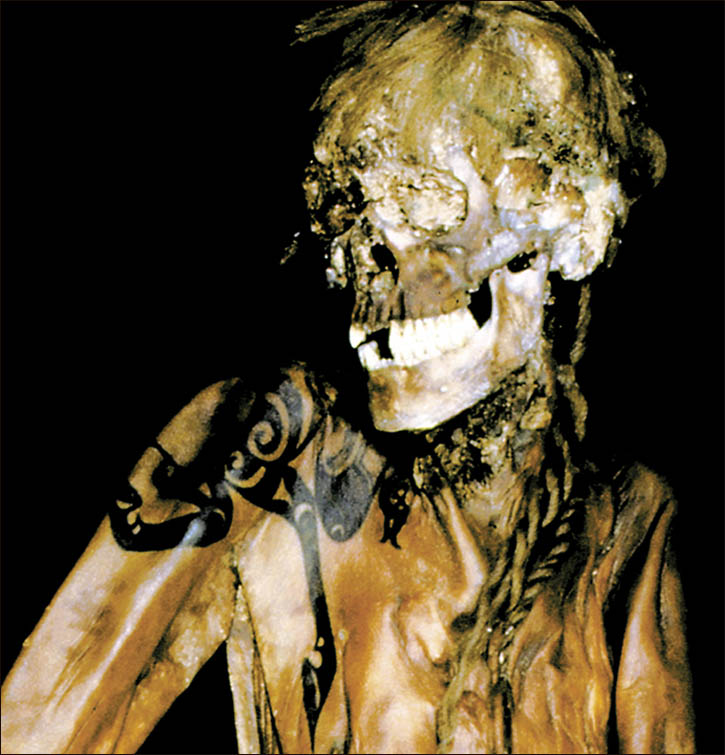
The ancient mummy of a mysterious young woman, known as the Ukok Princess, is finally returning home to the Altai Republic this month.

She is to be kept in a special mausoleum at the Republican National Museum in capital Gorno-Altaisk, where eventually she will be displayed in a glass sarcophagus to tourists.

For the past 19 years, since her discovery, she was kept mainly at a scientific institute in Novosibirsk, apart from a period in Moscow when her remains were treated by the same scientists who preserve the body of Soviet founder Vladimir Lenin.

To mark the move ‘home’, The Siberian Times has obtained intricate drawings of her remarkable tattoos, and those of two men, possibly warriors, buried near her on the remote Ukok Plateau, now a UNESCO world cultural and natural heritage site, some 2,500 metres up in the Altai Mountains in a border region close to frontiers of Russia with Mongolia, China and Kazakhstan.

They are all believed to be Pazyryk people – a nomadic people described in the 5th century BC by the Greek historian Herodotus – and the colourful body artwork is seen as the best preserved and most elaborate ancient tattoos anywhere in the world.

To many observers, it is startling how similar they are to modern-day tattoos.

The remains of the immaculately dressed ‘princess’, aged around 25 and preserved for several millennia in the Siberian permafrost, a natural freezer, were discovered in 1993 by Novosibirsk scientist Natalia Polosmak during an archeological expedition.

Buried around her were six horses, saddled and bridled, her spiritual escorts to the next world, and a symbol of her evident status, perhaps more likely a revered folk tale narrator, a healer or a holy woman than an ice princess.

There, too, was a meal of sheep and horse meat and ornaments made from felt, wood, bronze and gold.  And a small container of cannabis, say some accounts, along with a stone plate on which were the burned seeds of coriander.

‘Compared to all tattoos found by archeologists around the world, those on the mummies of the Pazyryk people are the most complicated, and the most beautiful,’ said Dr Polosmak.

‘More ancient tattoos have been found, like the Ice Man found in the Alps – but he only had lines, not the perfect and highly artistic images one can see on the bodies of the Pazyryks.

‘It is a phenomenal level of tattoo art. Incredible.’

While the tattoos, preserved in the permafrost, have been known about since the remains were dug up, until now few have seen the intricate reconstructions that we reveal here.

‘Tattoos were used as a mean of personal identification – like a passport now, if you like. The Pazyryks also believed the tattoos would be helpful in another life, making it easy for the people of the same family and culture to find each other after death,’ added Dr Polosmak.

‘Pazyryks repeated the same images of animals in other types of art, which is considered to be like a language of animal images, which represented their thoughts.

‘The same can be said about the tattoos – it was a language of animal imagery, used to express some thoughts and to define one’s position both in society, and in the world. The more tattoos were on the body, the longer it meant the person lived, and the higher was his position.

‘For example the body of one man, which was found earlier in the 20th century, had his entire body covered with tattoos. Our young woman – the princess – has only her two  arms tattooed. So they signified both age and status.’

The tattoos on the left shoulder of the ‘princess’  show a fantastical mythological animal: a dear with a griffon’s beak and a Capricorn’s antlers. The antlers are decorated with the heads of griffons. And the same griffon’s head is shown on the back of the animal.

The mouth of a spotted panther with a long tail is seen at the legs of a sheep.

She also has a dear’s head on her wrist, with big antlers. There is a drawing on the animal’s body on a thumb on her left hand.

On the man found close to the ‘princess’, the tattoos include the same fantastical creature, this time covering the right side of his body, across his right shoulder and stretching from his chest to his back.

His chest, arms, part of the back and the lower leg are covered with tattoos. There is an argali – a mountain sheep – along with the same dear with griffon’s vulture-like beak, with horns and the back of its head which has a griffon’s heads and an onager drawn on it.

All animals are shown with the lower parts of their bodies turned inside out. There is also a winged snow leopard, a fish and fast-running argali.

Thanks to Kebmodee for bringing this to the attention of the It’s Interesting community.