What I’ve Learned: Sol Snyder


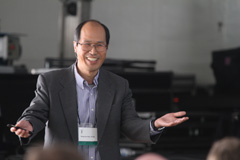
Sol Snyder, Distinguished Service Professor of Neuroscience, Pharmacology and Psychiatry, School of Medicine

Growing up, I never had any strong interest in science. I did well in lots of things in high school. I liked reading philosophy and things like that, but being a philosopher is not a fit job for a nice Jewish boy.

This was in the mid-1950s, and many of my friends were going into engineering, preparatory to joining the then prominent military industrial complex. Others were going to be doctors, so I got the idea that maybe I’d be a psychiatrist. I didn’t have any special affinity for medicine or desire to cast out the lepers or heal mankind.

I was always reading things. My father valued education. He wasn’t a big advice giver, but he … had a lot of integrity. What was important to him was doing the right thing. And he had great respect for the intellectual life and science.

My father’s professional life commenced in 1935 as the 10th employee of what became the NSA. He led a team that broke one of the principal Japanese codes. At the end of World War II, computers were invented, and, if you think about it, what could be the best entity to take advantage of computers than NSA, with its mission of sorting gibberish and looking for patterns. So my father was assigned to look at these new machines and see if they would be helpful. He led the computer installations at NSA.

Summers in college I worked in the NSA. My father taught me to program computers in machine language. Computers were a big influence on me.

I learned at the NSA about keeping secrets. What is top secret, what is need-to-know—that is one of the things you learn in the business. You don’t talk to the guy at the next desk even if you’re working on the same project. If that person doesn’t need to know, you just shut up.

In medical school, I started working at the NIH in Bethesda during the summers and elective periods, largely because the only thing I really did well up to that time was play the classical guitar and one of my guitar students was an NIH researcher. In high school I thought I might go the conservatory route, but that’s even less fitting for a nice Jewish boy than being a philosopher.

It was through my contacts at NIH that I was able to get a position working with future Nobel Prize winner Julius Axelrod. Julie was a wonderful mentor who did research on drugs and neurotransmitters. Working with him was inspirational. I just adored it.

What was notable about Julie was his great creativity, always coming up with original ideas. Even though he was an eminent scientist, he didn’t have a regular office. He just had a desk in a lab. He did experiments with his own two hands every day.

Philosophically, Julie emphasized you go where the data takes you. Don’t worry that you’re an expert in enzyme X and so should focus on that. If the data point to enzyme Y, go for it. Do what’s exciting.

My very first project with Julie was studying the disposition of histamine. I thought I had found that histamine had been converted into a novel product that looked really interesting, and I was wrong. I missed the true product because we separated the chemicals on paper and discarded the radioactivity at the bottom, throwing away the real McCoy. Another lab at Yale found it, led, remarkably, by a close friend since kindergarten. My humiliation didn’t last very long. I learned not to be so sloppy, to take greater care, and, most important, to explore peculiar results.

How does one pick research directions? You can go where it’s “hot,” but there you’re competing with 300 other people, and everyone can make only incremental changes. But if you follow Julie Axelrod’s rules and you don’t worry about what’s hot, or what other people are doing—just go where your data are taking you—then you have a better chance of finding something that nobody else had found before.

With the discovery of the opiate receptor, I was fortunate to launch a new field: molecular identification of neurotransmitter receptors. Later we discovered that the gas nitrous oxide is a neurotransmitter.

I’m a klutz. I can’t hammer a nail. So for the technical side, like dissecting brains to look at different regions, I enlisted friends. I learned to collaborate, a key element in so many discoveries.

Johns Hopkins has always been a collegial place. People are just friendly and interact with each other. This tradition goes back to the founding of the medical school, permeating the school’s governance as well as research. We tend to be more productive than faculty at other schools, where one gets ahead by sticking an ice pick in the backs of colleagues.

One of my heroes was my guitar teacher, Sophocles Papas, Andrés Segovia’s best friend. Sophocles was an important influence in my life, and we stayed close until he died in his 90s. In a couple of years after commencing lessons, I was giving recitals, all thanks to him. Like Julie, Sophocles emphasized innovative short cuts to creativity.

I’ve remained involved with music. I’m the longest-serving trustee on the Baltimore Symphony Orchestra, chairing for many years its music committee. Trustees of arts organizations are typically businesspeople selected for their fundraising acumen. But the person who nominated me reportedly commented, I’d like to propose something radical: I’d like to propose a trustee who cares about music.

Most notable about psychiatry is that the major drugs—antipsychotics for schizophrenia, antidepressants, and anti-anxiety drugs—were all discovered in the mid-1950s. Subsequent tweaking has enhanced potency and diminished side effects, but there have been no major breakthroughs. No new class of drugs since 1958—rather frustrating.

As biomedical science advances, especially with the dawn of molecular biology, our power to innovate is just dazzling. Today’s students take all of this for granted, but those of us who have been doing research for several decades are daily amazed by our abilities to probe the mysteries of life.

The logic of nature is elegant and straightforward. The more we learn about how the body works, the more we are amazed by its beauty and inherent simplicity.

One of my pet peeves is that the very power of modern science leads journal and grant reviewers to expect every “i” dotted and every “t” crossed. Because of this, four years or more of work go into each scientific manuscript. Then, editors and reviewers of journals are so picayune that revising a paper consumes another year.

Now let’s consider the poor post­doctoral fellow or graduate student. To move forward in his or her career requires at least one major publication—a five-year enterprise. If you only have one shot on goal, one paper in five years, your chances of success shrivel. The duration of PhD training and postdoctoral training is getting so long that from the entry point at graduate school to the time you’re out looking for a job as an assistant professor is easily 12, 15 years. Well, that is ridiculous. If you got paid $10 million at the end of this road, that would be one thing, but scientists earn less than most other professionals. We’re deterring the young smart people from going into science.

Biomedical researchers don’t work in a vacuum. They work with grad students and postdoctoral fellows, so being a good mentor is key to being a good scientist. Keep your students well motivated and happy. Have them feel that they are good human beings, and they will do better science.

The most important thing is that you value the integrity of each person. I ask my students all the time, What do you think? And this discussion turns into minor league psychotherapy. Ah, you think that? Tell me more. Tell me more.

The “stupidest” of the students here are smarter than me. It’s a pleasure to watch them emerge.

I see my life as taking care of other people. Although I didn’t go to medical school with any intelligent motivation, once I did, I loved being a doctor and trying to help people. And I love being a psychiatrist and trying to understand people, and I try to carry that into everything I do.

In medical research, all of us want to find the causes and cures for diseases. I haven’t found the cause of any disease, although with Huntington’s disease, we are making inroads. And, of course, being a pharmacologist, my métier is discovering drugs and better treatments.

My secret? I come to work every day, and I keep my own calendar. That way I have free time to just wander around the lab and talk to the boys and girls and ask them how it’s going. That’s what makes me happy.

Sol Snyder joined Johns Hopkins in 1965 as an assistant resident in Psychiatry and would later become the youngest full professor in JHU history. In 1978, he received the Albert Lasker Basic Medical Research Award for his role in discovering the brain’s opiate receptors. In 1980, he founded the School of Medicine’s Department of Neuroscience, which in 2006 was renamed the Solomon H. Snyder Department of Neuroscience.

http://hub.jhu.edu/gazette/2014/january-february/what-ive-learned-sol-snyder

http://en.wikipedia.org/wiki/Solomon_H._Snyder

Protecting new neurons reduces depression caused by stress, and may lead to a new class of molecules to treat depression.

Scientists probing the link between depression and a hormone that controls hunger have found that the hormone’s antidepressant activity is due to its ability to protect newborn neurons in a part of the brain that controls mood, memory, and complex eating behaviors. Moreover, the researchers also showed that a new class of neuroprotective molecules achieves the same effect by working in the same part of the brain, and may thus represent a powerful new approach for treating depression.

“Despite the availability of many antidepressant drugs and other therapeutic approaches, major depression remains very difficult to treat,” says Andrew Pieper, associate professor of psychiatry and neurology at the University of Iowa Carver College of Medicine and Department of Veterans Affairs, and co-senior author of the study.

In the new study, Pieper and colleagues from University of Texas Southwestern Medical Center led by Jeffrey Zigman, associate professor of internal medicine and psychiatry at UT Southwestern, focused on understanding the relationship between depression, the gut hormone ghrelin, and the survival of newborn neurons in the hippocampus, the brain region involved in mood, memory, and eating behaviors.

“Not only did we demonstrate that the P7C3 compounds were able to block the exaggerated stress-induced depression experienced by mice lacking ghrelin receptors, but we also showed that a more active P7C3 analog was able to complement the antidepressant effect of ghrelin in normal mice, increasing the protection against depression caused by chronic stress in these animals,” Zigman explains.

“The P7C3 compounds showed potent antidepressant activity that was based on their neurogenesis-promoting properties,” Pieper adds. “Another exciting finding was that our experiments showed that the highly active P7C3 analog acted more rapidly and was more effective [at enhancing neurogenesis] than a wide range of currently available antidepressant drugs.”

The findings suggest that P7C3-based compounds may represent a new approach for treating depression. Drugs based on P7C3 might be particularly helpful for treating depression associated with chronic stress and depression associated with a reduced response to ghrelin activity, which may occur in conditions such as obesity and anorexia nervosa.

Future studies, including clinical trials, will be needed to investigate whether the findings are applicable to other forms of depression, and determine whether the P7C3 class will have antidepressant effects in people with major depression.

The hippocampus is one of the few regions in the adult brain where new neurons are continually produced – a process known as neurogenesis. Certain neurological diseases, including depression, interfere with neurogenesis by causing death of these new neurons, leading to a net decrease in the number of new neurons produced in the hippocampus.

Ghrelin, which is produced mainly by the stomach and is best known for its ability to stimulate appetite, also acts as a natural antidepressant. During chronic stress, ghrelin levels rise and limit the severity of depression caused by long-term stress. When mice that are unable to respond to ghrelin experience chronic stress they have more severe depression than normal mice.

In the new study, Pieper and Zigman’s team showed that disrupted neurogenesis is a contributing cause of depression induced by chronic stress, and that ghrelin’s antidepressant effect works through the hormone’s ability to enhance neurogenesis in the hippocampus. Specifically, ghrelin helps block the death of these newborn neurons that otherwise occurs with depression-inducing stress. Importantly, the study also shows that the new “P7C3-class” of neuroprotective compounds, which bolster neurogenesis in the hippocampus, are powerful, fast-acting antidepressants in an animal model of stress-induced depression. The results were published online April 22 in the journal Molecular Psychiatry.

Potential for new antidepressant drugs

The neuroprotective compounds tested in the study were discovered about eight years ago by Pieper, then at UT Southwestern Medical Center, and colleagues there, including Steven McKnight and Joseph Ready. The root compound, known as P7C3, and its analogs protect newborn neurons from cell death, leading to an overall increase in neurogenesis. These compounds have already shown promising neuroprotective effects in models of neurodegenerative disease, including Parkinson’s disease, amyotrophic lateral sclerosis (ALS), and traumatic brain injury. In the new study, the team investigated whether the neuroprotective P7C3 compounds would reduce depression in mice exposed to chronic stress, by enhancing neurogenesis in the hippocampus.

http://now.uiowa.edu/2014/04/protecting-new-neurons-reduces-depression-caused-stress

Boosting Excess Neuron Activity Builds Resilience In Mice Vulnerable To Depression

A new study has found that activating natural resilience in the brain could reduce susceptibility for stress in mice, and potentially humans.

Depressive behaviors in mice are often linked to “out-of-balance” neuron activity in the brain’s reward circuit. Suppressing or stopping this hyperactive neuron activity was typically thought to treat this susceptibility to depression or anxiety — but the new study has found quite the opposite.

“To our surprise, neurons in this circuit harbor their own self-tuning, homeostatic mechanism of natural resilience,” Ming-Hu Han of the Icahn School of Medicine at Mount Sinai in New York City, explained in a press release. What this means is that instead of suppressing this excessive neuron activity, boosting it provided a self-stabilizing response, re-establishing balance and producing an antidepressant-like effect.

The mice that were once vulnerable to being anxious, listless, depressed or withdrawn after socially stressful experiences stopped exhibiting these behaviors after their neuron activity received a boost. “As we get to the bottom of a mystery that has perplexed the field for more than a decade, the story takes an unexpected twist that may hold clues to future antidepressants that would at through this counterintuitive resilience mechanism,” Dr. Thomas Insel, NIMH Director, said in the press release.

In susceptible mice, neurons that secrete dopamine — a feel-good hormone — from a reward circuit area called the ventral tegmental area (VTA) become unusually hyperactive. This hyperaction was much higher in mice that were resilient to stress, “even though they were spared the runaway dopamine activity and depression-related behaviors,” the press release reads. Using this logic, the susceptible mice just needed a boost in activation in these neurons to produce resilience.

What is interesting about this study is that it points to the power of the body and brain’s self-correcting prowess. “Homeostatic mechanisms finely regulate other critical components of physiology required for survival — blood glucose and oxygen, body temperature, blood pressure,” Lois Winsky, chief of the NIMH Molecular, Cellular, and Genomic Neuroscience Research Branch, said in the press release. “Similar mechanisms appear to also maintain excitatory balance in brain cells. This study shows how they may regulate circuits underlying behavior.”

http://www.medicaldaily.com/boosting-excess-neuron-activity-builds-resilience-mice-vulnerable-depression-277452

Cocaine Eats Up Brain Twice as Fast as Normal Aging

Chronic cocaine use may speed up brain aging, a new study suggests.

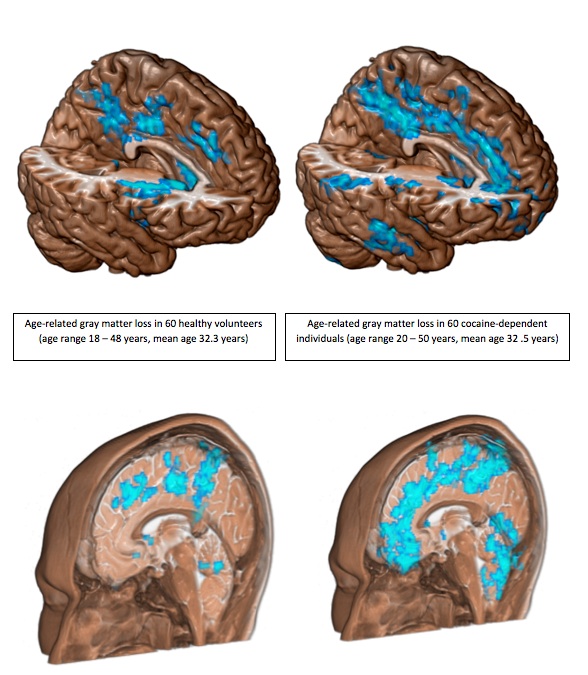
British researchers scanned the brains of 60 people with cocaine dependence and 60 people with no history of substance abuse, and found that those with cocaine dependence had greater levels of age-related loss of brain gray matter.

The cocaine users lost about 3.08 milliliters (ml) of brain volume a year, nearly twice the rate of about 1.69 ml per year seen in the healthy people, the University of Cambridge researchers said.

The increased decline in brain volume in the cocaine users was most noticeable in the prefrontal and temporal cortex, regions associated with attention, decision-making, self-regulation and memory, the investigators noted in a university news release.

“As we age, we all lose gray matter. However, what we have seen is that chronic cocaine users lose gray matter at a significantly faster rate, which could be a sign of premature aging. Our findings therefore provide new insight into why the [mental] deficits typically seen in old age have frequently been observed in middle-aged chronic users of cocaine,” Dr. Karen Ersche, of the Behavioral and Clinical Neuroscience Institute at University of Cambridge, said in the news release.

The study is published in the April 25 issue of the journal Molecular Psychiatry.

Cocaine is used by as many as 21 million people worldwide, and about 1 percent of these people become dependent on the drug, according to the United Nations Office on Drugs and Crime.

While the study doesn’t conclusively prove cocaine causes brain atrophy and other symptoms of aging, the association is cause for concern, the researchers said.

“Our findings clearly highlight the need for preventative strategies to address the risk of premature aging associated with cocaine abuse. Young people taking cocaine today need to be educated about the long-term risk of aging prematurely,” Ersche said.

However, accelerated aging also affects older adults who have abused cocaine and other drugs since early adulthood.

“Our findings shed light on the largely neglected problem of the growing number of older drug users, whose needs are not so well catered for in drug treatment services. It is timely for health care providers to understand and recognize the needs of older drug users in order to design and administer age-appropriate treatments,” Ersche said.

http://health.usnews.com/health-news/news/articles/2012/04/24/cocaine-habit-might-speed-brain-aging

University of Iowa scientists show that ingredient in green tomatoes (tomatidine) may build bigger muscles

A new study has found that a compound in green tomatoes, tomatidine, not only boosts muscle growth and strength, it protects against muscle wasting caused by illness, injury or aging. A research team at the University of Iowa found that healthy mice given supplements containing tomatidine grew bigger muscles, became stronger and could exercise longer. Even better, the mice did not gain any weight due to a corresponding loss of fat, suggesting that the compound may also have potential for treating obesity. Nice bonus.

The research team used a systems biology tool called the Connectivity Map to identify tomatidine and discovered it stimulated growth of cultured human muscle cells. (The same screening method previously identified a compound in apple peel as a muscle-boosting agent – but green tomatoes were found to be even more potent.) In fact, the team discovered that tomatidine generates changes in gene expression that are essentially opposite to the changes that occur in muscle cells when people are affected by muscle atrophy.

“Green tomatoes are safe to eat in moderation. But we don’t know how many green tomatoes a person would need to eat to get a dose of tomatidine similar to what we gave the mice,” study chief Dr. Christopher Adams said in a statement “We also don’t know if such a dose of tomatidine will be safe for people, or if it will have the same effect in people as it does in mice. We are working hard to answer these questions, hoping to find relatively simple ways that people can maintain muscle mass and function, or if necessary, regain it.”

The end goal is “science-based supplements,” or even simply incorporating tomatidine “into everyday foods to make them healthier.”

Muscle atrophy, or muscle-wasting, is a significant health issue. It can be caused by aging, injury, cancer or heart failure and makes people weak and fatigued, prohibits physical activity and predisposes them to falls and fractures. It affects more than 50 million Americans annually, including 30 million elderly.

Exercise can help but it’s not enough and is not an option for those who are ill or injured, Adams said.

The findings were published April 9 in the Journal of Biological Chemistry.

http://www.laweekly.com/squidink/2014/04/15/green-tomatoes-may-build-bigger-muscles

New research suggests that a third of patients diagnosed as vegetative may be conscious with a chance for recovery

Imagine being confined to a bed, diagnosed as “vegetative“—the doctors think you’re completely unresponsive and unaware, but they’re wrong. As many as one-third of vegetative patients are misdiagnosed, according to a new study in The Lancet. Using brain imaging techniques, researchers found signs of minimal consciousness in 13 of 42 patients who were considered vegetative. “The consequences are huge,” lead author Dr. Steven Laureys, of the Coma Science Group at the Université de Liège, tells Maclean’s. “These patients have emotions; they may feel pain; studies have shown they have a better outcome [than vegetative patients]. Distinguishing between unconscious, and a little bit conscious, is very important.”

Detecting human consciousness following brain injury remains exceedingly difficult. Vegetative patients are typically diagnosed by a bedside clinical exam, and remain “neglected” in the health care system, Laureys says. Once diagnosed, “they might not be [re-examined] for years. Nobody questions whether or not there could be something more going on.” That’s about to change.

Laureys has collaborated previously with British neuroscientist Adrian Owen, based at Western University in London, Ont., who holds the Canada Excellence Research Chair in Cognitive Neuroscience and Imaging. (Owen’s work was featured in Maclean’s in October 2013.) Together they co-authored a now-famous paper in the journal Science, in 2006, in which a 23-year-old vegetative patient was instructed to either imagine playing tennis, or moving around her house. Using functional magnetic resonance imaging, or fMRI, they saw that the patient was activating two different parts of her brain, just like healthy volunteers did. Laureys and Owen also worked together on a 2010 follow-up study, in the New England Journal of Medicine, where the same technique was used to ask a patient to answer “yes” or “no” to various questions, presenting the stunning possibility that some vegetative patients might be able to communicate.

In the new Lancet paper, Laureys used two functional brain imaging techniques, fMRI and positron emission tomography (PET), to examine 126 patients with severe brain injury: 41 of them vegetative, four locked-in (a rare condition in which patients are fully conscious and aware, yet completely paralyzed from head-to-toe), and another 81 who were minimally conscious. After finding that 13 of 42 vegetative patients showed brain activity indicating minimal consciousness, they re-examined them a year later. By then, nine of the 13 had improved, and progressed into a minimally conscious state or higher.

The mounting evidence that some vegetative patients are conscious, even minimally so, carries ethical and legal implications. Just last year, Canada’s Supreme Court ruled that doctors couldn’t unilaterally pull the plug on Hassan Rasouli, a man in a vegetative state. This work raises the possibility that one day, some patients may be able to communicate through some kind of brain-machine interface, and maybe even weigh in on their own medical treatment. For now, doctors could make better use of functional brain imaging tests to diagnose these patients, Laureys believes. Kate Bainbridge, who was one of the first vegetative patients examined by Owen, was given a scan that showed her brain lighting up in response to images of her family. Her health later improved. “I can’t say how lucky I was to have the scan,” she said in an email to Maclean’s last year. “[It] really scares me to think what would have happened if I hadn’t had it.”

https://ca.news.yahoo.com/one-third-of-vegetative-patients-may-be-conscious–study-195412300.html

New study shows that casual marijuana use alters the brain

The days when people thought only heavy Cheech-and-Chong pot smokers suffered cognitive consequences may be over. A study in The Journal of Neuroscience says even casual marijuana smokers showed significant abnormalities in two vital brain regions important in motivation and emotion.

“Some of these people only used marijuana to get high once or twice a week,” said co-author Hans Breiter, quoted in Northwestern University’s Science Newsline. Breiter hailed the study as the first to analyze the effects of light marijuana use. “People think a little recreational use shouldn’t cause a problem, if someone is doing OK with work or school,” he said. “Our data directly says this is not the case.”

“This study raises a strong challenge to the idea that casual marijuana use isn’t associated with bad consequences,” he added.

The study analyzed 20 pot smokers and 20 non-pot smokers between 18 and 25. Scientists asked them to estimate how much marijuana they smoked and how often they lit up over a three-month test period. Even those who smoked once a week showed brain abnormalities, while larger changes were seen in those who smoked more.

Marijuana is by far the most recognizable drug in the United States, with almost 19 million people reporting recent use, according to the National Survey on Drug Use. Cultural attitudes toward the drug are changing fast. What would have been inconceivable a generation ago — the decriminalization and legalization of marijuana — has happened in several states over the last several years. Nascent industries around the plant have sprouted in Colorado and Washington since they legalized the drug.

The study did not look at the behavior of the pot smokers, only their brains. What effect, if any, Wednesday’s findings will have on future legislation remains unclear.

The drug’s effect on the human brain, however, is substantially more clear, researchers say. In the study, scientists compared the size, shape and density of the nucleus accumbens and the amygdala, which control emotion. Those who had smoked had abnormally large nucleus accumbens, an area of the brain that controls pleasure, reward, and reinforcement learning.

Although structural changes were noted, it is not known whether this has any consequence on human behavior or emotion.

http://www.washingtonpost.com/news/morning-mix/wp/2014/04/16/even-casually-smoking-marijuana-can-change-your-brain-study-says/?tid=pm_national_pop

Laboratory-grown vaginas implanted in patients

Scientists have now reported the first human recipients of laboratory-grown vaginal organs. A research team led by Anthony Atala, M.D., director of Wake Forest Baptist Medical Center’s Institute for Regenerative Medicine, describes in the Lancet long-term success in four teenage girls who received vaginal organs that were engineered with their own cells.

“This pilot study is the first to demonstrate that vaginal organs can be constructed in the lab and used successfully in humans,” said Atala. “This may represent a new option for patients who require vaginal reconstructive surgeries. In addition, this study is one more example of how regenerative medicine strategies can be applied to a variety of tissues and organs.”

The girls in the study were born with Mayer-Rokitansky-Küster-Hauser (MRKH) syndrome, a rare genetic condition in which the vagina and uterus are underdeveloped or absent. The treatment could also potentially be applied to patients with vaginal cancer or injuries, according to the researchers.

The girls were between 13 and 18 years old at the time of the surgeries, which were performed between June 2005 and October 2008. Data from annual follow-up visits show that even up to eight years after the surgeries, the organs had normal function.

“Tissue biopsies, MRI scans and internal exams using magnification all showed that the engineered vaginas were similar in makeup and function to native tissue, said Atlantida-Raya Rivera, lead author and director of the HIMFG Tissue Engineering Laboratory at the Metropolitan Autonomous University in Mexico City, where the surgeries were performed.

In addition, the patients’ responses to a Female Sexual Function Index questionnaire showed they had normal sexual function after the treatment, including desire and pain-free intercourse.

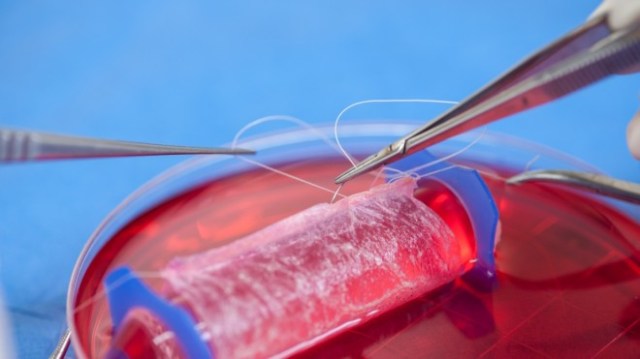
The organ structures were engineered using muscle and epithelial cells (the cells that line the body’s cavities) from a small biopsy of each patient’s external genitals. In a Good Manufacturing Practices facility, the cells were extracted from the tissues, expanded and then placed on a biodegradable material that was hand-sewn into a vagina-like shape. These scaffolds were tailor-made to fit each patient.

About five to six weeks after the biopsy, surgeons created a canal in the patient’s pelvis and sutured the scaffold to reproductive structures. Previous laboratory and clinical research in Atala’s lab has shown that once cell-seeded scaffolds are implanted in the body, nerves and blood vessels form and the cells expand and form tissue. At the same time the scaffolding material is being absorbed by the body, the cells lay down materials to form a permanent support structure — gradually replacing the engineered scaffold with a new organ.

Followup testing on the lab-engineered vaginas showed the margin between native tissue and the engineered segments was indistinguishable and that the scaffold had developed into tri-layer vaginal tissue.

Current treatments for MRHK syndrome include dilation of existing tissue or reconstructive surgery to create new vaginal tissue. A variety of materials can be used to surgically construct a new vagina — from skin grafts to tissue that lines the abdominal cavity. However, these substitutes often lack a normal muscle layer and some patients can develop a narrowing or contracting of the vagina.

The researchers say that with conventional treatments, the overall complication rate is as high as 75 percent in pediatric patients, with the need for vaginal dilation due to narrowing being the most common complication.

Before beginning the pilot clinical study, Atala’s team evaluated lab-built vaginas in mice and rabbits beginning in the early 1990s. In these studies, scientists discovered the importance of using cells on the scaffolds. Atala’s team used a similar approach to engineer replacement bladders that were implanted in nine children beginning in 1998, becoming the first in the world to implant laboratory-grown organs in humans. The team has also successfully implanted lab-engineered urine tubes (urethras) into young boys.

The team said the current study is limited because of its size, and that it will be important to gain further clinical experience with the technique and to compare it with established surgical procedures.

Co-researchers were James J. Yoo, M.D., Ph.D., and Shay Soker, Ph.D., Wake Forest Baptist, and Diego R. Esquiliano M.D., Reyna Fierro-Pastrana P.hD., Esther Lopez-Bayghen Ph.D., Pedro Valencia M.D., and Ricardo Ordorica-Flores, M.D.,Children’s Hospital Mexico Federico Gomez Metropolitan Autonomous University, Mexico.

http://www.sciencedaily.com/releases/2014/04/140410194326.htm

Thanks to Dr. Lutter for bringing this to the attention of the It’s Interesting community.

Humans will be kept between life and death in the first suspended animation trials

At a hospital in Pittsburgh, surgeons are now allowed to place patients into a state of suspended animation. If a patient arrives with a traumatic injury, and attempts to restart their heart have failed — if they’re on the doorstep of death — they will have their blood replaced with a cold saline solution, which stops almost all cellular activity. At this point, the patient is clinically dead — but if the doctors can fix the injury within a few hours, they can be returned to life from suspended animation by replacing the saline with blood.

Or at least, that’s the theory. The technique of suspended animation (or “emergency preservation and resuscitation” as non-sci-fi doctors prefer to call it) was first trialed on pigs in 2002. Hasan Alam, working with his colleagues at the University of Michigan Hospital, drugged up a pig, created a massive hemorrhage to simulate the effect of a massive gunshot wound, and then replaced its blood with a cold saline solution, cooling the pig’s cells to just 10 Celsius (50F). After the injury was treated, the pig was gradually warmed back up by replacing the saline with blood. Usually the pig’s heart started beating on its own, and despite the pig being dead for a few hours, there was no physical or cognitive impairment. Now, it’s time to try it out on humans. [Research paper: dx.doi.org/10.1067/msy.2002.125787 – “Learning and memory is preserved after induced asanguineous hyperkalemic hypothermic arrest in a swine model of traumatic exsanguination”]

Roughly once a month, UPMC Presbyterian Hospital in Pittsburgh receives a patient who has suffered a cardiac arrest after some kind of traumatic injury (gunshot, stabbing, etc.), and hasn’t responded to normal methods of restarting their heart. Because there’s currently no other kind of treatment, and because these kinds of wounds are nearly always fatal, the surgeons don’t need consent to carry out the suspended animation. The technique will be used on 10 patients, with the outcome compared against 10 people who didn’t. Samuel Tisherman, the surgeon who is leading the trial, told New Scientist that they’ll then refine their technique and try it out on 10 more patients — at which point, there should be enough data to work out whether suspended animation is worth rolling out to other hospitals.

The process is much the same for humans as it was for pigs. The first step is to replace all of the blood in the heart and brain — the two areas most sensitive to hypoxia — with with cold saline. Then, the saline is pumped around the rest of the body. After 15 minutes, the patient’s temperature reaches 10C — they have no blood, no brain activity, and they’re not breathing. Technically they’re dead — but because the metabolism of your cells slow down at low temperatures, they can survive for a few hours using anaerobic respiration (usually it’s just a few minutes). ”We’ve always assumed that you can’t bring back the dead. But it’s a matter of when you pickle the cells,” said Peter Rhee, who helped developed the suspended animation technique.

For now, this process is only being used for cardiac arrests following traumatic injuries, but in the future Tisherman says he hopes to use the technique for other conditions as well. The other big question, of course, is whether this technique can be used to suspend animation for more than just a couple of hours. If I have my blood replaced with saline, and then use cryonics to cool my body down yet further, could I be “dead” for a few months or weeks or years before being warmed up again? If sci-fi has taught us anything, it’s that suspended animation (or stasis as it’s sometimes called) is one of the most potentially exciting technologies — not only for rich people trying to extend their lives, but for the possibly centuries-long journeys that our first interstellar explorers will embark upon.

http://www.extremetech.com/extreme/179296-humans-will-be-kept-between-life-and-death-in-the-first-suspended-animation-trials

8 ancients beliefs now backed by modern science

The Earth may not be flat nor is it the center of the universe, but that doesn’t mean old-world intellectuals got everything wrong. In fact, in recent years, modern science has validated a number of teachings and beliefs rooted in ancient wisdom that, up until now, had been trusted but unproven empirically.

A full 55 pages of Arianna Huffington’s new book, Thrive: The Third Metric to Redefining Success and Creating a Life of Well-Being, Wisdom, and Wonder, are dedicated to these scientific breakthroughs that often confirm the power of ancient psychology and contemplative practices. On an intuitive level, we’ve known for centuries that these lifestyle practices can help us lead happy, healthy and balanced lives. But now, with the support of hard science, we can embrace these pieces of ancient wisdom and start really living them.

Here are eight ancient beliefs and practices that have been confirmed by modern science.

1. Helping others can make you healthier.

In their never-ending search for the best way to live, Greek philosophers argued over the relative benefits of hedonic and eudaimonic happiness. Hedonic well-being sees happiness as a factor of increased pleasure and decreased pain, while eudaimonic (“human flourishing”) happiness has more to do with having a larger purpose or meaning in life. A recent study from University of North Carolina at Chapel Hill psychologist Barbara Fredrickson may reveal which form of happiness is more beneficial for health and well-being.

The study, which was published in the Proceedings of the National Academy of Sciences last year, found that while both types of happiness can make you feel good, the latter could promote physical health and longevity as well. Using phone interviews, questionnaires and blood samples, the study explored how the two forms of happiness affected individuals on a genetic level. Participants with more hedonic and less eudaimonic well-being were found to have a lower production of virus-attacking antibodies, while those with more eudaimonic well-being experienced an increase in antibody production.

2. Acupuncture can restore balance to your body.

The traditional Chinese medicine technique is believed to address imbalances in a person’s qi (pronounced chi), the circulating energy within every living thing. Whether or not you believe in the existence of this energy flow, a new study published in Archives of Internal Medicine found that the age-old practice may be an effective way to relieve migraines, arthritis and other chronic pains.

Analyzing previous research data from approximately 18,000 subjects, researchers found that acupuncture was more effective than sham acupuncture and standard western care when treating various types of pain, including migraines and chronic back pain.

3. We need the support of a community in order to thrive.

Traditional Buddhist teachings suggest that community is a key component in any happy, fulfilled life. A 2010 study conducted by Brigham Young University and University of North Carolina at Chapel Hill researchers confirmed this belief, concluding that a healthy social life promotes longevity.

In analyzing the 148 studies — involving more than 300,000 individual participants — available on the subject, the researchers discovered that those with stronger social relationships maintained a 50 percent increased likelihood of survival. The effect of social relationships on mortality risk is even greater than the effect of exercise or obesity.

4. Tai chi can help alleviate a variety of health conditions.

This ancient Chinese martial art is based on the belief that achieving balance with one’s mind and body creates an overall sense of peace and harmony, naturally inspiring a long life. A report in the May 2009 issue of Harvard Women’s Health Watch summarized several studies confirming that this “moving meditation” practice can help prevent and treat many age-related health problems alongside standard treatment in older adults. A number of studies in the past decade have found tai chi to be helpful for those suffering from arthritis, low bone density and heart disease.

5. Meditation can help you reduce stress and discover inner peace.

Stemming from ancient Eastern origins, the practice of meditation is believed to help still the mind and reach a heightened level of awareness, improving health and well-being as a byproduct. Science is now proving the health benefits of meditation. The latest study from a team of Harvard Medical School scientists reveals how this mind-body practice can affect genes that control stress levels and immune function.

Harvard psychiatrist John Denniger and his team used neuro-imaging and genomics technology to measure potential physiological changes in each subject more accurately. After observing the high-stress individuals as they followed the study’s prescribed yoga and meditation practices, the team noticed an improved mitochondrial energy production, utilization and resiliency, which help to reduce the stress linked to health conditions like hypertension and infertility.


6. Compassion is the key to a meaningful life.

Tibetan Buddhist tradition includes a practice called metta, or loving-kindness. A 2012 study from Emory University found that compassion meditation based on this Tibetan model can effectively boost one’s ability to empathize with others by way of reading their facial expressions.

Another loving-kindness meditation study from 2011 found that, over time, this practice increased participants’ positive emotions that allowed them to find a deeper sense of mindfulness, their purpose in life, the network of support surrounding them, and their health. These components helped increase their overall life satisfaction.

7. Accepting what you can’t change is key to reducing suffering.

According to Buddhist teachings, one must accept the things they cannot change in order to reduce suffering. Now, scientists have found that this belief rings true, especially for older adults who are working through difficult life changes.

Researchers from Deakin University in Australia found that facing the realities of living with assistance and losing a degree of independence helps seniors live longer and feel far happier. Their study, which was published in the Journal of Happiness Studies last year, compared feelings of life satisfaction and perceived control of older adults living with assistance and those living in the community. Their analysis revealed that the ability to accept the inevitable (as well as maintain low-level control) in an assisted living setting was a significant predictor of life satisfaction. The researchers concluded, “In order to protect the well-being of older individuals, adaptation involves both a sense of control and the active acceptance of what cannot be changed.”

8. All you need is love.

If there is one thing that a variety of ancient wisdom traditions can agree on, it’s the value of love in maintaining a happy, meaningful life. And a group of Harvard researchers, on a mission to uncover the true roots of life fulfillment, conducted a 75-year study that reached the same conclusion.

The Harvard Grant Study, led by psychiatrist George Vaillant, followed the life trajectories of 268 male students in order to answer life’s universal questions of growth, development, value and purpose. Vaillant considers the most meaningful finding of the study to be that a happy life revolves around loving relationships. He explained that there are two pillars of happiness: “One is love. The other is finding a way of coping with life that does not push love away.”

http://www.huffingtonpost.com/2014/03/21/8-ancient-beliefs-now-bac_n_4995877.html