Controversial surgical treatment for addiction burns away the brain’s pleasure center


How far should doctors go in attempting to cure addiction? In China, some physicians are taking the most extreme measures. By destroying parts of the brain’s “pleasure centers” in heroin addicts and alcoholics, these neurosurgeons hope to stop drug cravings. But damaging the brain region involved in addictive desires risks permanently ending the entire spectrum of natural longings and emotions, including the ability to feel joy.

In 2004, the Ministry of Health in China banned this procedure due to lack of data on long term outcomes and growing outrage in Western media over ethical issues about whether the patients were fully aware of the risks.

However, some doctors were allowed to continue to perform it for research purposes—and recently, a Western medical journal even published a new study of the results. In 2007, The Wall Street Journal detailed the practice of a physician who claimed he performed 1000 such procedures to treat mental illnesses such as depression, schizophrenia and epilepsy, after the ban in 2004; the surgery for addiction has also since been done on at least that many people.

The November publication has generated a passionate debate in the scientific community over whether such research should be published or kept outside the pages of reputable scientific journals, where it may find undeserved legitimacy and only encourage further questionable science to flourish.

The latest study is the third published since 2003 in Stereotactic and Functional Neurosurgery, which isn’t the only journal chronicling results from the procedure, which is known as ablation of the nucleus accumbens. In October, the journal World Neurosurgery also published results from the same researchers, who are based at Tangdu Hospital in Xi’an.

The authors, led by Guodong Gao, claim that the surgery is “a feasible method for alleviating psychological dependence on opiate drugs.” At the same time, they report that more than half of the 60 patients had lasting side effects, including memory problems and loss of motivation. Within five years, 53% had relapsed and were addicted again to opiates, leaving 47% drug free.

(MORE: Addicted: Why We Get Hooked)

Conventional treatment only results in significant recovery in about 30-40% of cases, so the procedure apparently improves on that, but experts do not believe that such a small increase in benefit is worth the tremendous risk the surgery poses.  Even the most successful brain surgeries carry risk of infection, disability and death since opening the skull and cutting brain tissue for any reason is both dangerous and unpredictable. And the Chinese researchers report that 21% of the patients they studied experienced memory deficits after the surgery and 18% had “weakened motivation,” including at least one report of lack of sexual desire. The authors claim, however, that “all of these patients reported that their [adverse results] were tolerable.” In addition, 53% of patients had a change in personality, but the authors describe the majority of these changes as “mildness oriented,” presumably meaning that they became more compliant. Around 7%, however, became more impulsive.

The surgery is actually performed while patients are awake in order to minimize the chances of destroying regions necessary for sensation, consciousness or movement.  Surgeons use heat to kill cells in small sections of both sides of the brain’s nucleus accumbens.  That region is saturated with neurons containing dopamine and endogenous opioids, which are involved in pleasure and desire related both to drugs and to ordinary experiences like eating, love and sex.

(MORE: A Drug to End Drug Addiction)

In the U.S. and the U.K., reports the Wall Street Journal, around two dozen stereotactic ablations are performed each year, but only in the most intractable cases of depression and obsessive-compulsive disorder and after extensive review by institutional review boards and intensive discussions with the patient, who must acknowledge the risks. Often, a different brain region is targeted, not the nucleus accumbens. Given the unpredictable and potentially harmful consequences of the procedure, experts are united in their condemnation of using the technique to treat addictions. “To lesion this region that is thought to be involved in all types of motivation and pleasure risks crippling a human being,” says Dr. Charles O’Brien, head of the Center for Studies of Addiction at the University of Pennsylvania.

David Linden, professor of neuroscience at Johns Hopkins and author of a recent book about the brain’s pleasure systems calls the surgery “horribly misguided.”  He says “This treatment will almost certainly render the subjects unable to feel pleasure from a wide range of experiences, not just drugs of abuse.”

But some neurosurgeons see it differently. Dr. John Adler, professor emeritus of neurosurgery at Stanford University, collaborated with the Chinese researchers on the publication and is listed as a co-author.  While he does not advocate the surgery and did not perform it, he believes it can provide valuable information about how the nucleus accumbens works, and how best to attempt to manipulate it. “I do think it’s worth learning from,” he says. ” As far as I’m concerned, ablation of the nucleus accumbens makes no sense for anyone.  There’s a very high complication rate. [But] reporting it doesn’t mean endorsing it. While we should have legitimate ethical concerns about anything like this, it is a bigger travesty to put our heads in the sand and not be willing to publish it,” he says.

(MORE: Anesthesia Study Opens Window Into Consciousness)

Dr. Casey Halpern, a neurosurgery resident at the University of Pennsylvania makes a similar case. He notes that German surgeons have performed experimental surgery involving placing electrodes in the same region to treat the extreme lack of pleasure and motivation associated with otherwise intractable depression.  “That had a 60% success rate, much better than [drugs like Prozac],” he says. Along with colleagues from the University of Magdeburg in Germany, Halpern has just published a paper in the Proceedings of the New York Academy of Sciences calling for careful experimental use of DBS in the nucleus accumbens to treat addictions, which have failed repeatedly to respond to other approaches. The paper cites the Chinese surgery data and notes that addiction itself carries a high mortality risk.

DBS, however, is quite different from ablation.  Although it involves the risk of any brain surgery, the stimulation itself can be turned off if there are negative side effects, while surgical destruction of brain tissue is irreversible. That permanence—along with several other major concerns — has ethicists and addiction researchers calling for a stop to the ablation surgeries, and for journals to refuse to publish related studies.

Harriet Washington, author of Medical Apartheid:  The Dark History of Medical Experimentation on Black Americans from Colonial Times to the Present, argues that by publishing the results of unethical studies, scientists are condoning the questionable conditions under which the trials are conducted. “When medical journals publish research that violates the profession’sethical guidelines, this serves not only to sanction such abuses, but to encourage them,” she says. “In doing so, this practice encourages a relaxing of moral standards that threatens all patients and subjects, but especially  the medically vulnerable.”

(MORE: Real-Time Video: First Look at a Brain Losing Consciousness Under Anesthesia)

Shi-Min Fang, a Chinese biochemist who became a freelance journalist and recently won the journal Nature‘s Maddox prize for his exposes of widespread fraud in Chinese research, has revealed some of the subpar scientific practices behind research conducted in China, facing death threats and, as the New York Times reported, a beating with a hammer. He agrees that publishing such research only perpetuates the unethical practices. Asked by TIME to comment on the addiction surgery studies, Fang writes that publishing the research, particularly in western journals, “would encourage further unethical research, particularly in China where rewards for publication in international journals are high.”

While he doesn’t have the expertise to comment specifically on the ablation data, he says “the results of clinical research in China are very often fabricated. I suspect that the approvals by Ethics Committee mentioned in these papers were made up to meet publication requirement. I also doubt if the patients were really informed in detail about the nature of the study.” Fang also notes that two of the co-authors of the paper are advertising on the internet in Chinese, offering the surgery at a cost of 35,000 renminbi, about $5,600.  That’s more than the average annual income in China, which is about $5,000.

Given the available evidence, in fact, it’s hard to find a scientific justification for even studying the technique in people at all. Carl Hart, associate professor of psychology at Columbia University and author of the leading college textbook on psychoactive drugs, says animal studies suggest the approach may ultimately fail as an effective treatment for addiction; a 1984 experiment, for example, showed that destroying the nucleus accumbens in rats does not permanently stop them from taking opioids like heroin and later research found that it similarly doesn’t work for curbing cocaine cravings. Those results alone should discourage further work in humans. “These data are clear,” he says, “If you are going to take this drastic step, you damn well better know all of the animal literature.” [Disclosure:  Hart and I have worked on a book project together].

(MORE: Top 10 Medical Breakthroughs of 2012)

Moreover, in China, where addiction is so demonized that execution has been seen as an appropriate punishment and where the most effective known treatment for heroin addiction— methadone or buprenorphine maintenance— is illegal, it’s highly unlikely that addicted people could give genuinely informed consent for any brain surgery, let alone one that risks losing the ability to feel pleasure. And even if all of the relevant research suggested that ablating the nucleus accumbens prevented animals from seeking drugs, it would be hard to tell from rats or even primates whether the change was due to an overall reduction in motivation and pleasure or to a beneficial reduction in desiring just the drug itself.

There is no question that addiction can be difficult to treat, and in the most severe cases, where patients have suffered decades of relapses and failed all available treatments multiple times, it may make sense to consider treatments that carry significant risks, just as such dangers are accepted in fighting suicidal depression or cancer.  But in the ablation surgery studies, some of the participants were reportedly as young as 19 years old and had only been addicted for three years.  Addiction research strongly suggests that such patients are likely to recover even without treatment, making the risk-benefit ratio clearly unacceptable.

The controversy highlights the tension between the push for innovation and the reality of risk. Rules on informed consent didn’t arise from fears about theoretical abuses:  they were a response to the real scientific horrors of the Holocaust. And ethical considerations become especially important when treating a condition like addiction, which is still seen by many not as an illness but as a moral problem to be solved by punishment.  Scientific innovation is the goal, but at what price?
Read more: http://healthland.time.com/2012/12/13/controversial-surgery-for-addiction-burns-away-brains-pleasure-center/#ixzz2ExzobWQq

Thanks to Dr. Lutter for bringing this to the attention of the It’s Interesting community.

 

London bar raided after selling whale skin cocktail

101212-whale

Cops swooped on the Nightjar bar in Hoxton, East London, where barmen were  serving the Moby Dick drink.

It contained Laphroaig whisky, Drambuie, ale, bitters and a “whale skin  infusion”.

The raid last week comes amid a Europe-wide ban on whale meat and products,  except under strict restrictions in Greenland and Denmark.

The Metropolitan Police were tipped-off in October that the bar was serving  whale skin illegally. The Met’s Wildlife Crime Unit and a UK Border Force  officer raided the premises on December 3.

A police spokesman said: “One item from the premises was seized. This has  been  sent for analysis.”

No arrests have been made at the Nightjar, which describes itself on its  website as “a hidden slice of old-school glamour”. Its drinks range from £9  to £17 a glass.

Bar bosses said it had been unaware the drink contained an illegal ingredient  until the raid and has removed the drink from sale.

Nightjar director Edmund Weil said: “We did have a drink on this year’s menu  which included a small amount of scotch whisky infused with a single 2 x 5cm  strip of dried whale skin.

“The strip was purchased in a shop by an employee while on a trip to Japan in  autumn 2011.

“Until the police visit, neither ourselves nor our employees were aware of  the  legislation under which the bottle was seized.

“In hindsight we realise that regardless of the legal framework around such  products, it was an error of judgement on our part to include this on our  menu, and we would like to offer our apologies to anyone who may have been  offended by it.

“We have removed the drink entirely from our menu, which will be reprinted  before Monday to reflect this.”

Native Greenlanders who use whales as subsistence food are the only Europeans  allowed to kill or to eat them in strictly limited amounts.

Read more: http://www.thesun.co.uk/sol/homepage/news/4689220/Bar-raided-for-whale-meat-cocktail.html#ixzz2EhWDnief

Oregon’s ‘The Faces of Meth’ Add Campaign

Eight years ago, the Multnomah County Sheriff’s Office launched a campaign called “the Faces of Meth” to address Oregon’s methamphetamine problem. The images showed the jarring effects of meth on addicts’ faces through before-and-after pictures from their arrest records.

Rehabs.com recently followed suit with this infographic. Warning: these images are disturbing.


meth before after rehab.com

Rehabs.com


Recommended For You

Read more: http://www.businessinsider.com/new-faces-of-meth-ads-are-utterly-harrowing-2012-12#ixzz2E7zSezR1

Sexually-deprived fruitflies drink more alcohol

drinking_drosophila

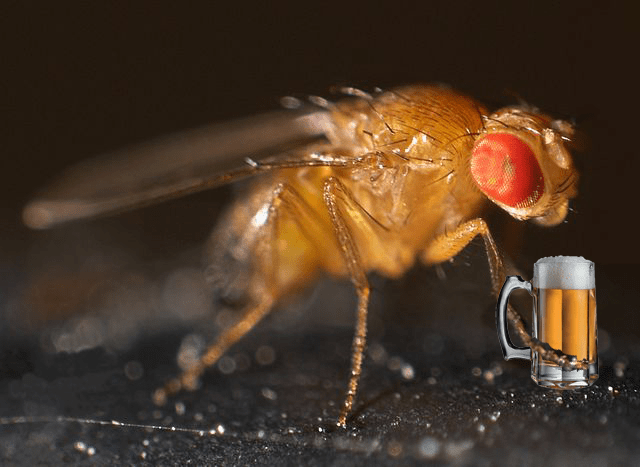
Rejection stinks. It literally hurts. But worse, it has an immediate and negative impact on our brains, producing withdrawal symptoms as if we’re quitting a serious addiction cold turkey. It’s no wonder, then, that we are tempted to turn to drugs to makeourselves feel better. But we’re not the only species that drowns our sorrows when we’re lonely – as a new study in Science reveals, rejected Drosophila do, too. Scientists have found not only will these sexually frustrated flies choose to consume more alcohol than their happily mated peers, sex and alcohol consumption activate the same neurological pathway in their brains.

Drosophila melanogaster males sure know how to woo a lady. When placed in the same container as a potential mate, a male fly will play her a delicate love song by vibrating one wing, caress her rear end, and gently nuzzle her most private of parts with his proboiscis to convince her that he is one heck of a lover. But even the most romantic fly can’t convince an already mated female Drosophila to give up the goods, so scientists were able to use the girls’ steely resolve to see how rejection affects fly drinking behavior.

“Alcohol is one of the most widely used and abused drugs in the world,” explains lead author Galit Shohat-Ophir. “The fruit fly Drosophila melanogaster is an ideal model organism to study how the social environment modulates behavior.” Previous studies have found that Drosophila melanogaster exhibit complex addiction-like behaviors. So in the controlled setting of Ulrike Heberlein’s lab at the University of California San Francisco, researchers paired male fruit flies with three types of females: 1) unmated females, which were willing and happy to mate; 2) mated females, which actively rejected the men; and 3) decapitated females, which didn’t actively reject the guys but, well, weren’t exactly willing partners either. After the flies were satisfied or frustrated, they were offered regular food and food spiked with ethanol, and the researchers measured which type they preferred to see if there was any connection between sex and drinking.

The flies that were rejected drank significantly more than their satisfied peers, but so did the ones paired with incapacitated girls, suggesting that it wasn’t the social aspect of rejection but sexual deprivation that drives male flies to increase their ethanol consumption (see the video at the end!). This alcoholic behavior was very directly related to the guy fly ever getting laid, for even after days of blue balls, if he was allowed to spend some time with a willing woman, he no longer preferred the spiked food.

What the scientists really wanted to understand, though, was why. What drives a frustrated fly to the flask? So to look at the underlying mechanism of this phenomenon, the scientists examined the flies’ brains. A body of scientific literature has connected one particular neurotransmitter, neuropeptide F (NPF), to ethanol-related behaviors in Drosophila, so it was a logical place to start. A very similar neurotransmitter in our brains, called neuropeptide Y (NPY), is linked to alcoholism.

Increased expression of NPF in mated male brains, as shown through immunochemistry.

The team found that sexual frustration caused an immediate decrease in the expression of NPF, while sex increased expression. Furthermore, when they used genetics to artificially knock down NPF levels in the satisfied flies, they drank as much as their not-so-satisfied friends. Similarly, when the researchers artificially increased NPF levels, flies stayed sober. This is the first time NPF levels have connected sexual activity to drinking. Clearly, NPF levels controlled the flies’ desire to drink, so the team further explored how NPF works in the fly’s brain.

Many animals, including ourselves, possess a neurological reward system which reinforces good behavior. Through this system, we ascribe pleasure or positive feelings to things we do that are necessary for species survival, including sex, eating, and social interaction. Drugs tap into this system, stimulating pleasure which can lead to addiction. Previous studies have shown that flies find intoxication rewarding, so the researchers hypothesized that NPF may play a role in the reward system.

Preference tests showed that artificially increasing NPF levels in the absence of sex or ethanol was rewarding to the flies, confirming the scientists’ hypothesis. This was further supported by the discovery that constantly activating NPF abolished the flies’ tendency to consider ethanol rewarding.

“NPF is a currency of reward” explains Shohat-Ophir. High NPF levels signal good behavior in Drosophila brains, thus reinforcing any activities which led to that state. This is a truly novel discovery, for while NPF and the mammal version, NPY, have been linked to alcohol consumption, no animal model has ever placed NPF/NPY in the reward system.

Understanding the role of NPF in reward-seeking behaviors may lead to better treatments for addicts. “In mammals, including humans, NPY may have a similar role [as NPF],” says Shohat-Ophir. “If so, one could argue that activating the NPY system in the proper brain regions might reverse the detrimental effects of traumatic and stressful experiences, which often lead to drug abuse.” Already, NPY and drugs that affect the function of its receptors are in clinical trials for anxiety, PTSD, mood disorders and obesity. This study suggests that perhaps they should be tested as treatment for alcoholism, too, as well as other reward-based addictions.

Research: Shohat-Ophir, G, KR Kaun & R Azanchi (2012). Sexual Deprivation Increases Ethanol Intake in Drosophila. Science 335: 1351-1355.

Click  http://blogs.scientificamerican.com/science-sushi/2012/03/15/flies-drink-upon-rejection/

to view a sequence of  three videos that show a male fly courting and successfully mating with a female fly, another male fly being rejected by a female, and a male choosing to consume an alcohol-infused solution over a non-alcohol solution. Video © Science/AAAS

Michael Newman – drunk Australian man tries to ride saltwater crocodile


A drunk man who climbed into a crocodile enclosure in Australia and attempted to ride a 5m (16ft) long crocodile has survived his encounter.

The crocodile, called Fatso, bit the 36-year-old man’s leg, tearing chunks of flesh from him as he straddled the reptile.

He received surgery to serious wounds to his leg and is recovering in hospital, police say.

He had been chucked out of a pub in the town of Broome for being too drunk.

The man, Michael Newman, climbed over a fence and tried to sit on the 800kg (1,800lb) saltwater crocodile.

“Fatso has taken offence to this and has spun around and bit this man on the right leg,” Sgt Roger Haynes of Broome police told journalists.

“The crocodile has let him go and he’s been able to scale the fence again and leave the wildlife park.”

Malcolm Douglas, the park’s owner, said that the crocodile was capable of crushing a man to death with a single bite.

“The man who climbed the fence was fortunate because Fatso was a bit more sluggish than normal, due to the cooler nights we have been experiencing in Broome,” said Mr Douglas.

“If it had been warmer and Fatso was more alert, we would have been dealing with a fatality.”

“No person in their right mind would try to sit on a 5m crocodile, Saltwater crocodiles, once they get hold of you, are not renowned for letting you go.”

The man staggered back to the pub bleeding heavily.

Pub manager Mark Phillips said staff told him that the man reappeared at about 11pm with bits of bark hanging off him and flesh gouged out of his limbs.

“They said he had chunks out of his legs and things like that,” Mr Phillips told The West Australian news website.

An average of two people are killed each year in Australia by aggressive saltwater crocodiles, which can grow up to 7m (23 ft) long and weigh more than a tonne.

http://www.bbc.co.uk/news/10611973


Teen has to have stomach removed after drinking cocktail containing liquid nitrogen


An 18-year-old had part of her stomach removed and is seriously ill in hospital after drinking a cocktail with liquid nitrogen in it.

According to the West Morland Gazette the girl, from Heysham, named in media reports as Gabby Scanlon, had been on a night out with friends and developed severe stomach pain after drinking the alcohol mixture.

She is now said to be seriously ill but stable in hospital.

According to ITV news the drink also contained Jaegermeister.

Cooling liquid nitrogen has been used in some luxury cocktails around the world and freezes everything it comes into contact with.

A Lancashire Police spokesperson said: “The investigation is still in its early stages and we are still interviewing witnesses to establish the full facts.

“The premises involved have fully cooperated with all agencies and have suspended drinks involving liquid nitrogen.”

http://www.huffingtonpost.co.uk/2012/10/07/liquid-nitrogen-cocktail-lancashire-teen-stomach-removed_n_1946286.html?utm_hp_ref=mostpopular

Political candidate in Brazil passed out cocaine with election leaflets


A Brazil city council candidate has been arrested after she was caught allegedly handing out cocaine with her election leaflets, according to reports.

Carme Cristina Lima, 32, was running for councillor of Itacoatiara, in Brazil’s northern state of Amazonas.

Police became suspicious when they saw a crowd allegedly gathering around Ms Lima’s car on the morning of election day on Sunday.

Officers searched her car and allegedly found hundreds of packets of cocaine attached to the candidate’s leaflets with instructions on how to vote for her.

Speaking to Brazil’s TNOnline website, police chief Daniel Ottoni said: “There was a large gathering of people around Ms Lima, but when they saw the police they all ran away.

“The candidate and another man also fled by car but officers caught up with them.

“According to locals, she had been distributing the drugs since early in the morning, on condition that people vote for her.”

Ms Lima was arrested for electoral corruption and drug dealing.

http://www.telegraph.co.uk/news/worldnews/southamerica/brazil/9593442/Brazil-candidate-handed-out-cocaine-with-election-leaflets.html

Marijuana farm the size of two football fields discovered in Chicago


Police in Chicago became farmers for a day Wednesday as they began to chop down a  marijuana farm as big as two football fields found in the city.

The farm, which contains about 1,500 plants and could have netted $7-10 million, was spotted by a police officer and county sheriff’s deputy in a helicopter as they headed back to their hangar, MyFoxChicago.com reports.

No arrests had been made as of Wednesday, and police were still trying to determine who owns the property that housed the grow site on the city’s far South Side. But police said they were hopeful that because of the size of the operation, informants or others might provide tips about those involved, including a man seen running from the area as the helicopter swooped low.

James O’Grady, the commander of the department’s narcotics division, tells The Associated Press they’ve never seen anything like it before, in part because Chicago’s harsh winters mean growers have a lot less time to plant, grow and harvest marijuana than their counterparts in less inclement places such as California and Mexico. The bumper crop was likely planted in spring, O’Grady said.

Add to that the urban sprawl: there are few spots in Chicago where such an operation could go unnoticed because of all the buildings, roads and residents. The growers took pains to ensure their crop was largely hidden by a canopy of trees and surrounding vegetation.

“Somebody put a lot of thought into it,” O’Grady said. “But they probably didn’t anticipate the helicopter.”

Chicago Police Officer Stan Kuprianczyk, a pilot, said police helicopters flew “over it all the time,” to and from their hangar, without spying the grow site. Yet somehow, a number of factors came together to allow Cook County Sheriff’s Deputy Edward Graney to spot the plants.

“We had the right altitude, the right angle, the right sunlight, and I happened to be glancing down,” said Graney. He said he initially spotted five plants or so through the trees before he asked Kuprianczyk to circle around for a closer look.

“We just happened to be right over a small hole in the trees and we looked down,” Kuprianczyk said.

They also happened to have the right training, Graney said, explaining that just a few weeks earlier a much smaller operation in suburban Chicago prompted them to fly over and videotape the scene so they might be able to recognize marijuana if they ever saw it from the air again.

So, by the time Graney spotted the marijuana plants, which are a much brighter shade of green than the surrounding vegetation, he had a pretty good idea what he was looking at.

Superintendent Garry McCarthy, whose officers are more used to intercepting shipments of marijuana grown elsewhere or discovering hydroponic growing operations inside buildings, said the discovery of the marijuana is significant in a larger fight against street violence.

Those involved with narcotics, whether it is marijuana, heroin or cocaine, purchase firearms with their profits and have shown they’re willing to use them to protect their business, he said.

“That’s where the violence comes in, the competition for the markets,” he said.

Read more: http://www.foxnews.com/us/2012/10/03/police-in-chicago-uncover-nearly-1000-pot-plants-in-city/?test=latestnews#ixzz28RCvlyQP

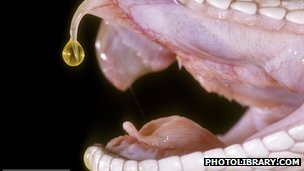
Black Mamba venom discovered to be a better painkiller than morphine


A painkiller as powerful as morphine, but without most of the side-effects, has been found in the deadly venom of the black mamba, say French scientists.

The predator, which uses neurotoxins to paralyse and kill small animals, is one of the fastest and most dangerous snakes in Africa.

However, tests on mice, reported in the journal Nature, showed its venom also contained a potent painkiller.

They admit to being completely baffled about why the mamba would produce it.

The researchers looked at venom from 50 species before they found the black mamba’s pain-killing proteins – called mambalgins.

Dr Eric Lingueglia, from the Institute of Molecular and Cellular Pharmacology near Nice, told the BBC: “When it was tested in mice, the analgesia was as strong as morphine, but you don’t have most of the side-effects.”

Morphine acts on the opioid pathway in the brain. It can cut pain, but it is also addictive and causes headaches, difficulty thinking, vomiting and muscle twitching. The researchers say mambalgins tackle pain through a completely different route, which should produce few side-effects.

He said the way pain worked was very similar in mice and people, so he hoped to develop painkillers that could be used in the clinic. Tests on human cells in the laboratory have also showed the mambalgins have similar chemical effects in people.

But he added: “It is the very first stage, of course, and it is difficult to tell if it will be a painkiller in humans or not. A lot more work still needs to be done in animals.”

Dr Nicholas Casewell, an expert in snake venom at the Liverpool School of Tropical Medicine, has recently highlighted the potential of venom as a drug source.

Commenting on this study he said: “It’s very exciting, it’s a really great example of drugs from venom, we’re talking about an entirely new class of analgesics.”

Dr Lingueglia said it was “really surprising” that black mamba venom would contain such a powerful painkiller.

Dr Casewell agreed that it was “really, really odd”. He suggested the analgesic effect may work in combination “with other toxins that prevent the prey from getting away” or may just affect different animals, such as birds, differently to mice.

The Royal Pharmaceutical Society’s Dr Roger Knaggs said: “We are witnessing the discovery of a novel mechanism of action which is not a feature of any existing painkillers.”

He cautioned that the mambalgins worked by injections into the spine so would need “significant development” before they could be used in people.

http://www.bbc.co.uk/news/health-19812064

Thanks to Kebmodee for bringing this to the It’s Interesting community.

Intoxicated woman steals ferry, screaming “I’m Jack Sparrow, I’m a pirate.”

A woman high on drugs and alcohol stole a 45-foot double-decker passenger ferry screaming “I’m Jack Sparrow, I’m a Pirate.” According to reports on Thursday, Alison Whelan and her friend caused thousands of dollars in damages when they commandeered the vessel.

Whelan and her friend Tristam Locke admitted that they had been on a two-day drinking binge and had consumed the deadly hallucinogenic drug, nightshade, as reported by The Telegraph. Whelan made her escape by unmooring the boat, untying several thick ropes “connecting the boat to the shore because she kept tripping over them.”

The ferry started “drifting like a pinball machine.” The two drunk ‘pirates’ were out of control “heading toward dozens of other moored vessels.” Whelan damaged numerous boats, making for a very expensive night. However, no booty for the self-proclaimed pirate has been reported as yet.

Whelan was heard taunting police and shouting “What are you going to do now? I believe this is out of your jurisdiction.” The two incorrigible hijackers were finally apprehended when the ferry came to rest about a mile upstream in still waters.

Whelan is a “chronic alcoholic who is awaiting a liver transplant.” She pleaded guilty to “aggravated vehicle taking and was jailed for 122 days.” When arrested she declared that she “would have ended up in St Tropez” if she hadn’t been captured.

http://www.examiner.com/article/weird-news-woman-steals-ferry-screaming-i-m-jack-sparrow-on-drunken-rampage