7.5% of American schoolchildren take prescription psychiatric medications

The National Center for Health Statistics has found that 7.5 percent of American schoolchildren between the ages of six and 17 had been prescribed and taking pills for emotional or behavioral difficulties.

That is one in every 13 kids.

The study also found that more than half (55 percent) of the parents of the participants said that the medications helped their children “a lot,” while another 26 percent said it helped “some.”

The researchers were unable to identify the specific medications prescribed to the children, however they did make some discoveries regarding race and gender of the children on these medications.

Significantly more boys than girls were given medication; about 9.7 percent of boys compared with 5.2 percent of girls.

Older girls were more likely than younger females to be put on medication.

White children were the most likely to be on psychiatric medications (9.2 percent), followed by Black children (7.4 percent) and Hispanic children (4.5 percent).

Children on Medicaid or a Children’s Health Insurance Program (CHIP) were more likely on medication for emotional and behavioral problems (9.9 percent), versus 6.7 percent of kids with private insurance and only 2.7 percent of uninsured children.

Parents of younger children (between ages 6 and 11) were slightly more likely to feel the medications helped “a lot” compared to those of older children.

Parents of males were also more likely to feel the medications helped “a lot” — about 58 percent of parents of males reported that they helped “a lot” compared to 50 percent of the parents of females.

Parents with incomes less than 100 percent of the federal poverty level were the least likely to feel the medications helped “a lot”. Just 43 percent of these parents said the medications helped “a lot”, while about 31 percent said they helped “some”.

More families living below 100 percent of the federal poverty level had children taking medications for emotional and behavioral problems than those above the federal poverty level.

http://atlantablackstar.com/2014/04/25/1-13-schoolkids-takes-psych-meds/

Thanks to Da Brayn for bringing this to the attention of the It’s Interesting community.

Cocaine Eats Up Brain Twice as Fast as Normal Aging

Chronic cocaine use may speed up brain aging, a new study suggests.

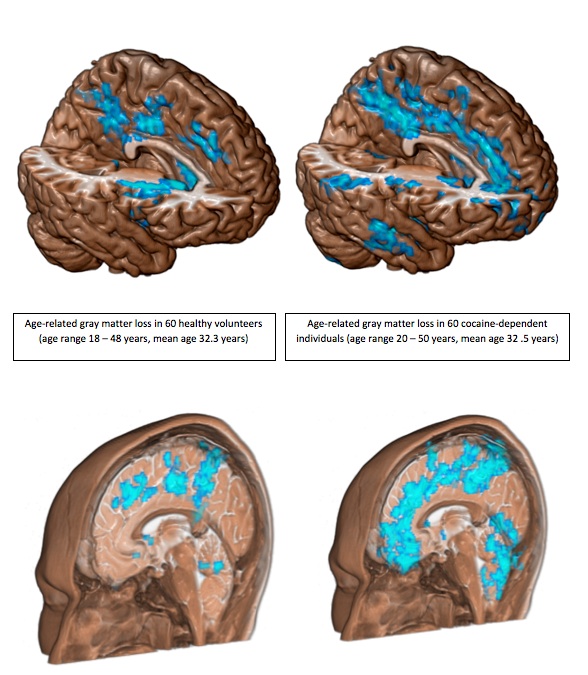
British researchers scanned the brains of 60 people with cocaine dependence and 60 people with no history of substance abuse, and found that those with cocaine dependence had greater levels of age-related loss of brain gray matter.

The cocaine users lost about 3.08 milliliters (ml) of brain volume a year, nearly twice the rate of about 1.69 ml per year seen in the healthy people, the University of Cambridge researchers said.

The increased decline in brain volume in the cocaine users was most noticeable in the prefrontal and temporal cortex, regions associated with attention, decision-making, self-regulation and memory, the investigators noted in a university news release.

“As we age, we all lose gray matter. However, what we have seen is that chronic cocaine users lose gray matter at a significantly faster rate, which could be a sign of premature aging. Our findings therefore provide new insight into why the [mental] deficits typically seen in old age have frequently been observed in middle-aged chronic users of cocaine,” Dr. Karen Ersche, of the Behavioral and Clinical Neuroscience Institute at University of Cambridge, said in the news release.

The study is published in the April 25 issue of the journal Molecular Psychiatry.

Cocaine is used by as many as 21 million people worldwide, and about 1 percent of these people become dependent on the drug, according to the United Nations Office on Drugs and Crime.

While the study doesn’t conclusively prove cocaine causes brain atrophy and other symptoms of aging, the association is cause for concern, the researchers said.

“Our findings clearly highlight the need for preventative strategies to address the risk of premature aging associated with cocaine abuse. Young people taking cocaine today need to be educated about the long-term risk of aging prematurely,” Ersche said.

However, accelerated aging also affects older adults who have abused cocaine and other drugs since early adulthood.

“Our findings shed light on the largely neglected problem of the growing number of older drug users, whose needs are not so well catered for in drug treatment services. It is timely for health care providers to understand and recognize the needs of older drug users in order to design and administer age-appropriate treatments,” Ersche said.

http://health.usnews.com/health-news/news/articles/2012/04/24/cocaine-habit-might-speed-brain-aging

New study shows that casual marijuana use alters the brain

The days when people thought only heavy Cheech-and-Chong pot smokers suffered cognitive consequences may be over. A study in The Journal of Neuroscience says even casual marijuana smokers showed significant abnormalities in two vital brain regions important in motivation and emotion.

“Some of these people only used marijuana to get high once or twice a week,” said co-author Hans Breiter, quoted in Northwestern University’s Science Newsline. Breiter hailed the study as the first to analyze the effects of light marijuana use. “People think a little recreational use shouldn’t cause a problem, if someone is doing OK with work or school,” he said. “Our data directly says this is not the case.”

“This study raises a strong challenge to the idea that casual marijuana use isn’t associated with bad consequences,” he added.

The study analyzed 20 pot smokers and 20 non-pot smokers between 18 and 25. Scientists asked them to estimate how much marijuana they smoked and how often they lit up over a three-month test period. Even those who smoked once a week showed brain abnormalities, while larger changes were seen in those who smoked more.

Marijuana is by far the most recognizable drug in the United States, with almost 19 million people reporting recent use, according to the National Survey on Drug Use. Cultural attitudes toward the drug are changing fast. What would have been inconceivable a generation ago — the decriminalization and legalization of marijuana — has happened in several states over the last several years. Nascent industries around the plant have sprouted in Colorado and Washington since they legalized the drug.

The study did not look at the behavior of the pot smokers, only their brains. What effect, if any, Wednesday’s findings will have on future legislation remains unclear.

The drug’s effect on the human brain, however, is substantially more clear, researchers say. In the study, scientists compared the size, shape and density of the nucleus accumbens and the amygdala, which control emotion. Those who had smoked had abnormally large nucleus accumbens, an area of the brain that controls pleasure, reward, and reinforcement learning.

Although structural changes were noted, it is not known whether this has any consequence on human behavior or emotion.

http://www.washingtonpost.com/news/morning-mix/wp/2014/04/16/even-casually-smoking-marijuana-can-change-your-brain-study-says/?tid=pm_national_pop

More than 10 percent of emergency room visits involving energy drinks result in hospitalization

More than 10 percent of emergency room visits by people age 12 or older for problems involving energy drinks are serious enough to result in hospitalization, the federal government warned this week.

The Substance Abuse and Mental Health Services Administration said that 20,783 people visited emergency rooms in 2011 for difficulties involving the high-caffeine drinks, which are heavily marketed to youths and young adults. Eleven percent of them were hospitalized.

The data showed that 12 percent of people who had consumed only the energy drinks were hospitalized, while eight percent of those who had consumed an energy drink in combination with alcohol or drugs needed in-patient care. The total number of emergency room visits involving the beverages doubled between 2007 and 2011.

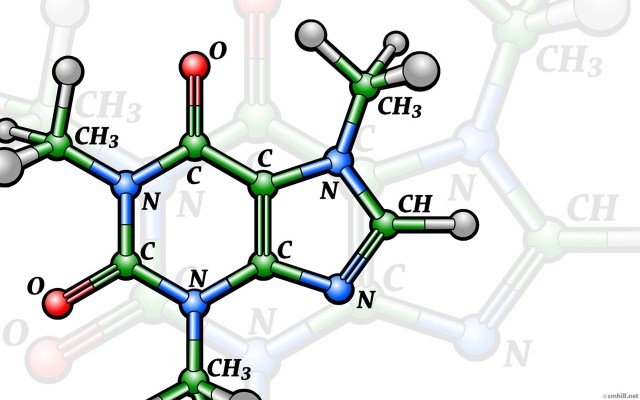
The flavored drinks — which include the brands Red Bull, Monster Energy and the smaller 5-Hour Energy shots — can contain as much as 500 milligrams of caffeine, which is five times as much as a typical cup of coffee and 10 times as much as a 12-ounce cola, according to SAMHSA. Ingesting that amount can cause health problems such as insomnia, racing heartbeat and increased blood pressure, the agency said in a bulletin issued March 13.

Even as their sales have soared, the drinks have been linked to “marijuana use, sexual risk taking, fighting, smoking, drinking and prescription drug misuse” among college students, the agency reported in 2013.

In 2012, the New York Times reported that the Food and Drug Administration had received 13 reports of deaths over the previous four years that cited the possible involvement of 5-Hour Energy and five fatalities that mentioned the possibility of Monster Energy being involved. A year ago, a group of physicians, researchers and public health experts urged the Food and Drug Administration to protect children and teens by restricting the amount of caffeine in energy drinks.

Energy drink companies have said that their products contain about the same amount of caffeine as strongly brewed coffee. Energy drinks and shots are usually sold as dietary supplements or food products, which don’t have caffeine limits. Other ingredients in energy drinks, such as taurine and ginseng, aren’t regulated by the FDA.

Studies have set different limits for the amount of caffeine an adult can safely consume, ranging from 2oo to 400 milligrams a day. More than 200 milligrams can be dangerous for children and adolescents, and the American Academy of Pediatrics advises against giving energy drinks to children.

http://www.washingtonpost.com/news/to-your-health/wp/2014/03/19/more-than-10-percent-of-emergency-room-visits-involving-energy-drinks-result-in-hospitalization/

Thanks to Pete Cuomo for bringing this to the attention of the It’s Interesting community.

Wake Up And Smell The Caffeine. It’s A Powerful Drug

Many of us can barely make it through the morning without first downing a cup of hot coffee. It’s become such a big part of our daily rituals that few actually give much thought to what it is that we’re putting in our bodies.

To help us break down the little-known things about caffeine, NPR’s David Greene spoke with Murray Carpenter, author of Caffeinated: How Our Daily Habit Helps, Hurts and Hooks Us. These are the things you probably aren’t thinking about as you wait in line at your local coffee shop.

Caffeine is a drug. Treat it as such.

In its essential form, caffeine is a bitter white powder derived from a natural insecticide found in some plants. Over the years, it became acknowledged as a drug after people independently discovered its stimulating effect.

But, Carpenter says, people often underestimate just how powerful that drug is. “A tablespoon — about 10 grams — will kill you,” he says, recounting the unfortunate story of a college student who went into a seizure and died after chasing down spoonfuls of caffeine with an energy drink.

Most of the caffeine in soft drinks comes from factories in China.

Naturally extracted caffeine is burned out from heated-up coffee beans. But most of the caffeine used in soft drinks is actually synthetically produced in Chinese pharmaceutical plants. After visiting one of these plants — the world’s largest, in fact — Carpenter can only describe it as “sketchy.”

“It was not what I expected,” he says. “It was sort of a rundown industrial park.”

And our favorite caffeinated beverage? Not coffee, but soft drinks.

“Despite the Starbucks on every corner [and] this sort of conspicuous coffee culture that we have today, we’re not drinking as much coffee as our grandparents did,” Carpenter says.

As coffee consumption has declined, our love of soft drinks has taken over. Today, eight of the 10 top-selling soft drinks are caffeinated. “If you look at, say, Coke, Diet Coke, Pepsi, Mountain Dew, Dr. Pepper, the only common denominator, besides carbonated water, is caffeine,” he says.

Sometimes, he says, caffeine can lurk in unexpected places — like orange soda.

Which brings us to the case of the supercharged Sunkist soda.

In 2010, a batch of Sunkist orange soda was bottled with a botched caffeine content. “These were sodas that should’ve had 41 milligrams of caffeine per 12-ounce serving, but they were blended with six times the labeled amount of caffeine,” Carpenter says. “So [there were actually] 240 milligrams per bottle.” That’s as much as three Red Bulls or 16 ounces of strong coffee, Carpenter notes in the book.

After Sunkist started getting complaints from consumers, it finally agreed with the Food and Drug Administration to voluntarily recall the 40,000 cases of supercaffeinated orange soda it had sent out.

“But my impression is that a lot of the people who consumed this and had some funny experiences with caffeine probably didn’t know what was going on,” he adds.

So what’s the takeaway? Drink in moderation.

Carpenter says three to four cups of coffee a day isn’t dangerous over the long term. That’s in line with what we’ve previously reported. Of course, if you’re experiencing symptoms like jitters or sleeplessness related to too much caffeine, cut back.

“For people who are using caffeine moderately … it’s probably perfectly healthy,” he says. “And we know there are some indications that we may even get some benefit out of long-term caffeinated coffee drinking.”

http://www.npr.org/blogs/thesalt/2014/03/13/289750754/wake-up-and-smell-the-caffeine-its-a-powerful-drug

LSD used as drug therapy for the first time in 40 years

Swiss scientists broke a four-decade-long informal ban on LSD research yesterday when they announced the results of a study in which cancer patients received the drug to curb their anxiety about death.

The study, which was published in the Journal of Nervous and Mental Disease, looked at the safety and efficacy of LSD when used in combination with talk therapy. The researchers used the semisynthetic psychedelic drug to facilitate discussions about the cancer patients’ fears of dying. The patients who took LSD, most of whom were terminally ill, experienced 10-hour-long supervised “trips.” One patient described the trips to The New York Times as a “mystical experience,” where “the major part was pure distress at all the memories I had successfully forgotten for decades.”

These periods of distress are regarded as therapeutically valuable because they allow patients to address their memories and the emotions they evoke. The patients underwent 30 such trips over the course of two months.

A year after the sessions ceased, the patients who had received a full dose of LSD — 200 micrograms — experienced a 20 percent improvement in their anxiety levels. That was not the case for the group who received a lower dose, however, as their anxiety symptoms actually increased. They were later allowed to try the full dose after the trial had ended.

Because of the small number of study participants, the researchers are reluctant to make any conclusive statements about the LSD treatment’s effectiveness. Indeed, the results were not statistically significant. But the fact that the study took place at all bodes well for psychedelic drug research, as the drug caused no serious side effects. Rick Doblin, executive director of the Multidisciplinary Association for Psychedelic Studies, a foundation that has funded many of these studies, thinks that revisiting LSD-based treatments is worthwhile. “We want to break these substances out of the mold of the counterculture,” Doblin told The New York Times, “and bring them back to the lab as part of a psychedelic renaissance.”

http://www.theverge.com/2014/3/5/5473828/lsd-drug-therapy-first-time-in-40-years

Thanks to Jody Troupe for bringing this to the attention of the It’s Interesting community.

Maryland police chief hoaxed on pot perils

50097724e81d3_image

By Fredrick Kunkle
The Washington Post

Annapolis Police Chief Michael A. Pristoop thought he came prepared when he testified before a Maryland state Senate panel on Tuesday about the perils of legalizing marijuana.

In researching his testimony against two bills before the Judicial Proceedings Committee, Pristoop said, he had found a news article to illustrate the risks of legalization: 37 people in Colorado, he said, had died of marijuana oversdoses on the very day that the state legalized pot.
“When he said it, everyone in the room dropped their laptops,” Sen. Jamie B. Raskin (D-Montgomery) said in an e-mail.

Trouble is, the facts were about as close to the truth as oregano is to pot. After a quick Google search on his laptop, Raskin — the sponsor of the legalization bill that was the subject of the Senate hearing — advised the chief that the Colorado overdose story, despite its deadpan delivery, had been made up for laughs by The Daily Currant, an online comedy magazine.

“I had not seen the spoof before, but it was self-evidently a parody,” Raskin said. “In the absence of real data, Internet hoaxes are becoming marijuana Prohibition’s last stand.”

Pristoop was among more than 100 people who testified at the hearing to give their views about legalizing or decriminalizing marijuana. Most witnesses said they were in favor of Raskin’s bill, which would legalize marijuana and tax and regulate its distribution and use. A separate bill, sponsored by Sens. Robert A. Zirkin (D-Baltimore County) and Allan H. Kittleman (R-Howard), would impose a civil fine of $100 for possession of small amounts of marijuana.
Late Tuesday, the chief apologized for the mistake, admitting in a news release that he had been duped.

“I apologize for the information I provided concerning the deaths. I believed the information I obtained was accurate, but I now know the story is nothing more than an urban legend,” Pristoop said. “This does not take away from the other facts presented in opposition to legalization or the good work of the Maryland Chiefs and Maryland Sheriffs Associations.”

Maj. Scott Baker said the chief and the department regretted the erroneous testimony but were also trying to take the mistake in stride, with a bit of humor.

“His numbers are up in smoke,” Baker acknowledged Wednesday — a sly tip of the hat to Cheech & Chong’s 1978 stoner movie.

Here’s an excerpt from the satirical — and totally fictional — Daily Currant article that duped Pristoop:

Colorado is reconsidering its decision to legalize recreational pot following the deaths of dozens due to marijuana overdoses.

According to a report in the Rocky Mountain News, 37 people were killed across the state on Jan. 1, the first day the drug became legal for all adults to purchase. Several more are clinging onto life in local emergency rooms and are not expected to survive.

“It’s complete chaos here,” says Dr. Jack Shepard, chief of surgery at St. Luke’s Medical Center in Denver. “I’ve put five college students in body bags since breakfast and more are arriving every minute.

“We are seeing cardiac arrests, hypospadias, acquired trimethylaminuria and multiple organ failures. By next week the death toll could go as high as 200, maybe 300. Someone needs to step in and stop this madness. My god, why did we legalize marijuana? What were we thinking?” http://www.washingtonpost.com/local/md-politics/like-wow-police-chief-is-hoaxed-on-pot-perils/2014/02/25/42bd0592-9e94-11e3-9ba6-800d1192d08b_story.html

Thanks to Da Brayn for bringing this to the attention of the It’s Interesting community.

Dr. David Nutt trying to make drug policies science-based, and to provide a safe alternative to alcohol

drugs

dr nutt
Nutt says politicians often have a “primitive, childish” way of thinking about drugs.

David Nutt is trying to develop a new recreational drug that he hopes will be taken up by millions of people around the world. No, the 62-year-old scientist isn’t “breaking bad.” In fact, he hopes to do good. His drug would be a substitute for alcohol, to create drinks that are just as intoxicating as beer or whiskey but less toxic. And it would come with an antidote to reverse its effects, allowing people to sober up instantly and drive home safely.

Nutt, a neuropsychopharmacologist at Imperial College London and a former top adviser to the British government on drug policy, says he has already identified a couple of candidates, which he is eager to develop further. “We know people like alcohol, they like the relaxation, they like the sense of inebriation,” Nutt says. “Why don’t we just allow them to do it with a drug that isn’t going to rot their liver or their heart?”

But when he presented the idea on a BBC radio program late last year and made an appeal for funding, many were appalled. A charity working on alcohol issues criticized him for “swapping potentially one addictive substance for another”; a commentator called the broadcast “outrageous.” News-papers likened his synthetic drug to soma, the intoxicating compound in Aldous Huxley’s dystopian novel Brave New World. Some of his colleagues dismissed the idea as scientifically unfeasible.

Nutt wasn’t surprised. As a fierce advocate of what he says are more enlightened, rational drug policies, he has been a lightning rod for a long time. Politicians, in Nutt’s view, make irrational decisions about drugs that help them win votes but cost society dearly. Drug policy is often based on the moral judgment that people should not use drugs, he says. Instead, it should reflect what science knows about the harms of different drugs—notably that many are far less harmful than legal substances such as alcohol, he says. The plan for a synthetic alcohol alternative is his own attempt to reduce the damage that drug use can wreak; he believes it could save millions of lives and billions of dollars.

Such views—and the combative way in which he espouses them—frequently land Nutt in fierce disputes. Newspaper commentators have called him “Professor Nutty” or “the dangerous professor.” In 2009, he was sacked from his position as chair of the United Kingdom’s Advisory Council on the Misuse of Drugs, tasked with giving scientific advice to the home secretary, after he criticized a government decision on cannabis.

But in November 2013, he received the John Maddox Prize for standing up for science. “In circumstances that would have humiliated and silenced most people,” wrote neurobiologist Colin Blakemore, one of the judges, “David Nutt continued to affirm the importance of evidence in understanding the harms of drugs and in developing drug policy.”

Controversial comparisons
David Nutt does not look like a dangerous professor. Short and heavyset, he has a jovial, round face and an old-fashioned mustache; one could mistake him for a London taxi driver. He limps slightly, has a down-to-earth way of speaking, and laughs a lot when he talks. “He is a real personality,” says psychopharmacologist Rainer Spanagel of Heidelberg University in Germany. “You can be in a meeting and almost have a result, then he will come in an hour late, stir everything up, and in the end convince everyone of his position.”

Nutt says he realized at an early age that “understanding how the brain works is the most interesting and challenging question in the universe.” When he was a teenager, his father told him a story of how Albert Hofmann, the discoverer of LSD, took a dose of that drug and felt that the bike ride home took hours instead of minutes. “Isn’t that incredible, that a drug can change time?” he asks. On his first night as an undergraduate in Cambridge, he witnessed the powers of drugs again when he went drinking with fellow students. Two of them couldn’t stop. “I just watched them transform themselves. One of them started wailing and crying and the other became incredibly hostile.”

During his clinical training, Nutt says he treated many alcoholics but failed “to get anyone interested in how to reduce their addiction to the drug that was harming them.” He set out to answer that question, first in the United Kingdom, later as the chief of the Section of Clinical Science at the U.S. National Institute on Alcohol Abuse and Alcoholism, a job he held for 2 years. Today, he runs the department of neuropsychopharmacology at Imperial College, using modern imaging techniques to see what happens in the brain when people take drugs or develop an addiction.

But his biggest contribution to science, he says, was a discovery he made quite early in his career: that some molecules don’t just block receptors in the brain, but actually have the opposite effect of the molecules that normally stimulate them—and in doing so shut down a brain pathway. Nutt called these molecules contragonists, and he has made a second career out of being a bit of a contragonist himself, trying to calm society’s overexcited responses to the steady stream of alarming news about drugs.

Fictional affliction
In 2009, Nutt published an article in the Journal of Psychopharmacology comparing the harms from ecstasy with those caused by horse riding. Every 10,000th ecstasy pill is likely to hurt someone, he calculated, while an average horse enthusiast can expect a serious accident every 350 hours of riding. The sport, he concluded, was more dangerous than the notorious party drug. That “raises the critical question of why society tolerates—indeed encourages—certain forms of potentially harmful behaviour but not others such as drug use,” he added.

Politicians were not amused, and Nutt’s whimsical reference to a fictional affliction he called equine addiction syndrome, or “equasy,” did not help. In his book Drugs – Without the Hot Air, Nutt provided his account of a phone conversation he had with U.K. Home Secretary Jacqui Smith after the paper was published. (Smith calls it an “embroidered version” of their talk.)

Smith: “You can’t compare harms from a legal activity with an illegal one.”

Nutt: “Why not?”

“Because one’s illegal.”

“Why is it illegal?”

“Because it’s harmful.”

“Don’t we need to compare harms to determine if it should be illegal?”

“You can’t compare harms from a legal activity with an illegal one.”

Nutt says this kind of circular logic crops up again and again when he discusses recreational drugs with politicians. “It’s what we would call ‘splitting’ in psychiatric terms: this primitive, childish way of thinking things are either good or bad,” he says.

He’s often that outspoken. He likens the way drug laws are hampering legitimate scientific research, for instance into medical applications for psychedelic compounds, to the church’s actions against Galileo and Copernicus. When the United Kingdom recently banned khat, a plant containing a stimulant that’s popular among people from the Horn of Africa and the Arabian Peninsula, he compared the decision with banning cats. And he accuses the Russian government of deliberately using alcohol to weaken the opposition. “However miserable they are, however much they hate their government and their country, they will just drink until they kill themselves, so they won’t protest,” he says.

But it’s his stance on cannabis that got him sacked. In early 2009, ignoring advice from Nutt’s advisory council, Smith upgraded cannabis from class C to class B, increasing the maximum penalty for possession from 2 to 5 years in prison. A few months later, Nutt criticized the decision in a public lecture, arguing that “overall, cannabis use does not lead to major health problems” and that tobacco and alcohol were more harmful. When media reported the remarks, Alan Johnson, who succeeded Smith as home secretary in mid-2009, asked him to resign. “He was asked to go because he cannot be both a government adviser and a campaigner against government policy,” Johnson wrote in a letter in The Guardian.

Nutt did not go quietly. With financial help from a young hedge fund manager, Toby Jackson, he set up a rival body, the Independent Scientific Committee on Drugs, “to ensure that the public can access clear, evidence based information on drugs without interference from political or commercial interest.” Politics have skewed not just drug laws but research itself, he argues. “If you want to get money from the U.S. government to work on a drug, you have to prove it damages the brain,” he says.

One of his favorite examples is a paper that Science published in September 2002. The study, led by George Ricaurte at Johns Hopkins University, seemed to show that monkeys given just two or three doses of ecstasy, chemically known as MDMA, developed severe brain damage. The finding suggested that “even individuals who use MDMA on one occasion may be at risk for substantial brain injury,” the authors wrote. The paper received massive media attention, but it was retracted a year later after the authors discovered that they had accidentally injected the animals not with MDMA but with methamphetamine, also known as crystal meth, which was already known to have the effects seen in the monkeys. Nutt says the mistake should have been obvious from the start because the data were “clearly wrong” and “scientifically implausible.” “If that result was true, then kids would have been dropping dead from Parkinson’s,” he says.

Some resent this combative style. “He is a polarizing figure and the drug policy area is polarized enough,” says Jonathan Caulkins, a professor of public policy at Carnegie Mellon University in Pittsburgh, Pennsylvania. But Jürgen Rehm, an epidemiologist at the Centre for Addiction and Mental Health in Toronto, Canada, says Nutt has helped stimulate debates that were long overdue. “You don’t get to be on the front page of The Lancet and The New York Times unless you sharpen your arguments a little bit,” Rehm says. “I can live with that.”

Ranking the drugs
In 2010, Nutt sparked a new firestorm when he published another comparison: a Lancet paper ranking drugs according to the harm they cause. Nutt and other experts scored a long list of drugs on 16 criteria, nine related to the user, such as death from an overdose or wrecked relationships, and seven related to society, such as drug-fueled violence and economic costs. In the end, every drug was given a score between 0 and 100 to indicate its overall harm. Alcohol came out on top, ahead of heroin; mushrooms and ecstasy were at the low end.

Critics said the study’s methodology was flawed because it didn’t address drug interactions and the social context of drug use. “For instance, the number of fatalities caused by excessive alcohol use is going to depend in part on gun control laws,” says Caulkins, who calls the whole idea of expressing drug harm as a single number “embarrassing.”

Caulkins adds that even if a perfect ranking of drug harms were possible, it wouldn’t mean that politicians should put the tightest control measures on the most harmful drugs. Suppose drug A is more harmful to the individual and society than drug B, he says, but impurities in drug A, when illegally produced, can lead to potentially fatal organ failure while they just taste bad in drug B. If you were going to prohibit only one of the two drugs, it should be drug B, he says, even though it causes less harm per se, because criminalizing drug A would lead to a more dangerous product and more deaths. Nutt’s ranking of drugs, he says, is “a pseudoscientific exercise which is trying to take control of the policy process from a technocratic perspective in a way that isn’t even sound.”

Other scientists defended the paper. Using Nutt’s harm scales, “flawed and limited as they may be, would constitute a quantum leap of progress towards evidence-based and more rational drug policy in Canada and elsewhere,” two Canadian drug scientists wrote in Addiction. Regardless of its quality, the paper has been hugely influential, Rehm says. “Everyone in the E.U. knows that paper, whether they like it or not. There is a time before that paper and a time after it appeared.”

Nutt says his comparisons are an essential first step on the way to more evidence-based drug policies that seek to reduce harm rather than to moralize. The best option would be a regulated market for alcohol and all substances less harmful to the user than alcohol, he argues.

That scenario, under which only heroin, crack cocaine, and methamphetamine would remain illegal, seems unlikely to become a reality. But Nutt says he can already see more rational policies taking hold. Recently, Uruguay and the U.S. states of Colorado and Washington legalized the sale of recreational cannabis, going a step further than the Netherlands, which stopped enforcing laws on the sale and possession of small amounts of soft drugs decades ago. Nutt was also happy to read President Barack Obama’s recent comment that cannabis is less harmful than alcohol. “At last, a politician telling the truth,” he says. “I’ll warn him though—I was sacked for saying that.”

New Zealand, meanwhile, passed a law in 2013 that paves the way for newly invented recreational drugs to be sold legally if they have a “low risk” of harming the user. Nutt, who has advised the New Zealand government, is delighted by what he calls a “rational revolution in dealing with recreational drugs.” The main problem now, he says, is establishing new drugs’ risks—which is difficult because New Zealand does not allow them to be tested on animals—and deciding what “low risk” actually means. “I told them the threshold should be if it is safer than alcohol,” he says. “They said: ‘Oh my god, that is going to be far too dangerous.'”

Safer substitute
Nutt agrees that alcohol is now one of the most dangerous drugs on the market—which is why he’s trying to invent a safer substitute. The World Health Organization estimates that alcohol—whose harms range from liver cirrhosis, cancer, and fetal alcohol syndrome to drunk driving and domestic violence—kills about 2.5 million people annually. “When I scan the brains of people with chronic alcohol dependence, many have brains which are more damaged than those of people with Alzheimer’s,” Nutt says.

In a paper published this month in the Journal of Psychopharmacology, Nutt and Rehm summarize the top six interventions that governments should consider to reduce the harms of alcohol, such as minimum prices and restrictions on the places that can sell hard liquor. They also argue that governments should support the development of alternatives. Nutt points to e-cigarettes—devices that heat and vaporize a nicotine solution—as a model. “In theory, electronic cigarettes could save 5 million lives a year. That is more than [the death toll from] AIDS, malaria, tuberculosis, and meningitis put together,” he says. “I would argue that the e-cigarette is going to be the greatest health invention since vaccination.”

Can an alcohol alternative do the same? “I think that idea is utopian,” says Spanagel, the German psychopharmacologist. One reason is that researchers have recently developed a much more complex picture of what ethanol, as chemists call it, actually does. Twenty years ago, they thought that once it reached the brain, alcohol elicited its many effects by infiltrating the membranes of neurons there and changing their properties. “Now we know that’s nonsense. You would have to drink 5 liters of schnapps for that to happen,” Spanagel says.

In fact, scientists have learned that alcohol, like other drugs, interacts with the receptors for certain neurotransmitters. But unlike other drugs, it acts on a wide range of them, including receptors for GABA, NMDA, serotonin, and acetylcholine. That will make it hard to find a substance to emulate most of alcohol’s wanted effects while avoiding the unwanted ones, Spanagel predicts.

Nutt is concentrating on the GABA system—the most important inhibitory system in mammalian brains. Alcohol activates GABA receptors, effectively quieting the brain and leading to the state of relaxation many people seek. Nutt has sampled some compounds that target GABA receptors and was pleasantly surprised. “After exploring one possible compound I was quite relaxed and sleepily inebriated for an hour or so, then within minutes of taking the antidote I was up giving a lecture with no impairment whatsoever,” he wrote in a recent article.

But he wants to go one step further. “We know that different subtypes of GABA mimic different effects of alcohol,” he says. Nutt combed the scientific literature and patents for compounds targeting specific GABA receptors, and, in an as-yet unpublished report that he shared with Science, he identifies several molecules that he says fit the bill. Compounds targeting subtypes of the GABAA receptor called alpha2 and alpha3 are particularly promising, he says. Some of these molecules were dropped as therapeutic drug candidates precisely because they had side effects similar to alcohol intoxication.

Gregg Homanics, an alcohol researcher at the University of Pittsburgh, is skeptical that another substance could mimic all the positive effects of alcohol. “You could come up with a drug that might make you feel good. But is it going to be the same good feeling as alcohol? I doubt that.” Such a drug might have downsides of its own, warns Andreas Heinz, an addiction researcher at Charité University Medicine Berlin. It could still turn out to be addictive or to harm a small proportion of the population. “There is an advantage when you have known drugs for hundreds of years and you know exactly what they do,” he says.

Still, Nutt’s appearance on the BBC radio program attracted new investors, ranging “from Ukrainian brewers to American hedge funds,” he says, and Imperial Innovations, a company that provides technology transfer services, is working with him “to consider a range of options for taking the research forward,” a spokesperson says. “We think we have enough funding now to take a substance all the way to the market,” Nutt says—in fact, he hopes to be able to offer the first cocktails for sale in as little as a year from now.

Even a very good alcohol substitute would face obstacles. Many people won’t forsake drinks they have long known and loved—such as beer, wine, and whiskey—for a new chemical, Spanagel says. The idea will also trigger all kinds of political and regulatory debates, Rehm says. “How will such a new drug be seen? Will you be able to buy it in the supermarket? In the pharmacy? Will society accept it?”

Whatever the outcome, Nutt’s quest for a safer drink has already made people think about alcohol in a new way, Rehm adds. “It’s provocative in the best sense of the word.” Much the same could be said of the scientist who thought it up.

http://www.sciencemag.org/content/343/6170/478.full

Mexican Vigilantes Battling A Drug Cartel For Control Of A City

MexDrug1

by Harrison Jacobs

Mexico has long suffered blistering violence and crime at the hands of its homegrown drug cartels.

Though the Mexican government has waged war on the cartels, the effort has struggled to go anywhere. More than 90,000 people have died in the ongoing conflict.

Fed up with a corrupt police force that is often in bed with the cartels and a military that has to this point been ineffective, some Mexicans have taken it upon themselves to fight the cartels and protect their families — with an incredible conflict happening this week in the city of Paracuaro.

Over the last year, vigilante groups, known as fuerzas autodefensas have sprung up all over Mexico, particularly in the southwestern state of Michoacan, an area plagued by the Knights Templar cartel.

MexDrug2

In neighbouring Guerrero, members of the Public Safety System (the name of the vigilante group) marched to commemorate the first anniversary of their founding.

MexDrug3

On Monday, hundreds of vigilantes stormed Paracuaro, Michoacan, where the Knights Templar had set up their headquarters, in order to seize the town back from the cartel. Below is the entrance, where vigilantes erected a checkpoint.

MexDrug4

The gunmen, “community police” from a number of nearby towns, rode in a convoy of pickup trucks and SUVs, before engaging in a gunfight with the Knights Templar.

MexDrug5

The battle was bloody. One vigilante, two members of the Knights Templar, and two federal police were reportedly killed in the shootout.

MexDrug6

Once they had taken control of the town, the vigilantes began disarming municipal police, whom they accuse of being corrupt and in league with the cartel.

MexDrug7

The vigilantes set up patrols and checkpoints on any highways going into and out of Paracuaro.

MexDrug8

Anybody suspected of being associated with the Knights Templar was detained. Currently, 11 police officers are being held on suspicion of colluding with the cartel.

MexDrug9

What happened in Paracuaro is becoming more common. Several months ago, another group in Guerrero detained more than 50 people for over six weeks for alleged crimes.

MexDrug10

While the vigilantes in Paracuaro went after the drug cartel, most other vigilante groups in Mexico are more concerned with punishing criminals who commit robberies, rape, and murder, than stopping the actual drug trade.

MexDrug11

In response to the vigilantes’ takeover of Paracauro, the Michaocan governor told press that the police will begin attempting to “eradicate” the vigilante groups.

MexDrug12

For a government and police force already overwhelmed by the drug cartels, trying to eliminate the vigilante groups likely won’t be easy.

MexDrug13

http://www.businessinsider.com.au/mexican-vigilantes-battle-drug-cartel-photos-2014-1

Thanks to Kebmodee for bringing this to the attention of the It’s Interesting community.

New research shows that psychedelic drugs may help decrease crime

lsd

Psychedelic drugs could help to keep ex-offenders out of prison, new research suggests.

U.S. scientists have found that drugs such as LSD and magic mushrooms could be used to help reform criminals under community correction supervision.

It has previously been thought that LSD could be used to treat alcohol addiction, but the new research is the first in 40 years to suggest it could be used to stop criminals from re-offending.

Researchers from the University of Alabama at Birmingham and Johns Hopkins University School of Medicine, Baltimore, collected data about 25,622 people under community supervision between 2002 and 2007.

All study participants were in the Treatment Accountability for Safer Communities (TASC) program, for people with a history of drug abuse, including alcohol addiction.

The researchers found that criminals diagnosed with a hallucinogen use disorder were less likely to fail the TASC programme, appear in court and be arrested and imprisoned, compared to those who did not have a history of taking the drugs.

Just one per cent of people on the programme were diagnosed with a hallucinogen disorder, while heavy users of cocaine, cannabis and alcohol were the most common.

‘Our results provide a notable exception to the robust positive link between substance use and criminal behaviour,’ the researchers wrote in their study, which was published in the Journal of Psychopharmacology.

‘They add to both the older and emerging body of data indicating beneficial effects of hallucinogen interventions and run counter to the legal classification as well as popular perception of hallucinogens as categorically harmful substances with no therapeutic potential,’ they added.

The scientists believe that offenders may be especially likely to benefit from LSD treatment as many people become criminals as a result of drug-seeking behaviour and impulsive conduct, often caused by compulsive drug use.

The study took factors such as race, employment, age, history of drug abuse and crimes, as well as gender and education into account.

However, the researchers warned that the findings of the study should not be seen to advocate recreational use of psychedelic drugs.

‘Nevertheless, they demonstrate that, in a real-world, substance-related intervention setting, hallucinogen use is associated with a lower probability of poor outcome,’ they wrote.

They believe the research should be the start of a continued investigation into the use of psychedelic drugs to treat criminals.

Read more: http://www.dailymail.co.uk/sciencetech/article-2537137/Could-LSD-cut-crime-Psychedelic-drug-help-prevent-criminals-offending.html#ixzz2qK1CX9Vz
Follow us: @MailOnline on Twitter | DailyMail on Facebook