Among New York Subway’s Millions of Riders, a Study Finds Many Mystery Microbes

Have you ever been on the subway and seen something that you did not quite recognize, something mysteriously unidentifiable?

Well, there is a good chance scientists do not know what it is either.

Researchers at Weill Cornell Medical College released a study on Thursday that mapped DNA found in New York’s subway system — a crowded, largely subterranean behemoth that carries 5.5 million riders on an average weekday, and is filled with hundreds of species of bacteria (mostly harmless), the occasional spot of bubonic plague, and a universe of enigmas. Almost half of the DNA found on the system’s surfaces did not match any known organism and just 0.2 percent matched the human genome.

“People don’t look at a subway pole and think, ‘It’s teeming with life,’ ” said Dr. Christopher E. Mason, a geneticist at Weill Cornell Medical College and the lead author of the study. “After this study, they may. But I want them to think of it the same way you’d look at a rain forest, and be almost in awe and wonder, effectively, that there are all these species present — and that you’ve been healthy all along.”

Dr. Mason said the inspiration for the study struck about four years ago when he was dropping off his daughter at day care. He watched her explore her new surroundings by happily popping objects into her mouth. As is the custom among tiny children, friendships were made on the floor, by passing back and forth toys that made their way from one mouth to the next.

“I couldn’t help thinking, ‘How much is being transferred, and on which kinds of things?’ ” Dr. Mason said. So he considered a place where adults can get a little too close to each other, the subway.

Thus was the project, called PathoMap, born. Over the past 17 months, a team mainly composed of medical students, graduate students and volunteers fanned out across the city, using nylon swabs to collect DNA, in triplicate, from surfaces that included wooden benches, stairway handrails, seats, doors, poles and turnstiles.

In addition to the wealth of mystery DNA — which was not unexpected given that only a few thousand of the world’s genomes have been fully mapped — the study’s other findings reflected New York’s famed diversity, both human and microbial.

The Bronx was found to be the most diverse borough in terms of microbial species. Brooklyn claimed second place, followed by Manhattan, Queens and Staten Island, where researchers took samples on the Staten Island Railway.

On the human front, Dr. Mason said that, in some cases, the DNA that was found in some subway stations tended to match the neighborhood’s demographic profile. An area with a high concentration of Hispanic residents near Chinatown in Manhattan, for example, yielded a large amount of Hispanic and Asian genes.

In an area of Brooklyn to the south of Prospect Park that roughly encompassed the Kensington and Windsor Terrace neighborhoods, the DNA gathered frequently read as British, Tuscan, and Finnish, three groups not generally associated with the borough. Dr. Mason had an explanation for the finding: Scientists have not yet compiled a reliable database of Irish genes, so the many people of Irish descent who live in the area could be the source of DNA known to be shared with other European groups. The study produced some less appetizing news. Live, antibiotic-resistant bacteria were discovered in 27 percent of the collected samples, though among all the bacteria, only 12 percent could be associated with disease. Researchers also found three samples associated with bubonic plague and two with DNA fragments of anthrax, though they noted that none of those samples showed evidence of being alive, and that neither disease had been diagnosed in New York for some time. The presence of anthrax, Dr. Mason said, “is consistent with the many documented cases of anthrax in livestock in New York State and the East Coast broadly.”

The purpose of the study was not simply to satisfy scientific curiosity, the authors said. By cataloging species now, researchers can compare them against samples taken in the future to determine whether certain diseases, or even substances used as bioterrorism weapons, had spread.

City and transit officials did not sound grateful for the examination.

“As the study clearly indicates, microbes were found at levels that pose absolutely no danger to human life and health,” Kevin Ortiz, a spokesman for the Metropolitan Transportation Authority, said in an email. And the city’s health department called the study “deeply flawed” and misleading.

Dr. Mason responded by saying he and his team had simply presented their complete results.

“For us to not report the fragments of anthrax and plague in the context of a full analysis would have been irresponsible,” he said. “Our findings indicate a normal, healthy microbiome, and we welcome others to review the publicly available data and run the same analysis.”

Thanks to Kebmodee for bringing this to the attention of the It’s Interesting community.

Ray Kurzweil’s Mind-Boggling Predictions for the Next 25 Years

Bill Gates calls Ray, “the best person I know at predicting the future of artificial intelligence.” Ray is also amazing at predicting a lot more beyond just AI.

This post looks at his very incredible predictions for the next 20+ years.

So who is Ray Kurzweil?

He has received 20 honorary doctorates, has been awarded honors from three U.S. presidents, and has authored 7 books (5 of which have been national bestsellers).

He is the principal inventor of many technologies ranging from the first CCD flatbed scanner to the first print-to-speech reading machine for the blind. He is also the chancellor and co-founder of Singularity University, and the guy tagged by Larry Page to direct artificial intelligence development at Google.

In short, Ray’s pretty smart… and his predictions are amazing, mind-boggling, and important reminders that we are living in the most exciting time in human history.

But, first let’s look back at some of the predictions Ray got right.

Predictions Ray has gotten right over the last 25 years

In 1990 (twenty-five years ago), he predicted…

…that a computer would defeat a world chess champion by 1998. Then in 1997, IBM’s Deep Blue defeated Garry Kasparov.

… that PCs would be capable of answering queries by accessing information wirelessly via the Internet by 2010. He was right, to say the least.

… that by the early 2000s, exoskeletal limbs would let the disabled walk. Companies like Ekso Bionics and others now have technology that does just this, and much more.

In 1999, he predicted…

… that people would be able talk to their computer to give commands by 2009. While still in the early days in 2009, natural language interfaces like Apple’s Siri and Google Now have come a long way. I rarely use my keyboard anymore; instead I dictate texts and emails.

… that computer displays would be built into eyeglasses for augmented reality by 2009. Labs and teams were building head mounted displays well before 2009, but Google started experimenting with Google Glass prototypes in 2011. Now, we are seeing an explosion of augmented and virtual reality solutions and HMDs. Microsoft just released the Hololens, and Magic Leap is working on some amazing technology, to name two.

In 2005, he predicted…

… that by the 2010s, virtual solutions would be able to do real-time language translation in which words spoken in a foreign language would be translated into text that would appear as subtitles to a user wearing the glasses. Well, Microsoft (via Skype Translate), Google (Translate), and others have done this and beyond. One app called Word Lens actually uses your camera to find and translate text imagery in real time.

Ray’s predictions for the next 25 years

The above represent only a few of the predictions Ray has made.

While he hasn’t been precisely right, to the exact year, his track record is stunningly good.

Here are some of Ray’s predictions for the next 25+ years.

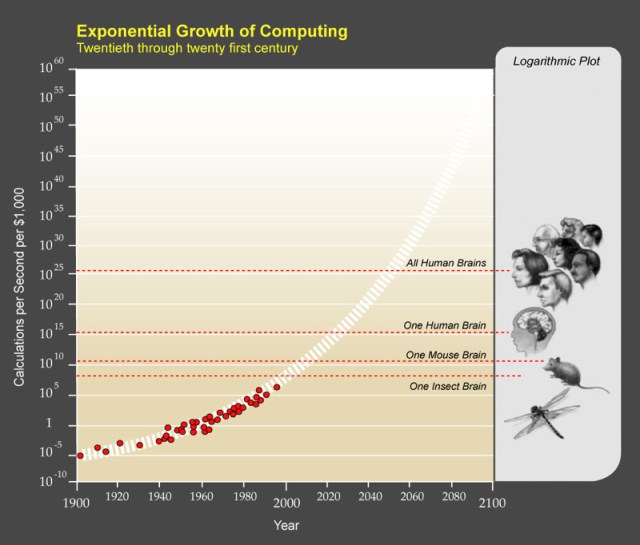
By the late 2010s, glasses will beam images directly onto the retina. Ten terabytes of computing power (roughly the same as the human brain) will cost about $1,000.

By the 2020s, most diseases will go away as nanobots become smarter than current medical technology. Normal human eating can be replaced by nanosystems. The Turing test begins to be passable. Self-driving cars begin to take over the roads, and people won’t be allowed to drive on highways.

By the 2030s, virtual reality will begin to feel 100% real. We will be able to upload our mind/consciousness by the end of the decade.

By the 2040s, non-biological intelligence will be a billion times more capable than biological intelligence (a.k.a. us). Nanotech foglets will be able to make food out of thin air and create any object in physical world at a whim.

By 2045, we will multiply our intelligence a billionfold by linking wirelessly from our neocortex to a synthetic neocortex in the cloud.

Ray’s predictions are a byproduct of his understanding of the power of Moore’s Law, more specifically Ray’s “Law of Accelerating Returns” and of exponential technologies.

These technologies follow an exponential growth curve based on the principle that the computing power that enables them doubles every two years.

Ray Kurzweil’s Mind-Boggling Predictions for the Next 25 Years

Thanks to Kebmodee for bringing this to the attention of the It’s Interesting community.

Protein That Can Edit Other Proteins Without DNA Blueprint Discovered

In our cells, proteins are the tiny machines that do most of the work. And the instructions for making proteins — and for piecing together their building blocks, called amino acids — are laid out by DNA, then relayed through RNA. But now, researchers show for the first time that amino acids can be assembled by another protein — without genetic instructions. These surprising findings were published in Science this week.

If a cell is an automobile-making factory, then ribosomes are the machines on the protein assembly line that links together amino acids in an order specified by DNA and messenger RNA (mRNA), an intermediate template. If something goes awry and a ribosome stalls, the quality control team shows up to disassemble the ribosome, discard that bit of genetic blueprint, and recycle the partially-made protein.

Turns out, that assembly line can keep going even if it loses its genetic instructions, according to a large U.S. team led by University of Utah, University of California, San Francisco, and Stanford researchers. They discovered an unexpected mechanism of protein synthesis where a protein, and not the normal genetic blueprint, specifies which amino acids are added.

“In this case, we have a protein playing a role normally filled by mRNA,” UCSF’s Adam Frost says in a news release. “I love this story because it blurs the lines of what we thought proteins could do.”

Frost and colleagues found a never-before-seen role for one member of the quality control team: a protein named Rqc2, which helps recruit transfer RNA (tRNA) to sites of ribosomal breakdowns (tRNA is responsible for bringing amino acids to the protein assembly line). Before the incomplete protein gets recycled, Rqc2 prompts the stalled ribosomes to add two amino acids — alanine and threonine — over and over. And that’s because the Rqc2–ribosome complex binds tRNAs that carry those two specific amino acids. In the auto analogy, the assembly line keeps going despite having lost its instructions, picking up whatever it can and attaching it in no particular order: horn-wheel-wheel-horn-wheel-wheel-wheel-wheel-horn, for example.

Pictured above, Rqc2 (yellow) binds tRNAs (blue and teal), which add amino acids (bright sot in the middle) to a partially-made protein (green). The complex binds the ribosome (white). A truncated protein with a seemingly random sequence of alanines and threonines probably doesn’t work properly, and that tail could be a code that signals for the malformed protein to be destroyed.

http://www.iflscience.com/health-and-medicine/protein-directs-protein-synthesis-without-dna-blueprint

Thanks to Kebmodee for bringing this to the attention of the It’s Interesting community.

Pizza Hut’s Subconscious Menu Aims to Guess What You Want Before You Know You Do

Pizza Hut incorporating retina tracking into the ordering process, in what it is calling the first Subconscious Menu.

Powered by Tobii, a Swedish company that specializes in eye-tracking technology, Pizza Hut’s new system presents customers with images of ingredients on a screen. Based on how long a customer’s eyes remain on different items, the system generates an order meant to represent what he or she subconsciously wants.

The Subconscious Menu, which has been under development for about six months and is currently being piloted in the U.K., was selected by Pizza Hut as the method that best leverages technology to improve the experience for customers.

Thanks to Kebmodee for bringing this to the attention of the It’s Interesting community.

http://time.com/3613220/pizza-huts-subconscious-menu/#3613220/pizza-huts-subconscious-menu/

Rapid-DNA technology that profiles DNA in about 90 minutes for law enforcement


Rapid-DNA technology makes it easier than ever to grab and store your genetic profile. G-men, cops, and Homeland Security can’t wait to see it everywhere.

Robert Schueren shook my hand firmly, handed me his business card, and flipped it over, revealing a short list of letters and numbers. “Here is my DNA profile.” He smiled. “I have nothing to hide.” I had come to meet Schueren, the CEO of IntegenX, at his company’s headquarters in Pleasanton, California, to see its signature product: a machine the size of a large desktop printer that can unravel your genetic code in the time it takes to watch a movie.

Schueren grabbed a cotton swab and dropped it into a plastic cartridge. That’s what, say, a police officer would use to wipe the inside of your cheek to collect a DNA sample after an arrest, he explained. Other bits of material with traces of DNA on them, like cigarette butts or fabric, could work too. He inserted the cartridge into the machine and pressed a green button on its touch screen: “It’s that simple.” Ninety minutes later, the RapidHIT 200 would generate a DNA profile, check it against a database, and report on whether it found a match.

The RapidHIT represents a major technological leap—testing a DNA sample in a forensics lab normally takes at least two days. This has government agencies very excited. The Department of Homeland Security, the Department of Defense, and the Justice Department funded the initial research for “rapid DNA” technology, and after just a year on the market, the $250,000 RapidHIT is already being used in a few states, as well as China, Russia, Australia, and countries in Africa and Europe.

“We’re not always aware of how it’s being used,” Schueren said. “All we can say is that it’s used to give an accurate identification of an individual.” Civil liberties advocates worry that rapid DNA will spur new efforts by the FBI and police to collect ordinary citizens’ genetic code.

The US government will soon test the machine in refugee camps in Turkey and possibly Thailand on families seeking asylum in the United States, according to Chris Miles, manager of the Department of Homeland Security’s biometrics program. “We have all these families that claim they are related, but we don’t have any way to verify that,” he says. Miles says that rapid DNA testing will be voluntary, though refusing a test could cause an asylum application to be rejected.

Miles also says that federal immigration officials are interested in using rapid DNA to curb trafficking by ensuring that children entering the country are related to the adults with them. Jeff Heimburger, the vice president of marketing at IntegenX, says the government has also inquired about using rapid DNA to screen green-card applicants. (An Immigration and Customs Enforcement spokesman said he was not aware that the agency was pursuing the technology.)

Meanwhile, police have started using rapid DNA in Arizona, Florida, and South Carolina. In August, sheriffs in Columbia, South Carolina, used a RapidHIT to nab an attempted murder suspect. The machine’s speed provides a major “investigative lead,” said Vince Figarelli, superintendent of the Arizona Department of Public Safety crime lab, which is using a RapidHIT to compare DNA evidence from property crimes against the state’s database of 300,000 samples. Heimburger notes that the system can also prevent false arrests and wrongful convictions: “There is great value in finding out that somebody is not a suspect.”

But the technology is not a silver bullet for DNA evidence. The IntegenX executives brought up rape kits so often that it sounded like their product could make a serious dent in the backlog of half a million untested kits. Yet when I pressed Schueren on this, he conceded that the RapidHIT is not actually capable of processing rape kits since it can’t discern individual DNA in commingled bodily fluids.

Despite the new technology’s crime-solving potential, privacy advocates are wary of its spread. If rapid-DNA machines can be used in a refugee camp, “they can certainly be used in the back of a squad car,” says Jennifer Lynch, a senior staff attorney at the Electronic Frontier Foundation. “I could see that happening in the future as the prices of these machines go down.”

Lynch is particularly concerned that law enforcement agencies will use the devices to scoop up and store ever more DNA profiles. Every state already has a forensic DNA database, and while these systems were initially set up to track convicted violent offenders, their collection thresholds have steadily broadened. Today, at least 28 include data from anyone arrested for certain felonies, even if they are not convicted; some store the DNA of people who have committed misdemeanors as well. The FBI’s National DNA Index System has more than 11 million profiles of offenders plus 2 million people who have been arrested but not necessarily convicted of a crime.

For its part, Homeland Security will not hang onto refugees’ DNA records, insists Miles. (“They aren’t criminals,” he pointed out.) However, undocumented immigrants in custody may be required to provide DNA samples, which are put in the FBI’s database. DHS documents obtained by the Electronic Frontier Foundation say there may even be a legal case for “mandating collection of DNA” from anyone granted legal status under a future immigration amnesty. (The documents also state that intelligence agencies and the military are interested in using rapid DNA to identify sex, race, and other factors the machines currently do not reveal.)

The FBI is the only federal agency allowed to keep a national DNA database. Currently, police must use a lab to upload genetic profiles to it. But that could change. The FBI’s website says it is eager to see rapid DNA in wide use and that it supports the “legislative changes necessary” to make that happen. IntegenX’s Heimburger says the FBI is almost finished working with members of Congress on a bill that would give “tens of thousands” of police stations rapid-DNA machines that could search the FBI’s system and add arrestees’ profiles to it. (The RapitHIT is already designed to do this.) IntegenX has spent $70,000 lobbying the FBI, DHS, and Congress over the last two years.

The FBI declined to comment, and Heimburger wouldn’t say which lawmakers might sponsor the bill. But some have already given rapid DNA their blessing. Rep. Eric Swalwell, a former prosecutor who represents the district where IntegenX is based, says he’d like to see the technology “put to use quickly to help law enforcement”—while protecting civil liberties. In March, he and seven other Democratic members of Congress, including progressive stalwart Rep. Barbara Lee of California, urged the FBI to assess rapid DNA’s “viability for broad deployment” in police departments across the country.

Thanks to Kebmodee for bringing this to the attention of the It’s Interesting community.

The FBI Is Very Excited About This Machine That Can Scan Your DNA in 90 Minutes

Landmark 20-Year Study Finds Pesticides Linked to Depression In Farmers

Earlier this fall, researchers from the National Institute of Health finished up a landmark 20-year study, a study that hasn’t received the amount of coverage it deserves. About 84,000 farmers and spouses of farmers were interviewed since the mid-1990s to investigate the connection between pesticides and depression, a connection that had been suggested through anecdotal evidence for far longer. We called up Dr. Freya Kamel, the lead researcher on the study, to find out what the team learned and what it all means. Spoiler: nothing good.

“There had been scattered reports in the literature that pesticides were associated with depression,” says Kamel. “We wanted to do a new study because we had more detailed data than most people have access to.” That excessive amount of data includes tens of thousands of farmers, with specific information about which pesticides they were using and whether they had sought treatment for a variety of health problems, from pesticide poisoning to depression. Farmers were surveyed multiple times throughout the 20-year period, which gives the researchers an insight into their health over time that no other study has.

Because the data is so excessive, the researchers have mined it three times so far, the most recent time in a study published just this fall. The first one was concerned with suicide, the second with depression amongst the spouses of farmers (Kamel says “pesticide applicators,” but most of the people applying pesticides are farmers), and the most recent with depression amongst the farmers themselves.

There’s a significant correlation between pesticide use and depression, that much is very clear, but not all pesticides. The two types that Kamel says reliably moved the needle on depression are organochlorine insecticides and fumigants, which increase the farmer’s risk of depression by a whopping 90% and 80%, respectively. The study lays out the seven specific pesticides, falling generally into one of those two categories, that demonstrated a categorically reliable correlation to increased risk of depression.

The study doesn’t really deal with exactly how the pesticides are affecting the farmers. Insecticides are designed to disrupt the way nerves work, sometimes inhibiting specific enzymes or the way nerve membranes work, that kind of thing. It’s pretty complicated, and nobody’s quite sure where depression fits in. “How this ultimately leads to depression, I don’t know that anyone can really fill in the dots there,” says Kamel. But essentially, the pesticides are designed to mess with the nerves of insects, and in certain aspects, our own nervous systems are similar enough to those of insects that we could be affected, too. “I don’t think there’s anything surprising about the fact that pesticides would affect neurologic function,” says Kamel, flatly.

Kamel speaks slowly and precisely, and though her voice is naturally a little quavery, she answered questions confidently and at one point made fun of me a little for a mischaracterization I’d made in a question. The one time she hesitated was when I asked what she thought the result of the study should be; it’s a huge deal, finding out that commonly used pesticides, pesticides approved for use by our own government, are wreaking havoc on the neurological systems of farmers. Kamel doesn’t recommend policy; she’s a scientist and would only go so far as to suggest that we should cut down on the use of pesticides in general.

Others are going further. Melanie Forti, of a farmer advocacy group based in DC, told Vice, “There should be more regulations on the type of pesticides being used.” With any luck, this study will lead to a thorough reexamination of the chemical weapons allowed by farmers.

These types aren’t necessarily uncommon, either; one, called malathion, was used by 67% of the tens of thousands of farmers surveyed. Malathion is banned in Europe, for what that’s worth.

I asked whether farmers were likely to simply have higher levels of depression than the norm, given the difficulties of the job — long hours, low wages, a lack of power due to government interference, that kind of thing — and, according to Kamel, that wasn’t a problem at all. “We didn’t have to deal with overreporting [of depression] because we weren’t seeing that,” she says. In fact, only 8% of farmers surveyed sought treatment for depression, lower than the norm, which is somewhere around 10% in this country. That doesn’t mean farmers are less likely to suffer from depression, only that they’re less likely to seek treatment for it, and that makes the findings, if anything, even stronger.

Landmark 20-Year Study Finds Pesticides Linked to Depression In Farmers

Thanks to Kebmodee for bringing this to the attention of the It’s Interesting community.

Watch A Bowling Ball And Feather Falling In A Vacuum

Here is the perfect example of how any two objects will fall at the same rate in a vacuum, brought to us by physicist Brian Cox. He checked out NASA’s Space Simulation Chamber located at the Space Power Facility in Ohio. With a volume of 22,653 cubic meters, it’s the largest vacuum chamber in the world.

In this clip from the BBC, Cox drops a bowling ball and a feather together, first in normal conditions, and then after virtually all the air has been sucked out of the chamber. We know what happens, but that doesn’t stop it from being awesome, especially with the team’s ecstatic faces.

http://www.iflscience.com/physics/dropping-bowling-ball-and-feather-vacuum

Thanks to Kebmodee for bringing this to the attention of the It’s Interesting community.

Infectious disease specialists from University of Illinois make first recommendation that health workers need optimal respiratory protection for Ebola, due to possible transmission in the air.

Lisa M Brosseau, ScD, and Rachael Jones, PhD

The authors are national experts on respiratory protection and infectious disease transmission. In May they published a similar commentary on MERS-CoV. Dr Brosseau is a Professor and Dr Jones an Assistant Professor in the School of Public Health, Division of Environmental and Occupational Health Sciences, at the University of Illinois at Chicago.

Healthcare workers play a very important role in the successful containment of outbreaks of infectious diseases like Ebola. The correct type and level of personal protective equipment (PPE) ensures that healthcare workers remain healthy throughout an outbreak—and with the current rapidly expanding Ebola outbreak in West Africa, it’s imperative to favor more conservative measures.

The precautionary principle—that any action designed to reduce risk should not await scientific certainty—compels the use of respiratory protection for a pathogen like Ebola virus that has:

•No proven pre- or post-exposure treatment modalities
•A high case-fatality rate
•Unclear modes of transmission

We believe there is scientific and epidemiologic evidence that Ebola virus has the potential to be transmitted via infectious aerosol particles both near and at a distance from infected patients, which means that healthcare workers should be wearing respirators, not facemasks (1).

The minimum level of protection in high-risk settings should be a respirator with an assigned protection factor greater than 10. A powered air-purifying respirator (PAPR) with a hood or helmet offers many advantages over an N95 filtering facepiece or similar respirator, being more protective, comfortable, and cost-effective in the long run.

We strongly urge the US Centers for Disease Control and Prevention (CDC) and the World Health Organization (WHO) to seek funds for the purchase and transport of PAPRs to all healthcare workers currently fighting the battle against Ebola throughout Africa—and beyond.

There has been a lot of on-line and published controversy about whether Ebola virus can be transmitted via aerosols. Most scientific and medical personnel, along with public health organizations, have been unequivocal in their statements that Ebola can be transmitted only by direct contact with virus-laden fluids (2,3) and that the only modes of transmission we should be concerned with are those termed “droplet” and “contact.”

These statements are based on two lines of reasoning. The first is that no one located at a distance from an infected individual has contracted the disease, or the converse, every person infected has had (or must have had) “direct” contact with the body fluids of an infected person.

This reflects an incorrect and outmoded understanding of infectious aerosols, which has been institutionalized in policies, language, culture, and approaches to infection control. We will address this below. Briefly, however, the important points are that virus-laden bodily fluids may be aerosolized and inhaled while a person is in proximity to an infectious person and that a wide range of particle sizes can be inhaled and deposited throughout the respiratory tract.

The second line of reasoning is that respirators or other control measures for infectious aerosols cannot be recommended in developing countries because the resources, time, and/or understanding for such measures are lacking (4).

Although there are some important barriers to the use of respirators, especially PAPRs, in developing countries, healthcare workers everywhere deserve and should be afforded the same best-practice types of protection, regardless of costs and resources. Every healthcare worker is a precious commodity whose well-being ensures everyone is protected.

If we are willing to offer infected US healthcare workers expensive treatments and experimental drugs free of charge when most of the world has no access to them, we wonder why we are unwilling to find the resources to provide appropriate levels of comparatively less expensive respiratory protection to every healthcare worker around the world.

How are infectious diseases transmitted via aerosols?

Medical and infection control professionals have relied for years on a paradigm for aerosol transmission of infectious diseases based on very outmoded research and an overly simplistic interpretation of the data. In the 1940s and 50s, William F. Wells and other “aerobiologists” employed now significantly out-of-date sampling methods (eg, settling plates) and very blunt analytic approaches (eg, cell culturing) to understand the movement of bacterial aerosols in healthcare and other settings. Their work, though groundbreaking at the time, provides a very incomplete picture.

Early aerobiologists were not able to measure small particles near an infectious person and thus assumed such particles existed only far from the source. They concluded that organisms capable of aerosol transmission (termed “airborne”) can only do so at around 3 feet or more from the source. Because they thought that only larger particles would be present near the source, they believed people would be exposed only via large “droplets” on their face, eyes, or nose.

Modern research, using more sensitive instruments and analytic methods, has shown that aerosols emitted from the respiratory tract contain a wide distribution of particle sizes—including many that are small enough to be inhaled (5,6). Thus, both small and large particles will be present near an infectious person.

The chance of large droplets reaching the facial mucous membranes is quite small, as the nasal openings are small and shielded by their external and internal structure. Although close contact may permit large-droplet exposure, it also maximizes the possibility of aerosol inhalation.

As noted by early aerobiologists, liquid in a spray aerosol, such as that generated during coughing or sneezing, will quickly evaporate (7), which increases the concentration of small particles in the aerosol. Because evaporation occurs in milliseconds, many of these particles are likely to be found near the infectious person.

The current paradigm also assumes that only “small” particles (less than 5 micrometers [mcm]) can be inhaled and deposited in the respiratory tract. This is not true. Particles as large as 100 mcm (and perhaps even larger) can be inhaled into the mouth and nose. Larger particles are deposited in the nasal passages, pharynx, and upper regions of the lungs, while smaller particles are more likely to deposit in the lower, alveolar regions. And for many pathogens, infection is possible regardless of the particle size or deposition site.

It’s time to abandon the old paradigm of three mutually exclusive transmission routes for a new one that considers the full range of particle sizes both near and far from a source. In addition, we need to factor in other important features of infectivity, such as the ability of a pathogen to remain viable in air at room temperature and humidity and the likelihood that systemic disease can result from deposition of infectious particles in the respiratory system or their transfer to the gastrointestinal tract.

We recommend using “aerosol transmissible” rather than the outmoded terms “droplet” or “airborne” to describe pathogens that can transmit disease via infectious particles suspended in air.

Is Ebola an aerosol-transmissible disease?

We recently published a commentary on the CIDRAP site discussing whether Middle East respiratory syndrome (MERS) could be an aerosol-transmissible disease, especially in healthcare settings. We drew comparisons with a similar and more well-studied disease, severe acute respiratory syndrome (SARS).

For Ebola and other filoviruses, however, there is much less information and research on disease transmission and survival, especially in healthcare settings.

Being at first skeptical that Ebola virus could be an aerosol-transmissible disease, we are now persuaded by a review of experimental and epidemiologic data that this might be an important feature of disease transmission, particularly in healthcare settings.

What do we know about Ebola transmission?

No one knows for certain how Ebola virus is transmitted from one person to the next. The virus has been found in the saliva, stool, breast milk, semen, and blood of infected persons (8,9). Studies of transmission in Ebola virus outbreaks have identified activities like caring for an infected person, sharing a bed, funeral activities, and contact with blood or other body fluids to be key risk factors for transmission (10-12).

On the basis of epidemiologic evidence, it has been presumed that Ebola viruses are transmitted by contaminated hands in contact with the mouth or eyes or broken skin or by splashes or sprays of body fluids into these areas. Ebola viruses appear to be capable of initiating infection in a variety of human cell types (13,14), but the primary portal or portals of entry into susceptible hosts have not been identified.

Some pathogens are limited in the cell type and location they infect. Influenza, for example, is generally restricted to respiratory epithelial cells, which explains why flu is primarily a respiratory infection and is most likely aerosol transmissible. HIV infects T-helper cells in the lymphoid tissues and is primarily a bloodborne pathogen with low probability for transmission via aerosols.

Ebola virus, on the other hand, is a broader-acting and more non-specific pathogen that can impede the proper functioning of macrophages and dendritic cells—immune response cells located throughout the epithelium (15,16). Epithelial tissues are found throughout the body, including in the respiratory tract. Ebola prevents these cells from carrying out their antiviral functions but does not interfere with the initial inflammatory response, which attracts additional cells to the infection site. The latter contribute to further dissemination of the virus and similar adverse consequences far beyond the initial infection site.

The potential for transmission via inhalation of aerosols, therefore, cannot be ruled out by the observed risk factors or our knowledge of the infection process. Many body fluids, such as vomit, diarrhea, blood, and saliva, are capable of creating inhalable aerosol particles in the immediate vicinity of an infected person. Cough was identified among some cases in a 1995 outbreak in Kikwit, Democratic Republic of the Congo (11), and coughs are known to emit viruses in respirable particles (17). The act of vomiting produces an aerosol and has been implicated in airborne transmission of gastrointestinal viruses (18,19). Regarding diarrhea, even when contained by toilets, toilet flushing emits a pathogen-laden aerosol that disperses in the air (20-22).

Experimental work has shown that Marburg and Ebola viruses can be isolated from sera and tissue culture medium at room temperature for up to 46 days, but at room temperature no virus was recovered from glass, metal, or plastic surfaces (23). Aerosolized (1-3 mcm) Marburg, Ebola, and Reston viruses, at 50% to 55% relative humidity and 72°F, had biological decay rates of 3.04%, 3.06%. and 1.55% per minute, respectively. These rates indicate that 99% loss in aerosol infectivity would occur in 93, 104, and 162 minutes, respectively (23).

In still air, 3-mcm particles can take up to an hour to settle. With air currents, these and smaller particles can be transported considerable distances before they are deposited on a surface.

There is also some experimental evidence that Ebola and other filoviruses can be transmitted by the aerosol route. Jaax et al (24) reported the unexpected death of two rhesus monkeys housed approximately 3 meters from monkeys infected with Ebola virus, concluding that respiratory or eye exposure to aerosols was the only possible explanation.

Zaire Ebola viruses have also been transmitted in the absence of direct contact among pigs (25) and from pigs to non-human primates (26), which experienced lung involvement in infection. Persons with no known direct contact with Ebola virus disease patients or their bodily fluids have become infected (12).

Direct injection and exposure via a skin break or mucous membranes are the most efficient ways for Ebola to transmit. It may be that inhalation is a less efficient route of transmission for Ebola and other filoviruses, as lung involvement has not been reported in all non-human primate studies of Ebola aerosol infectivity (27). However, the respiratory and gastrointestinal systems are not complete barriers to Ebola virus. Experimental studies have demonstrated that it is possible to infect non-human primates and other mammals with filovirus aerosols (25-27).

Altogether, these epidemiologic and experimental data offer enough evidence to suggest that Ebola and other filoviruses may be opportunistic with respect to aerosol transmission(28). That is, other routes of entry may be more important and probable, but, given the right conditions, it is possible that transmission could also occur via aerosols.

Guidance from the CDC and WHO recommends the use of facemasks for healthcare workers providing routine care to patients with Ebola virus disease and respirators when aerosol-generating procedures are performed. (Interestingly, the 1998 WHO and CDC infection-control guidance for viral hemorrhagic fevers in Africa, still available on the CDC Web site, recommends the use of respirators.)

Facemasks, however, do not offer protection against inhalation of small infectious aerosols, because they lack adequate filters and do not fit tightly against the face (1). Therefore, a higher level of protection is necessary.

Which respirator to wear?

As described in our earlier CIDRAP commentary, we can use a Canadian control-banding approach to select the most appropriate respirator for exposures to Ebola in healthcare settings (29). (See this document for a detailed description of the Canadian control banding approach and the data used to select respirators in our examples below.)

The control banding method involves the following steps:

1.Identify the organism’s risk group (1 to 4). Risk group reflects the toxicity of an organism, including the degree and type of disease and whether treatments are available. Ebola is in risk group 4, the most toxic organisms, because it can cause serious human or animal disease, is easily transmitted, directly or indirectly, and currently has no effective treatments or preventive measures.

2.Identify the generation rate. The rate of aerosol generation reflects the number of particles created per time (eg, particles per second). Some processes, such as coughing, create more aerosols than others, like normal breathing. Some processes, like intubation and toilet flushing, can rapidly generate very large quantities of aerosols. The control banding approach assigns a qualitative rank ranging from low (1) to high (4) (eg, normal breathing without coughing has a rank of 1).

3.Identify the level of control. Removing contaminated air and replacing it with clean air, as accomplished with a ventilation system, is effective for lowering the overall concentration of infectious aerosol particles in a space, although it may not be effective at lowering concentration in the immediate vicinity of a source. The number of air changes per hour (ACH) reflects the rate of air removal and replacement. This is a useful variable, because it is relatively easy to measure and, for hospitals, reflects building code requirements for different types of rooms. Again, a qualitative ranking is used to reflect low (1) versus high (4) ACH. Even if the true ventilation rate is not known, the examples can be used to select an appropriate air exchange rate.

4.Identify the respirator assigned protection factor. Respirators are designated by their “class,” each of which has an assigned protection factor (APF) that reflects the degree of protection. The APF represents the outside, environmental concentration divided by the inside, facepiece concentration. An APF of 10 means that the outside concentration of a particular contaminant will be 10 times greater than that inside the respirator. If the concentration outside the respirator is very high, an assigned protection factor of 10 may not prevent the wearer from inhaling an infective dose of a highly toxic organism.

Practical examples

Two examples follow. These assume that infectious aerosols are generated only during vomiting, diarrhea, coughing, sneezing, or similar high-energy emissions such as some medical procedures. It is possible that Ebola virus may be shed as an aerosol in other manners not considered.

Caring for a patient in the early stages of disease (no bleeding, vomiting, diarrhea, coughing, sneezing, etc). In this case, the generation rate is 1. For any level of control (less than 3 to more than 12 ACH), the control banding wheel indicates a respirator protection level of 1 (APF of 10), which corresponds to an air purifying (negative pressure) half-facepiece respirator such as an N95 filtering facepiece respirator. This type of respirator requires fit testing.

Caring for a patient in the later stages of disease (bleeding, vomiting, diarrhea, etc). If we assume the highest generation rate (4) and a standard patient room (control level = 2, 3-6 ACH), a respirator with an APF of at least 50 is needed. In the United States, this would be equivalent to either a full-facepiece air-purifying (negative-pressure) respirator or a half-facepiece PAPR (positive pressure), but standards differ in other countries. Fit testing is required for these types of respirators.

The control level (room ventilation) can have a big effect on respirator selection. For the same patient housed in a negative-pressure airborne infection isolation room (6-12 ACH), a respirator with an assigned protection factor of 25 is required. This would correspond in the United States to a PAPR with a loose-fitting facepiece or with a helmet or hood. This type of respirator does not need fit testing.

Implications for protecting health workers in Africa

Healthcare workers have experienced very high rates of morbidity and mortality in the past and current Ebola virus outbreaks. A facemask, or surgical mask, offers no or very minimal protection from infectious aerosol particles. As our examples illustrate, for a risk group 4 organism like Ebola, the minimum level of protection should be an N95 filtering facepiece respirator.

This type of respirator, however, would only be appropriate only when the likelihood of aerosol exposure is very low. For healthcare workers caring for many patients in an epidemic situation, this type of respirator may not provide an adequate level of protection.

For a risk group 4 organism, any activity that has the potential for aerosolizing liquid body fluids, such as medical or disinfection procedures, should be avoided, if possible. Our risk assessment indicates that a PAPR with a full facepiece (APF = 50) or a hood or helmet (APF = 25) would be a better choice for patient care during epidemic conditions.

We recognize that PAPRs present some logistical and infection-control problems. Batteries require frequent charging (which requires a reliable source of electricity), and the entire ensemble requires careful handling and disinfection between uses. A PAPR is also more expensive to buy and maintain than other types of respirators.

On the other hand, a PAPR with a loose-fitting facepiece (hood or helmet) does not require fit testing. Wearing this type of respirator minimizes the need for other types of PPE, such as head coverings and goggles. And, most important, it is much more comfortable to wear than a negative-pressure respirator like an N95, especially in hot environments.

A recent report from a Medecins Sans Frontieres healthcare worker in Sierra Leone30 notes that healthcare workers cannot tolerate the required PPE for more than 40 minutes. Exiting the workplace every 40 minutes requires removal and disinfection or disposal (burning) of all PPE. A PAPR would allow much longer work periods, use less PPE, require fewer doffing episodes, generate less infectious waste, and be more protective. In the long run, we suspect this type of protection could also be less expensive.

Adequate protection is essential

To summarize, for the following reasons we believe that Ebola could be an opportunistic aerosol-transmissible disease requiring adequate respiratory protection:
•Patients and procedures generate aerosols, and Ebola virus remains viable in aerosols for up to 90 minutes.
•All sizes of aerosol particles are easily inhaled both near to and far from the patient.
•Crowding, limited air exchange, and close interactions with patients all contribute to the probability that healthcare workers will be exposed to high concentrations of very toxic infectious aerosols.
•Ebola targets immune response cells found in all epithelial tissues, including in the respiratory and gastrointestinal system.
•Experimental data support aerosols as a mode of disease transmission in non-human primates.

Risk level and working conditions suggest that a PAPR will be more protective, cost-effective, and comfortable than an N95 filtering facepiece respirator.

Acknowledgements

We thank Kathleen Harriman, PhD, MPH, RN, Chief, Vaccine Preventable Diseases Epidemiology Section, Immunization Branch, California Department of Public Health, and Nicole Vars McCullough, PhD, CIH, Manager, Global Technical Services, Personal Safety Division, 3M Company, for their input and review.

References
1.Oberg L, Brosseau LM. Surgical mask filter and fit performance. Am J Infect Control 2008 May;36(4):276-82

2.CDC. Ebola hemorrhagic fever: transmission. 2014 Aug 13

3.ECDC. Outbreak of Ebola virus disease in West Africa: third update, 1 August 2014. Stockholm: ECDC 2014 Aug 1

4.Martin-Moreno JM, Llinas G, Hernandez JM. Is respiratory protection appropriate in the Ebola response? Lancet 2014 Sep 6;384(9946):856

5.Papineni RS, Rosenthal FS. The size distribution of droplets in the exhaled breath of healthy human subjects. J Aerosol Med 1997;10(2):105-16

6.Chao CYH, Wan MP, Morawska L, et al. Characterization of expiration air jets and droplet size distributions immediately at the mouth opening. J Aerosol Sci 2009 Feb;40(2):122-33

7.Nicas M, Nazaroff WW, Hubbard A. Toward understanding the risk of secondary airborne infection: emission of respirable pathogens. J Occup Environ Hyg 2005 Mar;2(3):143-54

8.Bauchsch DG, Towner JS, Dowell SF, et al. Assessment of the risk of Ebola virus transmission from bodily fluids and fomites. J Infect Dis 2007;196:S142-7

9.Formenty P, Leroy EM, Epelboin A, et al. Detection of Ebola virus in oral fluid specimens during outbreaks of Ebola virus hemorrhagic fever in the Republic of Congo. Clin Infect Dis 2006 Jun;42(11):1521-6

10.Francesconi P, Yoti Z, Declich S, et al. Ebola hemorrhagic fever transmission and risk factors of contacts, Uganda. Emerg Infect Dis 2003 Nov;9(11):1430-7

11.Dowell SF, Mukunu R, Ksiazek TG, et al. Transmission of Ebola hemorrhagic fever: a study of risk factors in family members, Kikwit, Democratic Republic of Congo, 1995. J Infect Dis 1999 Feb;179:S87-91

12.Roels TH, Bloom AS, Buffington J, et al. Ebola hemorrhagic fever, Kikwit, Democratic Republic of the Congo, 1995: risk factors for patients without a reported exposure. J Infect Dis 1999 Feb;179:S92-7

13.Kuhl A, Hoffmann M, Muller MA, et al. Comparative analysis of Ebola virus glycoprotein interactions with human and bat cells. J Infect Dis 2011 Nov;204:S840-9

14.Hunt CL, Lennemann NJ, Maury W. Filovirus entry: a novelty in the viral fusion world. Viruses 2012 Feb;4(2):258-75

15.Bray M, Geisbert TW. Ebola virus: the role of macrophages and dendritic cells in the pathogenesis of Ebola hemorrhagic fever. Int J Biochem Cell Biol 2005 Aug;37(8):1560-6

16.Mohamadzadeh M, Chen L, Schmaljohn AL. How Ebola and Marburg viruses battle the immune system. Nat Rev Immunol 2007 Jul;7(7):556-67

17.Lindsley WG, Blachere FM, Thewlis RE, et al. Measurements of airborne influenza virus in aerosol particles from human coughs. PLoS One 2010 Nov 30;5(11):e15100

18.Caul EO. Small round structured viruses: airborne transmission and hospital control. Lancet 1994 May 21;343(8908):1240-2

19.Chadwick PR, Walker M, Rees AE. Airborne transmission of a small round structured virus. Lancet 1994 Jan 15;343(8890):171

20.Best EL, Snadoe JA, Wilcox MH. Potential for aerosolization of Clostridium difficile after flushing toilets: the role of toilet lids in reducing environmental contamination. J Hosp Infect 2012 Jan;80(1):1-5

21.Gerba CP, Wallis C, Melnick JL. Microbiological hazards of household toilets: droplet production and the fate of residual organisms. Appl Microbiol 1975 Aug;30(2):229-37

22.Barker J, Jones MV. The potential spread of infection caused by aerosol contamination of surfaces after flushing a domestic toilet. J Appl Microbiol 2005;99(2):339-47

23.Piercy TJ, Smither SJ, Steward JA, et al. The survival of filoviruses in liquids, on solid substrates and in a dynamic aerosol. J Appl Microbiol 2010 Nov;109(5):1531-9

24.Jaax N, Jahrling P, Geisbert T, et al. Transmission of Ebola virus (Zaire strain) to uninfected control monkeys in a biocontainment laboratory. Lancet 1995 Dec 23-30;346(8991-2):1669-71

25.Kobinger GP, Leung A, Neufeld J, et al. Replication, pathogenicity, shedding and transmission of Zaire ebolavirus in pigs. J Infect Dis 2011 Jul 15;204(2):200-8

26.Weingartl HM, Embury-Hyatt C, Nfon C, et al. Transmission of Ebola virus from pigs to non-human primates. Sci Rep 2012;2:811

27.Reed DS, Lackemeyer MG, Garza NL, et al. Aerosol exposure to Zaire Ebolavirus in three nonhuman primate species: differences in disease course and clinical pathology. Microb Infect 2011 Oct;13(11):930-6

28.Roy CJ, Milton DK. Airborne transmission of communicable infection—the elusive pathway. N Engl J Med 2004 Apr;350(17):1710-2

29.Canadian Standards Association. Selection, use and care of respirators. CAN/CSA Z94.4-11

30.Wolz A. Face to face with Ebola—an emergency care center in Sierra Leone. (Perspective) N Engl J Med 2014 Aug 27

http://www.cidrap.umn.edu/news-perspective/2014/09/commentary-health-workers-need-optimal-respiratory-protection-ebola

Thanks to Kebmodee for bringing this to the attention of the It’s Interesting community.

Spitting fish adjust for distance when shooting

archer fish
Footage captured by two high-speed cameras shows the fish’s ability in detail

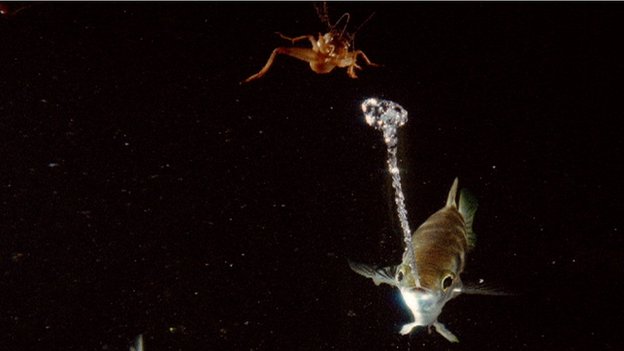
The jets of water that archer fish use to shoot down prey are “tuned” to arrive with maximum impact over a range of distances, according to a study.

By Jonathan Webb
Science reporter, BBC News

High-speed cameras were used to analyse fishes’ spitting performance in detail.

As they create each jet, the fish tweak the flow of water over time, causing a focussed blob of water to gather just in front of the target, wherever it is.

The ability comes from precise changes to the animal’s mouth opening, which may prove useful in designing nozzles.

Senior author Prof Stefan Schuster, from the University of Bayreuth in Germany, explained that jets of water and other fluids are used to cut or shape materials in industries ranging from mining to medicine.

He believes his new fish-based findings could improve the technology.

Patience and precision
“I’ve never seen anything in which they use a nozzle that changes its diameter,” he told the BBC. “The most standard approach is adjusting the pressure.”

But pressure, which the archer fish apply by squeezing their gill covers together, is not the secret to their ballistic precision.

Prof Schuster and his PhD student Peggy Gerullis found no evidence for pressure adjustments, nor for chemical additives or flicking movements in the water, which might account for the fishes’ ability to control the stability of the water jet, and focus the accelerating blob at its tip.

“The fish add nothing – they only shoot water, and they keep absolutely still during release of the jet,” Prof Schuster said.

“They just do it with the mouth opening diameter. It is not a simple manoeuvre… The diameter is continuously changing.”

That makes the new study, published in Current Biology, the first evidence of an animal actively manipulating the dynamics of a water jet.

Prof Schuster and Ms Gerullis trained two archer fish to hit targets at distances from 20cm to 60cm, under bright lights to help with filming.

The targets were small spheres, which allowed the team to calculate the forces involved.

Accuracy, of course, was rewarded – usually with a small fly. “You can easily train a fish to shoot at anything you want,” said Prof Schuster. “They are perfectly happy as long as something edible falls down.”

The tricky part was organising the angles.

“To be ready to monitor to the right spots with reasonable spatial resolution, you have to convince the fish somehow to fire from a defined position. That was the hardest part of the study, actually.”

With patience, the researchers collected enough measurements to reveal that the all-important blob of water at the jet’s tip, which allows archer fish to dislodge their prey, forms just before impact – no matter the target distance.

To accomplish this, the animals fine-tune not just the speed, but the stability of the water jet.

“It means that the physics the fish is using is much more complicated than previously thought,” Prof Schuster explained.

Cognitive evolution?

Dynamic jet control must now be added to an already impressive list of this fish’s abilities.

Other research has explored questions ranging from how archer fish compensate for the distortion of their vision by the water surface, to how they learn to hit moving targets by copying their companions, to exactly how they produce a water jet that catches up on itself to form their distinctive, watery missile.

Prof Schuster believes that their spitting accuracy may have evolved in a similar way to human throwing, which some theorists argue sparked an accompanying expansion of our cognitive abilities.

His team has also done fieldwork in Thailand, where they observed that the fish hunt in daylight, when their insect targets are few and far between. So having a good range, and not missing, are a big advantage for survival.

That power and precision requires brain power.

“People have calculated that to double [throwing] range requires roughly an 8-fold increase in the number of neurons involved in throwing,” Prof Schuster said.

So are these fish evolving into the cleverest animals under water?

“I don’t think they will develop into humans. [But] they have many strange abilities that you wouldn’t expect from fish.

“Maybe we can show by looking more closely at the brain, that shooting might have played a similar, prominent role in driving these abilities, as it’s thought that throwing played in human evolution.

“That’s just a crazy idea of mine.”

http://www.bbc.com/news/science-environment-29046018

Thank to Kebmodee for bringing this to the attention of the It’s Interesting community.