Scientists at Cornell create Terminator-like organic metamaterial that flows like liquid and remembers its shape


DNAletters


birdsnests

A bit reminiscent of the Terminator T-1000, a new material created by Cornell researchers is so soft that it can flow like a liquid and then, strangely, return to its original shape.

Rather than liquid metal, it is a hydrogel, a mesh of organic molecules with many small empty spaces that can absorb water like a sponge. It qualifies as a “metamaterial” with properties not found in nature and may be the first organic metamaterial with mechanical meta-properties.

Hydrogels have already been considered for use in drug delivery — the spaces can be filled with drugs that release slowly as the gel biodegrades — and as frameworks for tissue rebuilding. The ability to form a gel into a desired shape further expands the possibilities. For example, a drug-infused gel could be formed to exactly fit the space inside a wound.

Dan Luo, professor of biological and environmental engineering, and colleagues describe their creation in the Dec. 2 issue of the journal Nature Nanotechnology.

The new hydrogel is made of synthetic DNA. In addition to being the stuff genes are made of, DNA can serve as a building block for self-assembling materials. Single strands of DNA will lock onto other single stands that have complementary coding, like tiny organic Legos. By synthesizing DNA with carefully arranged complementary sections Luo’s research team previously created short stands that link into shapes such as crosses or Y’s, which in turn join at the ends to form meshlike structures to form the first successful all-DNA hydrogel. Trying a new approach, they mixed synthetic DNA with enzymes that cause DNA to self-replicate and to extend itself into long chains, to make a hydrogel without DNA linkages.

“During this process they entangle, and the entanglement produces a 3-D network,” Luo explained. But the result was not what they expected: The hydrogel they made flows like a liquid, but when placed in water returns to the shape of the container in which it was formed.

“This was not by design,” Luo said.

Examination under an electron microscope shows that the material is made up of a mass of tiny spherical “bird’s nests” of tangled DNA, about 1 micron (millionth of a meter) in diameter, further entangled to one another by longer DNA chains. It behaves something like a mass of rubber bands glued together: It has an inherent shape, but can be stretched and deformed.

Exactly how this works is “still being investigated,” the researchers said, but they theorize that the elastic forces holding the shape are so weak that a combination of surface tension and gravity overcomes them; the gel just sags into a loose blob. But when it is immersed in water, surface tension is nearly zero — there’s water inside and out — and buoyancy cancels gravity.

To demonstrate the effect, the researchers created hydrogels in molds shaped like the letters D, N and A. Poured out of the molds, the gels became amorphous liquids, but in water they morphed back into the letters. As a possible application, the team created a water-actuated switch. They made a short cylindrical gel infused with metal particles placed in an insulated tube between two electrical contacts. In liquid form the gel reaches both ends of the tube and forms a circuit. When water is added, the gel reverts to its shorter form that will not reach both ends. (The experiment is done with distilled water that does not conduct electricity.)

The DNA used in this work has a random sequence, and only occasional cross-linking was observed, Luo said. By designing the DNA to link in particular ways he hopes to be able to tune the properties of the new hydrogel.

The research has been partially supported by the U.S. Department of Agriculture and the Department of Defense.

http://www.news.cornell.edu/stories/Dec12/ShapeGel.html

Thanks to Dr. Rajadhyaksha for bringing this to the attention of the It’s Interesting community.

British company claims biggest engine advance since the jet: the SABRE engine

A Skylon in flight with a cutaway of the SABRE engine


A small British company with a dream of building a re-usable space plane has won an important endorsement from the European Space Agency (ESA) after completing key tests on its novel engine technology.

Reaction Engines Ltd believes its Sabre engine, which would operate like a jet engine in the atmosphere and a rocket in space, could displace rockets for space access and transform air travel by bringing any destination on Earth to no more than four hours away.

That ambition was given a boost on Wednesday by ESA, which has acted as an independent auditor on the Sabre test programme.

“ESA are satisfied that the tests demonstrate the technology required for the Sabre engine development,” the agency’s head of propulsion engineering Mark Ford told a news conference.

“One of the major obstacles to a re-usable vehicle has been removed,” he said. “The gateway is now open to move beyond the jet age.”

The space plane, dubbed Skylon, only exists on paper. What the company has right now is a remarkable heat exchanger that is able to cool air sucked into the engine at high speed from 1,000 degrees Celsius to minus 150 degrees in one hundredth of a second.

This core piece of technology solves one of the constraints that limit jet engines to a top speed of about 2.5 times the speed of sound, which Reaction Engines believes it could double.

With the Sabre engine in jet mode, the air has to be compressed before being injected into the engine’s combustion chambers. Without pre-cooling, the heat generated by compression would make the air hot enough to melt the engine.

The challenge for the engineers was to find a way to cool the air quickly without frost forming on the heat exchanger, which would clog it up and stop it working.

Using a nest of fine pipes that resemble a large wire coil, the engineers have managed to get round this fatal problem that would normally follow from such rapid cooling of the moisture in atmospheric air.

They are tight-lipped on exactly how they managed to do it.

“We are not going to tell you how this works,” said the company’s chief designer Richard Varvill, who started his career at the military engine division of Rolls-Royce. “It is our most closely guarded secret.”

The company has deliberately avoided filing patents on its heat exchanger technology to avoid details of how it works – particularly the method for preventing the build-up of frost – becoming public.

The Sabre engine could take a plane to five times the speed of sound and an altitude of 25 km, about 20 percent of the speed and altitude needed to reach orbit. For space access, the engines would then switch to rocket mode to do the remaining 80 percent.

Reaction Engines believes Sabre is the only engine of its kind in development and the company now needs to raise about 250 million pounds ($400 million) to fund the next three-year development phase in which it plans to build a small-scale version of the complete engine.

Chief executive Tim Hayter believes the company could have an operational engine ready for sale within 10 years if it can raise the development funding.

The company reckons the engine technology could win a healthy chunk of four key markets together worth $112 billion (69 billion pounds) a year, including space access, hypersonic air travel, and modified jet engines that use the heat exchanger to save fuel.

The fourth market is unrelated to aerospace. Reaction Engines believes the technology could also be used to raise the efficiency of so-called multistage flash desalination plants by 15 percent. These plants, largely in the Middle East, use heat exchangers to distil water by flash heating sea water into steam in multiple stages.

The firm has so far received 90 percent of its funding from private sources, mainly rich individuals including chairman Nigel McNair Scott, the former mining industry executive who also chairs property developer Helical Bar.

Chief executive Tim Hayter told Reuters he would welcome government investment in the company, mainly because of the credibility that would add to the project.

But the focus will be on raising the majority of the 250 million pounds it needs now from a mix of institutional investors, high net worth individuals and possibly potential partners in the aerospace industry.

Sabre produces thrust by burning hydrogen and oxygen, but inside the atmosphere it would take that oxygen from the air, reducing the amount it would have to carry in fuel tanks for rocket mode, cutting weight and allowing Skylon to go into orbit in one stage.

Scramjets on test vehicles like the U.S. Air Force Waverider also use atmospheric air to create thrust but they have to be accelerated to their operating speed by normal jet engines or rockets before they kick in. The Sabre engine can operate from a standing start.

If the developers are successful, Sabre would be the first engine in history to send a vehicle into space without using disposable, multi-stage rockets.

Skylon is years away, but in the meantime the technology is attracting interest from the global aerospace industry and governments because it effectively doubles the technical limits of current jet engines and could cut the cost of space access.

The heat exchanger technology could also be incorporated into a new jet engine design that could cut 5 to 10 percent – or $10 (6.25 pounds)-20 billion – off airline fuel bills.

That would be significant in an industry where incremental efficiency gains of one percent or so, from improvements in wing design for instance, are big news.

Thanks to Kebmodee for bringing this to the attention of the It’s Interesting community.
http://uk.reuters.com/article/2012/11/28/uk-science-spaceplane-idUKBRE8AR0R520121128

Brain-controlled helicopter may soon be available

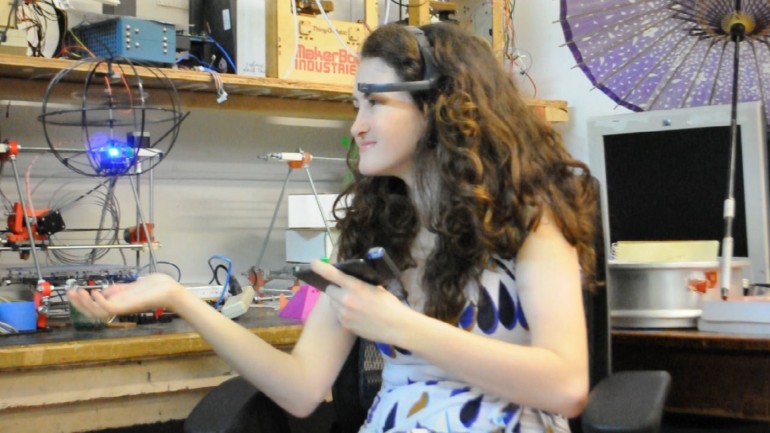
For the last few years, Puzzlebox has been publishing open source software and hacking guides that walk makers through the modification of RC helicopters so that they can be flown and controlled using just the power of the mind. Full systems have also been custom built to introduce youngsters to brain-computer interfaces and neuroscience. The group is about to take the project to the next stage by making a Puzzlebox Orbit brain-controlled helicopter available to the public, while encouraging user experimentation by making all the code, schematics, 3D models, build guides and other documentation freely available under an open-source license.

The helicopter has a protective outer sphere that prevents the rotor blades from impacting with walls, furniture, floor and ceiling is very similar in design to the Kyosho Space Ball. It’s not the same craft though, and the ability to control it with the mind is not the only difference.

“There’s a ring around the top and bottom of the Space Ball which isn’t present on the Puzzlebox Orbit,” Castellotti says. “The casing around their server motor looks quite different, too. The horizontal ring at-mid level is more rounded on the Orbit, and vertically it is more squat. We’re also selling the Puzzlebox Orbit in the U.S. for US$89 (including shipping), versus their $117 (plus shipping).”

Two versions of the Puzzlebox Orbit system are being offered to the public. The first is designed for use with mobile devices like tablets and smartphones. A NeuroSky MindWave Mobile EEG headset communicates with the device via Bluetooth. Proprietary software then analyzes the brainwave data in real time and translates the input as command signals, which are sent to the helicopter via an IR adapter plugged into the device’s audio jack.

This system isn’t quite ready for all mobile operating platforms, though. The team is “happy on Android but don’t have access to a wide variety of hardware for testing,” confirmed Castellotti, adding “Some tuning after release is expected. We’ll have open source code available to iOS developers and will have initiated the App Store evaluation process if it’s not already been approved.”

The second offering comes with a Puzzlebox Pyramid, which was developed completely in-house and has a dual role as a home base for the Orbit helicopter and a remote control unit. At its heart is a programmable micro-controller that’s compatible with Arduino boards. On one face of the pyramid there’s a broken circle of multi-colored LED lights in a clock face configuration. These are used to indicate levels of concentration, mental relaxation, and the quality of the EEG signal from a NeuroSky MindWave EEG headset (which wirelessly communicates with a USB dongle plugged into the rear of the pyramid).

Twelve infrared LEDs to the top of each face actually control the Orbit helicopter, and with some inventive tweaking, these can also be used to control other IR toys and devices (including TVs).

In either case, a targeted mental state can be assigned to a helicopter control or flight path (such as hover in place or fly in a straight line) and actioned whenever that state is detected and maintained. Estimated Orbit flight time is around eight minutes (or more), after which the user will need to recharge the unit for 30 minutes before the next take-off.

At the time of writing, a crowd-funding campaign on Kickstarter to take the prototype system into mass production has attracted almost three times its target. The Puzzlebox team has already secured enough hardware and materials to start shipping the first wave of Orbits next month. International backers will get their hands on the system early next year.

The brain-controlled helicopter is only a part of the package, however. The development team has promised to release the source code for the Linux/Mac/PC software and mobile apps, all protocols, and available hardware schematics under open-source licenses. Step-by-step how-to guides are also in the pipeline (like the one already on the Instructables website), together with educational aids detailing how everything works.

“We have prepared contributor tools for Orbit, including a wiki, source code browser, and ticket tracking system,” said Castellotti. “We are already using these tools internally to build the project. Access to these will be granted when the Kickstarter campaign closes.”

“We would really like to underline that we are producing more than just a brain-controlled helicopter,” he stressed. “The toy and concept is fun and certainly the main draw, but the true purpose lies in the open code and hacking guides. We don’t want to be the holiday toy that gets played with for ten minutes then sits forever in the corner or on a shelf. We want owners to be able to use the Orbit to experiment with biofeedback – practicing how to concentrate better or to unwind and relax with this physical and visual aid.”

“And when curiosity kicks in and they start to wonder how it actually works, all of the information is published freely. That’s how we hope to share knowledge and foster a community. For example, a motivated experimenter should be able to start with the hardware we provide, and using our tools and guides learn how to hack support for driving a remote controlled car or causing a television to change channels when attention levels are measured as being low for too long a period of time. Such advancements could then be contributed back to the rest of our users.”

The Kickstarter campaign will close on December 8, after which the team will concentrate its efforts on getting Orbit systems delivered to backers and ensure that all the background and support documentation is in place. If all goes according to plan, a retail launch could follow as soon as Q1 2013.

It is hoped that the consumer Puzzlebox Orbit mobile/tablet edition with the NeuroSky headset will remain under US$200, followed by the Pyramid version at an as-yet undisclosed price.

http://www.gizmag.com/puzzlebox-orbit-brain-controlled-helicopter/25138/


Duke University scientists create Harry Potter invisibility cloak

Scientists seem to have unlocked another technology that was only available in fantasy movies.  Physicists at Duke University have announced that they have successfully cloaked an object with “perfect” invisibility, straight out of Harry Potter.

In 2006 David Smith and his colleagues developed a theory called “transformation optics”.  The theory is based on redirecting magnetic fields around an object making it invisible, according to ScienceNOW.

All attempts at testing the theory provided some level of invisibility but it wasn’t until Dr. Smith started experimenting with metamaterials, which are designed to bend light and other radiation around them that they were able to create a Harry Potter style invisibility cloak.

Graduate student Dr. Landy says all earlier versions of a Harry Potter cloak suffered from reflected light.  Landy explained to Phys.org that “it was much like reflections seen on clear glass. The viewer can see through the glass just fine, but at the same time the viewer is aware the glass is present due to light reflected from the surface of the glass.”

The new cloak got around it by reworking the materials.

“Landy’s new microwave cloak is naturally divided into four quadrants, each of which have voids or blind spots at their intersections and corners with each other,”explains io9. “Thus, to avoid the reflectivity problem, Landy was able to correct for it by shifting each strip so that is met its mirror image at each interface.”

Smith said of the research:

“This to our knowledge is the first cloak that really addresses getting the transformation exactly right to get you that perfect invisibility.”

Pioneering self-contained ‘smart village’ offers world model for rural poverty relief


An innovative, high-tech “smart village” built in Malaysia provides a potential global template for addressing rural poverty in a sustainable environment, say international experts meeting in California’s Silicon Valley.

Rimbunan Kaseh, a model community built north-east of Kuala Lumpur, consists of 100 affordable homes, high-tech educational, training and recreational facilities, and a creative, closed-loop agricultural system designed to provide both food and supplementary income for villagers.

Malaysian Dato’ Tan Say Jim detailed the project Monday at a special meeting in San Jose of the Global Science and Innovation Advisory Council (GSIAC) — a unique assembly of all-star international and Malaysian experts and leaders created to guide sustainable Malaysian development.

The “smart village,” located on 12 hectares in the Malaysian state of Pahang, includes a four-level aquaculture system whereby water cascades through a series of tanks to raise, first, fish sensitive to water quality, then tilapia (“the world’s answer to affordable protein,” says Mr. Tan), then guppies and finally algae. The latter two products are used to feed the larger fish.

Filtered fish tank wastewater is then used to irrigate trees, grain fields and crops such as flowers and fresh produce, the plants grown individually in novel hydroponic devices. The “auto-pot” is a three-piece plastic container that automatically detects soil moisture levels and waters plants precisely as required, reducing needs for costly fertilizers and pesticides as well as water.

Organic waste is composted to encourage worms and other organisms on which free-range chickens feed together with the home-grown grains.

In addition to access to reliable food supplies, villagers augment their monthly income by an estimated $400 to $650.

“It is a complete loop; a modern farm — one that could even exist on the rooftop of a building,” says Mr. Tan of IRIS Corporation Berhad, which spearheads the public-private partnership.

The energy-efficient homes (roughly 100 square meters – 1,000 square feet) require 10 days to construct, in part from post-consumer materials, and cost between 50,000 to 60,000 Malaysian Ringgit ($16,000 to $20,000).

The village’s solar-generated power is complemented by biomass energy and mini-hydro electricity.

Rounding out the design: a community hall, resource centre, places of worship, playgrounds and educational facilities equipped with 4G Internet service supporting both e-learning and e-health services.

Photos of the “smart village” are available for download online at https://dl.dropbox.com/u/3960397/smart%20village%20photos.zipA video depicting home construction is online here: http://www.youtube.com/watch?v=OvXaWmlB6Wg

“With this project we stimulate rural growth with modern agriculture activities, we balance development and economic activities between the urban and rural areas, we provide income and we improve living standards,” says Mr. Tan.

Malaysia is looking to scale up the smart village initiative, replicating the Rimbunan Kaseh model at as many as 12 sites in the short to medium term.

“This model offers a great opportunity to create holistic change for people in the worse circumstances in Malaysia and other nations as well,” says Ellis Rubinstein, President and Chief Executive Officer of the New York Academy of Sciences (NYAS), which co-chairs the GSIAC Secretariat with the Malaysian Industry-Government Group on High Technology (MIGHT).

Says Mr. Rubinstein: “Integrated smart communities could transform services available to Malaysia’s citizenry while creating thousands of jobs, complementing GSIAC’s unprecedented alliance to improve education in that country at every level from ‘Cradle to Career’.

Says Dato’ Zakri Abdul Hamid (Dr. A.H. Zakri), Science Advisor to Prime Minister of Malaysia and co-chair of of MIGHT: “GSIAC has provided us with an unprecedented opportunity to advance our local capacities in both scale and effectiveness. Thanks to the New York Academy of Sciences, we have a chance to work with a partnership of many of the world’s leading multinational companies – usually competitors but, for us, coming together – and experts from universities around the world.

“This alliance gives us confidence we can take up in Malaysia the best practices so far demonstrated anywhere in the world. It opens the door to major foreign investment. And it gives us a chance that no other government – either regional or national – has anywhere else in the world: to develop a staged, integrated solution to our citizen’s needs that will dramatically increase efficiencies of scale as well as metrics of performance and impact just by virtue of being an integrated, fully thought out plan from the outset.”

Assembled last year, GSIAC is composed of leading education, economics, business, science and technology experts from Malaysia, China, India, Russia, Japan, Korea, The Netherlands, the UK and the USA, including two Nobel laureates, each volunteering to help the Asian country achieve an environmentally-sustainable, high-income economy driven by knowledge and innovation.

http://www.eurekalert.org/pub_releases/2012-07/migf-ps071212.php

Thanks to Kebmodee for bringing this to the attention of the It’s Interesting community.

Speech-Jammer Gun Invented in Japan


Imagine sitting around a conference table with several of your colleagues as you hold an important meeting. Now imagine your boss pulling out what looks like a radar gun for catching speeding motorists and aiming at any of you that speak to long, very nearly instantly causing whoever is speaking to start stuttering then mumbling and then to stop speaking at all. That’s the idea behind the SpeechJammer, a gun that can be fired at people to force them to stop speaking. It’s the brainchild of Koji Tsukada and Kazutaka Kurihara, science and technology researchers in Japan. They’ve published a paper describing how it works on the preprint server arXiv.

The idea is based on the fact that to speak properly, we humans need to hear what we’re saying so that we can constantly adjust how we go about it, scientists call it delayed auditory feedback. It’s partly why singers are able to sing better when they wear headphones that allow them to hear their own voice as they sing with music, or use feedback monitors when onstage. Trouble comes though when there is a slight delay between the time the words are spoken and the time they are heard. If that happens, people tend to get discombobulated and stop speaking, and that’s the whole idea behind the SpeechJammer. It’s basically just a gun that causes someone speaking to hear their own words delayed by 0.2 seconds.

To make that happen, the two attached a directional microphone and speaker to a box that also holds a laser pointer and distance sensor and of course a computer board to compute the delay time based on distance from the speaker. To make it work, the person using it points the gun at the person talking, using the laser pointer as a guide, then pulls the trigger. It works for distances up to a hundred feet.

The two say they have no plans to market the device, but because the technology is so simple, it’s doubtful they could patent it anyway.

http://www.physorg.com/news/2012-03-speechjammer-gun-quash-human-utterances.html

The Heaviest Jeans in the World

Naked & Famous Denim has created the heaviest pair of jeans in the world. 

Read below their post:


If anyone was to ask me “what is your favorite pair of jeans that you have ever created?”… my answer is our 32oz selvedge denim jeans… The heaviest pair of jeans ever made! We have worked to build this jean for 2 years and I can say with certainty that it was by far the most difficult production challenge we have ever overcome. Most people ask me “why the hell would you make a pair of jeans that is so heavy and uncomfortable?” and it’s a fair question… I often reply with an analogy “Why would someone climb mount Everest?” It’s not comfortable to do, its not easy, nor is it inexpensive… people do it so they can say they conquered the tallest mountain in the world. I find that human beings are fascinated by anything that is a superlative. Well, these jeans are my denim superlative.
From weaving the denim to cutting and sewing to installing the 15oz leather patch, this process has been a marvel of Japanese production skills. Without further blabbing, here are the photos of the final result…

138 pairs total were made and are available now at fine retailers worldwide! We may never be able to make these again so if you want a pair, you’ll have to act fast! So heavy and rigid, the jeans can easily stand on their own…

I’m often asked if the jeans are actually wearable. The answer is YES! I’ve worn a pair for a few days and it was doable, but I’m pretty bony and my hips were a bit marked up afterwards. In this photo below you can see one of the great staff members at colette boutique in Paris wearing his pair of 32oz jeans. They look amazing on him! He says after just 2 days of wear they are broken in and comfy. (I think he may be tougher than me.) Notice how he’s got a thick belt over the super thick patch!…

Here is 3 pairs of 32oz jeans next to 9 pairs of 11oz jeans!

I thought it would also be fun to share some photos of the actual sewing process, so here goes!… These photos are not in any particular order and I have 3000 photos of the production, so I just randomly chose a few…

The amount of hammering and ‘bashing’ involved in order to make the seams sew-able was extraordinary! A 2-sided mallet and the back of a screwdriver were both used to tame the beast that is 32oz denim…

One of the most difficult parts to sew is the feed-off center back yoke seam. That’s the point where several pieces are joined together, and you can see in the 4th photo below how thick that seam is. It’s almost a full inch thick! Crazy. This operation is always done by the most skilled worker. Good thing the Union Special held up as well as her fingers!

Struggling to turn a semi-finished pair outside-in… (It’s even difficult to just cuff these jeans!)

Hmm… how in the world are we going to sew the buttonhole?…

…With man-hand-power, that’s how!…

Laser-guided rivet installation…

Carefully sewing the woven taffeta label over a huge bump where the center yoke seam meets the waistband…

The final cleaning and snipping of any loose/extra thread. How rad are these 2 ladies?!…

Ok, I will admit that I put in this photo below because the girl is cute… Kawai!

Some extra photos for fun…

Well that’s it for now… If you are lucky/brave enough to have bought one of these masterpieces please do email me the photos. This denim should fade really beautifully as well! If you are thinking of buying a pair, just remember we like to joke… “Guaranteed uncomfortable or your money back!”

http://www.nakedandfamousdenim.com/blog/32oz-heaviest-jeans-in-the-world/