World’s oldest person dies at 117

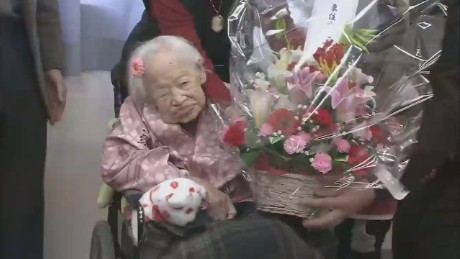
Misao Okawa, the world’s oldest person according to Guinness World Records, has died at the age of 117.

Okawa passed away Wednesday morning in Osaka, Japan, Tadahi Uchimura, a local official from the city told CNN.

She left behind three children, four grandchildren and six great grandchildren.

Okawa was born on March 5, 1898.

Her family ran a Kimono shop in Osaka, Satoshi Yoshioka, an employee at the nursing home where she had lived since 1997 told CNN.

“She was a person with mild character, and loved to eat so much. Her favorite food was sushi and udon noodles,” Yoshioka said.

“She had eaten a lot of cake for her birthday last March 5. ”

“However, in the last 10 days she stopped eating. I think eating was her motivation to live, and when she lost it, she passed away.”

According to Guiness World Records, the oldest person ever was Jeanne Louise Calment, who died at age 122 in 1997.

http://www.cnn.com/2015/04/01/asia/worlds-oldest-person-dies/index.html

New death test to predict whether someone will die in the next 30 days of being admitted to the hospital

A test to determine if elderly patients will die within 30 days of being admitted to hospital has been developed by doctors to give them the chance to go home or say goodbye to loved ones.

Health experts say the checklist will prevent futile and expensive medical treatments which merely prolong suffering.

The screening test looks at 29 indicators of health, including age, frailty, illness, mental impairment, previous emergency admissions and heart rate and produces a percentage chance of death within one month and 12 weeks.

Researchers say the aim of Critera for Screening and Triaging to Appropriate aLternative care, or CriSTAL for short, is to kick-start frank discussions about end of life care, and minimise the risk of invasive ineffective treatment.

“Delaying unavoidable death contributes to unsustainable and escalating healthcare costs, despite aggressive and expensive interventions,” said lead author Dr Magnolia Cardona-Morrel, a researcher at the University of New South Wales.

“These interventions may not influence patient outcome; often do not improve the patient’s quality of life; may compromise bereavement outcomes for families; and cause frustration for health professionals.”

The new test aims to provide a ‘starting point’ for ‘honest communication with patients and families about recognising that dying is part of the life cycle.’

Researchers looked at 112 peer-reviewed studies to find out which tests and questions were the best predictors of death.

They claim the test will help doctors and nurses who are often under great pressure from family members and society to prolong the life of patients at all costs.

“While there are accepted policies for de-escalating treatment in terminally ill patients, there are also inherent and societal pressures on medicine to continue utilising technological advances to prolong life even in plainly futile situations,” said Dr Cardona-Morrel.

“Training for nurses and doctors in the use of the screening tool and in approaching patients and families with concrete information about inevitability of death and lack of benefit of further intensive treatment are paramount.”

Most patients end up dying in hospital, even though that is not their stated preference, when asked.

Caroline Abrahams, Charity Director at Age UK, said:“The best time to begin discussing end of life issues and an older person’s wishes, is well in advance, when they are fit and well, but we acknowledge that this isn’t always possible.

“The ability to accurately identify people entering hospital who are nearing the end of their lives ought to help ensure they receive high quality care, appropriate to their needs, so we welcome this development. However, in practice, access to good end of life care services remains extremely variable and discussions with older people and their families about this most difficult of subjects are not always handled sensitively and well.

“So as well as improved analysis and triage of people’s needs, better training and support for medical staff in speaking compassionately with older people and their families about end of life care is also required. “

By giving families and patients some options about the preferred place of death, the test could also help terminally ill elderly people choose to go home, the authors said.

The checklist is yet to be tested but the researchers hope it will eventually be used for all hospital admissions.

The research was published in the BMJ Open publication Supportive & Palliative Care.

http://www.telegraph.co.uk/news/science/science-news/11363731/Death-test-could-predict-chance-of-dying-within-30-days.html

91 year old Polish woman declared dead and then later wakes up in mortuary

A Polish woman who spent 11 hours in cold storage in a mortuary after being declared dead has returned to her family, complaining of feeling cold. Officials say Janina Kolkiewicz, 91, was declared dead after an examination by the family doctor. However, mortuary staff were astonished to notice movement in her body bag while it was in storage. The police have launched an investigation.

Back home, Ms Kolkiewicz warmed up with a bowl of soup and two pancakes. Her family and doctor said they were in shock, according to the website of the Polish newspaper Dziennik Wschodni.

The woman’s niece, in the eastern Polish town of Ostrow Lubelski, summoned the doctor after coming home one morning to find that her aunt did not seem to be breathing or to have a pulse. After examining the woman, the family doctor declared her dead and wrote out her death certificate.

The body was taken to the mortuary and preparations were made for a funeral in two days’ time. “I was sure she was dead,” Dr Wieslawa Czyz told the television channel TVP. “I’m stunned, I don’t understand what happened. Her heart had stopped beating, she was no longer breathing,” Dr Czyz said.

However, the mortuary staff called some hours later to report that the woman was not yet dead, her niece told Dziennik Wschodni. The death certificate has been declared invalid, the newspaper says.

Ms Kolkiewicz told her relatives she felt “normal, fine” after returning home. She is apparently unaware of how near she came to the grave. “My aunt has no inkling of what happened since she has late-stage dementia,” Bogumila Kolkiewicz, her niece, told local media.

http://www.bbc.com/news/world-europe-30048087

Scientists publish new evidence of that awareness may persist several minutes after clinical death, which was previously thought impossible

Bright+light

The largest ever medical study into near-death and out-of-body experiences has discovered that some awareness may continue even after the brain has shut down.

Scientists at the University of Southampton spent four years examining more than 2000 people who suffered cardiac arrest from 15 hospitals in the UK, US and Austria. They found that of 360 people who had been revived after experiencing cardiac arrest, about 40 percent of them had some sort of “awareness” during the period when they were “clinically dead.”

One man’s memory of what he saw “after death” was spot-on in describing what actually happened during his resuscitation. The 57-year-old recalled leaving his body and watching his resuscitation from the corner of the room. He reported hearing two beeps come from a machine that went off every three minutes — indicating that his conscious experience during the time he had no heartbeat lasted for around three minutes. According to the researchers, that suggests the man’s brain may not have shut down completely, even after his heart stopped.

“This is paradoxical, since the brain typically ceases functioning within 20-30 seconds of the heart stopping and doesn’t resume again until the heart has been restarted,” study co-author Dr. Sam Parnia, a professor of medicine at Stony Brook University and former research fellow at Southampton University, said in a written statement.

Parnia added that it’s possible even more patients in the study had mental activity following cardiac arrest but were unable to remember events during the episode as a result of brain injury or the use of sedative drugs.

“We know the brain can’t function when the heart has stopped beating,” said Dr Sam Parnia, a former research fellow at Southampton University, now at the State University of New York, who led the study.

“But in this case, conscious awareness appears to have continued for up to three minutes when the heart wasn’t beating, even though the brain typically shuts down within 20 to 30 seconds after the heart has stopped.

Although many could not recall specific details, some themes emerged. One in five said they had felt an unusual sense of peace while nearly one third said time had slowed down or speeded up.

Some recalled seeing a bright light and others recounted feelings of fear, drowning or being dragged through deep water.

Dr Parnia believes many more people may have experiences when they are close to death but drugs or sedatives used in resuscitation may stop them remembering.

“Estimates have suggested that millions of people have had vivid experiences in relation to death but the scientific evidence has been ambiguous at best.

“Many people have assumed that these were hallucinations or illusions but they do seem to have corresponded to actual events.

“These experiences warrant further investigation.”

Dr David Wilde, a research psychologist at Nottingham Trent University, is currently compiling data on out-of-body experiences in an attempt to discover a pattern that links each episode.

“There is some good evidence here that these experiences are happening after people have medically died.

“We just don’t know what is going on. We are still in the dark about what happens when you die.”

The study was published in the journal Resuscitation.

http://www.resuscitationjournal.com/article/S0300-9572(14)00739-4/abstract

Michigan funeral home offers drive-thru viewings

Only a couple of families have taken advantage of a new service available at a Saginaw funeral home.

Drive-thru viewings.

Paradise Funeral Chapel (http://www.paradisefuneralchapel.com) recently started offering the option, which allows mourners to pay their last respects on the go. It was designed in part to cater to those with physical limitations.

The funeral home’s president, Ivan Phillips, says he expects more customers to opt for the drive-thru once they learn it’s not a gimmick and is safe to use.

Curtains covering the window open when sensors underneath the pavement recognize the presence of a car. Mourners then get three minutes to view the body as music plays.

Phillips says drive-thru viewings are set up so they don’t conflict with traditional indoor viewings.

http://abcnews.go.com/Weird/wireStory/michigan-funeral-home-drive-option-26263313

New research shows that women who never sunbathe are twice as likely to die than those who do so regularly

Researchers at the Karolinska Institute, Sweden, say guidelines that advise people to stay out of the sun unless wearing sunscreen may be harmful, particularly in northern countries which have long, cold winters.

Exposure to ultraviolet radiation from sunlight is often cited as a cause of skin melanoma (malignant tumour of melanocytes) and avoiding overexposure to the sun to prevent all types of skin cancer is recommended by health authorities.

But the new study, which followed nearly 30000 women over 20 years, suggests that women who stay out of the sun are at increased risk of melanomas and are twice as likely to die from any cause, including cancer.

It is thought that a lack of vitamin D may be to blame. Vitamin D is created in the body through exposure to sunshine and a deficiency is known to increase the risk of diabetes, TB, multiple sclerosis and rickets.

Previous studies showed that vitamin D can increase survival rates for women with breast cancer while deficiencies can signal prostate cancer in men.

The study looked at 29518 Swedish women who were recruited from 1990 to 1992 and asked to monitor their sunbathing habits.

After 20 years there had been 2545 deaths and it was found that women who never sunbathed were twice as likely to have died from any cause.

Women who sunbathed in the mild Swedish summer were also 10% less likely to die from skin cancer, although those who sunbathed abroad in sunnier countries were twice as likely to die from melanoma.

Yinka Ebo, senior health information officer at Cancer Research UK, said striking a balance was important.

“The reasons behind higher death rates in women with lower sun exposure are unexplained . overexposure to UV radiation from the sun or sunbeds is the main cause of skin cancer.”

http://www.timeslive.co.za/thetimes/2014/05/09/avoiding-sunshine-could-kill-you-study-finds

Thanks to Kebmodee for bringing this to the attention of the It’s Interesting community.

Mysterious fever virus reported in Guinea

By Susanna Capelouto, CNN
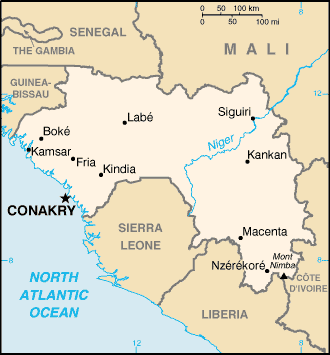
Since February 49 people have gotten sick and 29 have died from an unidentified illness characterized by fever, diarrhea and vomiting in Guinea, according to the West African nation’s minister of health, Remy Lamah.

Lamah said initial test results confirm the presence of a viral hemorrhagic fever, which according to the U.S. Centers for Disease Control and Prevention refers to a group of viruses that affect multiple organ systems in the body.

The Guinean health ministry warned in a statement that the disease is mainly spread from infected people, objects belonging to ill or dead people and by the consumption of meat from animals in the bush.

So far, most of the cases have been in the forest area of southern Guinea, and health officials say they are offering free treatment for all patients.

They’ve urged people to stay calm, wash their hands and report all cases to authorities.

http://www.cnn.com/2014/03/22/world/africa/fever-epidemic-guinea

Thanks to Da Brayn for bringing this to the attention of the It’s Interesting community.

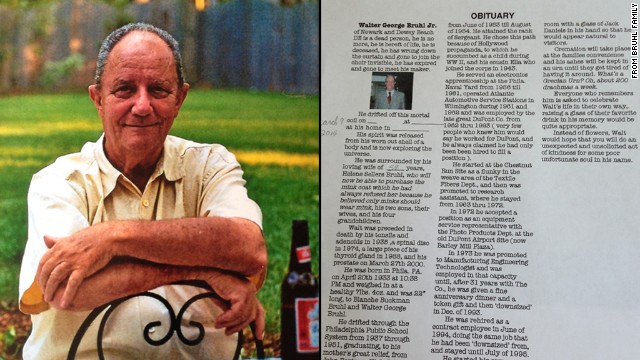
Delaware grandfather wrote his own humorous obituary for his family to find.

Walter Bruhl Jr. got the last laugh.

The Delaware man, who died Sunday, penned his own humor-tinged obituary and left it for his family to find. Family and friends honored him with a private luncheon on Saturday.

“Walter George Brulh Jr. of Newark and Dewey Beach is a dead person; he is no more; he is bereft of life; he is deceased; he has rung down the curtain and gone to join the choir invisible; he has expired and gone to meet his maker,” he wrote, quoting from Monty Python’s sketch about a dead parrot.

“Right away I was crying,” Walter’s grandson Sam Bruhl said. “I laughed and cried the whole time.”

The obituary included fill-in-the-blank spaces for the date and location of his death.

The 80-year-old grandfather of four wrote about his years in the Marine Corps during the Korean War, saying “Hollywood propaganda” prompted him to join the war effort.

“This was him to a T,” said his son Martin Bruhl, who describes his father as a man who loved life and making others smile.

“There will be no viewing,” Walter Bruhl Jr. wrote, “since his wife refuses to honor his request to have him standing in the corner of the room with a glass of Jack Daniels in his hand so he would appear natural to visitors.”

“I’m sure he is laughing back down at us,” Martin Bruhl said. “It has helped to lighten things for us.”

Sam Bruhl first posted the obituary on Facebook and later on Reddit.

“Typical of my PopPop,” he wrote in a Facebook post. “He’s the only man I’ve ever known to be able to add his own humor like this.”

On the first day, the Reddit post had more than 1,600 comments, said Sam Bruhl. “I tried to read them all and comment back because it meant so much,” he said.

In the last line of the obituary, Walter encourages people to “do an unexpected and unsolicited act of kindness for some poor unfortunate soul in his name.”

Bruhl’s words have generated an outpouring of support.

“We have noticed people making donations to charities in his name,” said Martin Bruhl, “I know he would have loved that.”

He added, “He loved, loved to write. He always wanted to be published, and this is a home run.”

“Some of my favorite comments…were people saying they missed him and never even met him,” Sam Bruhl said.

Walter died of congestive heart failure while on vacation with his wife of 57 years.

“Everyone who remembers him is asked to celebrate Walt’s life in their own way; raising a glass of their favorite drink in his memory would be quite appropriate,” Walter Bruhl wrote.

He added, “Cremation will take place at the family’s convenience, and his ashes will be kept in an urn until they get tired of having it around. What’s a Grecian Urn? Oh, about 200 drachmas a week.”

Two Weeks After Waking Up In Body Bag, Man Dies

untitled

by Mark Memmott

Walter Williams, the 78-year-old man from Mississippi who two weeks ago “came back to life once he was put on an embalming table,” has died.

According to The Clarion-Ledger of Jackson, Miss., Holmes County Coroner Dexter Howard said Williams died around 1 a.m. Thursday. CNN adds that the coroner believes Williams died of natural causes.

As for mistakenly concluding in February that Williams had died then, Howard said that “every case I do is a learning experience.”

The Clarion-Ledger says Williams’ family is glad for the time he was able to be with them the past two weeks:

“We’re at peace; we know he has fought a good fight,” said his daughter, Mary Williams. “His sister was able to make it into town, and he got to see his last grandchild and all of his grandkids. That was a blessing.”

The newspaper reminds readers that:

“The father of 11, grandfather of 15 and great-grandfather of six had gone into hospice in late February because of congestive heart failure. He was declared dead by a coroner the first time in the early hours of Feb. 27 when neither the coroner nor others, including nurses, could find a pulse.

“He was transported to the funeral home, where he began to move. An ambulance was called, and shortly thereafter, he was back in the hospital, talking to family and friends.

“Williams told family members, when they asked about his experience, that he thought he had just gone into a deep sleep.”

Now, nephew Eddie Hester tells local TV station WAPT, “I think he’s gone this time.”

“The same coroner and the same funeral home director came this time, and when they got there, I said, ‘I thought y’all were going to send somebody else,’ and we laughed about it. Everybody laughed,” Hester also told the station.

He adds that his uncle’s story has been “a two-week miracle for me and I enjoyed every minute of it, and my family did too.”

http://www.npr.org/blogs/thetwo-way/2014/03/14/290105529/two-weeks-after-waking-up-in-body-bag-man-dies

Thanks to Ray Gaudette for bringing this to the attention of the It’s Interesting community.

LSD used as drug therapy for the first time in 40 years

Swiss scientists broke a four-decade-long informal ban on LSD research yesterday when they announced the results of a study in which cancer patients received the drug to curb their anxiety about death.

The study, which was published in the Journal of Nervous and Mental Disease, looked at the safety and efficacy of LSD when used in combination with talk therapy. The researchers used the semisynthetic psychedelic drug to facilitate discussions about the cancer patients’ fears of dying. The patients who took LSD, most of whom were terminally ill, experienced 10-hour-long supervised “trips.” One patient described the trips to The New York Times as a “mystical experience,” where “the major part was pure distress at all the memories I had successfully forgotten for decades.”

These periods of distress are regarded as therapeutically valuable because they allow patients to address their memories and the emotions they evoke. The patients underwent 30 such trips over the course of two months.

A year after the sessions ceased, the patients who had received a full dose of LSD — 200 micrograms — experienced a 20 percent improvement in their anxiety levels. That was not the case for the group who received a lower dose, however, as their anxiety symptoms actually increased. They were later allowed to try the full dose after the trial had ended.

Because of the small number of study participants, the researchers are reluctant to make any conclusive statements about the LSD treatment’s effectiveness. Indeed, the results were not statistically significant. But the fact that the study took place at all bodes well for psychedelic drug research, as the drug caused no serious side effects. Rick Doblin, executive director of the Multidisciplinary Association for Psychedelic Studies, a foundation that has funded many of these studies, thinks that revisiting LSD-based treatments is worthwhile. “We want to break these substances out of the mold of the counterculture,” Doblin told The New York Times, “and bring them back to the lab as part of a psychedelic renaissance.”

http://www.theverge.com/2014/3/5/5473828/lsd-drug-therapy-first-time-in-40-years

Thanks to Jody Troupe for bringing this to the attention of the It’s Interesting community.