Strange new creature pushes fossil record back 200 million years

fossil

Christopher Cameron of the University of Montreal’s Department of Biological Sciences and his colleagues have unearthed a major scientific discovery — a strange phallus-shaped creature they found in Canada’s Burgess Shale fossil beds, located in Yoho National Park. The fossils were found in an area of shale beds that are 505 million years old.

Their study, published online in the journal Nature on March 13, 2013, confirms Spartobranchus tenuis is a member of the acorn worms group which are seldom-seen animals that thrive today in the fine sands and mud of shallow and deeper waters. Acorn worms are themselves part of the hemichordates, a group of marine animals closely related to today’s sea stars and sea urchins. “Unlike animals with hard parts including teeth, scales and bones, these worms were soft-bodied, so their fossil record is extremely rare,” said author Dr. Chris Cameron of the University of Montreal. “Our description of Spartobranchus tenuis, a creature previously unknown to science, pushes the fossil record of the enteropneusts back 200 million years to the Cambrian period, fundamentally changing our understanding of biodiversity from this period.”

Since their discovery in the 19th-century, some of the biggest questions in hemichordate evolution have focused on the group’s origins and the relationship between its two main branches: the enteropneusts and the pterobranchs, including graptolites. “One of the big punchlines from my graduate work, was molecular evidence that enteropneusts and pterobranchs are closely related” said Cameron, a specialist on the taxonomy, evolution and biogeography of hemichordates.

“It’s astonishing how similar Spartobranchus tenuis fossils are to modern day acorn worms, except that they also formed fibrous tubes.” The tubes provide a key missing link that connects the two main hemichordate groups. “The explosive radiation of graptolites in the Paleozoic planktonic ecosystems is known only from the diversity of their tubes. Our findings suggest that the tubes were lost in the lineage leading to modern day enteropneusts, but elaborated on in graptolites and retained to the present day in pterobranchs” added Cameron.

Hemichordates also share many of the same characteristics as chordates — a group of animals that includes humans — with the name hemichordate roughly translating to ‘half a chordate.’

“Work from my lab has shown that enteropneusts filter feed using a pharynx perforated with gill slits, just like the invertebrate chordates” added Cameron. Spartobranchus tenuisprobably fed on small particles of matter filtered from the seawater. “There are thousands of specimens at the Walcott Quarry in Yoho National Park, so it’s possible Spartobranchus tenuis may have played an important role in moving carbon from the water column to the sediment in the early Burgess Shale environment” said Cameron.

Detailed analysis suggests Spartobranchus tenuis had a flexible body consisting of a short proboscis, collar and narrow elongate trunk terminating in a bulbous structure, which may have served as an anchor. The largest complete specimens examined were 10 centimetres long with the proboscis accounting for about half a centimetre. A large proportion of these worms was preserved in tubes, of which some were branched, suggesting the tubes were used as a dwelling structure.

Other members of the Spartobranchus tenuis research team are lead author Jean-Bernard Caron of the Royal Ontario Museum and Simon Conway Morris of the University of Cambridge.

http://www.sciencedaily.com/releases/2013/03/130313141450.htm

Delftia acidovorans protects itself by turning its environment into gold

gold

Mythical King Midas was ultimately doomed because everything he touched turned to gold. Now, the reverse has been found in bacteria that owe their survival to a natural Midas touch.

Delftia acidovorans lives in sticky biofilms that form on top of gold deposits, but exposure to dissolved gold ions can kill it. That’s because although metallic gold is unreactive, the ions are toxic.

To protect itself, the bacterium has evolved a chemical that detoxifies gold ions by turning them into harmless gold nanoparticles. These accumulate safely outside the bacterial cells.

“This could have potential for gold extraction,” says Nathan Magarvey of McMaster University in Hamilton, Ontario, who led the team that uncovered the bugs’ protective trick. “You could use the bug, or the molecules they secrete.”

He says the discovery could be used to dissolve gold out of water carrying it, or to design sensors that would identify gold-rich streams and rivers.

The protective chemical is a protein dubbed delftibactin A. The bugs secrete it into the surroundings when they sense gold ions, and it chemically changes the ions into particles of gold 25 to 50 nanometres across. The particles accumulate wherever the bugs grow, creating patches of gold.

But don’t go scanning streams for golden shimmers: the nanoparticle patches do not reflect light in the same way as bigger chunks of the metal – giving them a deep purple colour.

When Magarvey deliberately snipped out the gene that makes delftibactin A, the bacteria died or struggled to survive exposure to gold chloride. Adding the protein to the petri dish rescued them.

The bacterium Magarvey investigated is one of two species that thrive on gold, both identified a decade or so ago by Frank Reith of the University of Adelaide in Australia. In 2009 Reith discovered that the other species, Cupriavidus metallidurans, survives using the slightly riskier strategy of changing gold ions into gold inside its cells.

“If delftibactin is selective for gold, it might be useful for gold recovery or as a biosensor,” says Reith. “But how much dissolved gold is out there is difficult to say.”

Journal reference: Nature Chemical Biology, DOI: 10.1038/NCHEMBIO.1179

http://www.newscientist.com/article/dn23129-bug-protects-itself-by-turning-its-environment-to-gold.html?cmpid=RSS|NSNS|2012-GLOBAL|online-news

Train enthusiast Jason Shron builds perfect replica of a 1980 Via Rail car in his basement

Jason Shron is The Guy with the Train in his Basement

The train-obsessed fanatic spent four and a half years or 2,500 hours and roughly $10,000 to reconstruct an actual Via Rail passenger coach in the basement of his Vaughan home.

“I love VIA trains so much I built one in my house,” Shron said. “This is where I feel most comfortable, I have been collecting Via stuff for years. The details make it so real to me.”

After learning a former Via coach was going to be scrapped, Shron purchased the mothballed car, gathered a group of railfan friends and tore apart the coach to rebuild in his basement.

“We each have a favorite place. A place where we feel completely at home where the stresses and headaches of daily life seem to melt away and we can just chill and regroup. My favorite place is on board the Via train, especially on board the VIA trains of my youth, riding the Rapido between Toronto and Montreal. Now I have this special place in my house,” said Shron, who doesn’t like to fly.

Shron owns Rapido Trains Inc., a model train company, and works from home using the train car as an office.

One of Rapido’s first ventures into the world of miniature was an incredible replication of the United Aircraft TurboTrain. Shron masterfully crafted an HO-scale version of the iconic speedster, which first hit Canadian rails in 1968.

The Turbo, which still holds the Canadian rail speed record of 140.6 mph, was inexplicably removed from service by Via Rail in October 1982, despite its popularity and reliability. The Turbo was scrapped and, pathetically, none of the Turbo sets were preserved for museums. No VIA train today can match the Turbo for style and speed.

The cover of a Via brochure on the Turbo takes up residence on one wall of the basement railcar.

“My home is my office. My kids play (inside the train car) and I have friends over for drinks,” he said. “My friends know me and know I have been obsessed by trains since I was two-years-old.”

Everything in the train car is authentic.

Shron had Via napkins and stirs sticks made in China, and he has replica train tickets.

The kitchen has actual Via tea cups and plates and the luggage storage area has become a bar.

The washroom has been turned into a music room where Shron also stores his vintage records and stereo, which can also play train sounds on demand.

Because the train car was decommissioned in the 1980s, Shron kept the smoking permitted sign because lighting up was allowed at the time.

The eight-seat cabin chairs are also the real deal and can swivel in their position.

“I love how these seats have been across Canada,” Shron said. “This is a warm comfortable place. To do this you have to be completely insane and have a wonderful wife.”

And Shron and his family have no plans to move.

“I want to live here forever,” he said. “Besides the house is only worth a dollar with a train in the basement.”

Shron has a very large basement and plans to build a model railroad, something he says will take about 30 years.

“It is essentially a massive passenger switching layout. The vast majority of operation will take place between Spadina Yard and Union Station. Union Station and Spadina will be on the lower deck, while the upper two decks will be Guildwood-Oshawa and Kingston-Brockville,” Shron said.

“Have I gone too far? My answer is no,” he said. “We each only get one kick at the can — there are no second chances.”

http://www.torontosun.com/2013/01/12/via-rail-passenger-car-is-home-for-vaughan-man

Scientists Debunk the IQ Myth: Notion of Measuring One’s Intelligence Quotient by Singular, Standardized Test Is Highly Misleading

iq

After conducting the largest online intelligence study on record, a Western University-led research team has concluded that the notion of measuring one’s intelligence quotient or IQ by a singular, standardized test is highly misleading.

The findings from the landmark study, which included more than 100,000 participants, were published Dec. 19 in the journal Neuron. The article, “Fractionating human intelligence,” was written by Adrian M. Owen and Adam Hampshire from Western’s Brain and Mind Institute (London, Canada) and Roger Highfield, Director of External Affairs, Science Museum Group (London, U.K).

Utilizing an online study open to anyone, anywhere in the world, the researchers asked respondents to complete 12 cognitive tests tapping memory, reasoning, attention and planning abilities, as well as a survey about their background and lifestyle habits.

“The uptake was astonishing,” says Owen, the Canada Excellence Research Chair in Cognitive Neuroscience and Imaging and senior investigator on the project. “We expected a few hundred responses, but thousands and thousands of people took part, including people of all ages, cultures and creeds from every corner of the world.”

The results showed that when a wide range of cognitive abilities are explored, the observed variations in performance can only be explained with at least three distinct components: short-term memory, reasoning and a verbal component.

No one component, or IQ, explained everything. Furthermore, the scientists used a brain scanning technique known as functional magnetic resonance imaging (fMRI), to show that these differences in cognitive ability map onto distinct circuits in the brain.

With so many respondents, the results also provided a wealth of new information about how factors such as age, gender and the tendency to play computer games influence our brain function.

“Regular brain training didn’t help people’s cognitive performance at all yet aging had a profound negative effect on both memory and reasoning abilities,” says Owen.

Hampshire adds, “Intriguingly, people who regularly played computer games did perform significantly better in terms of both reasoning and short-term memory. And smokers performed poorly on the short-term memory and the verbal factors, while people who frequently suffer from anxiety performed badly on the short-term memory factor in particular.”

1.Adam Hampshire, Roger R. Highfield, Beth L. Parkin, Adrian M. Owen. Fractionating Human Intelligence. Neuron, 2012; 76 (6): 1225 DOI: 10.1016/j.neuron.2012.06.022

http://www.sciencedaily.com/releases/2012/12/121219133334.htm

Scientists create artifical brain with 2.3 million simulated neurons

aritificial brain

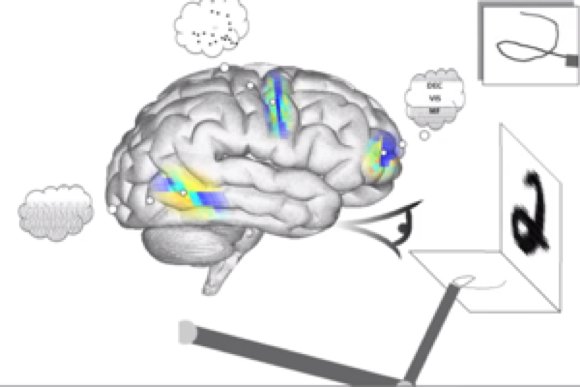
Another computer is setting its wits to perform human tasks. But this computer is different. Instead of the tour de force processing of Deep Blue or Watson’s four terabytes of facts of questionable utility, Spaun attempts to play by the same rules as the human brain to figure things out. Instead of the logical elegance of a CPU, Spaun’s computations are performed by 2.3 million simulated neurons configured in networks that resemble some of the brain’s own networks. It was given a series of tasks and performed pretty well, taking a significant step toward the creation of a simulated brain.

Spaun stands for Semantic Pointer Architecture: Unified Network. It was given 6 different tasks that tested its ability to recognize digits, recall from memory, add numbers and complete patterns. Its cognitive network simulated the prefrontal cortex to handle working memory and the basal ganglia and thalamus to control movements. Like a human, Spaun can view an image and then give a motor response; that is, it is presented images that it sees through a camera and then gives a response by drawing with a robotic arm.

And its performance was similar to that of a human brain. For example, the simplest task, image recognition, Spaun was shown various numbers and asked to draw what it sees. It got 94 percent of the numbers correct. In a working memory task, however, it didn’t do as well. It was shown a series of random numbers and then asked to draw them in order. Like us with human brains, Spaun found the pattern recognition task easy, the working memory task not quite as easy.

The important thing here is not how well Spaun performed on the tasks – your average computer could find ways to perform much better than Spaun. But what’s important is that, in Spaun’s case, the task computations were carried out solely by the 2.3 million artificial neurons spiking in the way real neurons spike to carry information from one neuron to another. The visual image, for example, was processed hierarchically, with multiple levels of neurons successively extracting more complex information, just as the brain’s visual system does. Similarly, the motor response mimicked the brain’s strategy of combining many simple movements to produce an optimal, single movement while drawing.

Chris Eliasmith, from the University of Waterlook in Ontario, Canada and lead author of the study is happy with his cognitive creation. “It’s not as smart as monkeys when it comes to categorization,” he told CNN, “but it’s actually smarter than monkeys when it comes to recognizing syntactic patterns, structured patterns in the input, that monkeys won’t recognize.”

Watch Spaun work through its tasks in the following video.

One thing Spaun can’t do is perform tasks in realtime. Every second you saw Spaun performing tasks in the video actually requires 2.5 hours of numbers crunching by its artificial brain. The researchers hope to one day have it perform in realtime.

It’s important to note that Spaun isn’t actually learning anything by performing these tasks. Its neural nets are hardwired and are incapable of the modifications that real neurons undergo when we learn. But producing complex behavior from a simulated neuronal network still represents an important initial step toward building an artificial brain. Christian Machens, a neuroscientist at the Champalimaud Neuroscience Programme in Lisbon and was not involved in the study, writes in Science that the strategy for building a simulated brain is “to not simply incorporate the largest number of neurons or the greatest amount of detail, but to reproduce the largest amount of functionality and behavior.”

We’re still a long way from artificial intelligence that is sentient and self-aware. And there’s no telling if the robots of the future will have brains that look like ours or if entirely different solutions will be used to produce complex behavior. Whatever it looks like, Spaun is a noble step in the right direction.

Scientists Create Artificial Brain With 2.3 Million Simulated Neurons

Proposed Montreal law would require all dogs to be bilingual

Dogs-Banner

Earlier this week, Montreal city councilor Benoit LaDouce proposed a bylaw that would require all dogs in public parks to be bi-lingual. According to Mr. LaDouce, “Dogs parks in our city are chaotic and communication is at the heart of the conflict.” In his mind, K9/citizen relations would be more harmonious if dogs in public spaces understood commands in both English and French.

http://www.cbc.ca/thisisthat/blog/2012/12/12/montreal-bylaw-requires-dogs-to-understand-commands-in-both-official-languages/?_tmc=OP6250GfCpJe83-b1qy_jB7Gke4VtETpPTwqQnZRVXY

Research from Asia is overturning long-held notions about the factors that drive people to commit suicide


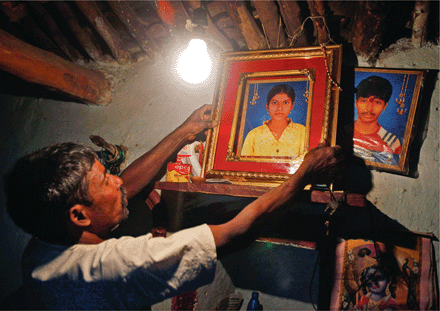
SHANGHAI, CHINA—Mrs. Y’s death would have stumped many experts. A young mother and loyal wife, the rural Chinese woman showed none of the standard risk factors for suicide. She was not apparently depressed or mentally ill. Villagers said she exuded happiness and voiced few complaints. But when a neighbor publicly accused Mrs. Y of stealing eggs from her henhouse, the shame was unbearable. Mrs. Y rushed home and downed a bottle of pesticide. “A person cannot live without face,” she cried before she died. “I will die to prove that I did not steal her eggs.”

Decades of research in Western countries have positioned mental illness as an overwhelming predictor of suicide, figuring in more than 90% of such deaths. Another big risk factor is gender: Men commit suicide at much higher rates than women, by a ratio of nearly 4 to 1 in the United States, according to the U.S. Centers for Disease Control and Prevention. Other common correlates include city life and divorce. But in China, says Jie Zhang, a sociologist at the State University of New York, Buffalo State, the case of Mrs. Y is “a very typical scenario.”

Zhang oversaw interviews with Mrs. Y’s family and acquaintances while researching the prevalence of mental illness among suicide victims aged 15 to 34 in rural China. Through psychological autopsies—detailed assessments after death—Zhang and coauthors found that only 48% of 392 victims had a mental illness, they reported in the July 2010 issue of the American Journal of Psychiatry. An earlier study of Chinese suicide victims put the prevalence of mental disorders at 63%—still nowhere near as high as accepted models of suicide prevention would predict. Meanwhile, other standard risk factors simply don’t hold true, or are even reversed, in China. Chinese women commit suicide at unusually high rates; rural residents kill themselves more frequently than city dwellers do; and marriage may make a person more, rather than less, volatile.

Such differences matter because China accounts for an estimated 22% of global suicides, or roughly 200,000 deaths every year. In India, meanwhile, some 187,000 people took their own lives in 2010—twice as many as died from HIV/AIDS. By comparison, the World Health Organization (WHO) estimates that suicides in high-income countries total only 140,000 a year. Suicide rates in Japan and South Korea, however, are similar to China’s (see p. 1026), suggesting that this is a regional public health issue. And yet suicide in Asia is poorly understood. “Suicide has not gotten the attention it deserves vis-à-vis its disease burden,” says Prabhat Jha, director of the Centre for Global Health Research in Toronto, Canada.

Emerging research from developing countries like China and India is now filling that gap—and overturning prevailing notions. “The focus of the study of suicide in the West is psychiatry,” Zhang says. While mental illness remains an important correlate in Asia, he says, researchers may learn more from a victim’s family, religion, education, and personality. New findings, Zhang says, suggest that some researchers may have misread correlation as causation: In both the East and the West, “mental illness might not be the real cause of suicide.”

Distressing data

Reliable data on suicide across Asia were once maddeningly scarce. In Thailand until 2003, there was no requirement that the reported cause of death be medically validated—a flaw that rendered the country’s suicide data inaccurate. In India, suicide is a crime, which means it often goes unreported. But the Thai government now has a more accurate reporting system for mortality figures, while Indian researchers are benefiting from the Million Death Study, an effort to catalog causes of death for 1 million Indians in a 16-year survey relying on interviews with family members (Science, 15 June, p. 1372). The study has already produced a disturbing revelation about reported suicide rates. “When we compare our data with police reports, you find undercounts of at least 25% in men and 36% in women,” says Jha, the study’s lead investigator.

New insights from China are particularly instructive. Because suicide carries a stigma, the Chinese government withheld data on the topic until the late 1980s. When information finally came out, it quickly became clear that the country had a serious problem. In 1990, for example, the World Bank’s Global Burden of Disease Study estimated there were 343,000 suicides in China—or 30 per 100,000 people. The U.S. rate for the same year was 12 per 100,000.

But other reports gave different figures, prompting a debate on sources. WHO’s extrapolated total was based on data that China had reported from stations covering only 10% of the population, skewed toward urban residents. As researchers focused on the problem, they arrived at more reliable figures—but also unearthed more mysteries. In an analysis in The Lancet in 2002, a group led by Michael Phillips of Shanghai Mental Health Center and Emory University School of Medicine in Atlanta estimated that from 1995 to 1999, Chinese women killed themselves more frequently than men—by a ratio of 5 to 4. “There was originally disbelief about the very different gender ratio in China,” Phillips says, although later it was accepted.

Today, the suicide sex ratio in China is roughly 1 to 1, still a significant departure from the overall U.S. male-to-female ratio of 4 to 1. In India, the male-to-female suicide ratio is 1.5 to 1, although in the 15 to 29 age group it is close to equal. And yet, WHO estimates the global sex ratio at three men to one woman. (With colleague Cheng Hui, Phillips recently used Chinese and Indian figures to lower that estimate to 1.67 to 1.) Among young adults in India, suicide is second only to maternal mortality as a cause of death for women, according to the Million Death Survey.

In both China and India, cases like Mrs. Y’s involving no apparent mental illness are common. In India, suicide is most prevalent among teenagers and young adults—the cohort that is entering the workforce, marrying, and facing new life stresses. This contrasts with the Western pattern of high suicide rates among the middle-aged, suggesting that although “there might well be some underlying psychiatric conditions, the main drivers of [suicide in India] are probably chiefly social conditions,” Jha says. While cautioning that detailed psychological autopsies are still needed in India, he says, “it’s a reasonable assumption that many of these young folks are not mentally ill.”

Convincing researchers outside Asia may prove an uphill battle. Matthew Miller, a suicide researcher at the Harvard Injury Control Research Center in Boston, says that mental illness may be underdiagnosed in Asia for reasons that aren’t fully understood. That could throw off correlation studies. Phillips, who has worked in China for over 20 years, agrees that underdiagnosis is a problem, and that “many Western researchers still believe that we are just missing cases.” But he rejects that explanation. Even accounting for underdiagnosis, he says, the finding of a lower rate of mental illness among suicide victims has held up in multiple studies. Many Chinese suicide victims, he adds, are “most certainly severely distressed, but they don’t meet the criteria of a formal mental illness.”

Lethal weapons

Assuming that suicide risk is shaped by different factors in Asia, researchers are striving to uncover the roots. One clue may lie in the high proportion of unplanned Chinese suicides. In a 2002 survey of 306 Chinese patients who had been hospitalized for at least 6 hours following a suicide attempt, Phillips and colleagues found that 35% had contemplated suicide for less than 10 minutes—and 54% for less than 2 hours. Impulsiveness among suicide victims in Asia “tends to be higher than in the West,” says Paul Yip, director of the Hong Kong Jockey Club Centre for Suicide Research and Prevention at the University of Hong Kong and one of the authors of a recent WHO report on suicide in Asia. Although impulsive personality traits are sometimes linked to illnesses like bipolar disorder, studies in China have not uncovered full-fledged personality disorders in impulsive suicide victims.

In a tragic twist, impulsive victims in Asia tend to favor highly fatal methods. After interviewing family members and friends of 505 Chinese suicide victims, Kenneth Conner, a psychiatric researcher at the University of Rochester Medical Center in New York, and colleagues reported in 2005 that those who had ingested pesticides were more likely to have acted rashly than were those who used other methods such as hanging or drowning. Pesticides are a leading cause of suicide death in China and India, and the cause of roughly half of suicides worldwide. Pesticides may also explain Asia’s unusual suicide sex ratio, Jha says. In the West, women attempt suicide just as frequently as men do, but they tend to down sleeping pills—and often survive.

The trends in Asia point to a need for innovative prevention strategies. Zhang believes efforts should focus less on mental illness and more on “educating people to have realistic goals in life and teaching them to cope with crisis.” Front and center should be universities and rural women’s organizations, both of which already have active suicide prevention programs in China, he says. Such community-based approaches appear to have been effective in Hong Kong, Yip says. Over the past decade, the territory has rolled out programs for schoolchildren on dealing with stress and outreach groups for older adults. Its suicide rate has fallen 27% since 2003.

But resources in many Asian countries are limited. The vast majority of cities in China and India still do not have 24-hour suicide prevention hotlines. That may make what scholars call means restriction—reducing access to tools commonly used in suicide—a better goal. In Sri Lanka, pesticides once accounted for two-thirds of suicide deaths. Then in 1995, the government took steps to ban the most toxic pesticides. The suicide rate plummeted by 50% in the following decade.

The varying degrees to which mental illness and suicide correlate in East and West may ultimately be beside the point, argues Zhang, who believes a third factor may be the trigger in both regions. Strain theory, which posits that societal pressures, rather than inborn traits, contribute to crime, can help explain suicide, he believes. “Psychological strains usually precede a suicidal behavior, and they also happen before an individual becomes mentally ill.”

When a person is pulled by two or more conflicting pressures, Zhang says, as with “a girl who receives Confucian values at home and then goes to school and learns about modern values and gender equality,” she may be more prone to suicide. Other situational stresses may include a sudden crisis faced by a rural woman lacking coping mechanisms—such as the case of Mrs. Y—or an incident that forces a young man to confront a gap between his aspirations and reality. Zhang found that strain theory held up for his study subjects in rural China. He plans to probe whether it also applies to older Chinese.

Ultimately, Zhang hopes to test strain theory on Americans. The U.S. National Institutes of Health “spends millions and millions of dollars every year on treating mental illness to prevent suicide,” he says. “But no matter how much money we spend, how many psychiatrists we train, or how much work we do in psychiatric clinics, the U.S. suicide rate doesn’t decrease.” It has hovered around 10 to 12 suicides per 100,000 people since 1960.

Such research may be the tip of the iceberg when it comes to debunking long-held ideas about behavior disorders. Alcoholism is another area ripe for exploration, Cheng says: The profile of alcoholics in China contrasts sharply with that in the West. Because of social pressure to drink, Chinese alcoholics are far more likely to be working and married than American counterparts, who are often unemployed and divorced, she says. Suicide, Cheng muses, “is just another example of how environment can change behavior.”

http://www.sciencemag.org/content/338/6110/1025.full

Machine invented that recycles patient’s blood during surgery

The bigger the operation, the more blood gets spilled. In procedures like open heart surgery and major trauma, blood loss can be so great that large quantities need to be replaced.

Blood transfusions are often the preferred option. But in a minority of cases there can be adverse reactions.

And then there is the cost. As Professor Terry Gourlay puts it: “Blood is not cheap”.

End Quote Professor Terry Gourlay Strathclyde University

He is a bioengineer at Strathclyde University in Glasgow, the leader of a team which has produced a new device to recycle blood during major surgery.

Recovering a surgical patient’s blood and putting it back in the body is not a new idea. But autotransfusion, as it is known, is typically a skilled, time-consuming and costly business.

Hemosep, as the Strathclyde process is known, is altogether more straightforward and looks a lot less labour intensive.

There is a small, lightweight machine which agitates the blood to stop it settling. But the key to it is the special plastic bag in which the recovered blood is poured.

Simply put, it is like a chemical sponge that soaks up the unwanted plasma which has diluted the blood during the operation.

The key component is an advanced polycarbonate membrane which lets the plasma through but keeps the important blood components separate. They include important proteins and clotting factors.

These concentrated cells can then be returned to the patient.

According to Professor Gourlay, the medical benefit of that is straightforward: “It’s your blood.”

Hemosep has already been tested successfully in Turkey where it has been used in more than 100 open heart surgery procedures.

The system will now be sold throughout the European Union in a partnership between Strathclyde and the medical device company, Advancis. It has also been approved for sale in Canada.

Professor Gourlay says that in some markets the true cost of a unit of blood can touch $1,600 and blood products constitute a multi-billion dollar worldwide market.

He explained: “Blood is not free, by any measure, and in fact in North America the latest studies suggest that a unit of blood costs upwards of $1,600.”

http://www.bbc.co.uk/news/uk-scotland-glasgow-west-19324077

Study aims to determine why some people hate cilantro

On “I Hate Cilantro” websites and Facebook pages they gripe that the herb tastes like soap, mold, or dirt. Cilantro haters not only despise its flavor, they also detest its smell. Stories in publications as serious as the New York Times, the Wall Street Journal and, yes, even msnbc.com have even covered the sharp divide in taste preferences when it comes to this particular herb.  And when a study of identical twins found an aversion to cilantro stems from a genetic glitch, the herb’s bashers finally had a good reason why they found the leaves of the Coriander plant so offensive.

But who are these people in the anti-cilantro community? No one had a clue — until now.

There has been no attempt to quantify which people hate the herb until two nutrition experts from the University of Toronto took a stab at it. They recently published their findings in the journal Flavour. In the study, they surveyed nearly 1,400 young adults ages 20 to 29 in Canada.

Volunteers completed a 63-item preference checklist in which they rated each food on a 9-point scale from 1 (dislike extremely) to 9 (like extremely). They could also select “never tried” or “would not try.”

Researchers found an aversion to cilantro ranged from a low of 3 percent to a high of 21 percent among six different ethnic groups.

Young Canadians with East Asian roots, which included those of Chinese, Japanese, Korean, Thai and Vietnamese descent, had the highest prevalence of people who disliked the herb at 21 percent. Caucasians were second at 17 percent, and people of African descent were third at 14 percent.

Among the herb’s fans, the group with the fewest number of people who disliked cilantro were those of Middle Eastern background at 3 percent, followed by those of Hispanic and South Asian ancestry at 4 percent and 7 percent respectively.

Exposure to the herb at an earlier age and with greater frequency in Mexican, Asian, and Indian cooking likely helps shape a positive flavor preference. Another possibility is that genetic differences among the cultural groups might influence someone’s taste perception of the herb.

Although researchers have yet to evaluate all 63 items on the food-preference checklist, study author Ahmed El-Sohemy, PhD, is sure of one thing: “Cilantro is perhaps the most polarizing with large numbers either loving it or hating it.” The paper calls this the “unusual divisive nature of cilantro.”

“People who dislike cilantro extremely describe it very, very differently from those who love it,” explains El-Sohemy, an associate professor of nutrition at the University of Toronto. The reason? “These individuals live in very different sensory worlds and are not perceiving the same thing,” he says.

As for El-Sohemy’s opinion of cilantro, count him among the lovers. “I remember loving the taste as a child,” he says. “I distinctly remember my mother’s Egyptian cooking, which used cilantro frequently.”

The study is a first step in determining how widespread a dislike for cilantro is, at least in a sample of young Canadians. It’s unclear whether older Canadians feel similarly or how much the herb is despised by people in other countries.

Eventually, the Toronto scientists hope to pinpoint the genetic basis for why cilantro is an herb some people love to hate.

http://bodyodd.nbcnews.com/_news/2012/05/16/11719087-who-hates-cilantro-study-aims-to-find-out

Thanks to Dr. S.G. for bringing this to the attention of the It’s Interesting community.

Ontario woman discovers 80,000 bees in her ceiling

A homeowner in southern Ontario says she knew she had a “sweet mess” on her  hands when a crack in the ceiling started oozing honey.

Loretta Yates soon discovered the 1 1/2-storey house she shares with her  husband and 22-month-old son was also home to about 80,000 bees nesting in the  first-floor ceiling.

She says her insurance company wouldn’t cover the damage to her house in  Varney, just outside Mount Forest, and a pest control company couldn’t promise  to get the bugs out for good.

That’s when she called beekeeper David Schuit, who took down the ceiling and  scraped the honeycomb loose, catching at least one queen bee and recovering more  than 100 kilograms of honey.

Schuit says there was so much dripping down in the kitchen, a lightbulb blew  because it was half-full of honey.

Bees and wasps have been nesting in the house for about four years, says  Yates, but she never realized there were so many.

“I guess with the cracked ceiling in the kitchen and the honey dripping on me — that was (the) time to get help,” she said Monday.

It’s expected some of the honey will be made into candles.

Read more: http://www.theprovince.com/technology/Honey+oozing+from+ceiling+leads+discovery+bees+inside+Ontario+home/7013333/story.html#ixzz22Olc7qQV